分类: business

  • SVG agri-projects go to ‘deal room’ after minister’s pitch in Barbados

    SVG agri-projects go to ‘deal room’ after minister’s pitch in Barbados

    Against a regional backdrop of rising food import dependency, climate-driven agricultural shocks and supply chain disruptions, St. Vincent and the Grenadines (SVG) has positioned eight targeted agriculture and food system projects in the Caribbean’s regional investment marketplace, Agriculture Minister Israel Bruce has announced. Two of these proposals have already advanced to the advanced negotiation stage known as the “deal room” following the high-level Food Systems Investment Forum held in Barbados, which centered on mobilizing equity capital to strengthen Caribbean food security.

    Bruce, who accompanied the SVG delegation to the forum that brought together governments, development partners and private financial stakeholders under the theme “Mobilising Equity Capital for Resilient Food Systems in the Caribbean”, detailed the projects and early investor feedback during a post-forum press conference in Kingstown.

    Across a range of agricultural subsectors, SVG brought eight distinct investment proposals to the table, covering agro-processing expansion, youth agricultural entrepreneurship, irrigation infrastructure upgrades, national livestock processing and local poultry production scaling. The full slate of projects includes: a $5.5 million national abattoir development; a $4 million recapitalization plan for local agricultural marketing brand VincyFresh; a $12.8 million arrowroot crop revitalization program; a $6 million initiative to support youth entering agribusiness; a $5.3 million expansion of upgraded market depots in Lauders, La Croix and Langley Park; a $5 million national poultry production facility; the $8.28 million Rabacca irrigation infrastructure project; and the $2.58 million Richmond Valley irrigation project.

    Bruce highlighted that the youth-focused project directly responds to a pressing demographic challenge facing SVG’s agricultural sector: a rapidly ageing farming base that requires intentional policy intervention to drive generational renewal. The market depot expansion, meanwhile, is designed to elevate the three windward-side upgraded facilities beyond basic storage and processing functions, turning them into robust regional hubs that can connect local producers to new domestic and export buyer networks.

    After the forum’s pitching process, which allowed participating nations to showcase their priority projects to potential financers, two SVG proposals – the VincyFresh recapitalization and the arrowroot revitalization program – earned shortlisting for deeper due diligence and negotiation in the forum’s dedicated deal room. Bruce confirmed that active negotiations with interested financiers are already underway, noting that premature public disclosure of specific investor identities would be inappropriate while talks remain ongoing. “We hope that there’ll be fruit borne out of these two deal rooms. We are keeping our fingers crossed,” he told reporters. Even without finalized agreements, Bruce framed the shortlisting as an encouraging early signal that international financiers see strong potential for value addition and export growth in SVG’s agro-processing sector.

    Beyond the two shortlisted projects, all eight of SVG’s proposals have been added to a regional investment “deal book” – a centralized catalogue that will be used to market Caribbean agricultural projects to potential funders across the region and globally. Bruce explained that this centralized, regional packaging represents a shift from the outdated model of ad-hoc bilateral investment pitches, allowing Caribbean nations to present a coordinated, professional portfolio of opportunities to the global investment community.

    One of the most strategically significant projects on the slate, the $5 million national poultry facility, ties directly to SVG’s domestic policy goals of cutting food import costs and boosting national food sovereignty. Bruce noted that SVG currently spends hundreds of millions of dollars annually on imported poultry, and the government is laser-focused on expanding local production to reduce this import burden while strengthening domestic food security. The Barbados forum, he said, offers a critical pathway to secure equity partners or concessionary financing to move the poultry facility from planning to implementation.

    Outlining his administration’s approach to agricultural financing, Bruce established a clear priority hierarchy designed to protect public finances and avoid unnecessary debt burdens for taxpayers: grant funding is the preferred first option, followed by public-private partnerships, then concessionary loans, with standard commercial loans ranked as the last resort. He framed this strategy as a core commitment to fiscal prudence, focused on creating economic breathing room rather than adding unsustainable fiscal pressures.

    Placing SVG’s participation in the broader context, Bruce noted the forum addressed shared regional challenges: climate-fueled agricultural shocks, global supply chain disruptions, and skyrocketing food import bills across the Caribbean. The overarching goal of the gathering is to support a regional transition away from the current model of heavy reliance on food imports and concessional lending, toward climate-resilient food systems supported by targeted equity and blended finance.

    Bruce also connected the high-level regional investment push to longstanding concerns raised by local SVG farmers, noting that when his New Democratic Party was in opposition, farmers consistently identified three top priorities: access to expanded market opportunities, solutions to praedial larceny, and improved farm access roads. “You can see that this mission was focused on market opportunities and access roads,” he explained, adding that all eight projects pitched in Barbados – from the abattoir and poultry facility to the irrigation schemes and youth investment plan – build on campaign commitments and ongoing domestic agricultural upgrades.

    While Bruce stressed that no firm financing commitments have been secured for any of the projects to date, he emphasized that securing spots in the deal room and regional deal book are critical foundational steps to attract investment. He committed to sharing further public updates as negotiations progress, framing the Barbados trip as part of a broader, long-term strategy to secure grants, equity and blended finance to transform SVG’s agriculture sector. Ultimately, he said, these investments will help shift SVG from an ageing, under-capitalized farming sector to a dynamic, youth-driven, export-focused industry that is more resilient to global and climate shocks.


  • Ali woos Jamaican business executive to build a Sandals eco-hotel in Guyana

    Ali woos Jamaican business executive to build a Sandals eco-hotel in Guyana

    During a public appearance Saturday marking the launch of a new automotive joint venture, Guyanese President Irfaan Ali made a direct public appeal to Adam Stewart, Executive Chairman of Jamaica-headquartered hospitality giant Sandals Resorts International, to develop a luxury all-inclusive eco-tourism resort in Guyana. In his remarks, the president emphasized that local private sector stakeholders are already prepared to commit an initial $15 million in joint investment to back the project.

    Ali framed the potential Guyanese venture as a historic opportunity for the Sandals brand, arguing that locating the resort in Guyana would create the brand’s top-tier eco-tourism destination that no competing property could match. “You will be doing your brand a great disservice if you don’t draw on the bold capacity I know your brand carries to make the best possible investment decision Sandals has ever made,” Ali said during the event. “That decision is to work with our private sector as partners in creating Sandals’ number one eco destination, all-inclusive resort here in Guyana. I can assure you that none will come close to you.”

    The meeting came ahead of the official opening of CAMS Motors, a new automotive dealership that operates as a joint venture involving Stewart’s ATL Group, the parent company of ATL Automotive. Stewart confirmed during the event that Ali has actively lobbied for Sandals to enter Guyana’s fast-growing hospitality sector, and while the discussions remain in early stages, he has not ruled out moving forward with the project.

    “As I arrived here, we were here to sell cars, but the president reminded me that one of these days we need to build a hotel down here, and I want to follow suit,” Stewart explained. “That’s not a public service announcement just yet. It’s a ‘we love the idea of it’.”

    Ali noted that the pitch to Sandals is the continuation of conversations that began roughly one year ago, when he first floated the concept of Sandals entering Guyana’s tourism market. He added that Guyana’s private sector has already demonstrated robust confidence in the country’s tourism growth trajectory, having completed construction on more than 14 new hotels across the country in recent years to accommodate rising visitor demand tied to Guyana’s expanding oil sector and growing global profile as a biodiversity and eco-tourism hotspot.

  • ‘Prepare to target the Cuban market’- President Ali tells Guyanese, Jamaican business executives

    ‘Prepare to target the Cuban market’- President Ali tells Guyanese, Jamaican business executives

    On Saturday, June 20, 2026, just 48 hours after Cuba unveiled a landmark package of market-oriented economic reforms that open the door to expanded private sector activity and increased foreign investment, Guyana’s President Irfaan Ali has called on the country’s domestic private sector to seize the emerging regional opportunity by building local vehicle assembly lines. Speaking at the Georgetown launch event for Chinese vehicle brands Foton and Jetour, hosted by local automotive firm CAM Motors, Ali urged the newly formed joint venture between CAM Motors, Jamaica’s ATL Automotive, the Continental Group of Companies, and Guyana-based MMKJ Inc to move forward with establishing a regional assembly hub on Guyanese soil.

    Ali told attendees that he has already tasked MMKJ Inc director Vishok Persaud and his team with conducting a feasibility study to turn Guyana into a central assembly base for the growing range of new vehicle brands entering the Caribbean market. “We have the capacity to support full-scale assembly lines, and we can hit the critical market mass we need if we collaborate to scale up our regional footprint,” Ali said. “We have to look ahead – Cuba is opening its economy, and Haiti is also moving toward reopening its markets, which creates massive new demand we can meet from here.”

    Beyond the newly opening Caribbean markets, Ali noted that the hub could also tap into underutilized demand in neighboring northern Brazil and the Dominican Republic, a large Spanish-speaking Caribbean economy that offers additional growth opportunities. To set the stage for these investments, he emphasized that the Guyanese government has already put in place a supportive ecosystem for manufacturing and assembly, including investor-friendly regulatory policies, competitive tax structures, low energy costs, accessible digital infrastructure, and direct government backing for new industrial projects.

    Ali framed the assembly hub initiative as a core part of Guyana’s long-term economic strategy to diversify beyond its booming oil and gas sector, building a more resilient and sustainable economy that generates broad-based growth beyond the energy industry. “This is the kind of transformative project that will carry our economy past reliance on oil and gas, and move us solidly into long-term, inclusive sustainability,” he said.

    Cuba’s reform package, announced by President Miguel Diaz-Canel on June 18, 2026, represents the most sweeping opening of the Cuban economy in decades, rolled out in response to years of economic pressure and mounting external challenges. As reported by Al Jazeera, the plan expands permitted private enterprise activity across multiple sectors, introduces new measures to attract foreign direct investment – including investment from Cuban nationals living abroad – paves the way for private real estate development, allows for the conversion of state-owned enterprises into privately held shareholding companies, and permits private banks to enter a financial sector that has long been exclusively state-controlled.

    Persaud, the MMKJ director, confirmed that the joint venture is committed to supporting Guyana’s local content goals, beyond just building out vehicle assembly infrastructure. The partnership will not only deliver after-sales support and service for vehicle owners across the country, but also act as a domestic partner to embed local participation across the automotive supply chain. “This project lets us fully deliver on our local content legislation, expand domestic private sector participation, and ensure that Guyanese businesses get to take part in every layer of this growing industry,” Persaud said.

    Ali added that shifting domestic consumer demand in Guyana already creates a strong foundation for a new vehicle assembly sector. Rising incomes have left more Guyanese with greater disposable income, driving a steady shift away from imported used Japanese vehicles toward brand-new cars and commercial vehicles. “We are already seeing a rapidly expanding market for new vehicles among both private consumers and domestic businesses, that demand is only going to grow as our economy expands,” he noted. To support this market shift, the Guyanese government already eliminated the 14 percent Value Added Tax on vehicles with engine sizes of 1500 CC and larger earlier this year, cutting purchase costs for consumers and stimulating new vehicle sales.

  • Minister Abiamofo: Local content bij Zijin groeit, aandeel Surinaamse bedrijven neemt toe

    Minister Abiamofo: Local content bij Zijin groeit, aandeel Surinaamse bedrijven neemt toe

    Suriname’s growing local engagement in its gold mining sector has taken a positive step forward, with new data showing increasing local employment, rising local leadership representation, and growing contract values for domestic businesses at Chinese mining firm Zijin. Minister David Abiamofo of the Ministry of Natural Resources shared these updated figures during budget debates in the National Assembly of Suriname Friday, outlining steady progress in the company’s local content initiative.

    According to Minister Abiamofo, Zijin currently provides direct employment to roughly 1,690 Surinamese workers across its operations. An additional 1,400 Surinamese earn indirect income through the company’s network of local suppliers and contractors, meaning the firm supports a total of more than 3,000 local jobs across the country.

    The most notable gains have come in leadership and technical roles, which have historically been dominated by foreign personnel at large international mining projects in the country. Abiamofo confirmed that 25% of all senior management positions at Zijin’s Suriname operations are now held by local Surinamese professionals. That share jumps to 49% for mid-level management roles, while 95% of frontline supervisors and 83% of technical staff are recruited from the local workforce. All entry-level operational roles and internal support positions are currently filled exclusively by Surinamese workers.

    Minister Abiamofo acknowledged that a small number of highly specialized positions still rely on foreign experts, due to the specific experience and industry certifications required for these niche roles that are not yet widely available among the local workforce. However, he emphasized that this is a temporary gap that will continue to narrow as local workers gain more on-the-job experience and specialized training through the company’s capacity building programs.

    Beyond direct employment, the value of contracts awarded to Surinamese domestic businesses has also increased considerably, climbing from $163 million U.S. dollars to $192 million U.S. dollars in recent years. Correspondingly, the share of contracts going to foreign-based companies has declined as local suppliers have expanded their capabilities to meet the mining firm’s needs.

    Despite the positive progress, Minister Abiamofo stressed that local businesses must maintain competitive standards to retain these opportunities. “Quality, reliability, and competitiveness remain the deciding factors for contract awards,” he said. “Local companies cannot rely solely on long-standing working relationships to secure ongoing work; they must continue to deliver value that matches or exceeds what international firms can offer.”

    The updates come as Suriname continues to push for greater local benefits from its natural resource sector, a core driver of the country’s national economy. Local content requirements have become a key policy priority for the government, aimed at ensuring resource extraction delivers long-term inclusive economic growth rather than just short-term revenue.

  • Park 7 Ave adds 34  apartments in MoBay

    Park 7 Ave adds 34 apartments in MoBay

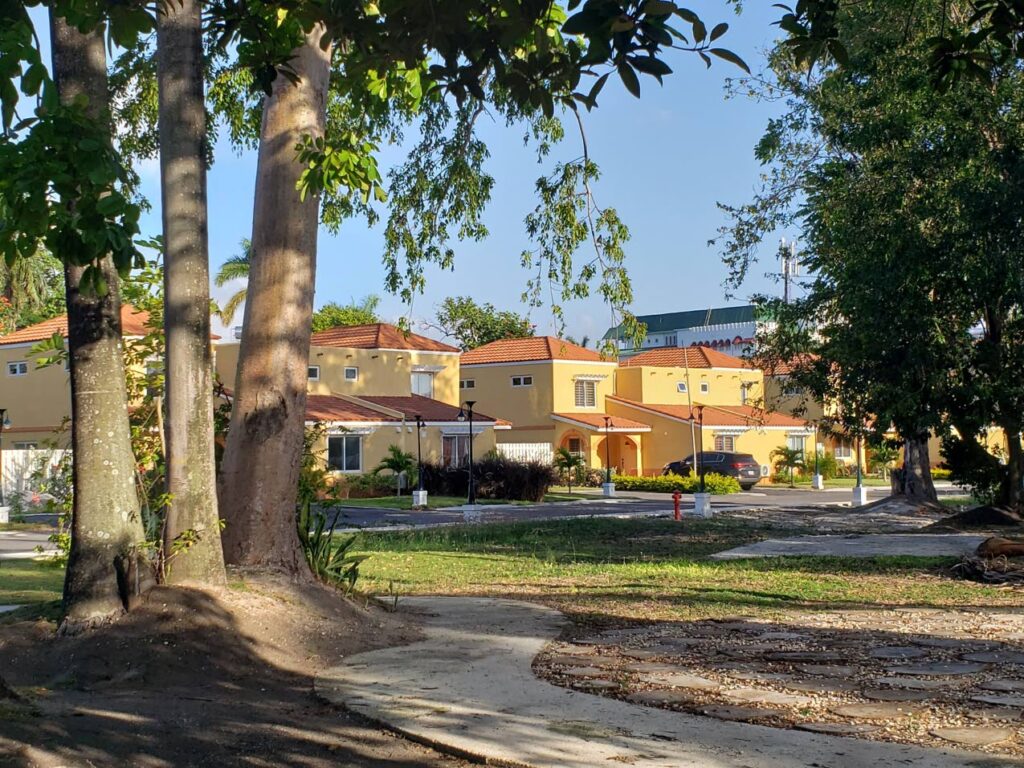
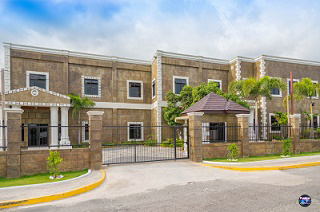
    Tucked near the bustling center of Jamaica’s Montego Bay, a new gated residential development called Park 7 Ave is taking shape, rooted in a straightforward design philosophy from lead architect Robin Baston: build a space you would be proud to call home.

    The end result of Baston’s approach is a cozy, 34-unit community spread across five three-story buildings, configured to balance occupancy with generous open green space that avoids the overcrowded feel common to many mid-market apartment projects. The development includes 22 one-bedroom units and 12 two-bedroom units, all outfitted with modern, sought-after amenities ranging from a community shared swimming pool and dedicated yoga deck to on-site laundry facilities, in-unit solar water heaters, walk-in closets, and premium marble threshold showers with tempered glass enclosures. Pricing starts at JMD $35 million for one-bedroom layouts and JMD $50 million for two-bedroom units, positioning the project between luxury high-end developments and dense budget-focused builds.

    Construction on Park 7 Ave kicked off in mid-2023, with an initial completion target of the end of 2024. That timeline was disrupted when Hurricane Melissa swept through the region, pushing the expected handover to the first quarter of 2025. According to Baston, the project is now progressing steadily, having reached the roof construction phase across all blocks, with some units already moving into advanced interior work including tiling and internal wall framing.
    Baston leads Robin Baston Associates (RBA), the architectural firm behind the development, which brings 30 years of regional design experience spanning villas, resort properties, commercial and retail spaces, and residential remodels. His past notable projects include Jamaica’s Long Mountain Country Club, multiple private villas in Silver Sands, the Canadian Chancery, the Imperial Optical corporate headquarters, and all Kingston Bookshop retail and office locations. Baston also serves as a director of Fullon Properties Ltd, the developer behind Park 7 Ave, which was founded 10 years ago and has previously delivered successful projects including Chatham Grove and Chatham Palms in Montego Bay, and the Charlton Road development in Kingston.

    In a recent interview with *Jamaica Observer’s Real Estate on the Rock*, Baston shared detailed insight into Fullon Properties’ fourth residential development, breaking down what makes the project unique in Jamaica’s competitive real estate market.

    Fullon Properties has carved out a distinct niche in Jamaica’s residential development space over its 10-year history, introducing industry innovations that have reshaped local consumer expectations and left real estate agents eager for more of the firm’s work. “They literally call asking, ‘When is the next project?’” Baston noted. Among the company’s trailblazing changes to the local market are the trend of naming developments after their street addresses and the popular one-deposit downpayment plan, which eases financial strain for buyers by making budget management far more accessible.

    Fullon’s unique operating model draws on long-standing partnerships with contracted accounting services, in-house architectural expertise, and close collaborative relationships with local real estate agents, engineers, and contractors. While the firm currently focuses exclusively on residential development, it has plans to expand into commercial projects in the coming years.

    When asked what differentiates Park 7 Ave from competing residential developments in Montego Bay, Baston explained that the project fills a gap many developers have ignored. “While many residential developments are either geared toward the luxury market or focused primarily on maximising unit density, Park 7 Ave was conceived to provide a balance between affordability and exclusivity,” he said. A core distinguishing feature is the project’s architect-led design philosophy, which guided every decision from individual apartment layouts to amenity integration and the overall community character.

    Park 7 Ave also upholds Fullon’s long-standing tradition of delivering distinctive, non-formulaic residential communities. Rejecting the repetitive, boxy architectural aesthetic common to mass-produced apartment developments, the project embraces a timeless design that is built to hold its visual appeal and market relevance for decades.

    The development’s target market aligns with its balanced positioning: it caters primarily to young professionals, growing local families, Jamaican residents returning from overseas, and real estate investors who want high-quality, thoughtfully designed housing in Montego Bay without the steep price tag that comes with luxury developments.

    For prospective buyers, Baston highlighted multiple key advantages of purchasing a unit at Park 7 Ave. The development offers a rare combination of open communal space, exclusive gated access, and panoramic views at an accessible price point. Every unit in the five-block community boasts either unobstructed sea views or sweeping vistas across Montego Bay toward Westgate, Bogue, and Reading, guaranteeing spectacular sunset views for all residents.

    Even though it is priced for the mid-market, Park 7 Ave still delivers the exclusive feel that home buyers seek, at a far more manageable entry point. Baston pointed to Fullon’s previous popular Montego Bay development, Chatham Palms, as a proven blueprint for the project’s success. Following completion, Chatham Palms saw a 100 percent increase in property value in just two years. The development also proved its construction quality during Hurricane Melissa, emerging from the storm with zero structural damage — a testament to Fullon’s commitment to sound building practices and durable design.

  • Betting on American streamer IShowSpeed

    Betting on American streamer IShowSpeed

    When global streaming star IShowSpeed unveiled his 15-stop Caribbean tour in late April, Jamaica’s official tourism body jumped at an opportunity far beyond hosting a single entertainment stop: a chance to leverage the creator’s massive global audience and diehard fanbase to put the island nation front and center for young travelers worldwide.

    Jamaica Vacations Limited (JamVac), a government agency under Jamaica’s Ministry of Tourism, built its strategy around a key industry insight: digital creators now hold far more sway over travel decisions and destination awareness among younger demographics than many traditional marketing channels. For JamVac Executive Director Joy Roberts, the partnership was a natural fit beyond just reach — IShowSpeed’s unfiltered, authentic public persona aligns perfectly with the vibrant, unpretentious culture of Jamaica, making him the ideal messenger to showcase the island to the world.

    “As soon as we confirmed Jamaica would be a featured stop on his tour, we knew we had to lean into this opportunity to authentically highlight our island’s culture, people, and one-of-a-kind experiences to a massive global audience,” Roberts told local outlet Jamaica Observer.

    Unlike JamVac’s core mandate of managing airlift capacity and driving travel demand through partnerships with traditional tour operators, this initiative required a rapid cross-government and cross-sector collaboration. Teaming up with the Ministry of Culture and the Jamaica Tourist Board (JTB), JamVac coordinated logistics on a tight timeline to deliver a seamless visit for the 55-million-subscribe YouTube creator while maximizing Jamaica’s global exposure. The accelerated operation pulled together everything from local transportation to authentic Jamaican culinary experiences and culturally rooted activities in mere weeks.

    Roberts emphasized that stakeholders from every corner of Jamaica stepped up to make the visit a success, from public sector agencies to private business owners, entertainers, chefs, local tour operators, and transportation providers, all eager to showcase their country in a positive light. She specifically highlighted Miss T’s Kitchen, which provided local meals throughout IShowSpeed’s stay, and Jamark Transportation, which handled the creator’s ground logistics.

    Prominent Jamaican entertainment entrepreneur Romeich Major was one of the first private sector leaders to join the effort, a decision he calls an obvious no-brainer. “Any opportunity to support entertainment and national uplift, regardless of who it’s for, I will always show up,” Major said. He contributed sponsorship and organized the tour’s dancehall-focused finale event; while clips of the party were not part of IShowSpeed’s official livestream, they spread rapidly across social media and gained millions of organic views. “There was no way we’d let one of the world’s biggest creators come to Jamaica and not let him experience a real Jamaican dancehall event,” Major explained.

    The payoff for the coordinated effort was substantial: the Jamaican leg of the tour generated millions of dollars in earned media value, putting the island in front of tens of millions of global viewers. IShowSpeed’s livestream from Kingston racked up more than seven million total views, with a peak of nearly 195,000 concurrent live viewers tuning in to see his explorations.

    Major summed up the opportunity simply: “He has a huge platform that reaches all over the world, so now millions more people get to see what Jamaica has to offer. It was an incredible initiative — the only downside is he didn’t have more time to see everything; he needs two or three full days to really experience the island,” he added with a laugh.

    Roberts echoed that sentiment, noting that the unscripted, spontaneous nature of IShowSpeed’s content gave audiences an unfiltered look at Jamaica’s culture that traditional advertising cannot match. That visibility was particularly critical this year, as parts of Jamaica’s tourism sector continue to recover from damage caused by Hurricane Melissa. “When you’re still rebuilding after a major storm, staying top of mind for global travelers is non-negotiable. Initiatives like this keep Jamaica on the list for people planning their next trip,” Roberts said.

    The partnership also highlights a rapidly growing new frontier for tourism marketing: influencer-driven destination promotion. Roberts noted that while traditional marketing campaigns still hold value, influencer content — especially live streaming — allows audiences to experience a destination in a far more immersive and authentic way than pre-produced ads. JamVac has not yet released final cost figures for the initiative, as it is still compiling total expenses.

    The JTB, which facilitated IShowSpeed’s VIP welcome at the airport but took a less central role in coordination, also praised the project’s impact. Director of Tourism Donovan White confirmed that the only costs the JTB incurred were for the welcome event, which included stilt walkers, traditional drummers, and Jonkonnu dancers. “Since IShowSpeed arrived in Jamaica, his content has already earned millions of global views, and clips keep circulating across social media,” White said. “That kind of authentic exposure to young audiences is extremely valuable, and you can’t put a price on that.”

    White added that it is still too early to measure the full long-term impact on visitor numbers, but the potential benefits are enormous. “His content showcased our culture, music, food, energy, and people in real time — that kind of organic visibility is impossible to replicate through traditional advertising,” he explained. White also noted that Jamaica’s ongoing popularity with top influencers is no accident: the island’s natural scenery, vibrant culture, and global soft power resonate deeply with young digital audiences, and content from visits like this remains searchable and shareable online for months or even years, extending its promotional value long after the livestream ends.

    Coordination of local artists and production for the tour stop was handled by IShowSpeed’s personal team in partnership with local private sector production partners. Major summed up the effort: “More than a hundred people from across the island came together to make this work — from security to drivers to every person behind the scenes. It was a total team effort.”

  • Million dollar mango market hit by middle east war

    Million dollar mango market hit by middle east war

    Under the blistering heat of southern Pakistan’s famed mango-growing region, farm workers perch precariously on thick tree branches, moving quickly to pluck ripe golden fruit and drop it into canvas sacks held by colleagues on the dusty ground below. It is peak mango season, but a sharp, unforeseen disruption tied to the ongoing Middle East crisis has upended the entire supply chain, leaving thousands of farmers and traders facing crippling financial losses this year. Pakistan, which has stepped in to mediate talks between conflict parties, has watched its agriculture-dependent economy get dragged into the crossfire of regional instability, with disastrous consequences for the country’s most iconic export crop.

    The annual mango harvest in Sindh province, the heart of Pakistan’s mango industry, kicked off in June. A preliminary ceasefire deal between warring parties announced by Pakistani mediators this week came far too late to salvage the 2024 export season, which wraps up in September. Traders and industry leaders confirm that total exports are on track to drop by at least 30% compared to last year, driven by plummeting demand in key regional markets and a four-fold surge in international shipping costs.

    In Tando Allahyar, the core of Pakistan’s mango cultivation belt, orchard manager Mohammad Shakeel oversees fields of the premium Sindhri variety – a golden-skinned mango celebrated across South Asia for its rich, sweet flavor and juicy pulp, named for the province where it thrives. Today, Shakeel says he is staring down losses so severe that many independent contractors have walked away from harvest contracts entirely, abandoning their advance deposits rather than risking further debt. “So many losses have been incurred, the contractors have even left their advance money,” he told AFP in an interview on the orchard floor.

    Pakistan is the world’s fourth-largest mango exporter, growing more than two dozen commercial varieties that normally generate roughly $110 million in annual export revenue. The “king of fruits,” as it is known across South Asia, is not just an economic staple but a cultural icon for the country. The current crisis lays bare the deep geopolitical vulnerability of Pakistan’s economy, which relies heavily on an agricultural sector already grappling with growing climate disruptions ranging from extreme heatwaves to catastrophic flooding.

    Waheed Ahmed, Chief Patron of the All Pakistan Fruit and Vegetable Exporter Association, explains that nearly 80% of Pakistan’s mango exports go to markets in the Gulf region, Iran, and neighboring Afghanistan – all areas that have been gripped by escalating conflict and political instability in recent months. “The border to Afghanistan is closed, there is war in Iran… there is war in the entire Middle East,” Ahmed noted. He projects that total mango exports will fall from around 110,000 tonnes last season to just 80,000 tonnes this year, a 27% drop that aligns with trader forecasts of a 30% decline in export revenue.

    While Ahmed welcomes the preliminary US-Iran ceasefire announced this week, the agreement came too late to reverse the damage to this year’s harvest, and long-term uncertainty remains for future seasons. “The main challenges still remain,” he said. Persistent conflict along Pakistan’s western border with Afghanistan has already frozen cross-border trade, leaving hundreds of loaded trucks stranded at closed crossings for months. Meanwhile, escalating tensions around the Strait of Hormuz – the world’s busiest maritime oil trade route – have driven up global energy prices, pushing shipping costs to unprecedented levels. Last year, Ahmed says, a 25-tonne container of mangoes cost roughly $1,400 to ship to key Gulf markets. This year, that same container costs between $6,000 and $7,000, a more than 300% increase that prices most exporters out of the international market.

    Any hopes that flooding the domestic market with cheap, surplus mangoes would offset lost export earnings have quickly been dashed by broader economic pressures spurred by the regional conflict. Pakistan’s inflation rate jumped from 5.5% in the pre-conflict July-February period to 10% in the three months after hostilities escalated, according to official government data. Soaring prices for basic goods including bread, fuel, and housing have left working-class Pakistani households unable to afford even the deeply discounted mangoes now available in local markets.

    At a bustling open-air market in Karachi, Pakistan’s largest and most economically diverse city, customer Muhammad Ashad examined stacks of plump, cheap mangoes priced at 200 Pakistani rupees (roughly $0.72) per kilogram – exactly half the price he paid last year. “Mangoes are very cheap this time compared to the last few years… because our export has stopped,” he explained. “I am seeing everywhere that there are very good mangoes, but people are still not able to buy them.”

    Shakeel, the orchard manager, says the dynamic creates a lose-lose situation for producers and consumers alike. Local prices are at rock bottom, but millions of households cannot afford to purchase the fruit even at half the 2023 price. “In the local market, the price is low. But not everyone can afford to buy mangoes. Look at the state of the country: expenses are rising… income is low. Should they buy their bread first or our mangoes?” he asked. For Pakistan’s $110 million mango industry, the 2024 harvest will go down as a cautionary tale of how regional geopolitical instability can quickly unravel the livelihoods of millions of people working in one of the country’s most important agricultural sectors.

  • Jamaican ‘side hustles’ get $ 1 billion fund:  First Union initiative expected to benefit thousands

    Jamaican ‘side hustles’ get $ 1 billion fund: First Union initiative expected to benefit thousands

    KINGSTON, Jamaica — In a landmark move to address Jamaica’s growing demand for accessible small business financing, First Union Financial Company Limited has unveiled a J$1 billion dedicated initiative aimed at lifting up thousands of working Jamaicans pursuing side businesses and budding entrepreneurs across the island.

    Named the Employees’ Side-Hustle and Entrepreneur Micro Loan Revolving Fund Programme, the new initiative is crafted to remove the most persistent barrier holding back income-generating ventures across Jamaica: limited access to affordable capital. By opening up financing to individuals looking to launch new side projects, scale existing small operations, or solidify their business foundations, the fund targets three core long-term goals: expanding financial independence for Jamaican households, increasing rates of local business ownership, and driving sustained, inclusive economic growth across the country, the company outlined in an official statement.

    Jonalisa Brooks, Group General Manager of First Union Financial, explained that the program was directly shaped by shifting labor and economic trends across Jamaica. In recent years, the country has seen a sharp rise in full-time employees launching supplementary side businesses to boost their household income, a trend that created an unmet need for targeted financial support.

    “We have watched a significant shift unfold: more and more Jamaicans are balancing full-time roles while building their own small business ventures on the side,” Brooks shared. “Countless people across the country are searching for actionable ways to add to their income, provide more stability for their families, and build a more secure financial future. We saw a clear gap: there was no dedicated financing program built specifically to support these ambitions, so we built one.”

    Beyond supporting new side-hustle launches, the initiative also delivers much-needed working capital to established small business owners who are ready to scale their operations and grow their impact. Brooks emphasized that access to affordable capital has long been the single biggest challenge facing small and micro enterprise owners across Jamaica, and the fund is designed to directly close that gap.

    “For emerging and established small business owners alike, limited access to financing remains the top barrier to growth,” Brooks noted. “Through this revolving fund, we are delivering practical, accessible funding solutions that meet entrepreneurs where they are. Our commitment to serving the people of Jamaica — working employees and aspiring business owners alike — has never been stronger.”

    Qualified applicants will be able to access loans of up to J$2.5 million to support a broad range of viable income-generating activities. Eligible sectors include retail and wholesale trade, agriculture and agro-processing, local manufacturing, transportation and logistics, professional services, import and distribution, technology and digital businesses, along with other vetted profitable ventures.

    A key innovative feature of the program is its revolving fund structure, which creates a self-sustaining model of financing for future generations of Jamaican entrepreneurs. As current borrowers repay their loans, those funds are cycled back into the pool to issue new loans, ensuring that capital remains available to support new business founders long into the future.

    Brooks emphasized that the launch comes at a critical juncture for Jamaica’s economic recovery and long-term development, noting that many of the country’s most successful, industry-leading businesses started as small side projects run by hardworking founders. “Thousands of Jamaicans have the talent, the drive, and the game-changing ideas to build thriving, successful enterprises — but too often, they are held back simply because they can’t access the capital they need to get off the ground or grow,” she said. “This fund is built to unlock that untapped potential.”

    “Jamaica needs more entrepreneurs, more local business owners, and more local job creators,” Brooks added. “By investing in hardworking people who are ready to invest in themselves and their ideas, we are building stronger local communities, more resilient small businesses, and ultimately a stronger, more prosperous Jamaican economy.”

    First Union Financial is now encouraging all interested eligible Jamaicans to learn more about the program, reach out to company offices for detailed information on eligibility criteria and application processes, and take advantage of the new financing opportunity.

  • The basic food basket has risen 534 pesos, representing 1.1% so far this year

    The basic food basket has risen 534 pesos, representing 1.1% so far this year

    Fresh official economic data from the Central Bank of the Dominican Republic (BCRD) confirms that both the cost of the national basic family food basket and overall inflation have maintained steady upward trajectories through the first five months of 2026, placing growing financial strain on household budgets across the country.

    By the end of May 2026, the average cost of the basic family food basket hit 49,268.36 Dominican pesos. This marks a 1.1% cumulative increase since the start of the year, equal to a 534.08 peso rise from the January 2026 average of 48,734.28 pesos. Price hikes have been observed across all income quintiles, with the highest-income fifth quintile recording the largest absolute increase at 1,378.43 additional pesos. Lower income brackets saw smaller but still notable increases: the lowest first quintile rose by 182.56 pesos, the second by 293.27 pesos, the third by 428.64 pesos, and the fourth by 529.15 pesos.

    Inflationary pressure has also not been evenly distributed across the Dominican Republic’s regions. Between January and May 2026, the East region experienced the steepest rise in basic food basket costs at 681.43 pesos, followed by the North region with a 591.94 peso increase and the Ozama region at 552.34 pesos. The South region saw the most moderate growth, with an overall increase of just 265.58 pesos.

    Overall national inflation has consistently outpaced the BCRD’s official target range of 4.0% ± 1.0% through the first five months of the year. Starting at 4.98% in January, inflation rose to 5.11% in April before climbing an additional 0.24 percentage points to 5.35% in May. Beyond food costs, rising prices for essential services and transportation have compounded increases to the overall cost of living.

    In the services sector alone, monthly inflation hit 0.42% in May 2026, driven largely by higher prices for personal care services. Year-over-year, services inflation reached 6.6% through May when compared to the same period in 2025. When breaking down inflation drivers across sectors, transportation recorded the largest cumulative price increase in the first five months of 2026 at 2.16%, making it the top contributor to overall national inflation. It was followed by services at 0.42%, restaurants and hotels at 0.41%, and health care at 0.36%.

    Not all sectors saw price growth, however. Five categories recorded modest price decreases through May 2026: recreation and culture (-0.98%), food and non-alcoholic beverages (-0.58%), communications (-0.16%), clothing (-0.10%), and furniture (-0.04%).

    Overall, the sustained upward trend in core living costs and above-target inflation has eroded Dominican households’ purchasing power through the first half of 2026, creating ongoing financial challenges for families covering daily basic needs.

  • David Collado launches “Dive Into Happiness” campaign to strengthen the promotion of Cabarete

    David Collado launches “Dive Into Happiness” campaign to strengthen the promotion of Cabarete

    Dominican Republic’s Tourism Minister David Collado has unveiled a groundbreaking international marketing campaign titled “Dive Into Happiness” at a launch event hosted in Miami, marking a key step in cementing Cabarete’s reputation as one of the Caribbean’s premier destinations for surfing and wind-powered water sports.

    This latest initiative builds on a strategic tourism development framework rolled out several years ago, which branded Cabarete the official “Surf & Wind City” of the Caribbean. That earlier strategy was designed to put the Puerto Plata coastal town on both regional and global travel radars, positioning it as a top-tier hub for sports, adventure, and immersive experiential travel.

    The campaign’s launch event drew high-profile professional surfers from both the Dominican Republic and Mexico, a deliberate pairing that aligns with the tourism ministry’s broader goal of bridging Dominican tourism offerings with key international audiences, while showcasing the full breadth of the country’s diverse travel attractions beyond its most well-known spots.

    Through this new campaign, the Dominican Ministry of Tourism is doubling down on its effort to establish the country as the Caribbean’s leading multi-destination travel spot. Rather than only leaning into the nation’s iconic postcard-perfect beaches, the campaign shines a spotlight on niche, specialized destinations like Cabarete, which has already earned global acclaim for its unrivaled natural conditions ideal for surfing, kitesurfing, windsurfing, and a wide range of other adrenaline-fueled water activities.

    Industry analysts note the campaign delivers a much-needed economic boost to the Dominican Republic’s North Coast and the province of Puerto Plata as a whole. It also comes at a pivotal moment for national tourism leaders, who have made growing diversification of the country’s travel product and strengthening the unique identity of individual local destinations a core priority for long-term sector growth.