分类: business

  • Brokers hike commission rates on equity trades

    Brokers hike commission rates on equity trades

    Against a backdrop of strong profit growth across Jamaica’s securities brokerage sector, three top local investment firms have moved to raise equity trading commissions and adjust a range of service fees, passing higher operational and regulatory costs to retail and institutional investors.

    The most recent adjustment comes from Barita Investments Limited (BIL), which notified clients of a new fee structure taking effect on June 1. The change covers not just equity trading commissions, but also cheque processing fees, outgoing real-time gross settlement (RTGS) transfer charges, and credit facility fees. Under the new rules, a flat 2% commission will apply to all local equity trades, with a minimum $550 charge for any transaction below $27,500. For trades exceeding $1 million, commission rates can be negotiated between 1% and 2%, a departure from BIL’s previous structure that charged just 0.75% for all transactions executed through JtraderPro, the Jamaica Stock Exchange’s (JSE) digital electronic trading portal.

    In a client notification email, BIL explained the fee updates are designed to ensure its services align with current industry benchmarks, support its expanding suite of financial solutions, and accurately reflect the value the firm delivers to clients.

    Months earlier, Jamaica Money Market Brokers Limited, operating as JMMB Investments, rolled out its own broad fee adjustments on April 17. While the firm cut the GOJ/BOJ bid placement fee from 0.146% to 0.10% (keeping the $5,175 minimum fee intact), it raised charges for RTGS transfers, cheque services, and return/recall transfers. For equity traders using JMMB’s digital Moneyline platform, the published commission rate rose from 0.50% to 0.70%, translating to an actual effective rate increase from 0.435% to 0.609%. Clients requiring assisted trades outside the digital platform saw their commission jump from 1.50% to 2.00%.

    JMMB Securities Limited (JMMBSL), the group’s brokerage arm, earned second runner-up honors from the JSE Best Practice Committee in December 2025 for its 2024 revenue and market activity. JMMB Group’s 2025 annual report ranks JMMBSL first in total number of trades, second in trading volume, and sixth in trading value for 2024. The fee hike comes as the JSE’s Main Market and Junior Market posted $60.58 billion and $6.36 billion in total traded value respectively for 2025, creating an opportunity for brokers to boost top-line revenue through higher commission rates.

    JMMB noted in its client communication that regular fee reviews are standard industry practice, conducted to balance the firm’s operational needs with client requirements. The latest adjustments, it said, align with the firm’s guiding principle of fair fee application, its core values, and its commitment to acting in clients’ best interests.

    The third major adjustment came from VM Wealth Management Limited, which implemented changes effective March 1, mirroring Barita’s move to eliminate discounted digital trading rates. Previously, VM Wealth charged 0.75% for trades executed on JtraderPro, and 1.5% to 2.00% for in-branch assisted trades. Under the new structure, all equity transactions carry a 2.50% trading fee, with an additional $1,500 charge for transaction requests submitted outside VM Wealth’s digital client portal.

    VM Wealth told clients the fee adjustments will allow the firm to continue investing in upgraded digital infrastructure, expanded service channels, and specialized client support teams. The firm emphasized its commitment to delivering efficient, secure, high-quality services to help clients meet their long-term financial goals.

    For years, Jamaican brokers have offered discounted commission rates for digital self-service trades, which require less hands-on staff interaction than assisted transactions. This strategy was designed to incentivize more frequent online trading, ultimately driving higher total revenue through increased transaction volume. Today’s fee adjustments mark a clear strategic shift, driven in large part by brokers’ need to prepare for the upcoming “twin peaks” regulatory framework and other upcoming regulatory changes impacting parent financial groups.

    The adjustments come at a time of robust overall performance for Jamaica’s securities sector. Unaudited data from the Financial Services Commission (FSC) shows total sector revenue grew 17% year-over-year to $87.77 billion for the 2025 calendar year ending December. The FSC attributes this revenue growth to expanded non-interest income, primarily driven by strong profits from debt securities trading. Total sector expenses fell 5% to $72.51 billion, pushing combined pre-tax profit (PBT) for the 19 reporting primary securities dealers to $15.26 billion.

    The FSC noted that the double-digit jump in pre-tax profit stems from concurrent growth in operating revenue and a decline in operating costs. For comparison, the 2024 pre-tax profit figure was restated from an original $0.87 billion gain to a $1.54 billion pre-tax loss, though no explanation has been provided for the revision.

    Despite the strong profit performance, the sector saw a 1% contraction in total assets to $973.43 billion, though total equity and capital improved 2% to $147.96 billion. The aggregate capital adequacy ratio for the 19 reporting firms rose from 20.41% to 22.49% — double the 10% statutory minimum required by regulators.

    Total broker funds under management (FUM) grew 10% year-over-year to a record $1.83 trillion, with collective investment schemes (including unit trusts and mutual funds) rising 9% to $416.47 billion from $383.11 billion in 2024. While FUM is at an all-time high, year-over-year growth has slowed in recent years: FUM stood at $1.72 trillion in December 2022 and $1.59 trillion in December 2021, meaning growth has moderated even as total values hit new records. Equity holdings within managed funds are also growing at a slower pace than in previous periods.

    The overall picture shows that even as Jamaica’s banking and securities sectors deliver rising earnings, consumers and investors are facing higher fees for a growing range of services — even as those services continue to shift to lower-cost digital delivery models.

  • Caribbean women lead the way in business and legacy building at Vision to Velocity 2026

    Caribbean women lead the way in business and legacy building at Vision to Velocity 2026

    Against the backdrop of annual Female Founders Month and Mother’s Month celebrations, the 2026 Vision to Velocity conference has emerged as a landmark gathering centered on amplifying the rising influence of Caribbean women entrepreneurs, who are reshaping industries and building lasting legacies across the region.

    Held to address persistent gaps in accessible, practical support for local business builders, the conference drew more than 100 established entrepreneurs, industry professionals and early-career emerging leaders from across the Caribbean. Unlike many conventional business events that lean heavily on abstract theory, the gathering was designed as a hands-on immersive experience, with deep dives into high-impact topics critical to small and growing ventures: strategic public relations, targeted marketing, intentional brand building, sustainable monetization and adaptive self-leadership. Throughout the multi-day event, women founders took center stage, sharing real-world insights into how they are advancing innovation and expanding economic opportunity across Caribbean markets.

    Organizers noted in an official press release that the conference was crafted specifically to respond to widespread challenges facing today’s Caribbean entrepreneurs: chronic professional burnout, persistent market uncertainty, and the spread of harmful misinformation about business scaling. Rather than offering generic advice, every session was built from the on-the-ground lived experiences of Caribbean business leaders who are currently growing and expanding their own ventures in the region, providing attendees with a grounded, supportive space to gain strategic clarity and actionable direction.

    Attendees left the conference with clear next steps, encouraged to re-evaluate their existing business strategies, boost their brand visibility in both local and global markets, and adopt more intentional approaches to leadership. Multiple participants reported leaving with a renewed sense of confidence and a refined, actionable roadmap to scale their operations beyond national borders into international markets.

    Shelly-Ann Aqui Solomon, founder of the Vision to Velocity conference, framed the event’s mission in terms of long-term impact rather than short-term gains. “This is about leadership and legacy,” she explained. “As Caribbean women, as mothers, as founders, we are shaping more than businesses; we are shaping the future. When we step into that fully, everything changes.”

    One of the most celebrated moments of the gathering was the formal recognition of graduating entrepreneurs from the Positioned to Propel Success Academy, the conference’s flagship development program. Over the course of the program, these participants completed structured skill-building training that equipped them with the core leadership and strategic tools needed to grow sustainable businesses.

    Beyond supporting established founders, the conference placed intentional focus on nurturing the next generation of Caribbean women leaders through its Next Generation Initiative. The program invited young women between the ages of 17 and 25 to participate in high-level business discussions, connect with experienced mentors, and gain first-hand experience in professional leadership environments. Aligned with the theme of Mother’s Month, the initiative highlighted the critical role of intergenerational guidance, intentional support, and intentional pathway-building to prepare future female leaders to thrive in the Caribbean business ecosystem.

    Organizers also extended public recognition to event sponsors, whose financial and in-kind support made it possible to expand access to the conference and advance the visibility and growth of entrepreneurs across the region.

    Closing out the official press release, organizers emphasized the transformative leadership of Caribbean women entrepreneurs: “Caribbean women are not waiting for opportunity, they are leading, building, and creating legacy for generations to come.”

  • NGC denies sponsorship of Air Supply concert

    NGC denies sponsorship of Air Supply concert

    A state-owned energy firm in Trinidad and Tobago is pushing back against widespread false online claims that it financially backed the recent Air Supply 50th anniversary concert held at Port of Spain’s iconic Queen’s Park Oval. The National Gas Company of Trinidad and Tobago Ltd (NGC) issued an official public statement on Wednesday clarifying its lack of involvement in the high-profile soft rock show, which took place on May 2 and drew a crowd that included Prime Minister Kamla Persad-Bissessar.

    The misunderstanding, NGC explains, traces back to a long-expired commercial partnership with the venue’s operator, the Queen’s Park Cricket Club (QPCC). For more than 12 years, NGC maintained an agreement with QPCC that saw the energy company fund the purchase and installation of a large digital replay screen at the cricket ground. In exchange for this investment, NGC secured long-term branding rights on the screen and access to a private corporate box for the venue’s events. This existing signage is what concert attendees spotted in event photos and videos, leading many to incorrectly assume the firm sponsored the Air Supply performance.

    Crucially, NGC confirmed that this 12-year arrangement was formally terminated by the company back in September 2025, months before the concert was held. The energy firm noted that the expired agreement has no connection whatsoever to any independent events hosted at the Queen’s Park Oval after the termination date. Currently, NGC is in the process of coordinating the full removal of its branded signage and graphics from the venue to prevent similar misinformation from spreading in the future.

    In its statement, the company expressed clear concern over the circulation of this misleading content across major social media platforms. It strongly rejected all narratives linking NGC to the concert, whether the false claims stemmed from innocent misinterpretation of visible branding or intentional misrepresentation of the firm’s activities.

    “Our brand and our reputation are among our most critical assets, and they cannot be misrepresented to the public,” the company emphasized in the release. NGC closed its statement by reaffirming its long-standing commitment to transparency, corporate accountability, and responsible business practices across all of its partnerships and public engagements, urging the public to disregard any untrue claims of its involvement in the May 2 concert.

  • VACANCY: Assistant Maintenance Manager

    VACANCY: Assistant Maintenance Manager

    A leading multinational manufacturing organization with established operations across the United Kingdom has announced an opening for the position of Assistant Maintenance Manager at its Midlands production facility. This full-time, permanent role offers an attractive compensation package ranging from £45,000 to £52,000 annually, depending on the successful candidate’s level of experience and professional qualifications.

    The core mandate of this position is to support the Head of Maintenance in overseeing all upkeep operations for the facility’s extensive production lines, industrial equipment, and on-site infrastructure. Key responsibilities include coordinating scheduled preventive maintenance programs, troubleshooting unplanned equipment breakdowns to minimize production downtime, managing a team of on-site maintenance technicians, and ensuring full compliance with UK health and safety regulations across all maintenance activities.

    Ideal candidates will hold a nationally recognized qualification in mechanical or electrical engineering, have a minimum of three years of experience working in a maintenance role within a fast-paced manufacturing environment, and demonstrate strong leadership and problem-solving capabilities. Experience with computerized maintenance management systems (CMMS) is listed as a highly desirable qualification for interested applicants.

    The company highlights that it is committed to investing in employee professional development, offering clear pathways for career progression within the organization’s broader maintenance and operations division. Applications are being accepted through the company’s official careers portal, with a closing deadline set for four weeks from the date of this vacancy announcement.

  • Monitoring of major infrastructure projects at the Caracol Industrial Park (video)

    Monitoring of major infrastructure projects at the Caracol Industrial Park (video)

    In a working visit to Cap-Haitien last week, Haiti’s Minister of Economy and Finance Serge Gabriel Collin led a high-level government delegation to review the implementation timeline and on-ground progress of a collection of infrastructure projects backed by the Inter-American Development Bank (IDB). The delegation’s itinerary centered on the Caracol Industrial Park (PIC) and its adjacent zones, where three key development initiatives are currently underway. The first initiative is the construction of a 13.4 megawatt solar power plant purpose-built to supply energy to the industrial park, a project that aligns with growing regional efforts to expand renewable energy capacity. The second project is the development of two new industrial facilities, each spanning 11,776 square meters of usable space, with full financing provided by the IDB. Completing the trio of initiatives is an environmental restoration effort, funded by the International Fund for Agricultural Development (IFAD), focused on reviving the Caracol coastal mangrove ecosystem and upgrading infrastructure at Lake Phaéton. During the site visits, the delegation was able to directly assess construction and restoration progress, as well as document how each initiative is already contributing to the region’s broader economic and environmental development goals. In comments following the inspections, Minister Collin underscored the outsized strategic importance of the Caracol Industrial Park to Haiti’s northern economic corridor, noting that the expanded park is already acting as a major catalyst for new job creation and overall economic growth across the Great North region. The minister also emphasized that long-term success for these high-impact investments will require reinforced accountability, consistent discipline, and close collaborative coordination between all public, private, and multilateral stakeholders involved in the projects. He added that sustained alignment across partners will be critical to ensuring the projects deliver lasting benefits to local communities and support long-term economic resilience in northern Haiti.

  • ‘A life well lived’: Friends, colleagues remember Dhiru Tanna’s quiet impact

    ‘A life well lived’: Friends, colleagues remember Dhiru Tanna’s quiet impact

    On April 27, more than 40 corporate directors, alongside close friends and long-time colleagues, convened at the Jamaica National Group (JN Group) headquarters to celebrate and pay tribute to the life and legacy of Dr. Dhiru Tanna, the organization’s late deputy chairman. Dr. Tanna passed away on April 14 at the age of 82, leaving behind a decades-long legacy of leadership that spanned business, public service and academia. The memorial gathering drew a roster of prominent figures from across Jamaica’s private and public sectors, including former Jamaica Olympic Association president Michael Fennell, attorney-at-law Monica Ladd, Blue Power Group chairman Jeffrey Hall, JN Group director and Office of the Prime Minister Permanent Secretary Ambassador Rocky Meade, former Cabinet Secretary Dr. Carlton Davis, Wisynco Group chairman William Mahfood, and retired KPMG managing partner Tarun Handa.

    In the solemn, intimate gathering, attendees reflected on the profound, far-reaching impact Dr. Tanna had on both the JN Group and the wider Jamaican community. Consistent themes emerged from every tribute: widespread admiration for Dr. Tanna’s sharp intellectual depth, unflappable judgment, and rare humility that shaped organizational decisions and nurtured generations of leaders over his decades of service. Tributes painted a portrait of a leader who mastered strategic planning, corporate governance, and people management, and who remained deeply committed to the core mission and inclusive culture of the JN Group. To those who served alongside him, Dr. Tanna was far more than an executive: he was a trusted mentor, a confidant, and a dedicated Jamaican patriot whose quiet wisdom carried unmatched weight in every discussion.

    Elizabeth Ann Jones, current chairman of the JN Group, recalled her first introduction to Dr. Tanna in Jamaica’s private sector, where she immediately recognized his extraordinary breadth of knowledge and sharp business acumen. Later, when the two served together on the board of the Jamaica National Building Society, Jones came to rely on Dr. Tanna as the consistent voice of reason amid tense board deliberations. “He was a steady presence who shared his knowledge, expertise and foresight during countless board discussions,” Jones noted.

    Earl Jarrett, JN Group chief executive officer, who collaborated with Dr. Tanna for more than 30 years, shared how he repeatedly benefited from Dr. Tanna’s thoughtful guidance over the decades. Jarrett described Dr. Tanna as a true polymath whose leadership extended across multiple Jamaican industries, noting that his unique abilities and forward-thinking vision helped numerous organizations navigate periods of transition and expansion. Colleagues across sectors regularly turned to Dr. Tanna for his broad range of knowledge and balanced perspective, Jarrett added.

    Longtime JN Group board member Peter Morris shared that he admired Dr. Tanna’s intellect and business sense from their very first meeting. Morris recalled that Dr. Tanna carried himself with quiet authority, balancing a deep commitment to delivering meaningful value and exceptional customer experiences for JN members with a relentless insistence on the operational discipline required to run an efficient, sustainable and profitable business. To Morris, Dr. Tanna was an elder statesman of the board and an invaluable mentor to many rising leaders, including himself.

    Parris Lyew-Ayee, chairman of the JN Foundation, highlighted another core trait that set Dr. Tanna apart: his deep respect for all people and their differing beliefs. A practicing Hindu, Dr. Tanna consistently encouraged fellow leaders to ground their own decisions in their personal values, rather than imposing his beliefs on others. Lyew-Ayee noted that Dr. Tanna’s sharp intellect, meticulous attention to detail, and calm confidence set him apart from the earliest days of his career. “He always seemed to be several steps ahead, quietly analysing, guiding and shaping outcomes with wisdom and clarity,” Lyew-Ayee said.

    Michael Fennell echoed these sentiments, describing Dr. Tanna as a man of quiet brilliance whose full depth was often only visible to those who had the privilege of working closely with him. Fennell emphasized that Dr. Tanna was an exceptional individual who carried his many accomplishments with profound humility, never seeking attention or praise, but leaving a lasting impact through his actions and his mentorship of young professionals. “[A] fantastic individual in every way, so unassuming, not pretentious in any way,” Fennell said. He added that Dr. Tanna’s greatest strength lay not just in what he knew, but in how carefully and thoughtfully he shared his knowledge with others.

    Former Cabinet Secretary Dr. Carlton Davis framed Dr. Tanna as an exceptional Jamaican whose intellect, humility, and wide-ranging contributions left an indelible mark on the entire nation. Davis noted that Dr. Tanna could not be confined to any single professional role: he excelled equally as an academic, a leading business executive, and a dedicated public servant. “He was a remarkable gift to Jamaica,” Dr. Davis said, adding that the country benefited immeasurably from Dr. Tanna’s choice to make Jamaica his permanent home.

    Keith Senior, assistant general manager at the JN Group, captured the deep personal and professional influence Dr. Tanna had on staff across all levels of the organization, saying he left “fingerprints on our souls.” Senior reflected on the widespread respect and admiration Dr. Tanna inspired across the company, noting that memories of him have become treasured keepsakes for colleagues. “There are people who simply pass through life, and then there are those who leave an indelible mark. Dhiru was one of those,” Senior said, portraying him as a towering figure whose influence stretched far beyond the walls of the boardroom.

    Dr. Laura Tanna, Dr. Tanna’s widow, offered a heartfelt note of gratitude to attendees for the outpouring of tributes to her late husband. She shared that hearing stories of his mentorship, friendship, and professional impact brought her renewed comfort during her time of grief, adding that the remarks from attendees revealed new dimensions of her husband’s life that she had not always witnessed firsthand. “Hearing how he has mentored people, hearing the stories of your friendship, it means a great deal to me,” she said.

  • Fashion Radar: Loeri, The Organic Mum

    Fashion Radar: Loeri, The Organic Mum

    Ahead of this year’s Mother’s Day, which falls on Sunday, May 10, Tuesday Style Fashion (TSF) is shining its weekly retail spotlight on Loeri Robinson, a Jamaican mumtrepreneur building a mission-driven wellness brand rooted in organic principles.

    Robinson’s connection to wellness and self-care dates back to her teenage years, when she first developed a passion for spa experiences and healthy living that would shape her long-term career path. Early on, she built a professional foundation in the insurance and investment industry, drawn by a core personal mission: empowering people to make choices that improve both their own quality of life and the well-being of their loved ones.

    But as Robinson worked as a financial advisor helping clients strengthen their financial security, she began to notice a critical pattern across the many clients she served. A large number of her clients struggled with chronic health conditions, and her close work with them gave her a unique front-row seat to observe how people approach medical treatment and long-term health management.

    What struck her most was the outsize role that intentional nutrition and consistent, holistic self-care play in both preventing and managing illness. This observation sparked a complete career pivot, leading her to first launch her own spa business. To deepen her expertise and source high-quality products aligned with her values, Robinson traveled to international wellness expos, where she attended specialized workshops and conducted deep dives into organic wellness offerings. She prioritized finding products that were not only safe and beneficial for consumers but also practical and enjoyable to use.

    That journey of exploration and entrepreneurship ultimately led to the launch of Unwind Distributors, her organic wellness distribution company. What began as a side passion project has grown into a thriving enterprise, and today Robinson leads a business she is proud to stand behind—one focused on uplifting and nurturing health and wellness across Jamaica.

  • New trade order?

    New trade order?

    Against a backdrop of rising geopolitical instability and interconnected global markets, India’s Foreign Affairs Minister Dr. Subrahmanyam Jaishankar has delivered a clear call to action for Jamaican business leaders: expand into new markets and build diversified supply chains, as shifting political landscapes continue to upend long-standing global trade patterns.

    Jaishankar shared his insights during a Monday ministerial luncheon hosted by Jamaica’s Ministry of Industry, Investment and Commerce at Kingston’s AC Hotel, where he framed modern commerce as inherently tied to global political dynamics. He emphasized that businesses can no longer afford to operate ignoring cross-border spillover effects from global crises, pointing to three major recent disruptions that have reshaped international trade: the COVID-19 pandemic, the ongoing Russia-Ukraine conflict, and escalating tensions in the Middle East.

    “In our deeply globalized world, any crisis or conflict anywhere carries global consequences,” Jaishankar explained. “Thousands of miles can separate us from a conflict zone, but events there still shape energy prices, drive global inflation, impact national fiscal deficits, and even threaten political stability in smaller nations, as we saw after the invasion of Ukraine.”

    The minister noted that years of repeated trade disruptions have laid bare the critical risks of overreliance on a narrow set of traditional supply routes and trading partners, a risk amplified by growing global trends toward economic nationalism and domestic protectionism.

    “The COVID-19 pandemic proved that supply chain reliability cannot be taken for granted,” he said. “Years of volatile tariff policy have also shown that market access is not guaranteed. At the same time, rapid technological advancement has opened new pathways for business growth and new global partnerships. Just as we see the global political order shifting, a parallel transformation is underway in global commerce. Every nation is now actively seeking new, alternative trading partners.”

    Against this shifting landscape, Jaishankar encouraged Jamaican and Caribbean businesses to broaden their strategic outlook and carve out new positions in a rapidly evolving global economy, where nations across the world are prioritizing the development of alternative, more resilient trade networks.

    “In today’s uncertain world, the key question is how we build more strategic options, how we expand our partnerships, how we diversify our connections,” he said. “This is the same advice I give to Indian businesses: go out, explore new markets, leverage regional hubs, pursue nearshoring opportunities. You cannot afford to limit your operations to your home market in this new climate.”

    To illustrate his point, Jaishankar shared India’s own recent experience adapting to supply chain disruption. When conflict in the Gulf region threatened critical liquefied petroleum gas (LPG) supplies— a primary cooking fuel for hundreds of millions of Indian households— via the Strait of Hormuz, New Delhi was forced to rapidly secure alternative suppliers. That scramble ultimately opened new, durable trade opportunities with partners across Latin America and the Caribbean, Jaishankar said.

    “Ten years ago, we would never have considered this region as a major LPG supplier, and the economic logistics would have been far too prohibitive anyway,” he noted.

    He also highlighted the fast-growing commercial ties between India and the broader Latin American and Caribbean region, where annual bilateral trade now nears $50 billion and continues to climb year over year.

    Jaishankar added that major advancements in global logistics, infrastructure development, and digital technology have dramatically eroded the barriers that geography once created for small and mid-sized economies. This shift opens unprecedented new opportunities for nations like Jamaica to deepen bilateral trade and investment links with major global economies like India, he said.

    He pointed to India’s own massive recent infrastructure expansion— including new interstate highways, expanded airports, and upgraded national rail networks— alongside its booming digital economy as proof of the country’s growing competitiveness and capacity to expand global commercial partnerships.

    As India continues to establish itself as a leading global economic power, Jaishankar confirmed that the country is eager to strengthen trade and investment ties with Jamaica and the wider Caribbean. Both regions stand to benefit from searching out new opportunities to offset global uncertainty, he said.

    “I know Jamaica has a great deal to offer, from its strategic geographic location to its growing domestic demand, to its ongoing post-pandemic recovery and national modernization agenda,” Jaishankar told gathered business leaders. “I am confident that across a wide range of sectors, we will see Indian companies, Indian expertise, and Indian innovation expand their presence here far more than ever before. I urge you to explore the mutual opportunities this new partnership can deliver.”

  • Belize hosts sustainable tourism conference, concludes with regional awards ceremony

    Belize hosts sustainable tourism conference, concludes with regional awards ceremony

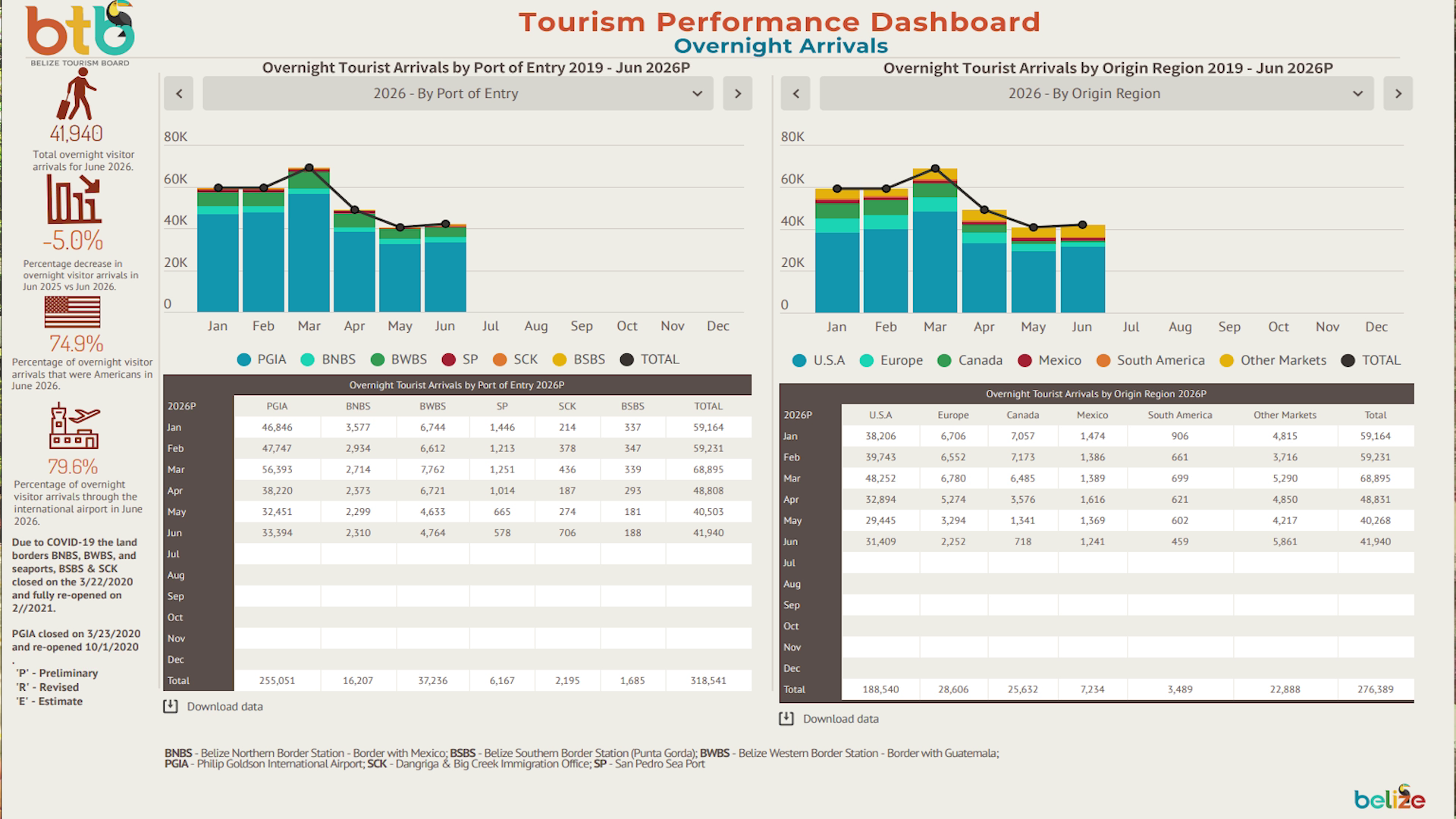
    Last week, one of the Caribbean’s most influential annual tourism industry gatherings came to a close on a note of collective optimism in San Pedro, Belize’s Ambergris Caye, after five days of robust collaboration and strategic exchange between regional and global tourism leaders.

    Organized around the forward-looking theme “Tourism in Full Color: Integrating Blue, Green, Orange and Beyond Economies into Sustainable Planning and Development”, the 2026 Sustainable Tourism Conference (STC 2026) brought together a diverse cross-section of tourism stakeholders from 30 countries around the world between April 26 and 30. Co-hosted by the Belize Tourism Board and the country’s Ministry of Tourism, Youth, Sports and Diaspora Relations, the event was designed as an open space for innovative thinking, cross-sector partnership, and solution-focused dialogue focused on shaping the future of travel across the Caribbean.

    The 350-plus delegates in attendance spanned every corner of the tourism ecosystem, from cabinet ministers and national tourism directors to senior policymakers, private sector investors, non-profit leaders, climate and sustainability researchers, and tourism students. Discussions centered on the most pressing challenges and transformative opportunities facing Caribbean tourism today: building climate resilience to protect vulnerable coastal destinations, safeguarding unique Indigenous and local cultural heritage for future generations, expanding economic empowerment for marginalized coastal communities, and unlocking accessible financing to scale up sustainable development projects across the region.

    Unlike traditional industry conferences that rely solely on closed-door panel discussions, STC 2026 blended high-level strategic dialogues with immersive on-site experiences. Delegates took part in hands-on field visits to Belize’s most iconic natural and cultural attractions, allowing them to see first-hand how community-led sustainability models work in practice, and connect abstract policy goals to on-the-ground impact. Throughout the entire event, a unifying message resonated across all sessions: the Caribbean region does not only hold the bold vision needed to reimagine global sustainable tourism — it already possesses the practical tools and local expertise needed to lead the world in this transition.

    Central to the conference’s “full color economy” framework was the focus on integrating interconnected economic sectors that drive inclusive, sustainable growth. Participants broke down silos between the blue (ocean-based), green (environmental), orange (cultural and creative), yellow (small business), purple (gender equity), silver (senior tourism), and black (Indigenous and Black diaspora-led) economies to develop concrete, actionable strategies that prioritize people and the planet alongside profit. A core priority throughout the event was turning idea-sharing into tangible progress, with a shared emphasis on cross-border partnership, effective on-the-ground implementation, and measurable, trackable sustainability outcomes.

    The conference concluded with the Caribbean Tourism Organization’s annual Sustainable Tourism Awards Ceremony, an event that celebrates outstanding environmental stewardship and sustainable innovation across the Caribbean region. The awards recognize excellence across four core categories: Excellence in Sustainable Tourism, Destination Stewardship and Resilience, Community-Based Tourism, and Regenerative Tourism. In a highlight moment for the host nation, Belize’s Turneffe Flats took home the top honor in the prestigious Excellence in Sustainable Tourism category.

    STC 2026 was held at Belize’s Grand Caribe and Sunset Caribe resorts, and marks a key milestone in the Caribbean’s collective push to position the region as a global leader in equitable, regenerative tourism development.

  • ‘NGC part of all cross-border talks’

    ‘NGC part of all cross-border talks’

    A week of rapid diplomatic and commercial developments in cross-border energy cooperation between Trinidad and Tobago and Venezuela has clarified the role of the National Gas Company of Trinidad and Tobago (NGC), with Chairman Gerald Ramdeen confirming that the state-owned entity is a core partner in every cross-border natural gas exploration and development agreement active in Venezuelan waters.

    Ramdeen made the remarks Friday during a gas supply agreement signing ceremony hosted at Port of Spain’s Hyatt Regency, addressing widespread public interest sparked by Thursday’s formalization of a strategic partnership between British energy giant BP and Venezuela’s acting President Delcy Rodriguez. He told reporters that technical discussions between BP’s London-based leadership team had already advanced to advanced stages by Wednesday, focused specifically on the cross-border Manakin-Cocuina field, adding he was legally barred from disclosing further confidential details of the ongoing negotiations.

    Despite public speculation and conflicting commentary around the projects, Ramdeen emphasized that development work for three key assets — Dragon, Manakin-Cocuina and Loran-Manatee — is progressing at maximum speed, with the shared goal of delivering gas to Trinidad and Tobago’s processing infrastructure as quickly as possible. He confirmed that NGC is partnering on all three projects alongside BP Trinidad and Tobago (bpTT) and global energy major Shell.

    Addressing competition for rights to the Loran field from other market players, Ramdeen asserted that all cross-border gas from the region must ultimately flow to Trinidad and Tobago for commercialization. “No part of these gas reserves can be turned into marketable product without access to Trinidad and Tobago’s infrastructure. That is the only existing facility in the region capable of monetizing these resources, so all parties have no choice but to route development through our country,” he explained.

    One major barrier to the projects had been the revocation of U.S. Office of Foreign Assets Control (OFAC) specific licenses for the Dragon and Manakin-Cocuina initiatives, but Ramdeen noted that a broader general license has since been issued that permits all market participants to pursue operations in Venezuela. He added that this updated regulatory framework came about in large part due to advocacy from NGC: when the first round of general licenses was issued, only a small set of pre-named entities were permitted to conduct energy business in Venezuela, a restriction that has since been lifted to cover all qualified players.

    When asked about the upcoming government-led negotiation delegation to Caracas, Ramdeen confirmed that the Ministry of Foreign and Caricom Affairs holds full oversight of the diplomatic process, and that he has not yet been invited to join the delegation by Minister Sean Sobers. He stressed that from NGC’s operational perspective, technical work is moving forward without delay, with joint teams from the Ministry of Energy, NGC and each project partner already advancing exploration and planning. Ramdeen predicted that tangible progress on the projects will become publicly visible in the coming weeks and months, demonstrating how much work has already been completed behind the scenes.

    He added that NGC holds daily and weekly discussions with all joint venture partners involved in cross-border gas projects, including the Dragon field, which is located within Venezuelan territorial waters. “These cross-border reserves deliver mutual benefits to both the people of Venezuela and the people of Trinidad and Tobago. NGC, working alongside the Ministry of Energy, the government and Cabinet under the leadership of the Prime Minister, is prioritizing bringing these resources to market as quickly as possible on the most favorable terms for all stakeholders,” Ramdeen said.

    The NGC chairman also addressed ongoing confidential talks with Canadian fertilizer giant Nutrien, noting that negotiations have reached a critical juncture. He declined to share additional details to avoid creating unsupported public expectations, while confirming that discussions have proceeded positively to date. Ramdeen did, however, raise concerns over a breach of confidentiality: unapproved public statements about the talks, which did not come from either NGC or Nutrien, have disrupted the process, as both parties have committed to negotiating in a confidential environment to advance discussions effectively.

    The Energy Chamber of Trinidad and Tobago later confirmed in an official release that BP and Venezuela had formally signed the strategic cooperation memorandum of understanding to develop the Cocuina-Manakin field. The agreement aims to leverage BP’s advanced technical expertise to unlock large natural gas reserves on Venezuela’s Deltana Platform, a development that is expected to strengthen Venezuela’s long-term energy independence and boost its role as a key regional energy supplier.

    The Cocuina portion of the field, part of the currently inactive Deltana Platform project on the Venezuelan side, extends across the maritime border into Trinidadian waters, where a BP subsidiary already operates the asset as Block 5b. In the announcement, Rodriguez framed the agreement as opening a new chapter in Venezuela’s diplomatic and commercial relations with the international community, marking the reopening of a BP representative office in Caracas that will be led by a Venezuelan national.

    “BP’s return is a clear demonstration of the future we aim to forge for Venezuela and its international energy relations,” Rodriguez said, calling for mutually beneficial cooperation to drive development and improve living standards for the Venezuelan people. The agreement is part of a broader trend of Venezuela reopening its oil and gas sector to foreign investment: in recent months, the country has signed new exploration and development deals with other major international energy firms, including Italy’s Eni and Spain’s Repsol.

    Reuters also reported that BP’s Executive Vice President for Gas and Low Carbon Energy William Lin confirmed the company is eager to partner with Venezuela on exploration of the Loran area, as well as other initiatives including gas commercialization. Global energy major Shell has also publicly confirmed its interest in developing the Loran field.