作者: admin

  • Hongarije: Peter Magyar beëdigd als nieuwe premier

    Hongarije: Peter Magyar beëdigd als nieuwe premier

    On a historic Saturday in Budapest, Peter Magyar, leader of Hungary’s center-right Tisza Party, took the official oath of office as the country’s new prime minister, bringing an end to Viktor Orbán’s 16-year incumbency. Magyar’s decisive victory in the April 12 parliamentary elections secured his party a constitutional supermajority in the 199-seat National Assembly, where Tisza now holds 141 seats, clearing a path for sweeping political and institutional change after years of national stagnation.

    The 45-year-old new leader used his inaugural address to call on Hungarian citizens to step through “the gate to regime change,” promising Hungarians not just a new cabinet, but an entirely transformed governing system. “The Hungarian people have given us a mandate to put an end to decades of aimless drifting,” Magyar told lawmakers and assembled guests during the ceremony in Budapest’s parliament building.

    Magyar’s election win has been met with broad positive reaction both from domestic voters and international business communities. In immediate response to the transfer of power, the Hungarian forint climbed to its highest level against the euro in four years, while domestic bond yields dropped in a show of market confidence. Post-election public opinion polls have also recorded growing public support for the Tisza Party as the new administration takes office.

    Despite the early wave of optimism, Magyar inherits a set of pressing economic and geopolitical challenges that will test his new government from its first days in office. While Hungary has barely pulled out of a prolonged period of economic stagnation, it now faces new headwinds driven by soaring energy costs spurred by the ongoing Middle East conflict. As a heavily import-dependent Central European economy, these price pressures pose a significant risk to growth. Orbán’s pre-election spending spree has also left public finances in a fragile state: recent data shows that by April, Hungary’s budget deficit had already hit 71% of the full-year target, with Magyar warning that the deficit could reach 7% of gross domestic product by the end of the calendar year.

    One of the new prime minister’s top policy priorities is resetting Hungary’s Western alignment, a sharp reversal from Orbán’s administration, which increasingly tilted toward the Kremlin and openly opposed key EU initiatives supporting Ukraine amid its ongoing war with Russia. Magyar has made clear that restoring productive relations with Brussels is a core goal of his government.

    Domestically, Magyar has laid out plans for sweeping reform of Hungary’s public media sector, already announcing a temporary suspension of state media news broadcasts. He justified the move by noting that state outlets under Orbán consistently favored the former prime minister and effectively shut out critical political voices. He has also launched an ambitious nationwide anti-corruption program, and has set an aggressive deadline of May 25 to reach a deal with EU leaders to unlock billions of euros in frozen bloc funding, resources that Magyar calls critical to rebooting economic growth and stabilizing Hungary’s public finances.

  • Caribbean journalists invited to explore the issue of deep-sea mining through regional media fellowship

    Caribbean journalists invited to explore the issue of deep-sea mining through regional media fellowship

    As global momentum for expanding deep-sea mining operations accelerates, regional media voices in the Caribbean are being called on to deepen their reporting of this undercovered issue — one that experts warn could reshape the future of the region’s marine ecosystems, local economies, and coastal-dependent communities for decades to come.

    According to environmental reporting initiative Climatetracker.org, the Caribbean currently stands at a critical policy juncture. Decisions about deep-sea mining regulation and exploration that are being finalized in the coming months are projected to determine the health and accessibility of Caribbean marine resources for generations, making robust public awareness of the issue more urgent than ever.

    Despite the far-reaching stakes of deep-sea mining development, meaningful coverage of the topic remains scarce across Caribbean media outlets. Existing reporting often lacks the localized context, regional background, and community-focused framing needed to properly inform Caribbean audiences and encourage public engagement in decision-making processes, organizers of the new initiative note.

    To close this critical information gap, three regional environmental organizations — the Jamaican Environment Trust, RISE UP for the Ocean, and EcoVybz Environmental Creatives — have partnered to launch the Caribbean Deep Sea Mining Media Fellowship, a targeted capacity-building program for regional journalists.

    The fellowship is open to applications from all Caribbean-based media professionals, including full-time staff reporters, independent freelance journalists, and early-career media creators who focus on environmental, climate, and sustainable development beats.

    Program organizers designed the initiative specifically for journalists eager to produce high-impact, community-centered storytelling while strengthening their specialized reporting skills on a topic growing steadily in importance for the entire Caribbean region.

    As a fully virtual program, the fellowship will select 15 participating journalists to receive specialized training that builds nuanced understanding of deep-sea mining activities, their potential ecological risks, and their socio-economic impacts on Caribbean communities. Beyond training, fellows will develop and publish an original story on a deep-sea mining-related topic of their choice, tailored to their preferred media platform, and will have the opportunity to appear in a collaborative podcast episode exploring the issue’s regional relevance.

    The program also connects participating journalists with a network of regional subject-matter experts and trusted local sources, while providing ongoing one-on-one mentorship, editorial guidance, and logistical support throughout the duration of the fellowship. Selected fellows will also receive a monetary stipend to compensate them for their work on their published deep-sea mining story. Applications for the fellowship are open now via the program’s official portal.

  • Police find gun, ammo, suspected cocaine at murder victim’s home

    Police find gun, ammo, suspected cocaine at murder victim’s home

    A shocking fatal shooting has rocked the Caribbean nation of St. Vincent and the Grenadines, where a 37-year-old former national football player was gunned down in a public street Friday night. Now, law enforcement officials have launched a wide-ranging investigation into the killing, which has pushed the country’s 2025 homicide total to 15, marking a disturbing surge in violent crime in recent weeks.

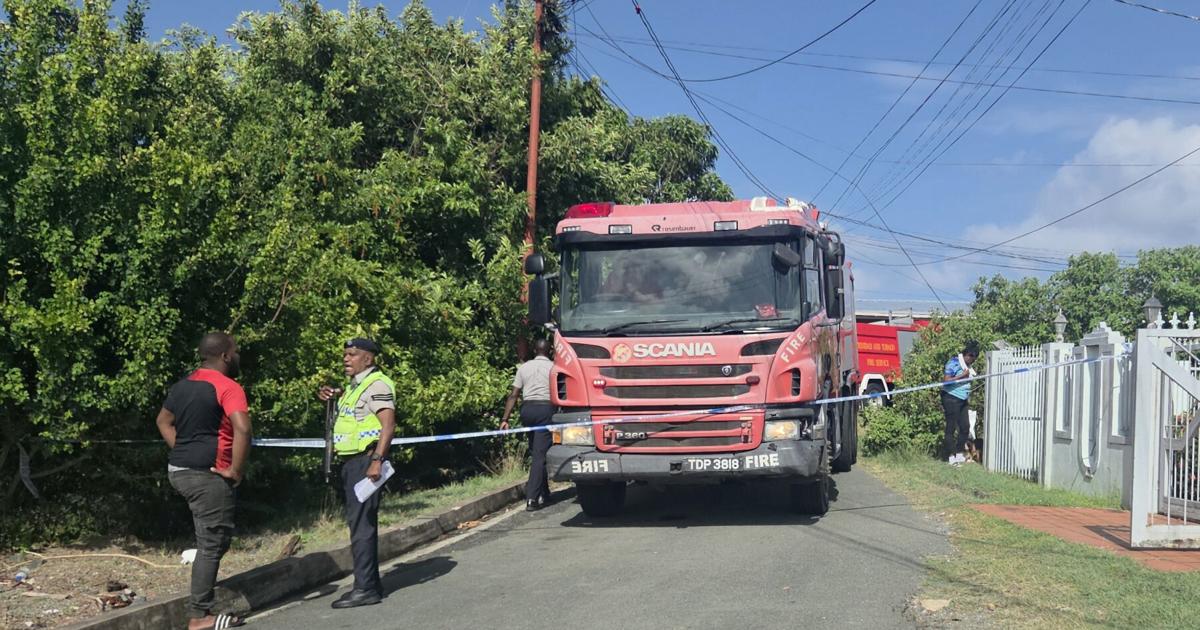
    According to official police statements released Saturday, emergency dispatchers received the first report of the shooting at approximately 8:06 p.m. local time. First responding officers rushed to the incident site, located just steps from the local Anglican Church in the Calliaqua district, where they found Keith “Devon” James, a long-time resident of Golden Vale, Calliaqua, lying unresponsive on the left side of the roadway.

    Witness accounts collected by investigators suggest James had just returned to his neighborhood and was exiting his vehicle when the gunman opened fire. Local residents have told investigators they spotted an unregistered dark-colored vehicle speeding away from the area immediately after the shots rang out, leading to widespread speculation that the killing was a premeditated attack, with the suspect lying in wait for James before striking.

    A medical examiner who arrived at the scene shortly after the shooting pronounced James dead at the location. Forensic investigators working the case recovered five spent 9mm shell casings from the road and surrounding area, evidence that will be used to match against weapons recovered as part of the investigation. In a subsequent search of James’s private residence, law enforcement seized a Glock pistol, 10 live 9mm rounds of ammunition, an extra pistol magazine, a large cache of cash that included both local and foreign currency, and an undetermined amount of a controlled substance that field testing suggests is cocaine.

    In their official statement, police noted that all seized items are currently undergoing forensic examination as part of the active investigation, and investigators have not yet confirmed what connection, if any, the recovered materials have to the fatal shooting. “Investigators are pursuing several lines of inquiry and are examining all relevant circumstances that may assist in determining the motive and identifying the person or persons responsible,” the statement read.

    A post-mortem examination is scheduled to take place in the coming days to formally confirm the cause and manner of James’s death. The Royal St. Vincent and the Grenadines Police Force has extended formal condolences to James’s family and loved ones as they navigate this tragedy, while also urging the general public to avoid spreading unconfirmed speculation about the case. Officials asked that community members allow the investigative process to proceed unimpeded.

    Police are calling on any member of the public with information related to the shooting, no matter how small it may seem, to come forward to assist with the investigation. Tips can be submitted to the Criminal Investigations Department/Major Crimes Unit at 456-1810, Police Control at 457-1211, the emergency police line at 911 or 999, or any local police precinct. All submitted information will be kept completely confidential, per police policy.

    James’s killing marks a grim milestone for the small island nation: it pushes the total number of homicides recorded in St. Vincent and the Grenadines so far this year to 15, and James is already the fourth person to be killed by gunfire in the country in less than a month.

  • Global leaders reaffirm commitment to safe and orderly migration at UN forum

    Global leaders reaffirm commitment to safe and orderly migration at UN forum

    At the conclusion of the second International Migration Review Forum (IMRF) hosted at United Nations Headquarters in New York, national governments from every region of the globe have finalized four days of intensive negotiations on cross-border migration challenges and shared opportunities, unanimously approving a new Progress Declaration to guide collective action over the coming years.

    Negotiated directly by all participating UN Member States, the new declaration formally reaffirms the international community’s shared commitment to the Global Compact for Safe, Orderly and Regular Migration (GCM), the landmark non-binding global agreement on migration first adopted in 2018, according to an official statement released by the International Organization for Migration (IOM). Beyond restating this core commitment, the declaration takes stock of all progress made in implementing the GCM since the first review forum, and outlines clear priority action areas for member states through 2030. Key priorities highlighted in the text include upholding fundamental labor rights for migrant workers, expanding access to official legal identity documentation for all migrants, creating more safe and regular migration pathways, reducing preventable deaths along migration routes, and strengthening cross-border collaboration between nations connected by major migration corridors.

    H.E. Annalena Baerbock, who presided over the forum in accordance with existing UN General Assembly resolutions, emphasized that migration is a universal reality that touches every nation in some capacity. “Migration is an inevitable human reality. The question is not whether migration is good or bad. The question is whether we manage it well, and manage it together. As every country today is either a country of origin, transit, or destination – and most times even all three at once,” Baerbock told delegates. She added that coordinated international cooperation remains indispensable to tackling migration-related challenges, noting that “No state can manage migration alone. It requires cooperation, it requires international regulation. And that is precisely the purpose of the Global Compact. This is precisely the purpose of multilateralism.”

    Held from May 5 to 8, this second IMRF marked the second global progress review of the GCM, a voluntary agreement designed to address all forms of migration, guided by ten principle aligned with international law. Months before the forum opened, participating member states submitted 90 voluntary national reviews of their own GCM implementation efforts – a 30 percent increase compared to submissions ahead of the first forum in 2022, with submissions from every global region. Forum organizers note that these reviews represent the most detailed global snapshot of national migration compact implementation compiled to date.

    Amy Pope, Director General of the International Organization for Migration and Coordinator of the UN Network on Migration, highlighted a key takeaway from the forum’s deliberations: that national sovereignty and the human rights of migrants do not have to be mutually exclusive. “Every sovereign state has the right to set its own migration priorities. Every migrant has the right to be treated with dignity. This Forum showed that these two truths are not in tension – and that when countries work together, both can be upheld,” Pope said.

    In a nod to the GCM’s inclusive whole-of-society approach, organizers held an informal multi-stakeholder pre-forum hearing on May 4, one day ahead of the official plenary opening. The hearing brought together a diverse cross-section of stakeholders beyond national government delegates, including migrant representatives, civil society organizations, diaspora and faith-based groups, local government officials, private sector leaders, trade union representatives, parliamentarians, independent human rights institutions, delegates from the International Red Cross and Red Crescent Movement, academic researchers, media representatives, and UN partner agencies.

    Over the four days of official forum proceedings, delegates joined roundtable discussions, policy dialogues, and general plenary debates focused on advancing the agreed 2030 migration priorities, with conversations shaped by earlier consultations held at local, national, and regional levels across the globe. In addition to the Progress Declaration, the forum also saw a dramatic expansion of concrete commitments to support global migration action. Since December 2021, governments, UN agencies, and allied partner organizations have contributed more than 450 individual pledges to advance GCM goals, compared to just 158 pledges recorded ahead of the first review forum. These pledges cover a wide range of initiatives, from improving working conditions for migrant workers and scaling up digital civil registration systems to supporting nations hosting large displaced migrant populations and contributing funding to the Migration Multi-Partner Trust Fund established under the GCM framework.

    The United Nations Network on Migration, a coalition of 39 UN entities coordinated by IOM, has continued to support national governments in their GCM implementation efforts, providing support for resource mobilization, capacity building, and the development of national action plans. The next full International Migration Review Forum is scheduled to convene in 2030, in line with the GCM’s review timeline.

  • Short-term shipments, long-term systems to tackle Grenadines water woes

    Short-term shipments, long-term systems to tackle Grenadines water woes

    A crippling dry season has pushed St. Vincent and the Grenadines into a widespread water crisis, with the island chain of the Grenadines facing particularly acute shortages that have sparked public scrutiny of the current administration’s response. In a series of public communications released in early May 2026, senior government officials have pushed back against criticism, defended their ongoing emergency interventions, and laid out a timeline for permanent infrastructure upgrades while blaming past leadership for long-unresolved structural gaps in the region’s water systems.

    The current drought has impacted every part of the nation, forcing the Central Water and Sewerage Authority (CWSA) to implement sweeping water rationing measures on the main island of St. Vincent, which operates a municipal water network. Conditions are far more dire across the Grenadines, a collection of smaller southern islands that lack natural rivers, streams, and any established municipal water distribution system. Most residents rely on private household cisterns to store rainwater, and current supplies have dropped to critically low levels or run completely dry in many communities. The severity of the situation was first brought to wider public attention through independent commentaries submitted to local media outlets, prompting the government to issue its formal response.

    Addressing the public in an official video published by the state-run Agency for Public Information on May 8, Terrance Ollivierre — Member of Parliament for Southern Grenadines and Minister of Grenadines Affairs — confirmed that emergency water shipments from St. Vincent to the Grenadines have been ongoing, with scheduled weekly voyages planned through the dry season. “A boat will be going down to the Grenadines on Saturdays and stopping in Mayreau and Union Island,” Ollivierre stated. After arriving on each island, water is loaded onto CWSA trucks and other civilian vehicles for final distribution to community drop-off points, an arrangement that will continue as long as dry conditions persist. Ollivierre noted that he has maintained regular coordination with CWSA leadership and Water Minister Daniel Cummings to prioritize the Grenadines’ needs, acknowledging that the crisis has reached emergency proportions in the island chain while stressing that the main island also faces its own water shortages. “We would do our best to make sure that both mainland and in the Grenadines… we get the water to the people that they need,” he said.

    Daniel Cummings, Minister of Health with formal oversight of the CWSA and a former CWSA manager himself, echoed Ollivierre’s comments, confirming that emergency sea shipments have been active for an extended period. He added that the core long-standing challenge in the Grenadines is not just water production, but the complete absence of a modern, piped distribution network to deliver water to households. The government’s planned infrastructure projects will address this gap by constructing elevated storage facilities and a full network of gravity-fed transmission mains that will bring running water directly to residences across the Grenadines. “There will be transmission and distribution mains on the islands of a comprehensive water distribution system, as you expect in a normal society,” Cummings said, expressing regret that previous administrations failed to move forward with these critical projects decades ago. He also urged all residents across the country, particularly on the mainland, to actively reduce water waste by fixing personal leaks and reporting broken infrastructure to the CWSA to stretch limited supplies through the dry spell.

    In a separate interview with local radio station Hot 97 FM, Senator Lavern King, a native of the southern Grenadine island of Canouan, outlined the government’s full policy roadmap, pushing back against claims that long-term improvements are moving too slowly. King explained that the current NDP administration, which took office in November 2025, has already allocated significant funding for Grenadines water infrastructure in its first national budget — so much so that opponents labeled it a “Grenadines-only budget” — moving beyond stopgap measures to plan for a permanent, island-wide water solution.

    In the short term, King confirmed weekly water shipments from St. Vincent will continue, and left open the possibility of increasing delivery volumes if needed. She also cited declining overall rainfall across the archipelago as a key driver of the current crisis, urging residents to practice conscientious water conservation. For the long term, the government is actively pursuing external financing to build multiple desalination plants across the Grenadines, which will create a locally sustainable source of fresh water independent of rainfall.

    King pushed back against critics demanding immediate completion of these multi-year projects, noting that large-scale, permanent infrastructure requires rigorous environmental studies, detailed design work, and professional project management to avoid costly mistakes. “Can you have a long-term plan implemented in five months? You cannot… because it’s impossible,” she said. She contrasted the current administration’s methodical approach with what she described as haphazard, vote-focused planning by the previous government, which she claimed rolled out rushed projects right before elections that ultimately failed and required costly repairs later, resulting in widespread public funds waste. King emphasized that water access has been a persistent challenge in the Grenadines for generations, and that the current government is committed to delivering a lasting solution rather than short-term political gains.

    Cummings added that the government remains committed to moving the full infrastructure package forward as quickly as possible, bringing reliable running water to every community across the Grenadines for the first time in the nation’s history.

  • PNCR says refused to give up part of Essequibo to Venezuela

    PNCR says refused to give up part of Essequibo to Venezuela

    GEORGETOWN, Guyana – In a press conference held Friday, Aubrey Norton, leader of Guyana’s main opposition party People’s National Congress Reform (PNCR), issued a forceful rebuttal of recent claims raised before the International Court of Justice (ICJ) that his party’s 1970s government considered ceding a portion of the disputed Essequibo Region to Venezuela to resolve the long-running border conflict between the two nations.

    Norton stressed that the allegation carried by Venezuela’s legal team at the ICJ is entirely unfounded. “This is untrue. When Venezuela made the proposal, it was rejected out of hand by the then PNC government,” Norton told reporters. The border dispute centers on the validity of the 1899 Arbitral Tribunal Award, which established the current boundary between Guyana and Venezuela and grants Guyana sovereignty over the 159,000-square-kilometer Essequibo Region, rich in offshore oil and mineral resources. Venezuela has for decades rejected the 1899 ruling and claims full sovereignty over the territory.

    Venezuela’s lead legal representative before the ICJ, international law professor Andreas Zimmermann, told the UN court last week that during 1977 bilateral negotiations, then-Guyanese foreign minister proposed a border adjustment at Punta Playa that would shift the existing borderline from its northwest orientation to a northeast route – a change that would cede territory to Venezuela. Zimmermann also told the court that during 1995 talks, both parties explored creative settlement options that included returning partial control of the disputed territory to Venezuela, including a potential lease arrangement that would leave Guyana administering some portions. He added that former Guyanese President Janet Jagan reaffirmed in an August 1998 letter that the UN Good Officer Process established under the 1966 Geneva Agreement was intended to explore all possible pathways to a negotiated settlement.

    Beyond refuting the 1970s concession claim, Norton pushed back against the Guyanese government’s current approach to the dispute, saying while he welcomes U.S. Secretary of State Marco Rubio’s recent pledge to defend Guyana from Venezuelan aggression, Guyana should have pursued a far more robust, proactive independent diplomatic strategy long before now. The comment comes amid Venezuela’s continued refusal to recognize the ICJ’s jurisdiction to rule on the validity of the 1899 award, a stance that has raised regional and international concerns over potential escalation.

    Norton outlined that a comprehensive Guyanese strategy should combine public education, targeted political influence, and proactive economic diplomacy that leverages the country’s valuable natural resources to build global support for its sovereignty claim, rather than relying on shallow transactional engagement with international partners. He also called for long-overdue formal recognition of Rashleigh Jackson, Guyana’s foreign minister during the 1970s talks, who Norton says was critical to securing resources for foundational research that underpins Guyana’s legal case. “It is unfair, and it should be rectified,” Norton said of the lack of public recognition for Jackson’s work.

    Joining the call for a more proactive public outreach strategy was Dr. David Hinds, co-leader of the Working People’s Alliance (WPA), who urged the Guyanese government to launch a large-scale, structured public education campaign to reinforce national awareness that Essequibo is an integral part of Guyana. Hinds noted that even at this late stage, an aggressive social media-focused campaign could not only educate Guyanese citizens about their country’s sovereign claim, but also reach audiences in Venezuela and across the Caribbean Community (CARICOM) to build broader regional and international understanding of Guyana’s position.

    Hinds added that such public outreach would also create grassroots pressure on the Guyanese government to prioritize protecting the country’s territorial integrity and embed a clear national understanding of the dispute across all segments of society, as tensions over the resource-rich region remain at a decades-long high.

  • Grenada Pavilion: Embracing wider Caribbean experience

    Grenada Pavilion: Embracing wider Caribbean experience

    As Grenada prepares to take part in its ninth consecutive edition of the 61st Venice Biennale, Dr. Susan Mains, commissioner of the Grenada Pavilion, opens up about the journey, the milestone, and a groundbreaking new direction for the small island nation’s presence at one of the world’s most prestigious international art events. For Mains, this participation is far more than a symbolic exhibition slot—it is a years-long strategic effort to build cross-border connections with Italy and the global arts community, strengthening the cultural and creative capacity of a small island developing state. Backed by official endorsement and support from Grenada’s Minister of Culture, the project has steadily grown into the transformative initiative it represents today.

    Nine consecutive participations are more than a numerical milestone: they stand for unbroken continuity, steady growth, and a continuously evolving artistic vision for the Grenada Pavilion. Over decades of engagement with the Biennale, the curatorial and leadership team has come to a core realization: Grenada’s cultural narrative does not exist in isolation. It is deeply interwoven with the shared histories, natural rhythms, and collective aspirations of all Caribbean neighboring nations. In line with this understanding, the 2026 pavilion will mark a deliberate, transformative shift in its mission.

    Moving forward, the Grenada Pavilion will expand its scope to embrace the entire Caribbean region, reimagining the Caribbean Sea not as a dividing barrier between islands, as it was often framed in colonial histories, but as a unifying connector that ties communities together—echoing the cross-island networks of the indigenous Kalinago people who navigated these waters for centuries. What was once a platform solely for Grenadian artistic voices will now open its doors to collaborative work, shared storytelling, and celebration of the extraordinary cultural diversity that defines the Caribbean. From the tiniest micro-island to the region’s largest sovereign nations, every artistic voice carries a unique cadence, and together they form a cohesive, powerful chorus that demands global attention. For this year’s edition, artists from across the region have joined the roster: Russell Watson of Barbados, Edward Bowen of Trinidad, and Grenadian artists Lilo Nido, Christ Mast, Jeverson Ramirez, and Arthur Daniel round out the list of contributors, each adding their unique perspective to deepen and enrich the collective narrative.

    The thematic core of the pavilion is anchored in research and writing by Asher Mains, MFA, who draws heavily on the work of Edouard Glissant, the iconic Martinican philosopher and writer whose thought was shaped by his dual experience of Caribbean lived reality and French intellectual tradition. This layered history—rooted in Indigenous Caribbean heritage, shaped by European colonialism, and enriched by the forced migration of African peoples and the arrival of Southeast Asian communities—has created a dynamic cultural synthesis that makes the Caribbean a global hotbed of creative innovation and cultural richness, a legacy the pavilion seeks to center.

    Mains emphasizes that this collaborative model is not rooted in competition, a core value that sets the pan-Caribbean project apart from the often individualistic, comparative framing of national pavilions. The goal is not to outperform other participating nations or artists, but to stand in solidarity: to lift each other up, exchange knowledge, learn from one another, and celebrate shared cultural heritage. The region’s strength, Mains argues, does not come from outcompeting one another, but from deep connection. When one Caribbean story is told, it resonates across every island and coastline of the region, and it belongs to all. This year’s Biennale marks a historic turning point for Caribbean art: alongside the reimagined Grenada Pavilion, national pavilions will also be hosted by The Bahamas, Haiti, and Cuba, while dozens of additional Caribbean artists are featured in the central Biennale exhibition curated by Koyo Kouoh. Mains notes that Kouoh’s inclusion of Caribbean creators in her *Minor Keys* curatorial framework has brought unexpected, graceful new layers to the central exhibition, highlighting the underrecognized power of the region’s artistic output.

    The Grenada Pavilion’s evolution has been shaped over multiple Biennale cycles by its long-running collaboration with curator Daniel Radini Tedeschi and his team, who have helped turn the project’s long-held aspirations into reality. Every sponsor and supporter that has backed the initiative has aligned with its core vision: a world built on peace, where art acts as a harbinger of greater connection and collective understanding.

    For Mains, serving as commissioner for this milestone participation is both a profound honor and a weighty responsibility. Moving forward, the Grenada Pavilion proceeds with clear intention, radical unity, and an unshakable belief in the power of collective artistic presence. While Grenada walks into this 9th participation with well-earned national pride, its greatest defining feature moving forward is radical openness: the pavilion is no longer a solo national venture, but a core part of a vibrant, united Caribbean artistic family. Together, the region’s artists move forward, together—forward ever.

  • LISTEN: Shugy says voters equated Pringle to a man who can’t drive

    LISTEN: Shugy says voters equated Pringle to a man who can’t drive

    In recent political commentary that has sent ripples through local electoral circles, prominent political figure Shugy has shared unfiltered insights into how the electorate perceives one controversial candidate: Pringle. According to Shugy’s on-the-record remarks, delivered during a public interview that has since drawn widespread attention, a large cross-section of voters have drawn a striking metaphor to sum up their impression of Pringle – they see him as a man simply incapable of getting behind the wheel and driving competently.

    This blunt analogy is far more than a throwaway insult; political analysts interpret it as a damning judgment on Pringle’s ability to steer policy, lead the community, and deliver on the promises he has laid out on the campaign trail. For voters, the comparison taps into a deeply held frustration: just as an unqualified driver puts everyone on the road at risk, they argue, a leader who lacks the competence, decisiveness, and vision to govern would put the entire constituency’s interests in jeopardy.

    The revelation comes at a critical juncture in the lead-up to upcoming local elections, where Pringle has been fighting to shore up support amid slipping poll numbers and growing criticism of his past performance in office. Shugy’s comments have amplified already existing doubts among undecided voters, and have been seized on by opposing political camps to underscore their own arguments that Pringle is unfit for office. While Pringle’s campaign has yet to issue an official response to the remarks, political insiders expect that the candidate will move quickly in the coming days to push back against the narrative and attempt to rebuild his image with voters before election day.

    Political observers note that this kind of plain-spoken voter metaphor is not uncommon in modern electoral politics, where voters often rely on simple, memorable comparisons to sum up complex judgments about candidates. In this case, the driving analogy has resonated because it connects directly to a core voter priority: the desire for a steady, capable hand at the helm of government. Whether this perception will hold through to election day remains to be seen, but it has already reshaped the narrative of the campaign and put Pringle on the defensive.

  • Court Delays Asot Michael Will Dispute Pending Handwriting Expert

    Court Delays Asot Michael Will Dispute Pending Handwriting Expert

    A high-profile estate dispute centered on the late former Antiguan politician Asot Michael has been paused until May 20, as legal teams on both sides work toward resolving disagreements over appointing an independent handwriting expert to verify the authenticity of a contested last will and testament.

    Presiding over the case, Acting High Court Judge M.E. Birnie Stephenson issued a formal order requiring both factions of Michael’s family to file detailed documentation of their candidate expert witnesses by the next hearing. The required submissions include each candidate’s scheduling availability, projected service fees, and confirmation of their willingness to take on the assessment role.

    Michael, who previously served as the Member of Parliament for St Peter and held a cabinet minister position in the Antiguan government, was discovered deceased at his Dry Hill residence in November 2024. At the center of the legal conflict is a will dated March 2021, which is being contested by Michael’s only son, Nigel Michael, and upheld by Michael’s two sisters, Teresa-Anne Michael and Soraya Michael.

    Represented by attorneys Hugh Marshall and Chantal Marshall, Nigel Michael has advanced two core claims against the 2021 will: first, he alleges the document is a deliberate forgery, and second, he claims his father suffered from impaired mental capacity caused by alcohol intoxication at the time the will was signed. In response, the sisters, whose legal team is led by Dr Errol Cort, Alketz Joseph and Jada Cort, have categorically denied all of Nigel’s accusations.

    Court records confirm that while both sides acknowledge the necessity of a handwriting analysis to resolve the authenticity question, they have failed to reach a consensus on which expert should conduct the examination. The sisters raised formal objections to the expert candidate put forward by Nigel Michael, Beverly East, citing unsubstantiated concerns that the expert could hold implicit bias in favor of Nigel’s position.

    Judge Stephenson ultimately rejected the bias allegation against East, ruling that the claimants had not presented any concrete evidence to support the claim. The justice emphasized that serious accusations of expert bias require a “clear and cogent basis” that was absent in this instance. The judge also issued criticism toward Nigel Michael’s legal team, faulting them for failing to conduct appropriate prior consultations with the opposing side before nominating their candidate, a misstep that undermined efforts to select a mutually agreed expert.

    In a final ruling to move the case forward, the court mandated that a single jointly appointed expert must be selected to conduct the analysis. It also ruled that all associated costs and expenses for the expert’s work will be split equally between the two disputing parties.

  • IMF Warns Skills Shortages Could Slow Antigua and Barbuda’s Economic Growth

    IMF Warns Skills Shortages Could Slow Antigua and Barbuda’s Economic Growth

    The International Monetary Fund (IMF) has issued a cautious assessment of Antigua and Barbuda’s economic trajectory, flagging persistent labor and skills gaps alongside limited domestic capacity as key headwinds that could dampen long-term growth even as the nation continues to record solid near-term expansion.

    In its concluding statement following the latest Article IV consultation — the IMF’s regular annual economic health check — the organization emphasized that risks to the Caribbean nation’s outlook remain skewed toward the downside. These risks stem from a mix of persistent global economic uncertainty and domestic structural bottlenecks that limit the country’s ability to capitalize on growth opportunities.

    Among the most pressing domestic challenges identified by IMF executive directors are widespread labor and skills shortages. The organization warned that if these gaps are left unaddressed, they will act as a persistent drag on sustainable development. Directors urged Antigua and Barbuda’s government to prioritize tackling these shortages as a core component of broader policy reforms designed to boost national competitiveness and lay the groundwork for robust long-term economic expansion.

    Beyond addressing workforce gaps, the IMF called for targeted structural reforms to lift overall productivity and improve transportation and digital connectivity, two pillars that underpin the country’s vital trade and tourism sectors. Key policy recommendations put forward by the organization include streamlining inefficient port and customs clearance procedures to reduce trade frictions, and adopting a more disciplined, prioritization-focused approach to public infrastructure investment to ensure resources deliver maximum economic impact.

    The IMF’s warning comes amid positive near-term economic data for the dual-island nation. The organization projects that Antigua and Barbuda will record a 3% real GDP growth rate in 2025, with expansion largely driven by sustained strength in the construction sector even as tourism output grows at a slower pace than previously expected.

    The report also noted encouraging near-term macroeconomic trends: total employment has now fully recovered to pre-COVID-19 pandemic levels, while headline inflation has cooled dramatically to 1.4% in 2025, a sharp decline from the elevated levels seen in recent years.

    While the IMF highlighted multiple downside risks to the outlook, it also emphasized that upside potential remains available. If authorities implement the recommended productivity-enhancing reforms, strengthen connectivity, and see a rebound in global tourism demand, Antigua and Barbuda can build a more resilient and faster-growing economy over the medium term.