作者: admin

  • IMF Warns Skills Shortages Could Slow Antigua and Barbuda’s Economic Growth

    IMF Warns Skills Shortages Could Slow Antigua and Barbuda’s Economic Growth

    The International Monetary Fund (IMF) has issued a cautious assessment of Antigua and Barbuda’s economic trajectory, flagging persistent labor and skills gaps alongside limited domestic capacity as key headwinds that could dampen long-term growth even as the nation continues to record solid near-term expansion.

    In its concluding statement following the latest Article IV consultation — the IMF’s regular annual economic health check — the organization emphasized that risks to the Caribbean nation’s outlook remain skewed toward the downside. These risks stem from a mix of persistent global economic uncertainty and domestic structural bottlenecks that limit the country’s ability to capitalize on growth opportunities.

    Among the most pressing domestic challenges identified by IMF executive directors are widespread labor and skills shortages. The organization warned that if these gaps are left unaddressed, they will act as a persistent drag on sustainable development. Directors urged Antigua and Barbuda’s government to prioritize tackling these shortages as a core component of broader policy reforms designed to boost national competitiveness and lay the groundwork for robust long-term economic expansion.

    Beyond addressing workforce gaps, the IMF called for targeted structural reforms to lift overall productivity and improve transportation and digital connectivity, two pillars that underpin the country’s vital trade and tourism sectors. Key policy recommendations put forward by the organization include streamlining inefficient port and customs clearance procedures to reduce trade frictions, and adopting a more disciplined, prioritization-focused approach to public infrastructure investment to ensure resources deliver maximum economic impact.

    The IMF’s warning comes amid positive near-term economic data for the dual-island nation. The organization projects that Antigua and Barbuda will record a 3% real GDP growth rate in 2025, with expansion largely driven by sustained strength in the construction sector even as tourism output grows at a slower pace than previously expected.

    The report also noted encouraging near-term macroeconomic trends: total employment has now fully recovered to pre-COVID-19 pandemic levels, while headline inflation has cooled dramatically to 1.4% in 2025, a sharp decline from the elevated levels seen in recent years.

    While the IMF highlighted multiple downside risks to the outlook, it also emphasized that upside potential remains available. If authorities implement the recommended productivity-enhancing reforms, strengthen connectivity, and see a rebound in global tourism demand, Antigua and Barbuda can build a more resilient and faster-growing economy over the medium term.

  • Zwembad Parima investeert in modernisering en duurzaamheid

    Zwembad Parima investeert in modernisering en duurzaamheid

    One of Suriname’s most enduring community sports hubs, Parima Swimming Pool, marked a major milestone this Friday with the official inauguration of a brand-new pump room facility, a project designed to cement the venue’s long-term viability, cut operational costs, and advance its sustainability goals.

    The comprehensive upgrade represents a total investment of roughly $175,000 US dollars, encompassing far more than just the new pump infrastructure. Beyond the core pumping system, the organization has also upgraded water pipes and control valves, completed critical structural maintenance to on-site buildings, renovated public restroom facilities, and carried out full refurbishments of the pool basins and surrounding grounds.

    According to Parima’s board of directors, the facility’s new high-efficiency filtration systems are projected to cut chlorine consumption by between 40% and 50%, translating to approximately $20,000 US dollars in annual cost savings. Board leaders note these recurring savings will allow the organization to fund major future maintenance projects largely from its own operating revenue, reducing reliance on external funding.

    The opening ceremony drew a wide range of distinguished guests and stakeholders, including the Director of Sports Affairs Biervliet, Minister of Education Currie, representatives from supporting sponsors, former board members, local swimming schools, and other community partners. In his remarks at the event, Parima Board Chair Maurice Brahim reflected on the venue’s 65-plus year legacy as a core community institution, honoring the founding vision of Willem Campagne, who long advocated for swimming as a fundamental life skill accessible to all.

    Over decades of operation, Brahim explained, Parima has evolved far beyond a simple public swimming pool. It has become a intergenerational community space where generations of local residents learned to swim, athletes train and compete, and community members gather for social and recreational activity.

    The ceremony also highlighted the board’s advocacy for mandatory school swimming programs, with leaders expressing their hope that swimming instruction will soon be reinstated as a required component of the national school curriculum. Brahim emphasized that investing in swimming education delivers widespread public benefits: it supports athletic development, improves public health, reduces the risk of drowning, and advances equal opportunity for young people across all backgrounds.

    The official ribbon-cutting was carried out jointly by former Parima board member Karel Cotino and a young competitive swimmer from Ewald P. Meyer Lyceum, formally bringing the new pump room online. The board closed the event by extending formal gratitude to all sponsors and local businesses that contributed time, resources, and expertise to bring the upgrade project to completion.

  • EHS: Entertainment Hot Spot: Dominica Bouyon features in famous influencer’s video

    EHS: Entertainment Hot Spot: Dominica Bouyon features in famous influencer’s video

    This brief prompt invites users to access additional engaging content via the official Entertainment Hot Spot page. It opens with standard social media sharing options, including native sharing functions, the ability to tweet the content to a Twitter/X audience, share the post across other platforms, and pin the item for later access, before directing users to the page to browse more trending entertainment-focused posts.

  • CANU seizes Europe-bound cocaine in Corentyne

    CANU seizes Europe-bound cocaine in Corentyne

    In a major breakthrough against transnational drug trafficking, Guyana’s Customs Anti-Narcotic Unit (CANU) announced Saturday that it seized more than 45 kilograms of high-value cocaine and an illegal loaded firearm during a raid Thursday on a property in Springlands, Corentyne. Two individuals connected to the illicit shipment were taken into custody following the operation. Alongside the narcotics, which were packaged into 40 solid brick-shaped contraband units, CANU operatives recovered an Uzi submachine gun fully loaded with ammunition at the raid location. According to official estimates from the agency, the seized cocaine has a street value of approximately €1.575 million, equal to US$1.856 million, on European markets – a sharp contrast to its estimated GY$50 million value within Guyana. CANU confirmed the narcotics shipment was en route to consumer markets in Europe when the operation intercepted it. In an official statement released after the seizure, the agency emphasized that this successful operation underscores its unwavering commitment to dismantling cross-border drug trafficking networks, halting illicit drug consignments headed for global markets, and clearing dangerous illegal weapons from local communities. CANU officials added that intelligence-driven operational strategies and sustained collaborative partnerships with regional security partners continue to play an indispensable role in protecting Guyana’s national borders and upholding the country’s overall national security. The operation marks another key win for Guyanese security agencies working to stem the flow of illegal narcotics through the region to international consumer markets.

  • Surinamese, Guyanese arrested with Europe-bound cocaine in Corentyne- CANU

    Surinamese, Guyanese arrested with Europe-bound cocaine in Corentyne- CANU

    In a major breakthrough targeting transnational drug trafficking, Guyana’s Customs Anti-Narcotics Unit (CANU) announced Saturday that two men — one Surinamese national and one local Guyanese — have been taken into custody following the seizure of more than 45 kilograms of high-grade cocaine bound for European markets. The operation, carried out Friday in the border town of Springlands, Corentyne, also recovered a loaded Uzi submachine gun from the premises where 40 brick-shaped packages of cocaine were uncovered.

    CANU has publicly identified the detainees as 35-year-old Amrishkoemar Mathoera, the Surinamese suspect, and 32-year-old Ravindra Sanakumar, a Guyanese national. Law enforcement officials have calculated the street value of the seized contraband at approximately €1.575 million (equivalent to US$1.856 million) on the streets of Europe, while its estimated local value in Guyanese currency sits around GY$50 million.

    In an official statement following the operation, CANU emphasized that the successful bust underscores the agency’s unwavering dedication to dismantling cross-border drug smuggling networks. The agency noted that intercepting illicit drug shipments before they reach global consumer markets and removing unregistered illegal firearms from communities are core priorities for its work. CANU also reaffirmed that intelligence-driven operational strategies and coordinated regional cooperation between neighboring law enforcement agencies remain indispensable tools for securing Guyana’s land and maritime borders and upholding the country’s national security. No further details on upcoming legal proceedings or additional co-conspirators have been released as of Saturday’s update.

  • Fractieleiders roepen op tot herstel vertrouwen in parlement en versterking democratie

    Fractieleiders roepen op tot herstel vertrouwen in parlement en versterking democratie

    On May 9, Suriname marked a major milestone in its democratic history: 160 years since the founding of its first representative legislative body. At a special public session held to celebrate the anniversary, faction leaders from across the country’s major political parties delivered a shared, consistent call for greater integrity, expertise, national unity, and the restoration of public trust in the national parliament. Despite ideological differences between competing parties, a single unifying message ran through nearly every address: the National Assembly (DNA) must rebuild its connection to the Surinamese people and strengthen the country’s democratic constitutional order.

    Political leaders opened the session by reflecting on the 160-year evolution of Suriname’s people’s representation, tracing its origins back to the first meeting of the Colonial States in 1866. Alongside this historical reflection, representatives also offered a critical assessment of the DNA’s current performance and the growing challenges that Suriname’s democracy faces in the modern era.

    Acting faction leader Rossellie Coutinho, speaking on behalf of the National Democratic Party (NDP), emphasized that the parliament must urgently confront whether it still retains sufficient public confidence. Coutinho argued that honest self-reflection is a necessary step for the legislative body to evolve into a modern institution that genuinely embodies and represents the “sovereign will of the Surinamese people.” The NDP also highlighted the need for increased female participation in parliamentary governance.

    Asis Gajadien, faction leader of the Progressive Reform Party (VHP), outlined his party’s longstanding historical role in advancing democracy and the rule of law in Suriname. He warned that democracy is not an inherent, guaranteed outcome, requiring constant active defense to survive. For Gajadien, people’s representation should not be limited to parliamentary debates, but must deliver tangible, measurable improvements to the daily lives of Surinamese communities. He called for national unity and cross-community collaboration, putting collective interest above division and ethnic polarization.

    Jerrel Pawiroredjo, faction leader of the National Party of Suriname (NPS), drew attention to the growing vulnerability of democratic institutions across the globe. Citing ongoing wars, rising extremism, systemic racism, and widespread information manipulation as global threats, he stressed that Suriname must remain vigilant against risks to its own democratic constitutional order. Pawiroredjo added that core democratic principles — representative governance, separation of powers, and press freedom — must be actively protected rather than taken for granted.

    Vice Chairman Ronnie Brunswijk, representing the General Liberation and Development Party (ABOP), traced Suriname’s democratic journey from its colonial-era representative system to the broad, inclusive democratic participation the country has today. Brunswijk noted that democracy matures through experience, overcoming challenging moments, and sustained open dialogue. He emphasized that all parliamentary work must center the national interest, rather than fuel division between population groups.
    Bronto Somohardjo, faction leader of Pertjajah Luhur (PL), openly acknowledged that public trust in Suriname’s political establishment has declined in recent years. Referencing the difficult living conditions that many ordinary Surinamese citizens currently face, Somohardjo argued that elected representatives cannot look away when much of the population lives in daily economic uncertainty. He stressed that the parliament must realign itself with the pressing needs of the general public.
    Ronny Asabina, faction leader of Brotherhood and Unity in Politics (BEP), underlined the non-negotiable importance of morality, integrity, and professional expertise for parliamentary representatives. He warned that public confidence in representative governance will erode further if institutional quality and professionalism are allowed to weaken. Asabina added that parliamentarians must always be mindful of the public example they set for broader society.

    Steven Reyme, faction leader of A20, framed political leadership as a temporary position that leaves a permanent legacy for the nation. He described the parliamentary seat as a “seat of influence,” noting that elected representatives carry the responsibility of building a strong foundation of better conditions for future generations of Surinamese. For Reyme, the parliament must remain committed to core values of transparency, integrity, and forward-looking governance to serve the nation well.

  • The real toll of ULP debt

    The real toll of ULP debt

    In June 1985, political commentator Dr. Kenneth John published a column assessing the first year in office of the Mitchell-led New Democratic Party (NDP) administration, which had swept into power the previous year. Among the key actions Dr. John highlighted from the new government were the release of Junior Cottle after more than a decade of incarceration, the recruitment of former Caribbean Development Bank official Arnhim Eustace to head the country’s planning division, and the appointment of St. Claire Leacock to lead the Marketing Board.

    The most enduring takeaway from Dr. John’s 1985 column, however, was his conclusion on the NDP’s early fiscal approach: the government had stayed on a sustainable path by prioritizing strict budget discipline and implementing a temporary austerity program, rather than falling into what Dr. John called the permanent debt trap of the International Monetary Fund — the only other option on the table at the time. This 40-year-old observation carries new weight today, as the island nation once again grapples with pressing questions about public debt under a new NDP administration, drawing sharp comparisons between past and present political eras.

    The current political debate over national debt has reignited after recent public disclosures on the country’s fiscal position from Prime Minister Richmond Friday and IMF representatives. The now-opposition Unity Labour Party (ULP) has seized on the disclosures to criticize the new NDP government, but this analysis turns the lens the other way, examining the cumulative debt accumulated by ULP during its 25 years in power.

    When Mitchell’s NDP took control from the previous Cato-led Labour administration in 1984, the incoming government inherited a national debt of EC$190 million. Mitchell publicly described the sum as a “helluva debt situation”, particularly given the unaffordable 9% to 11% interest rates attached to the infrastructure development loans that made up much of the total.

    When ULP won power in 2001, then-Prime Minister Ralph Gonsalves argued the new administration had inherited a poor fiscal hand. Speaking during a December 2001 parliamentary session, Gonsalves claimed the outgoing NDP government had left behind a total national debt of EC$640 million, including EC$140 million in debt tied to the controversial Ottley Hall development project. After the Ottley Hall debt was ultimately forgiven, the adjusted debt legacy left by the NDP after 17 years in power stood at EC$500 million. Subtracting the EC$190 million the NDP inherited from Cato’s government, this works out to an average of just EC$18 million in new debt added each year during the NDP’s tenure.

    By the end of September 2007, just six years into ULP’s first term, official reports put the national debt at EC$1.162 billion. With the Ottley Hall debt written off that same year, this represents a net increase of EC$662 million in just six years. Notably, the value-added tax (VAT), a major new revenue stream, was introduced just months before this debt milestone, in May 2007.

    Official budget data from 2015 puts the national debt at EC$1.51 billion as of September 30, 2014, meaning the national debt grew by an additional EC$348 million between 2007 and 2014. By the end of 2019, the official debt total had reached EC$1.7 billion, an increase of EC$190 million over the 2014 to 2019 period. As of September 30, 2023, 2024 budget estimates pegged the total national debt at EC$2.5 billion — split between EC$726 million owed to domestic creditors and EC$1.7 billion in external loans. This works out to an EC$800 million increase over just four years, from 2019 to 2023.

    When the current NDP administration took office in November 2025, it publicly disclosed that the national debt had grown past EC$3.5 billion, meaning ULP added roughly EC$1 billion to the national debt between September 2023 and the end of 2025, when it left office. In total, over 25 years of ULP governance, the national debt grew by EC$3 billion, averaging EC$120 million in new debt added per year — nearly seven times the annual average recorded by the previous NDP administration.

    This commentary is the work of an independent observer, and the opinions expressed do not necessarily reflect the editorial position of iWitness News. Opinion submissions may be sent to [email protected]. This analysis sets the stage for a deeper full comparison of the 1980s NDP administration and the current NDP government when the current administration marks its first anniversary in office.

  • GHS and the creation of ‘high-maintenance women’

    GHS and the creation of ‘high-maintenance women’

    A recent controversial comment from St. Vincent and the Grenadines’ former prime minister and current opposition leader, who blamed rising national crime rates on so-called “high maintenance women”, has drawn widespread and well-deserved condemnation across the country. This misleading, dismissive statement does nothing to address the root of the nation’s most pressing social challenges – many of which trace directly back to deep, long-standing flaws in the country’s public education system, a crisis that has already been formally flagged by global development experts.

    A 202? World Bank assessment has repeatedly warned that the Caribbean region faces a systemic education crisis, with entrenched structural issues that carry devastating long-term consequences for social stability and economic growth. In St. Vincent and the Grenadines, these gaps are visible even at the nation’s most prestigious educational institutions, underscoring the scale of the problem. This year marks the 115th anniversary of Girls’ High School, the country’s long-revered premier all-girls secondary school. But behind its decades-long reputation for excellence lies a troubling pattern of missing oversight from the national Ministry of Education that has gone unaddressed for years.

    Parents of enrolled students have repeatedly raised alarms about unregulated autonomy at the school, claiming school leadership operates outside formal accountability frameworks. While educational leaders are rightfully granted a degree of institutional autonomy to manage campus operations, this authority must always be bounded by clear national regulations, consistent monitoring, and public transparency. The same standards that govern small rural schools across the nation must apply equally to so-called “elite” institutions – from the curriculum offered to student access to learning equipment, and even to the fees charged for graduation and school events.

    It is true that some schools enjoy advantages from more connected, wealthy alumni networks and parent communities, but public education in St. Vincent and the Grenadines is supposed to be founded on the core principle of equal opportunity for all students, regardless of background. Today, however, relentless fundraising demands have shifted priorities dramatically: many students report that revenue generation has overtaken actual learning as the school’s top focus. Frequent allegations of financial impropriety surrounding combined government funding and independent school fundraising efforts have yet to be addressed by a formal public audit from the Ministry of Education, leaving concerns uninvestigated.

    One alumna of Girls’ High School commented that the school “exposes us to the finer things in life so that we know what we should want later”. But this framing exposes a dangerous double standard: does this mean that young Vincentian women who could not attend the elite school are inherently less capable of aspiring to a high quality of life? For low-income students like Mary Jones, who struggles to cover daily transportation costs for school, let alone the endless fees for mandatory school events, the pressure of keeping up appearances and covering unplanned costs completely overshadows the goal of learning.

    This system risks institutionalizing systemic classism across generations, teaching students that social status and image matter more than knowledge, and that fundraising events matter more than student wellbeing. Instead of scapegoating women for national crime, as the opposition leader did, the country must turn its attention to fixing these deep structural flaws in education – the foundation of any strong, equitable nation.

    If St. Vincent and the Grenadines is serious about building a prosperous, united future, leaders must commit to meaningful reform across the entire education sector. Administrative appointments must be made based on merit and public accountability, not patronage, and consistent oversight must be enforced for every school, regardless of its reputation or student demographic. The education system must be restructured to prepare young people to navigate 21st-century challenges, staffed by well-supported educators focused on the core mission of nation-building, one student at a time.

    Instead of perpetuating learned helplessness, class division, and harmful hierarchies under the guise of education – the very dynamics that produce the inequity the opposition leader wrongly blames on women – the nation must build a new system rooted in equal access, consistent accountability, and opportunity for every young Vincentian, regardless of gender, class, or which school they attend.

  • ‘Murder rate would be higher’

    ‘Murder rate would be higher’

    A shocking early-morning gang-linked triple shooting that claimed the life of a two-year-old child has ignited a fiery political debate in Trinidad and Tobago over the ruling government’s crime control policies, just months into its second state of emergency (SoE) implemented to curb spiraling violent crime.

    On Thursday, gunmen ambushed a vehicle carrying Akini Kafi, 2, his father Aquil Kafi, and Anthony Wilson in the Port of Spain neighborhood of Belmont, killing all three. The child’s mother, Antonia Cain-Kafi, was struck by four bullets and remains in critical condition at a local hospital. This brutal killing followed a similar April attack in Morvant that left nine-year-old J’Layna Armstrong dead alongside three adult relatives, in what police described as another targeted gang shooting.

    Prime Minister Kamla Persad-Bissessar addressed the tragedy Tuesday during a parliamentary crime debate, following a diplomatic ceremony at the Port of Spain Red House where 2,000 Indian-donated laptops were distributed to students across seven districts and bilateral education memoranda were signed. Opening her remarks, Persad-Bissessar expressed profound grief over the unnecessary loss of innocent life, emphasizing that the killing of a child represents an unconscionable national tragedy.

    “Every life lost is a heartbreak to many, and especially when there’s a child, it’s a tragedy,” she told reporters. “I know our law enforcement officers are doing the best they can to pursue those responsible for this tragedy, and our hearts go out to the families and the loved ones left behind.”

    Against this backdrop of national mourning, the prime minister defended her administration’s core crime control measure: the ongoing state of emergency. She pushed back against growing public and opposition criticism of the policy, arguing that the national murder rate would be far higher if the SoE had not been put in place. Persad-Bissessar also confirmed that no nationwide curfew would be introduced at this stage of the emergency.

    Persad-Bissessar’s government won a decisive victory in the April 28, 2025 general election. Just three months after taking office, the administration declared its first state of emergency in response to rapidly escalating gang violence and mounting national security threats. A second SoE was extended on March 3 of this year, after intelligence services received concrete warnings of imminent gang reprisal attacks across the Port of Spain metropolitan area.

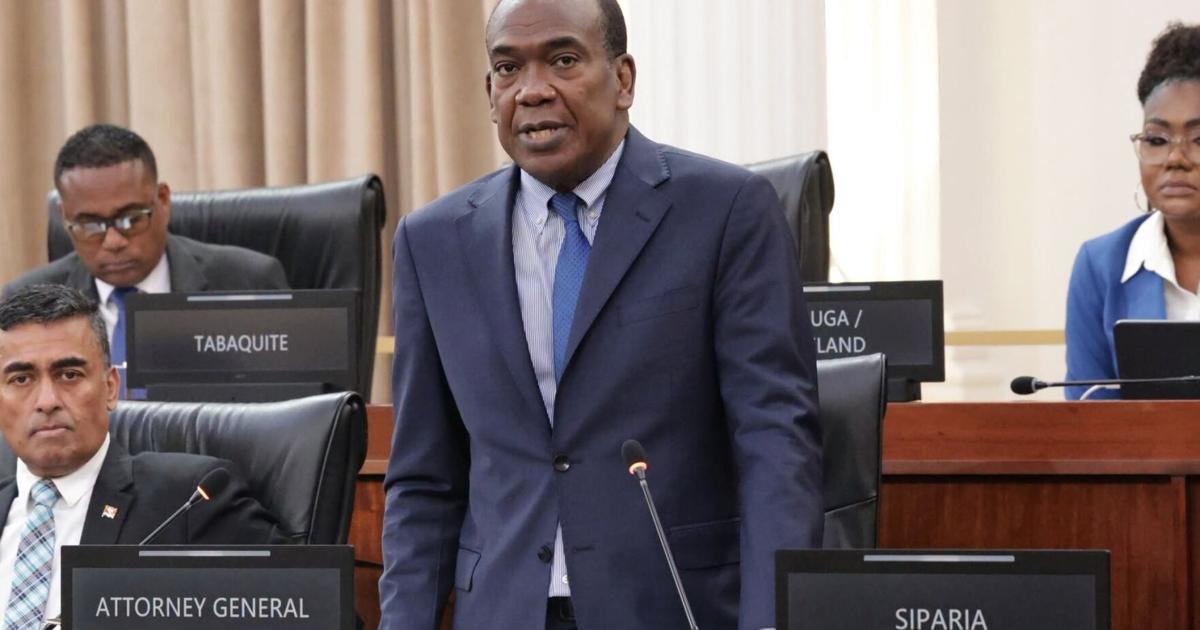
    The parliamentary debate devolved into partisan acrimony after Defence Minister Wayne Sturge made the bombshell claim that the recent Belmont triple murder and the April Morvant quadruple killing are directly linked to ongoing inter-gang turf wars in constituencies controlled by the opposition People’s National Movement (PNM). Sturge, who is a resident of Belmont, told the chamber that two local streets – Serraneau Street and Belle Eau Road – have long been divided into rival gang territories, with residents blocked from crossing into the opposing area. He confirmed that both recent mass shooting incidents are rooted in this long-running territorial feud.

    Sturge launched a scathing counterattack against opposition calls for his resignation and that of Homeland Security Minister Roger Alexander, pointing to the PNM’s own record of out-of-control violent crime when the party held power. He reminded lawmakers that under the previous PNM administration, the national murder rate hit all-time record highs, including one 24-hour period in July 2019 that saw 11 separate killings. Sturge went further, dismissing PNM MP Stuart Young, who first called for the ministers’ resignations, as one of the most ineffective national security ministers in the country’s history.

    “When 11 murders take place under his watch, he has the gall to come and call for resignations on this side,” Sturge said. “What he’s not saying is that his own constituents are largely responsible for the most murders in this country, and they refuse to allow zones of special operations (ZOSO) to be implemented in the area.”

    In a charged verbal exchange, Sturge pressed his attack, telling Young: “The same way you wouldn’t know when your constituents are going to murder some of your other constituents a street away, you expect us to know? But, let me tell you something, what we wouldn’t do, we wouldn’t know that four people are trapped in a pipeline and wait and let them die.”

    Young immediately stood to object, labeling Sturge’s remarks “gibberish” and “verbal diarrhoea.” Sturge quickly shot back, responding: “He could call it all kinds of things, verbal diarrhoea; you know what he couldn’t say? That I lie.”

  • Mom still critical after deadly ambush on family

    Mom still critical after deadly ambush on family

    A quiet morning commute to a toddler’s daycare turned into a deadly ambush this week in Belmont, leaving a 2-year-old boy and two adult men dead, and the child’s mother fighting for her life in a Port of Spain hospital. As of Wednesday evening, Antonia Cain-Kafi, 39-year-old Aquil Kafi’s wife and the mother of slain toddler Akini Kafi, remained in critical but stable condition after being hit four times during the sudden attack. The third victim was Aquil Kafi’s close friend, Anthony “Monster” Wilson.

    What makes the tragedy even more devastating to family members is the long, difficult journey the couple went through to welcome their only child. A close family friend shared with local outlet *Trinidad Express* that Cain-Kafi spent years trying to conceive, and when Akini arrived 2 years and 11 months ago, the couple celebrated him as nothing less than a “miracle baby.”

    On Thursday morning around 8:30 a.m., the group was traveling in a Toyota Aqua, with Kafi and Wilson in the front seats and Cain-Kafi and her young son in the back. They were en route to Akini’s regular daycare drop-off when another vehicle cut them off and blocked their path in the Holder Steps/Rifle Hill area, just off Serraneau Road and St Francois Valley Road. A gunman exited the blocking vehicle and immediately opened fire on the car carrying the family. By the time the shooting stopped, both Kafi and Wilson had been killed instantly, while both Cain-Kafi and Akini suffered life-threatening gunshot wounds.

    According to police accounts, bystanders in a private vehicle rushed the wounded survivors to Port of Spain General Hospital. Witnesses say Cain-Kafi, despite her own multiple gunshot wounds, managed to hand her injured son over to hospital staff for treatment. Medics were unable to save the toddler, who was pronounced dead shortly after arrival.

    On Wednesday, *Express* reporters met grieving relatives at the Forensic Science Centre in Federation Park, where family members had traveled to formally identify the bodies of the three victims. One relative who spoke to reporters shared warm, tender memories of the young boy who was taken too soon. Akini, she recalled, had an all-consuming obsession with cars. “He loved cars. He was fascinated by it and, well, he destroyed a lot of toy cars and he would then try to fix it,” she said. “He was a really loving baby boy and, oh my gosh, he had a smile that would melt any lady’s heart.”

    Local law enforcement has not yet released updates on potential suspects or motives for the targeted attack, leaving the community in mourning and waiting for answers as the surviving mother recovers from her devastating injuries.