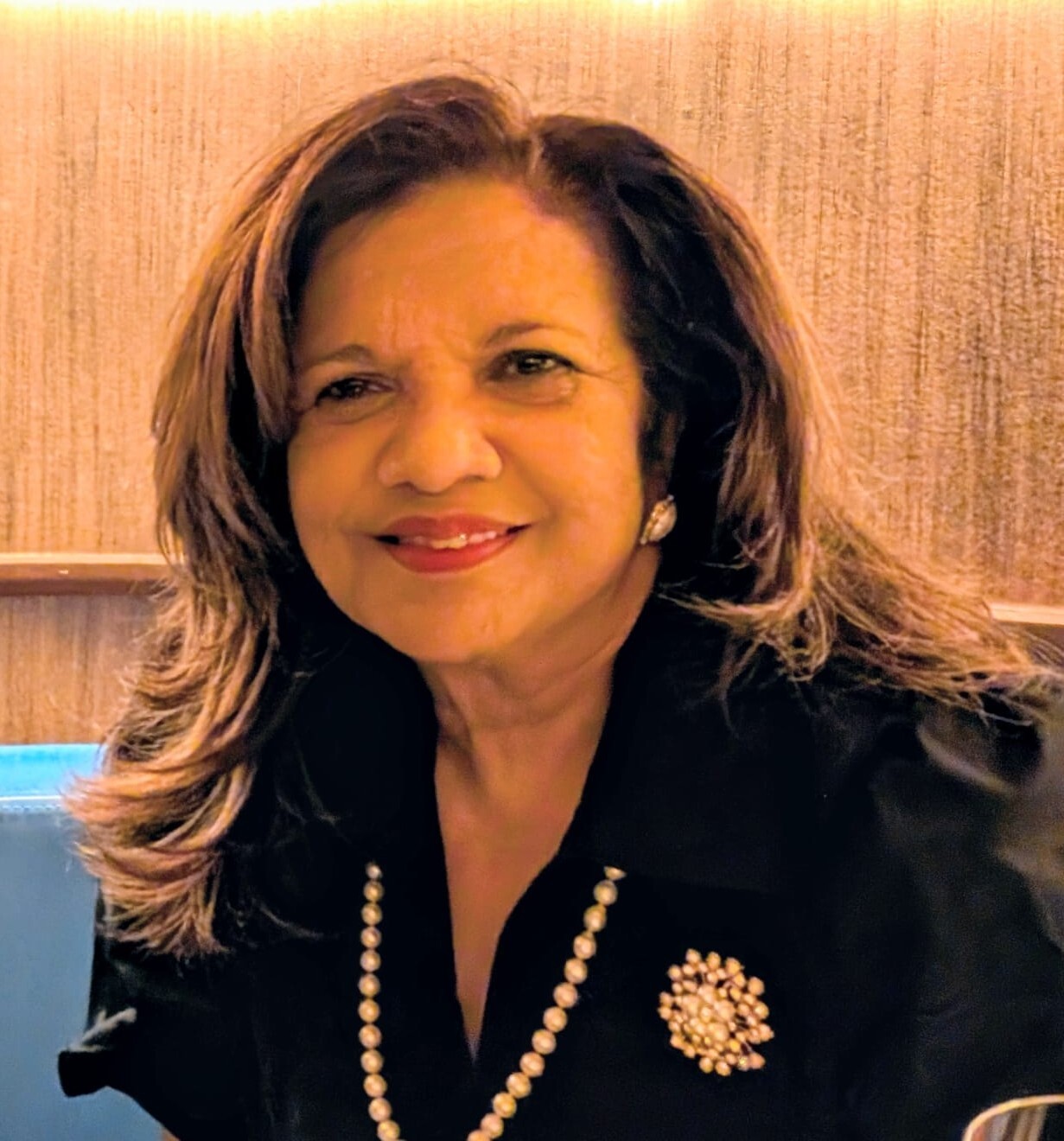
A respected leader in Barbados’ fisheries sector, 38-year-old Chief Fisheries Officer Dr Shelly-Ann Latoya Cox, will be honored with an official state-sanctioned funeral on Monday, July 13, following her unexpected passing last month. The official funeral service is scheduled to kick off at 1 p.m. at the Wildey Gymnasium, and a private cremation ceremony will be held for close family and loved ones after the public service. For community members wishing to pay their respects ahead of the funeral, a public viewing will be held on Sunday, July 12, from 1 p.m. to 6 p.m. at the Lyndhurst Funeral Home Chapel located on Passage Road in St Michael. Condolence books will also be available at the chapel during the viewing hours for members of the public to sign and leave messages of sympathy for Cox’s family, friends and colleagues. Cox stepped into the senior role of Chief Fisheries Officer earlier this year, assuming her official duties in January 2023, and served the nation’s fishing industry for just five months before her death on June 13. The announcement of Cox’s funeral arrangements was made jointly by the Cabinet Office and the Barbados Government Information Service (BGIS).
作者: admin
-

The Carenage comes alive for 3rd annual We Pan Fest
On Sunday, June 28, 2026, the waterfront district of The Carenage in Grenada transformed into a vibrant hub of rhythm, joy, and communal connection, as the third annual We Pan Fest kicked off at the Pedestrian Plaza. The one-day cultural gathering united hundreds of attendees spanning generations—from local families and emerging steelpan musicians to established performing artistes, small business vendors, and out-of-town patrons—all gathered to honor one of Grenada’s most cherished cultural traditions.
Organized by Senator Claudette Joseph in partnership with the local Carenage community, the festival carries a dual mission: to preserve and elevate Grenada’s iconic steelpan heritage, while creating tangible economic and social opportunities for local creators and small entrepreneurs. For Senator Joseph, the event is far more than a concert—it is a vehicle for community-building rooted in shared cultural identity.
“We Pan Fest continues to reflect my mission of community development through culture, togetherness and opportunity,” Joseph shared in her remarks during the festival. “It is a joy to see The Carenage filled with families, musicians, vendors and residents celebrating something that belongs to all of us. This is how we build pride in our communities and create spaces where people feel connected.”
This year’s iteration marked notable growth for the still-young festival, expanding its steel orchestra lineup from four groups in 2025 to six ensembles in 2026, giving attendees a broader, more dynamic showcase of Grenada’s thriving steelpan movement. The lineup welcomed first-time participant Corinthians Steel Orchestra, alongside returning favorites including River Road Pan Wizards, Republic Bank Angel Harps, IMA Rainbow City All Stars, Nexa New Dimension, and the reigning Panorama Champions Co-op Bank Commancheros.
Beyond steelpan performances, the full evening of entertainment featured a diverse lineup of homegrown Grenadian vocal and performance artistes, including Blaka Dan, General PP, Temptress, L.E.D. Bad Artiste, Zeal, Khaos, Alma Boy, Hitz, and Yung Pert, with acts curated to appeal to attendees of all age groups.
The festival also incorporated heartfelt commemorative moments that honored the legacy and community of steelpan in Grenada. Aligning with the seasonal timing of the event, Senator Joseph led a tribute to recognize the lifelong contributions of fathers who have dedicated their time and talent to advancing the steelpan art form. Attendees also paused for a moment of silence to honor pan players who had passed away in the 12 months leading up to the festival, acknowledging their enduring impact on Grenada’s cultural landscape.
The event earned high-level support from Grenada’s national leadership, with Prime Minister Dickon Mitchell making a special appearance to greet the crowd and deliver a short address affirming his backing for the festival and the broader Grenadian steelpan community. Mitchell also posed for photos with the newly formed Corinthians Steel Orchestra during his visit.
As the final notes of the evening rang out across The Carenage, organizers expressed their sincere gratitude to every group and individual that contributed to the festival’s success, including performers, vendors, corporate sponsors, volunteer staff, the production team, the Royal Grenada Police Force, and every patron who attended. Already, planning work is underway for the 2027 edition of We Pan Fest, which is scheduled to take place on Father’s Day, as the event solidifies its place as one of Grenada’s premier annual celebrations of culture, community, and national pride.
-

De hamer en de lat
A year after taking up the gavel as Speaker of the National Assembly of Suriname, Ashwin Adhin has delivered a comprehensive public assessment of his first term in office, outlining progress on legislative work, institutional modernization and preparations for the country’s upcoming oil and gas revenue era, while acknowledging ongoing challenges that remain to be addressed.
When Adhin assumed the speakership one year ago, his core pledge was to raise governance standards by enforcing strict adherence to the Assembly’s Rules of Procedure. Disrupting long-standing informal conventions that had muddied parliamentary order rather than supporting it, he notes, has been an uphill battle to rebuild basic discipline in the chamber.
Against the backdrop of Suriname’s impending arrival as an oil and gas producer, with first commercial production slated for 2028, Adhin argues that the central question facing the nation is not the size of its hydrocarbon reserves, but whether state institutions are strong enough to convert this new wealth into broad shared prosperity rather than waste and mismanagement. To lay the groundwork for responsible resource governance, he advocated for two key initiatives at the October 2025 Local Content Conference: a National Productivity and Diversification Plan, and a Parliamentary Forum for Economic Transition. This permanent multi-stakeholder platform brings together lawmakers, government officials, business leaders and academic experts to draft upcoming legislation on oil, gas, energy management and local content requirements.
Adhin emphasizes that local content cannot remain an empty buzzword: it must be translated into measurable mandatory requirements that embed local investors and businesses in the value chain ahead of 2028 first oil. In line with this agenda, the Assembly is awaiting the government’s October 2026 submission of the 2027-2031 Development Plan, paired with the 2027 national budget. As the body tasked with executive oversight and budget scrutiny, Adhin notes, parliament is the first line of defense against public resource waste.
In his first 12 months in office, the Assembly held more than 40 plenary public sessions and over 130 committee meetings. Six pieces of legislation have been finalized and enacted, including the 2025 national state budget, amendments to the State Debt Plan Act, the Labor Advisory Council Act, the Customs Act, the Suriname Fire Department Act, and the Funeral Services Act. The 2026 national budget is currently in its final stages of approval.
Meanwhile, heavier foundational legislation is working its way through committee processes. Key bills include the new Accounting Act, judicial branch modernization legislation, the Working Conditions Act, the Freedom of Information Act, and the Act establishing the Center for Innovation and Productivity. Public committee hearings have also been launched, with the first held in the high-profile case of three former public officials facing criminal indictment.
Beyond lawmaking, the National Assembly has stepped up its oversight function, Adhin says, demonstrating its authority in holding the executive to account. Work to enforce transparency around the state health insurance fund and other pressing public issues is advancing steadily.
In addition to legislative and oversight work, the speaker’s office has invested in strengthening the Assembly as an institution. A multi-year parliamentary program has been launched to drive organizational and institutional modernization of the body. Proposals are also on the table to fund additional parking capacity near the parliamentary complex, designed to reduce vehicle congestion in the city center and improve downtown livability.
A major ongoing digital transformation project is also underway: the digitization of all Surinamese legislation dating back to 1900. This work is not just for archival purposes; it will serve as the foundation for an artificial intelligence tool that will give faster, more open access to legal resources for the entire legal profession – from judges and prosecutors to lawyers, notaries, bailiffs and law students. A permanent standing committee on national security has also been established to strengthen the country’s security governance.
Parliament has also expanded its international engagement over the past year, coinciding with Suriname’s golden jubilee of independence. The Assembly hosted high-profile foreign visitors including the Dutch King and Queen, and the Asantehene of the Ashanti Kingdom. Lawmakers held bilateral talks with counterparts from the Dutch House of Representatives, India, the United States, Cuba, and the Kingdom of Saudi Arabia. Parliamentary delegations also participated in major international forums including the Inter-Parliamentary Union, strengthening Suriname’s parliamentary diplomacy over the past term.
Adhin takes a pragmatic approach to unfinished work, openly naming areas that still require improvement. A revised Rules of Procedure, designed to raise parliamentary order and debate standards, is still in preparation and has not been finalized. Quorum discipline, a longstanding chronic challenge for many parliaments, has shown improvement but still does not meet required standards.
To address these gaps, the Assembly will now start publicly tracking performance metrics to make its work measurable: quorum attendance rates, the share of scheduled sessions that actually proceed, the number of enacted laws, and progress on institutional transformation projects.
Political differences between the governing coalition and opposition are a normal and expected part of a functional democracy, Adhin notes. Meaningful progress is possible when all members prioritize national and community interest over partisan advantage. This frames the real test of the coming second year: progress will not be measured by how often the speaker’s gavel falls, but by how many completed laws leave the chamber, and whether promised reforms move beyond good intentions to tangible action.
When revising legislation, Adhin favors comprehensive, integrated reforms over incremental minimal changes. He has committed to three measurable core goals for the coming term: a fully updated Rules of Procedure by the end of the current sitting, a regular public half-yearly progress report to allow public scrutiny of parliamentary work, and finalization of legislation that directly impacts citizens, starting with bills supporting economic transition.
Adhin’s assessment of the first year is balanced: the National Assembly has maintained a busy legislative schedule and delivered tangible results in lawmaking and regulation. At the same time, organizational transformation is still ongoing, and the full impact of these changes now needs to be made clear and demonstrable to the Surinamese public.
This commentary was delivered by Michael Ashwin Adhin, Speaker of the National Assembly of the Republic of Suriname, on 29 June.