作者: admin

  • Eerste officieel erkende verpleegassistenten stromen door naar zorgsector

    Eerste officieel erkende verpleegassistenten stromen door naar zorgsector

    Suriname’s labor development foundation Stichting Arbeidsmobilisatie en Ontwikkeling (SAO) marked a historic milestone for the country’s healthcare sector on Friday, when it graduated the first officially state-recognized cohort of nursing assistants, opening up new career advancement pathways for entry-level care workers that were previously out of reach.

    The achievement comes after the Surinamese Ministry of Public Health, Welfare and Labor granted formal accreditation to SAO’s nursing assistant training program. In addition to 14 nursing assistants, 16 graduates in household management received their official diplomas and certificates during the graduation ceremony. SAO’s full nursing assistant curriculum integrates modules in both household management and core clinical nursing assistance skills.

    For years before the accreditation, SAO issued only internal institutional certificates to program completers, even though many graduates had already secured roles in hospitals and other care facilities across the country. The lack of formal government recognition created a major barrier to professional growth: these workers were ineligible to apply for advanced healthcare training programs, including courses offered at the respected Elsje Finck Sanichar College COVAB. That barrier is now eliminated with the new accredited status, granting graduates nationally recognized credentials that strengthen their position in the labor market and clear the way for specialized further training in the healthcare field.

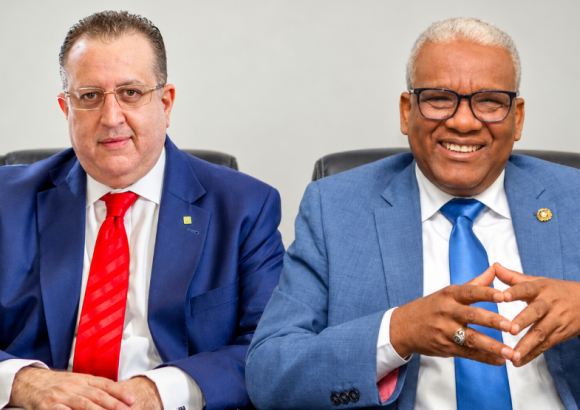
    Speaking at the ceremony, Minister of Public Health André Misiekaba and Deputy Minister Raj Jadnanansing emphasized that the accreditation is a transformative moment for both graduates and Suriname’s entire healthcare system. Officials noted that this development is a key step to reverse the persistent “brain drain” of healthcare workers from Suriname, by giving locally trained nursing assistants viable, rewarding career paths to build their careers at home instead of seeking opportunities abroad.

    Graduates will also receive dedicated support to secure placements in healthcare facilities across the country. The push to expand the pool of trained nursing assistants comes as Suriname continues to grapple with severe, ongoing healthcare staffing shortages. To maintain consistent care delivery, the ministry has already begun rolling out plans to bring in more nursing assistants and retired nursing professionals to fill gaps in care teams.

    The milestone aligns with the ministry’s 2025–2030 strategic framework, which includes wide-ranging plans to improve working conditions and roll out a revised pay scale for all healthcare workers. Moving forward, the ministry, COVAB and SAO will hold ongoing collaborative talks to further streamline the transfer process for nursing assistants pursuing advanced training.

    SAO leadership, including director Joyce Lapar, board chair Naomi Esajas-Friperson and Jolanda Verwey, reflected on the years of advocacy and program development that led to this formal recognition. They noted that accreditation does more than just guarantee consistent training quality: it delivers a much-needed boost to Suriname’s healthcare system at a time when the sector continues to face widespread staffing shortages and the ongoing outflow of skilled professionals to foreign markets.

  • Juvenile charged with Non-Capital Murder

    Juvenile charged with Non-Capital Murder

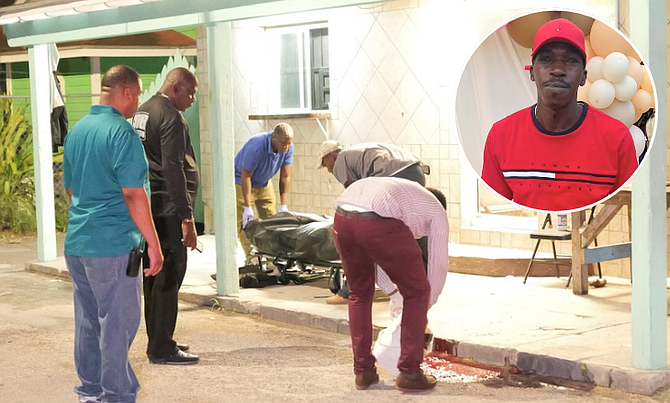
    Authorities in Grenada have formally charged a 16-year-old male resident of Sabb, St Andrew with non-capital murder in connection with the violent death of 66-year-old Melvar Wharwood. Prosecutors confirm the charge stems from evidence that the teen caused Wharwood’s death through unlawful harm, according to official statements released by the Office of the Commissioner of Police of the Royal Grenada Police Force. The criminal proceeding was launched after police launched a full investigation into the grim discovery: Wharwood’s unresponsive body was found in the Mirabeau area of St Andrew on Sunday, May 3, 2026. As a juvenile accused of the serious offense, the teen is scheduled to make his first initial court appearance at the Grenville Magistrate’s Court on Monday, May 11, 2026, where the first procedural steps of the legal process will get underway. No further details about the motive or circumstances surrounding the incident have been released to the public as the investigation remains ongoing. This report is based on official police documentation, and NOW Grenada disclaims responsibility for any third-party contributor content hosted on its platform.

  • OP-ED: The global epidemic of violence in an age of impunity

    OP-ED: The global epidemic of violence in an age of impunity

    In an authoritative analysis published by Dr. Alon Ben-Meir, President of the Institute for Humanitarian Conflict Resolution, the modern world faces an unprecedented escalation of systemic violence that has shifted from an extraordinary anomaly to a normalized daily reality. Data compiled by the International Institute for Strategic Studies underscores the severity of this crisis: more than 180,000 violent events have been documented globally, and the number of active armed conflicts currently stands at over 130—more than double the count recorded just 15 years ago. This pervasive spread of conflict inflicts catastrophic damage beyond immediate battlefield casualties: critical civilian infrastructure is destroyed, long-standing social bonds are torn apart, and the dehumanization of enemy groups has become an accepted political tactic. Disproportionate harm falls on the most vulnerable populations: hundreds of millions of women and children live within range of active armed clashes, facing not only the direct threat of bullets and bombs, but also secondary devastation including widespread hunger, preventable disease, and soaring rates of gender-based violence that leave millions dead and countless more with lifelong psychological trauma. Despite the scale of this crisis, Dr. Ben-Meir argues that the United Nations system and the world’s leading democratic powers are stuck in dangerous paralysis. Gridlocked by Security Council veto power, crippled by intensifying geopolitical rivalries, and reduced to issuing hollow, unenforceable declarations, global bodies offer only symbolic gestures of concern rather than the coordinated, enforceable accountability that this growing plague of violence desperately demands. The analysis frames the global escalation of violence as a structural crisis, not a random deviation from global order—a crisis that lays bare the profound failure of international institutions and the normalization of human suffering across political, economic, and societal spheres. The proliferation of conflict is not merely a numerical increase in armed confrontations, but a total breakdown of the global mechanisms designed to constrain aggression, turning dehumanization into a routine tool of political power. To unpack this multi-layered crisis, the analysis examines root causes across six interconnected dimensions, drawing on foundational insights from leading political and social philosophers. First, from a philosophical perspective, violence is revealed as a symptom of collapsed legitimate political authority, not a demonstration of state strength. Citing Hannah Arendt’s 1970 work *On Violence*, the analysis echoes Arendt’s core argument: “Power and violence are opposites; where the one rules absolutely, the other is absent. Violence appears where power is in jeopardy, but left to its own course, it ends in power’s disappearance.” Today’s spreading conflicts directly reflect this dynamic: they do not signal strong state power, but widespread institutional failure, where violence substitutes for the popular consent and legitimacy that governing bodies can no longer command. When political dialogue is exhausted and no legitimate power structure exists to resolve disputes, violence becomes the default recourse. Second, economic disenfranchisement acts as a critical accelerant of modern violence, fueled by resource competition, exploitative resource extraction, and systemic global inequality. Drawing on Slavoj Žižek’s concept of systemic violence, the analysis highlights that the most insidious form of modern violence is not the overt brutality of individual actors, but the anonymous, objective structural violence embedded in global capitalist systems. Greed-driven extraction of natural resources—from blood diamonds in Sierra Leone to oil in Venezuela and conflict cobalt in the Democratic Republic of the Congo—directly finances armed rebellions, turning prolonged conflict into a profitable enterprise for rogue actors. Beyond extractive industries, systemic economic deprivation, geoeconomic confrontation waged through weaponized tariffs and sanctions, and global commodity price shocks all directly shape military capabilities and the outcomes of conflicts. Third, the analysis examines the political conditions that enable violence to flourish. Political violence rarely emerges spontaneously from conflicting interests; it is a deliberate choice to pursue goals through coercion rather than negotiation. The paralysis of the UN Security Council and weakening democratic institutions align with Arendt’s description of bureaucratic tyranny: “In a fully developed bureaucracy, there is nobody left with whom one can argue, to whom one can present grievances, on whom the pressures of power can be exerted. … everybody is deprived of political freedom, of the power to act… where we are all equally powerless, we have a tyranny without a tyrant.” This dynamic creates a structural void in global accountability: veto power and geopolitical rivalry allow violence to spread unchecked, while political fragility and weakened institutions in countries such as Syria and Myanmar leave societies vulnerable to total breakdown, radicalization, and violent dissent. Fourth, deep societal fragmentation creates conditions where violence becomes normalized through growing inequality and the erosion of social cohesion. Centuries after Thomas Hobbes described the “solitary, poor, nasty, brutish, and short” life of humans in a pre-political state of nature, his bleak assessment remains relevant for modern communities where governance has collapsed and fear dominates daily life—conditions that currently affect millions of people living near active conflict zones. When social norms accept violence as a legitimate way to resolve disputes, combined with deep economic inequalities and limited opportunities for community participation, aggression is allowed to flourish. This environment normalizes dehumanization, creating recurring cycles of brutality fueled by gender-based violence, ethnic tensions, and unaddressed historical grievances, visible in regions from Nigeria to South Africa. Fifth, state-level actions and complicity amplify systemic violence. Governments that fail to address ethnic marginalization, resource competition, and establish functional governance create fertile ground for prolonged conflict. Walter Benjamin’s 1940 observation that “There is no document of civilization which is not at the same time a document of barbarism” underscores how national institutions can perpetuate violence through their foundational exclusionary structures. When governments refuse to recognize and address destabilizing inequities such as political, religious, or ethnic marginalization, societies become trapped in cycles of civil and international conflict. In extreme cases, rulers weaponize state apparatus to carry out totalitarian mobilization of violence, eliminating all space for political dissent and resistance. Finally, the instrumentalization of religion by political actors acts as a powerful catalyst for violence. When faith is stripped of its ethical core and co-opted to advance political goals, it becomes a tool to sanctify exclusion and legitimize brutality. Sectarian divides across the Middle East, South Asia, and parts of Africa turn collective identity into a battlefield, where compromise is labeled heresy and the annihilation of opposing groups is framed as a moral duty. As René Girard observed, “Religion shelters us from violence just as violence seeks shelter in religion.” When faith is manipulated to justify political power or historical grievance—seen in regions including India, Israel, and Iraq—it no longer restrains violence, but instead consecrates it, deepening cycles of retribution and turning conflicts into existential struggles that cannot be resolved through negotiation. The convergence of these six interconnected dimensions explains why violence has become a baseline condition of modern life, rather than an exceptional deviation from order. While Dr. Ben-Meir acknowledges that reversing this crisis is an extraordinarily difficult challenge, he outlines four concrete actionable measures that global actors can pursue to de-escalate global violence, emphasizing that grassroots public pressure is the essential driving force for change. Sustained popular protest, continuous grassroots advocacy, and relentless pressure on policymakers are required to force meaningful institutional reform. First, the United Nations Security Council must reform its veto power rules. Governments should restrict the use of veto power in cases involving genocide, war crimes, and crimes against humanity, and require permanent Security Council members to abstain from veto use when they are directly involved in a conflict. This would transform the veto from a tool of obstruction into a mechanism for accountability, addressing the institutional paralysis that allows violence to spread unchecked. Second, international bodies must develop and implement functional early warning systems that connect detection of emerging conflict to rapid preventive action, closing the persistent gap between early warning and effective response. Effective systems will integrate predictive analytics, local on-the-ground expertise, and cross-border coordination to anticipate violence months before it erupts, enabling timely diplomatic intervention and humanitarian action that can stop conflict before it begins. Third, governments and global institutions must address the root economic drivers of violence by tackling systemic inequality and economic insecurity. Progressive policy reforms including targeted wage increases, comprehensive tax reform, and targeted financial assistance for vulnerable communities directly address the underlying triggers of violence. Targeted lending, large-scale job creation, and redistributive economic policies alleviate the financial strain that fuels conflict and violent crime, making structural prevention far more effective than reactive, post-conflict response. This analysis, authored by Dr. Alon Ben-Meir, carries the disclaimer that the opinions expressed are solely those of the author and do not necessarily reflect the views of Duravision Inc., Dominica News Online, or any of its subsidiary brands.

  • Project to get kids active launches at St Lucy Primary

    Project to get kids active launches at St Lucy Primary

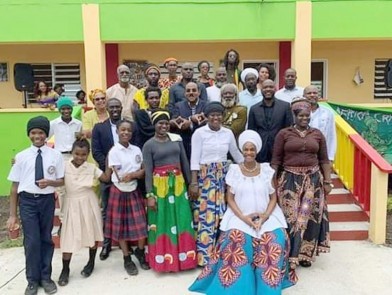
    A groundbreaking national public health initiative targeting rising childhood sedentary behavior kicked off this Friday in northern Barbados, with St Lucy Primary School earning the distinction of being the first participating institution to benefit from the new program, dubbed Project ACTIVE.

    Organized through a collaborative partnership between three leading Barbadian health organizations—the Barbados Physical Therapy Association (BPTA), the Heart and Stroke Foundation, and the Childhood Obesity Prevention Coalition—the launch day treated the school’s youngest students to a full afternoon of structured, playful physical activity designed to make moving feel like fun rather than a chore.

    In an interview with Barbados TODAY, lead project coordinator and practicing physiotherapist Marita Marshall outlined the core mission that drives the initiative: to embed sustainable, healthy lifestyle habits in children from an early age, while reframing physical exercise as an engaging, enjoyable activity rather than a requirement. Unlike many public health programs that focus exclusively on nutrition, Project ACTIVE is built to complement existing school wellness policies already in place across the island, adding a critical physical activity component that brings together students, parents and educators to prioritize whole-child wellness.

    As childhood sedentary behavior—driven in large part by growing screen time and recreational phone use—has become an increasing public health concern across Barbados, Marshall emphasized that early intervention is key to turning the tide on rising childhood inactivity rates and associated long-term health risks. “Our slogan is healthy habits, happy kids,” Marshall explained. “We really want to get away from children sitting on their phones playing all day, getting them to understand that exercise and physical activity can be fun. It is good for you. It is healthy, and it also supports the existing school nutrition policy that promotes healthy eating in schools.”

    Following the successful launch at St Lucy Primary, the project team will roll out in-person activations at two additional primary schools over the coming weeks. The next stop is scheduled for Irvine Wilson School on June 5, with a third activation planned for Blackman Gollop Primary School on June 25. Beyond in-school events, organizers are preparing to launch an islandwide online competition to expand participation beyond the education system, encouraging Barbadians of all ages to increase their daily physical activity. Marshall noted that the goal of the public-facing competition is to drive widespread engagement across the entire country, not just among school-aged children.

    Project organizers have encouraged members of the public to follow the BPTA’s official social media channels to receive real-time updates on the upcoming online competition, as well as announcements about future project activations across the island. Both teaching staff from St Lucy Primary and the core Project ACTIVE team joined students for the launch day activities, with young learners from Reception, Infants A and Infants B classes taking part in friendly, active challenges to kick off the national initiative.

  • CDB seminar to spotlight clean energy push and lower electricity costs across the Caribbean

    CDB seminar to spotlight clean energy push and lower electricity costs across the Caribbean

    As Caribbean nations grapple with sky-high energy costs, persistent economic strain, and intensifying climate risks, a landmark seminar focused on accelerating the region’s shift from imported fossil fuels to renewable energy is set to take centre stage at the Caribbean Development Bank’s (CDB) 56th Annual Meeting of the Board of Governors in Nassau, The Bahamas.

    Scheduled for Thursday, June 4, 2026, from 9:00 AM to 10:30 AM Atlantic Standard Time, the 90-minute session titled *Energy Transition: The Key to a More Resilient Caribbean* is framed as one of the flagship discussions of the week-long gathering, which runs from June 1 to 5. The event aligns with the annual meeting’s overarching theme: *Forging the Caribbean’s Future: Strategic Solutions for Uncertain Times*, which aims to equip regional stakeholders with actionable approaches to navigate economic volatility, fiscal headwinds, and growing climate-driven threats.

    The core impetus for the seminar stems from a long-standing crisis plaguing the region: crippling dependence on imported fossil fuels that has pushed electricity prices to among the highest globally. According to CDB data, commercial electricity rates across the bank’s Borrowing Member Countries average roughly US$0.37 per kilowatt-hour — almost three times the average rate across the United States. William Ashby, Acting Division Chief of CDB’s Economic Infrastructure Division, emphasized that this extraordinary cost burden weighs disproportionately on micro, small, and medium enterprises (MSMEs), eroding the Caribbean’s overall economic competitiveness. Beyond cost concerns, the fossil fuel dependence also leaves regional energy systems vulnerable to global price shocks and supply chain disruptions, undermining long-term energy security.

    To meet existing national renewable energy targets set by Caribbean nations, CDB estimates that approximately US$11 billion in targeted clean energy investment will be required between 2020 and 2030. To unlock this level of financing and progress, officials argue that deeper regional cooperation, progressive policy reform, and creative, accessible financing mechanisms are no longer optional — they are critical necessities.

    The seminar will convene a cross-sectoral lineup of key stakeholders, including regional government policymakers, leading energy sector specialists, global and regional financiers, and international development leaders, all to debate and co-develop practical strategies to speed up the transition to low-carbon energy systems. Key topics on the agenda include modernizing aging regional electricity grids to accommodate variable renewable energy sources like solar and wind, updating regulatory frameworks to draw more private sector investment into clean energy projects, and expanding access to blended financing — a model that combines public and private capital to de-risk emerging renewable initiatives.

    The session will also showcase CDB’s own ongoing renewable energy work across its member states, which forms a core pillar of the bank’s 2026–2035 strategic plan, *Transforming the Caribbean for Resilience*. Confirmed featured speakers bring on-the-ground expertise from across the region: Barbados’ Kerrie Symmonds will outline his country’s national Energy Transition and Investment Plan; Toni Seymour will share updates on utility modernization and transformation efforts in host country The Bahamas; Mohammad Rafik Nagdee will deep dive into pathways for expanded renewable energy financing and project development; and Timothy N. J. Antoine will offer perspective on how clean energy transition strengthens broader regional economic resilience.

    For those unable to attend the event in person, CDB has announced that all public sessions of the 56th Annual Meeting, including the energy transition seminar, will be streamed live for free via the bank’s official YouTube, LinkedIn, and Facebook platforms, opening the discussion to global stakeholders and interested observers.

  • Trump administration releases long-secret UFO files, revealing decades of military encounters

    Trump administration releases long-secret UFO files, revealing decades of military encounters

    In a move that has reignited widespread public curiosity about extraterrestrial life and decades-old questions surrounding military encounters with unexplained aerial objects, the Trump administration has published the first tranche of formerly classified U.S. government records focused on unidentified flying objects, now formally termed unidentified anomalous phenomena, or UAPs.

    The public disclosure, carried out by the Pentagon on Friday, stems from a presidential directive issued back in February, which ordered all federal agencies to comb through their archives, declassify relevant records, and release all materials connected to government UAP investigations and unexplained aerial encounters. According to senior officials, the initial batch of documents pulls together decades of collected data, ranging from written witness testimony and military surveillance footage to photographic evidence and raw source documentation gathered across multiple U.S. government departments.

    Defense Secretary Pete Hegseth framed the disclosure as a critical step toward greater government transparency with the American public. In an official statement shared on the social platform X, Hegseth noted that decades of classification around these records had given rise to fully justified public speculation, adding that it was long past time for American citizens to review the materials directly.

    One of the most high-profile testimonies included in the release comes from Buzz Aldrin, the astronaut who made history as the second person to walk on the lunar surface during NASA’s 1969 Apollo 11 mission. Reporting from The Guardian confirms that in a post-mission debrief held shortly after the Moon landing, Aldrin described observing a “sizeable” unidentified object moving near the Moon’s surface, alongside a “fairly bright light source” that the Apollo 11 crew initially hypothesized could have been a laser.

    Beyond astronaut testimony, the declassified files also include multiple pieces of military surveillance footage capturing unusual objects recorded across different regions of the globe. One sequence, captured in 2022, shows a distinct football-shaped craft traveling through airspace above the East China Sea. Other footage, collected in recent years, documents fast-moving lights and unidentifiable dots executing erratic, high-speed maneuvers in airspace above Iraq, Syria, and the United Arab Emirates.

    ABC News’ analysis of the released documents confirms that the vast majority of reported sightings included in the archives are clustered around active U.S. military operations and locations where the United States has deployed advanced, high-resolution surveillance systems. A large share of the incidents documented date back to the 1950s and 1960s at the height of the Cold War, with most of these mid-20th century encounters concentrated in Germany and territory belonging to the former Soviet Union.

    More recently documented encounters have been overwhelmingly concentrated in the Middle East, particularly near the strategically critical Strait of Hormuz. Nearly all reported sightings included in the files were submitted by active-duty military pilots and on-the-ground military personnel, though Pentagon officials have emphasized that none of the encounters documented in the released files suggest the unidentified objects posed any immediate threat to U.S. personnel or national security.

    Among the most unusual modern cases documented in the archives is a 2023 encounter reported by federal law enforcement officers operating in the western United States. Multiple officers independently reported observing glowing, spherical orbs, with one witness stating they had seen “orbs launching other orbs,” according to ABC News’ reporting. Pentagon officials have described the 2023 case as “among the most compelling” in the entire U.S. archive of UAP encounters.

    In a closing statement, the Pentagon confirmed that the full set of declassified UAP files is now available for instant public access, noting that the U.S. government is leaving it to individual members of the public to draw their own conclusions from the information contained in the released documents.

  • Award‑winning author delights young readers at library event

    Award‑winning author delights young readers at library event

    On a vibrant Saturday morning in Bridgetown, more than 30 young children converged on the Barbados National Library Service located on Fairchild Street for an interactive Caribbean Storytime session led by acclaimed author Yolanda T. Marshall.

    Marshall, a Canadian writer with mixed Barbadian and Guyanese heritage, brought a curated selection of her most beloved children’s works to the event. The lineup included fan favorites *Sweet Sorrel Stand*, *What’s in the Cookie Tin?*, and *A Piece of Black Cake for Santa*, alongside her latest release, *Marching North*—a picture book centered on Bajan cultural identity.

    Though crafted for a young audience, each of Marshall’s stories weaves in nuanced themes tied to the lived experience of the Caribbean diaspora. Food traditions, musical heritage, cultural belonging, and the sacrifices that shape migrant journeys all emerge as core threads running through her work, creating stories that resonate with both children and adult attendees.

    In an interview with Barbados TODAY conducted on the sidelines of the reading, Marshall opened up about the deep personal meaning this event held for her. Long before her in-person visit, she had discovered through online research that her titles were part of the Barbados National Library’s permanent collection, and she had made a promise to herself that she would visit the institution to host a reading on her next trip to the island.

    “I’m so happy to be in the national library. For many years, I’ve looked online and seen that my books are housed here, and I promised myself that when I visited Barbados, I had to come here and do a reading,” Marshall shared.

    A seasoned literary event host who leads hundreds of reading sessions each year across Canada, the United States, and multiple Caribbean nations, Marshall emphasized that this Bridgetown gathering stood out among her hundreds of annual engagements.

    “Today was extra special to be present in Barbados, where my books have a home in the National Library. It was wonderful to interact with the kids who, like myself, are Caribbean-born children, and it was a wonderful day to celebrate literacy,” she added.

  • Roberts Manufacturing’s public share offer closes successfully

    Roberts Manufacturing’s public share offer closes successfully

    After eight decades of operating as a cornerstone of Barbados’ manufacturing sector, Roberts Manufacturing Co. Limited has announced the successful completion of the initial phase of its public share offering, marking a historic milestone for both the company and regional Caribbean capital markets. Founded 80 years ago, the firm has built its reputation as a leading producer of margarines, shortening, edible oils and animal feeds, with distribution networks reaching 15 distinct Caribbean markets, and its initial public offering phase has drawn widespread support from a diverse pool of investors across the region.

    Participation in the offering came from an extraordinarily broad base of market actors, spanning retail investors, institutional financial entities, and corporate stakeholders across the Caribbean. Data from the company confirms more than 1,600 retail investors took up shares, including over 130 current employees of Roberts Manufacturing. Beyond retail stakeholders, the offer attracted subscriptions from a wide range of institutional players: statutory pension and social insurance funds, both defined-benefit and defined-contribution pension schemes, mutual fund managers, the domestic credit union sector, insurance firms, and other regulated financial entities. Corporate investors also joined the shareholder base, while significant cross-border interest from a leading Eastern Caribbean fund manager signaled early institutional confidence in the company as a credible regional issuer.

    Garfield Sinclair, Chair of Roberts Manufacturing, emphasized that the breadth of investor backing reflects deep confidence in the firm’s eight-decade track record of local operation, job creation, and export leadership out of Barbados. The core objective of the offering, he noted, was to place direct equity ownership of a stable, profitable, homegrown Barbadian company into the hands of citizens across all segments of society – a goal that has been fully realized through the offering’s outcome. Sinclair described the investor response as “outstanding,” noting that the company was particularly encouraged by a single major long-horizon Barbadian institutional investor committing to 20% of the entire offering, a major vote of confidence in the firm’s long-term growth trajectory.

    “The response of Barbadian investors to this offer has been outstanding, and we are deeply grateful for it. One of the most diverse and high-quality shareholder registers seen on the Barbados Stock Exchange in many years has been built through the combined participation of statutory and private pension funds, mutual fund managers, the credit union sector, insurers, corporates and over 1 600 retail investors, including over 130 employees,” Sinclair said. “Roberts Manufacturing is now, in a way it has never been before, owned by the country it has served for eight decades. We will work hard, every day, to reward that confidence.”

    Allotment of shares to successful subscribers is already underway, with admission to trading on the Barbados Stock Exchange expected to open during the week commencing May 25, 2026. Trading will operate under the ticker symbol RMCO, and the exact listing date will be shared in a separate formal announcement once all customary listing procedures are finalized. Existing selling shareholders, PROVEN Group Limited and McAl Trading Limited, will retain a substantial stake in the company alongside the new cohort of public shareholders, aligning their ongoing interests with the new investor base.

    The company’s board has confirmed that it will explore additional capital markets initiatives in the future to further expand the investor base and improve secondary market liquidity for RMCO shares. For the initial offering, Caribbean Strategic Advisors Inc. served as advisor to the selling shareholders, with SigniaGlobe Financial Group acting as lead broker and Capita Financial Services stepping in as co-broker. The G&A Group led all marketing and communications for the offering, and the official prospectus, dated October 31, 2025, remains available to interested parties through licensed Barbados Stock Exchange brokers and the Barbados Financial Services Commission.

  • Belize’s Coral Reef Gets a Global Brain Trust

    Belize’s Coral Reef Gets a Global Brain Trust

    On May 9, 2026, a landmark milestone was reached for coral conservation in Belize, as a small community-based non-profit from Placencia brought together a global network of leading marine scientists for one of the most ambitious coral science collaborations the Central American nation has ever hosted.

    Fragments of Hope, an organization that has quietly worked on reef restoration along Belize’s coastlines since 2006, organized the international workshop under the umbrella of the COR-POP initiative. The gathering drew researchers from top scientific institutions across four countries, including Germany’s Alfred Wegener Institute, the University of Miami, the Smithsonian Institution, Boston University, Tufts University, the University of Belize, and Scripps Institution of Oceanography at UC San Diego, all of which have signed on as official project collaborators.

    The workshop also included official participation from three of Belize’s key government bodies: the Ministry of Blue Economy and Marine Conservation, the Belize Fisheries Department, and the Blue Bond and Finance Permanence Unit, marking widespread public and private support for the project.

    The core mission of COR-POP is to develop an accessible, data-driven management system that empowers local reef conservation teams to make smarter restoration decisions. The framework will guide managers on which coral strains to cultivate, where to outplant new colonies, and how to maintain the genetic diversity needed for corals to survive rising ocean temperatures linked to climate change. A defining feature of the project is that all tools and data produced will be open-source, specifically designed to be usable by low-resource community conservation programs that often lack access to cutting-edge research and technology.

    COR-POP receives funding from CORDAP, the G20’s dedicated research and development platform focused on global coral preservation, a reflection of the international community’s recognition of Belize’s critical role in Caribbean reef conservation.

    The stakes of this work could not be higher, as climate change-driven coral bleaching continues to threaten reef ecosystems across the globe. But Fragments of Hope already has a proven track record of success: during recent mass bleaching events, just 4% of corals restored by the organization died, compared to a 31% mortality rate recorded in nearby natural, unassisted reef stands. This tangible success story was a key factor that supported Belize’s removal from UNESCO’s List of World Heritage in Danger back in 2018, when the country’s barrier reef system was recognized for major conservation gains.

    For local conservation leaders, the international workshop marks a new chapter, turning years of community-based on-the-ground work into a scalable model that could benefit reef restoration efforts across the globe.

  • Hantavirus Cases Rising in Argentina, Experts Point to Climate Change

    Hantavirus Cases Rising in Argentina, Experts Point to Climate Change

    As of the 2026 monitoring season, Argentina is facing an unprecedented jump in hantavirus infections and fatalities that has sparked public health concern across South America and beyond. National health authorities have confirmed 101 cases and 32 deaths so far this year, figures that are nearly double the total recorded across all of 2025. This marks the highest case count the country has seen since the 2018 outbreak, according to CNN reporting.

    Beyond local transmission, public health agencies are investigating a small cluster of infections linked to the cruise ship MV Hondius, which has been sailing through the ports of Argentina, Chile, and Uruguay. Two Dutch tourists who embarked on the vessel after traveling through multiple South American nations later died from hantavirus complications. The cruise ship is currently en route to the Canary Islands, Spain, with international health authorities coordinating response measures ahead of its arrival this weekend.
    Leading epidemiologists and environmental health experts point to climate change and widespread environmental degradation as key driving factors behind the expanding spread of hantavirus. The virus, which is primarily carried by wild rodents, typically spreads to humans through direct contact with infected rodent urine, feces, or contaminated materials. Experts explain that shifting climate patterns including rising average temperatures, extreme rainfall events, prolonged droughts, and more frequent severe forest fires are altering natural rodent habitats, forcing the animals to move into populated areas and increasing the frequency of close encounters between rodents and humans.
    Most of the 2026 confirmed cases have been concentrated in central Argentina, particularly across Buenos Aires province, where public health teams have ramped up surveillance and public education campaigns. To clear widespread public confusion, experts have emphasized that the current hantavirus outbreak is fundamentally different from the COVID-19 pandemic. The Andes hantavirus strain connected to the MV Hondius cluster is only capable of human-to-human transmission through extremely close, prolonged contact, making large-scale community transmission extremely unlikely.

    The World Health Organization has issued a public reassurance for residents of the Canary Islands, noting that the overall public health risk posed by the arriving cruise ship remains very low. Further afield, Belize’s Ministry of Health and Wellness confirmed this week that it is actively monitoring the outbreak situation, maintaining close communication with the Caribbean Public Health Agency (CARPHA) and other global and regional health partners. For the Caribbean region as a whole, the current risk of widespread hantavirus transmission remains low, according to official statements.
    In its official statement released Wednesday, CARPHA noted that it will continue supporting safe travel and tourism across the Caribbean through strengthened disease surveillance and early response systems, working closely with member nations to mitigate any emerging public health risks.