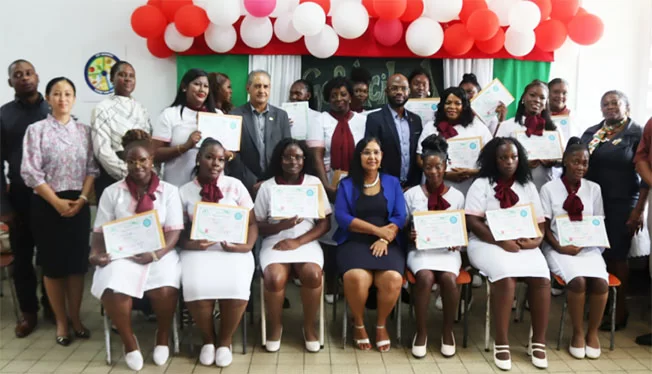
Suriname’s labor development foundation Stichting Arbeidsmobilisatie en Ontwikkeling (SAO) marked a historic milestone for the country’s healthcare sector on Friday, when it graduated the first officially state-recognized cohort of nursing assistants, opening up new career advancement pathways for entry-level care workers that were previously out of reach.
The achievement comes after the Surinamese Ministry of Public Health, Welfare and Labor granted formal accreditation to SAO’s nursing assistant training program. In addition to 14 nursing assistants, 16 graduates in household management received their official diplomas and certificates during the graduation ceremony. SAO’s full nursing assistant curriculum integrates modules in both household management and core clinical nursing assistance skills.
For years before the accreditation, SAO issued only internal institutional certificates to program completers, even though many graduates had already secured roles in hospitals and other care facilities across the country. The lack of formal government recognition created a major barrier to professional growth: these workers were ineligible to apply for advanced healthcare training programs, including courses offered at the respected Elsje Finck Sanichar College COVAB. That barrier is now eliminated with the new accredited status, granting graduates nationally recognized credentials that strengthen their position in the labor market and clear the way for specialized further training in the healthcare field.
Speaking at the ceremony, Minister of Public Health André Misiekaba and Deputy Minister Raj Jadnanansing emphasized that the accreditation is a transformative moment for both graduates and Suriname’s entire healthcare system. Officials noted that this development is a key step to reverse the persistent “brain drain” of healthcare workers from Suriname, by giving locally trained nursing assistants viable, rewarding career paths to build their careers at home instead of seeking opportunities abroad.
Graduates will also receive dedicated support to secure placements in healthcare facilities across the country. The push to expand the pool of trained nursing assistants comes as Suriname continues to grapple with severe, ongoing healthcare staffing shortages. To maintain consistent care delivery, the ministry has already begun rolling out plans to bring in more nursing assistants and retired nursing professionals to fill gaps in care teams.
The milestone aligns with the ministry’s 2025–2030 strategic framework, which includes wide-ranging plans to improve working conditions and roll out a revised pay scale for all healthcare workers. Moving forward, the ministry, COVAB and SAO will hold ongoing collaborative talks to further streamline the transfer process for nursing assistants pursuing advanced training.
SAO leadership, including director Joyce Lapar, board chair Naomi Esajas-Friperson and Jolanda Verwey, reflected on the years of advocacy and program development that led to this formal recognition. They noted that accreditation does more than just guarantee consistent training quality: it delivers a much-needed boost to Suriname’s healthcare system at a time when the sector continues to face widespread staffing shortages and the ongoing outflow of skilled professionals to foreign markets.