作者: admin

  • Investigation launched into alleged oil spill reported by Venezuela

    Investigation launched into alleged oil spill reported by Venezuela

    A cross-border environmental dispute has emerged between Venezuela and Trinidad and Tobago after Caracas accused Port of Spain of being the source of a major oil spill that has inflicted widespread harm to coastal ecosystems and communities in eastern Venezuela.

    In an official communiqué released Wednesday evening, Venezuela’s interim government under Acting President Delcy Rodríguez publicly raised alarm with the global community over the incident. The statement pinned the origin of the spill on the Republic of Trinidad and Tobago, noting that contamination has already spread across the Gulf of Paria and the shorelines of Venezuela’s Sucre and Delta Amacuro states.

    Preliminary technical assessments conducted by Venezuelan agencies have confirmed that the spill has left measurable damage across multiple key zones: open marine habitats, public coastlines, ecologically sensitive natural areas, and the fishing communities that form the backbone of the local regional economy. According to the communiqué, experts have documented severe threats to the region’s mangrove forests, coastal wetlands, native marine wildlife, and critical hydrobiological resources that underpin both local food security and the broader ecological balance of the Gulf of Paria. Records also confirm harm to vulnerable native species and ecosystems categorized as exceptionally sensitive to disruption.

    Following the detection of the spill, the Venezuelan government has issued a formal set of demands and next steps. Caracas has instructed its Ministry of Foreign Affairs to immediately launch a formal request for full access to all relevant details about the incident from Trinidad and Tobago, alongside a comprehensive copy of Port of Spain’s containment and mitigation action plan. The communiqué also emphasized that Venezuela demands Trinidad and Tobago uphold all binding obligations under international environmental law, and move forward urgently to implement reparations measures for the damage already inflicted by the spill.

    “ The Government of the Bolivarian Republic of Venezuela will continue to deploy all necessary actions to protect the affected ecosystems and safeguard the impacted communities,” the statement concluded.

    Responding to requests for comment from local outlet Trinidad Express, Trinidad and Tobago’s Energy Minister Dr. Roodal Moonilal confirmed that a formal investigation into the claims is already underway. Moonilal stated that Heritage Petroleum, the state-owned energy company of Trinidad and Tobago, has launched its own internal inquiries into the reports, and that additional details will be released to the public once preliminary findings are compiled.

  • The PM in Rome is launching a new dynamic of cooperation for the recovery of Haiti

    The PM in Rome is launching a new dynamic of cooperation for the recovery of Haiti

    In a diplomatic gathering held in Rome on Friday, May 8, 2026, Haitian Prime Minister Alix Didier Fils-Aimé led high-stake working discussions with senior representatives from the International Fund for Agricultural Development (IFAD) and a coalition of global development partners, opening a new chapter of coordinated international action to advance Haiti’s long-awaited recovery across multiple critical sectors.

    At the core of the talks were four foundational national priorities that the Haitian administration has identified as make-or-break for the country’s stability and growth: rural development, public security, institutional governance, and broad economic revitalization. Prime Minister Fils-Aimé used the platform to reaffirm his government’s unwavering commitment to scaling up targeted investments in Haiti’s rural regions, laying out a clear vision that links these investments to three core national goals: boosting domestic agricultural production, generating much-needed formal employment for Haitian citizens, and strengthening the country’s long-term food sovereignty to reduce reliance on uncertain international imports.

    A key policy priority highlighted by the prime minister was the urgent need to reopen the country’s major arterial road networks. He stressed that functional, accessible transportation corridors are a strategic prerequisite to connecting smallholder producers to domestic and regional consumer markets, laying the groundwork for a broader resumption of halted economic activity across the country. In addition to rural and economic priorities, discussions addressed institutional governance challenges, with participants agreeing on the importance of maintaining a robust, effective state presence in the capital Port-au-Prince while continuing to roll out development projects in provincial departments across Haiti.

    Fils-Aimé also used the meeting to outline ongoing institutional reforms the Haitian government has undertaken in the justice sector, particularly in the fight against systemic impunity. Among the key upcoming initiatives he detailed is the establishment of new specialized judicial mechanisms designed to investigate and prosecute two of the country’s most damaging challenges: large-scale financial crimes and mass atrocities that have long eroded public trust in state institutions.

    In response to the policy framework presented by Haitian authorities, attending international partners voiced unanimous support for the administration’s recovery guidelines. The global coalition, led by IFAD, reaffirmed their long-term commitment to aligning their support with Haiti’s national priorities, with a specific focus on advancing inclusive rural development, building the country’s environmental resilience to climate shocks, and catalyzing new productive investments that drive shared economic growth.

    The meeting marks a critical milestone in Haiti’s ongoing efforts to rebuild stability after years of political and humanitarian upheaval, bringing together national leadership and global stakeholders around a shared, coordinated agenda for sustainable recovery.

  • Greene Says UPP Senate Picks Show Opposition Has “Run Out of New Faces”

    Greene Says UPP Senate Picks Show Opposition Has “Run Out of New Faces”

    A prominent political figure has leveled sharp criticism at the United Progressive Party (UPP) over its latest slate of Senate appointments, arguing that the selection of candidates exposes a critical lack of fresh talent within the opposition ranks. In comments made public this week, the critic, identified as Greene, asserted that the UPP’s recent picks demonstrate that the opposition has completely “run out of new faces” to bring into upper parliamentary chamber roles.

    The observation comes amid heightened partisan tensions ahead of upcoming political proceedings, where Senate appointments carry significant weight for shaping legislative agendas and checking government policy. Greene’s assessment suggests that the opposition’s failure to elevate emerging political voices signals deeper structural weaknesses within the party, pointing to an overreliance on long-serving politicians who have already held public office. Political analysts note that the attack is part of a broader narrative from the governing side that frames the UPP as stagnant and disconnected from voter demands for new representation. The UPP has not yet issued an official response to Greene’s claims, though insiders from the party have previously defended their selection process as focused on experience rather than purely generational turnover.

  • FLASH – Historic meeting between Haiti’s PM Fils Aimé and Pope Leo XIV

    FLASH – Historic meeting between Haiti’s PM Fils Aimé and Pope Leo XIV

    In a landmark diplomatic and faith-based gathering held on May 9, 2026, Haitian Prime Minister Alix Didier Fils-Aimé took part in a historic audience with Pope Leo XIV at the Vatican, marking a high-profile moment to draw global attention to Haiti’s ongoing crises. The meeting marked the first stop on Fils-Aimé’s diplomatic visit to the Holy See, ahead of separate talks the prime minister held later with senior Vatican officials: Cardinal Pietro Parolin, Vatican Secretary of State, and Archbishop Paul Richard Gallagher, Secretary for Relations with States and International Organizations.

    During the closed-door discussion between the Pope and the Haitian prime minister, both leaders expressed mutual satisfaction with the longstanding positive ties between the Holy See and the Caribbean nation. Attendees also underscored the outsized, unique role the Catholic Church has played in Haiti throughout its current period of widespread political instability and humanitarian upheaval. The two dignitaries delved into the most pressing challenges facing the country, covering its fractured socio-political landscape, ongoing humanitarian crises, systemic migration pressures, and spiraling security conditions. They also echoed the critical need for coordinated support from the international community to help Haiti navigate its current difficulties.

    In a symbolic gesture of national pride amid struggle, Fils-Aimé presented Pope Leo XIV with an official jersey from Haiti’s national men’s football team. The team secured its spot in the 2026 FIFA World Cup finals against steep odds, a achievement that has stood as a rare unifying moment for the crisis-battered nation.

    Later the same day, at 4:00 p.m. local time, Fils-Aimé attended a special Mass for Peace in Haiti, celebrated at the Basilica of Saint Mary Major by Cardinal Parolin. The service drew a distinguished audience including senior Vatican officials, members of the global diplomatic corps accredited to the Holy See, and dozens of members of Haiti’s diaspora community based in Italy. The entire Mass was dedicated to prayer for peace, lasting stability, and national reconciliation across Haiti.

    Cardinal Parolin’s homily centered on the interconnected themes of hope, national reconciliation, and global solidarity with the Haitian people. He urged Haitians at home and abroad to commit to a “patient process of building justice and dialogue,” emphasizing that sustainable peace can only emerge from a sincere commitment to reconciliation across all segments of Haitian society. The cardinal voiced the Catholic Church’s deep concern over the widespread human suffering caused by ongoing gang violence, specifically calling out the crises of mass displacement and widespread malnutrition that have left millions vulnerable.

    Parolin reiterated that international partners must step up their “necessary contribution” and mobilize greater support for Haiti, stressing that the nation cannot be abandoned to face its security and humanitarian challenges alone. He issued a clear call for a “laying of the guns” by all armed factions, and reaffirmed that the Catholic Church remains a “leaven of peace” and an unwavering source of support for Haiti throughout its current transitional period.

    Following the conclusion of the Mass, Prime Minister Fils-Aimé addressed the gathered crowd to thank the Holy See for organizing the prayer service dedicated to his country. He reaffirmed the Haitian government’s core commitments: restoring national security, strengthening fractured national cohesion, and creating the conditions for a lasting return to institutional stability, most notably through the preparation of inclusive, democratic national elections.

    Fils-Aimé also highlighted the critical importance of interreligious dialogue in uniting the country, and recognized the central role the Catholic Church already plays in addressing Haiti’s most pressing social needs. He further acknowledged the outsized contribution that Haiti’s global diaspora has made and continues to make to national reconstruction efforts.

    In closing, the prime minister repeated his call for expanded support from the international community, and announced that Haiti is pushing for an international solidarity conference focused specifically on addressing the nation’s multiple crises. He expressed his hope that the Vatican gathering would help rekindle a sense of hope and unity among the Haitian people, even amid their most difficult trials.

  • Matter involving Neilon Franklyn to proceed to Coroner’s Inquest

    Matter involving Neilon Franklyn to proceed to Coroner’s Inquest

    The Royal Grenada Police Force (RGPF) has officially announced the completion of its investigation into the passing of former Grenadian Senator Neilon Franklyn, updating the public on the next steps in the legal process.

    After holding comprehensive consultations with the Office of the Director of Public Prosecutions, law enforcement officials confirmed that the case will move forward to a formal Coroner’s Inquest to further examine the circumstances surrounding Franklyn’s death. This procedural step follows standard legal protocol in Grenada for suspicious or unattended deaths, allowing for a public, thorough review of evidence collected during the police investigation.

    In a public statement released from the Office of the Commissioner of Police, the RGPF extended its gratitude to members of the Grenadian public for their patience, tips, and ongoing cooperation throughout the duration of the investigative work. Law enforcement noted that public support was instrumental in moving the case through its initial stages.

    This announcement marks a key transition in the handling of the high-profile case, which has drawn public attention since Franklyn’s death. The upcoming inquest will give the coroner and any participating jury the opportunity to review all gathered evidence and make a formal determination regarding the cause and circumstances of the former senator’s death.

  • Eerste officieel erkende verpleegassistenten stromen door naar zorgsector

    Eerste officieel erkende verpleegassistenten stromen door naar zorgsector

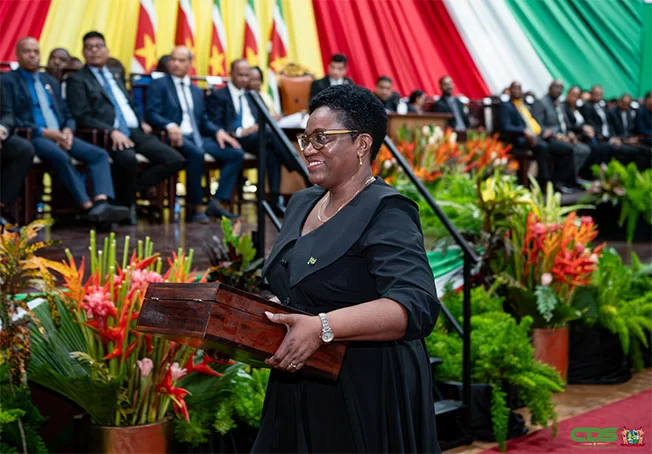
    Suriname’s labor development foundation Stichting Arbeidsmobilisatie en Ontwikkeling (SAO) marked a historic milestone for the country’s healthcare sector on Friday, when it graduated the first officially state-recognized cohort of nursing assistants, opening up new career advancement pathways for entry-level care workers that were previously out of reach.

    The achievement comes after the Surinamese Ministry of Public Health, Welfare and Labor granted formal accreditation to SAO’s nursing assistant training program. In addition to 14 nursing assistants, 16 graduates in household management received their official diplomas and certificates during the graduation ceremony. SAO’s full nursing assistant curriculum integrates modules in both household management and core clinical nursing assistance skills.

    For years before the accreditation, SAO issued only internal institutional certificates to program completers, even though many graduates had already secured roles in hospitals and other care facilities across the country. The lack of formal government recognition created a major barrier to professional growth: these workers were ineligible to apply for advanced healthcare training programs, including courses offered at the respected Elsje Finck Sanichar College COVAB. That barrier is now eliminated with the new accredited status, granting graduates nationally recognized credentials that strengthen their position in the labor market and clear the way for specialized further training in the healthcare field.

    Speaking at the ceremony, Minister of Public Health André Misiekaba and Deputy Minister Raj Jadnanansing emphasized that the accreditation is a transformative moment for both graduates and Suriname’s entire healthcare system. Officials noted that this development is a key step to reverse the persistent “brain drain” of healthcare workers from Suriname, by giving locally trained nursing assistants viable, rewarding career paths to build their careers at home instead of seeking opportunities abroad.

    Graduates will also receive dedicated support to secure placements in healthcare facilities across the country. The push to expand the pool of trained nursing assistants comes as Suriname continues to grapple with severe, ongoing healthcare staffing shortages. To maintain consistent care delivery, the ministry has already begun rolling out plans to bring in more nursing assistants and retired nursing professionals to fill gaps in care teams.

    The milestone aligns with the ministry’s 2025–2030 strategic framework, which includes wide-ranging plans to improve working conditions and roll out a revised pay scale for all healthcare workers. Moving forward, the ministry, COVAB and SAO will hold ongoing collaborative talks to further streamline the transfer process for nursing assistants pursuing advanced training.

    SAO leadership, including director Joyce Lapar, board chair Naomi Esajas-Friperson and Jolanda Verwey, reflected on the years of advocacy and program development that led to this formal recognition. They noted that accreditation does more than just guarantee consistent training quality: it delivers a much-needed boost to Suriname’s healthcare system at a time when the sector continues to face widespread staffing shortages and the ongoing outflow of skilled professionals to foreign markets.

  • Juvenile charged with Non-Capital Murder

    Juvenile charged with Non-Capital Murder

    Authorities in Grenada have formally charged a 16-year-old male resident of Sabb, St Andrew with non-capital murder in connection with the violent death of 66-year-old Melvar Wharwood. Prosecutors confirm the charge stems from evidence that the teen caused Wharwood’s death through unlawful harm, according to official statements released by the Office of the Commissioner of Police of the Royal Grenada Police Force. The criminal proceeding was launched after police launched a full investigation into the grim discovery: Wharwood’s unresponsive body was found in the Mirabeau area of St Andrew on Sunday, May 3, 2026. As a juvenile accused of the serious offense, the teen is scheduled to make his first initial court appearance at the Grenville Magistrate’s Court on Monday, May 11, 2026, where the first procedural steps of the legal process will get underway. No further details about the motive or circumstances surrounding the incident have been released to the public as the investigation remains ongoing. This report is based on official police documentation, and NOW Grenada disclaims responsibility for any third-party contributor content hosted on its platform.

  • OP-ED: The global epidemic of violence in an age of impunity

    OP-ED: The global epidemic of violence in an age of impunity

    In an authoritative analysis published by Dr. Alon Ben-Meir, President of the Institute for Humanitarian Conflict Resolution, the modern world faces an unprecedented escalation of systemic violence that has shifted from an extraordinary anomaly to a normalized daily reality. Data compiled by the International Institute for Strategic Studies underscores the severity of this crisis: more than 180,000 violent events have been documented globally, and the number of active armed conflicts currently stands at over 130—more than double the count recorded just 15 years ago. This pervasive spread of conflict inflicts catastrophic damage beyond immediate battlefield casualties: critical civilian infrastructure is destroyed, long-standing social bonds are torn apart, and the dehumanization of enemy groups has become an accepted political tactic. Disproportionate harm falls on the most vulnerable populations: hundreds of millions of women and children live within range of active armed clashes, facing not only the direct threat of bullets and bombs, but also secondary devastation including widespread hunger, preventable disease, and soaring rates of gender-based violence that leave millions dead and countless more with lifelong psychological trauma. Despite the scale of this crisis, Dr. Ben-Meir argues that the United Nations system and the world’s leading democratic powers are stuck in dangerous paralysis. Gridlocked by Security Council veto power, crippled by intensifying geopolitical rivalries, and reduced to issuing hollow, unenforceable declarations, global bodies offer only symbolic gestures of concern rather than the coordinated, enforceable accountability that this growing plague of violence desperately demands. The analysis frames the global escalation of violence as a structural crisis, not a random deviation from global order—a crisis that lays bare the profound failure of international institutions and the normalization of human suffering across political, economic, and societal spheres. The proliferation of conflict is not merely a numerical increase in armed confrontations, but a total breakdown of the global mechanisms designed to constrain aggression, turning dehumanization into a routine tool of political power. To unpack this multi-layered crisis, the analysis examines root causes across six interconnected dimensions, drawing on foundational insights from leading political and social philosophers. First, from a philosophical perspective, violence is revealed as a symptom of collapsed legitimate political authority, not a demonstration of state strength. Citing Hannah Arendt’s 1970 work *On Violence*, the analysis echoes Arendt’s core argument: “Power and violence are opposites; where the one rules absolutely, the other is absent. Violence appears where power is in jeopardy, but left to its own course, it ends in power’s disappearance.” Today’s spreading conflicts directly reflect this dynamic: they do not signal strong state power, but widespread institutional failure, where violence substitutes for the popular consent and legitimacy that governing bodies can no longer command. When political dialogue is exhausted and no legitimate power structure exists to resolve disputes, violence becomes the default recourse. Second, economic disenfranchisement acts as a critical accelerant of modern violence, fueled by resource competition, exploitative resource extraction, and systemic global inequality. Drawing on Slavoj Žižek’s concept of systemic violence, the analysis highlights that the most insidious form of modern violence is not the overt brutality of individual actors, but the anonymous, objective structural violence embedded in global capitalist systems. Greed-driven extraction of natural resources—from blood diamonds in Sierra Leone to oil in Venezuela and conflict cobalt in the Democratic Republic of the Congo—directly finances armed rebellions, turning prolonged conflict into a profitable enterprise for rogue actors. Beyond extractive industries, systemic economic deprivation, geoeconomic confrontation waged through weaponized tariffs and sanctions, and global commodity price shocks all directly shape military capabilities and the outcomes of conflicts. Third, the analysis examines the political conditions that enable violence to flourish. Political violence rarely emerges spontaneously from conflicting interests; it is a deliberate choice to pursue goals through coercion rather than negotiation. The paralysis of the UN Security Council and weakening democratic institutions align with Arendt’s description of bureaucratic tyranny: “In a fully developed bureaucracy, there is nobody left with whom one can argue, to whom one can present grievances, on whom the pressures of power can be exerted. … everybody is deprived of political freedom, of the power to act… where we are all equally powerless, we have a tyranny without a tyrant.” This dynamic creates a structural void in global accountability: veto power and geopolitical rivalry allow violence to spread unchecked, while political fragility and weakened institutions in countries such as Syria and Myanmar leave societies vulnerable to total breakdown, radicalization, and violent dissent. Fourth, deep societal fragmentation creates conditions where violence becomes normalized through growing inequality and the erosion of social cohesion. Centuries after Thomas Hobbes described the “solitary, poor, nasty, brutish, and short” life of humans in a pre-political state of nature, his bleak assessment remains relevant for modern communities where governance has collapsed and fear dominates daily life—conditions that currently affect millions of people living near active conflict zones. When social norms accept violence as a legitimate way to resolve disputes, combined with deep economic inequalities and limited opportunities for community participation, aggression is allowed to flourish. This environment normalizes dehumanization, creating recurring cycles of brutality fueled by gender-based violence, ethnic tensions, and unaddressed historical grievances, visible in regions from Nigeria to South Africa. Fifth, state-level actions and complicity amplify systemic violence. Governments that fail to address ethnic marginalization, resource competition, and establish functional governance create fertile ground for prolonged conflict. Walter Benjamin’s 1940 observation that “There is no document of civilization which is not at the same time a document of barbarism” underscores how national institutions can perpetuate violence through their foundational exclusionary structures. When governments refuse to recognize and address destabilizing inequities such as political, religious, or ethnic marginalization, societies become trapped in cycles of civil and international conflict. In extreme cases, rulers weaponize state apparatus to carry out totalitarian mobilization of violence, eliminating all space for political dissent and resistance. Finally, the instrumentalization of religion by political actors acts as a powerful catalyst for violence. When faith is stripped of its ethical core and co-opted to advance political goals, it becomes a tool to sanctify exclusion and legitimize brutality. Sectarian divides across the Middle East, South Asia, and parts of Africa turn collective identity into a battlefield, where compromise is labeled heresy and the annihilation of opposing groups is framed as a moral duty. As René Girard observed, “Religion shelters us from violence just as violence seeks shelter in religion.” When faith is manipulated to justify political power or historical grievance—seen in regions including India, Israel, and Iraq—it no longer restrains violence, but instead consecrates it, deepening cycles of retribution and turning conflicts into existential struggles that cannot be resolved through negotiation. The convergence of these six interconnected dimensions explains why violence has become a baseline condition of modern life, rather than an exceptional deviation from order. While Dr. Ben-Meir acknowledges that reversing this crisis is an extraordinarily difficult challenge, he outlines four concrete actionable measures that global actors can pursue to de-escalate global violence, emphasizing that grassroots public pressure is the essential driving force for change. Sustained popular protest, continuous grassroots advocacy, and relentless pressure on policymakers are required to force meaningful institutional reform. First, the United Nations Security Council must reform its veto power rules. Governments should restrict the use of veto power in cases involving genocide, war crimes, and crimes against humanity, and require permanent Security Council members to abstain from veto use when they are directly involved in a conflict. This would transform the veto from a tool of obstruction into a mechanism for accountability, addressing the institutional paralysis that allows violence to spread unchecked. Second, international bodies must develop and implement functional early warning systems that connect detection of emerging conflict to rapid preventive action, closing the persistent gap between early warning and effective response. Effective systems will integrate predictive analytics, local on-the-ground expertise, and cross-border coordination to anticipate violence months before it erupts, enabling timely diplomatic intervention and humanitarian action that can stop conflict before it begins. Third, governments and global institutions must address the root economic drivers of violence by tackling systemic inequality and economic insecurity. Progressive policy reforms including targeted wage increases, comprehensive tax reform, and targeted financial assistance for vulnerable communities directly address the underlying triggers of violence. Targeted lending, large-scale job creation, and redistributive economic policies alleviate the financial strain that fuels conflict and violent crime, making structural prevention far more effective than reactive, post-conflict response. This analysis, authored by Dr. Alon Ben-Meir, carries the disclaimer that the opinions expressed are solely those of the author and do not necessarily reflect the views of Duravision Inc., Dominica News Online, or any of its subsidiary brands.

  • Project to get kids active launches at St Lucy Primary

    Project to get kids active launches at St Lucy Primary

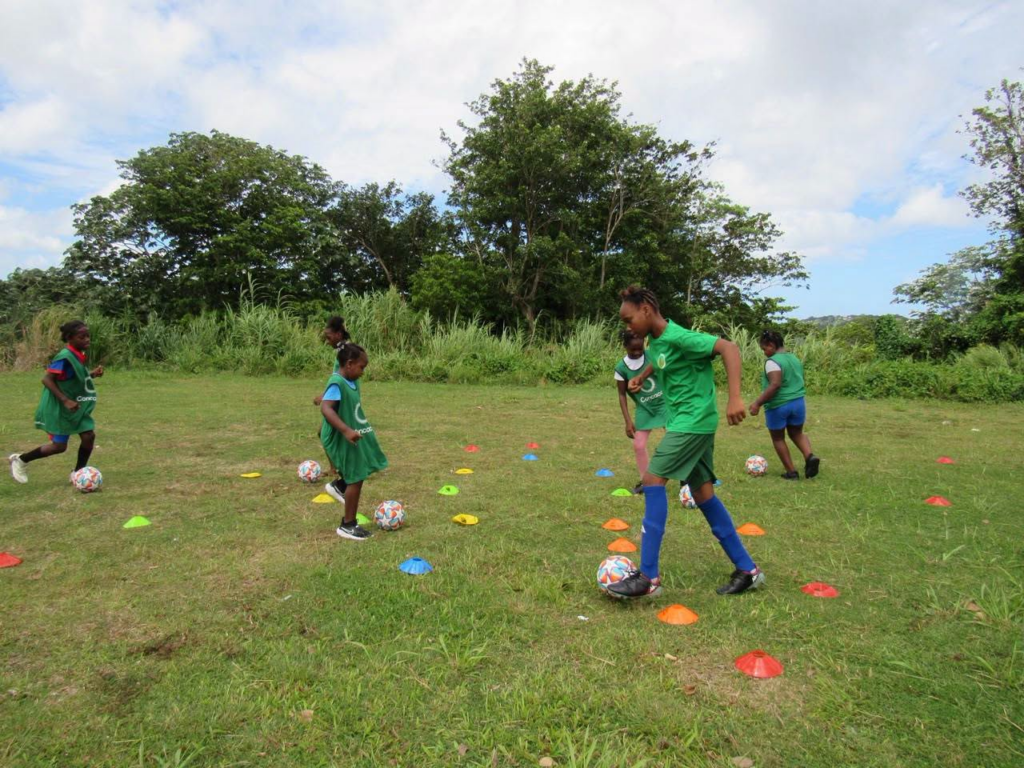
    A groundbreaking national public health initiative targeting rising childhood sedentary behavior kicked off this Friday in northern Barbados, with St Lucy Primary School earning the distinction of being the first participating institution to benefit from the new program, dubbed Project ACTIVE.

    Organized through a collaborative partnership between three leading Barbadian health organizations—the Barbados Physical Therapy Association (BPTA), the Heart and Stroke Foundation, and the Childhood Obesity Prevention Coalition—the launch day treated the school’s youngest students to a full afternoon of structured, playful physical activity designed to make moving feel like fun rather than a chore.

    In an interview with Barbados TODAY, lead project coordinator and practicing physiotherapist Marita Marshall outlined the core mission that drives the initiative: to embed sustainable, healthy lifestyle habits in children from an early age, while reframing physical exercise as an engaging, enjoyable activity rather than a requirement. Unlike many public health programs that focus exclusively on nutrition, Project ACTIVE is built to complement existing school wellness policies already in place across the island, adding a critical physical activity component that brings together students, parents and educators to prioritize whole-child wellness.

    As childhood sedentary behavior—driven in large part by growing screen time and recreational phone use—has become an increasing public health concern across Barbados, Marshall emphasized that early intervention is key to turning the tide on rising childhood inactivity rates and associated long-term health risks. “Our slogan is healthy habits, happy kids,” Marshall explained. “We really want to get away from children sitting on their phones playing all day, getting them to understand that exercise and physical activity can be fun. It is good for you. It is healthy, and it also supports the existing school nutrition policy that promotes healthy eating in schools.”

    Following the successful launch at St Lucy Primary, the project team will roll out in-person activations at two additional primary schools over the coming weeks. The next stop is scheduled for Irvine Wilson School on June 5, with a third activation planned for Blackman Gollop Primary School on June 25. Beyond in-school events, organizers are preparing to launch an islandwide online competition to expand participation beyond the education system, encouraging Barbadians of all ages to increase their daily physical activity. Marshall noted that the goal of the public-facing competition is to drive widespread engagement across the entire country, not just among school-aged children.

    Project organizers have encouraged members of the public to follow the BPTA’s official social media channels to receive real-time updates on the upcoming online competition, as well as announcements about future project activations across the island. Both teaching staff from St Lucy Primary and the core Project ACTIVE team joined students for the launch day activities, with young learners from Reception, Infants A and Infants B classes taking part in friendly, active challenges to kick off the national initiative.

  • CDB seminar to spotlight clean energy push and lower electricity costs across the Caribbean

    CDB seminar to spotlight clean energy push and lower electricity costs across the Caribbean

    As Caribbean nations grapple with sky-high energy costs, persistent economic strain, and intensifying climate risks, a landmark seminar focused on accelerating the region’s shift from imported fossil fuels to renewable energy is set to take centre stage at the Caribbean Development Bank’s (CDB) 56th Annual Meeting of the Board of Governors in Nassau, The Bahamas.

    Scheduled for Thursday, June 4, 2026, from 9:00 AM to 10:30 AM Atlantic Standard Time, the 90-minute session titled *Energy Transition: The Key to a More Resilient Caribbean* is framed as one of the flagship discussions of the week-long gathering, which runs from June 1 to 5. The event aligns with the annual meeting’s overarching theme: *Forging the Caribbean’s Future: Strategic Solutions for Uncertain Times*, which aims to equip regional stakeholders with actionable approaches to navigate economic volatility, fiscal headwinds, and growing climate-driven threats.

    The core impetus for the seminar stems from a long-standing crisis plaguing the region: crippling dependence on imported fossil fuels that has pushed electricity prices to among the highest globally. According to CDB data, commercial electricity rates across the bank’s Borrowing Member Countries average roughly US$0.37 per kilowatt-hour — almost three times the average rate across the United States. William Ashby, Acting Division Chief of CDB’s Economic Infrastructure Division, emphasized that this extraordinary cost burden weighs disproportionately on micro, small, and medium enterprises (MSMEs), eroding the Caribbean’s overall economic competitiveness. Beyond cost concerns, the fossil fuel dependence also leaves regional energy systems vulnerable to global price shocks and supply chain disruptions, undermining long-term energy security.

    To meet existing national renewable energy targets set by Caribbean nations, CDB estimates that approximately US$11 billion in targeted clean energy investment will be required between 2020 and 2030. To unlock this level of financing and progress, officials argue that deeper regional cooperation, progressive policy reform, and creative, accessible financing mechanisms are no longer optional — they are critical necessities.

    The seminar will convene a cross-sectoral lineup of key stakeholders, including regional government policymakers, leading energy sector specialists, global and regional financiers, and international development leaders, all to debate and co-develop practical strategies to speed up the transition to low-carbon energy systems. Key topics on the agenda include modernizing aging regional electricity grids to accommodate variable renewable energy sources like solar and wind, updating regulatory frameworks to draw more private sector investment into clean energy projects, and expanding access to blended financing — a model that combines public and private capital to de-risk emerging renewable initiatives.

    The session will also showcase CDB’s own ongoing renewable energy work across its member states, which forms a core pillar of the bank’s 2026–2035 strategic plan, *Transforming the Caribbean for Resilience*. Confirmed featured speakers bring on-the-ground expertise from across the region: Barbados’ Kerrie Symmonds will outline his country’s national Energy Transition and Investment Plan; Toni Seymour will share updates on utility modernization and transformation efforts in host country The Bahamas; Mohammad Rafik Nagdee will deep dive into pathways for expanded renewable energy financing and project development; and Timothy N. J. Antoine will offer perspective on how clean energy transition strengthens broader regional economic resilience.

    For those unable to attend the event in person, CDB has announced that all public sessions of the 56th Annual Meeting, including the energy transition seminar, will be streamed live for free via the bank’s official YouTube, LinkedIn, and Facebook platforms, opening the discussion to global stakeholders and interested observers.