The input provided for news rewriting and analysis only contains social media sharing links, an image URL, and a PDF download prompt with a stated file size of 202KB. No actual core news text, event details, background context or relevant factual information about the reported story is included in the user’s submission. Without the full substantive content of the original news piece, it is not possible to conduct a structured rewriting, in-depth analysis of core points, or accurate classification of the story. Receiving incomplete input prevents the completion of the requested news processing task as specified.
作者: admin
-

Tems declares Saint Lucia as ‘most beautiful place’ at Jazz Festival
One of the biggest highlights of the ongoing Saint Lucia Jazz & Arts Festival came on Saturday night, when Grammy-winning Nigerian Afrobeats star Tems delivered a career-defining performance at the Pigeon Island-hosted World Beats stage — and left the crowd with more than just memorable music. Making her first-ever appearance on the Caribbean island, the singer opened her set with an unscripted, heartfelt outpouring of affection for Saint Lucia that quickly won over every person in attendance.
“I’m actually loving this place so much, this might be the most beautiful spot I’ve ever visited in my life,” Tems told the roaring crowd, before joking, “Can you adopt me? Can I become one of you? You already feel like my people.” The warm, spontaneous remarks earned deafening cheers from the audience, setting a joyful tone for the rest of her headlining set.
Tems went on to deliver a dynamic, crowd-pleasing performance packed with her most beloved hits, including fan favorites *Me & U* and *Big Daddy*, that many attendees marked as the standout act of Saturday’s programming.
World Beats, the flagship Saturday event of this year’s festival, curated a dynamic lineup that blended global superstar talent and exciting regional acts from across the Caribbean. Alongside Tems, the night featured sets from rising performers LuCity, Les Aiglons De Guadeloupe, Princess’ Lover, and X-Man, plus another Grammy-winning headliner: British R&B star Ella Mai. Mai also drew a massive, engaged crowd, with fans singing every word back to her during performances of her chart-topping hits *Boo’d Up*, *Trip*, and *Naked*.
The high energy of the weekend kicked off one night earlier, when the Caribbean Fusion showcase brought its own electrifying energy to the festival grounds. Jamaican reggae star Skip Marley, Trinidadian soca group Kes the Band, dancehall artist Dexta Daps, and local Saint Lucian collective Melange all delivered high-octane sets that drew thousands of attendees to the stage.
For festival-goers, the excitement is far from over. Sunday night will bring the event’s closing showcase, The Ultimate Celebration, which features one of the most anticipated lineups of the entire weekend. Headlined by iconic R&B stars Brandy and Monica, the closing night will also include performances from legendary British-Trinidadian singer Billy Ocean, British soul songstress Beverley Knight, local favorite Mervin Wilkinson & Friends, and rising artist Kyle Ernest, wrapping up what has already been an unforgettable weekend of world-class music in one of the Caribbean’s most stunning settings.
-

Suriname en Indonesië breiden samenwerking uit met training in voedselverwerking
In a diplomatic move aimed at deepening bilateral agricultural cooperation, the governments of Suriname and Indonesia formalized a new partnership agreement on Friday, establishing a targeted training initiative focused on food processing and agro-industry development. The accord marks a tangible step forward in advancing shared goals of sustainable agricultural growth and economic diversification for both nations, with a specific focus on building local capacity in the Caribbean region.
The signing ceremony brought together senior representatives from both sides. On behalf of Suriname’s Ministry of Foreign Affairs, International Trade and Cooperation (BIS), acting director of Foreign Affairs Luziano Truideman put pen to paper on the agreement. Indonesian ambassador to Suriname Agus Priono signed for the Indonesian side, completing the formalization of the partnership. A commemorative photo of the two officials following the signing was captured by BIS photographers.
Organized by Indonesia’s official development agency Indonesian AID/LDKPI, the training program is tailored to build expertise in the processing and product diversification of mango and breadfruit, two staple tropical agricultural crops relevant across Caribbean nations. The two-week intensive program is scheduled to run from May 31 to June 14, 2026, hosted at the Politeknik ATI Padang based in West Sumatra, Indonesia. Suriname will send two delegates to participate in the full program, gaining hands-on skills and technical knowledge to bring back to their domestic agricultural sector.
According to a statement from Suriname’s BIS, the new agreement represents a meaningful deepening of longstanding bilateral cooperation between Suriname and Indonesia across three core priority areas: agricultural development, food processing, and institutional capacity building.
For Suriname specifically, the partnership opens a valuable new opportunity to acquire advanced technical knowledge and industry expertise in agro-processing and value addition for locally produced agricultural goods. Suriname’s domestic policy priorities place strong emphasis on expanding sustainable food production and broadening the country’s economic base beyond traditional sectors, and participating officials noted that this training initiative aligns perfectly with those national development goals.
Beyond structured classroom and practical training sessions, the program will also include an official working visit to Indonesia’s capital Jakarta. During the visit, participating delegates will gain on-the-ground practical experience, and engage in direct knowledge exchange with leading Indonesian research institutions and industry experts specializing in food processing and agro-industrial development.
-

COMMENTARY: Hearing her voice every day
Even on ordinary days, there are few sounds as grounding as the familiar lilt of my mother’s voice. Today, that voice rarely stretches into long conversations; most often, it ends with her soft, familiar refrain: “God bless you, Amen.” That quiet line is enough, though, to pull me straight into reflection as Mother’s Day approaches, calling my mother’s life, her quiet strength, and the subtle shifts time and geographic distance have carved into my family into sharp focus.
For as long as I can remember, the simple knowledge that she existed, just a call away, was a quiet comfort. She never claimed to fully understand every part of my life, but that was never the point—her steady presence was enough. As I grew into adulthood, I learned to give that same presence back to her: joining her on the trips she loved, and savoring the good meals that have always brought her joy.
My mother’s later years have been marked by unthinkable hardship. Five years ago, we lost my brother at just 50 years old, and a deep, enduring grief has settled around her ever since. Still, she refused to stop moving forward. Grief, however, does not stay confined to the heart—it seeps into the body, slow and unrelenting, changing her in ways I could not see from afar.
It had been years before I could travel home to see her, and when I finally did, two years ago, the visit overlapped with both Mother’s Day and her 80th birthday. Standing across from her, I saw the weight of years in the lines on her face, the slower cadence of her steps, and the quiet, unshakable resilience that has always defined her.
In the years since that visit, her declining health has demanded more and more daily care. Like thousands of other families separated by international borders, distance complicates every part of our journey—it strains us emotionally, and creates practical barriers that feel impossible to overcome. The hardest part of this separation is not the miles between us. It is the constant, heavy knowledge that I cannot always give her the level of gentle, consistent care she deserves in her final chapter.
This struggle is not unique to our family. It is a shared reality for millions of cross-border households: when formal care support is limited, and access to reliable care depends on proximity and local networks, the weight of responsibility falls disproportionately on families already stretched thin across continents.
Over time, I have also had to accept that our daily routine of calls at the same time each day is gone. Our conversations are fewer and further between now, but they have also grown deeper, more intentional. Every exchange carries more weight, more gratitude, more focused presence than the casual check-ins we shared for decades.
Even with all the ache of distance and grief, gratitude is what I feel most. I am grateful she has a dedicated caregiver to stand by her each day. I am grateful I can still pick up the phone and hear her voice. I am grateful that even when connection changes, it never fully breaks.
My sister and I both built our lives outside our home country. We did not leave for political asylum or economic opportunity—we left to build our own families, to follow love. My brother stayed behind to be close to our mother until his passing, and our father died years before he did.
When I look at my mother, I see a woman who lived every bit of her life fully. She was always active, endlessly social, engaged with her community, and brimming with energy for even the smallest daily moments. Now, like so many other elderly people, her world has grown quieter. The phone rings far less often than it once did.
But this is not just my mother’s story. It is the story of millions of aging parents, millions of scattered families, millions of adult children building lives thousands of miles from the home they grew up in. And if we are honest, it will likely be our story one day, too, when our own children grow and build their lives across borders.
That is what makes Mother’s Day so much more than a commercial celebration of mothers. It is a reminder: to show up for the people we love, to cherish the connections we still have, to appreciate the simple gift of hearing a loved one’s voice on the other end of a line.
It is a reminder to live fully, to feel deeply. To value the people who are still with us, today. To extend forgiveness, and to accept it when we need it. To give love without keeping score of what we get in return. Because at the end of the day, that is all love ever really is.
-

Cynthia Thomas: Historic ‘Stampgirl’ from Dominica and beloved matriarch in her 90th year
Nearly seven decades after an unplanned childhood moment secured her a permanent place in Dominica’s national identity, Cynthia Thomas, the face of one of the Caribbean nation’s most iconic postage stamps, has celebrated her 90th birthday, surrounded by loved ones and decades of warm memories.
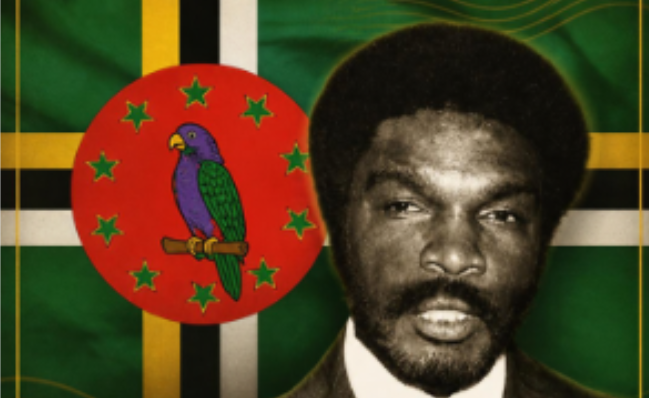
Born in Dominica on March 7, 1936, Thomas spent her formative years at the Nuns’ Industrial School on the island, a setting that would unexpectedly shape her lasting legacy. It was the 1950s, when the Dominican government was developing a new series of postage stamps intended to showcase everyday island life to the world. Officials commissioned a professional photographer to capture authentic scenes of local daily activity, and during a school visit, the photographer snapped a series of shots that included a young Thomas weaving traditional mats.
Of all the frames captured that day, the image of teenage Thomas at work stood out. It was selected for the final stamp issue, appearing on both the 3-cent and 48-cent denominations released in 1957. That small print turned a local schoolgirl into a globally recognized symbol of Dominican culture, seen by letter senders and collectors across every continent.
After completing her schooling, Thomas left Dominica to live and work first in St Kitts and Antigua, before relocating to London, United Kingdom, in 1961. In London, she built a decades-long professional life, holding roles at a Harrods bank and later at car manufacturer Vauxhall Motors, while raising her only son, Stephen. She would go on to become a proud grandmother to two grandchildren, Damani and Jamilah.
Out of respect for Thomas’ age and limited mobility, her 90th birthday celebration earlier this year was kept small and intimate, held at her London home. Close family members traveled to gather with her, bringing fresh flowers, her favorite Caribbean takeaway meal, a custom birthday cake, and a playlist of the classic music she loves to sing along to.
Music has remained one of Thomas’ core lifelong passions, and in a testament to her enduring creativity, she even released a full album of her work just a few years ago. For Thomas, the stamp that made her a part of Dominican history remains a source of constant joy and pride. Relatives say she still reflects fondly on the 1950s photo shoot, often describing the experience as unexpected and deeply meaningful. She also regularly shares warm reflections of her time at the Nuns’ Industrial School with younger family members, advising them that school days are among life’s most precious gifts, even when they are not fully appreciated in the moment.
Decades after that photo was taken, and thousands of miles from the island where she was born, mention of the iconic stamp still lights Thomas up. The small, accidental moment of her teenage years has grown into an enduring piece of Dominica’s cultural heritage, bridging geographic distance and multiple generations to remain a beloved part of the nation’s visual identity.
-

Veranderende consumptiegewoonten in China kunnen Amazone-regenwoud beschermen
Against a backdrop of growing global concern over Amazon deforestation tied to agricultural trade, a group of leading Chinese beef importers has made a landmark commitment to source deforestation-free certified beef from Brazil, challenging long-held assumptions about China’s approach to global commodity purchasing. The initiative, led by Xing Yanling, chair of the Tianjin Meat Industry Association, marks a visible shift toward sustainability in one of the world’s largest agri-food trade relationships. During an April visit to the Brazilian Amazon region, Xing expressed admiration for the region’s rich ecosystems, framing her trip as far more than a casual tourist visit. Under her leadership, importers handling roughly 40% of all China’s Brazilian beef imports have pledged to purchase 50,000 tons of certified deforestation-free beef before the end of 2025. This volume accounts for approximately 4.5% of Brazil’s projected total beef exports to China for the year. For years, conventional wisdom has held that China prioritizes low prices above all else when sourcing bulk commodities like soy and beef from South America. This new pledge upends that narrative, signaling that one of the most powerful players in global commodity trade is willing to pay a premium for more sustainable, responsibly sourced supply chains. The private sector commitment builds on years of policy action from the Chinese government to address the environmental footprint of its international trade. In 2019, China updated its forestry laws to ban trade in illegally harvested timber, and in 2023, the country signed a joint agreement with Brazil to end trade linked to illegal deforestation. Even before the latest industry commitment, major Chinese state-owned agribusiness COFCO had already laid out a goal to eliminate deforestation from its entire supply chain starting last year. Beef production is widely recognized as one of the agricultural commodities most closely linked to Amazon deforestation, particularly in Brazil’s northern rainforest regions. Environmental research group MapBiomas estimates that 90% of all deforested land in the Brazilian Amazon is immediately converted to cattle pasture. As Chinese consumer awareness of environmental issues grows alongside rising purchasing power, demand for traceable, more eco-friendly food products has surged. The new initiative relies on the “Beef on Track” certification label developed by Brazilian non-profit Imaflora, which allows end consumers and buyers to verify that beef is fully traceable, sourced from legal land, and free of deforestation links. Impressively, the Tianjin-based importers have agreed to pay a 10% premium for beef that meets the certification’s strict standards, which also include prohibitions on slave labor. While the initiative holds enormous potential to drive systemic change in the Brazil-China beef trade, it faces significant, well-documented challenges. Brazil’s current cattle tracing systems are vulnerable to fraud, a common scam known as “cattle laundering” where illegal cattle raised on deforested land are mixed with legal cattle to enter the supply chain. Industry experts note that widespread upgrades to tracing infrastructure could take years to implement. Additionally, Brazil implemented a new import quota for beef bound for China this year, adding extra pressure to the already constrained market. Reactions within Brazil’s beef industry have been divided. ABIEC, the country’s leading beef export association, has raised concerns that adding an extra certification layer could complicate market operations and has called for alignment with existing industry systems. Even so, Imaflora emphasizes that the certification is designed to reward existing sustainable efforts and open new market opportunities, rather than create unnecessary barriers for producers. “This certification recognizes the work that companies are already doing to guarantee sustainability and traceability,” explained Marina Guyot, a representative of Imaflora. The “Beef on Track” certification is expected to be fully available to meat processors, retail supermarkets, and importing companies by the end of the year, opening what could be a transformative new chapter in sustainable bilateral trade between Brazil and China.
-

How would you grade Guevarro?
As Trinidad and Tobago Police Service (TTPS) Commissioner Allister Guevarro approaches his one-year anniversary in the top law enforcement role next month, Homeland Security Minister Roger Alexander is opening the door for public and peer input on his tenure — declining to share his own personal rating ahead of the broader feedback period.
Alexander made the announcement during the TTPS’s 103rd annual Sports and Family Day, held Tuesday at St James Barracks, where reporters pressed him for his assessment of Guevarro’s leadership and what areas may need improvement. Guevarro and several senior TTPS deputies, including Junior Benjamin and Suzette Martin, were in attendance during the media interaction.
When asked to weigh in on Guevarro’s leadership of the national police force, Alexander pushed back on framing policing performance as a one-person responsibility. “It’s a team effort and not an individual effort. For the team effort, I have total confidence in the Trinidad and Tobago Police Service, from where I came from,” he told reporters.
The conversation also turned to longstanding public demands for mandatory body-worn cameras for frontline patrol officers, a policy widely cited as a tool to boost transparency and police accountability. While Alexander confirmed the government and TTPS do not oppose the adoption of body cameras, he said outfitting officers with life-saving protective gear is the immediate priority, given the rising danger facing law enforcement in the country.
“At this time, I have decided to protect law enforcement first by giving them the requisite protection gear so they can better protect you as citizens and this nation as a whole,” he explained. Pointing to the increasingly heavy firepower used by criminal actors, including 7.62mm and 5.56mm ammunition, Alexander questioned whether the public should prioritize recording equipment over officer safety: “What do you want? Do you want a man to be confident enough to take on these persons or do you want him to tape it with all the requisite equipment?”
After reporters reiterated the role of body cameras in ensuring transparency and accountability, Alexander shifted the conversation to what he called the deeper root causes of violent crime in the country: systemic failures in family and community upbringing. He argued that public discourse too often focuses exclusively on police performance, while ignoring the role of family members who harbor violent criminals and fail to intervene in harmful behavior early on.
“Why this conversation is not with the parenting aspect of this?” he asked. “Greater attention must be paid to family structures, community influence and early intervention in schools. We often question police officers, but less focus is placed on parents and grandparents, and on the fathers and them who are shooting persons, killing young children and then going to sleep and hugging up their children.”
Alexander added that even during the event, there are families across the country turning a blind eye to the criminal activity of their relatives: “Right now, while we’re speaking here, there’s someone — a grandmother, a mother, somebody — looking out the window to see when the police is coming because their criminal son is lying on the bed. He’s sleeping because he was out all night.”
To address these root causes, the minister confirmed the government is rolling out a new, multi-stakeholder psychosocial intervention initiative focused on crime prevention, a strategy the administration says is unprecedented in Trinidad and Tobago. A dedicated intervention team will work directly in schools and local communities to address harmful patterns early, partnering with criminologists, psychologists, parent-teacher associations, and faith leaders to implement preventive measures.
“At this time, the police have a psychosocial intervention team that we are putting together to enter the schools, to enter the community… Things that were never done before, because we understand prevention is the first stage,” Alexander said. “We have a wide range of professionals and community leaders coming on board because they understand prevention is better than cure.”