作者: admin

  • LIVE: Opening Ceremony of the 51st Regular Meeting of the Conference of Heads of Government of CARICOM

    LIVE: Opening Ceremony of the 51st Regular Meeting of the Conference of Heads of Government of CARICOM

    This entry submitted for news processing arrives incomplete: only social sharing buttons (for sharing, tweeting, pinning content) and a link to an image hosted on an external news server are included, with no full text of the original news story provided. Without the core journalistic content that would detail events, quotes, data, or context, no full, accurate rewrite of a specific news report can be completed. The image linked is dated July 6, 2026, and stored under a unique file identifier, but no accompanying descriptive text or narrative to outline the story’s topic, key players, or core claim is available for analysis or reconstruction.

  • Jamaica wint CARICOM-voorzitterstrofee tijdens 19e Road Run/Walk

    Jamaica wint CARICOM-voorzitterstrofee tijdens 19e Road Run/Walk

    Ahead of the 51st regular CARICOM Conference of Heads of Government, regional athletes and recreational runners gathered in Saint Lucia for the 19th edition of the annual CARICOM Road Run/Walk, where Jamaica’s Garfield Gordon and Barbados’ Carlie Robinson secured the event’s top individual honors.

    Held in Gros Islet from July 5-8 alongside the leadership summit, the 2025 event drew more than 250 participants spanning professional competitors, hobbyist runners and amateur walkers from 15 Caribbean countries and territories. Gordon crossed the finish line first in the men’s 10-kilometer race to take home the CARICOM Chairman’s Trophy, while Robinson claimed victory in the women’s division to earn the Secretary-General’s Trophy.

    Regional neighbors followed closely behind the winners on the podium. In the men’s division, Guyana’s Odida Parkinson finished second, and Antigua and Barbuda’s Kamar Thomas took third place. For the women’s competition, Guyana’s Attoya Harvey claimed second spot, while Trinidad and Tobago’s Alexia John rounded out the top three.

    Beyond athletic competition, event organizers and regional leaders framed the Road Run/Walk as far more than a race, positioning it as a cornerstone event that celebrates Caribbean unity and advances public health priorities across the bloc. Speaking on behalf of current CARICOM Chair and Saint Lucia Prime Minister Philip J. Pierre, Saint Lucia’s Minister of Education, Youth Development, Sport and Digital Transformation Kenson Casimir emphasized the event’s deeper meaning during the awards ceremony.

    “This gathering is not just about speed or trophies. It stands as a symbol of health, discipline, solidarity and the interconnectedness that binds our entire Caribbean region,” Casimir said. “CARICOM is not only about heads of government meetings and policy decisions. It is first and foremost about our people, our communities, and the shared Caribbean identity that unites us all.”

    CARICOM Secretary-General Dr. Carla Barnett, who joined participants for a group photo ahead of the award ceremony, echoed this sentiment and highlighted the event’s critical public health mission. She noted that non-communicable diseases including hypertension, diabetes and cardiovascular disease have seen sharp prevalence growth across the Caribbean region, making active lifestyle promotion a key priority for the bloc. By encouraging regular physical activity and healthy eating through events like the Road Run/Walk, CARICOM aims to drive down rates of these preventable conditions across member states.

    Following the race, Barnett presented the Secretary-General’s Trophy to women’s champion Robinson, while Casimir awarded the Chairman’s Trophy to Gordon. The competition sets the stage for four days of high-level talks at the 51st CARICOM Conference of Heads of Government, where regional leaders will deliberate on pressing priorities including deeper regional integration, expanded economic cooperation, cross-border security, and other key issues affecting the Caribbean Community.

  • Flow welcomes students to Summer Internship Programme

    Flow welcomes students to Summer Internship Programme

    As part of its long-term commitment to growing the next generation of regional industry professionals, Caribbean connectivity leader Flow has kicked off its highly anticipated 2026 Summer Internship Programme, welcoming nine emerging young talents from educational institutions across Barbados. The month-long initiative is designed to give participants immersive, hands-on work experience that bridges academic learning and real-world professional practice, all under the mentorship of Flow’s seasoned industry experts.

    The cohort selected for this year’s programme includes Chalande Headley, Tajei Greenidge, Aria Hill, Xavion Jordan, Naomi Simpson, Princess Callender, Kamal Ifill, Ajani Power and Joshua Waithe. Each intern has been placed in one of Flow’s core business departments, spanning Supply Chain, Marketing, Corporate Communications, Finance, Business-to-Consumer Sales, Business-to-Business Sales, Technology and Customer Experience, allowing them to contribute directly to ongoing company projects that expand and improve connectivity access across the Caribbean region. The programme will run through the full month of July, building on an official launch that took place June 29 with a structured orientation session.

    The opening orientation was led by Melissa Sharif, Flow’s Senior Manager of People, with additional support from across the company’s Senior Leadership Team, including Finance Director Ryan Kranpradie, Marketing Manager Damian Mascoll and Senior Communications Manager Toni Yarde. The event began with an interactive icebreaker activity, where interns shared personal and academic backgrounds and read positive affirmations pulled from a custom “positive pickle” jar, helping to ease the transition into the professional work environment. Following the introductory activity, senior leaders delivered practical career advice and actionable guidance to set the interns up for success.

    In his opening remarks to the cohort, Desron Bynoe, Flow’s Vice President and General Manager, encouraged participants to lean into curiosity and take full advantage of the developmental opportunity. “Ask questions, be curious, be humble and seize this valuable opportunity,” Bynoe said. “Don’t be afraid to take shots because it is in taking shots that you learn how to score and become a prolific goal scorer. Be very curious because it is through curiosity that you grow.”

    Adding a personal perspective to the guidance, Xavier Jeffrey, Flow’s Senior Manager of Retail Sales, who launched his own career at Flow as an intern, shared his own early-career journey with the group. “Don’t be scared to get it wrong or make mistakes. I was in your position many years ago. This is the time to learn,” Jeffrey said. “Flow is a supportive and encouraging environment with friendly people who are here to guide and encourage you.”

    Over the five weeks of the programme, interns will take part in a mix of project work, skills-based learning activities and professional enrichment sessions led by experts across every level of the company. To cap off the experience, the cohort will wrap up the internship by planning and executing a community outreach project, giving participants the chance to give back to local communities while demonstrating the collaborative and project management skills they have developed during their time in the programme.

  • WPA calls for nationwide protest against unlimited benefits for former presidents

    WPA calls for nationwide protest against unlimited benefits for former presidents

    On the eve of CARICOM Day, Guyana’s main opposition-aligned Working People’s Alliance (WPA) has issued a nationwide call for peaceful public demonstrations to push back against the Irfaan Ali administration’s proposed legislation that would restore uncapped financial and service benefits to all former Guyanese presidents. The protest, scheduled to kick off at 10 a.m. local time on July 6, will center on a main gathering at Church of God Road in Buxton, with organizers urging civic and community groups across all regions of the country to host parallel peaceful demonstrations in their own localities.

    WPA executive member Kidackie Amsterdam made the announcement during an appearance on the *Politics 101* program hosted by Dr. David Hinds, appealing for cross-sector participation from trade unions, religious institutions, youth organizations, private sector leaders, and other civil society groups to join the demonstration. The core target of the protest is the *Former Presidents’ Facilities and Benefits Bill 2026*, which the current administration has introduced to repeal the 2015 benefits act implemented by the former APNU+AFC government that placed strict caps on all post-presidency benefits.

    Amsterdam laid out the high projected cost of the proposed legislation, estimating that the three living former presidents – Samuel Hinds, Bharrat Jagdeo, and Donald Ramotar – would drain an additional 100 million to 200 million Guyanese dollars annually from public coffers, on top of the existing arrangement that grants former presidents seven-eighths of the sitting president’s 3 million-plus GY$ annual salary. He drew a sharp contrast between this proposed generous spending and the struggles of ordinary Guyanese, noting that the country’s more than 76,000 senior citizens receive just 46,000 GY$ per month in old age pension. Former President David Granger, the fourth living former head of state, currently travels to Cuba for ongoing specialized medical care under existing benefits provisions.

    Joining Amsterdam on the program, former PNCR executive member Annette Ferguson threw her full support behind the protest, rejecting the proposal that the bill be sent to a bipartisan parliamentary select committee for review – a position put forward by PNCR executive and APNU parliamentarian Ganesh Mahipaul. Ferguson argued that the bill is unconscionable and imposes an unfair extra financial burden on Guyanese citizens already grappling with soaring cost of living, underfunded public healthcare, and underresourced education systems. She also recalled that a nearly identical uncapped benefits bill was pushed through by the Jagdeo administration in 2009, despite widespread public outcry from civil society and the then-opposition.

    Notably, the broader A Partnership for National Unity (APNU) coalition, which counts the WPA as a member, has not formally backed public protests against the bill. But the WPA has framed the demonstration as a non-partisan push to scrap legislation it argues would place an unnecessary drain on public finances at a time when most Guyanese are struggling to cover basic living costs.

    Key provisions of the 2026 bill that have sparked outrage would eliminate nearly all restrictions on former presidents’ benefits. Under the proposed law, former presidents would be exempt from all income taxes, just like the sitting head of state. Critically, the legislation would grant unlimited benefits regardless of whether a former president engages in private business, paid employment, or even if they are convicted of a criminal offense that results in a prison sentence.

    The 2015 law currently in effect – which the Ali administration is moving to repeal – puts clear limits on all public spending for former presidents. It caps combined monthly utility costs (water, electricity, telephone) at 25,000 GY$ per former president, limits medical expense reimbursement to 200,000 GY$ annually for the former president, their spouse, and minor children, and restricts reimbursement to care received at domestic public health facilities unless the required treatment is not available locally. The 2015 framework also limits personal security to no more than two full-time personnel, caps state-provided motor vehicles at two, and provides an annual vacation allowance equal to two first-class return airfares, aligned with the terms offered to Supreme Court judges.

    Amsterdam emphasized that the WPA does not oppose treating former presidents with dignity and reasonable respect, but argues any benefits must be balanced against the country’s pressing economic needs and the constraints facing ordinary taxpayers. He warned that the cumulative long-term cost to the national treasury of the uncapped benefits could run into hundreds of millions of Guyanese dollars, diverting critical funds from far more urgent national priorities. Those priorities, he said, should include higher wages and benefits for teachers, nurses, police officers and other public servants, expanded public healthcare access, increased support for pensioners and people living with disabilities, expanded school feeding programs, critical infrastructure upgrades, youth employment programs, and financial support for the agriculture sector and small businesses.

    “This is a question of national priorities,” Amsterdam said. “Public office is a privilege of service, not a pathway to unlimited taxpayer-funded privileges after leaving office. This demonstration is not about personalities or partisan politics – it is about protecting the public purse and demanding responsible governance.”

    He criticized the government for using its parliamentary majority to advance a policy that ordinary Guyanese never asked for and cannot afford, arguing that the proposed legislation is completely out of touch with the daily economic realities facing most citizens. “Every additional dollar committed to generous post-office benefits is a dollar unavailable for urgent national priorities,” he noted.

    Amsterdam closed with an appeal to all Guyanese, regardless of political affiliation, ethnicity, or religious background, to join the peaceful, lawful demonstrations across the country. “Let us demonstrate peacefully, lawfully and respectfully. Let us send a clear message that Guyana’s wealth belongs to all Guyanese and should first be used to improve the quality of life of the people,” he said.

  • Antigua and Barbuda Hosts Major Regional Intelligence Meeting

    Antigua and Barbuda Hosts Major Regional Intelligence Meeting

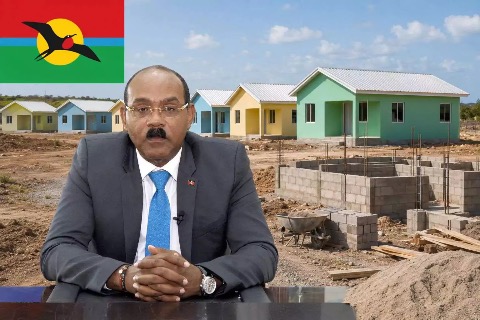
    From July 1 to 3, 2026, the capital city of St. John’s in Antigua and Barbuda welcomed 32 senior intelligence representatives from all Caribbean Community (CARICOM) member states, alongside delegates from seven regional and global partner organizations, for the 35th annual gathering of the Standing Committee of Regional Intelligence Heads — one of the Caribbean’s most high-stakes and influential security cooperation events. Organized jointly by the CARICOM Implementation Agency for Crime and Security (CARICOM IMPACS) and Antigua and Barbuda’s Office of National Drug and Money Laundering Control Policy (ONDCP), the three-day summit centered on aligning regional strategies to counter the growing wave of cross-border security threats endangering Caribbean communities.

    At the official opening ceremony, Antigua and Barbuda’s Attorney General, the Honourable Sir Steadroy C. Benjamin, delivered a keynote address on behalf of Prime Minister Gaston Browne, who was unable to attend the event. In his pre-recorded message, Prime Minister Browne stressed a core, unifying principle for the gathering: regional security is a collective responsibility. No single Caribbean nation has the resources or reach to defeat transnational organised criminal networks on its own, he emphasized, noting that coordinated action and information sharing are non-negotiable for protecting regional stability. Browne also drew a direct connection between the summit’s outcomes and Antigua and Barbuda’s upcoming hosting of the Commonwealth Heads of Government Meeting (CHOGM 2026), scheduled for November this year. A robust, coordinated regional intelligence framework, he argued, is the critical foundation for delivering a safe, secure, and successful landmark global event.

    Over the course of the summit, intelligence leaders conducted deep dives into the full spectrum of urgent security challenges facing the region. Beyond long-standing threats including drug trafficking, illicit weapons smuggling, irregular migration, and the persistent risk of terrorism and violent extremism, delegates zeroed in on one rapidly growing menace that has emerged as a top priority: cyber-enabled organised fraud. Delegates unanimously agreed that cyber fraud is no longer a peripheral financial issue or a minor nuisance for consumers. It has evolved into a highly sophisticated, globally coordinated criminal industry that drains life savings from working-class Caribbean households and generates billions in illicit revenue that funds other serious criminal operations across the region.

    A key focal point of the gathering was a dedicated working session with representatives from regional and international partner organisations, which reinforced the summit’s core theme: countering transnational crime demands collaboration that extends beyond national and even regional borders. By the close of the meeting, delegates reached a consensus on three key priority actions: strengthening real-time cross-border intelligence sharing, deepening existing strategic partnerships between member states and external stakeholders, and leveraging advanced financial intelligence tools to trace and disrupt the money flows that sustain transnational criminal networks.

    The summit was chaired by ONDCP Director Lieutenant Colonel Edward Croft, who concluded his tenure in the role at the close of the event. CARICOM IMPACS Executive Director Lieutenant Colonel Michael Jones publicly praised Croft for his steady, insightful leadership throughout the proceedings and highlighted his decades of dedicated service that have delivered tangible, lasting improvements to regional security across the Caribbean. For Antigua and Barbuda, hosting the 35th meeting marks a meaningful milestone in the nation’s commitment to regional cooperation, with the summit successfully advancing collective action to build a safer, more secure future for all CARICOM member states.

  • Top Warrens Primary pupil earns place at St Michael School

    Top Warrens Primary pupil earns place at St Michael School

    An 11-year-old Barbadian student has secured the top ranking at her private primary campus in this year’s nation-wide secondary school entrance assessment, turning years of focused effort and small personal sacrifices into an acceptance to her first-choice institution. Kierna Edwards, a graduate of Warrens Primary School, will move on to St Michael School in the upcoming academic term, a goal she worked tirelessly to achieve through months of structured preparation.

    In an interview with Barbados TODAY, Kierna opened up about the challenges of balancing exam prep with her daily life, noting that while the process brought occasional stress, her commitment never wavered. “It was a little stressing, but I still got through it,” she reflected.

    To shore up her weaker subject areas, Kierna worked one-on-one with private tutor Marion Husbands, who targeted reading comprehension — a skill Kierna initially struggled with — and provided targeted support for mathematics, where she was already showing steady improvement. Beyond extra academics, the young student made the deliberate choice to step back from two of her most beloved extracurricular groups: karate club and K-Kids service club. While the separation left her disappointed at the time, she said the trade-off was always clear. “It made me feel a little sad because it was taking me away from what I enjoyed, but I knew it was worth the studying because at the end of the day, I wanted to get to the school of my choice,” she explained.

    That hard-won goal became official earlier this month, when Kierna completed her enrollment registration at St Michael School on Friday. Though she is eager to start the next chapter of her education, the young achiever said saying goodbye to Warrens Primary will be an emotional adjustment. “It makes me feel a little sad because I had a lot of memories from that school and I’ll miss a lot of people, but I still have to accept that I am going on to a different level, and plus I can still visit them,” she said. Looking ahead to her first term at St Michael, Kierna already has plans to rejoin her old activities and pick up new ones, including cheerleading.

    Her father, Raj Edwards, shared that prioritizing Kierna’s academic growth has always been a core family commitment, crediting the personalized one-on-one tutoring with helping her refine gaps in her knowledge and build confidence. “I actually got her enrolled in private lessons… just to address the areas she was having issues in… in both math and English,” he said. Raj went on to praise Husbands for her outsized positive influence on Kierna’s progress, adding that he never doubted his daughter’s ability to reach her target. “I expected it, to be honest… she did a bit better than I expected, but I always had full belief in her,” he noted.

    Recalling the process of selecting school preferences, Raj said Kierna never wavered in her choice of St Michael School, and he encouraged her to commit fully to that goal. “When I asked her where she wanted to go, she said St Michael’s School. I said, ‘I will not put anything else on the paper because that’s where you’re going. Put all your energy, all your thoughts, everything into going there, and it’s gonna manifest for you,’” he recalled.

    Raj now is using his daughter’s success to encourage other parents to take an active, invested role in their children’s education. “Honestly, just invest in your children. It’s time consuming, it’ll cost money, but invest in them. There’s only one chance they have to get set on the path. Spend time, put in the work. And if it’s difficult for you to put in the work, then take them to lessons… but the work has to get put in,” he advised.

    To celebrate Kierna’s standout achievement, the family is planning a series of low-key local celebrations: a domestic staycation, a trip to the cinema, an outing to a beach house, and a collection of gifts to reward her hard work. Echoing his long-held confidence in his daughter, Raj added, “I told her I believe in you fully… Anything she wants, she’s gonna get.”

  • Guyana betwist Surinaamse lezing over financiering Corantijnbrug

    Guyana betwist Surinaamse lezing over financiering Corantijnbrug

    A diplomatic rift has emerged between neighboring South American nations Guyana and Suriname over the planned Corantijn River cross-border bridge, with Guyana formally rejecting Suriname’s recent public announcement that it would take on full financial responsibility for the key infrastructure project.

    The dispute broke into the open after Suriname’s Ministry of Foreign Affairs, International Trade and Cooperation issued an official communiqué last Friday stating that during recent bilateral talks, Suriname had communicated its intention to cover the entire cost of the bridge, a project long discussed through joint diplomatic channels between the two states.

    But Guyana’s Minister of Foreign Affairs Hugh Todd pushed back against that account in an official statement released Saturday, clarifying that no discussion of the funding shift or any deviation from the original joint project framework took place during the May 15 virtual summit between Guyanese President Irfaan Ali and Suriname’s President Jennifer Simons. Todd emphasized that Guyana has also received no formal notification through established bilateral consultation mechanisms of any policy change from Suriname regarding the funding structure. If a formal proposal for full Surinamese funding had been submitted, Todd added, Guyana would have reviewed it through standard diplomatic and technical channels per longstanding agreement.

    From the project’s inception, the Corantijn River bridge has been framed as a joint bilateral infrastructure initiative. Following the 2020 signing of a Memorandum of Understanding between the two countries, both nations have operated under a shared understanding that all stages of the project – including planning, financing, construction, operation, and long-term management – would be developed collaboratively. Under the original framework, the two countries also planned to jointly approach third-party development partners to secure additional financing for the project.

    The Guyanese government stressed that if Suriname had indeed decided to alter its stance on project funding, any policy change should have been discussed through the pre-agreed bilateral consultation structures with Guyana before any public announcement was made. The lack of prior consultation has created the current public disagreement over the project’s future.

    Despite the dispute, Guyana reaffirmed its unwavering commitment to seeing the Corantijn bridge completed. The statement from Georgetown made clear that Guyana remains fully willing to resume discussions through the existing bilateral mechanisms, with transparency, mutual respect, inclusive consultation, and joint decision-making as core guiding principles for moving the project forward.

  • Opposition Leader accuses President of “massive corruption” at highway “ranch”

    Opposition Leader accuses President of “massive corruption” at highway “ranch”

    On Sunday, July 5, 2026, a sharp public conflict erupted between Guyana’s top political rivals, as Opposition Leader Azruddin Mohamed leveled explosive GY$2.2 billion corruption allegations against sitting President Irfaan Ali over an agricultural property along the Linden-Soesdyke Highway. Mohamed published a 24-minute exposé video on his Team Mohamed’s Facebook page, complete with on-site imagery of the property, claiming the project involves improper misuse of state resources and presidential influence.

    Mohamed alleged that the 150-acre sprawling agricultural estate, which he refers to as a personal “ranch”, includes a GY$75 million public-funded access road and a GY$55 million electricity transmission line built exclusively for the property. In a pointed critique of inequity, he noted that nearby residents of St. Cuthbert’s Mission have only received four hours of grid electricity daily for decades, while Ali’s livestock – including black-bellied sheep and Brazilian cattle – enjoy 24/7 power access. According to the opposition leader’s estimates, the development also includes large ventilated poultry tunnel houses, dedicated cattle shelters, multi-level sheep enclosures, worker housing, a two-story concrete personal residence, and a recreational complex with a swimming pool, paved deck, gazebo, outdoor cooking area and event spaces, totaling a GY$165 million investment in residential and leisure infrastructure. Mohamed claimed Ali is projected to earn millions of dollars annually from the venture across poultry, cattle, sheep, goat, and fish production, and argued that the president amasses private generational wealth while pressuring business leaders to fund his lavish political fundraisers and galas.

    Notably, the report adds context: Azruddin Mohamed and his father Nazar “Shell” Mohamed are already under United States sanctions and criminal charges for alleged wire fraud, mail fraud, and money laundering connected to their gold trading operations. The U.S. Treasury Department’s Office of Foreign Assets Control claims the pair exported over 10,000 kilograms of gold without reporting it to Guyanese authorities, evading more than US$50 million in required tax payments to the Guyanese government. As of publication, none of Mohamed’s cost or revenue estimates for Ali’s property have been independently verified by third parties.

    President Ali has issued a full, vehement rejection of all allegations, speaking to reporters from Demerara Waves Online News shortly after arriving in St. Lucia for the 51st Caribbean Community (CARICOM) summit running from July 5 to 8. Ali clarified that the property is a pre-existing farm he owned long before his first election as president in 2020, and that all funding for expansions and operations comes from personal bank loans, not state resources. “There is absolutely no State involvement or no State financing for any single thing on my farm. It is in existence long before I am President and all of my assets have been declared to the Integrity Commission,” Ali stated, adding that local banking institutions can confirm all loans and asset declarations. He also rejected claims that he used presidential influence to secure the land or project benefits.

    Guyana’s Integrity Commission, unlike Jamaica’s equivalent body, is not legally required to publicly disclose the asset declarations of senior political officials. Ali further framed the accusations as part of a blackmail campaign by the Mohamed family, with whom he maintained a close personal relationship dating back to his secondary school years before the U.S. imposed sanctions on the pair in June 2024. “This part of a nasty agenda of the Mohameds and now they came out this morning with complete propaganda, lies and deception,” the president said, noting the pair had attempted similar pressure tactics until recently to force him to back down from unspecified actions.

    Ali also confirmed that his farm staff reported unauthorized drone flights over the private property for four consecutive days ahead of the accusations, with some reports of items being dropped from the unmanned aircraft. A formal police report has been filed over the incursion, and authorities are currently investigating the incident.

  • Caribbean urged to join forces on organ transplants

    Caribbean urged to join forces on organ transplants

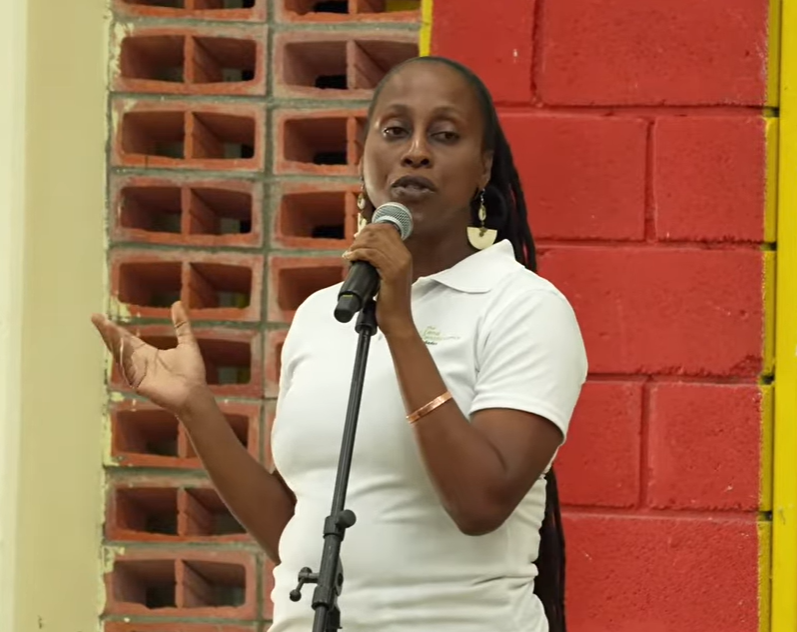
    As Barbados takes a critical step forward to formalize its organ donation infrastructure, regional health leaders are calling for deeper cross-country cooperation across the Caribbean to unlock expanded access to life-saving kidney transplants and build a thriving, revenue-generating regional transplant sector. Last Wednesday, Barbados’ Senate approved the landmark Human Tissue Transplant Bill, which establishes the legal and operational framework for a national deceased organ donation program. Speaking in the wake of this legislative progress, Sadie-Ann Sisnett, president of the Barbados Kidney Association (BKA), noted that transplant capacity is already growing steadily across multiple Caribbean nations. Sisnett pointed to existing active programs in Trinidad and Tobago, Jamaica, Guyana, and Antigua and Barbuda, highlighting that the Bahamas just successfully completed its first ever living-donor kidney transplant earlier this year. “Live and deceased donor transplants are already taking place across multiple Caribbean states, proving that the foundation for this work exists here,” Sisnett explained. The Caribbean faces disproportionately high rates of chronic non-communicable diseases, including kidney disease, that drive demand for transplants. Sisnett emphasized that restricting organ donation and transplant services to individual national borders severely limits the region’s overall ability to meet patient needs. If countries work together through stronger coordinated systems, however, thousands of patients would no longer need to travel outside the Caribbean to the United States or Canada to receive life-saving transplant surgery, she said. “Our doctors already collaborate across borders regularly, traveling to neighboring Caribbean countries to assist with complex transplant procedures,” Sisnett noted. “This existing cooperation can be expanded to enable cross-border organ donation, so that care can happen right here in the region, rather than forcing patients to go abroad for treatment.” Sisnett also credited regional training partners, including UK-based TLC Transplant Links Charity, for building a skilled workforce of transplant surgeons across the Caribbean, noting that all current programs operate at the highest global clinical standards. At Barbados’ Queen Elizabeth Hospital, the surgical team is preparing to perform the facility’s 20th kidney transplant, a milestone that demonstrates the depth of experience local clinicians have already built. Beyond expanding access for regional patients, a coordinated Caribbean-wide transplant network could also grow medical tourism and strengthen the entire regional healthcare sector, Sisnett added. Allan Haynes, founder and president of Kidney Caribbean and former BKA president, echoed this vision, arguing that the region is uniquely positioned to build a competitive, high-quality transplant industry that delivers major economic benefits. Drawing on his background in finance and accounting, Haynes pointed to a massive pricing gap that gives Caribbean providers a major competitive advantage over U.S. facilities. In the United States, a single kidney transplant costs patients and insurers between $250,000 and $500,000. Haynes noted that the same high-quality procedure can be delivered in the Caribbean for approximately $100,000, a price point that will draw international patients seeking affordable, world-class care. Even a small volume of international patients would generate significant foreign exchange revenue for the region, Haynes explained. If the Caribbean attracts just 100 international transplant procedures annually, that would bring in between $25 million and $50 million in direct revenue alone – a figure that does not include additional spending by patients’ traveling family members. Haynes framed the model as a win-win for the region: a localized, coordinated network would lower healthcare costs for Caribbean residents while creating a new export-oriented offshore medical sector that drives job growth and foreign earnings. “This dual approach – building a local industry to cut domestic healthcare costs, and an offshore sector to earn much-needed foreign exchange – is a transformative opportunity for the entire Caribbean,” Haynes said.

  • New book examines legal dispute that halted Bávaro International Airport project

    New book examines legal dispute that halted Bávaro International Airport project

    One of the Dominican Republic’s most contentious aviation legal battles, which brought the planned Bávaro International Airport (AIB) project to a standstill, has now taken on new life as a formal academic and professional teaching tool. This evolution follows the recent publication of *Doctrinal Analysis of the Jurisprudential Solution to an Airport Conflict*, a specialized legal text that dissects every layer of the years-long dispute.

    At the heart of the conflict was a head-on legal clash between the AIB Defense Council and the Dominican Institute of Civil Aviation (IDAC), the country’s top aviation regulator. IDAC launched the legal challenge to the project’s original authorization, arguing that the approval process carried critical procedural flaws. The regulator also maintained that only IDAC held the legal authority to grant approval for the construction of a new commercial airport in the nation. The dispute ultimately landed before the Dominican Constitutional Court, which issued a landmark 2025 ruling that upheld the legality of administrative actions blocking the project’s advancement. That ruling has since established a binding legal precedent that shapes how similar infrastructure authorization disputes are evaluated in the country today.

    The book was formally presented by legal and aviation policy experts from two leading international professional bodies: the World Association of Airport Law (WALA) and the Ibero-American Forum of Administrative Law. Countering the widespread idea that a one-size-fits-all model works for successful airport governance, the text’s authors argue that no universal framework can be applied across all development contexts. Instead, the publication prioritizes four core pillars as non-negotiable for responsible airport infrastructure development and management: strict compliance with national and local laws, uncompromising commitment to operational safety, rigorous evidence-based technical planning, and consistent alignment with broader public interest goals. Legal scholars and infrastructure policy experts across Latin America are already expected to integrate the case study into academic curricula and professional training for future regulators and legal practitioners.