作者: admin

  • Benjamin: No info  on gangs uniting  to attack police

    Benjamin: No info on gangs uniting to attack police

    A viral social media video calling for rival gangs to put down their differences and unite in violent action against law enforcement has sparked a firm condemnation and response from Trinidad and Tobago’s top political and police leadership, following a high-profile police-involved shooting earlier this year.

    The video, which circulated publicly on Friday, features two men, one of whom issued fierce criticism of the criminal charges filed against Kaia Sealy. Sealy, the common-law wife of Joshua Samaroo who was fatally shot by police during an encounter on January 20, currently faces eight criminal charges connected to the incident. She is currently based in the United States undergoing scheduled medical treatment, and is not in custody in Trinidad and Tobago as the case proceeds.

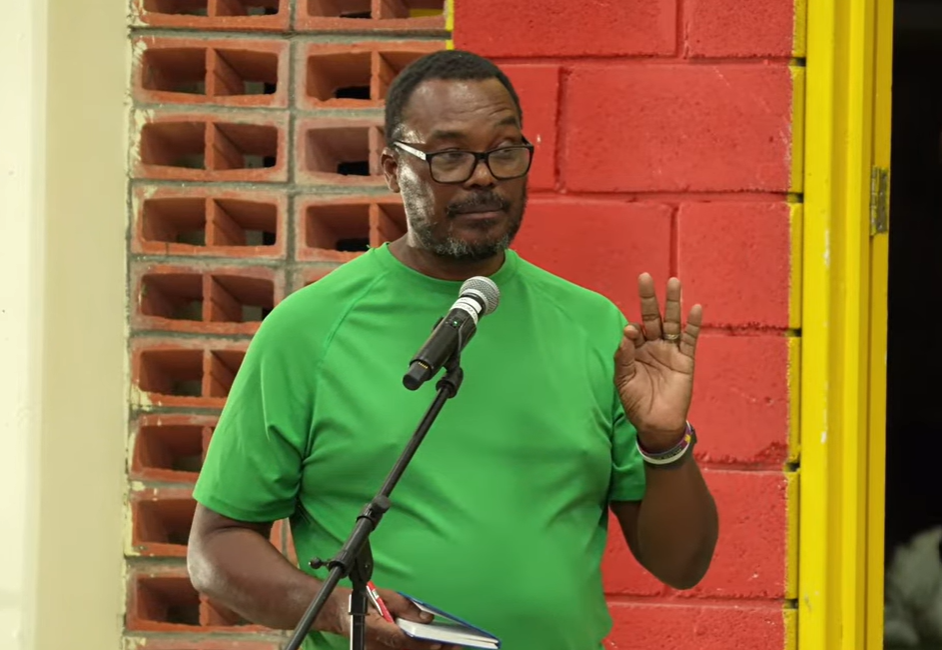
    In the recorded message, the speaker called for an end to ongoing gang conflict between two major local factions, Rasta City and Muslim City, framing the existing divisions as the product of a state-sponsored “divide and rule” system. He went further to urge members of four prominent gangs, numbered 6 through 9, to mobilize and prepare for a so-called “revolution” targeting state institutions.

    Within 24 hours of the video’s spread, Prime Minister Kamla Persad-Bissessar issued a blistering rebuke of the call for violence. In an official public statement released Saturday, she labeled the appeal as the product of depraved thinking, saying “only sick and evil people would support calls for violent gangs to attack law enforcement officials and law-abiding citizens.”

    Persad-Bissessar also tied the incitement to a recent public demonstration outside the office of the Director of Public Prosecutions (DPP) last week, noting that protesters had attempted to intimidate prosecutorial staff carrying out their official duties during that action. She credited the Trinidad and Tobago Police Service (TTPS) with intervening quickly to secure the building and protect staff, adding that the peaceful rule of law would not be undermined by violent intimidation.

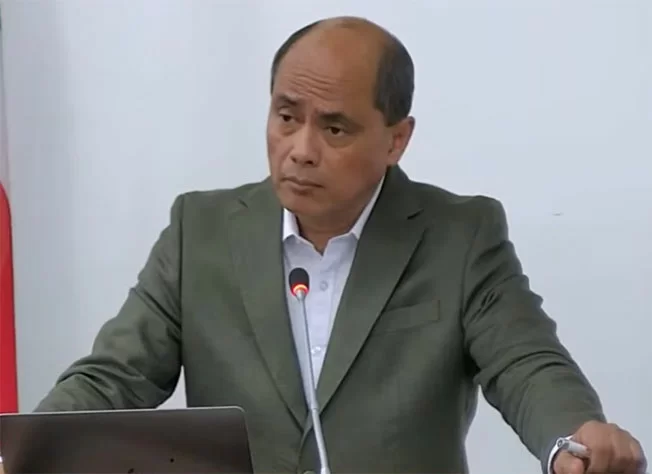
    Deputy Commissioner of Police (Administration) Junior Benjamin has clarified that, as of the latest police briefings, law enforcement has not received any credible intelligence confirming that gangs have already finalized plans to make peace and carry out coordinated attacks on police officers. Speaking to reporters from the Trinidad Express Wednesday, Benjamin made clear that the TTPS is prepared for any contingency: if gangs follow through on the call for attacks, all involved will be prosecuted and face the full consequences of their actions under local law.

    Benjamin emphasized that the TTPS operates to balance two core constitutional rights that are central to Trinidad and Tobago’s democratic system. “One is the whole idea of expression. A person’s freedom of expression in a protest and that of public safety and national security,” he explained. The Police Service, he said, is committed to upholding both rights equally, and will act decisively against any person or group that violates legal boundaries by threatening public safety or undermining the rights of others.

    The police service, Benjamin added, maintains active, ongoing intelligence gathering operations focused on gang activity across the country. Any intelligence related to potential planned violence is immediately shared with specialized operational units, which are prepared to intervene to de-escalate and neutralize any threat before it can harm civilians or law enforcement. “We are therefore saying we are here to ensure law and order at all times and we will ensure the safety of our citizens, no matter what,” he said, reaffirming the force’s commitment to public safety amid heightened tensions.

  • Kookgas opnieuw duurder: prijzen van meerdere cilinders stijgen

    Kookgas opnieuw duurder: prijzen van meerdere cilinders stijgen

    Starting June 1, consumers across Suriname are facing higher costs for multiple types of cooking gas, following an official announcement made Sunday by N.V. EnergieBedrijven Suriname (EBS). The price adjustment applies to 28-pound steel cylinders and a range of composite gas cylinders, and forms the latest step in the government’s planned gradual elimination of long-standing cooking gas subsidies.

    This incremental subsidy phase-out is rooted in a national energy transition policy approved back in August 2023 by Suriname’s Ministry of Economic Affairs, Entrepreneurship and Technological Innovation, alongside the Ministry of Natural Resources. The overarching goal of the policy is to gradually align cooking gas prices with their actual market value, phasing out the decades of government subsidies that have kept consumer costs artificially low for years.

    Under the new price schedule that took effect June 1, the cost of a 28-pound gas cylinder has risen from SRD 472.50 to SRD 504.00. This will not be the final increase for this product: one last 31.50 SRD price hike is scheduled for September 1, 2026, after which the cylinder will reach its government-mandated final market price.

    Multiple composite cylinders are also seeing upward price adjustments this round. The 10-kilogram composite cylinder has moved from SRD 404.25 to SRD 420.00; the 14-kilogram variant has increased from SRD 493.50 to SRD 525.00; and the 22-kilogram composite cylinder now costs SRD 924.00, up from the previous SRD 892.50. Additionally, the 100-pound cylinder has seen a small 9.93 SRD increase, bringing its new price to SRD 1,847.43.

    Not all cooking gas products are affected by this latest round of changes. The 20-pound and 40-pound cylinders will retain their current prices of SRD 387.50 and SRD 735.00 respectively, as both have already reached the final end price set by the government as part of the transition plan.

    With the June 1 price adjustment, three product lines — the 100-pound cylinder, 10-kilogram composite cylinder, and 22-kilogram composite cylinder — have now hit their final market pricing. Only two categories, the 28-pound steel cylinder and 14-kilogram composite cylinder, will see one additional incremental increase this coming September.

    Oversight of compliance with the new price caps falls to Suriname’s Price Control Department. The agency has reminded consumers that anyone who observes retailers charging prices above the officially mandated rates can file a report directly with the department for investigation.

  • Column: De spirituele crisis achter het verval van Surinaams onderwijs

    Column: De spirituele crisis achter het verval van Surinaams onderwijs

    Fifty years ago, classrooms across Suriname were filled with a generation of students who stared at chalkboards with hungry, ambitious eyes, eager to learn and grow. Today, that eager curiosity has been replaced by something far more somber: in far too many students, educators and activists see boredom, frustration, and worst of all, quiet resignation to a broken system. The decline of Suriname’s education sector is not just a drop in test scores or a bureaucratic challenge. It is an erosion of national dignity, a crisis that cuts beyond budgets and policy papers to reach the very core of the nation’s collective spirit. Empty classroom desks, widespread textbook shortages, and disheartened teachers are not administrative missteps to be brushed aside. They are visible symptoms of a deeper spiritual crisis unfolding across the country’s education system.

    Education at its core is not about memorizing dates or passing standardized exams. It is about helping children discover that the world is logical, understandable, and full of possibility. It opens the door to imagination and wonder, giving every child who learns to read an inner landscape where they can seek answers to their most pressing questions. Without that foundational opportunity, children learn only that arbitrary, unaccountable power rules their lives. For youth in Suriname’s rural interior and low-income urban neighborhoods, who are so often overlooked by national policymakers, quality education is the first step to recognizing their own worth: it teaches them that they exist, that their ideas matter, and that they can shape their own futures. But when a child attends a school every day that lacks basic order and resources, they learn chaos instead of logic – and that chaos leaves a lasting trauma. A child denied a meaningful education learns one devastating lesson early on: that they are not worthy of dreaming. That is the greatest harm a society can inflict on any of its members.

    Teachers do more than instruct individual children; they nurture the future parents, chefs, engineers, and leaders that will sustain the nation. A strong education gives adults the foundation of free choice: the ability to distinguish right from wrong, truth from lies, and cause from effect. That ability is the bedrock of moral consciousness in any society. Today, too many Surinamese graduates leave the system feeling betrayed. They hold a diploma on paper, but lack the intangible spiritual and intellectual tools: patience, discipline, and critical thinking. A society where adults have never learned to think critically quickly devolves into a culture of gossip, envy, and resentment. True education, by contrast, teaches people to carve their own paths without tearing others down to get ahead. It is the quiet voice that tells an adult to pause, reflect, and empathize. Without that voice, Surinamese society grows harder, more impatient, and far lonelier than it needs to be.

    The cumulative impact of frustrated students and burnt-out teachers is a nation unable to move forward, because collective trust in each other’s capabilities has eroded away. Quality education builds trust and connection across a society: a well-educated person trusts their doctor, the cashier processing their payment, and the politician they elected to serve. Today, that broad social trust has faded in Suriname, with many people only trusting their immediate family or religious communities. Education is the glue that binds a pluralistic society together, and that glue has come loose.

    A failing education system does not simply produce less knowledgeable people. It produces people broken by systemic neglect, who have lost connection to their broader community because no one ever taught them that knowledge is meant to be shared, not hoarded. It is long past time to stop blaming Suriname’s young people for the failures of the system that was built to serve them. Instead, the nation must turn its attention to building a new system that actually nurtures young minds and souls. Yes, teachers deserve living wages. Yes, crumbling school infrastructure needs urgent repairs. But more than anything, Suriname needs schools that do more than administer exams – they need schools that shape whole people. A nation that forgets to invest in the souls of its children condemns itself to an endless future of stagnation. But the Surinamese people deserve better than that; they deserve the light of opportunity.

    Teachers are not just civil servants going through the motions of a job. They are the fireflies (loi boto, in Suriname’s native creole) that light the path in the dark for the next generation. If we refuse to give those fireflies the support and resources they need to shine, our children will walk blindly toward the edge of crisis. Give a child a meal, and you feed their body for a single day. Give a child a meaningful, soul-nurturing education, and you feed them for a lifetime. Fifty years of declining education is not just a statistic on a policy report. It is the quiet sound of a nation forgetting who it is and what it can be. Now is the time to break that silence, and start rebuilding the future that Suriname’s children deserve.

  • Cuba is not a threat; it is a victim of terrorism

    Cuba is not a threat; it is a victim of terrorism

    On the anniversary of Cuba’s formal legal proceedings against the U.S. government seeking compensation for human harm from decades of anti-revolutionary terror, the full scope of the violence that has shaped the island nation’s modern history remains a raw, unhealed wound for generations of Cuban families.

    This history of state-sponsored aggression began within months of the 1959 Cuban Revolution, when U.S. authorities viewed a sovereign socialist government 90 miles from its shores as an unacceptable threat. Under the Eisenhower administration, the U.S. government formally approved a covert action program against the new revolutionary government in March 1960, allocating substantial funding to build armed opposition networks and carry out destabilizing attacks across the island. That decision planted the roots of widespread terrorism that would cost hundreds of lives and leave irreversible pain across Cuban communities for decades.

    The casualty list of this anti-revolutionary campaign includes dozens of innocent civilians, many of them children, cut down in unprovoked attacks by U.S.-funded armed gangs. In January 1963, 11-year-old Yolanda Rodríguez Díaz and 13-year-old Fermín Rodríguez Díaz were murdered by a counter-revolutionary gang operating in Matanzas’ southern region at the La Candelaria farm in Bolondrón. The previous year, 22-year-old Andrés Rojas Acosta was killed by a mercenary gang in San Nicolás de Bari, hanged with the same rope he had used to tie his pig. In October 1960, 22-month-old Reynaldo Núñez-Bueno Machado and his mother were gunned down by Gerardo Fundora’s gang during a roadside attack on a passing civilian jeep between Madruga and Ceiba Mocha. By March 1963, 10-year-old Albinio Sánchez Rodríguez was shot dead by Delio Almeida’s gang as retaliation for a defeat the group suffered at the hands of Cuban National Revolutionary Militia forces.

    These child killings are not isolated tragedies, but part of a broader pattern of violence that targeted even young Cubans working to advance the revolution’s social goals. The murders of volunteer literacy teacher Conrado Benítez García, young literacy worker Manuel Ascunce Domenech, and fellow educators and peasant organizers who worked to eradicate illiteracy across the island remain a defining reminder of how U.S.-backed terror targeted everyday Cubans working to build a better future. Even the 1961 Playa Girón mercenary invasion, a large-scale covert aggression, left a generation of families shattered: 13-year-old Nemesia Rodríguez Montalvo watched her mother die and her young siblings wounded from U.S.-supplied shrapnel, while 176 people were killed and more than 300 wounded across the island in the fighting.

    By the time counter-revolutionary gang activity was fully suppressed in 1965, the death toll from U.S.-sponsored terror had already reached 725 people, including civilians, active-duty troops, and militiamen, with hundreds more left permanently disabled and traumatized. Beyond the killings of civilians, the U.S. campaign included widespread economic sabotage and attacks on critical infrastructure designed to destabilize the new government. In February 1960, a U.S.-tied small plane set fire to 1.5 million arrobas of sugarcane across four major mills in Camagüey, striking at the heart of Cuba’s core export economy. The 1960 sabotage of the French freighter *La Coubre* in Havana’s port remains one of the most brutal early acts of state-sponsored terror: the ship carried a legal shipment of arms purchased by Cuba from Belgian industry, and the blast killed 101 people and left hundreds injured.

    Other high-profile attacks targeting civilian infrastructure followed throughout the 1960s and 1970s. In April 1961, the country’s largest department store, El Encanto, was burned to the ground by a CIA-linked terrorist, killing salesclerk Fe del Valle Ramos and injuring 18 other workers. A month earlier, an attack on the Hermanos Díaz refinery in Santiago de Cuba killed 27-year-old on-duty sailor René Rodríguez Hernández and left 19-year-old Roberto Ramón Castro permanently disabled. In May 1961, terrorists set fire to a crowded cinema in Pinar del Río during a children’s matinee, injuring 26 children and 14 adults. By 1963, an air strike on Santa Clara killed teacher Fabric Aguilar Noriega and wounded three of his four children. A 1971 machine gun attack on the coastal town of Boca de Samá, carried out by terrorist vessels launched directly from U.S. territory, killed two civilians and wounded multiple residents. Two years later, terrorists attacked two Cuban fishing vessels in the Florida Straits, murdering fisherman Roberto Torna Mirabal and stranding his crew on rafts without food or water.

    The deadliest and most infamous of these attacks came in October 1976, when a Cuban civilian airliner was blown up in mid-flight, killing all 73 people on board—including 24 members of Cuba’s youth fencing team, who had just swept all gold medals at the Central American regional championships. Beyond attacks on civilians and infrastructure, terrorist operatives backed by the U.S. also carried out hundreds of assassination attempts against revolutionary leader Fidel Castro Ruz, totaling more than 600 plots that were all foiled by Cuban security agencies. The campaign of aggression also extended to biological warfare: in 1981, the deliberate introduction of hemorrhagic dengue fever by U.S. operatives killed 158 people, including 101 children, and required the hospitalization of more than 116,000 Cubans.

    Six decades after the first anti-revolutionary terror attacks began, the Cuban people formally marked their collective claim for justice in two landmark legal actions: a 1999 lawsuit seeking compensation for human harm caused by U.S.-sponsored terror, followed by a 2000 filing for economic damages stemming from decades of aggression. Even after 67 years, the pain of these losses remains raw for the families of the victims, who have watched as successive U.S. administrations have maintained a hostile policy that has made Cuba the longest-running primary target of American state-sponsored aggression in modern history. Today, the lawsuits stand as a permanent historical record of the heavy price Cuba has paid to defend its sovereignty and right to exist as an independent nation.

  • Craft of the Homeland

    Craft of the Homeland

    Every June 1, as the world marks International Children’s Day, a quiet, joyful scene unfolds in a local neighborhood park opposite a small elementary school in Cuba. Bathed in early morning light, the open space transforms into a living canvas, dotted with children in bright white shirts, vivid red skirts and shorts, and striking red and blue scarves. As the day stretches into afternoon, the park remains alive with laughter: whether it’s the same group of kids or new faces joining in, children fill the space with energy, chasing each other through generations-old traditional games and testing new pastimes. For generations, these community green spaces have been more than just playgrounds — they are fertile ground where childhood dreams take root, grow, and thrive alongside one another. It is impossible to imagine what this vibrant scene would become if a single, cruel stroke erased the peace that makes it possible.

    Looking back at the generations of children who grew up running across this same park grass, many now-adult Cubans carry small, quiet marks of the care their country extended to them from birth: faint vaccine scars that stand as reminders of universal public health investment. They recall fond memories of school camping trips and special holiday assemblies, and many still credit their biggest life achievements to dedicated teachers, who despite limited resources, still opened the door to lifelong knowledge and opportunity for every child.

    But this peaceful Cuban childhood stands in sharp contrast to the harsh realities faced by millions of children across conflict zones and crisis-hit regions of the world, realities Cubans only witness through news reports. In these forgotten corners of the globe, children have been forced to trade the soft weight of storybooks and plastic toys for the heavy burden of weapons. For them, accessible schools are nothing more than distant fairy tales, and functioning hospitals are mythical chimeras that do not exist in their broken communities. Where neighborhood parks should be, children wander across hot asphalt littered with rubble and the debris of missile strikes, surrounded by destruction instead of play.

    Nowhere is this injustice more acute than in Palestine, where the youngest generation has grown up believing that learning the alphabet and mastering multiplication tables is a privilege they are not allowed to have. Conflict has not spared even the most vulnerable in other regions either: in areas of Iran and Ukraine, school buildings full of young students, backpacks, and dedicated teachers have been reduced to smoldering ash and crumbling rubble. In war, no bomb falls at random: cutting off an entire generation’s future, permanently, is a deliberate, calculated military strategy.

    Even in wealthy, stable nations like the United States, childhood safety cannot be taken for granted. American media is flooded with repeated stories of children who leave for school in the morning, and never come home alive — gunned down by heartless attackers in school shootings that steal the lives of promising young students before they have a chance to build their futures. And on the U.S. southern border, another child rights crisis plays out: thousands of children separated from their parents by U.S. Immigration and Customs Enforcement make headlines regularly, the bitter, harmful legacy of harsh deportation and immigration policies inflicting lasting trauma on vulnerable young people.

    Against this global backdrop, the simple, peaceful joy of the local Cuban park takes on deeper meaning. Even with all its imperfections, the park offers safety: a pregnant woman can sit calmly on a bench waiting for her prenatal appointment, and parents can drop their children off at the adjacent school knowing they will return home safe and alive at the end of the day. On this International Children’s Day, the quiet hum of playful laughter in this neighborhood park sends a clear message: even when weariness and hardship weigh on communities, there is no more important global duty than protecting children — our shared global future — for every child, no matter where they are born.

  • Atompai steunt onderwijsactie: Leerkrachten kunnen niet blijven wachten

    Atompai steunt onderwijsactie: Leerkrachten kunnen niet blijven wachten

    A senior Surinamese parliamentary figure has publicly thrown his full support behind a national collective action by teachers, calling on the government to end years of broken promises and deliver tangible improvements to educators’ underpaid and under-resourced working conditions.

    Poetini Atompai, a member of the National Assembly for the NPS party and chair of the body’s permanent education committee, told local outlet Starnieuws he aligns entirely with the joint education unions’ call for teachers to stay away from work starting Monday to participate in a national consultation over long-outstanding demands. The action will remain in place until the government implements concrete steps to honor prior agreements and meet long-overdue financial commitments to the nation’s teaching workforce.

    Atompai, who previously led the Surinamese Police Union, argues that after years of empty pledges, the government can no longer delay providing clear answers on when and how educators’ professional and financial standing will be improved. He stressed that financial constraints cannot be an indefinite excuse for the persistent struggles teachers face, noting that many currently survive on a monthly salary of just 13,000 Surinamese dollars, paired with inadequate work infrastructure and support. This current situation is no longer sustainable, he added.

    Since taking office as a lawmaker, Atompai says he has repeatedly raised alarm over teachers’ legal and employment rights, bringing the issue to the attention of relevant authorities across the government. “Teachers have no visibility into any improvements to their situation. We promised them progress, and now we owe them clarity on what will be done, how it will happen and when it will happen. That is why this action is necessary right now,” Atompai stated.

    He pushed back on the government’s justification of limited public finances, arguing that this does not justify abandoning the country’s educators. “If there is no money, are teachers just supposed to die?” he asked. Atompai recalled that the current administration raised expectations for improved living standards during its election campaign, and it therefore has a binding responsibility to deliver on those promises.

    Drawing on his observations over the past year in office, Atompai offered a sharp rebuke of the country’s political leadership. “Based on everything I have seen over the past year in politics, my clear conclusion is this: the political establishment has other priorities. Moving the country forward is not its number one goal,” he said.

    Currently, the government and the Ministry of Education are holding ongoing negotiations with the education unions over the demands.

  • Cooperation : Working session on various development projects with France

    Cooperation : Working session on various development projects with France

    On May 28, 2026, senior Haitian government officials and a senior French delegation gathered in Port-au-Prince for a substantive working session focused on advancing collaborative development initiatives aligned with Haiti’s top national priorities. Leading the Haitian side was Sandra Paulemon, Haiti’s Minister of Planning and External Cooperation, joined by her senior leadership team including Guy Roméro Latry, Director General of the Ministry, and Paul Ruddy Mentor, Chief of Staff. The French delegation was headed by Antoine Michon, French Ambassador to Haiti, and included senior representatives from two key French development institutions: Expertise France and the French Development Agency (AFD).

    Opening the session, Minister Paulemon opened by highlighting the longstanding productive partnership between Haiti and France, singling out the robust cooperation the two nations have built in the critical security sector. She outlined the three core priorities laid out in the current Haitian government’s National Pact, under the leadership of Prime Minister Alix Didier Fils-Aime: restoring widespread national security, driving inclusive economic and social recovery across the country, and successfully organizing upcoming general elections.

    Paulemon also raised a key procedural point to improve future project delivery: she called on international development partners to integrate Haiti’s Ministry of Planning and External Cooperation into project design and planning from the earliest stages. This closer involvement, she argued, would enable stronger cross-sector coordination, as well as more rigorous ongoing monitoring and evaluation of all external development interventions to ensure they deliver intended outcomes for Haitian communities.

    In response, Ambassador Michon and his team presented the full portfolio of French-supported projects currently active across Haiti, totaling roughly 15 initiatives spread across multiple regions and key sectors. These projects span agriculture, food security, primary and secondary education, public health, democratic governance, biodiversity conservation, and cultural preservation. Michon reaffirmed France’s unwavering commitment to supporting the Haitian government in advancing the three national priorities outlined by Paulemon.

    The ambassador detailed existing French security assistance already underway: this includes ongoing training programs for Haitian military personnel hosted in Martinique, and multiple capacity-building initiatives tailored to strengthen the operational capabilities of the Haitian National Police. He also outlined the scope of French humanitarian and social development work across the country, and confirmed France stands ready to provide full support to Haitian electoral authorities as they prepare for the upcoming planned elections.

    The session also touched on institutional capacity building within Haiti’s government. Minister Paulemon stressed the need for continued long-term technical support for staff at both her ministry and other sectoral government bodies, with a specific focus on leveraging specialized expertise from institutions like Expertise France. She outlined ongoing internal reforms aimed at strengthening the Ministry of Planning and External Cooperation, including expanding the mandate and resources of the Directorate of Public Investment and reinforcing the operational capacity of Study and Programming Units (UEPs) embedded within each sectoral ministry.

    Closing the working session, Paulemon reaffirmed the Haitian government’s commitment to deepening ongoing dialogue with all international development partners, with the shared goal of improving coordination of development interventions and ensuring all external support aligns closely with the national development priorities set by the democratically elected Haitian government.

  • Mother’s Day, Messages of Tribute to Haitian Mothers

    Mother’s Day, Messages of Tribute to Haitian Mothers

    As Haiti marked its 2026 Mother’s Day celebration on January 6, senior government officials across multiple cabinet portfolios have issued public tributes recognizing the extraordinary resilience, sacrifice and foundational role of Haitian mothers both at home and across the global diaspora. The tribute comes as the Caribbean nation continues to grapple with widespread political instability, insecurity and widespread uncertainty that has disrupted daily life for millions of Haitian citizens.

    In his official address, Prime Minister Alix Didier Fils-Aimé extended a solemn message of gratitude to all Haitian mothers, framing them as unshakable pillars of the nation. ‘In the midst of the turmoil our country is experiencing, they remain steadfast,’ the prime minister stated. He described Haitian mothers as living symbols of courage, dignity, and unwavering hope, noting that their daily sacrifices, boundless love and quiet faith keep families intact and preserve the shared values that bind Haitian society together.

    Fils-Aimé emphasized that these women serve as the quiet but indispensable foundation of national cohesion. By nurturing solidarity within their communities and households, Haitian mothers reinforce a core truth: that national unity is Haiti’s greatest strength, and long-term stability is rooted first in the love and connection of the home. ‘The Government bows before these women who, despite insecurity, fear, and uncertainty, continue to protect, educate, and love, without ever giving up,’ he said. ‘It is thanks to them that the hope for a more stable and fraternal future remains alive.’

    Closing his address, the prime minister extended the nation’s formal gratitude: ‘To you, mothers of Haiti: the Republic thanks you. Your strength honors the Nation. Your love shows us the way. Together, hand in hand, we will build upon your solid foundations a more united, more peaceful, and prouder Haiti. Happy Mother’s Day! May God bless every Haitian mother and protect Haiti.’

    Valéry Fils-Aimé, Haiti’s Minister of the Environment, also released a tribute centering the contributions of mothers working within his department and across the country. He praised the tireless commitment of Haitian mothers who balance professional responsibilities protecting Haiti’s natural environment—one of the nation’s most valuable shared heritage—with their demanding roles as caregivers and family leaders. ‘Through their courage, their sense of duty, their selflessness, and their constant commitment, they contribute every day to the smooth functioning of the institution and to the noble mission of protecting our environment,’ he noted. He added that even amid daily challenges, these women carry out their work with unwavering professionalism, pride and dignity, while still showing boundless devotion to their families. Fils-Aimé extended his gratitude for their contributions to national sustainable development and community well-being, wishing all Haitian mothers a day of joy and well-earned recognition.

    Kathia VERDIER, Minister for Haitians Living Abroad, used the occasion to shine a particular spotlight on Haitian mothers in the global diaspora. She highlighted the daily struggles these mothers face, from geographic separation from their extended communities to systemic and economic challenges, as they work tirelessly to build better futures for their children and support their families back in Haiti. ‘Despite distance, difficulties, and separation, [these mothers] continue to be the pillars of their families,’ Verdier stated, praising their strength, determination and commitment to core Haitian values, before extending holiday wishes to all mothers.

    In a break from official statements, Pedrica SAINT JEAN, Minister for the Status of Women, marked the occasion with on-the-ground outreach to new mothers. On May 31, Saint Jean visited two healthcare facilities: a hospital in Delmas 33 and the Eliazar Germain Hospital Center in Pétion-Ville, where she distributed essential maternity care kits to dozens of women who had recently given birth. During her visits, she commended the extraordinary courage, resilience and dedication that all Haitian mothers demonstrate, even amid daily hardship, noting their irreplaceable role in holding families together and driving long-term societal progress. She also reaffirmed her ministry’s ongoing support for Haitian mothers on the day dedicated to honoring their contributions.

    Rounding out the government’s tributes, Minister of Public Works Pierre Louis drew a connection between national development and the work of mothers. ‘Building the future of a nation is not just about infrastructure; it begins with the love, education, and resilience that you transmit every day,’ he said. ‘Through your sacrifices, you pave the most beautiful paths: those of life and hope. Honor and respect to you.’

  • Emergency intervention to help more than 400,000 Haitians

    Emergency intervention to help more than 400,000 Haitians

    Amid a catastrophic humanitarian emergency that has left more than half of Haiti’s population dependent on outside aid, a cross-organizational humanitarian partnership has launched a large-scale emergency intervention to support over 400,000 people grappling with the fallout of spreading armed conflict and mass displacement.

    Known as the REZILYANS AYITI consortium, the initiative brings together five leading global and local humanitarian actors: Plan International, the Centre for Rural Development and Community Action (CAPAC), Mercy Corps, the Norwegian Refugee Council (NRC), and Save the Children. Backed by funding from the Regional Humanitarian Fund for Latin America and the Caribbean, the response will focus on three hard-hit Haitian departments: West, Central, and Artibonite, running through October 2026.

    Haiti’s ongoing crisis has pushed the country to the brink of a widespread humanitarian collapse. Current data confirms that 6.4 million Haitians—more than 50% of the total population—require urgent life-saving assistance. An April 2026 analysis from the Integrated Food Security Phase Classification (IPC) warns that 5.8 million people are currently facing acute food insecurity, with conditions worsening by the month. Mass population displacement triggered by escalating violence has cut off millions from access to basic healthcare, clean water, and other essential services, while driving up protection risks for vulnerable groups across the country. Experts have repeatedly called for rapid, coordinated, multi-sector action to stem the worsening situation.

    The REZILYANS AYITI project will target 10 vulnerable communities across the three priority regions, with a layered set of interventions designed to address both immediate needs and longer-term community resilience. The core of the response includes flexible multipurpose cash assistance for displaced households and the local communities that have welcomed them. The initiative also prioritizes strengthening food security, expanding access to safe drinking water, upgrading hygiene and sanitation infrastructure, and scaling up critical nutrition services. Specifically, the program will improve access to prevention, early screening, and clinical treatment for global acute malnutrition in both displacement camps and host communities.

    A key pillar of the intervention is a dedicated child protection framework, tailored to support minors disproportionately impacted by the conflict. This includes integrated psychosocial support for children who have experienced trauma, systematic case management for at-risk youth, and targeted community outreach to identify separated, unaccompanied, or otherwise vulnerable children. Once identified, children are referred to specialized essential services, with particular focus placed on meeting the unique needs of girls and other marginalized groups facing heightened protection risks.

    Against a backdrop of unmet, steadily growing humanitarian needs across Haiti, the REZILYANS AYITI consortium’s integrated, community-centered approach marks a major effort to reverse some of the worst impacts of the ongoing crisis. Beyond meeting immediate survival needs, the initiative is designed to reduce widespread protection risks, restore a sense of dignity for displaced and conflict-affected populations, and build long-term resilience for communities that have borne the brunt of years of escalating instability.

  • Derde helft WK 2026: Senegal als verrassende outsider met grote ambities

    Derde helft WK 2026: Senegal als verrassende outsider met grote ambities

    As the 2026 FIFA World Cup approaches, Senegal prepares to make its third consecutive appearance at the global tournament, arriving as widely ranked Africa’s strongest contender with a bold goal: lifting the world’s most coveted football trophy.

    This campaign comes 24 years after the Teranga Lions made their iconic World Cup debut in 2002, when they delivered one of the biggest upsets in tournament history by beating defending champions France 1-0 in their opening match. That historic upset kickstarted a remarkable run for the first-time entrants: Senegal topped a challenging group featuring Denmark and Uruguay, knocked out Sweden in the round of 16, and only suffered a narrow 1-0 quarter-final defeat to Turkey, still the nation’s best World Cup performance to date.

    A generation later, Senegal has carried that momentum to the 2026 cycle, completing an undefeated qualifying run and notching a landmark win last June that sent a warning to the world’s elite: the side became the first African men’s team to defeat England at Wembley, running out 3-1 winners against the Three Lions. While their recent Africa Cup of Nations final against Morocco was marred by a temporary team walk-off in protest of a controversial penalty call, few question the depth of individual talent and collective strength Aliou Cissé’s side has built.

    At the head of this squad is 34-year-old captain Sadio Mané, who is widely expected to play his final World Cup before retiring from international football after the tournament. Despite a natural reduction in pace that comes with age, Mané remains a world-class talent, lauded for his technical ball control, game reading and influential leadership that has defined Senegal’s success in recent years. The Al-Nassr forward, who played alongside Cristiano Ronaldo to help his club claim the 2025-26 Saudi Pro League title, has extra motivation to finish his international career on a high: he missed Senegal’s 2022 World Cup campaign through injury, making this tournament his long-awaited chance to compete on the global stage one last time. Mané, who led Senegal to the 2025 Africa Cup of Nations title and was named the tournament’s best player, is also the nation’s all-time leading goalscorer, with 53 goals in 126 senior caps.

    Manager Pape Thiaw, who took over from long-time coach Aliou Cissé in late 2024, has also been a central figure in the team’s recent trajectory. He guided Senegal to an undefeated qualifying run, the historic Wembley win over England, and led the side to the 2025 AFCON final. Thiaw’s position has not been without controversy, however: he came under widespread scrutiny after ordering his players to walk off the pitch in protest of the controversial penalty in the AFCON final, a move that saw the Confederation of African Football strip Senegal of the title despite their on-field win. Ahead of the World Cup, fans and analysts alike are hoping Thiaw will bring a calmer, more measured approach to the global tournament, as Senegal’s on-pitch talent speaks for itself.

    Many of Senegal’s key players ply their trade in Europe’s top five leagues, bringing a mix of experience, pace and young potential to the squad. Chelsea and Napoli veteran Kalidou Koulibaly, 35, anchors the defense with decades of top-flight experience. In midfield, Idrissa Gana Gueye and Lamine Camara provide solidity, while Tottenham Hotspur’s Pape Matar Sarr offers dynamic energy despite a difficult club season, and Sunderland’s Habib Diarra is marked as one of the breakout young talents to watch. Up front, Crystal Palace’s Ismaila Sarr was instrumental in the win over England, while Everton winger Iliman Ndiaye adds pace and creative threat, and Bayern Munich loanee Nicolas Jackson – a physical, fast striker – is widely expected to be one of Senegal’s key attacking outlets.

    The squad also features a wave of exciting teenage prospects, including 18-year-old Bayern Munich midfielder Bara Ndiaye and Paris Saint-Germain forward Ibrahim Mbaye, signaling the long-term strength of Senegal’s player development pathway.

    Analysts have flagged two key weaknesses for Senegal heading into the tournament: the advanced age of several of its star players, and inconsistency among some of the side’s creative talents. Compounding these challenges is the team’s difficult group stage draw: Senegal has been placed in Group I alongside defending champions France, Norwegian powerhouse led by Erling Haaland, and intercontinental play-off winner Iraq.

    Senegal will be aiming to repeat its 2002 opening-match upset against France, though the 2026 version of Les Bleus will not make the mistake of underestimating the African side, as their predecessors did 24 years prior. The match against Norway will also be a stern test, as Senegal’s solid defense, which proved impenetrable for most of qualifying, will face its toughest test against one of the world’s best strikers in Haaland. Senegal enters its final group match against Iraq as the favorite, but the side may be forced to field its first-choice players for the full 90 minutes depending on results from the first two group fixtures.

    Senegal’s full 28-man preliminary 2026 World Cup squad is as follows:
    – Goalkeepers: Edouard Mendy (Al-Ahly), Mory Diaw (Le Havre), Yehvann Diouf (Nice)
    – Defenders: Kalidou Koulibaly (Al Hilal), Abdoulaye Seck (Maccabi Haifa), Moussa Niakhate (Lyon), Ismail Jakobs (Galatasaray), Mamadou Sarr (Strasbourg), Antoine Mendy (Nice), Ilay Camara (Anderlecht), El Hadji Malick Diouf (West Ham), Krepin Diatta (Monaco), Moustapha Mbow (Paris FC)
    – Midfielders: Idrissa Gana Gueye (Everton), Pape Matar Sarr (Tottenham), Pathe Ciss (Rayo Vallecano), Pape Gueye (Villarreal), Lamine Camara (Monaco), Habib Diarra (Sunderland), Bara Sapoko Ndiaye (Bayern München)
    – Forwards: Sadio Mane (Al Nassr), Bamba Dieng (Lorient), Nicolas Jackson (Bayern München), Iliman Ndiaye (Everton), Ismaila Sarr (Crystal Palace), Cherif Ndiaye (Samsunspor), Cheikh Sabaly (Metz), Ibrahim Mbaye (PSG), Assane Diao (Como)

    Thiaw will cut the squad to the required 26 players before the tournament kicks off. Most analysts predict Senegal will put on an impressive showing at the 2026 World Cup, though the side may ultimately lack the consistent creativity and elite depth needed to claim the overall title.

    Senegal’s 2026 World Cup Group Stage Fixtures:
    16 June: France vs Senegal (New Jersey, USA)
    22 June: Norway vs Senegal (New Jersey, USA)
    26 June: Senegal vs Irak (Toronto, Canada)