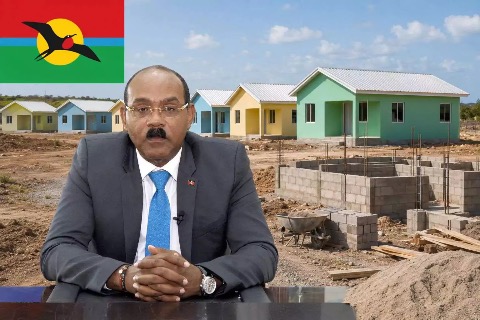
The long-running ideological and political clash over land use and development in Barbuda has reignited, as Antigua and Barbuda Prime Minister Gaston Browne has publicly committed to moving forward with a controversial planned housing development on the island, rejecting objections from the local Barbuda Council and the opposition Barbuda People’s Movement (BPM).
Addressing claims that local governing bodies were kept in the dark about the housing initiative, Browne pushed back against those assertions, noting that the project has been part of public discourse and planning processes for multiple years. He went on to argue that the Barbuda Council has a pattern of blocking large-scale development projects on the island, and made clear that the current wave of opposition would not halt the central government’s agenda.
Browne specifically called out BPM leader Trevor Walker, emphasizing to Barbudan residents that neither Walker nor any sitting members of the Barbuda Council hold the legal authority to stop the development from moving forward. He drew a direct parallel between the current standoff and a years-long dispute over the Peace, Love and Happiness resort development at Palmetto Point, a previous high-profile conflict that pitted the national government against the local council over development priorities.
This latest disagreement brings the deep, long-standing divide over Barbuda’s land governance and development strategy back into the public spotlight. Browne’s administration has aggressively pushed for expanding private freehold property ownership on the island as a mechanism to drive economic growth, while the BPM has consistently advocated for protecting Barbuda’s centuries-old communal land management system, which it frames as central to the island’s cultural identity and social equity.
Parallel to the housing project dispute, the Browne administration is moving forward with a signature land reform policy: the EC$1 land initiative, which will soon see the first freehold land certificates issued to eligible Barbudan residents. Browne confirmed that roughly six parcels of land are in the final stages of processing, with official certificates set to be distributed within the coming weeks. Two of these parcels, however, will require revised land surveys, as they exceed the maximum one-acre allocation limit set out in the policy’s guidelines.
Under the initiative, qualifying Barbudans can secure freehold title for up to one acre of land for just a nominal EC$1 fee. Browne has also pre-emptively dismissed expected pushback from the Barbuda Council over the issuance of these new freehold titles. He maintained that all land in Barbuda is legally vested in the Crown, which grants the central government full legal authority to grant freehold ownership rights to residents. The BPM has repeatedly condemned the policy, arguing that it threatens the future of Barbuda’s traditional communal land ownership framework.