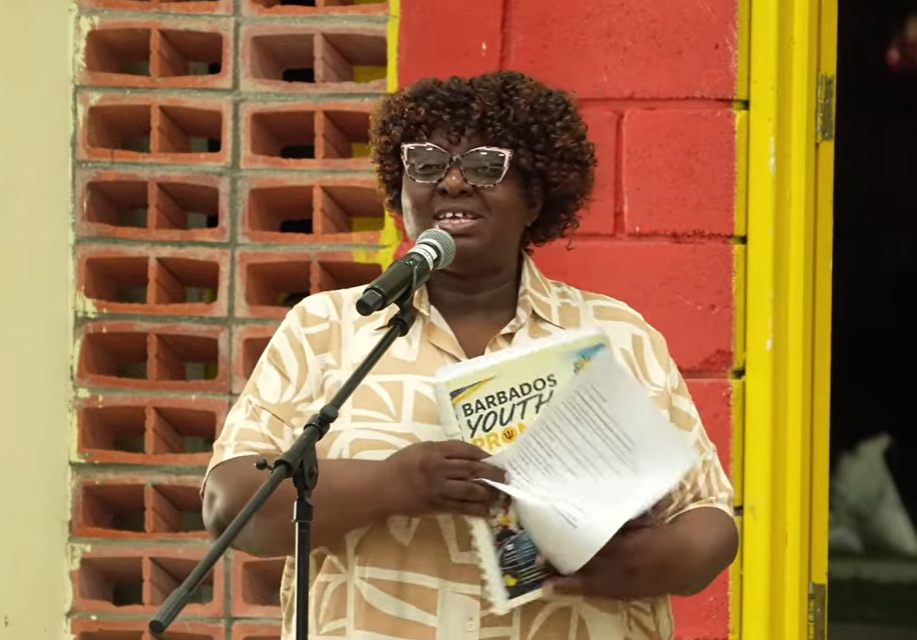
Youth advocate and social worker Natalie Murray has put forward a bold proposal to address a growing gap in post-school support for young Barbadians: the creation of a unified national framework that consolidates scattered government-run youth opportunities into a single, accessible system. Speaking at the St Andrews Ideas Forum hosted at the Alleyne School on Thursday, Murray explained that while dozens of programs for young people exist across public agencies, their fragmentation leaves many graduating students unable to find clear pathways to productive next steps after leaving secondary school.
Murray outlined that the core mission of the proposed framework is not to dictate young people’s future choices, but to meet them where they are, connect them to existing resources, and clear the navigation barriers that leave many adrift. Whether a young person’s goal is enrolling in university, pursuing technical training, starting an apprenticeship, entering full-time employment, launching a small business, working in agriculture, tech, the creative industries, or stepping into community leadership, the framework would ensure they can easily identify and access the support tailored to their path.
Key components of Murray’s plan include a centralized national online portal that lists every government-aligned youth program, regardless of which department oversees it. She noted during her research that current programs are siloed across labor, youth affairs, and education departments, leaving even motivated young people unaware of opportunities that could change their trajectories. She also called for mandatory youth transition planning to begin six to 12 months before a student graduates from secondary school, a step that is currently missing from most schools’ support structures. Too many young people leave school without any clear plan, she argued, not because no opportunities exist, but because no one has sat down with them early to map out a personalized path forward.
Murray added that the framework should also include a national database to track outcomes for young people after they leave school, allowing policymakers and support providers to identify disconnected youth and intervene early. She specifically highlighted the 19 to 29 age group, where a large share of young people have become disconnected from education, work, and training. Research links this disconnection to higher rates of involvement in harmful activity, she noted, and the proposed system would partner with existing government initiatives such as the life coach program run by the Ministry of People Empowerment to reach disconnected youth and reintegrate them as productive members of Barbadian society. The framework would also embed mental health screening into early transition planning, ensuring that young people struggling with psychosocial challenges are connected to the support they need to get back on track, rather than being left behind.
Barbados Prime Minister Mia Mottley has publicly endorsed Murray’s proposal, confirming that it aligns with the current government’s youth-focused policy agenda. However, Mottley emphasized that systemic change alone is not enough: the effort requires ordinary Barbadians to step up as volunteer mentors to support the next generation. She pointed to the planned expansion of 60 hours of experiential co-curricular learning as a core curriculum requirement, which exposes young people to opportunities ranging from cadets and youth groups to sports and cultural activities. This expansion can only succeed if enough adult volunteers step forward to lead and mentor these programs, she said.
Mottley reiterated the government’s long-stated goal of building a Barbados that centers young people while upholding care for aging citizens. She stressed that the nation cannot advance if young people cannot see a future for themselves at home or choose to leave for opportunities elsewhere. Mottley added that successful local youth programs should be scaled into national initiatives rather than remaining isolated, small-scale projects, noting that piecemeal efforts cannot deliver nationwide transformation.
Drawing on a formative experience from 2017, Mottley recalled meeting 15 young men between the ages of 25 and 30 under a roadside shed, where she learned at least 12 had been unemployed since leaving school. She admitted that a previous national initiative to track youth outcomes, called Youth Traces, eventually collapsed, leaving the government without clear data on disconnected youth. Moving forward, she said, communities have a critical shared responsibility to support young people, alongside government: cultural and social values that anchor young people cannot be taught through policy alone, they must be modeled and passed on by community members.
Mottley issued a public call for all Barbadians to volunteer three to four hours each week to help mentor and shape the next generation, warning that failing to engage leaves young people’s outcomes to chance. She has also directed Minister of Education Transformation Chad Blackman to conduct a full review of gaps in existing youth organizations, publicize all available opportunities via local media, and encourage more Barbadians to volunteer their time to support youth.