作者: admin

  • Honduras interested in buying Dominican-made military aircraft and armored vehicles

    Honduras interested in buying Dominican-made military aircraft and armored vehicles

    In a landmark step for regional security cooperation, Honduras has formally announced its interest in acquiring locally assembled military hardware from the Dominican Republic, a move aimed at reinforcing national security forces against rising organized crime and cross-border threats.

    The announcement came at the conclusion of an official state visit by Honduran President Nasry Asfura, who traveled alongside his Dominican counterpart President Luis Abinader to inspect key Dominican defense facilities, including San Isidro Air Base, and tour the country’s northern border security infrastructure. During the visit, Asfura confirmed that his administration has already launched formal negotiations with the Dominican government to advance the potential acquisition of two key defense products: the TP-75 Dulus patrol and training aircraft, and Furia armored tactical vehicles. Both platforms are developed and assembled domestically by the Dominican Military Industry (Indom).

    Asfura emphasized that the Dominican Republic has made notable strides in advancing its domestic military production sector, noting that the proposed equipment would directly enhance the operational and patrol capacity of Honduras’ National Police and Military Police. Beyond the hardware itself, the Honduran leader commended the Dominican Republic’s robust border security framework, including the fortified border wall and advanced digital surveillance systems that he observed firsthand during a stop in the Dajabón border region.

    Addressing shared regional security challenges, Asfura underscored that nations across Central America and the Caribbean face converging threats from transnational drug trafficking, terrorist activity, and organized criminal networks. These common risks, he argued, create an urgent need for security forces across the region to upgrade their capabilities with modern, effective technology and equipment.

    In a notable observation on regional development, Asfura positioned the Dominican Republic’s domestic military industry as a replicable model for other nations across Central America and the Caribbean. He explained that expanded regional access to locally manufactured defense equipment would allow partner nations to strengthen their security postures more rapidly, while also benefiting from more competitive pricing compared to importing hardware from extra-regional suppliers.

  • Dominican Republic sends 50 tons of humanitarian aid to Colombia after earthquake

    Dominican Republic sends 50 tons of humanitarian aid to Colombia after earthquake

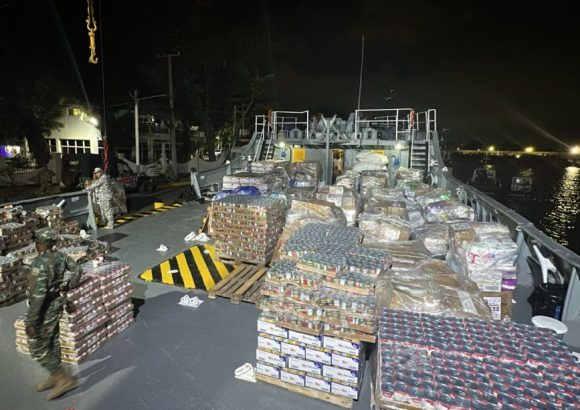
    In a powerful display of regional solidarity following a devastating earthquake in Colombia, the Dominican Republic has launched a major humanitarian relief mission, shipping nearly 50 metric tons of life-saving supplies to the affected South American nation onboard the Dominican Navy’s open-ocean patrol ship, the PA-301 Almirante Didiez Burgos.

    The aid convoy departed the Dominican Republic’s Sans Souci Naval Station, carrying a total of 110,530 pounds (around 49,735 kilograms) of urgently needed provisions. The diverse shipment covers critical categories of supplies to support impacted communities: non-perishable food items, prescription medications, clinical medical equipment, hand tools for recovery work, personal hygiene products, and household cleaning supplies that will help prevent public health outbreaks in post-disaster settlements.

    The entire collection effort was organized in response to an official appeal for donations issued by the Dominican government. Contributions poured in from across the country, with participation from public sector agencies, private sector companies, non-profit organizations, and individual Dominican citizens. All donated goods were gathered at the Dominican Republic’s 27 de Febrero Naval Base, where trained military personnel sorted, categorized, and packed the contributions to prepare them for the overseas maritime journey.

    The full relief operation was coordinated through the Dominican Ministry of Defense and the country’s national Armed Forces, forming a core part of the government’s official commitment to supporting Colombian communities reeling from the earthquake’s destruction. The deployment of the Navy’s patrol vessel also showcases the branch’s established logistical capabilities to carry out long-range maritime transport and large-scale humanitarian assistance missions during times of crisis.

    Leadership of the Dominican Armed Forces issued a formal statement of gratitude to all Dominican individuals and institutions that contributed to the donation drive. The statement emphasized that every donation serves as a tangible, direct expression of shared solidarity with the Colombian people as they work through the difficult process of recovery and reconstruction.

    Beyond immediate disaster relief, the mission also serves to reinforce the deep, long-standing bonds of friendship and cross-border cooperation that have defined the relationship between the Dominican Republic and Colombia. It further demonstrates the Dominican Republic’s consistent willingness to step in and support neighboring nations when natural disasters and other unexpected emergencies strike.

  • Onpeco urges stronger measures to guarantee drinking water amid drought

    Onpeco urges stronger measures to guarantee drinking water amid drought

    Amid escalating drought conditions that have cut water flow across key sources feeding national potable water systems, the National Observatory for Consumer Protection (Onpeco) has issued a urgent call for Dominican authorities to ramp up regulatory and infrastructure measures to secure safe, sufficient, and accessible drinking water for all residents.

    Beyond framing the challenge as a simple supply shortage, the consumer protection watchdog warned that the ongoing water crisis carries cascading risks that stretch far beyond convenience, threatening public health, undermining consumer rights, and putting long-term national water security in jeopardy.

    Onpeco has specifically called on national health regulators to strengthen oversight across the entire human consumption water supply chain, from production and packaging through storage, transportation, and retail sales. The organization emphasized that consumers have an inherent right to confidence that any product marketed as potable meets all established national health safety standards. To enforce this standard, Onpeco has recommended implementing routine, comprehensive inspections of water suppliers, publicly releasing all inspection outcomes, and moving quickly to penalize operators that fail to meet required guidelines.

    The watchdog also directly called on major Dominican water management agencies including CAASD (the Santo Domingo Water and Sewerage Corporation) and INAPA (the National Institute of Potable Water and Sewerage), alongside other regional water service providers, to prioritize preserving access to consistent water service, with a specific focus on low-income and vulnerable communities that have been hardest hit by shrinking groundwater and surface water sources.

    A core proposal put forward by Onpeco is the launch of a nationwide National Campaign for a Sustainable Water Culture, designed to reach all segments of Dominican society: households, primary and secondary schools, small and large businesses, industrial operations, and public government institutions. The campaign outlines actionable, everyday conservation steps that residents and organizations can adopt immediately: repairing leaking pipes and fixtures across properties, cutting down on shower length, turning off taps when water is not actively in use, avoiding the practice of washing streets and sidewalks with potable water, and implementing safe water reuse systems wherever feasible.

    Onpeco further stressed that sustainable water access depends equally on protecting the natural ecosystems that replenish national water supplies. The organization called for stronger legal and physical protection for rivers, streams, forested areas, critical watersheds, established water sources, and groundwater recharge zones, noting that water conservation efforts cannot succeed without concurrent protection of the natural resources that generate fresh water supplies.

    In a closing statement, the organization argued that the current drought should serve as a catalyst to accelerate the development and implementation of long-term, structural water security policies, rather than relying exclusively on short-term emergency interventions during periods of low rainfall. It emphasized that the Dominican state carries a core responsibility to guarantee both water quality and consistent availability for all citizens, while individual residents and private entities share a collective responsibility to use the limited resource efficiently and prevent waste and contamination.

    “The water we waste today may be the water we need tomorrow,” Onpeco concluded.

  • MTW announces islandwide roadworks for coming week

    MTW announces islandwide roadworks for coming week

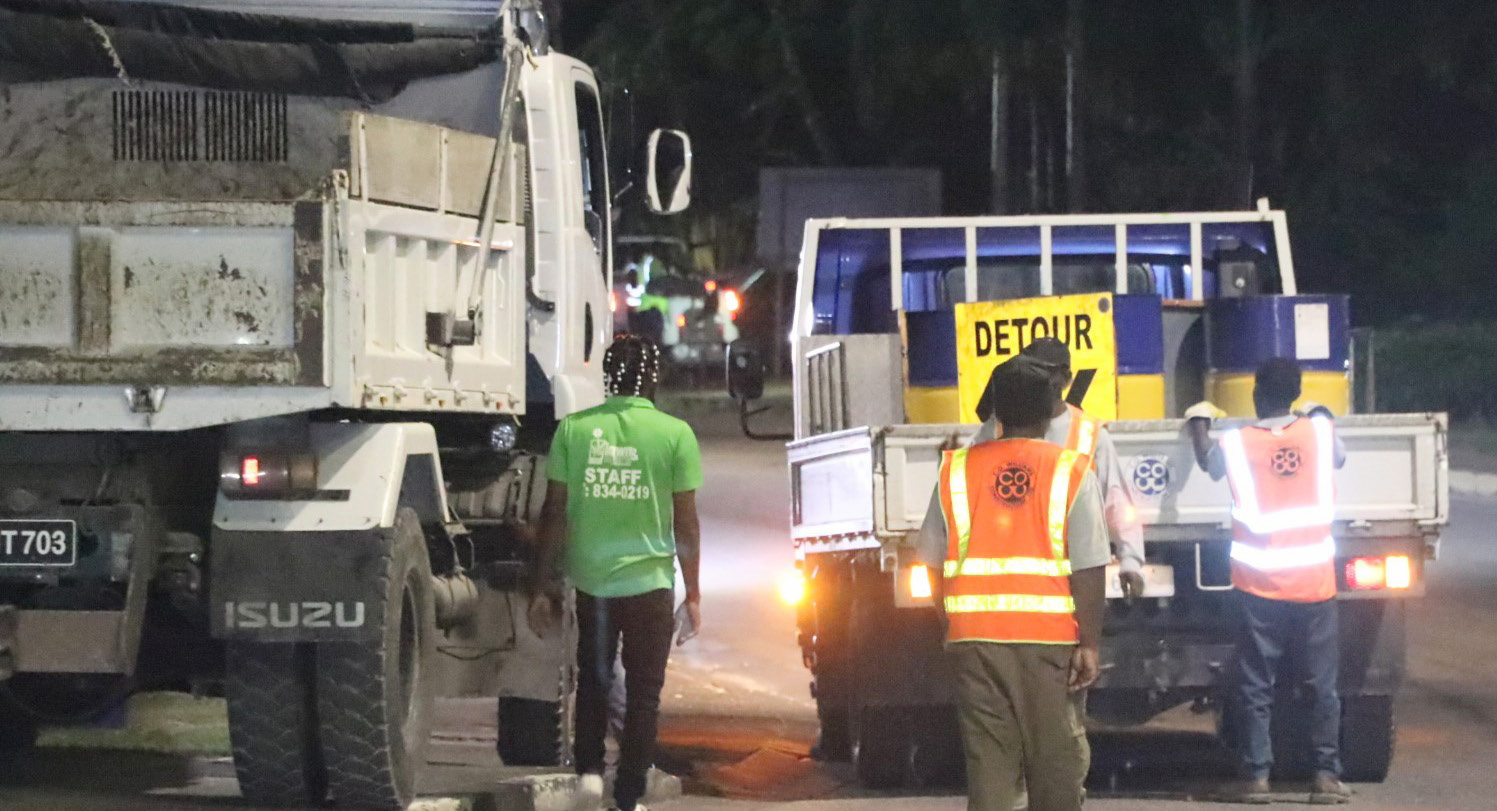
    A major week-long program of road maintenance, drainage improvements and infrastructure upgrades across multiple parishes of Barbados is set to launch on August 31, carried out by the country’s Ministry of Transport and Works (MTW), and will run through September 4. This coordinated initiative covers everything from pothole patching to full road rehabilitation, alongside targeted safety improvements for local communities and schools.

    One key ongoing disruption for drivers remains in effect in the parish of St Peter, where Farm Bridge will stay closed to all traffic until the MTW issues a new update. Motorists traveling between the town of Speightstown and the Ronald Mapp Highway are being redirected to use Warleigh Road as an alternative route for the foreseeable future.

    Large-scale road rehabilitation and new construction projects are already progressing across multiple sites around the island, with work continuing through the scheduled upgrade week. These active locations include Chancery Lane in Christ Church, Cottage Vale in St Philip, Crab Hill in St Lucy, the stretch of Highway D connecting Lester Vaughan School to Content in St Thomas, the Ermy Bourne Highway in St Andrew, and the community of St Judes in St George.

    In St George parish, the MTW has planned targeted works beyond major rehabilitation projects: new speed humps will be installed directly outside St Luke’s Primary School to improve student pedestrian safety, while crews will carry out scheduled pothole patching in the Sweet Vale neighborhood and along the corridor connecting Newbury to St Judes.

    In the heavily populated parish of St Michael, preparation work for full paving is ongoing at Emmerton Lane. Other continuing works in the area include repairs to a damaged retaining headwall at Fontabelle, and replacement of worn manhole grilles along the Mighty Grynner Highway.

    System-wide drain cleaning, a critical preventative measure against flooding during rainy periods, is also scheduled for multiple high-traffic areas across the island. These include sections of the ABC Highway, central Bridgetown, Enterprise Main Road, Belleplaine, Passage Road, and Bay Street.

    Daytime work crews, operating between 9 a.m. and 3 p.m. Monday through Friday (weather permitting), will handle multiple upgrades: MTW road marking teams will repaint stop lines and install new replacement road signs in St George, while crews will repaint retaining headwalls along the 2A Highway. Overnight crews, working from 6 p.m. to 4 a.m. Monday through Thursday, will handle a nationwide project to repaint faded school crossing markings, minimizing disruption to daytime school and traffic operations.

    In a public advisory released alongside the schedule, the MTW issued an urgent appeal to all motorists: drivers must reduce their speed when passing through active work zones. The ministry warned that speeding through construction and maintenance areas not only puts frontline road workers at severe risk of injury, but can also cause irreversible damage to freshly painted road markings before the paint fully cures.

    All works are subject to adjustment in the event of unfavorable weather conditions, the MTW confirmed.

  • Ministry of Education: Official reopening date for schools 31 August

    Ministry of Education: Official reopening date for schools 31 August

    A public notice from the Grenada Union of Teachers (GUT) regarding the start of the 2026-2027 academic year has prompted an official clarification from Grenada’s Ministry of Education, which is moving to clear up potential confusion among families, educators and the general public.

    The Ministry has raised concerns that the GUT’s independent communication could sow unnecessary uncertainty, noting that the official school reopening date was already shared publicly months in advance. To eliminate any ambiguity, the Ministry reaffirmed that all primary and secondary schools will officially reopen for student instruction on Monday, 31 August 2026 – this date remains the binding, official timeline established by the government education authority.

    The confirmed reopening date was not chosen arbitrarily. Ministry officials explain the decision followed a comprehensive review of relevant clauses in the national Education Act, pre-approved vacation windows, the annual national school calendar, and broad public interest priorities – chief among them protecting and maximizing critical in-person instructional time for students across the country.

    Addressing the GUT’s interpretation of the statutory definition of an “academic year”, the Ministry noted that the Education Act includes an explicit contextual caveat: all definitions hold “unless the context otherwise requires”. Officials stressed that all provisions of the legislation must be read as a cohesive whole, factoring in clauses related to school terms, scheduled breaks, and overall public education system administration. The standalone statutory definition of an academic year, the Ministry argued, does not on its own carry the authority to set the official reopening date following a scheduled vacation period.

    The Ministry emphasized it recognizes and respects the GUT’s right to advocate for its members and share its organizational perspectives on education matters. However, it drew a clear line between union advocacy and statutory authority: the power to formally set and announce official school start dates is not held by the teachers’ union, but rests exclusively with the Ministry of Education and the appointed minister for education, as granted by national law. As the administrator of Grenada’s public education system, the Ministry holds sole legal responsibility for finalizing, approving and disseminating the official national school calendar and all associated term dates.

    In closing, the Ministry called on parents, students, educators and all members of the public to rely exclusively on official government communications for accurate, up-to-date information on school operations. The agency expressed its expectation for collaborative cooperation from all education stakeholders to ensure a smooth, orderly start to the 2026-2027 academic year, reaffirming its core commitment to prioritizing the educational outcomes and overall well-being of Grenada’s children.

    *This report includes content from a public official statement from the Ministry of Education of Grenada. NOW Grenada disclaims responsibility for third-party contributor opinions and content, and provides channels for reporting potential content abuse.*

  • Wegenautoriteit pakt overwoekerde bermen langs wegen aan

    Wegenautoriteit pakt overwoekerde bermen langs wegen aan

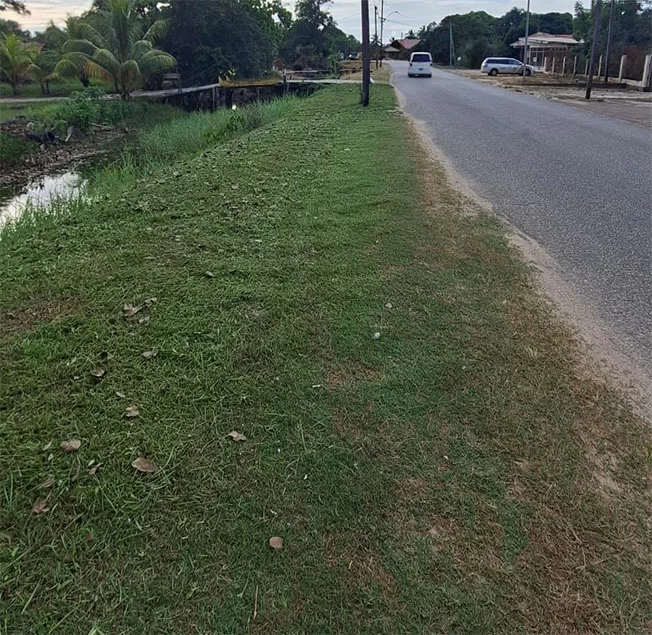
    On August 30, the Suriname Road Authority launched a nationwide program of shoulder mowing and cleaning works across multiple districts and highway segments of the country. Rolled out in staggered phases to minimize widespread disruption, this initiative forms part of the agency’s ongoing regular road maintenance agenda, with three core public safety and infrastructure goals at its center.

    First and foremost, the project targets overgrown grass and dense shrubbery that frequently blocks motorists’ and other road users’ line of sight at junctions, bends, and high-traffic areas. Left unaddressed, blocked visibility is a major contributing factor to fatal and non-fatal traffic collisions, so removing excess vegetation directly eliminates this preventable hazard.

    Beyond safety improvements, the maintenance work also delivers critical infrastructure benefits. Clearing overgrown shoulder vegetation improves rainwater drainage along roadways, reducing the risk of standing water that can erode road foundations, cause hydroplaning accidents, and shorten the overall lifespan of Suriname’s road network. The project also delivers aesthetic improvements, creating a neater, more orderly visual landscape across all maintained road corridors.

    While the agency has structured the works to limit inconvenience for travelers, temporary traffic slowdowns or minor disruptions are expected at active work sites. In a public advisory, the Road Authority has urged all road users to exercise extra caution when passing working maintenance crews and mowing equipment. The agency specifically recommends that drivers reduce their speed in advance of work zones and maintain a safe distance between their vehicles and on-site workers and machinery to avoid avoidable accidents during the maintenance period.

  • FAES/MSPP : Signing of a MoU to strengthen access to essential health services

    FAES/MSPP : Signing of a MoU to strengthen access to essential health services

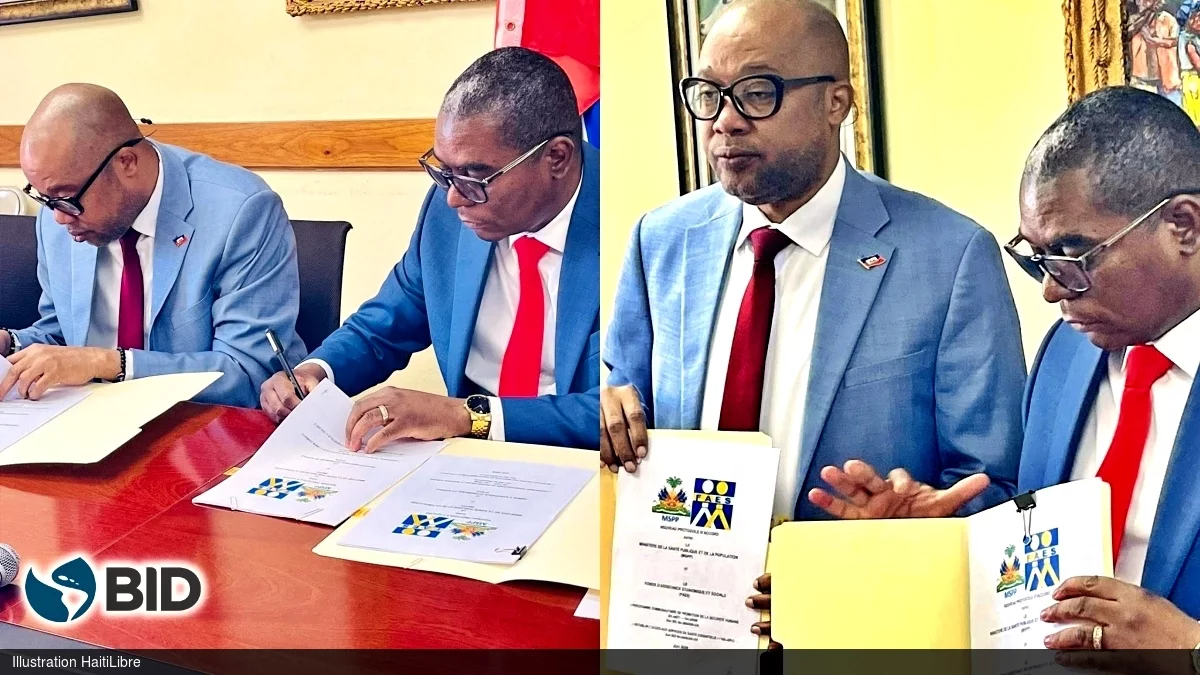
    In a significant push to upgrade Haiti’s ailing public health system, Haiti’s Economic and Social Assistance Fund (FAES) and the Ministry of Public Health and Population (MSPP) formalized a new partnership this week with the signing of a Memorandum of Understanding (MoU) that paves the way for two major Inter-American Development Bank (IDB)-funded health initiatives.

    The agreement, signed by FAES Director General Kesner Romilus and MSPP Minister Bertrand Sinal, outlines clear operational guidelines for the launch of the Community Program for the Promotion of Human Security in Haiti (project code HA-J0008) and Restoring Access to Essential Health Services (project code HA-J0012), both backed by IDB grant financing. The document codifies the respective roles and responsibilities of the two agencies, lays out standardized protocols for technical oversight, cross-institutional coordination, and progress reporting, and sets binding conditions for all health-focused program activities.

    Speaking at the signing ceremony, Minister Sinal highlighted that the agreement represents a core priority for the Haitian government, and thanked FAES for its collaborative efforts to advance the initiative. Under the two programs, a series of critical health infrastructure upgrades are set to move forward, including capacity expansions and renovations for Haiti’s university-level and departmental hospitals, as well as local District Health Units (UAS). The MoU also explicitly authorizes FAES to lead construction and rehabilitation work on healthcare facilities across the country, aligned with the terms of the original financing agreements with the IDB.

    A key focus of the initiative is addressing the longstanding shortage of frontline healthcare workers that has crippled service delivery across Haiti. Sinal confirmed that the new program budget allocates funding for the recruitment of roughly 2,000 additional Multipurpose Community Health Workers (ASCPs), on top of the 3,000 healthcare staff already hired by the ministry through the Office of the Prime Minister.

    Structured around existing grant agreements between the Haitian government and the IDB, the new MoU is designed to streamline the two programs by integrating their activities under a unified institutional framework, eliminating redundant processes and strengthening collaborative ties between FAES and MSPP. Per the agreement, FAES will serve as the official implementing agency for both projects, leveraging its existing institutional mandate and operational experience to deliver results.

    At its core, the partnership aims to build long-term institutional capacity to meet the unmet essential needs of Haiti’s health system, with targeted investments in three core areas: healthcare infrastructure, community-focused primary services, and expanded human resources.

    With the formal signing complete, FAES and MSPP are now set to shift toward translating this institutional commitment into tangible, on-the-ground impact, continuing to work closely with the IDB to adhere to the implementation protocols laid out in the agreement.

  • Grenada’s school reopening dispute: 31 August or 1 September?

    Grenada’s school reopening dispute: 31 August or 1 September?

    A high-stakes clash over institutional authority and legal interpretation has thrown Grenada’s upcoming public school reopening into uncertainty, leaving working families and school-aged children caught in the crossfire of conflicting official guidance. The dispute centers on one seemingly simple question: when should the 2026–2027 academic year begin, Monday, 31 August or Tuesday, 1 September? At its core, however, is a far broader debate over who holds the legal right to set the national school calendar, and how far administrative authority can stretch against the text of existing education legislation.

    Under Grenada’s existing Education Act, the Minister of Education, the Hon. David Andrews, is granted broad oversight of the national education system and implementation of national education policy. The Ministry of Education published its official 2025–2026 academic calendar back on 22 August 2025, which explicitly listed 31 August 2026 as the first day of classes for the new academic year, with 25 to 28 August reserved as staff planning week. At a recent press briefing, Minister Andrews defended the scheduled 31 August reopening, arguing the adjustment was designed to maximize valuable instructional time for students and align with longstanding practical preparations for the first day of school.

    Andrews has anchored his position in Section 39(2) of the Education Act, a provision that grants the minister power to adjust vacation schedules outlined in Section 39(1) through official order, whenever such an amendment is deemed expedient for the public interest. From his perspective, this statutory clause gives him full authority to modify the official academic year start date to fit current needs.

    But the Grenada Union of Teachers (GUT), the country’s leading teachers’ representative body, has pushed back against the Ministry’s timeline, drawing on a different section of the same Education Act. The legislation explicitly defines the full academic year as running from 1 September to 31 August annually. In a public statement released to the community, GUT argued that this statutory definition means the 2026–2027 academic year cannot legally begin before Tuesday, 1 September 2026, and advised both educators and families to plan accordingly.

    The conflict has left two competing timelines in play: the Ministry’s officially published administrative calendar, for which schools have already completed weeks of advance preparations, and the union’s legally grounded demand for a 1 September start. According to the Ministry of Education, teaching staff already returned to their posts by 24 August, and orientation sessions for secondary school students were scheduled across 26 to 28 August to align with the 31 August reopening. This means the disagreement is not a question of whether schools are prepared to welcome students—it is a fundamental battle over whether an administrative schedule can supersede the statutory definition of the academic year laid out in national law.

    What makes this dispute more than a minor scheduling debate is the underlying question of governance: does the minister’s authority to adjust vacation periods extend to altering the official start date of an academic year that is legally defined to begin on 1 September? This is not just a legal technicality—it is a test of institutional boundaries and executive authority within Grenada’s education governance framework.

    Regardless of the legal strength of either side’s argument, the immediate human cost of the conflict is already clear. Families across the country are now left navigating contradictory guidance on a key date that was finalized and published by the Ministry itself months in advance. For households juggling work shifts, childcare arrangements, transportation planning, and household budgets, a one-day shift is far from a trivial administrative technicality. It creates unnecessary stress and logistical chaos that falls disproportionately on working parents and vulnerable students.

    It is understandable that government agencies and teacher unions do not see eye to eye on every policy decision. Teacher unions hold a legitimate role in holding education leadership accountable and challenging administrative decisions that they believe conflict with the law, just as the minister carries a formal responsibility to effectively manage the public education system entrusted to his care. But when competing public messaging on a basic, foundational detail like the start of the school year leaves the public confused, the burden does not fall only on the warring institutional parties. It is children and their families who end up trapped in the middle of a dispute that has nothing to do with them.

    Looking forward, the most meaningful outcome of this conflict would not simply be a last-minute ruling on whether students arrive on Monday or Tuesday. It would be a clear, binding clarification of the scope of the education minister’s calendar-setting authority before the next academic cycle is published. By codifying exactly where administrative discretion ends and statutory requirements begin, Grenada can avoid a repeat of this unnecessary uncertainty for families in future years.

  • René Depestre celebrates his 102nd birthday

    René Depestre celebrates his 102nd birthday

    One of the most towering figures in Haitian and global Francophone literature, René Depestre, marked his 102nd birthday with a heartfelt official tribute hosted at his long-time private residence, Villa Hadriana, on August 29, 2026. The ceremony was organized by the municipal government of Lézignan-Corbières, the southern French town where Depestre has resided for four decades, and featured a delegation from the Haitian Embassy in France led by Ambassador Louino Volcy.

    During the intimate event, Lézignan-Corbières Mayor Gérard Forcada presented Depestre with the city’s highest medal of honor. The distinction recognizes two core achievements: Depestre’s lifelong, groundbreaking contributions to world literature and Francophone cultural exchange, and his four decades of work building enduring ties of friendship between Haiti and his adopted French hometown.

    The municipal tribute follows a formal request submitted by the Haitian Embassy to France back in February 2026, as part of a year-long national series of events celebrating the iconic writer’s legacy. The embassy had additionally proposed that the city grant Depestre honorary citizenship and rename a local public space after the writer to cement his legacy in the community.

    In his address at the ceremony, Ambassador Volcy framed the medal as far more than a symbolic gesture, outlining three layers of deep meaning behind the honor. First, Volcy emphasized that the award recognizes not just Depestre as an individual, but the entire rich tradition of Haitian literature. It sends a powerful message that, even amid the severe challenges Haiti currently faces, the nation remains resilient — and its literary output stands as a lasting source of resistance, hope, and global influence. Second, the medal highlights the longstanding cultural bonds and friendship between Haiti and France, with Depestre serving for decades as a critical intellectual and artistic bridge connecting the two nations. Finally, Volcy noted that the tribute confirms Lézignan-Corbières is far more than just a temporary residence for the writer: it has become an integral part of his personal and professional story.

    Mayor Forcada echoed Volcy’s remarks, praising Depestre’s extraordinary, decades-long career that has inspired generations of writers across the globe. Forcada added that Depestre’s 40 years of living in Lézignan-Corbières has been a gift to the community, and has helped forge far deeper people-to-people and cultural connections between the small French town and the Caribbean nation of Haiti.

    For his part, the centenarian writer expressed deep gratitude to the mayor, the municipal government, and Ambassador Volcy for organizing the tribute. Depestre described the gathering of attendees honoring his life and work as a “beacon in the night of his 102 years,” a moving acknowledgment of the warmth and recognition he has received in his adopted home.

    The birthday tribute is just one of dozens of events taking place across France throughout 2026, all focused on celebrating Depestre’s remarkable life, reintroducing his expansive body of work to new audiences, highlighting his irreplaceable contributions to Francophone and global literature, and examining how his intellectual thought remains relevant to contemporary cultural and political conversations.

  • The IACHR is concerned about the end of TPS for Haitians

    The IACHR is concerned about the end of TPS for Haitians

    In a formal statement dated August 30, 2026, the Inter-American Commission on Human Rights (IACHR) — an independent human rights body of the Organization of American States — has voiced deep concern over the grave risks facing thousands of Haitian nationals after the official termination of Temporary Protected Status (TPS) by United States authorities. The alarm comes amid the catastrophic and ongoing humanitarian and human rights collapse that continues to grip Haiti, leaving the country unable to safely absorb returning deportees. First established under U.S. immigration law, TPS offers temporary legal protection and work authorization to foreign nationals already present in the U.S. when their home countries face extraordinary, unsafe conditions that prevent safe return. These qualifying conditions include widespread armed conflict, large-scale environmental disasters, public health emergencies, or other extraordinary temporary crises that leave the national government unable to accommodate returning citizens. The legal path to ending Haiti’s TPS designation cleared key judicial hurdles earlier this year: on June 25, 2026, the U.S. Supreme Court permitted the termination to move forward, and a subsequent August 5 ruling from the U.S. District Court for the District of Columbia confirmed that the Department of Homeland Security had the authority to implement the end of the program. U.S. authorities officially marked the termination as effective July 22, 2026, concluding that conditions in Haiti no longer meet the statutory requirements to maintain the TPS designation. However, the IACHR pushes back against this conclusion, arguing that any assessment of conditions on the ground must reflect the current devastating reality of Haitian insecurity and governance failure. Today, armed gangs exert control over an estimated 80 to 90 percent of Haiti’s capital Port-au-Prince, with their violent influence spreading outward into the Artibonite, Centre, and South-East departments. Data from the United Nations Integrated Office in Haiti (BINUH) lays bare the scale of the ongoing bloodshed: between March 6 and July 31 of 2026, even amid ongoing security operations to reclaim gang-held territory, at least 613 people were killed and 375 injured in gang-related clashes in the La Plaine de Cul-de-Sac region, which includes violence-plagued neighborhoods of Cité de Soleil within the Port-au-Prince metropolitan area. The humanitarian fallout from this widespread violence is equally staggering. As of May 13, 2026, BINUH recorded 1.47 million internally displaced people across Haiti — equal to 12 percent of the country’s total population, a 1 percent increase just since December 2025. Women and girls make up 54 percent of this displaced population, while children account for 51 percent. Between the end of 2025 and mid-2026, authorities recorded 1,880 confirmed cases of gender-based violence, 71 percent of which involved rape and sexual assault. In its 2026 statement, the IACHR recalled its 2021 Resolution No. 02/21, which first recognized the multi-faceted nature of Haiti’s long-running crisis and called on all countries in the Inter-American region to adopt robust protections for Haitians on the move, rooted in core principles of equality, non-discrimination, international solidarity, and shared responsibility. The IACHR acknowledges that all sovereign states retain the authority to set their own immigration policies, establishing rules for entry, residence, and departure from their territory. But under binding international law and Inter-American human rights standards, the U.S. is legally required to uphold the peremptory norm of non-refoulement — a non-derogable rule that prohibits forcing any person to return to a territory where their life, physical integrity, or personal liberty faces a proven risk of severe violation. Beyond this core obligation, the IACHR emphasizes that all deportation and removal decisions must include individual risk assessments, uphold full due process guarantees, and guarantee applicants access to effective legal remedies. The body is calling on U.S. authorities to go further, reiterating that Washington should expand access to formal refugee status procedures and complementary forms of international protection for Haitians at risk. It also urges the creation of permanent, accessible, and affordable pathways to regularized migration status, including targeted humanitarian measures, expedited family reunification, and special amnesty and regularization programs for Haitians who have lived and worked in the U.S. for years under TPS protection. The IACHR is an autonomous, principal organ of the Organization of American States, drawing its mandate from the OAS Charter and the American Convention on Human Rights. Its core mission is to promote and defend human rights across the Inter-American region, operating as an independent consultative body to the OAS. Its seven members are elected in an individual capacity by the OAS General Assembly, and do not act as representatives of their countries of origin or residence.