作者: admin

  • Metal gate on border bridge linking Dominican Republic and Haiti collapses

    Metal gate on border bridge linking Dominican Republic and Haiti collapses

    In the border city of Dajabón, a critical cross-border link connecting the Dominican Republic and Haiti is facing growing risk of catastrophic failure, as widespread structural decay has triggered urgent alarms from daily users. The international crossing spanning the Massacre River has been grappling with years of unaddressed degradation that has steadily worsened, leaving merchants, motorists and local communities on edge over its safety.

    Extensive rust and corrosion have eaten away at nearly all of the bridge’s core metal infrastructure, from its primary load-bearing beams to the protective railings that line its driving surface. The situation escalated recently when a metal access gate on the Dominican side of the crossing collapsed unexpectedly. The sudden failure has amplified long-simmering fears that the entire structure could be at risk of a major collapse if interventions are not made quickly.

    Daily commuters and cross-border traders who rely on the crossing say the steady decline of the bridge is a direct result of persistent neglect from relevant authorities. They warn that a full or partial structural failure of the span would not only put lives at risk but also deliver a major shock to cross-border movement and bilateral trade between the two neighboring nations.

    In response to the growing crisis, local stakeholders and frequent users have issued a formal call for the Dominican Republic’s Ministry of Public Works and Communications (MOPC) to step in immediately. They are demanding that the ministry deploy a team of technical experts to conduct a full, thorough structural assessment of the bridge, followed by immediate rehabilitation work to shore up the decaying span. This intervention, they argue, is critical to protecting one of the most important border crossings in the Dominican Republic and halting further damage that could lead to irreversible closure.

  • Abandoned suitcase at Las Américas Airport found with 29 pounds of marijuana

    Abandoned suitcase at Las Américas Airport found with 29 pounds of marijuana

    In a joint anti-narcotics operation at one of the Dominican Republic’s busiest international air hubs, law enforcement agencies have intercepted a large shipment of marijuana, marking another significant step in the country’s ongoing fight against cross-border drug trafficking.

    The operation was carried out by personnel from three key institutions: the National Drug Control Directorate (DNCD), the Specialized Airport Security Corps (CESAC), and the country’s Public Ministry. During a routine security inspection conducted at Las Américas International Airport, teams spotted an unclaimed black hard-shell suitcase left unattended in the airport’s international arrivals zone. The bag had been left behind by a passenger who had disembarked from an incoming flight originating from New York.

    Acting in accordance with official protocol and under direct orders from a prosecuting attorney, law enforcement officers opened the abandoned luggage to conduct a full search. Inside, hidden between layers of everyday clothing, they discovered two separately wrapped packages containing marijuana. Following the seizure, the contraband was transferred to the National Institute of Forensic Sciences (INACIF) for formal processing and weight verification. INACIF’s official analysis confirmed the illegal drugs had a total weight of 28.98 pounds, just under the 29-pound threshold reported by initial responding teams.

    As of the latest update, investigators have already completed preliminary identification work on the passenger believed to be connected to the seized drugs. Law enforcement teams are currently actively pursuing leads to track down, apprehend, and prosecute the suspect connected to this smuggling attempt. In the wake of this seizure, senior Dominican authorities have reaffirmed their unwavering commitment to expanding and intensifying anti-drug enforcement operations across all entry points to the country. These operations cover airports, maritime ports, land border crossings, and other high-risk locations used by drug trafficking networks to move illegal narcotics into and through the Dominican Republic.

  • Lawmakers launch public consultation on new Penal Code

    Lawmakers launch public consultation on new Penal Code

    In Santo Domingo, Dominican Republic, the lower house of the national legislature, the Chamber of Deputies, took a key step Tuesday to refine the country’s upcoming new Penal Code, voting to launch an open public consultation process. The initiative is designed to collect citizen and stakeholder feedback on potential adjustments to the legislation, which is scheduled to go into full effect on August 3.

    Chamber President Alfredo Pacheco outlined the framework of the consultation effort in remarks following the approval vote. Under the plan, legislators will open the door to recommendations from every major sector of Dominican society, and are prepared to hold public hearings to directly address widespread concerns about specific articles within the new code.

    While no formal deadline has been established for members of the public to submit their proposed changes, legislative leaders aim to complete the review of all potential amendments during the current legislative session, which is scheduled to conclude on July 26. Pacheco emphasized, however, that the process will not be rushed: if more time is needed to carefully evaluate submissions, the consultation period can be extended past the end of the current session.

    One critical clarification Pacheco made regarding the scope of the review is that the three legal grounds for abortion already enshrined in the new code will not be reopened for debate. The Chamber president noted that this contentious issue received years of extensive deliberation and negotiation throughout the multi-year process of developing and approving the new Penal Code, and it will not be revisited as part of this amendment consultation. All proposed adjustments will instead center on other provisions that have sparked public criticism or concern from stakeholder groups since the code’s final approval.

  • Aerodom delivers 18 explosives detection dogs to Cesac

    Aerodom delivers 18 explosives detection dogs to Cesac

    In a major step to upgrade aviation safety infrastructure across the Dominican Republic, airport operator Aerodom has transferred 18 purpose-trained explosives detection canines to the nation’s Specialized Airport and Civil Aviation Security Corps (Cesac), expanding the agency’s capacity to prevent security threats at all of the country’s commercial airports.

    The newly deployed K-9 unit consists of three highly capable working dog breeds: Belgian Malinois, German Shepherds, and Dutch Shepherds, all selected for their sharp scent detection abilities, discipline, and reliability in high-pressure security environments. The handover was formally received by Cesac Director Brigadier General Pilot Enmanuel Souffront Tamayo, who will oversee the integration of the dogs into routine airport security operations.

    Each of the animals has completed rigorous specialized training to identify a wide range of explosive compounds, allowing security teams to detect hidden threats more efficiently during passenger screenings, baggage inspections, and perimeter patrols. With these additional units, Cesac will be able to expand the frequency and scope of security sweeps across terminals, runways, and restricted airport areas, closing potential gaps in the country’s civil aviation security network.

    According to Aerodom announcements, the canines were purchased from Logiscan LTDA, a Colombia-based provider of specialized working canines for security operations. The selection process was a collaborative effort between Aerodom and Cesac, with both teams conducting extensive behavioral and capability evaluations to ensure each dog met the strict standards required for airport security work.

    Aerodom Chief Executive Officer Cyril Girod emphasized that this canine donation is far more than an isolated equipment upgrade: it reflects the company’s long-standing commitment to partnering with national civil aviation authorities to build a safer, more secure travel ecosystem for both Dominican residents and international visitors. The initiative is just one component of a sweeping multi-million dollar capital improvement program that Aerodom is rolling out across the country’s flagship aviation hub, Las Américas International Airport. That broader plan also includes construction of a modern new passenger terminal, full rehabilitation of the airport’s main runway, and installation of a cutting-edge automated baggage handling system designed to improve both efficiency and security for travelers.

  • Father of two drowns after boat explodes off Spanish Cay

    Father of two drowns after boat explodes off Spanish Cay

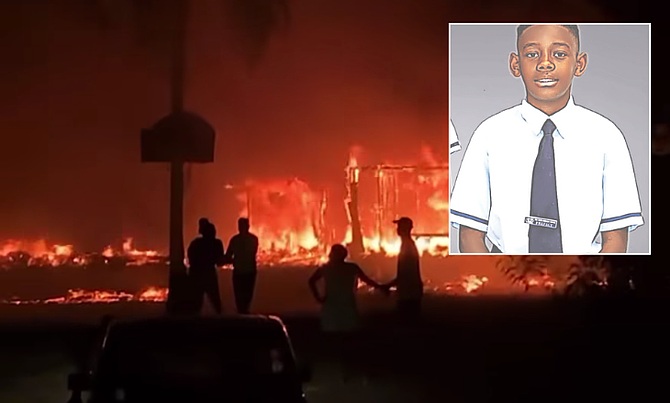
    A tragic maritime accident off the coast of Abaco, Bahamas, has claimed the life of a 37-year-old father of two, after a work-bound vessel exploded early Saturday morning, leaving all seven passengers stranded in open water before six survivors were pulled to safety. The victim, Jamal Cornish, had been hired alongside six other men for a construction project on Spanish Cay when the fatal incident unfolded just after 6 a.m.

    Local law enforcement has shared key details about the chain of events that led to the blast. The group was traveling on a 23-foot teal-and-white Angler boat when mechanical issues arose: a crew member detected water leaking from the vessel’s bilge pump. While attempting to fix the malfunction, the crew member accidentally placed a wire against the engine’s battery, triggering an immediate explosion that forced all seven men into the ocean.

    In the chaotic aftermath of the blast, all passengers worked together to stay afloat as they waited for rescue. Cornish, who had been helping address the vessel’s mechanical problems before the explosion, eventually told the other men he could no longer keep his head above water, before losing his grip and slipping beneath the surface. Nearby private boat operators responded quickly to the emergency, pulling six of the seven passengers from the water unharmed. Cornish’s body was later recovered by his own family members, and he was officially pronounced dead at the Marsh Harbour Health Centre by a local physician.

    For Cornish’s family, the sudden loss has been devastating to process. His sister, Jasmine Curry, told reporters she had just traveled to Grand Bahama when she received the shocking call about the accident, and immediately returned to Abaco to join the search. “When the search was going on, it just seemed like unreal. Then when we got the news that they found his body it still didn’t seem real,” Curry shared. A commercial fisherman by trade, Cornish had taken the construction job to supplement his income while the Bahamian lobster season is closed, a role he had held for several months leading up to the accident. Those who knew him remember him as a humble, kind, and deeply loving man devoted entirely to his wife and two children.

    Curry noted that the boat was privately owned, not property of the construction company the men were working for, and she emphasized that she views the incident as a tragic accident, not a negligent act that requires accountability. She added that she has not yet spoken with the six surviving passengers about the events of that morning.

    In an official statement released following the incident, the Bahamas Ministry of Transport and the Port Department offered their deepest condolences to Cornish’s loved ones, and praised the quick action of the private citizens who rescued the remaining six passengers. The statement also used the tragedy to highlight the critical importance of maritime safety for communities across the island nation.

    “Marine travel remains an essential part of daily life throughout The Bahamas,” the statement read. “Thousands of residents, workers, fishermen, contractors, and visitors depend on our waters every day. Incidents such as this are a stark reminder that safety at sea cannot be taken for granted, whether a voyage is routine, or a vessel is travelling a familiar route.”

    Officials confirmed that authorities are still in the process of collecting evidence and interviewing witnesses to fully document the circumstances of the explosion. The Ministry and Port Department have asked the public to refrain from spreading unconfirmed speculation about the incident, and to allow investigative teams to complete their work and confirm the full factual details of the tragedy.

  • Task force chief assaulted at shanty home demolition

    Task force chief assaulted at shanty home demolition

    A sweeping government demolition operation targeting an unregulated shanty community off Cowpen Road in Montgomery, The Bahamas, cleared 64 informal structures on Wednesday, capping nearly a year of warnings that pushed displaced residents to salvage what belongings they could along the roadside while grappling with sudden homelessness.

    The tense operation marked the latest step in the Davis administration’s ongoing nationwide crackdown on unregulated settlements, a policy that has left hundreds of low-income residents scrambling to find alternative affordable housing. Authorities originally issued eviction notices to roughly 200 area residents in February of last year, granting a 28-day compliance window for occupants to vacate the land.

    The day’s confrontation turned violent when a resident attacked Superintendent Stephen Carey, chair of the government’s Unregulated Communities Action Task Force, leaving the senior official requiring three stitches for his injuries. Carey detailed that the altercation began after the resident threatened a member of the Bahamas Defence Force deployed to the site. As the suspect was being escorted to a transport bus for arrest on charges of making threats and disorderly conduct, he knocked Carey to the ground and initiated a physical struggle. The resident was taken into police custody and is scheduled to face formal criminal charges in the coming days. Following the assault, enforcement teams moved displaced residents further back from the demolition zone to secure the work site.

    Three structures on the property are still standing, pending official investigation into their claimed legal construction permits. Carey confirmed that full completion of the demolition will take less than a week. He emphasized that authorities had repeatedly followed up with residents to enforce the eviction order, saying, “Up to 7pm yesterday, we had a team inside here and we were asking them, begging, and pleading with them to move. We told them that as of 7am this morning, they will not be permitted back on the premises. They continued to think that we were joking, so now they see that we are serious.”

    The operation also yielded one additional arrest on suspicion of dangerous drug possession, Carey confirmed. Going forward, the task force chief warned residents of all other unregulated settlements across the country to evacuate immediately before enforcement teams arrive. “Starting next week, again, we have another area that we are going into. Once those 28-day notices expire, we will be demolishing those structures,” he said. “Start evacuating now, because once we reach there, there’s going to be no extension and no extra time given.”

    For the residents displaced by Wednesday’s demolition, the loss of their homes represents a devastating collapse of long-term stability, compounded by a widespread lack of affordable housing across The Bahamas. Tanisla Mitus, a 28-year resident of The Bahamas who lived in the Montgomery community, said sky-high rental costs have left him unable to secure new accommodation. “Expensive, all about I looking for can’t find no money, pay it,” he said. “What happens now? People don’t know where to go. That’s bad. I feelin bad. My heart can’t take it because I don’t go nowhere. When I come to The Bahamas, I’m living there.”

    Multiple residents reported additional distress from concurrent immigration operations carried out alongside the demolition. Doxene Cepoudy, speaking through a translator, claimed that several family members were taken into custody as families tried to move their belongings before crews began work, though Carey disputed that account, confirming only one detention related to the immigration sweep. One mother of one, a 10-year resident of the community, said her child’s father was taken into custody, leaving her with nowhere to go. Another long-term resident, who has lived in The Bahamas for 13 years and in Montgomery since 2016, said she and her two children are now homeless. She acknowledged that residents had received advance notice of the demolition, but said she had been unable to find affordable housing, a search made even harder by her limited English proficiency that prevented her from understanding and responding to housing listings.

    Wednesday’s operation also resolved recent political uncertainty surrounding the crackdown. Last week, Long Island Member of Parliament Dr Andre Rollins told Parliament that a scheduled shanty town demolition off Cowpen Road had been cancelled, a claim that led government lawmakers to force the reason he gave for the cancellation struck from the official legislative record. Rollins did not name the specific community at the time, and Works Minister Clay Sweeting, a task force member, did not publicly dispute the cancellation claim during the parliamentary debate. On Wednesday, however, Carey firmly denied that any cabinet member had intervened to halt the demolition, explaining the project was only delayed to allow officials to verify occupancy and confirm which residents had received government relocation assistance.

    As heavy machinery continued to level structures through the day, residents packed clothing, furniture and personal items, loading what they could into private vehicles while others stood by helplessly, watching the homes they had lived in for years reduced to rubble.

  • Civil Defense honors rescuer for humanitarian mission in Venezuela

    Civil Defense honors rescuer for humanitarian mission in Venezuela

    Just weeks after a pair of devastating earthquakes rocked Venezuela, killing and injuring hundreds and leaving thousands homeless, a Dominican rescuer has received national recognition for his life-saving contributions to the international humanitarian response.

    Carlos Alberto Mora, a member of the Dominican Republic’s rescue contingent deployed to the disaster zone, was formally honored by the country’s Civil Defense agency for his service during the cross-border Quisqueya Solidaria 2026 relief mission. The formal award ceremony was led by Civil Defense Executive Director Juan Salas, who used the occasion to highlight Mora’s extraordinary performance throughout days of grueling search and rescue operations.

    In his remarks, Salas commended the rescuer for unwavering commitment, steady courage in the chaotic aftermath of the disaster, and consistent professionalism that aligned with the highest international emergency response standards. When taking the stage to accept the honor, Mora deflected individual praise, choosing instead to dedicate the award to every member of the 40-person Dominican rescue team that deployed to Venezuela. He emphasized that the successful extraction of multiple trapped survivors from collapsed building rubble was only possible through seamless collaboration and shared commitment across the entire contingent.

    A poignant moment of the ceremony came when Mora displayed a Venezuelan flag that had been gifted to the team by the Caracas Fire Department. The hand-signed flag stands as a tangible symbol of the gratitude Venezuelan first responders and communities hold for the Dominican Republic’s rapid offer of assistance after the June 24 quakes. Salas also used the event to extend formal thanks to top Dominican government leaders, including President Luis Abinader and Defense Minister Lieutenant General Carlos Antonio Fernández Onofre, for their swift approval and ongoing support that enabled the country to join the international relief effort quickly after the disaster struck.

  • Indotel announces Cybersecurity Assistance Center for digital crime victims

    Indotel announces Cybersecurity Assistance Center for digital crime victims

    As digital transformation accelerates across nearly every aspect of daily life, the Dominican Republic is taking a major step to protect its citizens from growing cyber threats. The Dominican Telecommunications Institute, better known locally as Indotel, has officially kicked off the public procurement process to develop and launch a dedicated Cybersecurity Assistance Center, a new public resource designed to support residents impacted by digital security incidents.

    Announcing the new initiative, Indotel Board President Guido Gómez Mazara framed the center as a critical public infrastructure project for the digital age. With everyday activities from retail banking and online shopping to social media engagement and access to government public services moving entirely online, Gómez Mazara noted that Dominican residents face rising exposure to a wide range of cyber threats. The new center will operate as a centralized, trusted point of contact for any citizen navigating these harmful digital incidents.

    Cybersecurity is no longer a niche technical concern, but a pressing public interest issue that touches every aspect of modern life, from personal privacy to financial stability and overall public well-being, Gómez Mazara emphasized. The center will be equipped to handle initial assistance requests for a vast spectrum of common cybercrimes currently impacting Dominican residents. These include widely reported threats such as WhatsApp phishing scams, fraudulent phone calls targeting personal information, identity theft, hijacked social media accounts, e-commerce fraud, cyberstalking, cyberbullying, sextortion, and attacks distributed through fake malicious links.

    When citizens reach out for support, the center will provide immediate, actionable guidance on three key priorities: securing compromised accounts to prevent further harm, preserving digital evidence required for official investigations, and walking users through the process of reporting incidents to the appropriate authorities. Importantly, Gómez Mazara clarified that the new center will act as a complement to, not a replacement for, the ongoing work of national law enforcement agencies and other specialized cybersecurity bodies, filling a gap in accessible support for ordinary citizens.

  • Dominican Republic honors outgoing Canadian Ambassador with national award

    Dominican Republic honors outgoing Canadian Ambassador with national award

    Following three years of diplomatic service in the Caribbean nation, outgoing Canadian Ambassador Jacqueline Delima Baril has received one of the Dominican Republic’s most prestigious state awards in recognition of her work advancing bilateral ties between Ottawa and Santo Domingo. In a formal ceremony held at the Dominican Ministry of Foreign Affairs’ central headquarters, Dominican Foreign Minister Roberto Álvarez bestowed the Order of Merit of Duarte, Sánchez and Mella, in the rank of Grand Cross Silver Plaque, to Delima Baril on behalf of the Dominican government.

    The top honor was officially authorized by Dominican President Luis Abinader via Presidential Decree No. 421-26, a formal designation that singles out Delima Baril’s key efforts to deepen cooperation and connection between the two countries. During the event, Álvarez highlighted the ambassador’s consistent dedication to nurturing open dialogue, expanding collaborative partnerships across priority sectors, and building lasting mutual trust between Canadian and Dominican stakeholders.

    The ceremony drew a crowd of senior Dominican government leaders, resident diplomatic representatives from other nations, and senior staff from the Canadian Embassy in Santo Domingo. Accepting the distinction, Delima Baril offered reflective remarks on the landmark progress achieved during her tenure, expressed sincere gratitude for the rare national honor, and reaffirmed the deep, enduring friendship and shared commitment to cooperation that define the modern relationship between Canada and the Dominican Republic.

  • Council of Ministers approves 2027 Budget Policy under Meta RD 2036

    Council of Ministers approves 2027 Budget Policy under Meta RD 2036

    SANTO DOMINGO — Top Dominican Republic officials, including President Luis Abinader and Vice President Raquel Peña, chaired the 59th regular session of the nation’s Council of Ministers on Monday, where the administration greenlit the 2027 Annual Budget Policy. The policy establishes clear national spending priorities that align directly with the country’s ambitious long-term development blueprint, Meta RD 2036.

    After the conclusion of the gathering, José Ignacio Paliza, the country’s Minister of the Presidency, outlined the core priorities of the new budget framework. The 2027 policy will center public investment on four key pillars: growing the nation’s human capital, expanding critical public and commercial infrastructure, boosting national productivity, and strengthening public sector institutions. At the same time, Paliza confirmed that the government will preserve all existing social support programs while upholding its commitment to disciplined, responsible fiscal management that avoids unsustainable debt accumulation.

    Paliza emphasized that the budget policy is intentionally structured to direct limited public resources toward initiatives that deliver the most meaningful, long-lasting gains for both national sustainable development and the daily well-being of Dominican citizens.

    Among the key commitments outlined in the policy, the administration will retain education spending at 4.05% of the country’s gross domestic product, matching current investment levels that prioritize long-term human development. The government will also continue rolling out its multi-decade education initiative, the Horizon 2034 Plan, with targeted investments to expand school infrastructure across the country and improve accessible student transportation services.

    Beyond education, public health will receive significant allocations, with new investment going toward upgrading existing hospitals, expanding primary healthcare units that serve underserved communities, strengthening the National Emergency Network, and expanding the reach of social protection programs for low-income and vulnerable populations.

    Major infrastructure investments will also be a core focus, with funding earmarked for new highway construction, integrated regional public transportation systems, expanded aqueduct networks, upgraded sanitation infrastructure, and nationwide housing improvement projects. Additional funding will be allocated to reinforce the independence and capacity of the national judiciary, as well as boost both citizen safety and border security. High-priority security projects include the completion of a cutting-edge smart border fence and the construction of new, modern correctional facilities across the country.