作者: admin

  • Antigua’s oldest known resident celebrates 103rd birthday

    Antigua’s oldest known resident celebrates 103rd birthday

    The oldest documented living citizen of Antigua and Barbuda, Irenie Mussington, has marked her 103rd birthday surrounded by love, official recognition and warm tributes from the nation’s highest leaders, family members and countless well-wishers across the country.

    Born on July 4, 1923, Mussington’s life has been defined by quiet resilience and persistent hard work from her earliest years. When she was just nine years old, she lost her mother, a devastating loss that forced her to leave formal education just two years later to step into a caregiving role for her injured grandmother. To support herself and her family, she took up work as a domestic helper, shouldering adult responsibilities long before most girls her age.

    At 18, Mussington took a bold step to build her own livelihood, launching an independent small business as a street vendor. She started by selling handcrafted homemade sweets, gradually growing her enterprise to include locally produced beverages and clothing items. For more than six decades, she ran her small trading operation out of St. John’s, continuing her work until she retired at the age of 83.

    Beyond her professional tenacity, Mussington has built a sprawling, loving family: she is a mother of three, grandmother to nine, and great-grandmother to another nine children. Governor General Sir Rodney Williams lauded Mussington as a shining model of resilience, relentless work ethic and committed service to local communities across the nation. During his weekly public broadcast, Prime Minister Gaston Browne echoed this praise, calling her “a national treasure” and extending his warmest birthday wishes to the centenarian. To commemorate her extraordinary 103-year milestone, the government of Antigua and Barbuda presented Mussington with a 10,000 Eastern Caribbean dollar cheque as a formal recognition of her legacy and lifetime of contribution.

  • Antigua and Barbuda to Push CARICOM for Longer Suspension of Common External Tariff

    Antigua and Barbuda to Push CARICOM for Longer Suspension of Common External Tariff

    As the Caribbean Community (CARICOM) prepares to convene its annual Heads of Government meeting in Saint Lucia, Antigua and Barbuda has laid out a clear, cost-of-living-focused policy agenda centered on reforming the bloc’s core trade framework. Prime Minister Gaston Browne outlined his country’s priorities in an interview on the *Brown and Brown Show* on Sunday, confirming that Antigua and Barbuda will lead a push to extend and broaden the current suspension of the Common External Tariff (CET) — a regional import duty applied to all goods entering CARICOM from non-member nations.

    The existing CET suspension, currently capped at a one-year term, has already helped bring down prices for imported goods across the bloc. Browne argues that this temporary relief needs to be expanded to deliver sustained relief for households grappling with rising living costs. “We’ll certainly be one of the countries that’s going to push for a reduction in the cost of living by asking for a continued suspension of the CET,” Browne told listeners. “I know it’s on a yearly basis. I think we should go to at least two years in the suspension of the CET.” Beyond extending the timeline, Antigua and Barbuda is also calling for the suspension to be broadened to cover more product categories, unlocking additional price cuts for consumers.

    To complement the CET reform, Browne says Antigua and Barbuda will also advocate for expanded access to lower-priced imports from the Dominican Republic, a non-CARICOM neighbor with competitive production in multiple key sectors. To back this proposal, the prime minister has already instructed the country’s Ministry of Trade to compile a detailed list of goods that the Dominican Republic can supply at lower costs than existing intra-CARICOM suppliers. This move is part of a broader regional strategy to tame persistent inflationary pressures that have strained household budgets across the Caribbean in recent years.

    Browne also highlighted that CARICOM is currently advancing a new trade agreement with Colombia, which would open doors for member states to access a wider range of competitively priced goods. Leveraging its existing robust shipping connections to Panama, the Dominican Republic, and key South American markets, Antigua and Barbuda stands ready to act as a regional distribution hub for these lower-cost imports, the prime minister noted, positioning the country to support the entire bloc’s cost-reduction goals.

    While short-term trade adjustments are critical for immediate relief, Browne emphasized that long-term, sustainable reductions in the cost of living will require deeper structural change. “Ultimately, we will be able to reduce the cost of living by growing our own produce and having our own meats,” he said, calling on consumers across the region to prioritize and support locally produced agricultural goods as part of the collective push for lower living costs.

  • Antigua and Barbuda Projects EC$250 Million Budget Surplus on Strong Revenue Growth

    Antigua and Barbuda Projects EC$250 Million Budget Surplus on Strong Revenue Growth

    The twin-island nation of Antigua and Barbuda is on track to deliver a landmark annual budget surplus exceeding EC$250 million in 2025, with government revenue collections continuing to outperform results from the previous year, Prime Minister Gaston Browne announced in a public appearance Sunday.

    Speaking during an interview on the local *Brown and Brown Show*, Browne explained that the stronger-than-expected surplus forecast stems from robust revenue collection by two key government agencies: the Inland Revenue Department and the Customs and Excise Division. This positive fiscal outcome comes even as the administration maintains a controversial policy holding domestic fuel prices below global market rates, a choice that has carved into projected government earnings.

    “Year-to-date, revenue performance has been good, very strong,” Browne told listeners. “We’re quite pleased with the performance of both Inland Revenue as well as Customs. Both of them have actually shown increases over last year.”

    The prime minister noted that the upward trend in revenue has put the government in the rare position of delivering a multi-hundred-million-dollar surplus while simultaneously making progress on reducing the country’s overall sovereign debt burden. “We are projecting a surplus of about a quarter of a billion dollars, and the debt-to-GDP is falling down to about 62 percent,” Browne added.

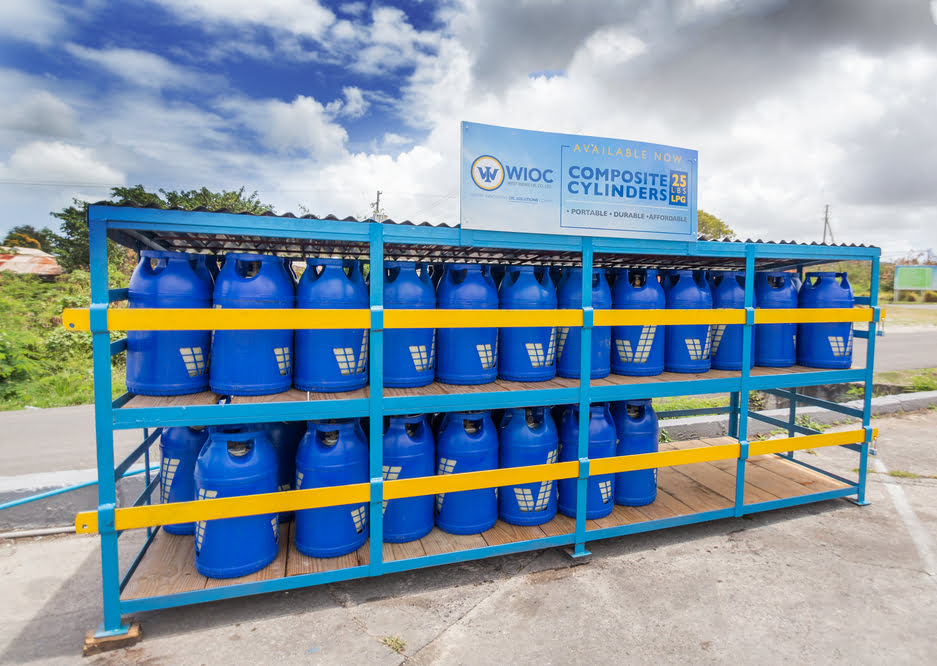
    Browne also confirmed that the government has rejected advice from its own Ministry of Finance to scrap the fuel price subsidy, choosing to continue artificially lowering consumer costs at the pump. To maintain the policy, the government compensates the West Indies Oil Company to offset losses from the capped prices, and the administration gives up roughly EC$4 million in monthly tax revenue to keep the subsidy in place.

    Even accounting for this recurring monthly revenue loss, Browne confirmed that total year-to-date collections are still higher than the totals recorded during the same period in 2024, defying projections that the subsidy would erase fiscal gains.

    The prime minister used the announcement to defend his administration’s track record on fiscal stewardship, pointing out that since his government took office in 2014, national debt has grown only marginally even as the country’s overall economy has expanded substantially. “When it comes to fiscal responsibility, I can say here without any fear of contradiction that my administration has been the most fiscally responsible administration that this country has ever seen,” Browne stated.

    Looking ahead, Browne emphasized that the confluence of sustained broad-based economic expansion, improved tax compliance and collection, and careful fiscal planning has put the government in a stronger financial position, allowing it to keep pushing forward with critical infrastructure and development projects across the nation.

  • OP-ED – 4 July – CARICOM Day as a Caribbean national holiday? President of the Caribbean Court of Justice poses question to the region

    OP-ED – 4 July – CARICOM Day as a Caribbean national holiday? President of the Caribbean Court of Justice poses question to the region

    Five decades after the founding of the Caribbean Community (CARICOM), the call for a unified regional public holiday to commemorate the integration project is once again on the table for Caribbean policymakers to consider in July 2026.

    The story of CARICOM begins on July 4, 1973, when four transformative regional leaders — Errol Barrow of Barbados, Forbes Burnham of Guyana, Michael Manley of Jamaica, and Eric Williams of Trinidad and Tobago — gathered in Chaguaramas to sign the foundational Treaty of Chaguaramas. They launched what remains the most ambitious cross-border integration initiative ever undertaken by small developing states globally. Vere Bird of Antigua and Barbuda, a key early signatory to the precursor Dickenson Bay Agreement, also stands as a towering figure in the history of Caribbean regional cooperation. That 1973 date is far more than a footnote in history books: it marks the official birth of CARICOM, and the moment Caribbean nations first formalized their collective identity as “one out of many.”

    Public holidays around the world are never just exercises in historical remembrance. They serve critical contemporary and future-focused functions, giving communities a structured opportunity to reaffirm shared values, preserve collective memory, and nurture intergenerational bonds of belonging and continuity. National observances from Independence Day to Emancipation Day fulfill this role by reminding citizens not just of what happened on a historic date, but why it mattered and what it means for collective identity today. Yet despite decades of integration progress, CARICOM remains in an unusual position: it has built most of the infrastructure of a unified economic space, with shared institutions, a common legal heritage, coordinated educational systems, and an increasingly interconnected single market, but it lacks a single, collective day for all Caribbean citizens to pause and reflect on the regional project that made these achievements possible. Establishing an official CARICOM Day would fill this long-standing gap.

    Sustainable communities are shaped not just by geographic borders and bureaucratic institutions, but by shared symbols, traditions and collective rituals. These moments give ordinary citizens the chance to see themselves as part of a shared, ongoing enterprise. A yearly CARICOM Day would create exactly that kind of unifying moment. Instead of drawing a boundary on a map, it would carve out a shared space in time: one day each year for all Caribbean people to reflect on the regional integration journey and the shared aspirations that still drive it forward. Coincidentally, this date already carries global significance: on July 4 this year, the United States celebrates the 250th anniversary of its Declaration of Independence, a milestone that sees Americans gather yearly to mark their national origin. That same date offers the Caribbean a perfect, already recognizable opportunity to mark the birth and ongoing evolution of its own regional community.

    Regional integration has always been a multi-generational project. The founding leaders who gathered in Chaguaramas in 1973 understood that building a unified Caribbean would take decades, not years, so the responsibility to advance their vision has passed sequentially from one generation of leaders to the next. The foundational work of the region’s founding fathers was carried forward by a second generation of leaders including P.J. Patterson, Basdeo Panday, Owen Arthur, and Bharrat Jagdeo, who deepened economic integration and strengthened core regional institutions. In more recent years, contemporary leaders such as Kenny Anthony, Patrick Manning, Ralph Gonsalves, and Mia Mottley have continued to champion cross-border cooperation, adapting the integration movement to meet 21st-century challenges and realities. CARICOM, in short, is not the achievement of any single generation — it is a shared inheritance passed down across decades of progress.

    A yearly regional holiday would give Caribbean people a regular opportunity to reflect on how far the integration movement has come, and how much work remains to reach the project’s full vision. CARICOM has persisted and matured through changing national administrations, global economic turbulence, devastating natural disasters, and shifting global power dynamics. It has endured because its core idea remains as compelling today as it was in 1973: that Caribbean people, despite their diverse ancestral and national backgrounds, can deliver greater welfare, security, and shared prosperity by working together than they can ever achieve alone.

    Twenty years ago, the entry into force of the Revised Treaty of Chaguaramas and the launch of the CARICOM Single Market and Economy (CSME) marked a major milestone in the realization of that founding vision. Today, Caribbean nationals enjoy opportunities that would have been unthinkable to the founding generation. Citizens can travel freely across member state borders, launch businesses, provide professional services, pursue employment opportunities, and invest outside their home countries. The push for full free movement of all CARICOM nationals continues to advance, and every step forward reinforces a simple, powerful truth: a Jamaican, Dominican, Vincentian, Kittitian, Barbadian, Trinbagonian, Guyanese, or Belizean is not just a citizen of their individual nation — they are also a citizen of the broader Caribbean Community. The CARICOM passport stands as a tangible, widely recognized symbol of this shared identity.

    CARICOM’s shared regional institutions have also become one of the Caribbean’s greatest collective strengths. The University of the West Indies (UWI) has educated generations of Caribbean leaders, scholars, professionals, and public servants. The Caribbean Examinations Council (CXC) administers qualifications recognized across the region and around the world. The Caribbean Development Bank (CDB) has funded critical development projects across all member states. The Caribbean Public Health Agency (CARPHA) has strengthened the region’s collective capacity to respond to public health emergencies, while the Caribbean Disaster Emergency Management Agency (CDEMA) coordinates cross-border disaster relief when hurricanes and other crises strike. West Indies Cricket and the CARIFTA Games have long demonstrated sport’s unique power to unify the region, serving as enduring symbols of shared Caribbean identity and pride. The Caribbean Court of Justice (CCJ), the apex court for participating member states and the judicial guardian of the rights enshrined in the integration treaty, carries the unique responsibility of adjudicating regional matters, and has made significant progress in ruling on cases that shape the daily lives of Caribbean people. True to its motto “One People. One Region. One Court,” the CCJ belongs to all Caribbean people, and the public is encouraged to engage with the court’s work, whether via an in-person visit to its Port-of-Spain headquarters or through its official website and social media channels, to understand how its rulings impact communities from Kingston to Georgetown.

    These integration gains are too valuable to be taken for granted, and a shared holiday would help cement public understanding of their value. Establishing CARICOM Day as an official public holiday on July 4 (with the holiday moved to the first Monday of July when July 4 falls on a weekend — this year that falls on July 6) would mean far more than just an extra day off. It would act as a catalyst for action across all sectors of Caribbean society: for schools to integrate the history of regional integration into their curricula; for national governments to highlight the impact and achievements of shared regional institutions; for businesses and civil society groups to celebrate Caribbean enterprise and collective innovation; and for ordinary citizens to reflect on the shared inheritance that binds the region’s diverse communities together.

    Already, two CARICOM member states — Antigua and Barbuda, and Guyana — have formally recognized CARICOM Day as a public holiday, proving that the idea is practical, feasible, and widely popular. It is time for the rest of the region to follow their lead. Policymakers across the Caribbean should not let another five years pass without taking serious action to formalize this shared celebration of Caribbean history and future. Every July 4, all Caribbean people should pause to celebrate the movement’s hard-won achievements, reflect on the shared journey that brought the region to this point, and renew their collective commitment to the ongoing CARICOM project. At the end of the day, regional cooperation is the Caribbean people’s most valuable shared asset — imperfections and all.

  • UPP to Hold Public Consultations Ahead of White Paper Debate on US Deportee Proposal

    UPP to Hold Public Consultations Ahead of White Paper Debate on US Deportee Proposal

    Ahead of a critical special parliamentary sitting scheduled for the week of July 13, Antigua and Barbuda’s main opposition United Progressive Party (UPP) has announced plans to host a nationwide series of public consultations to gather resident input on the government’s recently released White Paper detailing a proposed third-country deportee agreement with the United States.

    Jamale Pringle, UPP’s political leader and the party’s only sitting Member of Parliament, emphasized that the community-centered consultations are designed to give ordinary constituents a formal platform to share their perspectives on the high-stakes policy before parliamentary representatives cast their votes or stake out formal positions. While the consultations are confirmed to take place before the July parliamentary debate, the party has not yet released concrete details on meeting dates or locations, with a promise of further announcements in the coming days.

    Pringle framed the outreach as a core duty of elected office in a representative democratic system, noting that lawmakers are bound to reflect the will of the voters who put them in power. “We operate within a representative democracy, and representatives should reflect the wishes of the people who elected them,” Pringle stated, arguing that no decision on a matter of national significance should be made without first soliciting public input from affected communities.

    Beyond gathering public opinion, the UPP plans to use the upcoming parliamentary debate to flag critical gaps it has identified in the government’s White Paper. The opposition’s top criticism centers on the complete lack of supporting official documentation that would outline the full terms of the proposed arrangement with Washington, with the party stressing that it is deeply concerning that key documents related to the policy proposal have not been made accessible to the general public.

    The policy discussion was triggered last week when the Antigua and Barbuda government published the White Paper, which lays out U.S. proposals for the small island nation to accept certain third-country nationals who have been deported from U.S. territory. According to the government’s official document, the White Paper provides full context for the ongoing bilateral discussions, enumerates the core risks and opportunities for Antigua and Barbuda, outlines the government’s official assessment of the proposal, and details the core principles and conditions under which any form of cooperation with the U.S. on this initiative could be considered.

    The White Paper explicitly acknowledges that the agreement would raise profound questions across multiple critical policy areas, including national sovereignty, domestic legal responsibility, public expenditure, national security, domestic social stability, and the country’s standing international obligations. It also stresses a hard reality for the small Caribbean nation: as a state with limited institutional, financial, and infrastructural resources, Antigua and Barbuda cannot reasonably take on open-ended commitments related to non-citizens whose deportation is being sought by a foreign government.

    Moving forward, both the government and opposition are aligning on the timeline: the White Paper will formally be tabled before parliament during the special session expected the week of July 13, with the UPP expected to bring the feedback collected from its public consultations into the debate.

  • PM Browne Says Government Housing Policies Have Reduced Wealth Inequality

    PM Browne Says Government Housing Policies Have Reduced Wealth Inequality

    Antigua and Barbuda Prime Minister Gaston Browne has credited his administration’s targeted housing initiatives with driving a dramatic reduction in national wealth inequality, announcing a sharp improvement in the country’s Gini coefficient over his decade in office. Speaking during an appearance on the Brown and Brown Show this past Sunday, Browne outlined that core programs including the Housing Assistance Programme for Indigent People (HAPI) and large-scale affordable housing developments are intentionally structured to expand access to homeownership, a key tool for transferring accumulated wealth to working and low-income citizens.

    “Every time we construct these homes and a member of the public gets to benefit from that property, we are actively moving wealth into the hands of ordinary men and women across the country,” Browne explained during the interview.

    The Gini coefficient, a globally recognized statistical metric that measures the gap between the most and least wealthy members of an economy, ranges from 0 (perfect equality across all population segments) to 1 (maximum inequality, with almost all wealth concentrated in a tiny elite). When Browne’s administration took power in 2014, the prime minister noted, the country recorded a Gini coefficient of 0.87—an extremely high figure pointing to severe wealth concentration. That figure has now fallen to 0.47, a drop of 0.40 that marks one of the most rapid improvements in wealth distribution recorded in the region.

    “The closer the Gini coefficient gets to one, the more skewed wealth distribution becomes. It means a tiny group of wealthy individuals are capturing almost all of the country’s economic gains,” Browne added. He emphasized that the dramatic reduction in the metric confirms that wealth is now spread far more broadly across Antigua and Barbuda’s population than it was a decade ago.

    Browne used the interview to push back against widespread criticism that recent economic growth in the country has only benefited a small, well-connected elite. He argued that if corruption and mismanagement of public resources were as widespread as critics claim, the national statistical data would reflect that failure, rather than showing clear progress in reducing inequality.

    Beyond the drop in wealth inequality, the prime minister highlighted additional markers of economic progress under his leadership: a significantly strengthened national fiscal position, and steady growth in per capita income across the country.

  • Minister Freeland Attends Global Intellectual Property Talks in Geneva

    Minister Freeland Attends Global Intellectual Property Talks in Geneva

    A high-stakes global gathering on intellectual property governance is kicking off in Geneva this month, with a senior official from Antigua and Barbuda set to represent the small Caribbean nation at one of the world’s most influential forums for creative and economic policy. From July 7 to 15, Minister of State for Tourism Michael Freeland is taking part in the 68th session of the World Intellectual Property Organization (WIPO) Assemblies of Member States, the UN agency’s top decision-making body that draws more than 1,000 delegates from national governments and international institutions each year.

    In advance of the official opening of the assembly proceedings, Freeland will join a preeminent ministerial policy dialogue centered on a pressing global question: how can intentional investment in innovation and creative industries lay the foundation for more inclusive future societies and drive long-term, sustainable economic expansion? The core agenda of the two-week gathering brings together public sector leaders from every region of the world to tackle cross-cutting intellectual property (IP) issues, from standards for patents and trademark protection to rules governing copyright and geographical indication labeling, with the ultimate goal of charting the trajectory of global IP policy for years to come.

    Beyond plenary sessions and policy debates, Freeland has a packed schedule of bilateral and regional engagements during his time in Geneva. He is scheduled to hold official talks with Daren Tang, WIPO’s Director General, join a dedicated ministerial meeting for Caribbean nations, and lead technical discussions focused on strengthening Antigua and Barbuda’s domestic intellectual property framework.

    Key priorities for the Caribbean nation’s delegation include advancing actionable updates to national legislation governing new plant varieties, upgrading the country’s existing Industrial Property Automation System, rolling out convenient online filing services for IP applicants, expanding national access to and use of the WIPO-administered Madrid System for international trademark protection, moving forward with long-planned copyright reform, and rolling out public awareness campaigns to boost understanding of IP rights across the country.

    As the top decision-making forum for the global IP ecosystem, the WIPO Assemblies play a critical role in aligning national policy frameworks with global standards, creating opportunities for small and developing nations to shape rules that work for their unique economic and development goals. For Antigua and Barbuda, participation in this year’s gathering offers a key platform to advance domestic IP modernization that aligns with the country’s broader goals of sustainable growth and innovation-driven development.

  • Outgoing CARICOM Chairman Terrance Drew calls for stronger regional integration

    Outgoing CARICOM Chairman Terrance Drew calls for stronger regional integration

    On July 5, at the opening ceremony of the 51st Regular Meeting of the Caribbean Community (CARICOM) Conference of Heads of Government hosted in Saint Lucia, outgoing CARICOM Chairman Prime Minister Dr. Terrance Drew of St. Kitts and Nevis delivered a pivotal call to regional leaders, challenging them to forge a more robust, impactful CARICOM tailored to serve the Caribbean’s future generations.

    This year’s summit, held as the regional integration bloc celebrates its 53rd anniversary, carries the unifying theme “CARICOM: From Resilience to Renewal in a Changing World”, a framing that reflects the bloc’s ongoing efforts to adapt to shifting global conditions. During the opening proceedings, Drew formally handed the CARICOM chairmanship over to host nation Prime Minister Hon. Philip J. Pierre, in line with the bloc’s established procedures.

    Speaking to delegates gathered at the Jefferson Ballroom of Sandals Grande St. Lucia, Drew emphasized that while the 53-year-old organization must prioritize continuous evolution to meet modern demands, it must never abandon its core mission of advancing collective regional interests. Reflecting on his tenure at the helm of the bloc, he commended his fellow heads of government for upholding unwavering commitments to regional unity, democratic governance, and the rule of law through a period of unprecedented global uncertainty and persistent local challenges across the Caribbean.

    “Throughout these challenges, CARICOM chose engagement over isolation,” Drew noted in his address. “Together, we reaffirmed our commitment to a fair and rules-based international trading system, and ensured that the interests of small developing states continued to be heard.” He highlighted that during his chairmanship, the bloc deepened collaborative ties with long-standing traditional partners, while simultaneously expanding strategic cooperation with new partners across other global regions — most notably advancing the bloc’s growing relationship with the African Union. All partnerships, Drew stressed, were guided by a core principle: every collaboration must deliver mutual benefits for all participating parties.

    Within the bloc itself, Drew added that regional leaders made meaningful progress strengthening the CARICOM Single Market and Economy, boosting cross-regional trade cooperation, expanding labor mobility, and laying more solid foundations for long-term inclusive economic growth across member states.

    The outgoing chairman also used the platform to recognize the leadership and work of CARICOM Secretary-General Dr. Carla Barnett, praising her consistent professionalism, unwavering integrity, and deep personal dedication to the regional organization. He extended additional gratitude to the entire staff of the CARICOM Secretariat for their persistent support in advancing the bloc’s integration goals.

    “Throughout my tenure, whenever I called, you answered. Whenever support was required, you and your team responded with diligence, competence, and excellence,” Drew said, addressing Barnett directly. “You have served and continue to serve CARICOM with distinction. You have understood the importance of preserving the impartiality of the Secretariat while faithfully implementing the decisions of Heads of Government. That balance has strengthened this Community, and for this, I offer, on behalf of all of us, our sincerest gratitude.”

    Drew closed his remarks by reaffirming that building a stronger CARICOM for coming decades demands more effective regional governance, more rigorous execution of collective regional decisions, and ongoing targeted efforts to make the bloc safer, more prosperous, and more responsive to the daily needs and priorities of ordinary Caribbean citizens.

  • Derde helft WK 2026: Kaapverdië verloor van Argentinië, maar won de wereld

    Derde helft WK 2026: Kaapverdië verloor van Argentinië, maar won de wereld

    Against all odds, a tiny African island nation of just over 590,000 people achieved a feat this World Cup that many global football powerhouses can only dream of: capturing the affection and admiration of millions of fans around the world. This is not a story of lifting the biggest trophy in world sport, but of how first-time World Cup qualifier Cape Verde turned a knockout-stage clash against defending champions Argentina into a global moment that stretched far beyond the 90 minutes on the pitch.

    Cape Verde’s 2026 World Cup run was historic from the start. For the first time in the nation’s history, the tiny archipelago off the coast of West Africa qualified for football’s biggest tournament. In a stunning debut, they advanced straight through the group stage to the knockout round, setting up a blockbuster round of 16 match-up against Lionel Messi’s Argentina, the defending World Cup champions.

    Few gave the untested Cape Verde side a chance against the tournament favorites, but they defied every expectation. The underdogs pushed Argentina to the absolute brink, forcing the reigning champions to dig deep to secure a narrow 3-2 victory. After the final whistle, Argentina head coach Lionel Scaloni openly acknowledged that his side had fought an incredibly tough battle to earn the win. Messi himself, a global icon of the sport, sought out Cape Verde goalkeeper Vozinha to personally praise his performance, telling the keeper the entire nation should be proud of what their team had accomplished.

    Praise for Cape Verde poured in from across the global football community. Former stars Thierry Henry and Zlatan Ibrahimović called the side heroes, hailing them for putting on such an impressive display for their country. International media outlets immediately ranked Cape Verde as one of the most beloved surprise stories of the entire tournament.

    Beyond the pitch, the run carries deep meaning for Cape Verdean diaspora communities thousands of kilometers from the island nation. In Rotterdam, Netherlands, often called the “tenth island” of Cape Verde due to its large, generations-old Cape Verdean community, the connection to the national side ran especially deep. The first Cape Verdean migrants arrived in the port city as sailors in the 20th century, many settling permanently to build new lives; today, tens of thousands of people of Cape Verdean descent call Rotterdam home. That diaspora history was directly represented on the pitch: five of Cape Verde’s World Cup squad were born in Rotterdam, and another six were born elsewhere in the Netherlands. For local residents, that meant cheering for Cape Verde felt like cheering for a second home team. Local cafes and event spaces were packed to capacity during the Argentina match, with fans of all ages cheering nonstop through the full 90 minutes and extra time. When the final whistle ended their run, disappointment was nowhere to be found – only overwhelming pride. This squad was about more than football: it represented a shared history of migration, perseverance and cross-continental connection.

    One player who emerged as a global fan favorite was 40-year-old goalkeeper Josimar Dias, better known by his nickname Vozinha. The veteran keeper turned in a string of spectacular saves throughout the group stage and the tense knockout clash with Argentina. Despite Cape Verde’s elimination, international media hailed Vozinha as one of the tournament’s biggest breakout stars, with many analysts ranking him as the best goalkeeper of the entire knockout round.

    When the squad returned home to Praia, Cape Verde’s capital, they were greeted with a celebration fit for world champions. Thousands of fans lined the roads from the airport and packed the terminal, singing, dancing, waving national flags and cheering as if the team had lifted the World Cup trophy. To many observers, this reaction might seem unexpected for a team eliminated in the first knockout round. But the moment underscores a core truth of sport: success is not always measured by trophies.

    For a small nation that long flew under the radar on the global football stage, this World Cup run meant far more than a handful of matches. Millions of people around the world learned of Cape Verde not for its tropical beaches and tourism, but for the courage, skill and resilience of its national team. The story of Cape Verde’s 2026 World Cup run also highlights the deeper stories football can tell: stories of migration and identity, of communities separated by thousands of kilometers that still feel connected as one, of young people born in Rotterdam, Lisbon or Boston who proudly wear the shirt of their parents’ homeland. It also reminds the world that winning is not always measured in goals or trophies.

    Argentina left the pitch with the win, but Cape Verde left with something far more precious: global respect, widespread admiration, and a permanent place in the hearts of millions of football fans across the world.

  • British forced to retreat: 6 July 1779

    British forced to retreat: 6 July 1779

    On the 6th of July, 1779, a decisive naval clash off the coast of the Caribbean island of Grenada shifted control of the strategically critical colony between two global imperial powers, France and Britain. The engagement, pitting French forces led by the Comte d’Estaing against a British fleet commanded by Vice-Admiral John Bryon, ended with a battered British retreat, cementing French hold over the island at a moment when the American Revolution had spilled over into a global conflict.

    Alerted that d’Estaing’s invasion force had already arrived on Grenada, Bryon’s fleet sailed along the island’s western coast on the morning of 6 July. As the British advanced toward the capital of St George’s, they spotted a larger French fleet emerging from the protected harbor of Carenage. Despite being outmatched, British commanders remained confident they could defeat the French and retain control of the colony, which contemporary accounts ranked as the British Empire’s most valuable Caribbean holding after Jamaica.

    The first exchange of fire broke out between 7 and 8 a.m., as the British fleet moved to engage. British commanders had planned to force the French into a close-quarters battle, but d’Estaing’s forces deliberately avoided this tactic, neutralizing Britain’s initial advantage. By noon, British officers concluded that continuing the fight offered no path to victory, and ordered a general ceasefire. A second engagement erupted around 3 p.m. as the French fleet moved south, forcing the British back into combat until sunset. When the two fleets drifted apart at the end of the day, the British withdrew, their ships heavily damaged.

    Official casualty records reflect the high cost of the day’s fighting: 183 British sailors killed and 346 wounded, compared to 190 French killed and 759 wounded. While the battle itself ended in a stalemate in strictly military terms, the British failed in their core objective of retaking the island, leaving France in de facto control. Notably, d’Estaing chose not to pursue Bryon’s retreating, crippled fleet – a decision that has led many historians to argue neither admiral covered themselves in glory during the engagement. Even so, the fall of Grenada was recognized immediately as a major blow to British power. Historian Jamieson described it as the most significant defeat Britain had suffered since the American rebellion expanded into a global war.

    News of the French success in the Caribbean sparked widespread public celebrations across France. For the French, the victory shattered the myth of unchallenged British naval dominance that had persisted since Britain’s victory in the Seven Years’ War. The defeat also stirred deep anxiety among British leadership. In a private letter, James Cornwallis, whose son had barely escaped as commander of the warship Lion, wrote that senior British admiral Barrington had returned home in extreme frustration, warning that Britain’s position in the West Indies – where the empire had long believed it was strongest – was dire. “Nothing can look worse than our affairs,” Cornwallis noted, contrasting the gloomy mood with the string of British victories that had defined the previous global conflict.

    One little-remembered participant in the battle and the French capture of Grenada is Louis-Antoine de Bougainville, the famed French explorer and botanist after whom Grenada’s iconic national flower, the bougainvillea, is named. Bougainville commanded the 74-gun ship of the line *Le Guerrier* during the engagement, and his vessel emerged from the battle with surprisingly little damage, losing just nine crew members. The flowering plant, native to Brazil, was first brought back to Europe by Bougainville in 1768 during one of his exploratory voyages, and it would later become the national symbol of the island he helped capture.

    Today, the 1779 Battle of Grenada remains a key turning point in the island’s colonial history, marking a brief period of French rule that reshaped its cultural and political trajectory before it was returned to British control at the end of the war.