作者: admin

  • Caribbean delegation visits Martinique and Guadeloupe to examine Sargassum management strategies

    Caribbean delegation visits Martinique and Guadeloupe to examine Sargassum management strategies

    For more than a decade, massive, recurring blooms of sargassum seaweed have plagued the small island developing nations of the Caribbean, leaving widespread damage in their wake. These invasive influxes disrupt fragile coastal ecosystems, threaten marine biodiversity, trigger public health concerns from rotting biomass, and undermine the economic stability of communities that rely heavily on coastal tourism and fishing. Now, a coordinated regional effort is bringing stakeholders together to share proven solutions and strengthen collective action against this transboundary threat.

    Following recent regional meetings for the Sargassum Regional Strategies for Ecosystem-based Actions (SARSEA) project in Dominica, a delegation representing nine Caribbean states and territories under the Organisation of Eastern Caribbean States (OECS) has launched a four-day technical study mission, running from June 1 to 4, 2026, in the French Caribbean territories of Martinique and Guadeloupe. The core goals of the mission are to examine locally developed sargassum management frameworks and explore viable pathways to turning harvested seaweed into marketable, value-added products.

    Supported jointly by the European Union and the OECS, the initiative forms part of long-standing regional collaboration aimed at fostering cross-border knowledge exchange and building more robust collective responses to the overlapping environmental, economic and public health harms caused by repeated sargassum landings. Over the years, Martinique and Guadeloupe have built comprehensive, multi-faceted strategies covering every stage of sargassum management, from open-ocean monitoring and early warning to large-scale collection, risk mitigation and innovative processing of harvested seaweed into useful goods. The mission gives delegates the chance to observe these strategies in action, hold direct discussions with local public and private stakeholders, and map out opportunities for deeper regional coordination on the shared challenge.

    The first half of the itinerary is focused on technical visits and demonstrations across Martinique, spanning June 1 and 2. On opening day in Le François, the delegation will start with a morning tour of offshore containment barriers and dedicated collection barges, followed by an afternoon visit to two air quality monitoring sites run by local operator Madininair. The day will conclude with a formal presentation on sargassum monitoring systems and early-warning tools at Le François Town Hall.

    On June 2, the schedule moves to Le Vauclin, where delegates will first join guided tours of manual sargassum collection sites at Macabou and Pointe Faula, led by representatives of local organization ACI. After a working meeting with GIP and ACI representatives at Le Vauclin Town Hall, the group will travel back to Le François to visit Holdex, a local company pioneering commercial and innovative applications for processed sargassum. The Martinique portion of the program will close with a presentation on ongoing initiatives to develop value-added sargassum products, delivered by Dominique Bœuf of SARA/SERD. After concluding the Martinique leg, the delegation will travel to Guadeloupe for the final two days of the mission, June 3 and 4, to continue learning from that territory’s management approaches.

    The entire mission is backed by the SARSEA project, which receives funding from the Agence Française de Développement and is implemented through a partnership between Expertise France and the OECS Commission. SARSEA’s core mandate is to build technical capacity across the Caribbean, strengthen regional governance frameworks for sargassum management, and promote ecosystem-centered approaches to addressing the bloom crisis.

    Event organizers emphasize that the study mission underscores Martinique and Guadeloupe’s commitment to sharing their hard-won experience with neighboring Caribbean territories through a foundation of cross-border cooperation, collective solidarity, and innovative problem-solving. Echoing this collaborative spirit, an OECS representative participating in the mission noted that sargassum is a transboundary problem that does not respect national borders. “By combining our knowledge, expertise and resources, we can better protect our coastlines, our economies and our communities,” the representative said.

  • Central Procurement Unit to host symposium on strengthening public procurement

    Central Procurement Unit to host symposium on strengthening public procurement

    Grenada’s Central Procurement Unit (CPU), operating under the country’s Ministry of Finance, has partnered with the Climate-Resilient Water Sector in Grenada (G-CREWS) Project to organize a landmark two-day national procurement symposium. Slated for June 10 and 11, 2026, the event will be hosted at the Radisson Beach Resort in Grand Anse, with daily sessions kicking off at 9:00 a.m. and centered around the official theme “Smart Bidding, Stronger Partnerships.”

    The symposium is designed to convene a broad cross-section of stakeholders active in Grenada’s public procurement ecosystem, including sitting public officers, private contractors, local and national suppliers, independent consultants, and other key industry players. Core goals of the gathering include deepening participants’ working knowledge of official government procurement protocols, reinforcing adherence to regulatory compliance standards, and building more productive collaborative ties between the country’s public and private sectors.

    This strategic initiative is a core component of the Government of Grenada’s broader long-term push to modernize the nation’s public procurement systems. Beyond procedural updates, the government aims to boost transparency across all procurement activities and expand equal access to contracting opportunities for vendors operating in every region of the country. Attendees will gain actionable insights through a structured program of expert-led presentations and interactive working sessions, covering core topics from standard procurement procedures and mandatory compliance rules to the emerging framework of green procurement aligned with Grenada’s climate action goals.

    Several targeted highlights are baked into the symposium’s agenda. First, sessions will walk participants through industry best practices for developing bids that are both competitive and fully compliant with current regulatory requirements. Second, leading regulatory experts will share clear, up-to-date insights into Grenada’s latest procurement regulations, step-by-step procedural workflows, and official bid evaluation processes. Third, the event will build in dedicated time for direct, one-on-one engagement between attending vendors and senior procurement professionals, as well as technical specialists from the CPU.

    The Ministry of Finance has issued an open call to all contractors, suppliers, service providers, and public officers engaged in any form of procurement activity across the country to register and take part in this pivotal industry forum. In a statement announcing the event, the CPU reaffirmed its ongoing commitment to nurturing a fair, transparent, and modern procurement environment that directly advances Grenada’s national development priorities and creates new, sustainable growth opportunities for domestic businesses of all sizes.

    *Disclaimer: NOW Grenada holds no responsibility for opinions, statements, or third-party media content shared by contributing entities. Individuals may report content violations through the platform’s official abuse reporting channel.*

  • Iran’s Inflation Hits Worst Levels Since World War II

    Iran’s Inflation Hits Worst Levels Since World War II

    In a landmark and long-awaited official confirmation of Iran’s deepening economic turmoil, the Islamic Republic’s own Central Bank released a report on Monday, June 2, 2026, confirming that domestic inflation has climbed to levels unmatched since the end of World War II. This marks the first time a state-affiliated institution has publicly acknowledged the severity of the ongoing economic crisis, breaking a period of limited official transparency around the country’s collapsing financial conditions.

  • Grenada hosts validation workshop

    Grenada hosts validation workshop

    On June 1, 2026, Grenada’s Ministry of Climate Resilience, the Environment and Renewable Energy marked a major milestone in the island nation’s ongoing push to strengthen climate preparedness, hosting a full stakeholder validation workshop for the *Citizen’s Guide to Climate Change Adaptation for Grenada, Carriacou and Petite Martinique* at St. George’s Kirani James Athletic Stadium.

    The workshop gathered a cross-section of key actors, from senior government ministry and agency officials to civil society leaders, community organizers, academic researchers, youth delegates, and international development partners. The group’s core task was to review and sign off on the revised draft of the guide before it enters its final editing stage and official public release. This validation session forms an integrated part of the ministry’s broader work to boost public awareness, inclusive participation, and collective ownership of climate adaptation initiatives outlined in Grenada’s updated 2025–2030 National Adaptation Plan (NAP).

    The revised draft presented at the June workshop was built on iterative stakeholder feedback collected during an earlier Focus Group Session held on April 27, 2026. During that initial meeting, participants conducted a line-by-line review of the guide’s zero draft and submitted detailed recommendations to refine its structure, accessibility, clarity, on-the-ground relevance, and practical usability. All of these suggestions were integrated into the revised version, with key updates including simplified, jargon-free language, clearer alignment with national climate adaptation priorities, real-world examples of actionable adaptation measures, and enhanced visual design to make the content more approachable for general readers.

    In his opening address to attendees, Permanent Secretary Peron Johnson emphasized that the core mission of the guide is to demystify national climate policy for everyday Grenadians. “The National Adaptation Plan is a critical national framework for building resilience across all sectors of our economy and society. However, formal policy documents can often be highly technical and inaccessible to the average person. The Citizen’s Guide is intended to bridge that gap by translating complex adaptation concepts into information that households, communities, schools, businesses, civil society organisations, and citizens can understand, relate to, and act upon.”

    Johnson went on to stress that climate resilience cannot be delivered by the government alone; it requires collective, informed engagement from every segment of Grenadian society. “Climate resilience will only be achieved when adaptation becomes everyone’s business. This Guide is designed to empower citizens with the knowledge needed to understand climate risks, identify opportunities for action, and contribute meaningfully to building a more resilient Grenada, Carriacou and Petite Martinique.”

    National Adaptation Plan Officer Dr. Roxanne Graham-Victor highlighted that inclusive stakeholder engagement has been central to the guide’s entire development process, noting that the validation workshop was a critical step to ensure the final document meets the practical needs of its target audience. “The objective of this process is to ensure that the Guide is clear, practical, accessible, and useful to the people it is intended to serve. Stakeholder feedback remains central to achieving that objective,” she explained.

    Acting Director of Climate Resilience Titus Antoine added that the guide will serve as a cornerstone public resource to support full implementation of the National Adaptation Plan and deepen ongoing public participation in national climate action.

    The ministry extended formal gratitude to all workshop participants for their input and sustained commitment to advancing Grenada’s climate resilience goals. It also gave special recognition to the National Adaptation Plan Global Network and the International Institute for Sustainable Development (IISD) for their long-standing technical and financial support to strengthen Grenada’s adaptation planning systems and make the development of the Citizen’s Guide possible.

    Following the conclusion of the workshop, the guide’s drafting team will implement the final round of stakeholder recommendations. Once finalized, the document will be distributed across all three islands as a foundational public resource to support climate adaptation education, awareness, and local action.

  • Corbin wins Kevin Denny Open

    Corbin wins Kevin Denny Open

    The 2026 Kevin Denny Open Chess tournament wrapped up its multi-day competition over the weekend, with two standout winners emerging from the event’s two competitive divisions. Held in honor of legendary 13-time Barbadian national chess champion International Master Kevin Denny, the tournament also served as the second qualifying event for the 2026 National Open Chess Championship, drawing roughly 40 competitors across its rated and unrated sections.

    In the FIDE-rated division, veteran FIDE Master Dr. Philip Corbin pulled off a dramatic late-tournament comeback to secure his first tournament victory in several years, capping off a week of intense, high-stakes play. The title fight came down to the final round, with Jeremiah Farley entering his last match holding a fragile half-point lead over both Corbin and current women’s national champion, Woman FIDE Master Hannah Wilson.

    Farley squared off against Justin Kirton in the final round, while Corbin faced Wilson in a matchup that would ultimately decide the overall standings. In a tense, hard-fought game, Farley held his own through the opening and early middle game, but lost critical pawns in the late middle game, allowing Kirton to clinch a win. Meanwhile, Corbin launched a relentless central attack against Wilson’s king, steadily cramping her position and building overwhelming pressure. When Corbin positioned himself to capture a key piece, Wilson conceded the match via resignation.

    These final round results pushed Corbin past Farley in the overall standings, finishing atop the division with 5.5 total points. Farley ended the tournament with 5 points, claiming second place on tie-breaks. Kirton, Ronaldo Rochester, and Justin Parsons also finished the competition with 5 points apiece, all having secured wins in their final round matches. Parsons outperformed the other two on tie-breaks to take third place, earning the final qualifying spot for the 2026 National Open Chess Championship. Additional final round wins were recorded by Othneil Harewood, Jefferson Farley, Cyprian La Touche, Rebekah Lashley, Sameera Jaikaran, and Paul Thompson. After the tournament, Dr. Corbin received his first-place trophy from Erskine Simmons, Secretary General of the Barbados Olympic Association, in a ceremony hosted by the Barbados Chess Federation.

    In the novice unrated division, competition was even tighter than in the rated section, with three players finishing the tournament with a perfect 6 points. Junior Corbin, who is not related to Dr. Philip Corbin, claimed the division title after tie-breaks, edging out runner-up Raef Clarke and third-place finisher Kevin St. Hill. All three leaders entered the final round tied at 5 points, and each managed to secure a win in their final match to hold their positions at the top of the leaderboard. Other successful competitors in the unrated division’s final round included William Allen, Miguel Mings, Kendrick Corbin, Nia Snow Clarke, and James Alleyne.

    Tournament organizers with the Barbados Chess Federation deemed the 2026 Kevin Denny Open a major success, noting strong participation and high levels of play across both divisions. Following this event, the next major competition on the Barbados chess calendar is the 2026 Primary Interschool Team Chess Championship, scheduled to take place June 18-19.

  • Hope stresses attention to detail ahead of Sri Lanka ODIs

    Hope stresses attention to detail ahead of Sri Lanka ODIs

    As West Indies prepares to kick off a critical three-match ODI series against Sri Lanka on Wednesday at Kingston’s Sabina Park, captain Shai Hope has voiced unwavering confidence in his side’s ability to extend their dominant home run and claim crucial World Cup qualification points.

    Hope’s comments come on the heels of a focused pre-series training camp held in Antigua, where the squad honed specific skills tailored to challenge a formidable Sri Lankan side. Under Hope’s leadership, the West Indies Men’s ODI team, affectionately known as the Men in Maroon, have not dropped a home series in four consecutive outings — a streak the side is determined to push to five when they take the field this week.

    “One thing that we’ve done really well as a group, we’ve defended home court really nicely,” Hope noted in his post-camp remarks.

    The series carries high stakes for the Caribbean side, with direct points on offer that will determine whether they secure automatic qualification for the 2025 ICC 50-over World Cup. Currently sitting 10th in the global rankings, West Indies fall outside the cut-off for automatic qualification, and a poor showing could see them miss out on a third consecutive major 50-over ICC tournament, having already failed to qualify for the 2023 World Cup and the most recent Champions Trophy.

    Acknowledging the challenge ahead, Hope emphasized that Sri Lanka ranks among the most competitive sides in international cricket, requiring meticulous preparation from his squad. The training camp focused heavily on two key areas: tightening batting performance by reducing unnecessary dot balls and boosting bowling aggression by prioritizing early wickets to put opposition lineups under pressure.

    “Sri Lanka is a very strong team, such as everyone else in the international field. So, that attention to detail that we need to pay goes a long way … understanding what they’re trying to throw at us and finding ways to score as batters, limiting that dot-ball percentage, something we focused on a lot in the recent past,” Hope explained. “And, as bowlers, trying to find ways to keep picking up wickets, because when you put batting lineups under pressure with wickets, it’s a lot easier to control in the back end when things may start to go helter-skelter.”

    A major boost to the side’s prospects ahead of the series is the return of star fast bowler Alzarri Joseph, who takes the field for West Indies for the first time in more than a year. Prior to his break from international cricket, Joseph was widely regarded as the leader of the team’s ODI bowling attack, and Hope said his comeback has already lifted team morale.

    “It’s great having Alzarri back. He’s been one of our strongest bowlers, especially in this format, for quite some time. And seeing him looking so fit, looking so strong, looking so refreshed, I think that’s going to be a big boost for us. Not putting any pressure on him, but I’m looking forward to seeing him go well and do great things for the West Indies again,” Hope said.

    With preparation wrapped up and the opening match just days away, Hope said the squad is fully aware of what is at stake over the course of the series, and is ready to compete for the results that will keep their World Cup dream alive. “So, just understanding that we have a lot to play for as well, especially now with the points up for grabs. The preparation is going really nicely and just understanding what’s required within the next few days against Sri Lanka,” he added.

  • TTPS-issued ammo found at double murder scene

    TTPS-issued ammo found at double murder scene

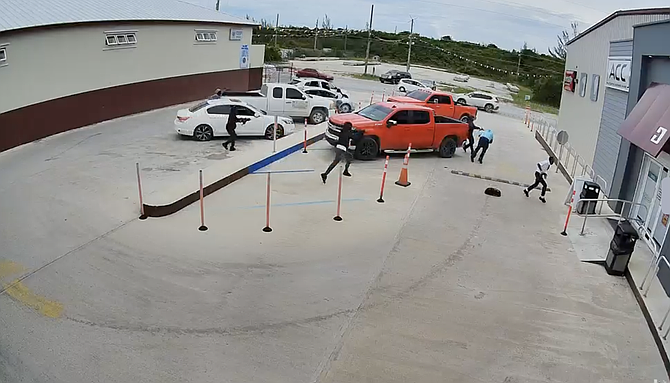
    A shocking double murder has rattled the quiet community of Penal in south Trinidad, prompting an urgent manhunt and a major internal probe after investigators made an unexpected discovery: police-issued ammunition at the scene of a gang-style shooting. The violence unfolded shortly after 8 p.m. on Sunday, when local residents reported hearing a rapid barrage of gunfire erupt from a residential property along Rock Road.

    Initial witness accounts paint a chilling picture of the attack. One man who was at the home watching football with the two victims told investigators that 23-year-old Jahrael Akeel Tafari Hunte, a local resident of Penal’s Syne Village, had stepped outside to answer a call from his wife just moments before the gunmen struck. Minutes after Hunte left the room, the witness looked outside and spotted three unidentified masked men armed with firearms loitering near the property’s front gate. Before he could raise an alarm, a hail of gunshots rang out, forcing the witness to flee the home for his own safety.

    Once the gunfire stopped and the attackers had fled, the witness returned to the property to find Hunte and 45-year-old Randolph Felix, a Rock Road resident, lying unresponsive on the ground, both having sustained multiple gunshot wounds. A third man at the scene survived the attack but suffered a gunshot wound to his left lower leg, along with cuts and abrasions to his chest and wrist. He was rushed to a nearby medical facility for treatment and remains in stable care under observation as of the latest updates.

    Responding officers from the Trinidad and Tobago Police Service (TTPS) immediately cordoned off the area and called in specialist crime scene investigators from the Region Three Homicide Bureau to process the site. Over the course of their examination, investigators recovered a large cache of ballistic evidence: 21 spent shell casings, four broken metal fragments, and three live, unfired rounds of ammunition. What made this discovery unusual, however, was that one 9mm spent casing and one 9mm live round recovered at the scene bore official TTPS markings, confirming they had been issued to police service personnel. All other ammunition recovered carried commercial manufacturing markings from third-party arms producers.

    This brazen double killing is not an isolated incident in the region. The attack capped off a staggering 13-hour wave of violence that left six people dead across south Trinidad. Earlier the same morning, three men were shot dead in a separate shooting incident in Corinth, Ste Madeleine, adding to the growing tally of violent deaths in the area.

    Investigators now face two parallel lines of inquiry: first, to identify and apprehend the three armed attackers responsible for the shooting, and second, to determine how police-issued ammunition ended up in the hands of the gunmen. Authorities have not yet ruled out any potential connections between serving or former police officers and the attack, and the TTPS has confirmed it will conduct a full review of all issued ammunition stockpiles as part of the ongoing probe.

  • Under-19 head coach seeking to win back-to-back tournaments

    Under-19 head coach seeking to win back-to-back tournaments

    As the highly anticipated Cricket West Indies (CWI) Rising Stars Under-19 tournament approaches, Robin Parris, head coach of the defending champion Barbados squad, has voiced unwavering confidence that his team can hold onto their crown when competition kicks off in Antigua from July 9 to 23. Gadson Bowens, a core leader of the squad, has been tapped to captain the 14-member team through the two-week tournament, with the full roster and support staff officially announced recently.

    In an exclusive interview with Barbados TODAY following the squad unveiling, Parris painted a picture of a cohesive, balanced roster that blends tested experience with promising emerging talent. He highlighted the key players that form the team’s experienced backbone: starting with captain Bowens, Justin Parris who comes off a strong showing on an ‘A’ team tour, R’Jai Gittens fresh off representing the West Indies at the recent U-19 World Cup, and all-rounder Rafael Lovell.

    Parris noted that the squad features a mix of players with multiple years of youth competitive experience, split between athletes based in Barbados and those plying their trade in domestic cricket systems in England, all of which has contributed to a steadily developing, competitive unit. The head coach singled out the team’s fast bowling group as a particularly potent strength that is expected to deliver strong results on Antigua’s pitches. With five talented, young fast bowlers still honing their craft and three consecutive tournament titles under Barbados’ belt, Parris said the ongoing winning legacy is a testament to the foundational work laid by previous coaching staff and the overall strength of youth cricket development across Barbados.

    Far from feeling pressured by the weight of Barbados’ outstanding track record in the tournament, Parris framed past successes as a motivating source of inspiration for the current squad and coaching team. “For me, it’s about upholding the long-held standards of Barbados youth cricket, living up to the benchmarks set by the coaches who came before us, while also pushing ourselves and our players to grow,” Parris explained. Alongside assistant coach Roddy Estwick, the coaching staff’s core priority extends beyond winning: they are focused on building strong foundational habits and preparing young athletes to step up to higher levels of competitive cricket in the future.

    “Our approach is straightforward: take it one match at a time, put in the work in preparation, build strong team chemistry, and leave every bit of effort out on the pitch when we compete,” Parris added.

    The full 14-player Barbados squad for the tournament is: Gadson Bowens (captain), Asher Branford, Kelani Clarke, Kemar Dixon, R’Jai Gittens, Jordan Graham, Zarell Harding, Jahidi Hinds, Raphael Lovell, Justin Parris, Rajeev Parsooram, Jakeem Pollard, Seth Smith, and Damarko Wiggins. Joining head coach Robin Parris and assistant coach Roderick Estwick on the management team are manager Dwayne Best and physiotherapist Kwayne Dalrymple.

  • Missing cruise ship passenger found dead on St Kitts nearly a week after disappearance

    Missing cruise ship passenger found dead on St Kitts nearly a week after disappearance

    Nearly seven days after a 33-year-old Chinese cruise ship passenger went missing during a solo hiking trip on the Caribbean island of St. Kitts, law enforcement authorities have confirmed his body was recovered by search teams.

    According to official statements from the St. Kitts and Nevis government, the missing traveler, Wang Zyuan, was first reported lost on May 27 while trekking alone along the Mount Liamuiga trail. Before communications cut out, Wang placed an emergency call to local 911 services at approximately 2:00 p.m. local time to report he had become disoriented and separated from any marked paths, but responders could not re-establish contact after the initial call.

    Local media outlet WINN FM 98.9 confirmed that Wang had opted to complete the hike without the accompaniment of a licensed professional guide. Witness reports note he was last seen wearing a black outfit and red footwear before starting his ascent up the trail.

    Immediately after Wang was reported missing, the Royal St. Christopher and Nevis Police Force (RSCNPF) coordinated a large-scale multi-agency search operation. The joint effort brought together resources from the St. Kitts-Nevis Defence Force, the island’s Fire and Rescue Department, and the National Emergency Management Agency (NEMA), alongside local civilian volunteers who assisted in combing through dense terrain. Telecommunication providers shared cell tower location data to help responders narrow their search parameters, cutting through large swathes of unmarked rainforest to target potential areas where Wang might have been stranded.

    After five days of systematic searching across the volcanic mountain, search crews located Wang’s body on Monday, with official confirmation of the discovery made public the same day. Police have not released additional details about the case, including a potential cause of death, noting only that a full investigation into the incident remains ongoing.

    Mount Liamuiga, the site of the hike, is a dormant volcano that stands as the highest point on St. Kitts, reaching nearly 3,800 feet (1,200 meters) above sea level. The trail that cuts across its slopes winds through dense tropical rainforest, and multiple cruise lines that list the hike as an available excursion explicitly warn tourists that the route is extremely physically demanding, with conditions that often turn muddy and slippery even during dry weather.

    This is far from the first search and rescue operation on the island’s remote backcountry trails. Over the past two decades, multiple incidents have left international tourists stranded or injured on Mount Liamuiga. In 2006, responders successfully rescued American traveler Linda Campbell after she became stranded on the mountain’s upper slopes, and in 2019, a 21-year-old Canadian hiker Jayme Houle required a large-scale search effort after suffering an injury while hiking the trail alone, mirroring the circumstances of Wang’s disappearance.

  • Making Money from Seaweed

    Making Money from Seaweed

    Across coastal communities around the globe, seaweed has quietly evolved from a wild ocean plant to a versatile commercial commodity that ends up in everything from refreshing beverages to skincare products. Now, one of the world’s leading international conservation organizations is working to unlock this economic potential for more residents of Belize, blending environmental sustainability with new income-generating opportunities.

    The Nature Conservancy (TNC) has launched a self-paced, free online training program focused on small-scale seaweed farming, designed to be accessible to a wide range of learners. Aspiring entrepreneurs, local fishermen seeking to diversify their catch and income, community organizers, and anyone curious about the emerging blue economy can complete the entire curriculum in just four to five hours, fitting the coursework around their existing schedules.

    The program was not developed in a vacuum: experts and community representatives from Belize, Indonesia, and Tanzania collaborated to shape the curriculum, ensuring it addresses the specific needs and conditions of tropical coastal communities. Course content covers all core fundamentals, from the basic mechanics of starting a small seaweed farm to strategies for implementing low-impact growing practices that protect surrounding marine ecosystems. It also walks learners through how entire communities can organize collective operations to maximize shared economic benefits.

    Unlike many forms of agricultural and aquacultural production, seaweed farming carries an exceptionally low environmental footprint. It requires no arable land, no inputs of fresh water, and no synthetic fertilizers or animal feed, making it far less taxing on natural resources than conventional food production. Beyond that, growing seaweed actively supports marine health: it filters excess nutrients from coastal waters to improve water quality, creates critical habitat for a wide range of fish and other ocean species, and absorbs carbon dioxide from the ocean to help mitigate the impacts of climate change.

    In Belize, a small but growing commercial seaweed industry already exists, with local businesses processing the crop into a diverse array of products. Dried whole seaweed, powder, body soaps, hydrating gels, health drinks, and nourishing hair products are already on the market, demonstrating the strong consumer demand for seaweed-based goods. TNC’s new course aims to lower the barrier of entry for new producers, helping more Belizeans join this growing market while upholding strict sustainable practices that protect the country’s valuable coastal ecosystems. The full course is currently available for enrollment through TNC’s official website.