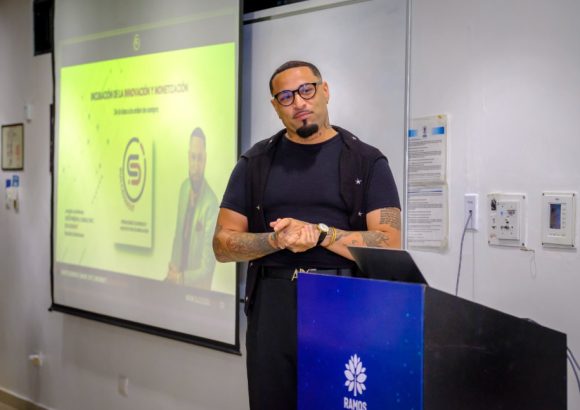
Early-stage startup ecosystems across Latin America and the Caribbean face a little-discussed but deeply damaging contradiction that is holding back innovative entrepreneurship, industry expert Jonathan Joel Mentor outlines. The pattern plays out with striking regularity: a founder with an unfinished product, a clear unmet market need and a compelling problem to solve applies to a regional early-stage funding program, only to be turned away for lacking established metrics. The application demands concrete revenue figures, existing customer traction, proven retention rates, calculated customer acquisition costs, audited performance and hard evidence of a working business model – requirements that force founders to come back once they have already built traction on their own. By that point, many promising ventures have already run out of steam and folded, while only the few that could self-finance or secure alternate backing survive.
What makes this dynamic so problematic is that it directly contradicts what institutions claim to offer. They advertise support for unproven early-stage companies, but their selection criteria only reward ventures that have already validated themselves without institutional backing. This is not just a problem of too little capital flowing to pre-seed ventures; it is that much of the capital labeled as pre-seed only arrives after the critical early discovery work has already been completed by founders, Mentor argues.
This dynamic creates what Mentor terms the “proof-before-discovery trap” – a flaw rooted in a misunderstanding of what pre-seed capital is actually designed to fund. Pre-seed investment has a specific, core economic purpose: it is meant to finance the exploratory period where a startup is still answering fundamental questions: Is the problem we are solving urgent enough for customers to pay for it? Which customers will actually commit to a purchase? What product design is actually viable? Which distribution channel can reliably reach the target market? Can the founding team turn their insights into actionable execution?
At the pre-seed stage, uncertainty is not an administrative hassle to be avoided – it is the exact outcome the capital is supposed to address. Serious early-stage investors do not wait for all risk to disappear before committing; they decide which risks are worth testing, what insights the funding should generate, and how to act once those insights are available. The contradiction emerges when institutions demand founders provide the exact proof the investment is supposed to help them create.
The result is a system where startups only become eligible for early-stage capital after they have already self-financed most of their early development. Institutions may still end up backing capable businesses, but they are no longer discovering and supporting pre-seed ventures – they are simply rewarding the few that survived the process of self-funding.
When these rigid selection filters are applied, the companies that tend to pass are not necessarily the most innovative or high-potential – they are simply the most “institutionally legible.” Their founders often have existing strong professional networks, international work experience, polished application materials, recognizable academic or professional credentials, or enough personal financial stability to develop a product before seeking outside support. None of these traits are bad, and many such founders do go on to build successful companies. But institutional legibility is not the same as commercial potential.
Founders with groundbreaking technical insights, unique access to underserved niche markets, or deep specialized expertise in complex, under-documented industries often look like weaker candidates simply because their supporting evidence is still incomplete. A startup may not have revenue yet because its product requires approval from a regulated industry. It may lack early customers because its first target buyer is a large corporation or public agency with a months-long procurement process. It may not have reliable third-party market data because the market it is entering is too new or understudied to have existing documentation.
When metrics designed for mature companies are forced onto early-stage startups, two costly errors become almost inevitable. The first is a false negative: a high-potential business is rejected because the institution cannot quantify what it does not yet know. The second is a false positive: a startup is selected because it checks all the institutional boxes, even though its core business assumptions have never been tested in the market. The first pushes valuable innovative potential out of the regional ecosystem, while the second wastes capital on ventures that only look like progress on paper.
Many regional early-stage programs treat the pre-seed gap as if the only thing missing is money. A capital infusion is important, but funding without access to critical non-financial resources buys little more than time for founders. A fintech startup may need a controlled regulatory environment to test its product. A logistics startup may need access to an existing distribution network to run a pilot. A tourism startup may need partnerships with hotels, airports or destination operators willing to act as early customers. A startup selling to government may need a streamlined procurement pathway that allows a successful pilot to turn into a full contract. Founders cannot create all these enabling conditions on their own. That means institutions that fund early-stage discovery must figure out what they can offer beyond just a check. That additional support could include access to market data, a paid pilot opportunity, a regulated testing environment, a strategic operating partner, a formal procurement pathway, or reserved follow-on funding for successful experiments. Without these inputs, founders leave the program with more polished presentation materials but no new commercial evidence. Their core uncertainty is not resolved – it is just pushed back to a later date.
Beyond non-financial support, most pre-seed programs lack what Mentor calls clear decision architecture. A well-designed pre-seed funding instrument should answer a handful of critical questions before any money is disbursed: What high-impact uncertainty is this funding meant to resolve? What is the smallest, rigorous experiment that can generate credible, actionable evidence? Who will provide the customer access, data, operating environment or regulatory approval needed to run that experiment? What specific outcomes will trigger additional funding, a product redesign, or an orderly wind-down? And who within the institution has the authority to make that follow-up decision?
The ideal sequence is straightforward: Map the core uncertainty → run a funded experiment to generate market evidence → act on that evidence with follow-on investment, a redesign, or closure. Most existing entrepreneurship programs already have standard components: application processes, mentorship, selection committees, and demo days for investors. What they almost always lack is a pre-agreed clear pathway connecting the initial investment to the next critical decision. This gap matters a great deal. A cohort of founders can be managed without anyone owning the core investment logic. A founder can receive general business advice without the institution ever clarifying what evidence it needs to approve follow-on funding. A pilot can be completed without a committed buyer, allocated budget, or clear path to scaling. The program checks all its activity boxes, but the startup’s core uncertainty remains unresolved.
Not every early-stage experiment is supposed to succeed, and pre-seed capital is not meant to protect every startup from failure. Its real purpose is to make failure bounded, informative, and tied to clear decision-making. Yet many regional programs celebrate their successful exits and high-profile winners, then quietly sweep failed ventures under the rug. Founders move on, the cohort closes, and a new application cycle opens with the same flawed selection logic. Institutions rarely systematically capture knowledge from failed ventures: why the business could not gain traction, which customers refused to buy, which core technical or market assumption proved wrong, which regulatory barrier blocked adoption. In a region where early-stage capital is already scarce, this is an expensive mistake. A failed startup may not return a profit to the investor, but the experiment should still improve the institution’s ability to judge future investments. It can reveal which assumptions actually matter for success, which milestones predict long-term commercial progress, and what kinds of support actually generate actionable evidence rather than just busywork. The key question for pre-seed programs is not just how many of their portfolio startups are still alive. It is how much useful evidence each investment generated, how quickly the next decision could be made, and whether the institution got better at allocating its next peso. Without this learning cycle, programs do not build sustainable investment capacity – they just end up paying for the same lesson over and over again.
The regional pre-seed gap is almost always framed as a problem of founder readiness. Founders are told they need to become more disciplined, more polished in their pitches, more financially sophisticated, and better at attracting investor interest. That advice is often valid, but founder preparation cannot fix a funding system whose decision process was never designed to handle the inherent uncertainty of pre-seed ventures.
Different types of institutions – fund managers, commercial banks, development corporations, public agencies, and multilateral development institutions – all approach early-stage finance with different legal obligations, risk tolerances, and core goals. But any institution that claims to fund pre-seed ventures should be able to answer the same set of core questions: What uncertainty are we paying to better understand? Who will provide the startup access to the resources it needs to validate its hypothesis? Who within the organization decides whether the generated evidence is sufficient? Is additional capital readily available if the experiment succeeds? What happens if the results are ambiguous? What will the institution learn if the startup has to close?
A program manager can run a cohort, and a mentor can advise a founder, but neither can replace a dedicated investment owner with the authority to make decisions about what the portfolio is supposed to discover.
Latin America and the Caribbean do not need unselective, reckless investment or accept unnecessary losses for the sake of fashion. What they need is funding standards that match the stage of the company being financed. For an established company, investment readiness means stable revenue, predictable operations, and documented capacity to grow or repay capital. For a pre-seed company, investment readiness means something entirely different: a high-impact unresolved uncertainty, a credible founding team, a testable core hypothesis, access to the environment needed to generate learning, and a financing structure that turns evidence into a clear decision. This is not a lower standard – it is a more honest one.
Institutions are perfectly justified in choosing to only back companies that already have traction, revenue, and validated demand. That type of capital is seed funding, growth capital, procurement support or small business lending – all legitimate financial instruments. But capital that requires a startup to complete the entire discovery process before becoming eligible is not pre-seed financing. It just arrives after the pre-seed stage is already over.
Mentor concludes that the region already has more promising high-potential startups than existing investment pipelines reflect. More often than not, what is missing is not entrepreneurial potential. It is an institutional process capable of recognizing that potential before someone else has already paid to prove it.