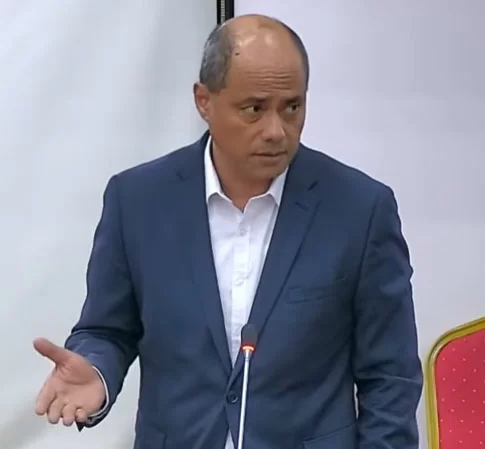
Suriname’s National Party of Suriname (NPS) parliamentary faction leader Jerrel Pawiroredjo has formally called on the national government to implement proactive measures to safeguard the country’s food security ahead of a projected period of extreme drought that poses severe risks to the nation’s critical rice sector.
Pawiroredjo raised the urgent issue during a public plenary session of the National Assembly of Suriname (DNA) on Monday, noting that reputable international climate research institutions have forecast extreme dry conditions for this region of South America in the coming months. This is not the first time the NPS leader has sounded the alarm over drought impacts: he previously highlighted risks to the country’s energy supply, and has now turned his attention to the agriculture sector, with a specific focus on rice – Suriname’s most essential staple food crop.
According to Pawiroredjo’s data, rice cultivation in Suriname has shrunk dramatically in recent years. At the peak of national rice production, more than 50,000 hectares of land were planted with rice. Today, that cultivated area totals less than 10,000 hectares, he confirmed. Beyond the shrinking land area, local rice farmers have also struggled for years with the gradual degeneration of existing rice varieties, a problem compounded by the failure of Suriname’s premier rice research institution to develop improved, high-yield strains. The Anne van Dijk Rice Research Center in Nickerie (ADRON) no longer retains sufficient specialized expertise to deliver improved seed development, he argued.
These combined trends leave the country vulnerable to significant rice shortages if drought conditions persist, Pawiroredjo warned. While export shortfalls are a likely outcome of the current trajectory, he stressed that the nation must never reach a point where it is forced to import its core staple food. To that end, he is demanding answers from the Minister of Agriculture, Livestock and Fisheries (LVV) outlining what pre-emptive preparations the government has already put in place. Key areas he highlighted include accelerated rice variety improvement, emergency seed import plans, accessible financing frameworks for smallholder farmers, adjustments to bank lending rates for agricultural operations, guaranteed access to production inputs, and investment in updated agricultural machinery.
For Pawiroredjo, however, the single most critical priority is securing reliable water access for agricultural irrigation. If the forecast extreme drought materializes, authorities must map out water sources and identify the necessary pumping infrastructure well in advance of water shortages. “We know this drought is coming. Let’s start planning now for where our irrigation water will come from,” he told the government during the parliamentary session.
He also added that fuel supplies for irrigation pumping stations must be arranged well ahead of the dry period, to avoid a situation where pumps are forced offline mid-drought due to diesel shortages. Pawiroredjo urged the government against waiting for crises to emerge before acting, drawing a parallel to previous failures in energy sector management that led to widespread blackouts at the state power utility EBS. He reiterated that the public is waiting for the government and the LVV ministry to present a clear, actionable plan to support the agriculture sector – and the rice industry in particular – through what could be a prolonged period of severe drought.