作者: admin

  • Department of Culture to Host Cultural Characters Workshop

    Department of Culture to Host Cultural Characters Workshop

    A new free public workshop focused on preserving centuries-old Caribbean traditional cultural performance practices is set to open its doors to participants this Wednesday afternoon, launched by the Cultural Department of the Ministry of Creative Industries. Conceived by Culture Director Khan Cordice, the multi-week training program will immerse attendees in a range of iconic folk performance skills that form the backbone of regional Carnival celebrations.

    According to Events Coordinator Gilbert Laudat, the curriculum covers hands-on training in core disciplines including stilt walking—locally known as the art of the Moko Jumbie, conch shell blowing, and the performance techniques required to portray traditional figures such as the Caribbean John Bull clown and whip cracker. Beyond performance skills, participants will also learn the history behind these cultural roles, as well as the craft of building authentic costumes and assembling all the elements that bring these traditional characters to life.

    The core mission of the initiative, Laudat explained, is to address a growing gap in intergenerational knowledge transmission by creating accessible opportunities for community members, especially young people, to build deep, practical expertise in these fading folk traditions. By lowering barriers to entry through free, public training, organizers hope to reverse the trend of declining participation and secure the long-term survival of these defining elements of local cultural heritage.

    Registration for the program is open to all interested participants on-site at the Environment Division. Daily sessions will run from 3:30 p.m. to 7:00 p.m., with the entire workshop scheduled to conclude on July 24, 2026, after opening on July 8. Following the completion of the initial training cycle, the Cultural Development Division is aiming to see a noticeable increase in the representation of these traditional cultural characters in the annual Carnival Monday parade, bringing heritage back to the center of the island’s biggest celebration.

    Laudat added that the training initiative will not end with the initial workshop cycle. Long-term plans include ongoing, regular training opportunities for the general public, with an expansion to schools across the island already in the works. After the 2026 Carnival concludes, the program will pause briefly before resuming to add training focused on traditional Christmas cultural characters, extending the initiative’s impact beyond Carnival season to year-round heritage preservation.

  • News : Zapping…

    News : Zapping…

    As the Caribbean nation of Haiti enters the second week of July 2026, a series of key political, diplomatic and cultural developments are unfolding across the country, marking both moments of national remembrance and steps forward for governance and community engagement.

    On July 7, 2026 – exactly five years after former Haitian President Jovenel Moïse was assassinated by mercenary attackers – local officials in Cap-Haïtien gathered to honor his memory. Leading the municipal delegation was Cap-Haïtien Mayor Michel Saint-Croix, who was joined by Deputy Mayor Edeline Jean and senior members of the city’s municipal administration. The group traveled to Moïse’s mausoleum, where they held a formal memorial service and laid a floral tribute to the late head of state. In a statement following the ceremony, the Cap-Haïtien Municipal Administration confirmed its alignment with the national day of remembrance, reaffirming its long-standing commitment to upholding republican values, fulfilling the national duty of remembrance, and strengthening the country’s democratic institutions. Former Haitian Prime Minister Laurent Lamothe also released a public statement marking the somber anniversary, condemning the assassination as an act of “unimaginable barbarity” that altered the entire trajectory of Haiti’s national destiny. Lamothe, who has faced significant personal repercussions for his public calls for full accountability and justice for Moïse’s killing, emphasized that his calls for truth would not waver. “His assassins thought they were killing a man. They shattered the destiny of a nation,” Lamothe wrote. “Jovenel fell, but his memory will live on. I paid a heavy price for refusing to remain silent and demanding justice. I would do it again without hesitation. For Jovenel, for Haiti, until the whole truth comes out.”

    One day before the commemoration, on July 6, 2026, veteran Haitian journalist Lucien Jura officially stepped into the role of Secretary of State for Communication. Jura succeeds Jean Willio, who oversaw a structured handover of institutional knowledge to ensure a smooth transition focused entirely on advancing national priorities.

    In regional diplomatic news, Haitian Foreign Minister Raina Forbin held a high-level bilateral meeting with her Bahamian counterpart Frederick A. Mitchell, Minister of Foreign Affairs and Public Service of the Commonwealth of The Bahamas, on the sidelines of the 51st Ordinary Session of the CARICOM Council of Heads of State and Government hosted in Saint Lucia. Forbin attended the CARICOM summit alongside Haitian Prime Minister Fils-Aimé. The two diplomats centered their discussions on deepening bilateral collaboration between Haiti and The Bahamas, with a particular focus on pressing shared regional priorities: restoring stability and security across Haiti, expanding joint action on maritime security, supporting Haiti’s ongoing electoral process, and addressing evolving tensions across the Caribbean region.

    In cultural news, two Haitian literary voices have earned a spot among the six finalists for the inaugural Quai d’Orsay Literary Prize, a new award launched in 2025 by France’s Ministry for Europe and Foreign Affairs. Louis-Philippe Dalembert’s novel *Je n’ai jamais dit Papa* (I Never Said Dad), published by Éditions Robert Laffont, and Lyonel Trouillot’s *Bréviaire des anonymes* (Breviary of the Anonymous), published by Actes Sud, were selected as finalists from a pool of submitted entries, marking a major milestone for Haitian literature on the global stage.

    On the community cultural front, two Haitian cultural organizations have launched a new initiative to preserve the country’s iconic traditional drumming heritage in Les Cayes. On June 27, La Fabrique des Arts partnered with the Institute for the Promotion and Development of Education and Culture (IPDEC) to launch recurring weekly drum classes open to young residents of the city. Experienced local drummers Ricardo Paisible and Fen Josil lead the instruction, and the first session drew more than a dozen young participants eager to learn traditional Haitian rhythmic patterns in a structured, inclusive, and dynamic learning space. Over the course of the program, participants will build their technical skill, rhythmic awareness, and understanding of drumming’s central role in Haitian cultural identity. The joint initiative aims to intergenerationally transmit traditional knowledge, safeguard Haiti’s musical heritage, and nurture the next generation of Haitian drummers.

  • Antigua and Barbuda Hands Over ECCB Monetary Council Chairmanship to Dominica

    Antigua and Barbuda Hands Over ECCB Monetary Council Chairmanship to Dominica

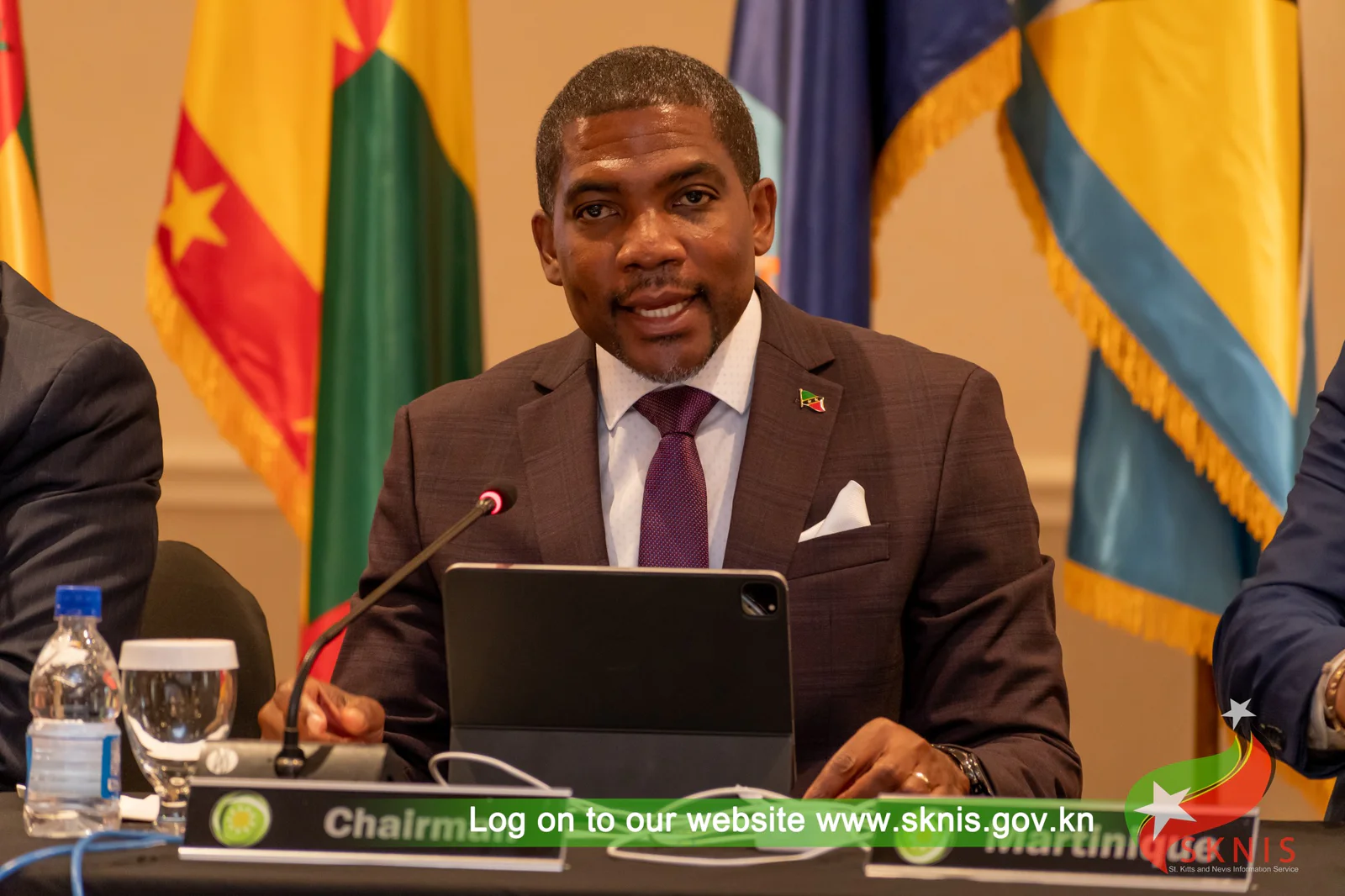
    A key leadership transition is set to take place in 2026 for the Eastern Caribbean Central Bank (ECCB), as the top post of its Monetary Council prepares to change hands in a formal, public ceremony. On July 9, 2026, starting at 5:00 p.m. local time at the Trafalgar Ballroom of the InterContinental Dominica Cabrits Resort located in the Commonwealth of Dominica, current chair Gaston Browne, the council’s representative for Antigua and Barbuda, will officially transfer the gavel to incoming chair Dr. Irving McIntyre, Dominica’s representative to the decision-making body.

    As the highest governing and decision-making authority of the ECCB, the Monetary Council is composed of the finance ministers from all eight of the ECCB’s member jurisdictions across the Eastern Caribbean. Following long-standing institutional rules, the council’s chairmanship rotates on an annual basis, with the role passing to the next representative in alphabetical order of the member territories: Anguilla, Antigua and Barbuda, the Commonwealth of Dominica, Grenada, Montserrat, Saint Christopher (St Kitts) and Nevis, Saint Lucia, and Saint Vincent and the Grenadines. This rotational system ensures equal representation and shared governance across the Eastern Caribbean currency union.

    Beyond the formal leadership handover, the 2026 ceremony will carry special historical significance: it will host the public unveiling of a fully redesigned series of Eastern Caribbean (EC) banknotes and coins, created to mark the 50th anniversary of the EC dollar’s fixed exchange rate peg to the United States dollar.

    The process to update the regional currency began years before the launch. During the Monetary Council’s 105th meeting held on July 21, 2023, members approved a landmark change: the removal of the late Queen Elizabeth II’s portrait from EC currency, a shift that aligns with the region’s evolving sovereign identity. The council also directed the ECCB to lead a period of public consultation to gather input from residents across member territories on what imagery should replace the former portrait. These public engagement sessions ran from July through December 2023, and the results were clear: an overwhelming majority of respondents supported featuring local national heroes and foundational nation builders on the newly redesigned currency.

    For those unable to attend the ceremony in person, the entire event will be broadcast for free via live stream on two platforms: the official ECCB Connects platform and the ECCB’s public YouTube channel, allowing residents, financial stakeholders and interested observers across the region and globally to follow the proceedings.

  • Greene Calls for Public Cooperation as CHOGM 2026 Security Simulation Exercise Begins

    Greene Calls for Public Cooperation as CHOGM 2026 Security Simulation Exercise Begins

    As Antigua and Barbuda advances its preparations to host the 2026 Commonwealth Heads of Government Meeting (CHOGM), the Caribbean nation has launched a critical two-day national security simulation exercise, Foreign Affairs Minister and CHOGM Task Force Chairman Hon. E.P. Chet Greene announced in a public address to all citizens and residents.

    Greene emphasized that this drill is far more than a routine training exercise. It stands as a tangible demonstration of Antigua and Barbuda’s unwavering commitment to delivering a secure, well-organized and successful summit for Commonwealth heads of state and government when the global gathering convenes in November 2026. The simulation is designed to test response protocols, coordinate inter-agency operations and identify gaps in security planning ahead of the major international event.

    In his address, Greene extended formal recognition and praise to the law enforcement officers and security personnel leading the simulation operation. He noted that the dedication, personal sacrifice, and detail-oriented planning these professionals have brought to the process form the very foundation of the nation’s preparedness to welcome world leaders. He urged all participating personnel to uphold the highest professional standards throughout the exercise, noting that their performance reflects the quality and integrity of Antigua and Barbuda as a host nation.

    The task force chairman also offered sincere thanks to the general public for their ongoing support. Public cooperation and patience, he said, are irreplaceable factors that will determine the exercise’s ultimate success. Broad public participation in adapting to temporary changes underscores the unified “whole-of-nation” support behind the 2026 CHOGM hosting effort, sending a clear signal to the global community that Antigua and Barbuda is fully ready to welcome the Commonwealth gathering.

    Greene formally apologized in advance for temporary disruptions to daily public life, including expected traffic delays and temporary restricted access to certain areas. He stressed that these short-term adjustments are a necessary part of robust, effective planning, and that only thorough advance preparation can guarantee the safety of attending international delegates, local residents, and all event staff, while setting the foundation for a globally successful summit.

    As the simulation gets underway, Greene pledged full accessibility and support from himself, the national government, and the entire CHOGM Task Force. “We are all in this together,” he noted, adding that collective shared resolve will ensure the 2026 CHOGM is an event that makes all Antigua and Barbuda residents proud. He closed the address with a blessing for the nation’s security forces and the twin-island state.

  • Pawiroredjo: Ordinaire kwikdiefstal hoort niet achter gesloten deuren

    Pawiroredjo: Ordinaire kwikdiefstal hoort niet achter gesloten deuren

    A heated political clash has erupted in Suriname’s National Assembly (DNA) over plans to discuss the high-profile disappearance of more than 300 kilograms of mercury from the Geyersvlijt police station compound behind closed doors, with cross-faction lawmakers pushing back against the government’s push for a confidential committee general discussion. The controversy centers on a major theft case that has already sparked widespread public concern, with critics arguing the public has a right to full transparency, especially given the case touches on the integrity of the national police force itself.

    Multiple sitting members of the legislature have rejected the proposal to hold proceedings in secret, arguing that the seriousness of the theft and questions around police institutional integrity demand an open, public debate that allows Suriname’s society to follow the proceedings and hold officials accountable. Ebu Jones, a faction member of the NDP opposition, flatly rejected closed-door handling of the case. Jerrel Pawiroredjo, faction leader of the NPS, added that confidential committee general meetings should remain an exceptional procedure, not a default for common criminal cases.
    Pawiroredjo warned that treating a run-of-the-mill mercury theft with mandatory secrecy would push the National Assembly directly into covering up the issue, eroding public trust in the legislative body.

    Government representatives, including Justice and Police Minister Harish Monorath and government coordinator in the DNA André Misiekaba, defended the call for confidentiality, noting that an active criminal investigation into the disappearance is still ongoing under the leadership of the Public Prosecutor’s Office. According to the government, sensitive investigatory details cannot be released in an open plenary session, as public disclosure could jeopardize ongoing investigative work. The government offered to share full sensitive details with lawmakers in a closed committee general meeting if legislators desired more information, but this proposal drew sharp criticism from both ruling coalition and opposition blocs.

    Jones reiterated that the public already has broad awareness of the case and significant concerns, giving Surinamese citizens a legal and moral right to clear, public information. He emphasized that parliament has a fundamental obligation to uphold transparency when addressing missing materials and integrity failures within the police service.
    Krishna Mathoera, a legislator from the ruling VHP party, contextualized the mercury disappearance as part of a longer pattern of problematic incidents within the police apparatus, including other missing seized goods, allegations of extortion, and repeated integrity breaches. Mathoera stressed the issue extends beyond the active criminal probe, touching on core governmental accountability: “What measures is the Minister of Justice and Police taking to stop this kind of incident from happening again?” she asked.

    The government maintained its position that active investigatory work means names and operational details cannot be named publicly, while acknowledging that parliament has a legitimate right to receive accountability updates, noting the relevant minister has already outlined planned policy changes to address gaps. VHP faction leader Asis Gajadien and fellow legislator Rabin Parmessar underlined that the National Assembly retains the sovereign right to vote to make information public if it determines a closed confidential meeting is unnecessary, a precedent that has been set in previous parliamentary cases.

    DNA Speaker Ashwin Adhin outlined a compromise path forward, announcing that after consultations with the government, a new meeting has been scheduled for Thursday at 9:00 a.m. If the government determines all relevant details can be released publicly, the full meeting will be open to the public and media. If sensitive information is deemed necessary to withhold initially, the meeting will open in closed committee general session, after which the full National Assembly will vote on whether to transition the remainder of the debate to an open public session.

    A confidential preliminary meeting has already been convened, with the full parliamentary debate scheduled in the coming days. Multiple legislators have stressed that confidential committee general meetings must not become a routine tool to keep matters of public interest hidden from general view. They reminded fellow members that DNA Standing Order Article 100 mandates secrecy for all members for matters discussed in closed session, unless the full National Assembly votes to lift the confidentiality requirement. The government is set to discuss the matter at a cabinet meeting this week to finalize its position on what information can be released publicly ahead of Thursday’s scheduled parliamentary debate.

  • Football : Everything you need to know about World Cup ticketing and the role of the FHF

    Football : Everything you need to know about World Cup ticketing and the role of the FHF

    Amid growing public questions surrounding access to 2026 FIFA World Cup match tickets, the Haitian Football Federation (FHF) has released an official public statement to clear up confusion, laying out the dual ticketing structures established by FIFA and defining exactly what responsibilities the federation holds in the overall process.

    FIFA’s framework for 2026 World Cup ticketing splits distribution into two fully separate, independent systems, the FHF confirms. The first pathway is open to the general public and Haitian national team supporters, operated entirely directly by global soccer’s governing body through FIFA’s own official ticketing portal. Under this system, the FHF has no involvement whatsoever in sales processing, payment collection, or ticket distribution to individual fans. The federation’s only function here is to validate official fan group affiliations with FIFA, following strict protocols set by the tournament organizer. The FHF also confirmed that the widely reported $60 starting ticket price referenced in multiple local publications applies exclusively to this FIFA-managed public sales system, with all financial transactions processed directly between buyers and FIFA, no third parties or federation intermediaries involved.

    The second ticketing pathway is the institutional allocation reserved exclusively for participating national member associations like the FHF. This allocation follows a fixed timeline of requests, approvals, and payments, all contained within FIFA’s official ticketing window for participating nations. Contrary to some circulating rumors, these tickets are not provided for free; the FHF must purchase its allocation directly from FIFA through the official member association ticketing program. The allocation is designated solely to cover institutional needs tied to Haiti’s participation in the tournament, including tickets for the national team delegation, players, coaching and support staff, club representatives, institutional partners, official guests, and other members of the Haitian football community. All steps of this process – from initial request to validation, invoicing, payment, and final ticket issuance – are completed through FIFA’s official ticketing portal, following the governing body’s strict administrative protocols. Every ticket allocated to the FHF is ordered, invoiced, paid for, and issued by FIFA, with every step logged in FIFA’s official systems to ensure full traceability for every ticket the federation acquires.

    To reinforce transparency, the FHF emphasized that every ticket in its institutional allocation goes through a fully documented, rigorous administrative process that includes written ticket requests submitted to FIFA, formal allocation confirmations, official FIFA invoices, proof of FHF payment, FIFA ticket issuance, and final distribution to pre-approved beneficiaries. The federation also issued a clear warning: it has not authorized any individual or third-party organization to sell 2026 World Cup tickets on its behalf outside of FIFA’s official, publicized channels.

    Outlining its core role in the overall process, the FHF explained that its responsibilities begin and end with acquiring tickets for the Haitian football community per FIFA’s rules and distributing those tickets to the pre-approved beneficiaries. Once distribution is complete, the federation has no practical or legal authority to control how individual ticket holders use their tickets. Any subsequent resale, transfer, or circulation of a ticket after distribution falls entirely under the responsibility of the ticket holder, and cannot be interpreted as official involvement or endorsement from the FHF. The federation added that it stands ready to cooperate fully with FIFA and any other competent regulatory authority if specific, verifiable information emerges that warrants an investigation.

    The statement also noted that since the FHF was placed under the oversight of a FIFA-appointed Normalization Committee, it has adhered to strict global standards of governance, transparency, and accountability. Multiple independent oversight mechanisms are already in place: these include periodic management and compliance audits carried out by independent firms commissioned by FIFA, annual independent external financial audits, and regular public publication of financial statements in line with the federation’s transparency commitments.

  • Veteran Pilot Killed in Crop-Duster Crash Near Spanish Lookout

    Veteran Pilot Killed in Crop-Duster Crash Near Spanish Lookout

    On the morning of July 7, 2026, a routine agricultural fertilizing flight ended in unthinkable tragedy near Spanish Lookout, Belize, when a highly experienced crop-duster pilot lost control of his aircraft and crashed in an open field adjacent to Mennonites Beach. The pilot, identified locally as Henry Plett, a 15-year veteran of agricultural aviation, did not survive the incident.

    Multiple emergency and regulatory agencies have launched a joint investigation to unpack the sequence of events that led to the crash. Reporting on scene for Belize’s News Five, journalist Shane Williams outlined the scope of the probe, which brings together the Belize Police Department, the Department of Civil Aviation, and the National Fire Service. According to on-scene accounts, the crash occurred just before 11 a.m., while Plett was executing a low-altitude maneuver over farmland beyond the tree line near the crash site—a maneuver that witnesses confirmed he had performed successfully thousands of times over his long career.

    Fellow agricultural pilots from the local community, who reviewed crash site footage but chose not to speak on camera, confirmed that the aircraft entered a sudden nosedive, leaving Plett almost no time to eject or attempt a recovery before impact. Emergency response teams from local law enforcement, civil aviation, and the Spanish Lookout Fire Service arrived at the site within minutes, securing the perimeter and preserving evidence for investigators.

    Among the first community members to reach the crash site was Leonard Reimer, former chairman of Spanish Lookout, who had encountered Plett less than 30 minutes before the fatal flight. Reimer recalled running into Plett on the road, where the pilot was heading to the airstrip on his motorcycle to begin his day’s work. “He was always such a positive, friendly, humorous guy,” Reimer shared. “What makes this even more devastating is that he was just weeks away from getting married, so excited to start this new chapter of his life. This is an unimaginable loss for his fiancée and our whole community.”

    Plett was a well-respected fixture in Belize’s agricultural aviation sector, with more than 15 years of consistent experience flying crop-dusting missions for local farmers. A striking, tragic detail has emerged in the wake of the crash: this incident comes almost exactly eight years after Plett survived another crop-duster crash in the More Tomorrow area. A 2018 statement from Joseph Myvette, head of Belize’s National Crimes Investigation Branch, recounted that earlier incident: Plett had been spraying rice fields when his plane developed mechanical failure. He managed to crash land the aircraft, exited safely before it burst into flames, and walked away without a single injury.

    Eight years later, there was no escape for the veteran pilot. Members of the Spanish Lookout community say Plett will be remembered for his consistent kindness, tireless work ethic, and deep dedication to the farming community that relied on his skills for decades. As of July 7, investigators have not released any preliminary findings on what caused the 2026 crash, and they have not indicated when a final report will be made public.

  • Mira at the Helm, Family-Linked Company on the Payroll

    Mira at the Helm, Family-Linked Company on the Payroll

    In a groundbreaking investigative report by local Belizean outlet News Five, newly leaked procurement documents have sparked fresh scrutiny of government contracting practices at the Ministry of National Defense, focusing on payouts to a family-connected business during former minister Oscar Mira’s tenure.

    Mira, a former enlisted soldier with the Belize Defense Force, made political history in March 2025 when he was sworn in as the substantive Minister of National Defense just days after that year’s general election. Promising to uphold Belize’s constitution and serve all citizens without favoritism during his oath of office, Mira stepped into the role after serving as a Minister of State within the same ministry, and held the top post until a cabinet reshuffle moved him to the Ministry of Home Affairs in late November 2025.

    But newly obtained Smart Stream payment invoices tell a troubling story about the flow of public funds during and after Mira’s leadership. Leaked records reviewed by News Five show that MP Farms, a fruit and vegetable supplier with direct ties to the Mira family, has secured more than $5.7 million in defense ministry contracts for food and rationing supplies between 2024 and June 2026. What has raised the most alarms is the dramatic surge in payments during 2025, the year Mira led the ministry: 74% of the firm’s total three-year earnings, equal to more than $4.27 million, was disbursed to MP Farms in that 12-month period. Even after Mira left the defense portfolio in late 2025, payments continued, with one disbursement processed as recently as February 2, 2026 – just three days after Mira denied any impropriety in public comments.

    Questions about irregularities in the defense ministry’s procurement process first emerged in early 2024, when Public Service Minister Henry Charles Usher acknowledged cabinet had discussed ensuring proper resourcing for the Belize Defense Force’s food and rationing programs, but stated no formal corruption allegations had been filed and the government would continue monitoring the process. The issue resurfaced in January 2026, when a reporter asked Mira directly whether any of his relatives held defense ministry supply contracts.

    Mira responded at the time that his family’s business had successfully bid for tenders under the previous government administration, implying no unfair advantage had been secured during his tenure. The newly leaked payment records contradict that framing, however, showing the vast majority of the firm’s earnings from the ministry came during Mira’s time as the top official at the defense department.

    The investigation has reignited long-running debates in Belize about the adequacy of anti-conflict of interest safeguards in public procurement, whether existing regulations prevent connected insiders from siphoning public funds, and what steps the current administration will take to audit existing defense ministry contracts and strengthen oversight moving forward. News Five’s full investigation, which first aired as a segment on the outlet’s evening evening broadcast, is available to view in full on the organization’s digital platform.

  • Major Lloyd Jones Raises Concerns Over BDF Supplies

    Major Lloyd Jones Raises Concerns Over BDF Supplies

    On July 7, 2026, a retired high-ranking former officer of the Belize Defense Force (BDF) has ignited public debate over alleged mismanagement of millions in defense spending, calling out current and former military-turned-leaders at the Ministry of National Defense for failing to deliver promised resources to frontline troops.

    Retired Major Lloyd Jones, who has remained closely engaged with BDF affairs since leaving the service, shared his deep frustration in a public Facebook post, pointing out that the ministry’s top leadership — Oscar Mira, Florencio Marin, and Chief Executive Officer Dario Tapia — are all fellow graduates of the prestigious Royal Military Academy Sandhurst, just like himself. Jones argues that this elite military training should have instilled a core commitment to troop welfare and strong accountability, but that commitment is nowhere to be seen in the day-to-day experiences of active service members.

    “At Sandhurst, even as young junior officers, we are taught from day one that the safety and well-being of the troops under your command must be your central priority if you expect them to follow you into battle,” Jones explained in his public comments. That core principle, he says, is being ignored in the current management of defense supplies. His criticism centers on two key areas: equipment procurement and troop rations. According to Jones, while official announcements highlight multi-million dollar spending on supplies, those resources never materialize for the soldiers who need them. “If you talk to the troops, they will tell you that the millions of dollars reported in the news never translates to what ends up on their plates,” Jones said. “Somewhere in the system, value is being lost, and it is the ordinary soldier who bears the unfair cost.”

    For Jones, the issue extends far beyond missing supplies and mismanaged budgets — it cuts to the heart of military integrity, a value every BDF officer is trained to uphold unconditionally. He emphasizes that integrity must be beyond reproach for military leaders, especially for former service members who have moved into political leadership roles at the ministry. Soldiers, Jones notes, are the first to see when systems fail: they stand guard overnight, handle ration pickups, and witness first-hand when orders for 10 sacks of supplies result in only five being delivered. When leaders fail to uphold integrity, troops lose all respect for their command, he says.

    Citing a lesson from his early career under General Garcia, Jones recalled that the general stressed that every soldier watches what leaders do, and leading by example is non-negotiable. “When you hold a leadership position, your every action is observed, and that matters. That is what is missing right now with Marin, Mira, and Tapia, and that is why this is such a serious problem,” Jones said.

    Jones is not a political outsider criticizing the ruling party: he is a long-time card-carrying member of the People’s United Party (PUP) and even ran as the party’s candidate for Belize Rural North in past elections. Yet he says his loyalty to the party does not override his commitment to the BDF and its troops. When asked directly if Mira, Marin, and Tapia remain fit to serve in their leadership roles at the Ministry of National Defense, Jones gave an unflinching answer.

    “I don’t think so. I don’t think they can recover from this,” Jones said. “Troops have already lost all confidence in them, and allowing them to stay would be a disservice to every man and woman in the BDF who works tirelessly, misses holidays like Christmas and New Year’s, and skips family milestones to guard our 8867-square-kilometer border.” Jones added that, by contrast, rank-and-file police officers have expressed strong approval of current leadership under Minister Julius, an example of how effective leadership inspires the personnel it serves.

    Despite his public criticism of PUP figures tied to the defense controversy, Jones reaffirmed that he will remain an active member of the party. He also praised Prime Minister John Briceno for moving quickly to address the allegations, a sign of confidence that the issue will be properly reviewed. This report is a transcript of an evening television broadcast, with all spoken content rendered accurately for online publication.

  • Political War of Words Escalates Between Briceño and Panton

    Political War of Words Escalates Between Briceño and Panton

    Verbal hostilities between Belize’s Prime Minister John Briceño and United Democratic Party Leader Tracy Panton, the country’s opposition chief, have spiraled into a full-blown political confrontation centered on explosive allegations of corruption and misuse of public office. The clash was ignited over the weekend during a ruling People’s United Party’s National People’s Congress gathering in the coastal town of Dangriga, where Briceño launched a pointed public attack on Panton’s past ministerial record.

    In comments delivered in Belizean Kriol at the meeting, Briceño challenged Panton’s credibility to lead discussions on governmental accountability, arguing that voters have not forgotten her decision to award the national Boledo lottery license to an ally of the previous Barrow administration. “Tracy thinks that people forget how she gave away Boledo to a member for the Barrow government. We have to remind her, who did she give the boledo to. We have to tell her she has no moral authority to talk about corruption, because Tracy has been one of the most corrupt ministers the government have ever seen,” Briceño stated.

    The opposition leader has rejected the claims outright and fired back with equally harsh criticism, labeling Briceño’s unsubstantiated remarks as a cowardly, defamatory abuse of executive power. Panton, who boasts a 20-year untainted record of public service dedicated to national development, said the prime minister has crossed a fundamental line of acceptable political conduct by attacking her reputation without a shred of evidence to back his claims.

    “It is cowardice coming from the head of state. Let the prime minister present the evidence he has. I have served this country for twenty years in public service unblemished, given my blood sweat and tears to the work of nation building and he will come after me. I hope he knows what ants nest he is stirring,” Panton said. “I say it because it is not acceptable to disparage or seek to defame or seek to malign a member of the National Assembly, the leader of the opposition at that, without any evidence.”

    As of July 7, 2026, the dispute has reached a new turning point: Panton has formally threatened to pursue legal action against the prime minister to clear her name and protect her personal and professional reputation, setting the stage for what could become an even more divisive chapter in the country’s pre-election political landscape.

    This report is adapted from a transcribed evening television broadcast, with Kriol-language remarks preserved per standardized spelling conventions.