作者: admin

  • Bonanza Stables owner alleges Government wrongly euthanised imported horses

    Bonanza Stables owner alleges Government wrongly euthanised imported horses

    A controversial decision to euthanize two imported horses in Grenada less than 12 hours after their port arrival has ignited public outrage, drawn criticism from veterinary experts, and thrown a spotlight on gaps in the country’s animal import regulation process. The animals, owned by Bonanza Stables proprietor Royan Smith, tested positive for Babesia, a common tick-borne pathogen that affects equines, before being put down under orders from the Ministry of Agriculture.

    In a post-incident interview, Smith painted a picture of bureaucratic delay and unfair treatment that led to the preventable loss of his animals. He claims he had repeatedly sought the required import permit from ministry officials for months ahead of the horses’ arrival from St. Lucia, but that repeated promises to process his application never came to fruition. “I’ve been trying to get a permit from the ministry. The guy kept putting me off,” Smith alleged.

    According to Smith’s account, the two pregnant horses tested negative for all regulated diseases before they embarked on their voyage to Grenada. It was only while they were held at sea waiting for import approval that the animals were bitten by ticks and contracted Babesia. Despite the positive diagnosis, Smith stressed that the infection is widely considered manageable with standard veterinary care, and did not justify immediate culling. He added that veterinary authorities from St. Lucia reached out to Grenadian regulators ahead of the horses’ arrival to propose a compromise: allow the animals to enter the country to be quarantined and treated, rather than destroyed. This account could not be independently verified as attempts to reach St. Lucia’s Chief Veterinary Officer Dr. Sharmine Melville-Edwin went unanswered.

    Smith has personal experience treating the disease: he previously oversaw a full recovery from Babesia in another of his horses in just 10 days of treatment. After learning his permit application would not be approved before arrival, Smith escalated the issue to Ministry of Agriculture Permanent Secretary Javan Williams, hoping to negotiate a solution. But instead of accommodation, Smith says Williams directly ordered the horses not be allowed to disembark, and warned they would be euthanized immediately upon landing. Smith offered multiple alternative solutions, including housing the horses in private quarantine facilities and temporary mobile stables, but all proposals were rejected by officials. With no way to arrange for the horses to be transported back to St. Lucia, the animals were held at the Port of St. George’s after arriving at 8 a.m., and were euthanized by 6 p.m. the same day.

    For Smith, the loss is both financially ruinous and emotionally devastating. One of the horses, a rare white animal, had already been booked to appear at upcoming wedding events, and both were intended to support his equine tourism operations. “Right now, they put me out of business,” Smith said. He added that he was in the process of preparing a legal injunction to stop the culling when the order was carried out, and formal legal action against the ministry is still on the table. “It’s a shame on the government of Grenada, shame on the Ministry of Agriculture to kill my animals because of this,” he said, insisting the disease posed no meaningful public or animal health threat that justified the quick action.

    Prominent local veterinarian Dr. Kenrith Carter has echoed Smith’s criticisms, raising formal concerns about whether the ministry followed established protocol for dealing with a positive diagnosis. In a public statement shared on social media, Dr. Carter questioned why proper steps including quarantine, confirmatory retesting, consultation with equine disease experts, and exploration of treatment options were skipped entirely before the culling order was issued.

    Dr. Carter explained that Babesia is not the uniformly deadly pathogen regulators appeared to treat it as: the disease encompasses a wide range of strains, most of which are species-specific and treatable with appropriate medication. While some strains can jump between animals and humans, he noted that transmission only occurs through a tick bite, meaning there is no risk of direct spread from horse to human contact. He also added that Babesia has already been documented in local livestock populations in Grenada in previously published scientific research, making the extreme response even more puzzling. His primary outstanding question echoes the core of the controversy: why were the horses not placed in quarantine while the situation was resolved?

    Under Grenada’s current Animals (Diseases and Importation) Act, all birds, reptiles, and insects are barred from entry without an explicit license issued by the Minister of Agriculture. Any animal imported without proper authorization can be legally seized and destroyed by authorities. Outreach to the Ministry of Agriculture for comment on the controversy has so far gone unanswered: Permanent Secretary Williams confirmed receipt of a request for comment Monday, but as of the time of this reporting, no response has been provided to questions about the import delay, the decision to forgo quarantine and treatment, and the legal basis for the immediate euthanasia order.

  • Werkbezoeken president leveren nieuwe afspraken

    Werkbezoeken president leveren nieuwe afspraken

    Suriname’s President Jennifer Simons has returned to the country following a series of official working visits to two Latin American and Caribbean nations – Brazil and the Dominican Republic – that have yielded a broad suite of new bilateral cooperation agreements spanning key sectors from public health to diplomatic engagement. The trip marked a major push by Suriname to deepen its economic and diplomatic ties across the Latin American and Caribbean region, according to official government statements.

    During the first leg of the tour in Brazil, Simons held formal high-level talks with Brazil’s President Luiz Inácio Lula da Silva. The in-depth discussions covered a wide range of shared priorities, and resulted in new cooperation pacts across seven core areas: public health, defense, cybersecurity, agriculture, trade, infrastructure, and energy. The two leaders also used the meeting to exchange views on pressing cross-border issues, including regional integration efforts and global climate action, aligning their positions on shared regional challenges.

    After concluding engagements in Brazil, Simons and her official Surinamese delegation traveled onward to the Dominican Republic for the second phase of the tour. Discussions in Santo Domingo centered on three key priorities: boosting bilateral investment, expanding agricultural collaboration, and growing cross-border tourism. By the end of the visit, the two sides formalized new partnerships by signing a total of six distinct cooperation agreements.

    One of the most significant diplomatic outcomes of the Dominican Republic visit is an agreement to further strengthen bilateral ties between the two countries, including a planned establishment of a Dominican Republic embassy in Paramaribo, Suriname’s capital. That update was officially confirmed by Suriname’s Communication Service in a post-visit statement.

    While in the Dominican Republic, President Simons also delivered an address to the country’s National Congress. In her speech, she touched on a range of critical topics including regional integration, climate change, and collective security. She emphasized that small developing nations face interconnected shared challenges that can only be effectively addressed through coordinated, joint action.

    Suriname’s national government has stated that all agreements reached during both visits are expected to drive substantial expansion of economic and diplomatic cooperation between Suriname and the two host nations, laying a long-term foundation for mutually beneficial growth across multiple sectors.

  • Flow Antigua Donates Laptop to Seaview Farm Primary Following Educational Tour

    Flow Antigua Donates Laptop to Seaview Farm Primary Following Educational Tour

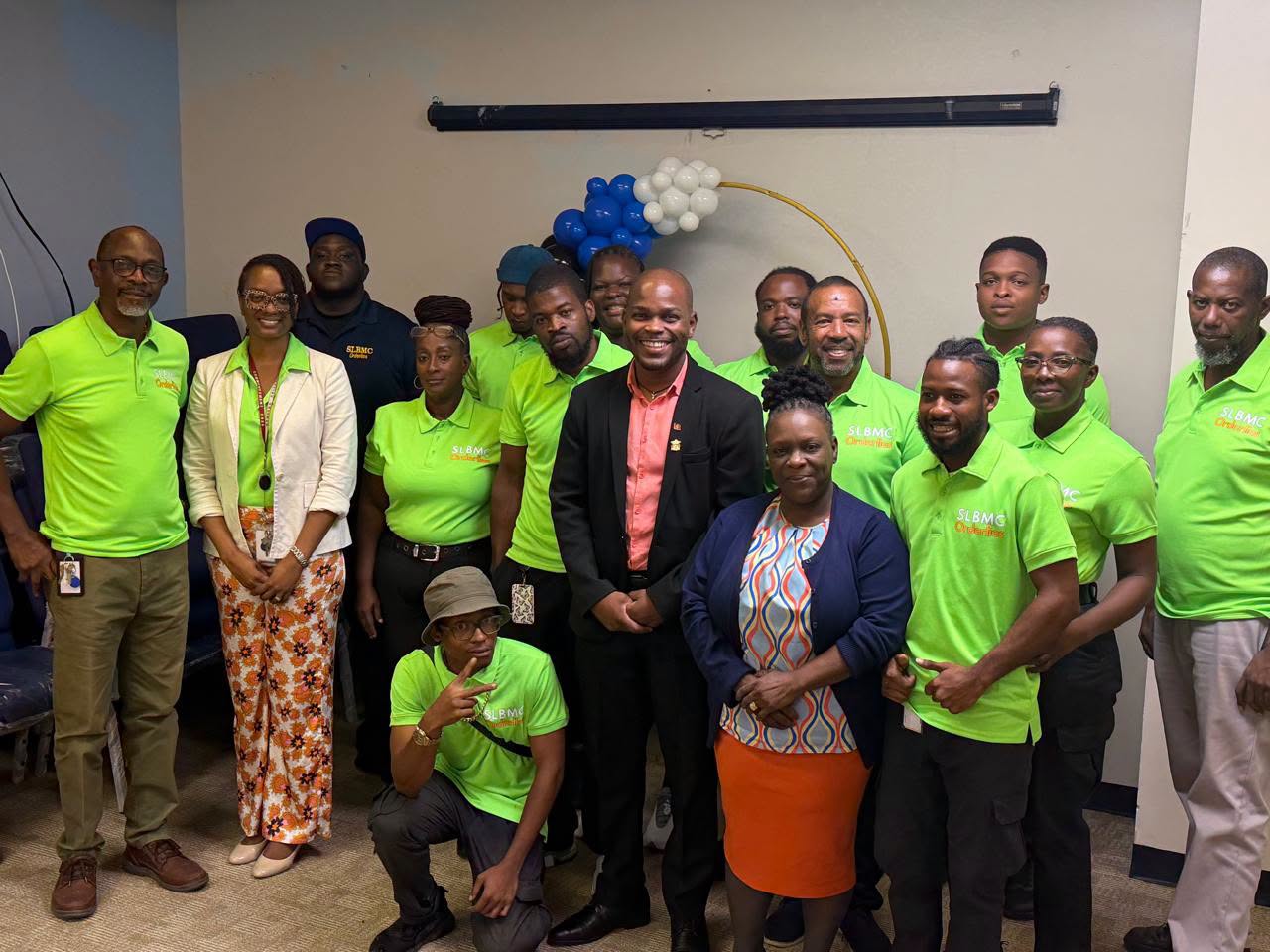
    A recent stakeholder engagement session took place at Flow Antigua’s headquarters, where company representatives delivered a comprehensive introduction to the modern telecommunications landscape shaping Antigua and Barbuda’s digital ecosystem.

    During the closed-door session, attendees gained insights into how the regional telecom provider is evolving its infrastructure, expanding service access, and adapting to shifting consumer demands across the island nation. The discussion covered core topics ranging from broadband network expansion to emerging digital services that support both residential and business customers. Company leaders also outlined the role of private investment in strengthening the country’s connectivity, noting that robust telecommunications infrastructure is a cornerstone of economic growth and social inclusion for local communities.

    This gathering forms part of Flow Antigua’s ongoing outreach effort to keep key stakeholders, government partners, and community leaders informed about the company’s strategic development plans in the Caribbean region.

  • Temporary suspension of services at Physical Ministry of Education location

    Temporary suspension of services at Physical Ministry of Education location

    Starting Wednesday, June 3, the Ministry of Education in Grenada will suspend all in-person services at its Tanteen, St. George headquarters for an initial 10-day period to allow for planned environmental upgrades to the building, the government agency confirmed in an official public announcement.

    The temporary closure of the physical office location is designed to enable contractors to complete environmental improvement work efficiently and without service disruptions to ongoing work. Ministry officials emphasized that while in-person visits will be paused, all core public services will remain fully operational through remote delivery channels, including dedicated phone lines and official email addresses for every department.

    In a statement released to the public, the Ministry noted that it does not expect the closure period to extend beyond the initial 1.5-week timeline. The public will receive timely, official updates on any adjustments to the schedule and confirmation when regular in-person service resumes at the Tanteen location.

    Leadership and staff of the Ministry have extended a sincere apology to all residents and service users for any inconvenience caused by this temporary operational shift, and expressed gratitude for the public’s patience and cooperation during the upgrade work.

    To ensure continued access to all services, the Ministry has published full contact details for every department, which are as follows:
    – General inquiries: [email protected]
    – Administrative Unit: [email protected]
    – Minister’s Secretary: [email protected]
    – Permanent Secretary’s Secretary: [email protected]
    – CEO’s Secretary: [email protected]
    – Senior Administrative Officer: Phone (473) 418-0714, (473) 423-0938
    – Personnel Unit: [email protected], Phone (473) 536-0723
    – Accounts Unit: [email protected] (email only)
    – Registry: [email protected] (email only)
    – School Administration and Management Unit: [email protected], Phone (473) 417-0739
    – Curriculum Unit: [email protected] (email only)
    – Examinations Unit: [email protected], Phone (473) 417-8795
    – Student Support Services Unit: [email protected], Phone (473) 415-1458
    – School Feeding Officer: [email protected] (email only)
    – Food Aid Coordinator: [email protected], Phone (473) 456-4054
    – Information Technology Unit: [email protected], [email protected], Phone (473) 406-9648
    – Human Resource Development Unit (Scholarship Desk): [email protected], [email protected], [email protected], [email protected], Phone (473) 417-9762
    – Early Childhood Education Unit: [email protected], [email protected] (email only)
    – Special & Inclusive Education Unit: [email protected], Phone (473) 534-0724
    – School Maintenance Unit: [email protected] (email only)
    – Projects Unit: [email protected] (email only)
    – Planning Unit: [email protected] (email only)
    – Lifelong Learning Unit: [email protected], Phone (473) 417-9762 / (473) 423-3859
    – Public Relations Unit: [email protected], Phone (473) 418-4403
    – Juvenile Administration Unit: [email protected], Phone (473) 415-1458
    – OECS Skills and Innovation Project (SKIP): [email protected] (email only)
    – Programme for Educational Advancement and Relevant Learning (PEARL): [email protected] (email only)
    – Youth Transformational Skills Programme (YTSP), Skills Delivery Unit: [email protected], Phone (473) 423-3939
    – UNESCO Secretariat: [email protected] (email only)
    – Drug Control Secretariat: [email protected] (email only)

    This announcement was published via NOW Grenada, which notes that it is not responsible for contributor statements or content, and invites users to report abusive content through official platform channels.

  • Barbadians urged to take greater responsibility for health, wellbeing

    Barbadians urged to take greater responsibility for health, wellbeing

    As more Barbadians shift toward proactive health management, a leading local wellness organizer is pushing for expanded collective effort to encourage widespread personal accountability for physical and mental wellbeing ahead of a major island-wide fitness event.

    Celia Collymore, founder and project lead of Barbados-based wellness initiative Bajan Fusion, shared her perspective during the official media launch of the organization’s upcoming Fitness Party, scheduled to take place Saturday, June 13 at the Historic Garrison Savannah’s Main Guard House and Clock Tower in St Michael. Carrying the theme ‘Move. Recharge. Thrive.’, this year’s gathering is timed to coincide with Global Wellness Day and Men’s Health Month, with a portion of all ticket proceeds set to be donated to the Men Empowerment Network Support, a local organization working on men’s health advocacy.

    Reflecting on evolving public attitudes toward wellness across Barbados, Collymore outlined a mixed landscape of engagement with healthy living. Speaking to reporters, she noted that locals fall across a spectrum of mindsets: ‘Every time I connect with people, it’s a mix of feelings.’ For many, a personal wake-up call such as watching a loved one battle or die from a preventable health condition is enough to spark motivation to adopt better self-care habits. Others already struggle with poor health but are open to making sustainable changes when provided with accessible guidance and community support.

    However, Collymore pointed out that a significant portion of the population still downplays the value of consistent healthy living, with many holding the fatalistic view that death is inevitable regardless of lifestyle choices, so they see no reason to adjust their daily habits.

    Despite these persistent barriers, Collymore emphasized that public attitudes have shifted dramatically for the better over the past decade, particularly in the wake of the global COVID-19 pandemic. ‘Especially since COVID and after, I find that Barbadians are really taking more charge of their lives,’ she said, pointing to the exponential growth of community-led wellness groups, recreational run clubs, and local sporting events across the island as tangible evidence of this shift. Comparing the current landscape to when she launched Bajan Fusion in 2012, Collymore noted that widespread cultural change around health has already transformed life on the island, adding that she is encouraged by the growing number of Barbadians prioritizing their wellbeing.

    Even with this progress, Collymore warned that Barbados’ persistently high prevalence of non-communicable diseases (NCDs) makes clear that far more work remains to reach population-wide health goals. ‘There’s still a lot of people who are not taking care of themselves, and that’s really where we need to zoom in a bit more,’ she explained. Bajan Fusion, she added, aligns its community work with the broader public health goals of Barbados’ Ministry of Health and Wellness, supporting government-led efforts to normalize healthy lifestyles across all age groups.

    Collymore argued that even targeted community events like the upcoming Fitness Party can act as a catalyst for long-term, life-changing habits. ‘One day can change your life. Sometimes people just need that one opportunity, that one chance, that one conversation,’ she said. She added that the biggest gap in sustaining healthy habits for most people is accountability and ongoing community connection, noting that many people start their wellness journey strong but lose momentum without support. ‘I think that’s the challenge where people sometimes get started and then they fall off. So how do we help them with that self-accountability, but also community, being able to check in on them and make sure they okay?’

    The 2026 Fitness Party will run from 2 p.m. to 6 p.m. at its St Michael venue, and is designed as an inclusive, family-friendly experience that blends group physical activity, evidence-based wellness education, Barbadian cultural expression, live entertainment, and community connection. Ticketing is structured to be accessible for all ages: adult entry costs $50 Barbadian dollars, while entry for children between 7 and 17 years of age is priced at $30. Full event details and registration information are available on Bajan Fusion’s official website, bajanfusion.com.

  • Grenada represented at 28th Caribbean Postal Union Conference

    Grenada represented at 28th Caribbean Postal Union Conference

    The 28th Caribbean Postal Union Conference, themed “Leading for Resilience —Transforming Caribbean Posts for a Connected Future”, brought regional postal leaders together in Nassau, Bahamas from May 25 to 29, 2026, and the Grenada Postal Corporation (GPC) emerged as a key contributor to shaping the sector’s future across the Caribbean.

    Grenada sent a high-level delegation to the important regional gathering, led by Post Director Randal Robinson and Deputy Post Director Abeesha Toussaint-Maximay. Both delegates took active part in pivotal conversations focused on modernizing and strengthening postal services throughout the region, with GPC holding a prominent position in the conference’s technical program.

    On the second day of the conference, Toussaint-Maximay took on the role of moderator for a targeted panel discussion centered on artificial intelligence, digital transformation, and innovation in postal operations. The session delved into critical questions around how regional postal providers can adapt to sweeping industry changes, retain their competitive edge in an evolving digital landscape, and secure long-term operational and financial sustainability.

    The following day, Robinson joined the panel for discussions dedicated to postal sector growth, the rising impact of e-commerce, navigating evolving competitive markets, and building systemic resilience. During his participation, he outlined actionable strategies for developing customer-centric delivery ecosystems that meet modern consumer expectations, while also emphasizing the urgent need to strengthen interconnected regional postal networks to better serve cross-border communities and trade.

    According to GPC representatives, the organization’s active leadership and visible participation in these high-level regional discussions signals that Grenada’s postal expertise is earning growing recognition across the Caribbean. The delegation’s involvement also reaffirms GPC’s longstanding commitment to three core priorities: driving innovation, building systemic resilience that can withstand economic and operational shocks, and delivering consistent service excellence to Grenadian residents and regional partners.

    As the conference concluded, GPC noted that the organization remains dedicated to collaborative work alongside other regional postal entities to continue shaping a more connected, innovative, and resilient future for postal services across the entire Caribbean region.

  • Strong courts ‘vital’ to development, public trust

    Strong courts ‘vital’ to development, public trust

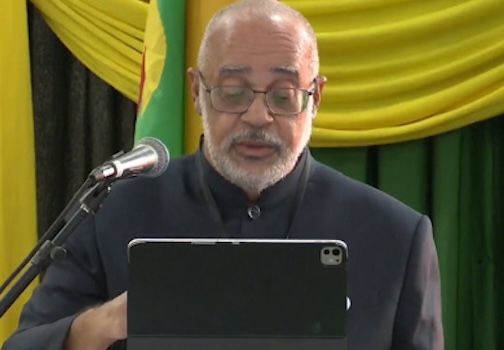
    Delivering the keynote William G. Demas Memorial Lecture at the Caribbean Development Bank’s 56th annual gathering, Caribbean Court of Justice (CCJ) Associate Justice Denys Barrow delivered a urgent, clear message Thursday: strong, autonomous judicial systems are non-negotiable for advancing regional development, cutting pervasive crime, and upholding public faith in governance. Without broad citizen confidence in a region’s justice framework, he warned, the very foundation of law and order risks unraveling.

    Centering his address on the theme “Contributions of the Courts to Caribbean Development: The Enduring Importance of Strong Institutions”, Barrow pushed back against dominant narratives that frame development solely through gross domestic product growth or large-scale infrastructure builds. True progress, he argued, must ultimately be measured by tangible improvements to the daily lives and well-being of all community members. “It is the development of the community that must be the ultimate focus and beneficiary of our efforts,” he stated, noting that economic targets and infrastructure projects are simply milestones on the path to inclusive community advancement, not end goals in themselves.

    Barrow emphasized that functional, accountable institutions, fair legal systems, and intentional policy frameworks all work in tandem to raise quality of life across the Caribbean — including progress on the region’s long-running, costly crisis of violent crime. He referenced the 2023 CARICOM summit hosted in Trinidad and Tobago, where regional heads of state reached a landmark agreement to reframe crime and violence as a public health emergency, rather than treating it exclusively as a law enforcement challenge. This paradigm shift, Barrow explained, redirects regional crime policy away from a singular focus on policing and punishment toward proactive violence prevention that stops harm before it occurs.

    The judge spotlighted grim regional data to contextualize the urgency of reform: Caribbean leaders have confirmed the region’s homicide rate is roughly three times the global average, with growing alarm over persistent spikes in serious offenses including murder, sexual assault, manslaughter, armed robbery, and aggravated assault. Barrow also voiced strong support for the 2023 Needham Point Declaration on Criminal Justice Reform, a sweeping policy blueprint adopted at the seventh biennial Law Conference of the Caribbean Court of Justice Academy for Law. The declaration lays out a series of transformative reforms designed to modernize outdated criminal justice systems across the Caribbean, targeting longstanding pain points including chronic case backlogs, dangerous prison overcrowding, and eroding public trust in judicial institutions.

    One of the declaration’s most ambitious and impactful proposals sets binding timeframes for case resolution: the document calls for regional judicial systems to aim to complete trials for indictable serious criminal cases within one year of charges being filed, while minor summary offenses should be finalized within six months. For a transitional adjustment period, the declaration sets staggered targets of two to three years for indictable matters and 12 months for summary offenses. Barrow stressed that eliminating unreasonable court delays serves the public good as much as it benefits parties directly involved in cases. “Beyond the interests of accused persons, victims, witnesses and family members, society as a collective has an overriding interest in the avoidance of unreasonable delay,” he said. Cutting backlogs, he argued, is critical to rebuilding public confidence by delivering early acquittals for innocent people, swift consequences for guilty offenders, and reinforcing the public’s understanding that crime will be followed by accountability.

    On the topic of sentencing, Barrow noted that courts must continuously navigate and balance the competing needs of offenders, crime victims, and the broader public, striking a careful balance between demands for retribution and goals of rehabilitation. To illustrate this balance, he referenced the high-profile Campus Trendz case from Barbados that reached the CCJ on appeal: a 2010 robbery that ended with perpetrators throwing a Molotov cocktail into a locked clothing store, killing six young women trapped inside. In its ruling, the CCJ upheld six concurrent life sentences for the primary offender, meeting the public’s legitimate demand for retribution while also reaffirming that rehabilitation must remain a core consideration alongside other sentencing principles.

    Barrow argued that prioritizing rehabilitation is especially critical for the Caribbean because the vast majority of the region’s violent offenders are young people. “The existential truth is that our nations cannot simply treat our young men as lost and write them off,” he said. When legislatures craft laws and courts hand down sentences that center rehabilitation as a core goal, he explained, Caribbean societies are making an investment in their own long-term future.

    The CCJ justice also defended the vital role of independent courts in delivering impartial justice, even in cases that stoke intense public anger and widespread outrage. “The courts exist to provide to society the assurance that, even where popular opinion is outraged, our justice institutions must be trusted to apply the law,” he said. Barrow emphasized that justice must be guided by the rule of law, not personal demands for vengeance or arbitrary leniency — a principle that must be respected by victims’ families, convicted people, and the general public alike.

    He reiterated that sustainable regional development depends entirely on public confidence in core state institutions, and the judiciary is the most critical of these. “It is a fundamental proposition and a predicate of our existence that we trust the courts to deliver justice,” he said. If that trust erodes, Barrow warned, communities will increasingly abandon formal legal processes and turn to extrajudicial “street justice” to resolve disputes, opening the door to a total breakdown of law and order. “What is sought to be prevented is the resort to street justice, the unravelling of the bonds of law and order,” he added.

    Headquartered in Port of Spain, Trinidad and Tobago, the CCJ serves as the final court of appeal for five Caribbean nations: Barbados, Belize, Dominica, Guyana, and Saint Lucia. All five countries have replaced the UK Privy Council with the CCJ as their final appellate body for both civil and criminal cases. Beyond its appellate role, the CCJ exercises original jurisdiction as a court of first instance with exclusive authority to interpret and apply the CARICOM treaty, hearing disputes between CARICOM member states, between member states and the Caribbean Community, and claims brought by individuals and private entities. Rulings from the CCJ in both its appellate and original jurisdictions are final and binding across all participating states.

  • Belize’s Newsroom of Tomorrow…Is Being Built Today

    Belize’s Newsroom of Tomorrow…Is Being Built Today

    The 2026 Caribbean Media Summit, hosted last week in Trinidad by the Media Institute of the Caribbean, delivered a stark opening diagnosis: the Caribbean regional media ecosystem is confronting an unprecedented existential crisis. Legacy news outlets across the bloc have been battered by overlapping structural threats, from plummeting advertising revenue and the disruptive rise of artificial intelligence to a algorithm-dominated media economy that prioritizes clickbait sensationalism over rigorous, substantive reporting.

    The scale of the crisis is visible in the wave of news outlet closures that have swept the region over just the last 18 months. Two prominent independent newspapers, Guyana’s Stabroek News and Trinidad and Tobago’s Newsday, have ceased operations, eliminating two critical sources of diverse public discourse that served communities for decades. Newsday’s managing director described the outlet’s collapse as the result of a “perfect storm” of overlapping challenges, noting that print advertising revenue has plummeted by 75% across the last 10 years. For Stabroek News, the final blow came from an approximately $90 million government debt owed for past advertising services.

    The contraction extended to digital media in July 2025, when telecom giant Digicel announced the immediate shutdown of Loop News, one of the Caribbean’s most trusted independent digital news platforms that had operated across the region since 2014. Digicel also wound down its regional sports broadcasting division SportsMax, cutting nearly 100 roles spanning journalists, editors, producers and technical staff across multiple Caribbean nations.

    The most historically staggering loss hit the U.S. Virgin Islands in early 2024, when the St. Croix Avis – founded in 1844 and the oldest continuously operating newspaper in the Caribbean by 1990 – closed its doors after 180 years of continuous publication, unable to compete for audience and revenue with free online news and social media.

    Panelists discussing “Media Viability in the Age of AI” at the summit agreed that the current regional landscape is extraordinarily challenging, with many warning that the core question at hand is no longer whether individual news outlets can turn a profit, but whether Caribbean societies can sustain any form of trusted, independent public interest journalism at all. The pressures facing the sector are simultaneously editorial, financial, technological and political, and the growing list of closed outlets represents a quiet threat to Caribbean democratic discourse, eroding institutions that communities have long relied on for accountable reporting.

    Yet the outlook is not uniformly grim. While the region grapples with widespread contraction, one Belizean media organization has spent years laying proactive groundwork to adapt to the new media landscape: Greater Belize Media (GBM), parent company of News 5 Live and the first Belizean news organization to launch a fully resourced dedicated digital news department.

    Unlike many legacy outlets that were slow to recognize shifting audience habits and technological disruption, GBM identified the transformative impacts of algorithm change, AI and evolving news consumption patterns early and began restructuring long before crisis hit. Last year, the organization publicly launched its transformative “One Newsroom” initiative, a full organizational restructuring that unified reporters, videographers, editors and digital producers under a single integrated editorial structure. The model, adapted from the approach used by leading global news organizations, was customized to align with the unique consumption habits and information needs of the Belizean public.

    The initiative grew from a straightforward but critical insight: in an era where audiences access news in real time across multiple overlapping platforms, the old siloed system that kept broadcast and digital news operations entirely separate was not just inefficient – it was a major competitive disadvantage. “The way news and news consumption is evolving is via social media and online platforms,” explained Hipolito Novelo, GBM’s Digital Editor. “Consumers of news want to consume news almost immediately. That is what GBM offers, immediacy, and of course, the accuracy of it.”

    This dual commitment to speed and uncompromised accuracy sits at the center of GBM’s restructuring. While delivering fast news is simple, maintaining accuracy while operating at speed and meeting audiences across every platform they use is a far greater challenge – one GBM has intentionally built its new structure to meet. The organization has expanded its digital presence across social media, its official website, a dedicated WhatsApp channel and a Facebook Messenger channel, building an integrated distribution network designed around how Belizeans actually access news today, rather than forcing audiences to adapt to outdated legacy structures. GBM also actively monitors ongoing changes to platform algorithms, adjusting its distribution strategy in real time to avoid falling behind audience trends.

    On the most contentious issue reshaping global journalism today – artificial intelligence – GBM has also rejected a reactive, fear-based approach. While many newsrooms across the globe are still debating what AI means for editorial workflows and journalistic integrity, GBM is already finalizing a formal, public AI governance policy, joining a small but growing group of leading news organizations that recognize responsible AI adoption requires clear rules, not just unguided experimentation.

    “We are not afraid of AI,” Novelo said. “We are studying it, understanding it, and figuring out how to use it in ways that make our journalism stronger. Not shortcuts that compromise it. Every single day we are working to make sure we are ahead of it, not behind it.”

    This curious, strategic, disciplined approach to change is exactly what the Caribbean media sector needs more of, summit participants agreed. The path to long-term survival for regional media does not lie in lamenting the disruptive changes that have reshaped the global information ecosystem, but in building intentional institutional resilience: the capacity to adapt editorial practices, technology and organizational structure to a constantly shifting media environment. As Novelo puts it, GBM’s work is not a reaction to crisis – it is a sustained effort to keep pace with change. “We watch how the algorithms evolve, we watch how audiences shift, we adjust our strategy, and we keep delivering. That is the job. The landscape changes every single day and we change with it, because our audience deserves a newsroom that never stops working to reach them.”

  • US political commentators denied entry to United Kingdom following visa revocations

    US political commentators denied entry to United Kingdom following visa revocations

    A political firestorm has erupted in both the United Kingdom and the United States after UK Border Force authorities revoked the Electronic Travel Authorisations (ETAs) of two well-known left-wing American political commentators, barring them from entering the country ahead of high-profile scheduled speaking events.

    Hasan Piker, a popular Twitch streamer and progressive political analyst, and Cenk Uygur, co-founder and long-time host of the groundbreaking online news program *The Young Turks*, were slated to appear as keynote speakers at the newly launched SXSW London festival, alongside a separate public lecture at the University of Oxford. Both commentators took to social media platform X over the weekend to confirm they had been blocked from boarding their flights to the UK after their approved travel documents were suddenly cancelled.

    Both men have directly tied the entry ban to their long-standing, vocal criticism of the Israeli government and its military campaign in the Gaza Strip. In a viral post on X, Uygur condemned the decision, arguing that it represented a troubling infringement of free expression for Western citizens. ‘I tried to get on a flight to London to attend SXSW London and give a speech at Oxford. I’ve been banned for criticising Israel. Are we free any more? This is oppression of western citizens by our own governments on behalf of a different country,’ he wrote. Piker echoed the accusation in his response, claiming the revocation was coordinated at the request of the Israeli government. ‘The UK has revoked my visa as well. All at the behest of Israel. The west is betraying ‘liberal values’ for a genocidal fascist foreign government,’ Piker wrote.

    To date, the UK Home Office has declined to publicly share the specific reasoning behind the decision to revoke the pair’s ETAs. UK official guidance outlines that travel authorisations can be cancelled at any time if border authorities judge an individual poses a potential threat to UK public good or national security.

    The ban has drawn both praise and condemnation across UK political circles. Labour Member of Parliament David Taylor, who previously publicly called for UK authorities to bar Piker from entering the country, hailed the decision. Writing on X, Taylor argued: ‘There’s no reason to open our doors to those who seek to spread hate and division, especially to those who’ve supported a proscribed terror group.’ The Community Security Trust (CST), a UK-based Jewish community organisation that tracks antisemitism and provides security for Jewish community events, also welcomed the outcome. While the group acknowledged that legitimate political criticism of the Israeli government is protected speech, it argued that Piker’s past public remarks crossed the line into antisemitic rhetoric.

    Critics of the entry ban, however, have decried the decision as a dangerous overreach that undermines core principles of free speech and open political debate. Green Party of England and Wales leader Zack Polanski described the visa denials as ‘a really grim decision,’ while Akiko Hart, director of the UK-based civil liberties group Liberty, called for full transparency from the Home Office regarding entry restrictions that limit political expression.

    A spokesperson for SXSW London confirmed the cancellation of the pair’s appearances in an official statement to the BBC, noting that immigration decisions fall entirely under the remit of UK Home Office authorities. The organiser reaffirmed the festival’s commitment to hosting open, inclusive dialogue featuring a broad range of diverse political perspectives.

    This latest entry ban follows a string of recent controversial decisions by UK authorities to bar high-profile foreign nationals from entering the country on public interest grounds. Recent bans have included American rapper Kanye West, who was barred over a history of antisemitic comments, multiple international political activists, and a group of extreme right-wing figures ahead of a major London demonstration held last month.

  • Two Shootings Overnight; Police Say Pomona Victims Likely Not Intended Targets

    Two Shootings Overnight; Police Say Pomona Victims Likely Not Intended Targets

    Authorities in Belize have launched dual investigations into two back-to-back shooting incidents that rocked the Stann Creek District on the evening of June 2, 2026, leaving three people wounded and local communities on edge.

    The first violent incident unfolded just after 6:30 p.m. in the quiet residential area of Pomona Village, where 25-year-old Orlando Acosta and a 16-year-old minor were caught in crossfire. According to initial police accounts, two motorcycles rode up to a group of people gathered in the area. A passenger seated on one of the two bikes pulled out a loaded firearm and fired multiple rounds into the crowd, striking both Acosta and the teenager.

    In an official briefing on the case, Assistant Superintendent of Police Stacy Smith shared preliminary investigative conclusions, noting that law enforcement does not believe the two injured people were the attackers’ intended targets. “We are not of the view that any of the injured individuals was the target, but another individual that was in the group,” Smith stated. Investigators have already collected surveillance footage from nearby businesses and residential cameras in the Pomona Village area, and teams are currently reviewing the recordings to identify suspects and piece together a timeline of the attack. As of the latest update, no clear motive has been confirmed, and no arrests have been made in connection with the first shooting.

    Roughly two and a half hours after the first incident, at approximately 9:00 p.m., a second shooting broke out in the Rivas Estate neighborhood, located near Dangriga Town. The victim in this attack was identified as 19-year-old Jason Marin, a resident of Dangriga. Police reports indicate Marin was in the process of entering a private property when a vehicle pulled up alongside him. An individual inside the vehicle exited and fired multiple gunshots, hitting Marin before fleeing the scene.

    Smith added context to the second incident, revealing that the property Marin was entering has been linked to prior law enforcement activity. “The property Marin was entering had previously been the subject of police operations related to drugs and weapons,” Smith confirmed. As of the latest update, Marin is being treated at a local hospital, where his condition is listed as critical but stable.

    Both active shooting investigations remain ongoing, with law enforcement appealing to any members of the public who were in the area on the night of the incidents and have information about the attacks to contact the Stann Creek District police station to assist with the case.