作者: admin

  • Celebrity Wedding in Belize Blends Culture, Glamour, and Global Attention

    Celebrity Wedding in Belize Blends Culture, Glamour, and Global Attention

    In late May 2026, a high-profile celebrity wedding on a secluded private island off Belize’s Ambergris Caye did more than celebrate a union between two American media icons — it positioned the Central American nation as a premier luxury destination for high-net-worth and celebrity events.

    The weekend ceremony united Dave Mays, the pioneering founder of hip-hop’s cultural cornerstone *The Source* magazine, and Brett Joley, a former producer on the globally beloved *The Oprah Winfrey Show*. Held on the exclusive 8-acre all-inclusive Prince Island, owned by veteran music executive James Prince, the event gathered a roster of big names from music, media and politics, blending A-list glamour with Belizean cultural identity to capture international attention.

    Long celebrated for its turquoise Caribbean coastlines, dense rainforest reserves and laid-back tropical charm, Belize has seen steady growth in its luxury destination wedding sector in recent years. This event, however, marked one of the highest-profile celebrity gatherings the country has hosted in recent years, amplifying its profile among global influencers and high-profile travelers.

    Among the attendees were hip-hop legend Mannie Fresh, the iconic producer who rose to fame with Cash Money Records and now co-hosts the popular weekly culture podcast *Still 400* on Mays’ latest media venture, Breakbeat Media. Also in attendance was Belizean rapper-turned-politician Shyne, who has long leveraged his global profile to promote Belize’s tourism sector. Shyne emphasized his commitment to elevating his home country in a on-site remark, noting that his public brand is inherently tied to putting Belize on the global map.

    “If anybody knows anything about me, everything that I do is Belize,” Shyne told attendees. “And, obviously, I have a legacy and there are a lot of people that look up to me and believe in me. So, when Shyne says Belize, they’re like, okay.”

    Mannie Fresh also highlighted the work of Belize Tourism Board Director Evan Tillett, who has spearheaded efforts to attract high-profile events and celebrity visitors to the country in recent years. The master of ceremonies opened the event by noting the unique origin story of the couple’s relationship, which began amid the 2020 Black Lives Matter protests against police brutality and systemic injustice — a context that added layers of meaning to their union beyond a simple romantic celebration.

    Mays first launched *The Source* in 1988, and the publication went on to shape global hip-hop culture for an entire generation, becoming the leading voice for Black music and entertainment in the United States. Most recently, Mays founded Breakbeat Media, a multimedia podcast network launched in 2021 that already boasts hit programming like *Still 400*, which explores music, culture and unfiltered real-world conversations with celebrity guests.

    Local reporters covering the event note that this star-studded wedding is more than a one-off celebrity spectacle: it serves as a high-impact example of Belize growing appeal as an alternative to more traditional luxury wedding destinations like the French Riviera, Hawaii or the Caribbean’s more crowded celebrity hotspots. With its combination of unspoiled natural scenery, exclusive private island venues and welcoming local culture, Belize is poised to attract more high-profile events from global influencers and industry leaders in the coming years.

  • ‘Sovereign debt’ blasted as imposed burden on small states

    ‘Sovereign debt’ blasted as imposed burden on small states

    At the official launch of the Caribbean Policy Development Centre (CPDC)’s new documentary *Tides of Debt* held at the Marriott Hotel in Hastings on Wednesday, Barbados Agriculture Minister Dr. Shantal Munro-Knight delivered a sharp rebuke of the global financial system’s framing of Caribbean debt, rejecting the widely used term “sovereign debt” as an inaccurate, harmful misnomer that erases the structural roots of the region’s growing fiscal crisis.

    A former executive director of the CPDC itself, the regional umbrella NGO behind the documentary project, Dr. Munro-Knight argued that the crippling debt burden holding back Caribbean nations does not stem from domestic policy missteps, but rather from centuries of historical inequity and a global economic architecture built to ignore the region’s acute climate vulnerability. She invoked Nigerian author Chimamanda Ngozi Adichie’s work on the danger of single stories to warn against reducing complex regional economic struggles to a narrative of national failure.

    “I stay away from that notion of sovereign debt. I don’t like it,” Dr. Munro-Knight stated. “Because even that word, ‘sovereign debt,’ it makes it national; it makes it country-owned. If you understand all of our history, we would know that our challenge of debt is nuanced, it’s systemic, it’s structural, it is global, and it is historical. That notion of sovereign debt as being owned nationally as having a place within the context of what countries singly do—we need to be able to repudiate that.”

    Data presented at the launch backed this claim, drawing on Inter-American Development Bank (IDB) research that quantifies the direct link between climate shocks and debt accumulation. The analysis shows that one major climate disaster pushes a small Caribbean nation’s public debt up by an immediate 10 percent, with that figure surging to 18 percent just three years after the event. These persistent, unplanned climate-driven costs, the minister emphasized, are the primary driver of the region’s debt, not excessive domestic spending.

    This shared understanding of the debt crisis is what led Barbados to develop the landmark Bridgetown Initiative, a global policy framework designed to overhaul outdated international financial rules to better support climate-vulnerable developing nations. Dr. Munro-Knight called out traditional multilateral lenders for their crippling bureaucratic delays, which leave small island states defenseless when disaster strikes. She gave a stark example: “You’ve got to take two years to write the proposal before then you can get the readiness grant to get ready, then to do the actual proposal, and by that time two hurricanes, a flash flood, ash fall, and everybody dead—but we’re still waiting on the release of funds. The Bridgetown Initiative said hold on, stop. Let’s re-look. Let’s restructure.”

    She also highlighted the gap between global guidance and on-the-ground reality for small island economies. International institutions often pressure developing nations to “mobilize private finance” to address climate and development challenges, but Dr. Munro-Knight noted that Caribbean private sectors are inherently small and risk-averse, making global de-risking mechanisms a non-negotiable prerequisite for progress. The Bridgetown Initiative, she argued, has gained global traction not because it is a Barbados-led project, but because it gives voice to a long-silenced crisis shared by dozens of vulnerable nations across the Global South. “We either lie down, play dead, or we get up and we act in the moment,” she said.

    Dr. Munro-Knight pointed to Barbados’ own dramatic economic turnaround since 2018 as proof that region-led innovative fiscal strategies can work, even when dismissed by international observers. When the current administration took office that year, Barbados faced a fiscal catastrophe: a 176 percent debt-to-GDP ratio, the third highest in the world, just 6.6 weeks of import cover, and the immediate threat of Tropical Storm Kirk. To pull the country out of crisis, the government pioneered new tools, including pandemic and natural disaster clauses in sovereign bonds that allow the government to pause interest payments after a catastrophe, as well as groundbreaking debt-for-climate swap agreements.

    Critics predicted the restructuring would fail, but the results have exceeded expectations. The process generated $165 million in new capital and $125 million in annual savings, Dr. Munro-Knight revealed. None of those savings were absorbed into general government spending; instead, they were directed to a sustainability trust that funds critical environmental and development projects, including the south coast reclamation and wastewater initiative that now provides irrigation for local agriculture. Today, Barbados’ debt-to-GDP ratio has fallen to 93.3 percent, the first time it has dropped below 100 percent in the country’s modern history. “When Barbados restructured its debt and went to the international market in 2018, everybody said it would fail,” the minister said. “Look at where we are now… The metrics show that it worked. We can’t be afraid.”

    Turning to her role as agriculture minister, Dr. Munro-Knight connected this fiscal innovation directly to food security, which she framed as core to regional sovereignty and survival. Under the government’s current Barbados Economic Recovery and Transformation (BERT 3.0) plan, national growth targets are explicitly tied to cutting the country’s food import bill. She noted that Barbados spent $8.6 billion on imported fresh produce last year, despite a national strategic crop plan that identified 16 crops that can be grown locally for a fraction of the import cost.

    Recalling her decades of work in trade negotiations with the CPDC, the minister highlighted how global trade rules are rigged against small developing nations seeking food sovereignty. She shared an anecdote from a past World Trade Organization negotiation, where a senior American official told developing country delegates that pursuing domestic food production was an “anachronism of bygone days” that should be abandoned in favor of relying on cheap imports. “The structural inequalities and the constraints of debt force the region into situations where we are making hard choices—we call it the developer’s dilemma,” she explained.

    To address this, the Barbados government has launched “Mission 2”, a cross-sectoral initiative to legally and socially protect the country’s water and food security. In closing, Dr. Munro-Knight urged Caribbean civil society to preserve their collective memory of these structural injustices and push back against efforts by global actors to dilute the meaning of regional resilience. For the Caribbean, food security is not just a technical policy goal, she argued—it is core to national development and cultural identity. “What we are doing is not just about growing. We are feeding a nation, but in feeding a nation, we’re also changing a cultural pattern. It is about people fundamentally. It is about how we feed our children, how our children through generations will have a relationship with land and ownership of land,” she said. “If we allow others to define that and remove our relationship from the earth, then part of us as people of the Caribbean is going to be lost.”

  • Ave Maria, Dugard Combined win at Schools Calypso & Soca

    Ave Maria, Dugard Combined win at Schools Calypso & Soca

    On a vibrant Wednesday filled with rhythm and cultural pride, two Saint Lucian primary schools walked away with the highest honors at the annual National Primary Schools Calypso & Soca Competition, held at the iconic Mindoo Phillip Park. The event gathered young, promising performers from educational institutions across the island, creating a joyful space to celebrate local musical heritage, creative expression, and youthful talent.

    The first segment of the competition centered on calypso, a genre deeply rooted in Caribbean social commentary and narrative storytelling. Young artists took the stage to deliver thoughtful, compelling performances that wove personal stories and critical observations into their music, captivating the attending crowds and panel of judges alike. When scores were finalized, Dugard Combined School claimed the coveted calypso crown with its standout performance of *Remember Me*, delivered by young performer who goes by the stage name Mr Personality. Second place went to Canon Laurie Anglican, which presented *Las Manti La* by rising artist Ti Jean. Anglican Infant secured third place with *What Should I Do* by Unique, while Ave Maria Girls’ Primary earned fourth spot with *Standing Strong*, a track from Mighty Informer.

    Following the thoughtful calypso segment, the soca portion of the competition brought high-octane energy and infectious beats that kept the audience on their feet. Ave Maria Girls’ Primary stole the show here, turning in an electrifying performance of *Lash Up* by Soca Storm that earned the school the first-place soca title. Carmen Rene Memorial finished as runner-up with *We Ready for Di Road*, performed by young talents Zizi & Kiki. Ciceron R.C. Combined took third place with *Big Dreams* by I-Scream, while Camille Henry Memorial rounded out the top four with *The Rain Have Nothing on Us* by Little J.

    Alongside the top-finishing schools, the competition welcomed participants from a range of other Saint Lucian primary institutions, including Morne Du Don Primary, Saltibus Combined, Gordon Walcott Memorial, Les Etangs Combined, and Delcer RC Combined, each contributing their own unique energy and artistry to the celebratory event.

    Looking ahead, the next chapter of this national cultural showcase will kick off on Friday, June 5, 2026, at 9:30 a.m., also hosted at Mindoo Phillip Park in Castries. The upcoming National Secondary Schools Calypso & Soca Competition will feature secondary school talent from across the island, with confirmed participating institutions including Castries Comprehensive, Vieux Fort Comprehensive, Sir Ira Simmons Secondary, and St Joseph’s Convent.

  • STATEMENT: CARICOM congratulates Trinidad & Tobago on its election to the United Nations Security Council, 2027-2028

    STATEMENT: CARICOM congratulates Trinidad & Tobago on its election to the United Nations Security Council, 2027-2028

    On Wednesday, 3 June 2026, the Caribbean Community (CARICOM) Heads of Government issued a formal statement from the organization’s Secretariat based in Turkeyen, Greater Georgetown, Guyana, extending warm, heartfelt congratulations to the Government and people of the Republic of Trinidad and Tobago following the country’s successful election to a non-permanent seat on the United Nations Security Council for the 2027-2028 term. The election, held the same day the statement was released, saw Trinidad and Tobago secure overwhelming backing from the United Nations’ global membership of member states. According to CARICOM’s leadership, this broad, cross-regional support is a clear reflection of the widespread confidence the international community holds in Trinidad and Tobago’s decades-long dedication to upholding multilateral cooperation, advancing global peace and security, and defending the core principles enshrined in the United Nations Charter. CARICOM emphasized that the election outcome is not just a landmark personal achievement for Trinidad and Tobago, but a moment of collective pride for the entire 15-nation Caribbean bloc. The regional body further noted that Trinidad and Tobago will bring a much-needed, distinct perspective to the Security Council’s deliberations, centering the experiences and priorities of Small Island Developing States (SIDS) and Low-lying Coastal Developing States, a group disproportionately vulnerable to global shocks ranging from climate change to geopolitical instability. CARICOM leaders expressed full confidence that Trinidad and Tobago will leverage its new seat to advocate vigorously for policy solutions that address the unique threats to peace and stability facing the Caribbean and other similarly vulnerable regions across the globe. In closing, the Caribbean Community reaffirmed its unwavering support for Trinidad and Tobago as it prepares to take on this critical global responsibility next year, and confirmed that the entire bloc stands ready to work closely with the country to advance the collective interests of the Caribbean region within the framework of the United Nations system.

  • United Progressive Party leadership calls for greater transparency on international airport project

    United Progressive Party leadership calls for greater transparency on international airport project

    As Dominica pushes forward with construction of its new flagship international airport, scheduled for completion in 2027 under the leadership of lead developer Montreal Management Consults Development Ltd (MMC), the country’s main opposition United Progressive Party (UPP) is intensifying calls for full governmental transparency around the megaproject’s long-term financial outlook.

    Led by party head Joshua Francis, the UPP has stressed it does not oppose infrastructure expansion that would boost the island nation’s global connectivity and support economic growth. Instead, the opposition says Dominican citizens deserve full access to details about the potential fiscal risks of a project of this scale, particularly given the unique economic vulnerabilities small island developing states face.

    In a formal press release outlining its concerns, the UPP flagged a suite of interconnected global economic headwinds that could threaten the airport’s ability to operate without ongoing public funding: persistent global inflation, rising aviation and operational overhead costs, volatile post-pandemic tourism demand, and systemic economic fragility common to small island nations. The party warned that without sustained, robust economic growth across Dominica’s key sectors, local taxpayers could ultimately be forced to cover ongoing operational shortfalls through public subsidies.

    To underscore its argument, the UPP pointed to the well-documented experience of Argyle International Airport in neighboring St. Vincent and the Grenadines, a similar large-scale infrastructure project built to drive tourism growth. Originally designed to handle between 1.2 million and 1.5 million annual passengers, Argyle has consistently fallen far short of its traffic projections. Official data from the airport’s early years shows just 185,224 passengers in 2017, 189,324 in 2018, and 203,465 in 2019, and the UPP says recent numbers remain a tiny fraction of the airport’s intended capacity. The opposition added that public records and government budget documents confirm St. Vincent and the Grenadines’ government has repeatedly allocated public funds to cover the airport’s maintenance and operational gaps.

    Against that regional precedent, the UPP says the Dominican government must answer critical unaddressed questions before moving further with construction. These include how ongoing operational costs for the airport — including staffing, maintenance, runway repairs, security, and debt repayment — will be covered if passenger volumes fail to hit projections, whether covering those gaps will lead to higher taxes, increased user fees, or expanded national public debt, and whether a comprehensive independent feasibility assessment and long-term cost-benefit analysis have been completed and made available for public review.

    The opposition emphasizes that Dominican residents must receive clear, unambiguous answers before the country commits future generations to what could be crippling, unsustainable long-term financial obligations. The UPP holds that all large-scale national infrastructure projects should be rooted in transparent planning, prudent fiscal management, realistic growth projections, and guardrails that protect taxpayers from excessive debt exposure.

    To enable informed public debate around the project, the UPP is formally requesting the Dominican government publish a full set of key planning documents, including the complete economic feasibility study, long-term operational cost estimates, passenger and tourism demand projections, debt-servicing schedules, projected annual subsidy requirements, and contingency plans for scenarios where revenue falls short of forecasts.

    In closing, the UPP stated that national development initiatives should be guided by evidence-based economic planning and public accountability, not short-term political priorities. The party reaffirmed its commitment to responsible infrastructure development, greater government economic transparency, and protecting Dominica’s long-term fiscal stability.

  • Training in Guatemala Helps Belizean Farmers Improve Cattle Farming

    Training in Guatemala Helps Belizean Farmers Improve Cattle Farming

    In a collaborative regional push toward more environmentally responsible agriculture, a delegation of cattle farmers, conservation leaders and government officials from Belize traveled to Guatemala’s Petén region in early June 2026 to gain hands-on training in a forest-friendly cattle raising method. The knowledge-sharing exchange was organized by The Nature Conservancy’s Belizean branch, bringing together cross-sector stakeholders from across the Selva Maya region to address shared challenges in the livestock industry.

    Participants from Belize included representatives from the Belize Maya Forest Trust, the Belize Livestock Producers Association, the country’s Forest Department, and independent local cattle producers. Together, they gathered to study silvopasture, an innovative regenerative agricultural approach that diverges from the conventional practice of clearing all trees to create open grazing pastures.

    Unlike traditional cleared grazing systems, silvopasture integrates native tree cultivation directly into cattle grazing lands. This model delivers multiple ecological and economic benefits: trees naturally boost soil fertility by cycling nutrients and preventing erosion, protect critical watershed habitats from runoff, extend the productive lifespan of grazing land, and cut down on deforestation pressure by reducing the need to clear intact forest for new pasture. During the training, Petén-based farmers who have already adopted silvopasture on their own ranches opened their properties to the visiting delegation, walking attendees through real-world implementation, outcomes and problem-solving for the system.

    For Belize, sustainable cattle farming is a matter of urgent economic and ecological importance. The livestock sector remains a cornerstone of rural livelihoods across the country, contributing heavily to the national agricultural economy. However, years of conventional grazing practices have left many grazing lands degraded, and the sector is increasingly strained by the growing impacts of climate change, from prolonged droughts to unpredictable rainfall. At the same time, unregulated clearing of forest for new pasture has put increasing pressure on Belize’s ecologically critical Selva Maya forest system, one of the most biodiverse intact tropical forest landscapes left in Central America.

    Organizers of the exchange emphasized that the cross-border training program represents a new model of regional cooperation for conservation. The initiative demonstrates how Belize and its regional neighbors are working together to build a more sustainable future for both livestock production and forest conservation in the Selva Maya, aligning economic development for rural communities with long-term environmental protection.

  • Derde helft WK 2026: Team Engeland, kan Tuchel het beste uit Kane en Bellingham halen?

    Derde helft WK 2026: Team Engeland, kan Tuchel het beste uit Kane en Bellingham halen?

    Sixty years have passed since England lifted their only men’s FIFA World Cup title on home soil, and as the 2026 tournament approaches in North America, the Three Lions enter the event as one of the pre-tournament favorites – but not without lingering questions surrounding their squad selection, tactical direction, and big-game form that have left fans and pundits divided.

    England made history during qualifying, becoming the first European nation to secure their World Cup spot with two group matches still remaining, wrapping up their campaign with a perfect eight wins from eight matches and not conceding a single goal along the way. The comfortable qualification run cemented their place among the top contenders, currently sitting 4th in the official FIFA world rankings. That smooth progress, however, has done little to quiet growing concerns: their qualifying group was widely regarded as one of the weakest in the European bracket, and recent friendly results – including back-to-back losses to Senegal and Japan at Wembley Stadium – have sparked public dissatisfaction with the team’s performances against elite opposition.

    At the center of the current debate is German head coach Thomas Tuchel, who took over the national side following the departure of Gareth Southgate. Southgate, despite frequent criticism for his cautious, risk-averse playing style and controversial tactical choices, led England to back-to-back European Championship finals and a World Cup semi-final appearance in 2018. Since taking charge, Tuchel has yet to deliver the dynamic, attacking football many fans expected, with the team often producing slow, hesitant displays. Tactical experiments, including shifts to a false nine system and a double playmaker setup, have failed to yield consistent positive results so far.

    Tuchel’s 26-man squad for the 2026 tournament has triggered major controversy, after he omitted several longstanding regular starters and surprising included a number of uncapped or out-of-form players. Two of England’s most creative attacking talents, Cole Palmer of Chelsea and Phil Foden of Manchester City, were left out after underwhelming club seasons. Veteran defender Trent Alexander-Arnold and former starter Harry Maguire also missed out on selection. In their places, Tuchel gave a spot to Saudi Arabia-based striker Ivan Toney, who has played limited competitive minutes since moving to the Middle East. Other controversial inclusions include Tottenham defender Djed Spence, 35-year-old Brentford midfielder Jordan Henderson, and uncapped Bayer Leverkusen defender Jarell Quansah. Overall, nine of the 26 selected players will be making their debut at a major senior international tournament.

    Tuchel has defended his selection choices, emphasizing team chemistry over individual talent in his approach. “We are not trying to pick the 26 most talented individual players in England,” he explained. “Our goal is to build the best possible team. Tournaments are won by cohesive teams, not collections of stars – everything depends on group chemistry.” Despite early skepticism about a foreign coach leading the national side, Tuchel has made it clear his ambition is to end the nation’s 60-year trophy drought and bring the World Cup title back to England.

    One of the biggest individual storylines surrounding the side is the form of captain and all-time record goalscorer Harry Kane, who already has 78 international goals to his name heading into the tournament. Kane has a history of failing to hit his best form at major tournaments for England, even after claiming the Golden Boot at the 2018 World Cup, often arriving at the competition fatigued or carrying minor injuries following a long club season. This year, however, Kane comes into the tournament off the back of a career-best club campaign with Bayern Munich, where he scored an incredible 61 goals in 51 matches across all competitions. A fit and in-form Kane is just two goals away from equaling England’s all-time record of 10 World Cup goals set by Gary Lineker, and he will be counted on to lead the line if England is to make a deep run.

    Another key talking point is the position of Real Madrid midfield star Jude Bellingham, one of the most talented young players in European football. Bellingham endured a difficult season at club level, disrupted by injuries and inconsistent form, which has opened the door for Aston Villa’s Morgan Rogers to challenge for a starting spot. Bellingham is capable of playing in a deeper central midfield role, but that position is already widely expected to be filled by established starters Declan Rice and Elliot Anderson, leading to speculation that Bellingham could start the tournament on the bench.

    One bright spot for England is the emergence of 21-year-old Manchester City left-back Nico O’Reilly, who has enjoyed a breakout season. O’Reilly scored seven Premier League goals this term and played a key role in City’s League Cup final victory, and many observers believe he could become the first world-class left-back England has produced since Ashley Cole. While he is still developing his game, he brings elite pace, solid defensive fundamentals, and strong positional awareness to the side.

    England have been drawn into Group L, a challenging group that will test their credentials from the opening match. Their tournament kicks off on June 17 in Arlington, Texas against 11th-ranked Croatia, the same side that knocked England out of the 2018 World Cup at the semi-final stage. They will then face Ghana in Foxborough, Massachusetts on June 23, before wrapping up group play against Panama on June 27 in East Rutherford, New Jersey. While Panama is ranked 33rd in the world, they earned a surprise final spot at the 2025 CONCACAF Nations League after beating the United States, and 74th-ranked Ghana boasts dangerous attacking talent in the form of Antoine Semenyo and Mohammed Kudus, making them a dangerous dark horse in the group.

    Full 2026 England World Cup Squad:
    Goalkeepers: Jordan Pickford (Everton), Dean Henderson (Crystal Palace), James Trafford (Manchester City)
    Defenders: Reece James (Chelsea), Ezri Konsa (Aston Villa), Jarell Quansah (Bayer Leverkusen), John Stones (Manchester City), Marc Guehi (Manchester City), Dan Burn (Newcastle United), Nico O’Reilly (Manchester City), Djed Spence (Tottenham Hotspur), Tino Livramento (Newcastle United)
    Midfielders: Declan Rice (Arsenal), Elliot Anderson (Nottingham Forest), Kobbie Mainoo (Manchester United), Jordan Henderson (Brentford), Morgan Rogers (Aston Villa), Jude Bellingham (Real Madrid), Eberechi Eze (Arsenal)
    Forwards: Harry Kane (Bayern Munich), Ivan Toney (Al-Ahli), Ollie Watkins (Aston Villa), Bukayo Saka (Arsenal), Marcus Rashford (Barcelona), Anthony Gordon (Newcastle United), Noni Madueke (Arsenal)

  • 75-Year-Old Carl Noel Lashley Found Dead on Lower All Saints Road

    75-Year-Old Carl Noel Lashley Found Dead on Lower All Saints Road

    On Wednesday, June 3, 2026, law enforcement authorities in Antigua and Barbuda opened an official investigation into the unexpected passing of 75-year-old Carl Noel Lashley, a man with no fixed permanent address, according to an official media statement released by the Office of Strategic Communications of the Royal Police Force of Antigua and Barbuda.

    Lashley’s unresponsive body was located just after 1:00 p.m. local time near the Pillars of Saints New Testament Church of God, situated along Lower All Saints Road. First responding officers confirmed that the deceased was found lying on a public sidewalk, wearing identifiable clothing: a black outer sweater layered over a green shirt, long black trousers, and a pair of black Crocs footwear.

    Preliminary examinations carried out at the scene by responding police personnel found no obvious outward marks of trauma or signs of foul play on Lashley’s body. Following the initial law enforcement check, a licensed medical professional attended the site to conduct an official assessment, and formally pronounced Lashley dead at approximately 2:35 p.m. the same day.

    As of the release of this statement, active investigative work to determine the exact cause and context of Lashley’s death remains ongoing. In a statement of compassion included with the release, the leadership of the Royal Police Force extended its deepest and most sincere condolences to Lashley’s immediate family, extended relatives, and close friends as they navigate this period of loss.

  • Farmers sign on as $84.4m crop drive begins to cut food imports

    Farmers sign on as $84.4m crop drive begins to cut food imports

    Barbados is moving forward with a bold new agricultural strategy designed to shrink its heavy annual food import bill, with government officials confirming this week that the island nation has begun signing participating farmers onto a targeted 16-crop development programme. Chief Agricultural Officer Paul Lucas disclosed in an interview with Barbados TODAY Wednesday that final contract negotiations with participating growers are currently wrapping up, marking the official launch of the coordinated public sector initiative.

    The programme is a collaborative effort between the Ministry of Agriculture’s technical teams, its specialized strategic planning unit, and the state-run Barbados Agricultural Development and Marketing Corporation (BADMC), with a long-term goal of strengthening the island’s domestic agricultural sector and delivering sustained economic benefits to local farming communities. According to Lucas’s projections, the initiative is on track to generate approximately $84.4 million in wholesale value once fully operational, a milestone that would make significant progress toward the government’s core objective of cutting Barbados’ annual food import bill, which currently sits between $80 million and $100 million.

    “Our calculations, based on current wholesale market pricing, put the total projected value at around $84.4 million,” Lucas explained. “In the long run, this programme will help us cut unnecessary national spending, and our overarching goal is to keep reducing our reliance on foreign food imports as much as possible.”

    A key pillar of the strategy is prioritizing crop varieties that are naturally well-adapted to Barbados’ tropical climate and soil conditions. Among the 16 selected crops, four already boast robust domestic production that has already pushed import volumes for these products to minimal levels: cucumber, cassava, sweet potato, and yams. Lucas noted that these staples have long been traditional crops for Barbadian farmers, who have honed generations of expertise growing them successfully in local conditions.

    To remove common barriers to entry for small and medium-scale growers, the Ministry of Agriculture is providing critical production inputs and infrastructure support ahead of the upcoming planting season, including a network of new water storage tanks to help growers manage inconsistent rainfall. Additionally, all farmers joining the programme are guaranteed a fixed buyer market for their harvested produce, eliminating the risks of volatile market price swings and post-harvest uncertainty that have long discouraged expanded production in the sector.

    “For growers who want the security of a guaranteed market for their crops when harvest time comes, we can deliver that security,” Lucas said. “They don’t have to worry about finding a buyer or absorbing marketing losses, because that side of the operation is already handled through the programme.”

    This targeted support has already sparked a notable resurgence of interest in onion production, a crop that struggled to gain traction among farmers due to post-harvest challenges. BADMC’s new dedicated onion drying facility has addressed a longstanding pain point: inconsistent tropical weather made traditional open-air curing a high-risk process that often left farmers with significant post-harvest losses. Lucas reported that since the facility and the broader programme were announced, farmer interest in growing onions has risen sharply.

    “Before this infrastructure was in place, farmers always worried they would lose entire crops during the drying stage because weather conditions were never predictable,” he said. “Now that that risk has been removed, we’ve seen a real renewed appetite to expand onion production.”

    The initiative is rolling out amid broader climate concerns, however, as meteorologists have forecast an upcoming El Niño pattern that brings elevated risks of drought and increased pressure on soil health across the Caribbean. Despite these potential headwinds, the Ministry of Agriculture says it has put in place robust technical support to help farmers adapt to challenging conditions and meet production targets. Officials are also urging Barbadian consumers to back the initiative by prioritizing locally grown produce when shopping for groceries.

    “When you choose to buy local, you’re improving lives and strengthening livelihoods across our farming communities, and helping our whole society build a more resilient food system,” Lucas emphasized. “We all benefit from fresher, healthier local food, more sustainable agricultural systems, and we’re supporting working families and helping rural communities grow. Choosing local is an investment in building a stronger Barbados.”

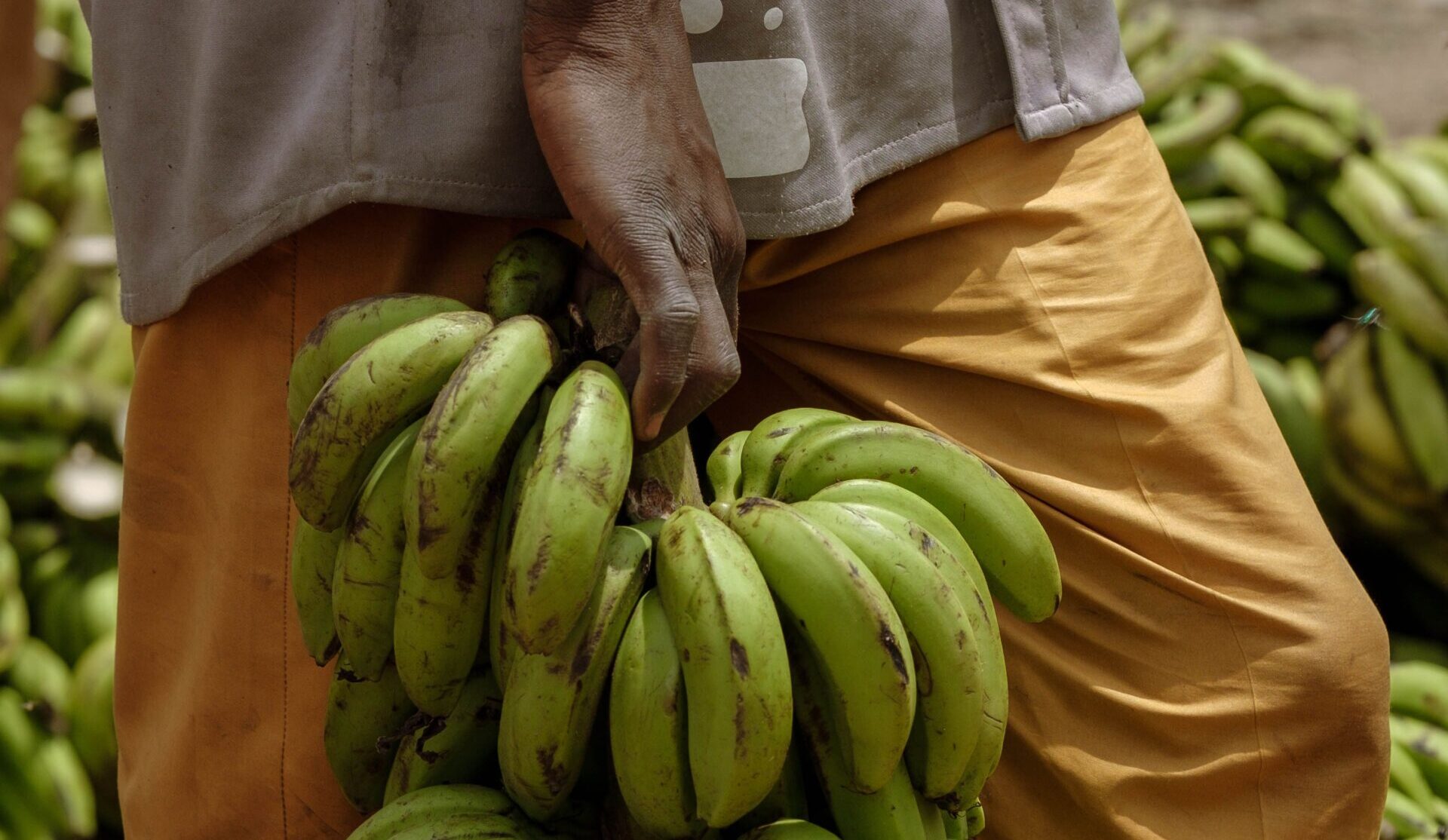
    The full breakdown of the 16 priority crops and their projected annual production volumes (in kilograms) is as follows: 127,055 kg of beets, 1,295,255 kg of butter squash, 298,897 kg of cabbage, 226,093 kg of cantaloupe, 510,719 kg of carrots, 672,093 kg of cassava, 1,342,641 kg of cucumber, 662,238 kg of lettuce, 1,020,696 kg of onion, 625,121 kg of hot pepper, 878,460 kg of sweet pepper, 294,546 kg of pumpkin, 2,897,083 kg of sweet potato, 803,682 kg of tomato, 1,051,496 kg of watermelon, and 924,789 kg of yam.

  • Will Businessman Be Charged for Assaulting Minor?

    Will Businessman Be Charged for Assaulting Minor?

    In a developing story that has ignited fierce public discourse across the nation, a viral video depicting a local business owner physically assaulting a teenage boy suspected of shoplifting has prompted official pushback from the country’s leading child welfare agency, which is calling for non-violent alternatives to youth discipline. The disturbing footage first circulated on social media platforms this Monday, quickly splitting public opinion over the longstanding debate around when — if ever — physical punishment is acceptable for children who break rules.

    Public reaction to the video has been sharply divided. One camp of online commentators has rallied behind the shop owner, arguing that when parents fail to teach children basic respect for others’ property and the law, outside adults are justified in stepping in to administer corrective discipline. The opposing side has condemned the attack outright, emphasizing that the individual targeted is a legal minor, and that no adult has the right to inflict physical harm on a child, regardless of the alleged offense.

    On Wednesday, the Ministry of Human Development, Family Support and Gender Affairs issued an official statement reaffirming its unwavering opposition to violence against children in all contexts. Ministry CEO Adele Catzim‑Sanchez told local outlet News 5 that vigilante action has no place in addressing youth misconduct, urging business owners who encounter theft or other trouble involving minors to contact law enforcement immediately and secure surveillance evidence rather than taking matters into their own hands.

    “We have to have options that go beyond violence,” Catzim‑Sanchez emphasized in her remarks.
    The CEO also noted that viral social media footage rarely captures the full context of an incident, and stressed that the government already maintains a robust network of evidence-based support programs designed to address problematic youth behavior without resorting to force. Through the Ministry’s Community Rehabilitation Department, young people who run afoul of the law can be referred to prevention and mentorship initiatives via either police or court diversion programs, tailored to the specific circumstances of each case.

    The core intervention is a structured four-month program that works holistically with each participant: it explores underlying personal and family challenges that may contribute to harmful behavior, provides professional mental health counseling, offers support for school engagement when needed, and connects families with basic support such as food assistance if that is identified as an unmet need.

    “Our philosophy is that incarceration or institutionalisation should be an action of last resort,” Catzim‑Sanchez explained.
    In response to the common argument that physical discipline has long been an accepted part of child-rearing in many communities, the CEO argued that it is past time to move beyond the automatic reflex to meet misbehavior with force. She acknowledged that business owners have a clear and legitimate right to protect their property from theft, but noted that long-term public good requires investing in proactive prevention programs rather than reacting to every incident with violence.

    With primary and secondary schools across the country now closed for the annual summer break, Catzim‑Sanchez also issued a targeted advisory to families, urging parents and guardians to enroll their children in structured, positive summer programs. She noted that historical data shows a consistent seasonal spike in youth involvement in law enforcement interactions during the summer months, when unsupervised free time can increase the risk of negative behavior. Keeping young people engaged in constructive, supervised activities, she said, is one of the most effective proactive steps families can take to prevent trouble before it starts. At the time of publication, no official charges have been filed against the shop owner, and authorities have not announced a timeline for a decision on potential prosecution.