The 2026 Caribbean Media Summit, hosted last week in Trinidad by the Media Institute of the Caribbean, delivered a stark opening diagnosis: the Caribbean regional media ecosystem is confronting an unprecedented existential crisis. Legacy news outlets across the bloc have been battered by overlapping structural threats, from plummeting advertising revenue and the disruptive rise of artificial intelligence to a algorithm-dominated media economy that prioritizes clickbait sensationalism over rigorous, substantive reporting.
The scale of the crisis is visible in the wave of news outlet closures that have swept the region over just the last 18 months. Two prominent independent newspapers, Guyana’s Stabroek News and Trinidad and Tobago’s Newsday, have ceased operations, eliminating two critical sources of diverse public discourse that served communities for decades. Newsday’s managing director described the outlet’s collapse as the result of a “perfect storm” of overlapping challenges, noting that print advertising revenue has plummeted by 75% across the last 10 years. For Stabroek News, the final blow came from an approximately $90 million government debt owed for past advertising services.
The contraction extended to digital media in July 2025, when telecom giant Digicel announced the immediate shutdown of Loop News, one of the Caribbean’s most trusted independent digital news platforms that had operated across the region since 2014. Digicel also wound down its regional sports broadcasting division SportsMax, cutting nearly 100 roles spanning journalists, editors, producers and technical staff across multiple Caribbean nations.
The most historically staggering loss hit the U.S. Virgin Islands in early 2024, when the St. Croix Avis – founded in 1844 and the oldest continuously operating newspaper in the Caribbean by 1990 – closed its doors after 180 years of continuous publication, unable to compete for audience and revenue with free online news and social media.
Panelists discussing “Media Viability in the Age of AI” at the summit agreed that the current regional landscape is extraordinarily challenging, with many warning that the core question at hand is no longer whether individual news outlets can turn a profit, but whether Caribbean societies can sustain any form of trusted, independent public interest journalism at all. The pressures facing the sector are simultaneously editorial, financial, technological and political, and the growing list of closed outlets represents a quiet threat to Caribbean democratic discourse, eroding institutions that communities have long relied on for accountable reporting.
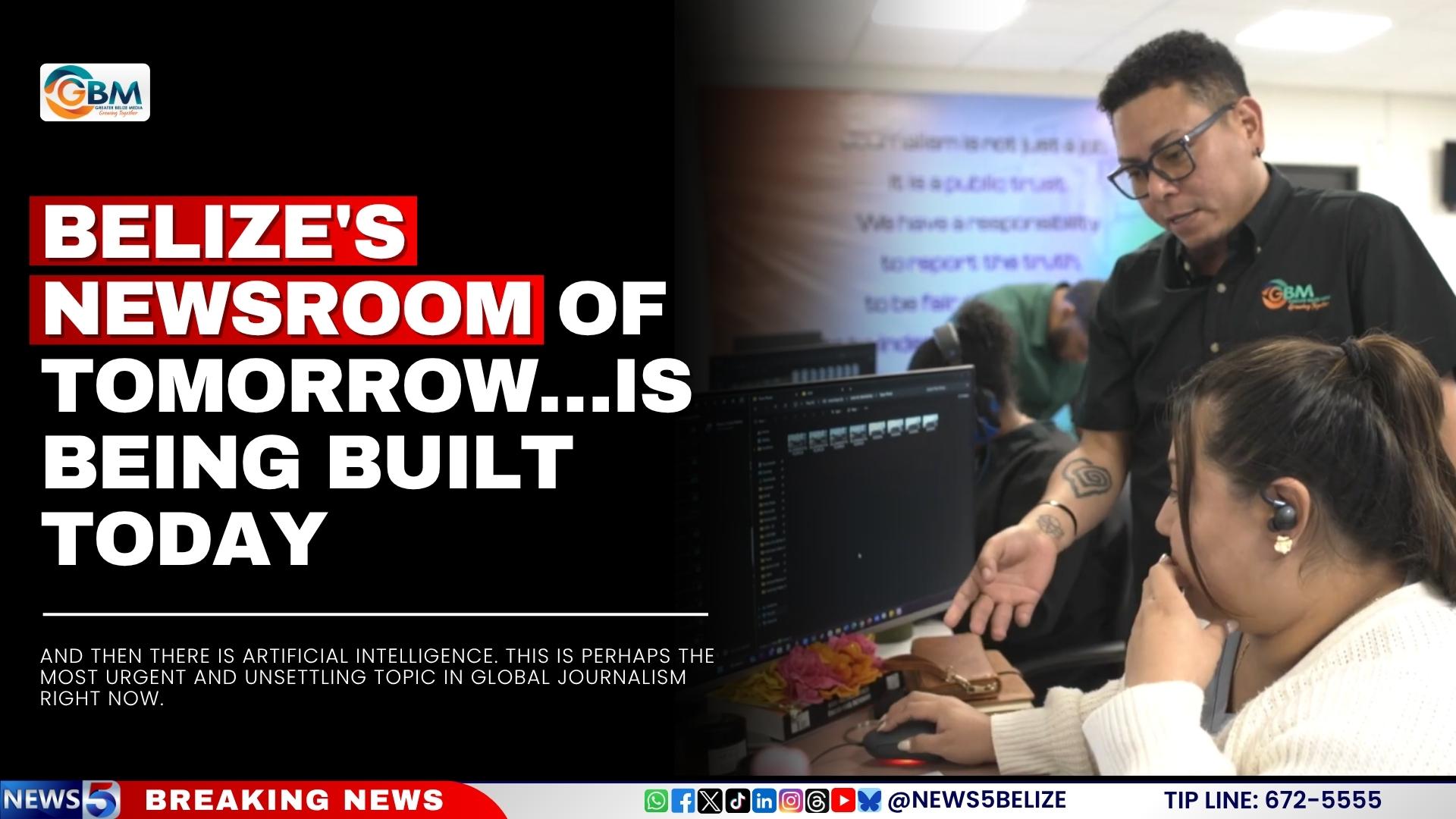
Yet the outlook is not uniformly grim. While the region grapples with widespread contraction, one Belizean media organization has spent years laying proactive groundwork to adapt to the new media landscape: Greater Belize Media (GBM), parent company of News 5 Live and the first Belizean news organization to launch a fully resourced dedicated digital news department.
Unlike many legacy outlets that were slow to recognize shifting audience habits and technological disruption, GBM identified the transformative impacts of algorithm change, AI and evolving news consumption patterns early and began restructuring long before crisis hit. Last year, the organization publicly launched its transformative “One Newsroom” initiative, a full organizational restructuring that unified reporters, videographers, editors and digital producers under a single integrated editorial structure. The model, adapted from the approach used by leading global news organizations, was customized to align with the unique consumption habits and information needs of the Belizean public.
The initiative grew from a straightforward but critical insight: in an era where audiences access news in real time across multiple overlapping platforms, the old siloed system that kept broadcast and digital news operations entirely separate was not just inefficient – it was a major competitive disadvantage. “The way news and news consumption is evolving is via social media and online platforms,” explained Hipolito Novelo, GBM’s Digital Editor. “Consumers of news want to consume news almost immediately. That is what GBM offers, immediacy, and of course, the accuracy of it.”
This dual commitment to speed and uncompromised accuracy sits at the center of GBM’s restructuring. While delivering fast news is simple, maintaining accuracy while operating at speed and meeting audiences across every platform they use is a far greater challenge – one GBM has intentionally built its new structure to meet. The organization has expanded its digital presence across social media, its official website, a dedicated WhatsApp channel and a Facebook Messenger channel, building an integrated distribution network designed around how Belizeans actually access news today, rather than forcing audiences to adapt to outdated legacy structures. GBM also actively monitors ongoing changes to platform algorithms, adjusting its distribution strategy in real time to avoid falling behind audience trends.
On the most contentious issue reshaping global journalism today – artificial intelligence – GBM has also rejected a reactive, fear-based approach. While many newsrooms across the globe are still debating what AI means for editorial workflows and journalistic integrity, GBM is already finalizing a formal, public AI governance policy, joining a small but growing group of leading news organizations that recognize responsible AI adoption requires clear rules, not just unguided experimentation.
“We are not afraid of AI,” Novelo said. “We are studying it, understanding it, and figuring out how to use it in ways that make our journalism stronger. Not shortcuts that compromise it. Every single day we are working to make sure we are ahead of it, not behind it.”
This curious, strategic, disciplined approach to change is exactly what the Caribbean media sector needs more of, summit participants agreed. The path to long-term survival for regional media does not lie in lamenting the disruptive changes that have reshaped the global information ecosystem, but in building intentional institutional resilience: the capacity to adapt editorial practices, technology and organizational structure to a constantly shifting media environment. As Novelo puts it, GBM’s work is not a reaction to crisis – it is a sustained effort to keep pace with change. “We watch how the algorithms evolve, we watch how audiences shift, we adjust our strategy, and we keep delivering. That is the job. The landscape changes every single day and we change with it, because our audience deserves a newsroom that never stops working to reach them.”