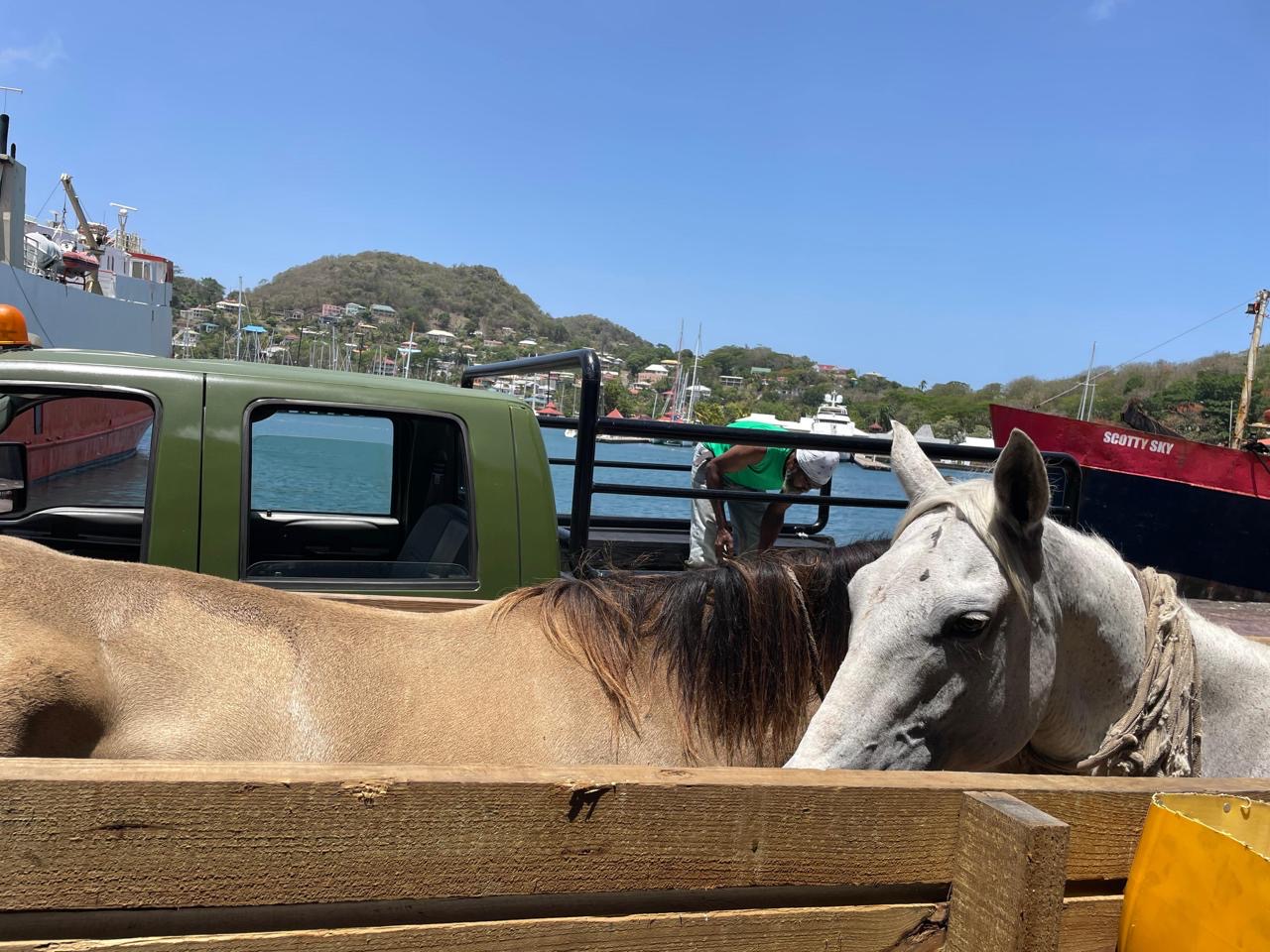
A controversial decision to euthanize two imported horses in Grenada less than 12 hours after their port arrival has ignited public outrage, drawn criticism from veterinary experts, and thrown a spotlight on gaps in the country’s animal import regulation process. The animals, owned by Bonanza Stables proprietor Royan Smith, tested positive for Babesia, a common tick-borne pathogen that affects equines, before being put down under orders from the Ministry of Agriculture.
In a post-incident interview, Smith painted a picture of bureaucratic delay and unfair treatment that led to the preventable loss of his animals. He claims he had repeatedly sought the required import permit from ministry officials for months ahead of the horses’ arrival from St. Lucia, but that repeated promises to process his application never came to fruition. “I’ve been trying to get a permit from the ministry. The guy kept putting me off,” Smith alleged.
According to Smith’s account, the two pregnant horses tested negative for all regulated diseases before they embarked on their voyage to Grenada. It was only while they were held at sea waiting for import approval that the animals were bitten by ticks and contracted Babesia. Despite the positive diagnosis, Smith stressed that the infection is widely considered manageable with standard veterinary care, and did not justify immediate culling. He added that veterinary authorities from St. Lucia reached out to Grenadian regulators ahead of the horses’ arrival to propose a compromise: allow the animals to enter the country to be quarantined and treated, rather than destroyed. This account could not be independently verified as attempts to reach St. Lucia’s Chief Veterinary Officer Dr. Sharmine Melville-Edwin went unanswered.
Smith has personal experience treating the disease: he previously oversaw a full recovery from Babesia in another of his horses in just 10 days of treatment. After learning his permit application would not be approved before arrival, Smith escalated the issue to Ministry of Agriculture Permanent Secretary Javan Williams, hoping to negotiate a solution. But instead of accommodation, Smith says Williams directly ordered the horses not be allowed to disembark, and warned they would be euthanized immediately upon landing. Smith offered multiple alternative solutions, including housing the horses in private quarantine facilities and temporary mobile stables, but all proposals were rejected by officials. With no way to arrange for the horses to be transported back to St. Lucia, the animals were held at the Port of St. George’s after arriving at 8 a.m., and were euthanized by 6 p.m. the same day.
For Smith, the loss is both financially ruinous and emotionally devastating. One of the horses, a rare white animal, had already been booked to appear at upcoming wedding events, and both were intended to support his equine tourism operations. “Right now, they put me out of business,” Smith said. He added that he was in the process of preparing a legal injunction to stop the culling when the order was carried out, and formal legal action against the ministry is still on the table. “It’s a shame on the government of Grenada, shame on the Ministry of Agriculture to kill my animals because of this,” he said, insisting the disease posed no meaningful public or animal health threat that justified the quick action.
Prominent local veterinarian Dr. Kenrith Carter has echoed Smith’s criticisms, raising formal concerns about whether the ministry followed established protocol for dealing with a positive diagnosis. In a public statement shared on social media, Dr. Carter questioned why proper steps including quarantine, confirmatory retesting, consultation with equine disease experts, and exploration of treatment options were skipped entirely before the culling order was issued.
Dr. Carter explained that Babesia is not the uniformly deadly pathogen regulators appeared to treat it as: the disease encompasses a wide range of strains, most of which are species-specific and treatable with appropriate medication. While some strains can jump between animals and humans, he noted that transmission only occurs through a tick bite, meaning there is no risk of direct spread from horse to human contact. He also added that Babesia has already been documented in local livestock populations in Grenada in previously published scientific research, making the extreme response even more puzzling. His primary outstanding question echoes the core of the controversy: why were the horses not placed in quarantine while the situation was resolved?
Under Grenada’s current Animals (Diseases and Importation) Act, all birds, reptiles, and insects are barred from entry without an explicit license issued by the Minister of Agriculture. Any animal imported without proper authorization can be legally seized and destroyed by authorities. Outreach to the Ministry of Agriculture for comment on the controversy has so far gone unanswered: Permanent Secretary Williams confirmed receipt of a request for comment Monday, but as of the time of this reporting, no response has been provided to questions about the import delay, the decision to forgo quarantine and treatment, and the legal basis for the immediate euthanasia order.