作者: admin

  • SEA moving 5 000 beneficiaries to direct deposits

    SEA moving 5 000 beneficiaries to direct deposits

    In a push to modernize social welfare delivery and address recent service disruptions, Barbados’ Social Empowerment Agency (SEA) will transition 5,000 National Assistance Grant beneficiaries from paper cheque disbursements to direct bank deposits, People Empowerment and Elder Affairs Minister Adrian Forde confirmed during a Friday press briefing.

    The policy shift comes in the wake of recent cheque-printing failures that left thousands of vulnerable recipients unable to access critical financial support on time. Forde emphasized that continuing to rely on outdated paper-based systems is no longer practical for a 21st-century social safety net, framing the transition as both the ethically correct and operationally appropriate step forward for the agency, which merged the island nation’s former standalone welfare and child care services.

    The rollout will unfold gradually over the coming months, with government officials stressing there is no rigid deadline to force beneficiaries to adapt. To streamline registration, SEA has developed a custom barcode system and digital registration portal. Starting next week, every affected client will receive mailed correspondence outlining the transition, alongside a pre-generated form to submit banking details. A QR code will also be included for tech-savvy recipients to complete registration online, while those who prefer hard copies can drop off filled forms at three designated SEA locations: Southern Plaza, Six Roads, and Benthams in St Lucy. On-site support will be available at all SEA branches for any recipients who need help filling out their forms.

    Forde clarified that the government will not rush the process, noting that officials are committed to partnering with recipients to deliver a seamless transition regardless of which banking institution they use. He also publicly encouraged beneficiaries to use BimPay, the Central Bank of Barbados’ national digital payment platform, to manage their funds. To address widespread concerns about data privacy, SEA Network Administrator Jerome Phillips confirmed that all beneficiary banking and personal information will be stored on an encrypted database, with all sensitive data hashed and sorted to block unauthorized access.

    The transition is currently limited exclusively to National Assistance Grant recipients, but SEA Director RoseAnn Richards noted that if the rollout proves successful, the direct deposit system could be expanded to the agency’s educational assistance program in the future. To support recipients who do not currently hold a bank account, Forde said SEA will partner with participating commercial banks and credit unions to help unbanked beneficiaries open accounts, with all administrative support provided by the ministry. Beneficiaries who feel uncertain or uncomfortable with digital banking are also invited to book one-on-one consultations at any SEA location to discuss their concerns.

    Forde set a voluntary target of completing the full transition by the end of December 2024, and added that the shift to direct deposits carries an unexpected social benefit: it will help reduce the long-standing social stigma attached to receiving public welfare assistance. Unlike paper cheques that clearly mark funds as welfare disbursements, direct deposits into personal bank accounts are private, meaning recipients do not have to disclose their benefit status to third parties when accessing their money.

    “We have created this process to meet people where they are,” Forde said. “There is no pressure to rush, and we are here to work through every barrier alongside beneficiaries to make this change work for everyone.”

  • Climbing Creek – de stille ramp (slot)

    Climbing Creek – de stille ramp (slot)

    There are some places that leave an indelible mark on anyone who visits them. Climbing Creek, a sprawling swamp in Nickerie, Suriname, is one of those special yet threatened sites. Slowly poisoned by encroaching saltwater, this once-thriving ecosystem faces collapse not from natural forces, but from an unplanned man-made canal dug years ago with no oversight. I joined a small team of military personnel on a 20-day expedition into the swamp to document the quiet work of repairing the damage others left behind. This story is not a pretty one, but it is one that demands to be told.

    From the team’s base camp, the scale of ecological destruction is immediately visible. Large swathes of the swamp have dried out completely, leaving only parched earth and dying vegetation. Only small pockets flood during high tide, drawing flocks of desperate birds searching for remaining fish, shrimp and crabs to survive. Every day, the team wades into mud that reaches above their knees to plant young native mangrove saplings along the creek’s eroding banks, carefully placing each seedling just above the water line where it has the best chance of taking root. They pull each other out of deep sticky mud when they get stuck, but no amount of discomfort stops them from completing their daily work.

    As more trees and native vegetation succumb to salt poisoning, the team presses on. While laughter echoes from the canal as team members cool off between shifts, their camp cook prepares a simple lunch of spiced chicken, rice and smoked fish that I was invited to share. What these few men accomplish here is almost impossible to put into words. If the saplings survive, the site will slowly regenerate into a dense mangrove forest over one to three years. These mangroves will hold freshwater in the swamp, allow silt to build up, and eventually choke and close the unauthorized canal entirely. Ecologists have already seen this successful restoration model work on similar projects along the Nickerie coast.

    The bitter irony of this story is hard to miss: one individual’s unregulated decision to dig a casual canal triggered an entire regional ecological disaster, and no authority has ever been held accountable. It falls to this tiny, under-resourced team to prove that repair is possible, working tirelessly for a greater public good with no fanfare and no recognition. Few people will ever see the sacrifices they make or the hardships they endure here, so their story has remained untold — until now.

    As the midday heat grows unbearable, the men rest in hammocks strung above dead vegetation, seeking what little relief they can find. When the sun dips lower, they inspect their boat engines, only to discover that two of the three are broken: one has a damaged propeller, and the other has an internal mechanical failure. They make the call to send both broken engines back with me for repair, along with 12 empty water containers and drained fuel tanks to be refilled on the outside.

    Night falls fast, and the high tide needed to navigate the narrow creek will not turn until around 9 p.m. The team builds a campfire, which immediately draws swarms of venomous horseflies and large black mosquitoes. They place mosquito-repelling candles all around our resting spot on the canal bank. As we wait for the tide, the men share stories of their work, the daily challenges they face, and how much they long to return home to their young families. They have already spent 18 days in the swamp, with just two more left to plant the remaining saplings, and they are determined to hit their planting target before they leave. They plan to launch at 7 a.m. the next day for their final push: the cook will stay behind at base camp, while the rest head three to five kilometers further up the coast to plant the last of the saplings.

    When the tide finally comes in, the team rushes to free the stuck boat from the muddy bank and load it for our departure. By the light of the campfire and a single lantern, the world around us is pitch black, save for a brilliant unobscured view of the starry night sky. Before we board, we wrap every inch of exposed skin, leaving only our eyes visible to ward off insect bites. We each get a fresh mosquito candle to hold, and the boat pulls out into the dark canal. The 25-horsepower engine is far more power than the narrow waterway needs, so the captain navigates slowly, weaving carefully through shallow stretches. Within minutes, hundreds of gnats, mosquitoes and other unknown insects swarm around the candle flame. Glittering eyes reflect the captain’s headlamp along both banks: crocodiles drawn to the fish that congregate in the canal. No one feels fear, only quiet awe for the wild natural world unfolding around us under the moonless starry sky. Fish jump around the boat, and we repeatedly toss a small juvenile sea turtle that accidentally landed on board back into the water.

    Meter by meter, the boat pushes through the narrow canal. The passengers’ only goal is to avoid getting bitten, but there is still a quiet thrill to this adventurous night journey. We quickly lose count of how many crocodiles we spot: some show only their heads peeking above the water, while others rest on the bank, their glossy brown-black skin glinting in the headlamp’s glow. We are so focused on the landscape around us that we fall quiet, letting the rumble of the engine mix with the calls of night birds, the splash of jumping fish, the rustle of reeds and the soft rush of water.

    By the time we reach the dam, the tide is already receding, putting pressure on the two men who will have to make the return trip to camp after dropping us off. Our first mosquito candle has burned down, so we get a fresh one. Two hours later, as we approach the dam, the three men with us jump back into the mud to push and pull the heavily loaded boat meter by meter over the dam. Fish dart through the shallow mud around their feet, grateful for any bit of remaining water, visible only in the beam of the captain’s headlamp — the only light we use to avoid disturbing wildlife.

    With the last of their strength, they pull the boat over the dam and launch it into the irrigation channel that will take us to the main road. Once in the wider channel, the captain opens the engine, and the boat speeds across the warm water. A fish the size of a hand leaps right into the boat, and I toss it back to safety. Black silhouettes of dead trees line the banks — a stark reminder of the damage that has been done, but under the starry sky, there is a quiet, heartbreaking beauty to the scene rather than menace. We reach the dock just minutes before midnight, and unload the boat quickly so the two men can head back to camp while the tide still holds. Even without the heavy load, pulling the boat back over the dam through the mud to reach deep enough water for the engine remains a brutal, backbreaking job.

    We wave goodbye, and soon only the rumble of the engine and a faint beam of headlight are visible before the dark swallows everything. We climb into a waiting vehicle for the drive to Nieuw Nickerie. The drive is once again through complete darkness: large stretches of the main east-west highway have no streetlights at all, a fact that leaves me wondering why basic infrastructure has never been extended to this remote region. By the time we reach town, fatigue from the day’s heat and work has set in deep. It is 3 a.m. when I step into a hot shower to wash off the swamp mud, and climb into bed, the images of the day still burned clear into my memory.

    Back in Nieuw Nickerie, the shower washed away the mud, but it cannot wash away the images I carry with me: the dying fish gasping in dry mud, the soldier singing while he worked chest-deep in mud, the 12,000 young mangrove saplings waiting for the freshwater they need to survive.

    No one can say for sure if this restoration project will succeed. It depends on tides, on weather, on continued commitment from people who believe in the work. But one thing I know for certain: these men are showing up, every single day, with no audience, no praise, and no reward. The destructive canal still sits there, and no one in power has ever answered for the damage it caused.

    If you ever find yourself near Climbing Creek, take a moment to think of these men. Think of what they do there, working under the burning sun, knee-deep in mud, for a forest that will not even grow for another three years. And think of what this place could have been, if one person had never had that unregulated, destructive idea in the first place.


  • MARAD virtually rules out issuing boat captain licence to Mohamed

    MARAD virtually rules out issuing boat captain licence to Mohamed

    On Friday, Guyana’s Maritime Administration (MARAD) publicly confirmed it will almost certainly reject an application for a commercial boat captain’s license from Azruddin Mohamed, a prominent Guyanese opposition leader and local businessman, citing his designation as a sanctioned individual by the United States over alleged financial crimes.

    In an official statement, the national maritime regulator emphasized that any responsible public agency handling matters involving a sanctioned individual is required to thoroughly evaluate the cascading legal, financial, banking, contractual and regulatory compliance risks tied to any formal approval. “As the national maritime regulatory body, MARAD would be extraordinarily reckless to issue a license to a person of this sanctioned character,” the statement read.

    Mohamed, who leads Guyana’s main opposition party We Invest in Nationhood (WIN), has already framed the ongoing license delay as a deliberate act of political victimization targeting him. He claims he has submitted all required documentation for the new license, while other less high-profile applicants have already received their approvals. He has also raised public questions about whether his civilian driver’s license will face similar blocking when it comes up for renewal.

    The legal troubles facing Mohamed stretch back more than two years. First, the U.S. Treasury Department’s Office of Foreign Assets Control sanctioned Mohamed and his father, Nazar “Shell” Mohamed, for allegedly evading more than $50 million in taxes owed to the Guyanese government on a shipment of over 10,000 ounces of gold. More than a year after the sanctions were imposed, a U.S. federal grand jury issued an indictment against the pair on charges of wire fraud, mail fraud, and money laundering. The two men are currently fighting extradition to the United States to stand trial on the charges.

    MARAD pushed back against Mohamed’s claims of political targeting, stressing that the regulatory agency cannot simply overlook or dismiss his ongoing legal and sanctions-related issues. The regulator reiterated its commitment to equal application of rules across all segments of Guyanese society, regardless of an individual’s wealth, political standing, or public profile.

    “The wider issue, however, is bigger than one man and one boat. Maritime safety standards cannot be tightened for ordinary Guyanese but relaxed when a politically powerful individual wants a license. That would be reckless,” the agency noted.

    In addition to the license dispute, MARAD also addressed a recent high-profile incident involving a vessel reportedly linked to Mohamed. According to official records held by the agency, neither the fast craft in question nor Mohamed himself hold valid operating licenses or authorization to run the vessel in Guyanese waters.

    The agency referenced preliminary reports from Guyana’s Joint Services that outline a serious incident from recent weeks: the unlicensed vessel was spotted traveling at excessive speed at night, failed to comply with official signals to stop, and triggered a law enforcement pursuit before it was eventually intercepted.

    MARAD emphasized that these alleged incidents will be fully investigated by relevant competent authorities, and the matter should not be downplayed for political reasons. “MARAD should not be politically attacked simply because its application of the law produces an inconvenient result,” the statement concluded.

  • FLASH : Nearly a hundred Haitians expelled from the USA have lived through hell

    FLASH : Nearly a hundred Haitians expelled from the USA have lived through hell

    On Thursday, September 10, 2026, a U.S. Immigration and Customs Enforcement (ICE) deportation flight carrying Haitian migrants descended into chaos after multiple avoidable disruptions left dozens of repatriated people subjected to inhumane treatment and overwhelmed Haitian migration authorities scrambling to provide basic support. What was supposed to be a scheduled midday arrival at Cap-Haitien’s Hugo Chávez International Airport turned into a 7-hour delayed landing after sunset, in the middle of torrential rain, and long after all Haitian government offices had closed for the day.

    The journey of these migrants began at 7:34 a.m. when Global X charter flight 6122 first departed Alexandria, Louisiana, headed for a stopover in South Florida. What followed was hours of unexplained holding at Opa-locka airport, with the plane only departing for Haiti at 5:10 p.m. It finally touched down in Cap-Haitien at 7:05 p.m. Compounding this delay was the fact that all 98 deportees on board had been kept in shackles for more than 13 hours before they even landed, a period that does not include their total flight time.

    In addition to the unanticipated delay, ICE violated pre-existing agreements with Haiti’s National Migration Office (ONM) by adding 27 extra deportees to the flight without any prior notification, pushing the total number of returnees from the planned 71 to 98. The sudden increase stretched the ONM’s already tight operating budget to breaking point, turning what should have been a standard reception process into an arduous, underfunded emergency.

    Prior to this flight, Haitian authorities had planned to increase the standard reentry assistance stipend for deportees from the longstanding $80 to $200 per person, to help returnees cover travel and basic living costs after arriving back in Haiti. But the unplanned surge in numbers, paired with the late-hour arrival, left the agency without enough funding to deliver the increased stipend or even cover temporary accommodation for the group.

    Jean Négot Bonheur Delva, Director General of the ONM, explained the structural issues created by ICE’s disregard for agreed protocols. “The cut-off time for receiving a plane is 1:00 or 2:00 PM, as it takes us two to three hours to provide assistance to these migrants. In Haiti, we work from 8:00 AM to 4:00 PM,” Delva said in a media statement.

    Despite the severe logistical challenges and poor weather, Haitian on-ground staff managed to provide all 98 returnees with a hot meal and the official documentation forwarded by U.S. authorities. The group of returnees included a diverse cross-section of people with longstanding ties to the U.S.: 15 had entered the country through the Biden administration’s humanitarian parole program, dozens were active asylum seekers, one was a legal U.S. green card holder, and 50 had been residing in the U.S. under Temporary Protected Status (TPS). Two young children were also on the flight: a 3-year-old U.S. citizen and a 6-year-old born in Brazil.

    Delva confirmed that mobilized ONM staff did not finish processing all deportees and leave the airport until after 2:00 a.m. the next day. “This has a cost,” Delva emphasized, noting that the agency also incurred unexpected costs for emergency bus requisition to transport the group. “It’s a problem for us; it’s demoralizing.”

    The September 10 flight is part of a recent surge in ICE deportations of Haitian nationals from the United States, following the termination of Haiti’s TPS designation, according to prior reporting on the ongoing repatriation operation.

  • BRICS-top: Daagt de groep echt een door het Westen gedomineerde wereld uit?

    BRICS-top: Daagt de groep echt een door het Westen gedomineerde wereld uit?

    This weekend, leaders of the BRICS bloc of major emerging economies will convene in New Delhi for their annual summit, hosted by India. The gathering, taking place on September 12 and 13, comes as the group continues to grapple with deep internal divisions over a regional conflict that has roiled global markets and strained international alliances this year, marking the bloc’s third attempt to reach a unified consensus on the crisis.

    Russian President Vladimir Putin arrived in New Delhi on Friday, setting the stage for talks that will test the bloc’s ability to bridge competing interests. The conflict at the center of divisions is the U.S.-led military campaign against Iran, which joined BRICS as a new member in 2024 alongside the United Arab Emirates, Saudi Arabia, Egypt, Ethiopia, and Indonesia. The rift has pitted Iran against the UAE, laying bare the competing geopolitical priorities that have long hampered coordinated action within the 11-nation bloc.

    Founded in the aftermath of the 2008 global financial crisis and the collapse of the WTO’s Doha Development Round, BRICS was created to challenge the post-WWII Western-led international order that emerging economies argued systematically sidelined the interests of the Global South. Nearly 20 years after its formation, analysts agree the bloc has succeeded in making the global order more multipolar, but it has struggled to build a cohesive alternative framework to replace Western-dominated institutions.

    Many experts argue that measuring BRICS success by its ability to replace Western-led institutions misses the point of the bloc’s core mission. “We tend to underestimate every BRICS initiative because it is not the revolution we expected,” note Octavio Oliveira and Enzo Godinho, Brazilian researchers at the University of São Paulo’s BRICS Studies Group. “While it lacks the institutional capacity of the United Nations to address major geopolitical issues, its very existence provides a critical platform for Global South nations to amplify their voices and pursue cooperation outside Western frameworks.”

    Analysts emphasize that BRICS was never intended to fully displace the Western order, only to offer Global South countries greater negotiating power and alternative pathways for development. “What unites BRICS members above all is the desire to grow their economies through international trade and put an end to the West’s moral lecturing on human rights and democracy,” explains Sean Burges, an associate professor of international studies at Carleton University in Canada. Reform and greater autonomy, rather than overthrowing the liberal international order, are the bloc’s core priorities. Burges questions: “Why would BRICS want to take over the global governance responsibilities of the G7?”

    To date, BRICS has delivered tangible alternative channels for trade and investment centered on national development and poverty reduction. China’s model of unconditional development assistance and Brazil’s push for direct currency swaps between central banks are prime examples, Burges says. These initiatives have driven a sharp increase in economic exchange within BRICS and across the broader Global South, while the shift away from aid conditionalities has even pushed traditional Western-dominated institutions like the World Bank and IMF to reform their own practices.

    Geopolitical analyst Guy Burton points out that the definition of “the West” has shifted dramatically since BRICS was founded in the early 2000s, creating a more ambiguous landscape for the bloc’s challenge. “The West is fracturing, with the transatlantic alliance between the U.S. and Europe wobbling, so it is unclear exactly what BRICS is challenging — America or Europe,” Burton notes.

    While BRICS holds enormous collective economic weight — representing nearly half of the global population, 40 percent of global purchasing power, 44 percent of global oil production, and roughly a quarter of total world trade, with projected 2025 growth of 3.7 percent compared to just 1 percent for the G7, per IMF data — analysts agree its collective global influence remains far more limited than its size suggests.

    The bloc’s New Development Bank (NDB), its flagship multilateral financial institution, had only approved around $39 billion in lending by the end of 2024 — equal to just a few months of the World Bank’s total lending commitments. The NDB also raises the majority of its capital in U.S. dollars, and analysts say it has introduced little structural innovation, sharing many core characteristics with existing Western-led multilateral development banks.

    The single biggest barrier to BRICS challenging Western economic dominance is the continued global dominance of the U.S. dollar. “Despite widespread rhetoric around de-dollarization initiatives, most BRICS trade is still settled in dollars, and most members hold large dollar reserves, which reinforces the dollar’s position as the global reserve currency and limits members’ policy autonomy,” Oliveira and Godinho explain. While China has promoted wider use of the renminbi and Saudi Arabia has opened up to trade in non-dollar currencies, the dollar faces no serious near-term challenge, a trend Burton expects will hold for at least the next decade. Still, Imran Khalid, a geostrategic analyst, notes that while BRICS as a whole has not abandoned the dollar, individual members are gradually reducing their own dependence in a slow, largely irreversible shift.

    Even with these limitations, analysts argue BRICS’ economic contributions should not be discounted. The 2024 expansion that added major oil producers including Saudi Arabia, Iran, and the UAE has boosted the bloc’s collective influence, particularly in global energy markets. Chinese investments through the Belt and Road Initiative and other bilateral financing streams have also delivered concrete development and financing alternatives outside the traditional Bretton Woods system.

    The bloc’s greatest strength — its broad representation of Global South populations — is also its biggest weakness: deep internal divisions driven by competing national interests. In May, a BRICS foreign minister meeting in New Delhi failed to reach a consensus on the U.S.-Israel-Iran conflict, ending without a joint statement after Iran pushed to condemn U.S. and Israeli actions, a position the UAE refused to support. Notably, though, all major peace initiatives for the conflict have come from the Global South, not from Western capitals.

    Burges argues that BRICS expansion has widened, rather than narrowed, internal divisions. “Expansion increases representation of the Global South, but it dilutes the group’s cohesion,” he explains. Membership gave Iran a new global platform, but that does not mean all BRICS members align with Iran’s positions. “BRICS does not operate on a ‘one for all, all for one’ principle — members deliberately retain their freedom to act independently, which is the opposite of a tightly coordinated geopolitical bloc,” Burton says. While the original smaller BRICS grouping struggled to represent the full diversity of the Global South, expanded membership risks undermining collective action, even as Oliveira and Godinho view growing interest from new members as a positive sign of a shifting multipolar global order.

    In conclusion, analysts widely frame BRICS as more a platform for Global South autonomy than a direct challenger to the Western-led order. Without a common currency, unified trade tariffs, or collective defense commitments, it is not a conventional geopolitical bloc. Still, by creating alternative financing channels and facilitating trade outside Western institutions, it gives Global South nations greater room to maneuver between competing great power interests. Most importantly, experts note, it has already succeeded in weakening the effectiveness of Western political and economic pressure on individual developing nations.

  • Kingstown Town Board goes rogue on vendors?

    Kingstown Town Board goes rogue on vendors?

    A last-minute order to clear street vendors from two major Kingstown thoroughfares has sparked public uproar and exposed a visible rift between the Kingstown Town Board (KTB) and the national New Democratic Party (NDP) administration, just months after the party took office on a platform that framed street vendors as economic partners rather than public nuisances.

    On Wednesday, September 9, the KTB made an unexpected announcement via social media, ordering that all vending activities on Bedford Street, Bay Street and adjacent sidewalks would be halted just three days later, on September 12. Vendors operating in the restricted zones were instructed to relocate to existing authorized market stalls or submit new applications for designated spots, with the KTB framing the move as part of routine efforts to keep the capital clean, orderly, and accessible to all. The abrupt, short-notice order caught both vendors and the general public completely off guard, as it directly contradicted the formal policy Prime Minister Godwin Friday had laid out earlier this year, 100 days into the NDP’s term.

    Within 48 hours, the KTB reversed course. In a second post to the same social media platform this past Friday, the board announced the planned eviction would be “stayed until further notice” to allow for additional consultations with affected vendors and community stakeholders. Deputy Prime Minister St. Clair Leacock, who also serves as the Member of Parliament for Central Kingstown (the electoral district encompassing the capital), clarified the reversal on his personal Facebook page, emphasizing that the move was far more than a temporary pause. “It’s a firm Halt awaiting our comprehensive plan for the redeveloping and refurbishing of Kingstown,” Leacock wrote. “Vendors have a special place in our hearts and with proper consultation a central role in our developmental plans. Stay tuned.”

    The rapid back-and-forth has prompted widespread questions about coordination between the KTB and the central NDP government. Notably, KTB’s acting warden, Noel Dickson, was the NDP’s South Windward electoral candidate in both the 2015 and 2020 general elections, deepening public confusion over the misalignment between the town board’s order and the national government’s stated approach.

    Long before this week’s confrontation, street vending has been one of the most divisive ongoing policy issues in Kingstown, spanning multiple successive administrations. The NDP defeated the long-ruling Unity Labour Party (ULP) in November 2024, and from the opposition benches, Friday had already staked out a clear, contrasting position on vending policy. In a July 2025 address when he still led the opposition, Friday tied the prevalence of informal street vending to the country’s ongoing challenge of high unemployment, noting that vending is most often a last resort for workers who cannot find formal employment in the stagnant local economy.

    “People think that vending is so easy,” Friday said at the time. “These are people who are trying to make a living.” He argued that the government’s responsibility was not to sweep vendors off the streets, but to integrate them into the formal economy, rather than treating them as an unwanted problem to be eliminated.

    After taking office, Friday doubled down on that vision during a March 6, 2026 interview with Hot 97 FM, framing his administration’s planned overhaul of Kingstown not as a “war on vendors” but as a broader effort to build a more livable, vibrant capital. He rejected the framing of vending as an inherent public nuisance, instead emphasizing that “I see vendors as people who are looking for work.” He described street vendors as some of the most driven, entrepreneurial people in St. Vincent and the Grenadines, arguing that their energy should be structured and supported, not erased. Friday’s long-term vision for Kingstown reimagines the capital as a mixed-use residential and commercial hub where people choose to live and linger, rather than just a daytime commercial center that empties out by late afternoon. He has said that revitalizing the capital starts with centering people, not blanket prohibitions.

    The ULP, which held power for over a decade before the 2024 election, took a far more hardline approach to informal vending. Then-Minister of Local Government Julian Francis framed unregulated street vending as an existential threat to the capital’s functionality, arguing that unlicensed stalls blocked pedestrian walkways, swallowed up scarce public parking, and created general chaos in the city center. By Francis’ count, the government identified between 750 and 900 street vendors operating in Kingstown by 2022, and the ULP administration built three new market facilities with roughly 270 authorized stalls to relocate vendors off the streets. In November 2022, then-Prime Minister Ralph Gonsalves oversaw the removal of more than 800 vendors from Kingstown’s streets after opening two new city markets, declaring that all public streets in the capital would be cleared of informal vending by the end of that month.

    Following this week’s reversal, the KTB acknowledged the critical role that street vending plays in the local economy and in supporting thousands of Vincentian households, noting that “any effort to improve how Kingstown is managed must therefore be undertaken in a manner that takes these realities into account.” The policy pause leaves the future of hundreds of street vendors in limbo as the NDP government works to align its long-term development vision with on-the-ground implementation, bringing the long-running debate over Kingstown’s vending policy back to the forefront of national politics.

  • Machine operator granted bail on prohibited gun, ammo charges

    Machine operator granted bail on prohibited gun, ammo charges

    A 41-year-old machine operator from Ottley Hall, St. Vincent and the Grenadines, has been released on EC$20,000 bail following his arrest on illegal weapons possession charges, with a court scheduling his next appearance in a high-level court this September. Damon Mason was taken into custody last Thursday when law enforcement officers discovered an unauthorised AR-15 rifle and 19 rounds of 5.56 mm ammunition during a seizure at Nine Steps, Kingstown, according to official police statements. Both the semi-automatic rifle and the matching ammunition are classified as prohibited items under the country’s existing firearms legislation. Appearing before the Mesopotamia Magistrate’s Court on Friday, Mason entered a formal not guilty plea to the two counts against him: illegal possession of a prohibited firearm and unauthorised possession of ammunition, violations that require permission granted by a government minister to be legal. Magistrates granted bail but imposed a series of strict conditions to prevent flight risk. As part of the bail agreement, Mason must secure a financially responsible surety to back his bail bond, surrender all of his valid travel documents to authorities, and check in regularly at the Central Police Station two times every week. Court officials also issued formal stop notices that have been posted across all of the country’s ports of entry and exit, barring him from leaving the country ahead of his trial. The case was adjourned following the initial hearing and transferred to the Serious Offences Court, with the next court date set for September 17, when proceedings will advance toward a full hearing on the charges.

  • BOOK GRANTS BY SEPT 21

    BOOK GRANTS BY SEPT 21

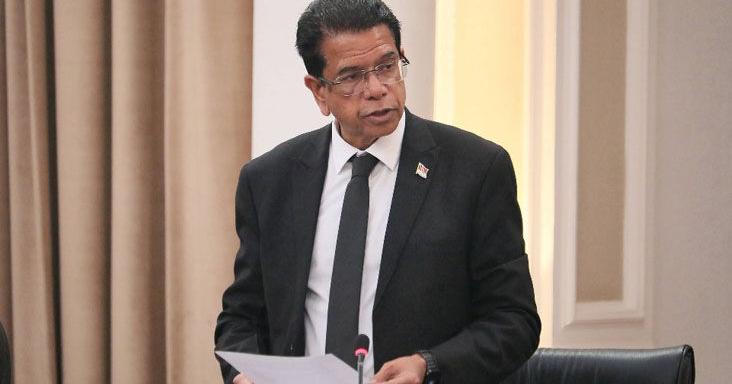
    During a recent parliamentary sitting held at Port of Spain’s Red House, Trinidad and Tobago’s Education Minister Dr Michael Dowlath has laid out a clear timeline for the disbursement of the widely anticipated 2026 School Supplies and Book Grant, responding to mounting pressure from opposition lawmakers and anxious parents across the country.

    The urgent question that prompted Dowlath’s announcement came from Opposition MP Dr Nyan Gadsby-Dolly, a former education minister who raised growing public alarm over the delayed distribution of the need-based financial assistance ahead of the 2026-2027 academic year, which launched on September 7. Gadsby-Dolly highlighted that thousands of eligible families had yet to access the grant funds meant to offset back-to-school costs, demanding a firm, public deadline for all approved applicants.

    In his official response, Dowlath confirmed that every pre-vetted approved applicant can expect to receive their grant payment no later than Monday, September 21, 2026. He pushed back against criticism of the current administration’s timeline by noting that even under the previous People’s National Movement (PNM) government that Gadsby-Dolly served in, grant distributions were not completed until September 30 in both 2024 and 2025, making the 2026 deadline earlier than the last two cycles of the program.

    The rollout of this year’s grant has faced consistent scrutiny since it launched on September 2, just five days ahead of the first day of school, a timeline that drew sharp criticism from both parents and opposition representatives for being unnecessarily delayed. When pressed by Gadsby-Dolly to share how many grants had already been disbursed as of the parliamentary sitting, Dowlath declined to provide a figure, arguing the question fell outside the scope of the original urgent query she had submitted.

    The grant program offers $1,000 per eligible student at most grade levels, with a adjusted allocation of $500 for Form Two students, a change made to account for existing provisions of textbooks and educational technology for that cohort. This year, the ministry expanded the program to include 20,744 beneficiaries, a net increase of 744 eligible students compared to the 2025 cycle, according to comments Dowlath made to journalists during a recent school tour in southern Trinidad.

    Dowlath also defended the compressed processing timeline this cycle, explaining that official authorization to launch the grant program was only granted in June 2026, giving the ministry just six weeks to verify the more than 45,953 submitted applications, compared to the six-month processing window that was available for the 2024 cycle. A subsequent ministry statement clarified that the entire distribution effort remains within the $20 million budget allocation approved in the 2026 Mid-Year Review, so no additional public funding will be required for the expanded program.

    In a second urgent question brought forward during the same parliamentary sitting, Gadsby-Dolly raised another pressing education issue: a severe bat infestation at St Hilda’s Government Primary School that forced the campus to pause in-person classes shortly after the new term began. Dowlath addressed the outbreak, confirming that campus administrators reported the bat presence on school grounds to the ministry immediately after the start of term, and the ministry has already contracted the National Maintenance Training and Security Company Ltd (MTS) to carry out full remediation.

    Per the current work schedule, pest removal and site clearance work is set to begin on September 12 and wrap up by September 13, clearing the way for the school to fully reopen to all students the following Monday. In the interim, Dowlath noted, school leadership has arranged for Standard Five students to continue their studies remotely: teachers are preparing assignments that parents can pick up and drop off completed work at the school’s guarded entrance booth, ensuring no disruption to student learning while the infestation is resolved.

  • Swaratsingh: CMOH permit removal could unlock millions

    Swaratsingh: CMOH permit removal could unlock millions

    In a landmark move to streamline business operations and stimulate economic growth, Trinidad and Tobago’s House of Representatives has passed the Public Health (Amendment) (No 2) Bill, 2026, which eliminates the routine separate approval requirement from County Medical Officers of Health (CMOH) in the national construction permitting process. The legislation, which received unanimous cross-party support including backing from the opposition, targets long-standing delays that have hampered the country’s construction sector for years.

    Minister of Planning, Economic Affairs and Development Kennedy Swaratsingh, who presented the bill to parliament, laid out extensive data demonstrating how the CMOH approval step had become a major bottleneck in the development approval pipeline. Between 2020 and the time of the debate, more than 7,200 development applications were routed to the CMOH for mandatory review. Official performance data shows that the average processing time for CMOH referrals hit 67 days, far exceeding the official 21-day service target. Only 15% of all applications were completed within the mandated timeline, while 22% took more than three months to resolve. One in every four submissions was sent back to applicants for additional clarification, further extending wait times.

    The backlog hits non-residential construction projects particularly hard, with this category facing an average wait of 93 days just to get CMOH sign-off. Swaratsingh emphasized that this redundant step has become one of the single biggest contributors to costly delays across the entire construction permitting system. Based on conservative estimates, roughly $5.4 billion in annual construction activity passes through the CMOH approval process each year. The cumulative financial impact of these delays is staggering: tied-up capital, deferred investment returns, and cost escalations add up to an average of $100 million in lost value annually, totaling nearly $1 billion in present-day terms over a 10-year period, according to the minister’s calculations.

    Crucially, government officials stressed that the reform does not roll back public health protections. Instead, it eliminates duplicative oversight that already occurs through other established regulatory bodies. “This removes a duplicated approval, not a safeguard,” Swaratsingh clarified during parliamentary debate. Multiple agencies already oversee the various health and safety components of construction projects: the Town and Country Planning Division manages land use, density, and subdivision standards; municipal corporations handle core building permit reviews, inspections, and completion certifications; the Water and Sewerage Authority oversees plumbing, water access, and sewage systems; the Fire Service reviews fire safety and life protection protocols; and the Environmental Management Authority assesses potential environmental impacts. Additionally, licensed architects and engineers carry professional liability for the safety and compliance of the designs they certify. Even with all these existing layers of review, applicants were still required to obtain separate CMOH concurrence, creating unnecessary redundancy.

    The costs of these persistent delays extend far beyond administrative inconvenience, touching every stakeholder in the development process. For developers and lenders, ongoing delays mean accumulating interest on outstanding bridging and construction loans, with some loan commitments expiring before approval is granted. Development teams are forced to retain contractors and professional staff for extended periods, driving up overhead costs. Delays also push up material and tender prices, and can cause purchaser agreements and mortgage approvals to lapse before projects reach completion. For subdivision developments, lengthy hold-ups leave individual lots trapped in the development process, unable to be conveyed, sold, or mortgaged, locking up valuable real estate that could otherwise be put to productive use.

    By eliminating this redundant approval step, the government projects significant widespread economic benefits that will ripple through the national economy. The reform will move forward billions in construction activity that would otherwise be stuck in administrative backlogs. Using standard construction industry economic multipliers, the policy change is expected to bring roughly $1.1 billion in additional construction spending forward into the first year following implementation. This one-time boost will support an estimated $1.8 billion in total national output, equal to 0.5% of the country’s gross domestic product, and sustain 6,000 additional jobs in the near term. In the longer term, the reform is projected to add $40 million in annual GDP and support 300 permanent jobs annually by retaining construction sector investment that would otherwise have been withdrawn due to regulatory barriers.

    The change is part of a broader government initiative to modernize the entire national permitting system and improve the country’s ranking for ease of doing business. Swaratsingh noted that regulatory frameworks that served the country well in past decades no longer meet the needs of a growing modern economy, justifying targeted updates to cut unnecessary red tape.

    Importantly, the legislation preserves full CMOH oversight for developments that carry genuine public health risks. Projects involving food preparation, healthcare facilities, sanitation hazards, on-site water and wastewater disposal, communicable disease control concerns, and other health-sensitive uses will still required full CMOH review. The new framework simply removes overlapping approval for low-risk projects that have already been cleared by other competent agencies, balancing administrative efficiency with robust public health protection.

    After hours of debate, the bill was approved on Tuesday evening with full support from opposition lawmakers, marking a rare moment of cross-party consensus on economic regulatory reform.

  • Barry, Camille spar in House

    Barry, Camille spar in House

    A tense, personal verbal altercation unfolded in Trinidad and Tobago’s Parliament on Thursday, pitting Government Business Leader Barry Padarath against acting Opposition Chief Whip Camille Robinson-Regis over the administration’s bid to delay responses to pending parliamentary questions for an additional 14 days. What began as a procedural disagreement quickly devolved into personal jabs, drawing a formal complaint from the Opposition side and a regulatory intervention from the chamber’s presiding officer before the debate could move forward.

    The confrontation kicked off when Padarath addressed the House of Representatives to formally table the Government’s request for a two-week deferral on three pending oral questions, noting that ministers were ready to respond to six other questions listed on the Order Paper. Following Padarath’s announcement, Robinson-Regis pushed for clarity on the timeline for a backlog of unaddressed written questions, only to learn the Government was seeking a matching two-week delay for those outstanding queries as well.

    Robinson-Regis immediately raised strenuous objections to the request, highlighting that some of the delayed questions had originally been scheduled for official responses as far back as July 24. With the calendar already marking mid-September, she pressed Padarath repeatedly to commit to a firm final timeline for when representatives could expect the missing answers.

    In a dismissive response, Padarath retorted to the chamber’s Deputy Speaker, “It seems the member for Trincity/Maloney is experiencing withdrawal. She knows very well the process for this.” He reaffirmed that the Government would deliver an update on the status of all outstanding questions once the two-week deferral period ended. Unfazed by the dismissal, Robinson-Regis shot back with a cutting personal quip, asking if Padarath was experiencing menopause.

    The Government leader immediately fired back with another personal remark, countering, “Unlike the member for Trincity/Maloney, I don’t need domestic assistance. But what I will tell you… is that the member is fully aware of the process and procedure and therefore please allow that to happen.” He once again restated his commitment that the Government would share a full update within the 14-day window.

    Robinson-Regis promptly filed a formal complaint about Padarath’s disrespectful remarks to Deputy Speaker Dr. Aiyna Ali, asking, “Madam Deputy Speaker, is the member going to be allowed to be disrespectful to us on this side?”

    Ali stepped in to de-escalate the clash, ruling that all relevant questions on the matter had already been put forward and addressed. She urged Robinson-Regis to return to her seat to allow parliamentary proceedings to continue as scheduled. Though Robinson-Regis complied with the ruling, she made her lingering dissatisfaction clear, stating “I am not in agreement with what you just said” before taking her seat.