作者: admin

  • Ensure nation’s schools are safe

    Ensure nation’s schools are safe

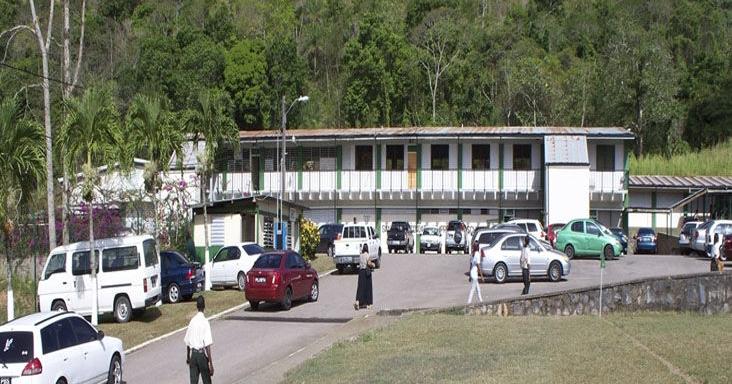
    A brazen daylight robbery at a public secondary school in Trinidad has ignited a mass teacher walkout and thrown longstanding, unaddressed school safety failures into the national spotlight, after an intruder easily breached a broken perimeter fence to rob a classroom teacher last week.

    The incident unfolded around 2 p.m. Thursday at San Juan North Secondary School, when a bare-chested intruder wearing a jersey to conceal his face climbed through gaps in the school’s crumbling perimeter fence. He slipped into an empty classroom — students were between classes at the time, avoiding what experts warn could have been a far deadlier outcome — and confronted the female teacher inside. Ordering her to lie on the classroom floor, the intruder stole her personal valuables and vehicle key, keeping one hand hidden throughout the encounter that left the teacher uncertain whether he was carrying a weapon. After the intruder fled the compound, the teacher locked the classroom door and alerted other staff, who contacted local police, who have since launched an official investigation into the robbery.

    By 1:30 p.m. the following day, fed-up teachers and students had launched a full walkout of the campus to protest the dangerous conditions that allowed the attack to occur. Hours later, a representative from the Trinidad and Tobago Unified Teachers’ Association (TTUTA) submitted formal documentation of the school’s long-running safety hazards to the national Occupational Safety and Health Agency (OSHA), triggering an official workplace safety review that will determine whether staff can be compelled to return to campus.

    Speaking at an on-site press conference following the walkout, TTUTA president Crystal Ashe emphasized that the robbery was not an unpredictable random event — it was a preventable crisis that followed years of ignored warnings from school leadership and teacher representatives. “This teacher could have been injured. This teacher’s life could have been lost,” Ashe told reporters, noting that the intruder’s concealed hand left the victim in crippling fear for her life during the attack.

    Ashe detailed that TTUTA and the school’s principal have been raising alarms about critical infrastructure and security deficits at the 900-student campus for years. A technical inspection team from the National Maintenance Training and Security Company Ltd (MTS) visited the campus in December 2024, conducted a full walkthrough, and formally flagged multiple high-risk areas requiring urgent repairs — including the broken perimeter fence and overgrown vegetation that provided intruders with perfect cover to sneak onto campus. Between that inspection and the day of the robbery, Ashe said, no remedial work was completed at all.

    “She put it on the SINS platform, she wrote to the ministry, she implored them, she highlighted the urgency of it, and you know what took place so far? Nothing,” Ashe said, referring to the principal’s repeated requests for action through the Ministry of Education’s official Schools Infrastructure Management System (SINS) portal. Beyond the perimeter fence and overgrown grounds, other unaddressed hazards included broken sewer lines and unsafe electrical wiring in the school’s now-decommissioned technical-vocational training block.

    Security staffing is also dangerously insufficient at the campus, Ashe argued. Currently, the school is assigned five MTS security officers and two unarmed police officers to cover the large campus and nearly 1,000 total students and staff. Ashe said the current staffing ratio is completely unfit for the size of the compound, leaving huge gaps in patrol coverage that allow intruders to enter undetected. Ashe also noted that even basic grounds maintenance has fallen apart: the San Juan-Laventille Regional Corporation, which is not legally responsible for school grounds maintenance, stepped in to cut overgrown grass because the contracted private vendor had not been paid by the ministry and refused to complete the work.

    Teachers have now formally invoked occupational safety and health regulations to walk off the job, and will not return to campus until OSHA completes a full safety assessment and confirms the environment is safe for work. Ashe warned that the outcome could have been catastrophic if the intruder had entered the classroom while students were present, and called for four immediate actions to resolve the crisis: full repair or replacement of the broken perimeter fence, an increase in MTS security staffing from five to at least eight officers, clearing of all overgrown vegetation on campus, and access to free professional counselling for the traumatized teacher who was robbed. Ashe added that teaching staff have already offered to contribute financially to counselling support for their colleague if the ministry fails to cover the cost.

    Ashe also criticized the absence of any Ministry of Education officials at the school in the immediate aftermath of the attack, urging political leaders to step up and fulfill their legal responsibility to keep students and staff safe. “Do not abdicate your responsibility. Please do what you need to do to ensure that our nation’s schools are safe places of learning,” he said.

    In a statement provided to local outlet *Express* following the incident, Education Minister Dr Michael Dowlath acknowledged the robbery and confirmed that the ministry is aware of the security vulnerabilities at the school. Dowlath stated that the school already has a full complement of assigned MTS security staff, with supervisory oversight from a corporal, and that the robbery has been reported to the Trinidad and Tobago Police Service (TTPS) for ongoing investigation. He added that the ministry’s Health, Safety and Security Services Unit has already completed a preliminary review of the incident and identified the vulnerable section of the rear perimeter fence that the intruder used to access the campus. “This is being addressed as part of the Ministry’s ongoing approach to strengthening security arrangements at the school,” Dowlath said, noting that the ministry has formal protocols for coordinating with school administrators, security staff, and law enforcement to respond to security incidents and adjust safety measures where needed. “The Ministry will continue to work with the relevant stakeholders to strengthen security arrangements where required,” he added.
  • Govt to bring back ZOSO Bill

    Govt to bring back ZOSO Bill

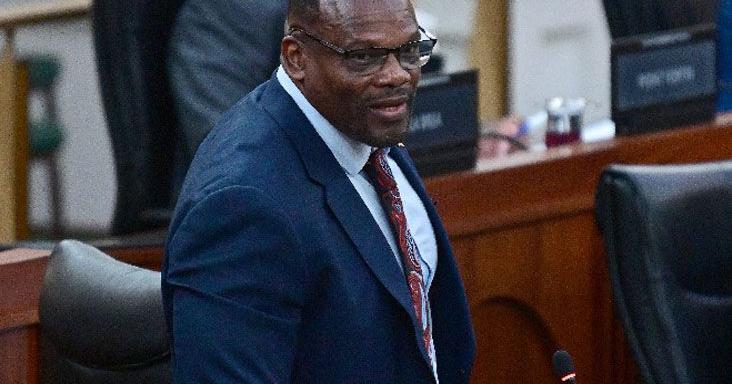
    Trinidad and Tobago’s government is preparing to bring the controversial Zones of Special Operations (ZOSO) legislation back before parliament, following a formal announcement that it will not extend the national state of emergency (SoE) set to expire on September 17, 2026. The confirmation was delivered by Minister of Homeland Security Roger Alexander during an address to the House of Representatives Wednesday night, coming one day after Prime Minister Kamla Persad-Bissessar convened a meeting of the National Security Council—including Police Commissioner Allister Guevarro—at the St Ann’s Diplomatic Centre.

    Alexander framed the impending expiration of the state of emergency as a natural transition point to advance the ZOSO framework, which he positioned as a core component of the administration’s broader multi-pronged anti-crime strategy. Unlike the temporary SoE, the ZOSO legislation creates a permanent statutory mechanism to designate geographically bounded areas as special security zones, where the state can deploy enhanced law enforcement measures paired with targeted community development interventions. “Its importance lies in its combined approach,” Alexander told lawmakers. “ZOSO is not simply about entering a community with law enforcement—it is about security and community development operating hand in hand. It allows the State to concentrate resources in an area affected by serious crime, while also addressing the underlying conditions that criminal organisations exploit.”

    Under the proposed legislation, any area designated as a ZOSO would remain active for a maximum period of 180 days. Within these zones, the framework calls for coordinated, robust action against gang activity, illegal firearms, and violent crime, paired with improved delivery of public services, expanded community outreach, and targeted social programs to address root causes of criminality.

    This reintroduction marks the government’s second attempt to pass the bill in 2026. The Law Reform (Zones of Special Operations) (Special Security and Community Development Measures) Bill was first introduced to the Lower House by Attorney General John Jeremie, SC, on January 16, and passed the following day by a 27-11 vote. However, the legislation required a three-fifths special majority to advance, and it was ultimately defeated in the Senate on January 27 after four days of debate. The governing party holds only 15 of the Senate seats, meaning it needed at least four additional votes from opposition or independent lawmakers to reach the required threshold of 19 votes. When the final vote was called, all 15 government senators supported the bill, while all 14 non-government senators—six from the official opposition and eight independents—voted against it. One independent senator abstained, leaving the bill far short of the required support.

    The first attempt at the legislation drew widespread criticism over concerns that it would grant overly broad powers to the state to declare special security zones and deploy expanded security resources in local communities. Ahead of the new vote, Alexander pushed back against these concerns, emphasizing that the framework’s dual focus on security and development sets it apart from traditional heavy-handed policing approaches. He also issued a appeal to cross-party lawmakers, urging them to set partisan interests aside when considering the bill. “When that bill returns to this House, every member will have a responsibility to judge it on whether it gives vulnerable communities stronger protection and better State support,” Alexander said. “Public safety should not become a partisan casualty.”

    In addition to announcing the ZOSO reintroduction, Alexander outlined the broader range of investments the administration is making to bolster national security as the country transitions away from the state of emergency. He stressed that the SoE was never positioned as a standalone solution to rising crime, but rather one temporary tool within a long-term national security strategy that includes expanding law enforcement manpower, improving police mobility and public presence, updating outdated security legislation and technology, strengthening border controls, cracking down on human and drug trafficking and cybercrime, and addressing the social and behavioral risk factors that push young people into criminal activity.

    To address longstanding staffing gaps in the country’s protective services, Alexander confirmed that 233 new police recruits are currently completing training and are on track to graduate and enter service soon. “That means more trained officers preparing to serve the people of Trinidad and Tobago,” he said, adding that recruitment efforts will continue long-term, as sustained policing depends on sustained investment in personnel. The Cabinet has also approved a plan to absorb 800 currently serving Special Reserve Police officers into the regular Trinidad and Tobago Police Service (TTPS). Alexander noted that these officers already bring years of frontline experience to the force, and their absorption will close critical manpower gaps, boost divisional operational capacity, and add more personnel for patrols, criminal investigations, community policing initiatives, and specialist operations.

    The expansion of protective services extends beyond law enforcement, Alexander added. Prison Service recruitment and training is also being accelerated: 250 new prison recruits entered training by July this year, as part of a planned target to recruit 800 new full-time prison officers by 2027. “We are rebuilding the front line across the protective services,” he said.

    To improve public access to visible security, Alexander also announced that six joint mobile units staffed by police and Defence Force personnel have already been positioned across the country and will begin operational duties in the near future. Another 24 units will be deployed to strategic locations across Trinidad and Tobago based on ongoing operational assessments and input from local communities on their security needs. “Visible security must not remain concentrated in offices and compounds. It must be present where people live, work, travel, study, and conduct business,” Alexander said. “We are taking security closer to the people.”

  • Hete zaterdag met kans op wat regen

    Hete zaterdag met kans op wat regen

    Suriname’s national weather forecast for the day, issued in the early hours of September 12, paints a picture of sweltering humid conditions through the morning and midday, followed by a high probability of intense afternoon and evening thunderstorms.

    In the capital city of Paramaribo, early morning temperatures will hover between 22 and 25 degrees Celsius, with partial cloud cover covering parts of the sky. While conditions remain mild before full sunrise, temperatures are set to climb rapidly once the sun clears the horizon. In inland districts including Brokopondo and Sipaliwini, early morning readings will be slightly cooler, sitting around 20 degrees Celsius, in line with typical regional temperature patterns.

    By midday, maximum temperatures across the country are forecast to reach approximately 36 degrees Celsius. However, the actual experienced temperature will be even higher than this reading, driven by Suriname’s persistently high atmospheric humidity. The thick, moisture-saturated air will feel heavy, leaving many residents struggling with uncomfortable breathing conditions as the heat builds.

    Winds will remain light through the early part of the day, blowing primarily from the east or southeast at speeds below force 3 on the Beaufort scale. Even the gentle breeze expected will offer little relief from the oppressive humidity, as the moving air itself will remain warm.

    Most of the morning will bring a mix of sunshine and broken cloud, giving intermittent periods of clear warm skies. But cloud cover will begin to build steadily from mid-afternoon onward. Meteorologists project a substantial chance of scattered rain showers and thunderstorms developing through the afternoon and extending into the evening, with some forecasting models putting the probability of precipitation at over 80 percent.

    These storms are expected to arrive suddenly, bringing intense downpours that can catch residents off guard. During active thunderstorms, wind speeds will pick up temporarily, accompanied by frequent lightning and thunder.

    Rainfall is forecast to gradually taper off as evening approaches, though isolated showers may still persist in some regions through the night. Overnight temperatures will drop to around 24 degrees Celsius, but high humidity will remain locked in the air, meaning conditions will not feel genuinely cool. Instead, residents will still face a clammy, oppressive warm haze through the overnight hours.

  • CPL: Green, de Kock put Tridents within sight of playoffs

    CPL: Green, de Kock put Tridents within sight of playoffs

    BRIDGETOWN, Barbados – In a high-stakes Caribbean Premier League (CPL) clash at Kensington Oval on Thursday, South African stars Chris Green and Quinton de Kock delivered a pair of match-defining performances that guided the Barbados Tridents to a tense four-wicket victory over the St Kitts and Nevis Patriots, putting the Tridents one win away from securing a playoff spot.

    Tridents captain Green won the toss and made the call to send the Patriots into bat first, a decision that paid off spectacularly as the fast-bowler tore through the opposition’s top order to leave them reeling early. Green dismissed Johnson Charles for a golden duck with just the second ball of the match, and Daniel Sams followed up by removing Kyle Mayers for another duck, handing the Patriots a disastrous 0/2 start within the first two overs.

    By the seventh over, Green had claimed three more top-order wickets: he bowled Andre Fletcher for four, had Alick Athanaze caught for 16, and trapped Dasun Shanaka leg before wicket for six. A collapse followed, when Gudakesh Motie removed Jason Holder just two balls after Shanaka’s dismissal, dropping the Patriots to 51/6 deep into their innings. Only a counterattacking 25-ball 45 from Wanindu Hasaranga rescued the side from a sub-100 total, allowing them to reach a below-par 118 all out in 20 overs. Green finished with stellar figures of 4 wickets for 20 runs, with Sams and Motie chipping in with two wickets apiece to wrap up the Patriots innings.

    Chasing a modest required run rate of under six per over, the Tridents suffered an early collapse of their own that put their victory chase in jeopardy. Jason Holder, the Patriots’ spearhead, removed opener Brandon King for a duck with the third ball of the Tridents innings, then Rivaldo Clarke edged an unplayable outswinger behind to the wicketkeeper three balls later, leaving the home side tottering at 4/2. When Zachary Carter fell to Hasaranga for 16 after hitting two early boundaries, the Tridents were 27/3 and in a precarious position, with their playoff hopes hanging in the balance.

    That was when veteran wicketkeeper-batter Quinton de Kock stepped up to steer the side home. Playing with calmness and accumulated experience, de Kock put together two crucial partnership that turned the tide of the match: he added 38 runs for the fourth wicket with Shadrack Descarte, then built a 39-run fifth-wicket stand with Sherfane Rutherford, who contributed 23 valuable runs to the chase. De Kock remained unbeaten on 44 off 43 balls, and the Tridents reached the target of 121 for the loss of six wickets with 12 balls still to spare, when Daniel Sams hit a winning six off Nivan Bidaisee to seal the four-wicket win.

    The result brings drastically different outcomes for the two sides. For the Patriots, the defeat means they have been eliminated from playoff contention, extending their drought to five consecutive seasons without a postseason appearance. For the Tridents, who sat at the bottom of the table just two matches ago, the win lifts them into the fourth and final playoff spot on eight points, with two remaining group stage matches against the Jamaica Kingsmen and Guyana Amazon Warriors. One more win will lock in their top-four spot, but two losses could see them knocked out of the postseason race on net run rate.

  • Venezolaanse vissersboten krijgen na 19 jaren weer juridische basis

    Venezolaanse vissersboten krijgen na 19 jaren weer juridische basis

    After nearly two decades of operational ambiguity, Suriname and Venezuela have formally renewed their bilateral fisheries agreement, closing a long-standing legal gap that had threatened Suriname’s international seafood export access. The original 2007 agreement expired and was never updated, leaving more than 200 Venezuelan fishing vessels that have operated consistently in Suriname’s Atlantic waters without a formal bilateral regulatory framework.

    Confusion over the terms of the renewed deal spread late last week after Venezuela’s acting president Delcy Rodríguez issued an official statement following a meeting with Suriname’s president Jennifer Simons. Rodríguez claimed that 200 new fishing permits would be granted to Venezuelan vessels from the states of Nueva Esparta and Sucre to operate in a designated Atlantic corridor under Surinamese oversight. This wording led to widespread misunderstanding that Suriname would open its waters to 200 additional previously-unauthorized fishing boats.

    Parveen Amritpersad, Director of Suriname’s Fisheries Department, clarified the details in an interview with local outlet Starnieuws, stressing that no new vessels are being admitted to Surinamese waters. “This is not an expansion of foreign fishing access – we are simply formalizing the legal status of an existing fleet that has operated here for years,” Amritpersad explained. According to the Surinamese Ministry of Agriculture, Livestock and Fisheries (LVV), the renewal only updates the expired permits issued under the 2004 framework for the same group of vessels that have fished in the region consistently.

    For years after the original 2007 agreement lapsed, Venezuelan vessels continued to operate through a workaround: permits were issued to Surinamese seafood processing companies under national domestic regulations, and those companies then held working contracts with the Venezuelan fishing fleets. But this structure failed to meet international requirements, which mandate that foreign-flagged fishing vessels operate under a valid bilateral government-to-government agreement. Without this formal basis, Suriname risked sanctions on its seafood exports.

    The European Union had repeatedly flagged this gap to successive Surinamese governments, including it in official recommendations as a issue that required urgent correction to address unreported and unregulated (IUU) fishing. Negotiations on renewal had stalled for years, in part due to political hold-ups on the Venezuelan side, but pressure from the EU accelerated finalization of the updated agreement.

    The new legal framework is critical to protecting Suriname’s key seafood export sector. Suriname is currently in ongoing talks with the European Commission to demonstrate its progress in combating IUU fishing, and international buyers now require strict proof that all fish caught for export operates under a valid regulatory regime with full traceability. This requirement extends to exports to the United States, where market access rules for seafood have tightened significantly in recent years.

    Under the terms of the renewed agreement, all participating Venezuelan vessels must comply with Suriname’s permit rules, including a requirement to land all catches at Surinamese ports for processing by local companies. Two major Surinamese processors, Deep Sea and Caribbean Seafood, already maintain long-term working relationships with the Venezuelan fleets, and all catches are required to be landed at the CEVIHAS port facility before processing and export.

  • Hellings opnieuw aan roer OWOS na grimmige verkiezingsstrijd

    Hellings opnieuw aan roer OWOS na grimmige verkiezingsstrijd

    Suriname’s largest energy sector trade union, the Ogane Workers Organisation Suriname (OWOS), has confirmed that incumbent president Marciano Hellings and his “Renewable” faction have won a decisive victory in long-awaited internal union elections, capping a bitterly contested campaign that saw legal battles and a pre-election shooting that left one person injured.

    Final vote counts released Thursday put Hellings’ ticket far ahead of the challenger faction Bondru, with 586 votes cast for Renewable compared to just 325 for Bondru. Even before ballots from the outlying districts of Nickerie, Coronie and Wageningen were processed, partial counting showed Hellings held an unassailable lead of more than 80% of counted votes, leaving no doubt about the final outcome. In a post-election statement, Hellings framed the result as a clear, unambiguous choice by union members to retain his leadership.

    The lead-up to the vote was exceptionally tense, with multiple legal clashes between the two factions filed in court ahead of polling day. Tensions rose even higher just before voting opened when a shooting incident left one person wounded, deepening divisions between the two camps. Following the result, Bondru representatives have suggested that the shooting played a major role in their election defeat, claiming Hellings leveraged the incident in media coverage to falsely imply Bondru was linked to the attack, swaying last-minute voter sentiment.

    Hellings has flatly rejected these accusations, noting that the challenger has provided no evidence to back up their claims. He argued that union members had already signaled widespread opposition to Bondru’s platform long before the shooting occurred. The incumbent framed the election result as a rejection of what he described as deliberate attempts to sow division within the union ranks.

    Bondru also pointed to an unusual quirk of the final count: the faction needed the support of at least 20% of the union’s membership just to qualify as a candidate in the election, yet the final result showed even some members who had initially backed Bondru’s candidacy ultimately did not vote for the ticket. Despite the narrow margin and contentious campaign, however, Bondru has confirmed it will not contest the result through the courts, breaking the pattern of pre-election legal clashes. The faction says it will instead await the outcome of an ongoing police investigation into the pre-election shooting to clarify what exactly occurred, and will not make unsubstantiated accusations against the winning side.

    In a conciliatory post-defeat statement, Bondru representatives emphasized that all members of both factions are colleagues at state-owned energy utility Energie Bedrijven Suriname (EBS), and will need to continue working alongside one another going forward. The faction even noted that the hard-fought campaign carried a silver lining: it allowed team members to gain a clearer understanding of one another’s strengths, leaving the door open to future collaboration within the union structure.

    For his part, Hellings says his top priority now is healing the deep divisions opened up by the election campaign. He warned that fragmentation weakens the union’s bargaining power, and expressed personal regret over the rift with Bondru members, many of whom previously worked alongside him in union leadership. The newly re-elected administration’s immediate policy focus will be wrapping up ongoing collective bargaining agreement negotiations, which have dragged on longer than expected heading into September. After those talks conclude, the union will turn its attention to resolving the long-stalled issue of implementing a new salary structure for energy workers, a reform that Hellings says can no longer be delayed.

    Members of the winning Renewable faction have echoed calls for reconciliation, acknowledging that harsh words and difficult moments marked the campaign, but arguing that it is time to close that chapter and refocus on the core mission of advocating for worker interests. A senior Renewable board member also reaffirmed the union’s commitment to maintaining a clear separation between union leadership and EBS corporate management, stating: “No management will sit in the union’s chair, and the union will not sit in management’s chair.”

    In a final gesture of goodwill, Bondru officially congratulated Hellings and the incumbent leadership on their victory, and confirmed the faction accepts and respects the will of the union membership.

  • Rodríguez vertrekt na tien overeenkomsten en afspraken

    Rodríguez vertrekt na tien overeenkomsten en afspraken

    Venezuela’s interim president Delcy Rodríguez has wrapped up an official one-day working visit to Suriname, returning to Caracas on Friday evening after a trip that has deepened ties between the two South American nations. Invited by Suriname’s president Jennifer Simons, Rodríguez and her delegation arrived in Paramaribo, Suriname’s capital, on Thursday evening, kicking off two days of diplomatic engagement.

    On Friday morning, Rodríguez received a formal ceremonial welcome at the Presidential Palace, where the two heads of state and their respective delegations held in-depth bilateral discussions covering a wide range of shared priority areas. By the end of the talks, the two sides had signed nine binding cooperation agreements and one joint statement, laying out a clear roadmap for expanded collaboration across multiple key sectors. The pacts cover agriculture and food security, fisheries and aquaculture, commercial aviation, tourism, oil and gas development, higher education, and specialized professional training.

    One of the most tangible outcomes of the visit centers on the fisheries sector. Rodríguez announced that 200 Venezuelan fishermen from the coastal states of Nueva Esparta and Sucre will be granted official permits to operate in an Atlantic fishing corridor designated and made available by the Surinamese government. Beyond fisheries, the two sides also reached agreements to launch new commercial air routes between the two countries and partner up to advance development of their shared oil and gas industries.

    During the negotiations, officials also addressed an ongoing legal matter involving Venezuela’s state-owned oil giant PDVSA. The issue centers on a third-party execution attachment placed on PDVSA assets located in Suriname, a dispute linked to the Petrocaribe regional energy compensation mechanism. As of the conclusion of Rodríguez’s visit, legal proceedings on this matter are still ongoing, with both sides confirming they will continue diplomatic engagement to find a resolution.

    In a forward-looking proposal, Suriname’s president Simons put forward a plan to convene meetings of the Suriname-Venezuela Political Consultation Mechanism and the Bilateral Joint Commission in the first half of 2027. These established bilateral frameworks are designed to flesh out technical details and drive progress on practical cooperation initiatives outlined during this latest summit.

    The official portion of Rodríguez’s visit concluded with a wreath-laying ceremony at the monument of Simón Bolívar, the iconic Venezuelan independence leader, located on Paramaribo’s Central Church Square. Following the ceremony, Simons hosted an official luncheon for Rodríguez and her entire delegation.

    Speaking at the conclusion of the visit, Rodríguez emphasized that both nations must now move forward with implementing the newly signed agreements to strengthen commercial integration and deepen long-standing bilateral ties. She also extended a formal reciprocal invitation to President Simons to visit Venezuela at a mutually convenient future date, opening the door for continued high-level diplomatic engagement between the two neighbors.

  • Is Government Shutting Out Its Financial Watchdogs?

    Is Government Shutting Out Its Financial Watchdogs?

    A heated conflict has erupted between Belize’s Public Service Union (PSU) and the Briceno administration over new restrictions on public financial officers’ access to the government’s core financial management platform, reigniting debates over government transparency and accountability amid an ongoing investigation into high-level public fund misconduct.

    For over two decades, the SmartStream system has functioned as the central digital infrastructure for tracking and managing all public sector spending across Belize’s government ministries. Under the newly implemented policy, however, financial officers are only permitted to view transactions within their own assigned departments, a sharp reversal from the previous framework that allowed cross-ministry read-only access for oversight purposes. The PSU has warned that this change directly weakens the ability of frontline financial staff to detect misappropriation, questionable spending, and corrupt practices.

    The controversy comes on the heels of the so-called “Mira Millions” leaks, which exposed millions of dollars in suspicious split payments and alleged conflicts of interest at Belize’s Ministry of Defense – claims that are still undergoing formal audit. PSU President Dean Flowers argues the new access limits come at a deeply suspicious time, suggesting the administration may be moving to block further exposure of wrongdoing. He emphasized that previous cross-ministry access allowed responsible financial officers to bring corrupt behavior by senior ministry officials to light for the Belizean public.

    Flowers pointed out that the restriction directly contradicts the Briceno administration’s pre-office pledges to deliver greater transparency, strengthen the Auditor General’s office, and properly staff the Integrity Commission to pursue corrupt elected officials. “This is what we are paying these people for, to mismanage and to hide how they are enriching themselves and their families,” Flowers said in a scathing rebuke.

    The union also highlighted the stark hypocrisy of the administration’s actions: while officials have claimed to advance long-promised whistleblower protection legislation, they have simultaneously stripped the very access that allows public servants to uncover misconduct. The whistleblower bill has been stalled in the legislature since 2021, a delay that Union Senator Glenfield Dennison publicly called out just weeks ago.

    Dennison challenged ruling party senators to advance the long-delayed bill, noting that the current targeting of the officials who leaked the Mira Millions documents is exactly the kind of abuse that whistleblower protections are meant to prevent. “Yo sih how they are victimizing or want to victimize the people that leaked the screenshot on the Mira Millions, that is what that is there to protect. So lets get that out in the next ninety days. I am ready to debate that in the Senate. Senator Chanona you ready to debate that? So let us get the whistleblowers bill,” Dennison stated.

    While minor progress on the bill has been made since Dennison’s remarks, Flowers remains deeply skeptical that the change will result in meaningful reform. He called out the administration’s contradictory actions: just as officials requested final input from labor groups on the whistleblower legislation ahead of a House vote, they implemented the SmartStream access restrictions. “How hypocritical can these people be. These people are sick, the only thing that comes to my mind is, sick puppy,” Flowers said.

    As the PSU continues to push for the reversal of the access restrictions and urgent progress on accountability reforms, a core question hangs over the dispute: will the Briceno administration treat open access to financial information as a critical safeguard against corruption, or as a threat to be contained?

  • PSU Accuses Government of Being Behind Attack Ads

    PSU Accuses Government of Being Behind Attack Ads

    A fiery political dispute has erupted in Belize just days after a high-profile social media ad targeted Senator Glenfield Dennison, a public officer and member of the country’s Public Service Union (PSU). PSU President Dean Flowers has leveled a serious allegation against the ruling Briceno administration: claiming the government is diverting public taxpayer funds to run coordinated attack advertisements aimed at discrediting public servants who speak out against official government policies.

    In comments made public following the appearance of the ad targeting Dennison, Flowers framed the attack as part of a broader pattern of intimidation by the administration against critical public officials. He opened his remarks by welcoming the senator to what he sardonically called an exclusive “club” of public servants who have faced government-backed smear campaigns, noting that targeted attacks are typically a sign a public official is doing meaningful work that challenges the status quo.

    “Nobody stones an empty mango tree,” Flowers said, illustrating that aggressive pushback from the government only comes when an official’s work poses a legitimate challenge to its agenda. He went on to highlight the staggering scale of public funds the government controls — totaling $1.9 billion — arguing that it is inappropriate, if not unethical, for those public resources to be used to target a relatively low-profile public servant who is simply exercising his right to dissent.

    Flowers added that this pattern of attacks did not reopen old wounds for the union, because challenging the government and speaking truth to the Belizean public is at the core of the PSU’s mandate. “This is what we do. We tell the truth and try to inform and educate the Belizean people,” he stated. Flowers called for an immediate end to the misleading attack ads, noting that while the government can only sustain these smears for a limited time, the union’s work to advance transparency and public accountability will continue indefinitely.

    He closed his remarks with a blunt rebuke of those who amplify the ads: “And only idiots, I want you to air this, only idiots and fools support those ads and add commentary to them.”

    This report is adapted from a transcript of an evening television newscast, with original Kriol language commentary rendered to text using a standardized spelling system.

  • Flowers Says Government’s Revenue Authority Argument Is Collapsing

    Flowers Says Government’s Revenue Authority Argument Is Collapsing

    A high-stakes legislative showdown over Belize’s deeply divisive Revenue Authority Bill has taken an unexpected turn, after the proposed legislation failed to reach the Senate floor for its scheduled debate on Tuesday, September 11, 2026. Dean Flowers, president of the Public Service Union (PSU) – one of the bill’s most vocal opponents – has broken his silence on the sudden delay, leveling sharp criticism at the leadership of the Belize Tax Services Department and the Ministry of Finance, while claiming the government’s case for the semi-autonomous body has completely unraveled.

    Flowers, who has led sustained pushback against the proposed reform, did not offer a definitive explanation for why the bill was pulled from Tuesday’s Senate agenda. However, he launched a blistering attack on the credibility of the policy’s backers, arguing that their repeated justifications for creating the Semi-Autonomous Revenue Authority are riddled with contradictions and factual inaccuracies.

    “What I can say to you is that the Public Service Union has put out plainly that the leadership of the Belize Tax Service Department and the leadership of the Ministry Finance don’t know what the hell they are doing and they are contradicting themselves every time they make a statement,” Flowers said in a public address following the delay. “We have been able to take the law, put it beside what they are saying, take their figures put it beside what they are proposing and we have been able to show that these people are misguided and they have misinformed Cabinet that supported that bill.”

    Flowers issued a direct public challenge to the director of the Belize Tax Services Department, demanding a formal response to critical correspondence the PSU has released outlining its objections to the bill. He doubled down on his core claim that the government has exhausted all attempts to defend the proposal, which supporters frame as a reform to boost administrative efficiency in Belize’s tax collection system.

    “They have ran out of those argument, completely ran out of arguments to justify what they cannot justify, what is unjustifiable,” Flowers added. “It cannot be that there will be greater efficiency in the Belize Tax Services Department.”

    This report is a transcribed excerpt from an evening television news broadcast, with all speaker remarks preserved as delivered, including standardized spelling for phrases originally spoken in Kriol.