作者: admin

  • Seales leads Windies to historic Pakistan triumph

    Seales leads Windies to historic Pakistan triumph

    On a memorable Tuesday at Trinidad’s Brian Lara Cricket Academy, young fast bowler Jayden Seales delivered a career-defining performance, claiming his fourth Test five-wicket haul to lock in a historic 90-run victory for the West Indies over Pakistan in the opening match of their series. What unfolded across four days of fluctuating momentum ended with a dominant finish from the home side, capping off a contest that kept cricket fans on the edge of their seats from the first over to the last.

    The day of decision opened with West Indies in a precarious position, resuming at 126 for seven in their second innings having built a narrow overnight advantage. Tail-end batters Kemar Roach and Shamar Joseph extended their stubborn partnership to 61 runs, adding 28 crucial runs to push the home side closer to a competitive lead. After Mohammad Ali removed Joseph for 38, late contributions from Roach, Jomel Warrican and Seales himself pushed West Indies’ overall lead past the 200-run mark, setting Pakistan a 211-run victory target with a day and a half of play remaining. Pakistan’s pace spearhead Mohammad Abbas then claimed the final two wickets of Roach and Warrican to pick up his seventh five-wicket haul in Tests, finishing with figures of 5-22 from 15.5 overs, leaving the visitors with a realistic chance of chasing down the required total to take an early series lead.

    But Pakistan’s chase got off to a disastrous start almost as soon as it began. In just the third over, with five runs already on the board, the consistently reliable Roach sent down a searing delivery that brushed Imam-ul-Haq’s glove on the way through to the wicketkeeper, handing West Indies the first breakthrough. Azan Awais followed back to the pavilion shortly after, chasing a wide half-volley from Seales and edging a simple catch to the keeper, leaving Pakistan at 21 for two. Seales struck again in his very next over, trapping Salman Agha lbw for a duck to plunge the visitors into crisis at 25 for three, with Pakistan limping into the lunch break at 28 for three still needing 183 runs to win.

    After the interval, Pakistan’s captain Babar Azam and wicketkeeper-batter Mohammad Rizwan showed brief glimpses of fight, with Rizwan hitting two consecutive boundaries off Seales and Azam finding the midwicket rope off Joseph. But the momentum shifted back to West Indies almost instantly when medium pacer Justin Greaves, the hero of the first innings with the ball, produced two quick strikes. He bowled Rizwan for 11 in his first over of the spell, then trapped Aamer Jamal lbw for a duck just one over later, dropping Pakistan to 50 for five. The situation worsened three runs later when Ali Usman chased a full delivery from Roach and edged a catch to Greaves at second slip, reducing the visitors to 7/6 wickets down.

    Shan Masood, who hit a century in Pakistan’s first innings but batted down the order due to a finger injury, managed only three runs before driving loosely at Seales straight into the hands of Joseph at backward point, all but ending any remote hope of a Pakistan recovery. By the time Seales knocked over Khurram Shahzad’s middle stump and Joseph caught Mohammad Ali at second slip, Pakistan had slumped to 71 for nine, with the match seemingly destined to end before the tea break.

    But a stubborn late partnership between Abbas and Azan frustrated West Indies, with Abbas hitting four entertaining boundaries and Azam bringing up his 32nd Test half-century, carrying Pakistan to 114 for nine at the tea break. Their 49-run stand for the final wicket prolonged the contest, but it could not prevent the inevitable. Shortly after tea, Seales fittingly finished the match by trapping Abbas lbw for 23 off 33 balls, wrapping up Pakistan’s innings at 120 all out in 40.2 overs. Seales finished with stunning match-winning figures of 5-20 from 14.2 testing overs, securing the 90-run win and extending Pakistan’s miserable away form to eight consecutive Test defeats on the road.

    Greaves, who claimed seven wickets across the two Pakistan innings, was named Player-of-the-Match for his all-contributions with the ball, finishing with 2-12 in the second innings. Roach also chipped in with two key wickets to end with 2-27 for the match, rounding out a dominant collective bowling performance from the West Indies side.

  • Lifeguard Dies After Medical Emergency at Fort James Beach

    Lifeguard Dies After Medical Emergency at Fort James Beach

    A quiet day of coastal safety patrols at Antigua’s popular Fort James Beach turned into an unthinkable tragedy this week, when a young lifeguard suffered an unexpected life-threatening medical incident while working in the water and later succumbed to his condition.

    Witnesses and fellow first responders confirm that colleagues on duty spotted the lifeguard showing clear signs of distress almost immediately after he fell ill. Acting swiftly in line with their emergency training, the other lifeguards rushed into the water to retrieve him, pulling him safely onto the sand before beginning cardiopulmonary resuscitation (CPR) and placing an urgent call for professional emergency medical support.

    When Emergency Medical Services crews arrived at the beach, they took over resuscitation efforts and continued advanced life-saving interventions on site. Despite their sustained efforts to stabilize the young lifeguard, he was rushed to the island’s main tertiary care facility, Sir Lester Bird Medical Centre, where medical providers later confirmed he had died.

    As of the latest public update, local authorities have not yet released a confirmed cause for the sudden medical emergency, nor have they shared full details on the exact sequence of events that led to the incident. Investigations are ongoing, and official updates are expected to be released to the public as more verified information becomes available.

  • MV Barima Captain and Crew Remanded on Murder Charges

    MV Barima Captain and Crew Remanded on Murder Charges

    In a high-profile development following one of Guyana’s deadliest maritime disasters in recent years, three crew members of the capsized ferry MV Barima — including its captain — have been formally charged with murder and remanded into federal custody.

    The accused, identified as 40-year-old captain Kevin “KP” Price, 42-year-old chief mate Rondell Dwayne Roberts, and 33-year-old goods superintendent Delon Granderson, made their first court appearance on July 28, 2026 before Chief Magistrate Judy Latchman in Georgetown. During the hearing, the murder charges were formally read to the three men. Per standard legal procedure in Guyana for serious open hearings, the defendants were not required to enter pleas at this initial stage, and none of the three secured legal representation by the time of the appearance.

    The case has been adjourned until August 3 to allow for further legal preparation and proceedings. Guyana Police Force officials confirmed that the murder charges were filed only after receiving formal legal guidance from the country’s Director of Public Prosecutions, a step that comes amid widespread public outcry over the high death toll of the incident.

    The MV Barima capsized and sank on July 18 while en route from the capital of Georgetown to Port Kaituma, a remote river port in northwest Guyana. Complicating early recovery efforts and casualty counting, the vessel was not operating with an official passenger manifest, meaning authorities have had to rely on witness accounts and missing person reports to estimate the total number of people on board. Current official estimates place the total number of passengers and crew at 179. As of the latest update, Guyanese rescue authorities have confirmed that 76 people were pulled alive from the Atlantic waters, 73 bodies have been recovered and their deaths formally confirmed, and 30 passengers and crew remain unaccounted for, presumed dead.

    In a startling revelation that has amplified public anger over the disaster, Guyanese authorities confirmed that two of the three accused crew members — including Captain Price — tested positive for marijuana following toxicology tests conducted after the sinking. The presence of controlled substances in the crew’s systems has raised serious questions about operational negligence and vessel safety protocols ahead of the fatal voyage.

    In response to widespread calls for a transparent, independent investigation into the incident, Guyanese Prime Minister Irfaan Ali has established a five-person international investigative commission made up of leading legal and maritime safety experts. The commission will be chaired by Godfrey Philip Smith, a prominent maritime specialist from Belize, with a mandate to uncover the root causes of the disaster and recommend changes to Guyana’s maritime regulatory framework to prevent similar tragedies.

    Currently, the wreckage of the MV Barima rests approximately 50 feet below the surface of the Atlantic Ocean off Guyana’s northwest coast. Maritime officials have stated that salvage operations are not economically or logistically feasible at this time, and it is highly unlikely that the vessel will be raised from the seabed.

  • ‘Political Finance Reform Blueprint Is Ready’. Will Government Follow It?

    ‘Political Finance Reform Blueprint Is Ready’. Will Government Follow It?

    Belize has taken a major step toward addressing the long-unresolved issue of unregulated political and campaign financing, with a local policy think tank releasing a comprehensive road map for reform – but the biggest question now hangs over whether the nation’s elected leaders will choose to act on the proposal.

    The Belize Policy Research Institute (BELPRI) recently published its landmark report detailing a clear framework for enacting the campaign finance legislation that has been debated for decades across Belize’s political landscape. In an interview discussing the report, BELPRI Executive Director Dr. Dylan Vernon noted that the hardest challenge facing reform is not drafting solid, enforceable legislation, but building political buy-in from the leaders who stand to benefit from the current unregulated system.

    Belize’s Prime Minister John Briceño has previously cast doubt on the timeline for reform, saying that overhauling political finance rules is such a massive undertaking that it is unlikely to be completed during his current administration’s term. But Dr. Vernon has pushed back against this narrative, arguing that difficulty is no excuse for inaction.

    “We have to acknowledge that it’s not going to be easy. This is difficult. The Prime Minister is right in that way. But, because it’s difficult, it does not mean in any way or form that we should not try and we should not at least try to mitigate some of the worst implications and negative results of money in politics,” Dr. Vernon stated.

    The think tank’s report is framed as a usable blueprint that the government and political parties can leverage to move the reform process forward, if they have the willingness to do so. For Dr. Vernon, the core test of reform is not working out logistics of enforcement – a common excuse cited by politicians to delay action – but convincing sitting politicians that the current system that benefits them personally ultimately fails the broader public.

    For years, politicians across both of Belize’s major political parties have gained advantages from the lack of formal regulation of political financing, keeping the status quo firmly in place. “Changing it will not be easy. And I think that’s the key hurdle to overcome. The excuses about lack of enforcement and how difficult it is, I think we’re able to get over those. The key one would be convincing them that the status quo isn’t working,” Dr. Vernon explained.

    Despite the steep political barriers, Dr. Vernon emphasized that even incremental reform introducing basic oversight of campaign finance would deliver long-term benefits for both the political class and the general Belizean public, making the effort to push for change worthwhile.

  • Trijana Meeting: duurzame ontwikkeling begint bij inheems leiderschap

    Trijana Meeting: duurzame ontwikkeling begint bij inheems leiderschap

    Indigenous traditional authority figures from South Suriname have outlined a clear vision for the region’s long-term sustainable growth: any meaningful progress must center indigenous governance and build equal, collaborative partnerships between local communities, the national government, and civil society organizations. This position was the core outcome of the 2026 annual Trijana Meeting, held from July 22 to 24 in the remote village of Pelelu Tepu.

    Gathered under the official theme “Collaboration for Sustainable Development and Empowerment of Indigenous Communities in South Suriname,” the meeting brought together representatives from 11 indigenous villages, alongside delegates from multiple government agencies and leading regional conservation and development groups including the Amazon Conservation Team, Conservation International Suriname, Green Growth Suriname, and Wildlife & People Suriname.

    Over three days of deliberation, participants mapped ongoing developments across the region and aligned on shared priorities for South Suriname’s future. Discussions centered on the persistent structural challenges that indigenous communities face, most notably limited access to core public services: basic education, healthcare, reliable transport infrastructure, and other foundational amenities remain out of reach for many residents due to the region’s remote geographic location.

    Crucially, attendees emphasized that traditional indigenous knowledge and established local governance systems provide a robust, proven foundation for sustainable stewardship of South Suriname’s ecologically rich landscapes. The meeting’s agenda balanced two interconnected goals: advancing critical nature conservation efforts and driving inclusive socio-economic progress that improves quality of life for local communities. Participants stressed that future development projects cannot focus solely on building new infrastructure; any initiative must be aligned with the self-identified needs and traditional governance structures of the indigenous communities that call the region home.

    In a closing statement, Granman Jimmy Toeroeman reaffirmed the collective call for an equal partnership model, where the national government commits targeted investment to expand access to basic public services, and civil society organizations deliver customized support that responds directly to community priorities, rather than imposing external agendas. Toeroeman also underscored the urgency of collective action to secure formal legal recognition of indigenous land rights. “To get our fundamental land rights approved, we must stand together as one indigenous people,” he said. “Not as separate tribes, but as a united community.”

  • DPP defends instituting murder charges against MV Barima captain, others

    DPP defends instituting murder charges against MV Barima captain, others

    On Tuesday, 28 July 2026, Guyana’s top prosecutorial official Shalimar Hack, Director of Public Prosecutions (DPP), has stood by the decision to file murder charges against three crew members of the ferry MV Barima, while openly acknowledging the vessel had critical flaws in its navigation and safety infrastructure. The case has sparked sharp debate over the legal grounding of the charges and their potential impact on an upcoming independent public inquiry into the tragedy.

    Hacking explained that the decision to pursue murder charges followed a comprehensive review of available evidence, applicable legal principles, binding precedent from the United Kingdom, Commonwealth legal jurisdictions, the European Court of Human Rights, and broader public policy priorities. Notably, she did not directly address the core legal requirements for a murder conviction: proving criminal intent and malice aforethought against the three accused — 40-year-old captain Kevin Price of Melanie Damishana, East Coast Demerara; 42-year-old chief mate Rondell Dwayne Roberts of Grove Public Road, East Bank Demerara; and 33-year-old goods superintendent Delon Granderson of Fellowship, West Coast Demerara.

    Earlier the same day, defense attorneys Nigel Hughes and Darren Wade publicly raised urgent concerns over what they described as the fundamental weakness of the murder charges. The pair also questioned the timing and motive of the charges ahead of the upcoming Commission of Inquiry (COI), which will be led by a panel of Caribbean and international maritime experts.

    In a public Facebook post, Hughes outlined a key critique: if the three accused are formally charged with murder, they are likely to exercise their right to remain silent during the COI, out of concern that any testimony they give could be used as evidence against them in the subsequent criminal trial. This would leave critical questions about the tragedy unanswered before the inquiry, he argued.

    Hacking pushed back against these concerns, emphasizing that the upcoming independent inquiry established by Guyana’s President will not interfere with the criminal prosecution. She noted that parallel proceedings have functioned successfully in previous high-profile Guyanese cases, including 2018 piracy charges connected to the Berbice incident and fraud charges stemming from the 2020 Regional and General Elections, pointing to precedent for simultaneous processes.

    “Given the unprecedented magnitude of this matter, coupled with public interest factors, the prosecution will be conducted with due consideration of the work of the Commission of Inquiry,” Hack added.

    Under Article 187 of the Constitution of the Cooperative Republic of Guyana, the Office of the Director of Public Prosecutions is an independent body that operates free from direction or control by any other government authority or individual. The DPP holds statutory authority to initiate and oversee criminal proceedings against any person accused of violating Guyanese law, and maintains full control over all such prosecutorial processes.

    In line with these constitutional powers, Hack confirmed that her office conducted a full review of the investigative file compiled by the Guyana Police Force into the MV Barima tragedy, and formally advised law enforcement to file the murder charges that are now the subject of public controversy.

  • Champions League 2026 : Haiti wins against Cuba [3-2]

    Champions League 2026 : Haiti wins against Cuba [3-2]

    On July 28, 2026, at Puebla, Mexico’s Estadio Universitario BUAP, Haiti’s under-20 men’s national team—affectionately known as the Grenadiers—pulled off a dramatic 3-2 win against Cuba’s “Lions of the Caribbean” in their second Group A clash of the 2026 CONCACAF U-20 Championship. The result marked Haiti’s first victory of the tournament, a much-needed confidence boost following a lopsided 3-0 opening defeat to the United States three days prior.

    Heading into the match, Haitian head coach Raul Gonzalez Triana made just one forced change to the starting lineup that faced the U.S. Dieuvens Kenson Resil stepped into central defense to replace Stanley Volcin, who received a red card in the opening round loss. The full starting XI for Haiti featured goalkeeper Carlos Bré of Real Hope FA, captain Arthur Alcimé (Real Hope FA), Marckidens Tanis (AS Capoise), Resil (Mount Pleasant, Jamaica), Miguel Joseph (Exafoot), Ramy Fabilus (Real Hope FA), Clavens Exantus (Violette AC), Franco Célestin (Mount Pleasant), Emerson Left (Mount Pleasant), Shaun A Brun (Tacoma Defiance, U.S.), and Nikolaï Pierre (Orlando City, U.S.). Four second-half substitutions adjusted Haiti’s momentum: Jean Jules replaced Alcimé, Da-Benz Jacquet took Pierre’s spot, and J. Charles replaced Fabilus all in the 62nd minute, while E. Jean came on for Célestin in the 72nd, and K. Romulus replaced Exantus in the 81st.

    Haiti controlled the pace of play from the opening whistle, and they capitalized on their first clear chance in the 16th minute. Miguel Joseph pounced on a messy clearance from Cuba’s goalkeeper to slot home the opening goal, putting the Grenadiers up 1-0. The side extended their lead just 18 minutes later, when Emerson Laissé drew a penalty inside the 18-yard box, and Franco Célestin converted the spot kick to make it 2-0 heading into halftime.

    Cuba fought back hard in the final 10 minutes of regulation, finally breaking through for a goal in the 80th minute through Yankarlos Iglesias to cut the deficit to 2-1. The tight contest delivered even more late drama in second-half stoppage time: Da-Benz Jacquet appeared to put the game out of reach for Haiti with a third goal in the 92nd minute, pushing the score to 3-1. Just 60 seconds later, Cuba’s Robert Zerguera responded with a late goal of his own to make it 3-2, but the final whistle blew before Cuba could find an equalizer, handing all three points to Haiti.

    Following the result, the Group A table sees the U.S. sitting firmly atop the standings with six points from two wins, having not conceded a single goal so far. Haiti and Cuba are tied on three points apiece, with Haiti holding second place on the current tiebreaker after scoring three goals and conceding five, compared to Cuba’s five goals scored and three conceded. El Salvador remains at the bottom of the group with zero points from two losses, having failed to score so far in the tournament.

    Haiti will now turn its attention to its final group stage fixture, scheduled for July 31 against El Salvador. A positive result in that match will see Haiti advance to the tournament’s quarter-final stage, keeping its hopes of qualifying for the 2027 U-20 World Cup alive.

  • St. Jude Hospital misses July target for full commissioning

    St. Jude Hospital misses July target for full commissioning

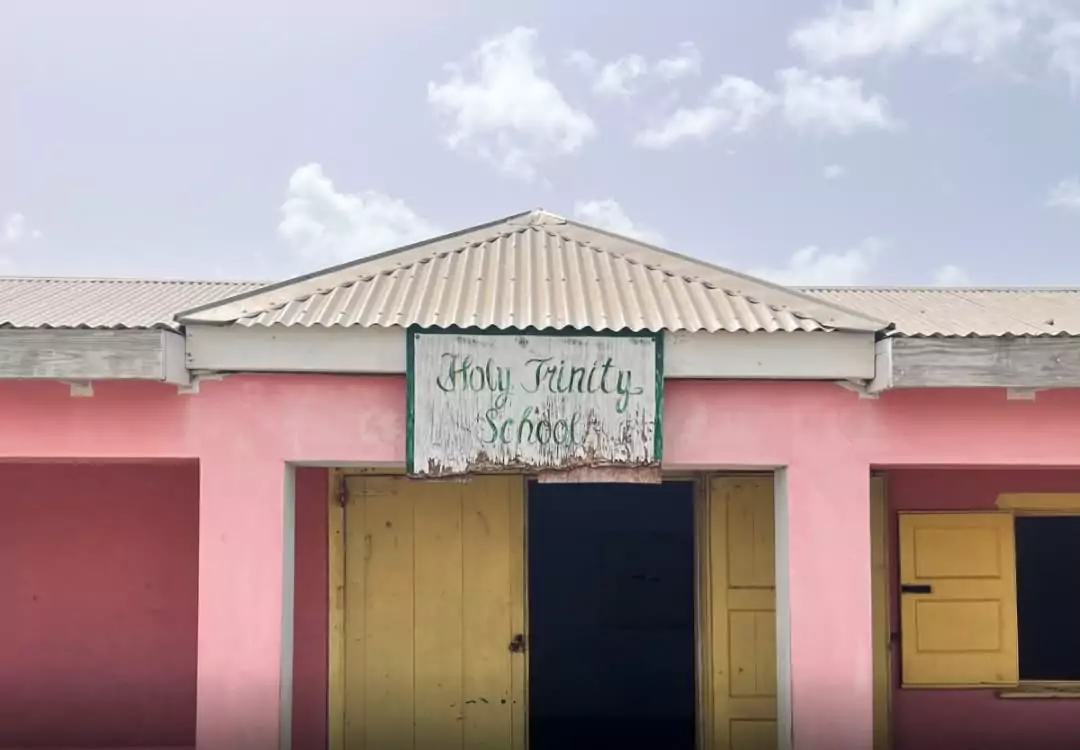
    The long-awaited full opening of Saint Lucia’s rebuilt St. Jude Hospital will not meet its original end-of-July completion target, the nation’s health minister confirmed this week. During Monday’s regular Cabinet press briefing, Health Minister Moses Jn Baptiste announced the delay, noting that on-site construction and pre-opening preparations are still moving forward at the facility’s new location in Augier, Vieux Fort.

    As the calendar approaches the end of July, the full transition of hospital operations to the new site remains incomplete. Jn Baptiste explained that the dedicated commissioning team needs several additional weeks to finish all required checks, emphasizing that the team is working both aggressively and carefully to deliver a fully safe healthcare environment for patients and staff.

    The minister attributed the pushed-back timeline to the need for more in-depth, thorough inspections of specific sections of the new facility. Currently, the commissioning team is collaborating with specialized technical and medical professionals to verify that every critical system meets strict safety and operational standards before full launch. This includes comprehensive testing of core building infrastructure, heating, ventilation and air conditioning (HVAC) networks, medical gas supply systems, medical equipment and safety control mechanisms, digital and information communications technology (ICT) for laboratory services, and radiology department safety protocols.

    In addition to technical checks, the government is also working to fill critical staffing gaps ahead of full opening. Jn Baptiste confirmed that the fully operational hospital will require a total workforce of 721 employees to serve the public. As of the briefing, only 471 staff members had reported for duty at the new site, but recruitment and deployment efforts for the remaining personnel are already underway.

    The government has stressed it will not move forward with a full public opening until every safety, operational and staffing requirement is fully satisfied. “Our aim is to give the people of Saint Lucia the best and safest hospital environment possible,” Jn Baptiste told reporters at the briefing.

    Pre-commissioning work has proceeded in stages, with several support departments already brought online and operational. The physiotherapy unit, kitchen and food services, and on-site laundry facilities are all currently up and running. Most recently, the hospital’s Dialysis Services Department was officially commissioned on Tuesday, July 28, marking the latest milestone in the phased preparation process.

  • BREAKING NEWS: GUILTY VERDICT – Jonathan Scott Lehrer and Robert Thomas Snider

    BREAKING NEWS: GUILTY VERDICT – Jonathan Scott Lehrer and Robert Thomas Snider

    After a high-profile criminal investigation and trial that stretched for more than 18 months, a court has delivered a guilty verdict against two men charged in the brutal killings of prominent Canadian businessman Daniel Langlois and his partner Dominique Marchand.

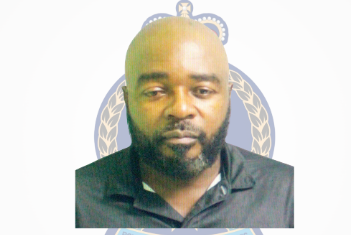
    Jonathan Scott Lehrer and Robert Thomas Snider Jr. were found guilty of two counts of murder in connection with the 2023 deaths of the couple, whose charred bodies were discovered inside a burned-out vehicle near the defendants’ property on December 1 of that year. The image accompanying this reporting shows Lehrer and Snider exiting the local courthouse during proceedings in 2025.

    The case drew international attention due to Langlois’ standing as a pioneer in the digital media and animation industry, and the brutal circumstances of the couple’s deaths. Investigators launched a full forensic inquiry immediately after the discovery of the vehicle and remains, working to piece together the sequence of events that led to the killings. As legal proceedings concluded with this guilty verdict, additional details on sentencing, trial evidence and the motive behind the crime are expected to be released in the coming days.

  • OP-ED: The business of slavery from Africa to the New World, Part 1 – The trader who kept a diary

    OP-ED: The business of slavery from Africa to the New World, Part 1 – The trader who kept a diary

    As we approach Emancipation Day 2026, reflections on the transatlantic slave trade demand more than surface-level commemoration — they demand a clear-eyed examination of the deeply commercial infrastructure that sustained the centuries-long system of human trafficking. This inquiry began for me, a scholar researching the evolution of global financial institutions from antiquity to the modern era during my doctoral studies at the University of Manchester, when I first encountered the hidden business records of the trade in enslaved people. Among these records, one document stands out as a singular and unflinching window into the day-to-day operations of the trade: the diary of Antera Duke.

    Duke, a prominent Efik merchant prince and leader of what was then Duke Town (in present-day Nigeria), kept his daily journal between 1785 and 1788, written in the trade English commonly used along the West African coast. First published in a comprehensive scholarly edition by Oxford University Press in 2010, this diary is the only known surviving day-by-day account of the slave trade written by an African slave trader. What makes it so striking is its unemotional, strictly commercial tone: Duke logs customs duties (called “comey”) collected from European ship captains, records dinners hosted aboard British vessels from Liverpool, details credit disputes and their resolutions, and tracks consignments of enslaved people delivered downriver to waiting buyers. There is no moral hand-wringing, no indication of the horror of the trade being documented — it is, unapologetically, the journal of a businessman running a profitable enterprise.

    Duke’s diary forces a critical, often overlooked question: before enslaved people were sold at auction in Richmond, Virginia, before they were forced to harvest sugar cane in Barbados, before they were packed onto overcrowded transatlantic crossing ships, who ran the upstream commercial business of capturing and selling enslaved people, and what were the terms of that trade? The historical record is uncomfortable on all sides, and it contradicts the common simplified narrative that Europeans directly captured most enslaved people themselves.

    In reality, the harsh disease environment of coastal West Africa earned the region the nickname “the white man’s grave”: roughly half of all newly arrived European settlers and traders died within a year of landing, forcing Europeans to remain on their ships or in isolated coastal forts, relying entirely on local African actors to supply the enslaved people they purchased. The work of capturing, marching, and selling enslaved people at coastal trading points was controlled by West African states and established merchant networks: the Kingdom of Dahomey, which operated the key port of Ouidah under a royal customs monopoly; the Aro trading network of Igboland; and the canoe-house merchant firms of Bonny and Old Calabar, where Duke himself was a leading partner. Enslaved people were acquired through a range of violent systems — warfare, raids, judicial punishment, debt seizure, and kidnapping — before being sold directly to European buyers at coastal trading beaches, where the African supply network and European shipping industry converged.

    This history cannot be softened, but it also cannot be reduced to a single simplistic narrative. The historical archive holds two concurrent truths that must both be acknowledged: many African rulers and merchants profited directly from running the supply side of the trade, but other African leaders recognized the catastrophic damage the trade was inflicting on their communities and spoke out against it centuries before abolition. As early as 1526, Afonso I, the Christian monarch of the Kingdom of Kongo, wrote a formal letter to the King of Portugal protesting that Portuguese-backed traders were seizing his people daily, writing that “our country is being completely depopulated” and begging the Portuguese crown to send priests and religious materials rather than more slave traders and trade goods. This letter survives in official archives to this day. The demand for enslaved people came from European powers across the Atlantic, and that demand transformed and industrialized violence across inland West Africa. Both facts are equally true, and neither negates the other.

    Tracing the flow of money through the trade also reveals how interconnected the early modern global economy already was, built entirely on the exploitation of enslaved people. The price of an enslaved person was calculated in a negotiated “assortment” of goods, valued in standardized trade units like the trade ounce. Contrary to popular myth, these assortments were not made up of cheap trinkets. Economic historian David Richardson’s analysis of more than 90 English slaving voyages found that the highest-value category of goods traded was textiles, most notably handwoven Indian cottons from Gujarat and Bengal. Next came guns produced in Birmingham, with hundreds of thousands of firearms traded annually at the height of the trade. The bundle also included iron bars, distilled spirits like brandy and rum, and cowrie shells harvested in the Maldives and shipped by the ton to West Africa to use as small currency: abolitionist and formerly enslaved author Olaudah Equiano recorded that he himself was sold for 172 cowries. This means a weaver in Bengal, a gunsmith in Birmingham, a shell diver in the Maldives, and an enslaved laborer in the Caribbean were all part of a single interconnected global supply chain, even if they never knew one another existed. As demand for enslaved people outstripped supply through the 18th century, prices rose roughly five-fold along the West African coast, following standard commercial market dynamics.

    Even the transatlantic slave ship itself functioned as a sophisticated financial instrument. A typical English slaving voyage was divided into 64 tradable shares, held not just by wealthy elite merchants, but also by small investors: local shopkeepers, clergymen, even widows who held a single 64th share as a long-term investment. By 1790, outfitting a single slaving voyage out of Bristol cost roughly £8,500, and the full round trip from Europe to Africa to the Americas and back took 12 to 18 months, with profits mostly returning to investors as bills of exchange drawn on London banks. The popular textbook narrative of a neat triangular trade of goods, enslaved people, and sugar is partially a myth; most returns from the voyage came in the form of financial paper, not physical cargo.

    Voyages were fully insured, with premiums totaling roughly 10% of the total outbound cost. The Middle Passage crossing itself was priced at a 4.8% premium, with each enslaved person insured for £30 per head. Insurance policies explicitly excluded coverage for deaths from illness, suicide, or insurrection, unless losses exceeded 10% of the cargo’s total value — a quiet acknowledgment of the constant risk of both disease and rebellion on these voyages. Notably, economic historians who have reconstructed historical underwriting records find that slaving voyages were not unusually risky investments to insure; in fact, insuring a voyage run by the British East India Company cost more than insuring a slaving voyage.

    When the British Parliament first passed regulation of the slave trade in 1788, it regulated the trade purely as a logistical and commercial enterprise. The Dolben’s Act set a legal limit on the number of enslaved people a ship could carry based on its tonnage: the Liverpool ship Brookes, which had previously carried 609 enslaved people in a single voyage, was now legally permitted to carry only 454, with each enslaved man allotted just six feet of length and 16 inches of width of space. The act even included incentive pay: captains received a £100 bonus and surgeons received a £50 bonus if mortality during the crossing fell below 2%.

    Mortality was explicitly treated as a key performance indicator for the trade. Across the entire transatlantic trade, roughly one in every seven enslaved people died during the Middle Passage crossing. Abolitionists quickly exposed a second devastating mortality statistic that proponents of the trade could not refute: European crew members died at shocking rates too. When abolitionist Thomas Clarkson analyzed official crew muster rolls, he found that in a single year, 216 of 910 Bristol slave-trade sailors died — more deaths than the rest of Britain’s commercial shipping combined over two years. The trade, often hailed by proponents as a “nursery of seamen” for Britain, was in fact a deadly graveyard for the sailors who worked on the ships.

    What kind of profits did the trade actually generate? Modern scholarship delivers a cold, clear answer: average profits for British slaving voyages landed between 8% and 10%, with one careful analysis by historian Roger Anstey finding an average return of 10.2%. While there was enormous variance across voyages, and some large firms earned far higher returns during boom years, the consensus average tells an important story: the slave trade delivered a normal commercial return, comparable to other ordinary shipping investments. The trade persisted for three centuries not because it was an extraordinary, once-in-a-generation bonanza, but because it was an ordinary, diversified, insurable, and socially respectable investment open even to a clergyman’s widow with a single share.

    While investors in Europe earned steady, ordinary returns, Africa paid a catastrophic cost that no financial ledger ever recorded. One careful demographic estimate suggests that Africa’s total population in 1850 was half what it would have been without the transatlantic slave trade, and modern economic analysis still finds the long-term structural scars of this depopulation and exploitation in contemporary development data.

    The trade was built on systematic record-keeping and ledgers, but it was also dismantled by activists who used the same tools of data and documentation to expose its horrors. Clarkson’s mortality tables from crew muster rolls, the widely circulated diagram of the overcrowded ship Brookes printed and distributed 7,000 times across Britain, Equiano’s bestselling memoir of his experience of enslavement and freedom: these formed the first data-driven human rights campaign in history, where numbers were marshaled to challenge the power of the pro-slave trade lobby. This work stands in that long tradition of using clear historical evidence to confront the legacy of the slave trade.

    But Antera Duke’s diary leaves no room for comfortable moral certainties, and it should leave readers uneasy as well. Both European buyers and African sellers kept careful commercial ledgers of the trade in human lives. There is no easy way to cast all responsibility on “somebody else” when the historical record makes clear that actors on both sides of the coastal trading beach participated in and profited from the system. Every generation, as it confronts the legacy of slavery, has to decide for itself which side of that beach it stands on.

    Tomorrow, Part 2 of this series will examine the auction room where enslaved people were sold in the Americas, and the financier who bankrolled the trade.

    This article is written by Professor C. Justin Robinson, Pro Vice-Chancellor and Principal of The UWI Five Islands Campus.