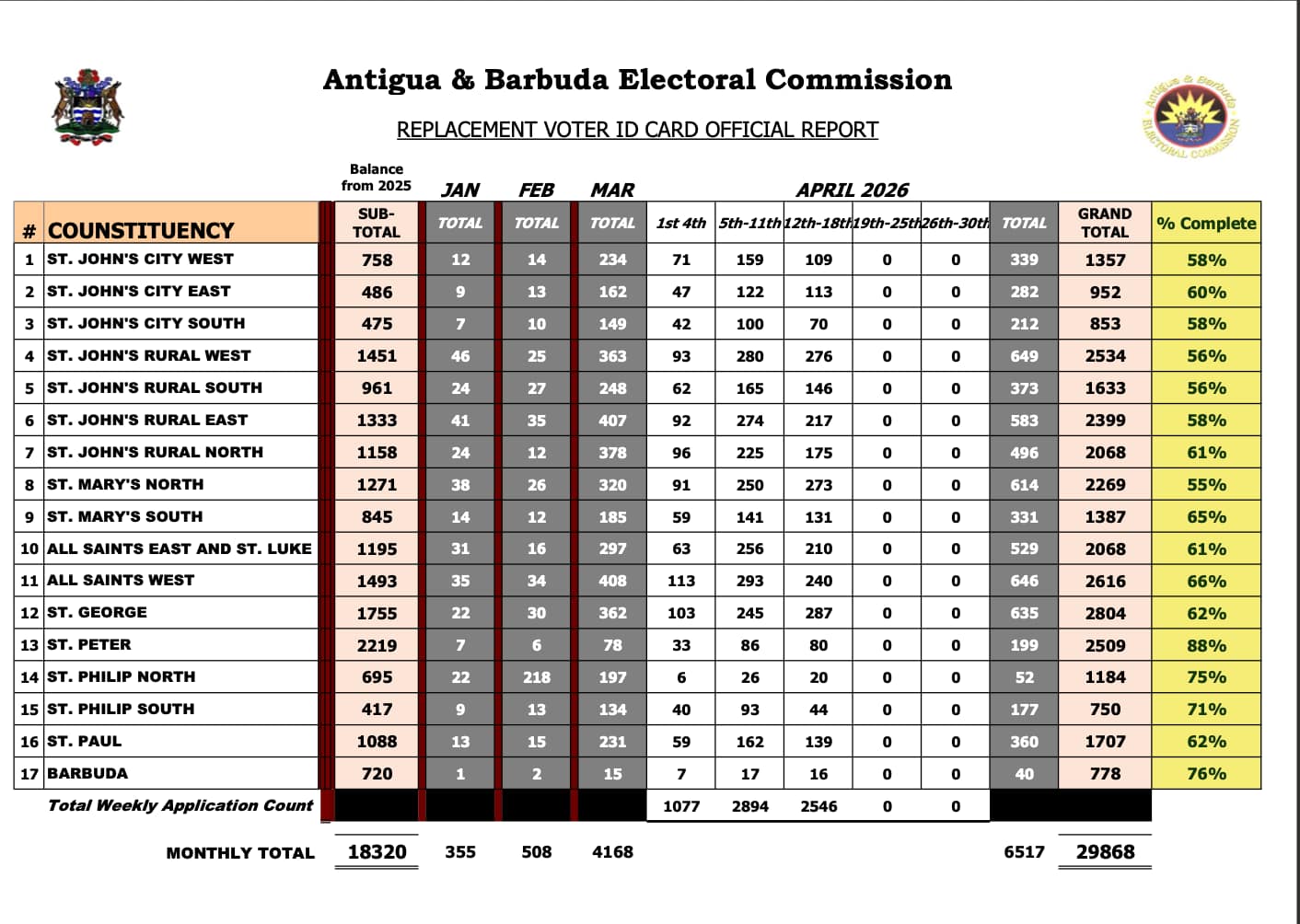
As Antigua and Barbuda gears up for its upcoming general election, official data from the Antigua and Barbuda Electoral Commission (ABEC) reveals a dramatic uptick in voter identification card transactions, with cumulative volumes crossing the 29,000 threshold by mid-April 2026. The commission’s cumulative tracking report documents 29,868 total transactions processed between the start of the year and the April 16 cutoff, a figure that combines both first-time voter ID applications and requests for replacement or renewed cards. Disaggregated data by constituency shows uneven but widespread engagement across the country, with completion rates varying sharply between less populated districts and denser urban constituencies. The small St Peter constituency leads all jurisdictions nationwide with an impressive 88% completion rate for voter ID updates, followed closely by Barbuda at 76% and St Philip North at 75% — early indicators of strong voter preparation in these regions. By contrast, more heavily populated constituencies have recorded far higher raw volumes of applications but lower overall completion rates, signaling ongoing backlogs and unmet processing demand. All Saints West has logged the highest total volume at 2,616 applications to date, while St John’s Rural West follows close behind with 2,534 total requests. A closer look at weekly data covering the period of April 12 through April 18 underscores the accelerating pace of voter action, with a staggering 2,546 replacement applications and 323 new applications processed in just seven days. Daily transaction counts show a clear last-minute rush: the busiest day of the week was April 13, when 793 applications were submitted, followed by a gradual decline through the end of the week to 441 applications on April 16. This spike aligns with recent official signals confirming the timeline of the upcoming general election, motivating voters to complete the required ID update process ahead of polling day. Three key battleground constituencies — All Saints West, St George, and St Mary’s North — posted the highest weekly application volumes, reflecting heightened political mobilization in these competitive districts. As all registered voters are required to hold a valid, updated voter ID to cast a ballot in the upcoming general election, the nationwide surge in transactions confirms growing voter engagement and a widespread push across the electorate to meet participation requirements before polls open.
作者: admin
-
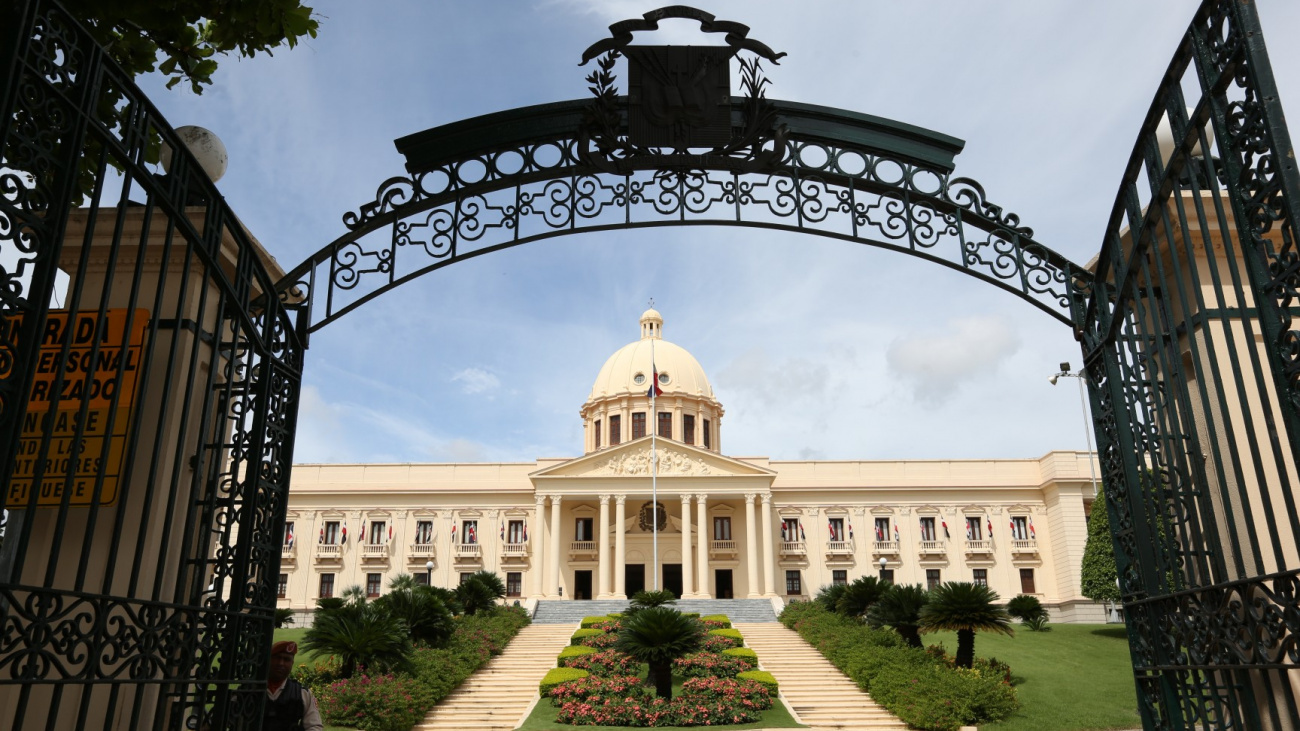
Dominican government denies links to Spain’s “Koldo Case” companies
Amid growing international scrutiny tied to a high-profile Spanish corruption investigation centered on pandemic-era public contracts, the Dominican Republic government has issued a firm official statement cutting any ties between the current administration and companies linked to the so-called Koldo case.
The clarification, released from the capital Santo Domingo, directly addresses recent reports published in Spanish media that have suggested connections between Dominican authorities and the entities named in the Spanish probe. The government explicitly stated that no public procurement contracts or purchase agreements have been signed with any of the connected firms since the current administration took office on August 16, 2020.
Authorities went on to name each of the companies at the center of the allegations: Pronalab, Modular HV Corp, Reusa, GSI Dominicana, Bali, Megalab Eurofino, and Eurofins Histolog. Even amid unproven claims that suspects in the Koldo case attempted to secure business deals with the Dominican Republic during the height of the global COVID-19 pandemic, Dominican officials confirmed that no formal agreements were ever finalized with any of these entities.
The statement reaffirmed that the current government maintains zero commercial or contractual relationships with these firms across all public sector procurement processes. This official pushback comes as the Koldo investigation continues to unfold in Spain, where authorities are probing widespread allegations of fraud and irregularities in public contracts awarded for pandemic-related response efforts. By issuing this explicit denial, the Dominican administration aims to reinforce its commitments to transparency and public accountability, pushing back against any implications of improper ties to the ongoing Spanish corruption probe.
-
St Kitts and Nevis cuts fuel tax and import duties to ease cost of living – WIC News
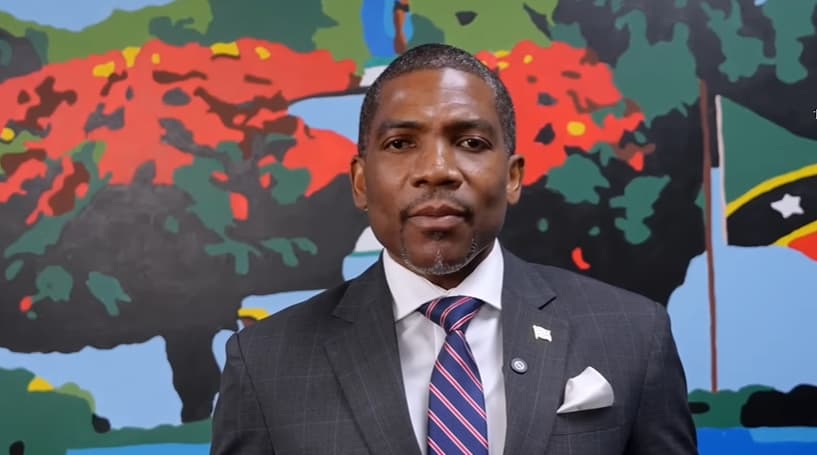
Facing persistent global economic volatility that has pushed up everyday living costs for households across the Caribbean, the federation of St Kitts and Nevis has rolled out a targeted package of four tax and duty relief measures designed to put immediate savings back into consumers’ pockets. Prime Minister and Minister of Finance Dr. Terrance Drew outlined the new initiatives in a national address delivered on Tuesday, April 14, 2026, confirming all measures will enter into force on Monday, April 20, 2026.
In framing the policy shift, Drew emphasized that the interventions respond directly to widespread household financial strain, noting, “These are genuine, targeted interventions to put money back in your pocket, to keep your lights on, to keep your vehicle moving and to help you breathe a little easier in a stormy world.” The government is absorbing more than EC $2 million in lost revenue to fund the relief package, a deliberate trade-off Drew defended as a critical investment in both household well-being and long-term economic growth: “Your Government chose relief over revenue – because when our people can breathe, our economy grows.”
The first and largest component of the package is a 50% cut to the excise tax on gasoline, lowering the levy from EC$1.95 per gallon to just EC$0.98 per gallon. This temporary cut will remain in place through July 31, 2026, with the government covering EC$1.2 million in foregone revenue to deliver immediate savings to both private drivers and commercial consumers who rely on fuel for work and logistics. The second measure complements this cut with a reduction in customs import duty on gasoline, dropping the rate from 6% to 3% through the same end date of July 31. This additional cut, backed by EC$600,000 in government absorbed costs, will further reduce prices at the pump. “Every fill-up leaves a little more in your pocket,” Drew said of the fuel-focused cuts.
To advance long-term energy affordability and the country’s transition to sustainable power, the third measure overhauls the federation’s alternative energy equipment policy. Through December 31, 2026, all imports of clean energy hardware, including solar panels, will be fully exempt from value-added tax (VAT), customs service charges, and import duties. The government will absorb EC$405,000 in revenue to support this initiative, which aims to lower barriers for households and businesses looking to invest in rooftop solar and reduce long-term reliance on costly imported fossil fuels.
The fourth reform targets hidden consumer costs in cross-border trade. Moving forward, extra shipping fees charged by freight companies will no longer be included in the customs calculation base for import taxes and duties, eliminating what would otherwise be a “tax on a fee” and creating a more transparent pricing structure for imported consumer goods.
In addition to the four permanent (temporary) new measures, Drew confirmed that the popular discounted VAT rate days will continue through 2026 to deliver additional targeted relief for major seasonal spending periods. The 2026 schedule includes an Easter discount day on April 17, back-to-school relief on August 28 and 29, and pre-Christmas season discounts (including for vehicle purchases) on December 11 and 19.
Drew stressed that the entire relief package forms a core part of the administration’s broader Sustainable Island State Agenda (SISA) and SEED (Sustainability, Education, Empowerment, and Development) strategy. Beyond immediate household relief, the policy shift is part of a longer-term plan to reduce the federation’s economic dependence on the Citizenship by Investment programme and build a more diversified, resilient domestic economy that supports all residents.
In a public Facebook post following the address, Drew called on local businesses to pass the full benefit of the government’s tax cuts through to end consumers, writing: “To our businesses: we ask not for charity but for fairness. When the Government reduces taxes, let those savings reach the people at the counter. Because when our people can breathe, our economy grows and that benefits everyone.”
-
Column: Een parlement in gijzeling van persoonlijke en partij politieke belangen
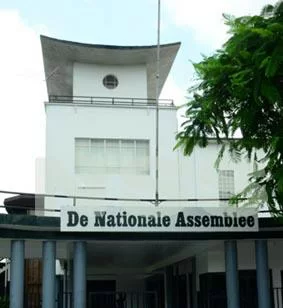
When Suriname’s current National Assembly took office following the May 2025 general elections, Speaker Ashwin Adhin of the National Democratic Party (NDP) laid out an ambitious new agenda: a more effective, higher-performing legislature that would deliver faster, more substantive policy outcomes for the nation. More than nine months later, that pledge has proven far easier to make than to keep. The past months have brought nothing short of a continuous string of delays, quorum failures driven by bad-faith political maneuvering, coercion, and unethical bargaining across the body.
The National Assembly’s current legislative docket is overflowing with time-sensitive, high-stakes bills that directly impact Suriname’s standing and future. Key legislation designed to prevent Suriname from being added to an international anti-money laundering and counter-terrorism financing blacklist remains stalled, with existing rules against both activities still not brought up to international compliance standards. At the same time, at least seven major financial bills that would reform the country’s tax system are scheduled for upcoming debates, while the national budget process is already months behind schedule — a problem compounded by disorganization within the governing coalition itself.
Internal power dynamics within the ruling coalition are far from stable. The NDP holds the most visible, dominant position and sets the legislative agenda, but deep divides have already emerged within the National Party of Suriname (NPS), whose 6-seat caucus has split into competing factions pulling in opposite directions. Smaller coalition partners including the PL, A20 and BEP have adopted a cautious, waiting-and-seeing approach, and wield little meaningful influence over final decision-making.
While all coalition partners have overlapping substantive and political disagreements over four initiative bills related to the functioning of the country’s judiciary, growing scrutiny is now focused on the role of the ABOP, led by Ronnie Brunswijk. It is an open secret that these bills are being wielded as a political pressure tool against the government and other coalition members. Support for legislation is not tied to its policy merits, but to the advancement of partisan interests, the protection of party positions and influence, and other demands with little connection to the public good. Far from rigorous parliamentary deliberation, the process has devolved into little more than backroom deal-making.
The consequences of this gridlock are already tangible and widely felt: consistent quorum boycotts, fractured caucuses, and endless delays to critical decision-making. The legislature has subordinated its core mandate — drafting and passing laws that serve the national interest — to internal power struggles. And while these high-priority bills languish, a second alarming pattern has emerged: a surge in overseas travel by parliamentarians and government officials, with little to no transparency or public accountability.
International parliamentary and government missions are a legitimate, necessary part of governing. But what is missing is basic openness about where officials are traveling, what the purpose of the trip is, how many people are attending, and what the total cost to public funds is. Even when trips are organized by invitation and partial costs are covered by hosts, public funds still cover expenses including daily stipends for delegates. Similarly, frequent government overseas trips have also been conducted without any public disclosure of details.
A one-sentence summary confirming attendance at a conference or mission is nowhere near enough accountability. Elected representatives and government officials owe the public a detailed, transparent accounting of what tangible benefits these trips delivered for Suriname. As long as that accountability is not provided, public perception will only grow that lawmakers have gotten their priorities backwards. A parliament that stalls life-saving critical legislation but still jumps at the chance to travel overseas will inevitably lose the public’s trust.
It is long past time for National Assembly members to be reminded that serving as a people’s representative is not an honorary title — it is a public responsibility. Right now, that responsibility is being treated as an afterthought. As long as political parties continue to prioritize their own narrow interests at the expense of the Surinamese public, the parliament will remain what it is already at risk of becoming: an institution that does not lead the nation, but is instead led by the unproductive internal power struggles that paralyze it.
-
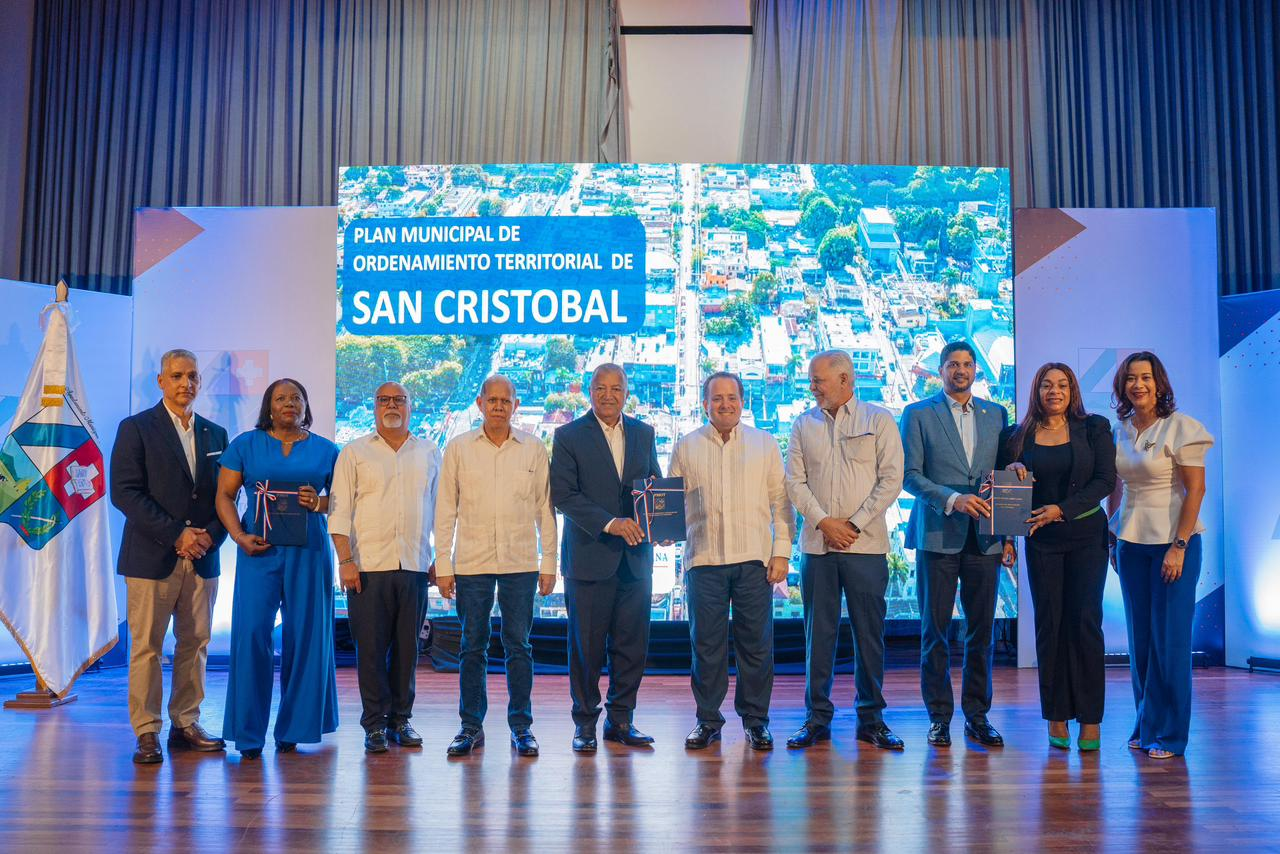
Government introduces plan to regulate land use in San Cristóbal
In a formal event held at the Loyola Polytechnic Institute in the Dominican Republic, Administrative Modernization Minister José Ignacio Paliza officially launched the long-awaited Municipal Territorial Planning Plan for San Cristóbal. This strategic initiative is designed to bring structured order to the municipality’s urban expansion while safeguarding ecologically critical natural resources through a transparent, clearly defined framework of land-use regulations.
The San Cristóbal project is not an isolated policy effort. It forms a core part of a nationwide government push to roll out approximately 60 comprehensive territorial planning projects across the country, all carried out in compliance with the national Territorial Planning Law 368-22. This broad program represents a major step forward in institutionalizing systematic spatial development management across the Dominican Republic.
Government officials emphasized that the plan delivers tangible dual benefits for both private investors and local residents. By codifying explicit rules for what types of development are permitted on different parcels of land, the framework eliminates regulatory uncertainty, cuts red tape for construction and environmental approval processes, and creates a stable environment that encourages responsible investment while protecting community interests. Before the plan is finalized and formally approved, it will enter a period of open public consultation, a requirement that ensures local community members have a direct voice in shaping the long-term trajectory of their municipality.
A key defining feature of the plan is its commitment to controlled, sustainable urban growth. Rather than allowing sprawling unregulated development into undeveloped natural and agricultural lands, the policy concentrates new urban expansion primarily on existing already-developed areas. Under the final zoning layout, only 10 percent of the municipality’s total land will be classified for urban use, leaving the vast majority of territory reserved for agricultural production, forest conservation, and permanent environmental protection. The plan lays out a 20-year developmental vision extending to 2036, with the goal of establishing San Cristóbal as a national model for sustainable, climate-resilient territorial development. Parallel to this planning initiative, the Dominican government is also advancing separate targeted conservation projects in the region, most notably the ongoing preservation effort for the historically and ecologically significant Pomier Caves system.
-
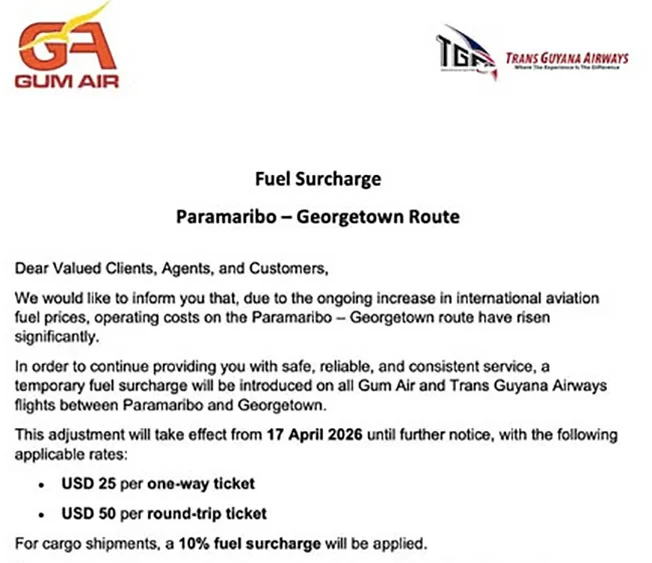
Brandstofcrisis legt grotere druk; overheid blijft afwachtend
Global aviation markets are facing unprecedented upward pressure on operating costs, driven by a sharp rally in jet fuel prices that is forcing carriers across the world to implement fare increases and new fuel surcharges. This trend is now hitting South America’s small Caribbean nation of Suriname, where local airlines have moved to pass higher energy costs directly to consumers.
Effective April 17, 2026, regional carrier Gum Air introduced a $25 one-way fuel surcharge for its Paramaribo-Georgetown route, with return flights carrying a $50 surcharge. The airline also added a 10% fuel surcharge to all air cargo shipments on the route. Surinam Airways, the country’s flag carrier, rolled out a similar surcharge policy for all passenger tickets back on March 25, becoming the first major Surinamese airline to adjust pricing in response to the fuel crisis.
Airlines argue these extra charges are an unavoidable necessity: without passing through rising jet fuel expenses, daily operations would become financially unsustainable, and carriers would be unable to maintain service levels for customers. Even so, the new pricing structure has pushed up travel costs for both leisure and business passengers, adding new strain to Suriname’s tourism sector – one of the most critical contributors to national employment and GDP across the country.
While most nations across Latin America and the Caribbean have rolled out targeted policy interventions to mitigate the fallout of the global fuel crisis, the Surinamese government has so far taken a hands-off, wait-and-see approach. As of mid-April, no formal regulatory framework or support policy has been announced to address soaring jet fuel costs or cushion the blow for consumers and key economic sectors.
Rooted in heightened geopolitical tensions between the United States and Iran, the ongoing global jet fuel crisis has sent energy costs soaring across the Americas, putting widespread economic pressure on both net energy importers and exporters. Governments across the region have responded with a diverse range of policy measures to contain the impact. Mexico, for example, has ramped up domestic crude oil production and tapped into its national strategic petroleum reserves, while also introducing new subsidies for public transit to keep household transportation costs low. Brazil has doubled down on its longstanding biofuel strategy, expanding incentives for ethanol production and use to cut the country’s reliance on imported fossil fuels.
Argentina has opted for direct price caps on fuel to stem rising inflation and prevent widespread social unrest, while also investing in renewable energy infrastructure to shore up long-term energy security. Colombia and Peru have both activated strategic reserves and rolled out targeted fuel subsidies for low-income and vulnerable population groups.
For small island nations across the Caribbean, which are almost entirely dependent on imported fossil fuels, urgent emergency measures have been put in place. Trinidad and Tobago has increased domestic oil and fuel exports while maintaining government-funded fuel subsidies for residential households. Jamaica has implemented temporary cuts to fuel taxes and accelerated incentives for electric vehicle adoption and expanded public transit access. Regional bodies have also stepped up collaboration on collective fuel purchasing initiatives, designed to lower procurement costs for smaller markets through bulk buying agreements.
Beyond short-term emergency interventions, a growing number of countries in the region are investing in the development of sustainable aviation fuel (SAF) and exploring new technological innovations to cut the aviation sector’s long-term reliance on fossil jet fuel. Initiatives to optimize flight routes for lower fuel consumption and improve overall aviation logistics are also being accelerated, with the dual goal of cutting fuel use and stabilizing long-term operating costs for carriers.
-

New York Mets open new training facility in Boca Chica
In a major push to fortify its global talent identification and development system, the New York Mets have officially launched a state-of-the-art youth player development complex in Boca Chica, Dominican Republic, a region long renowned as a hotbed of elite baseball talent. The $10 million facility is purpose-built to serve 16- to 18-year-old international amateur prospects signed by the franchise, delivering a fully integrated, high-performance training and living ecosystem that addresses longstanding resource gaps for young players in the country.
The sprawling complex packs an array of premium amenities tailored to every dimension of athlete development. It boasts a 10,000-square-foot gym and dedicated nutrition center, a 16,900-square-foot agility training field, modernized training spaces with specialized recovery zones, expanded batting cages, classroom spaces for academic and professional education, and on-site residential suites to house participating athletes. Unlike piecemeal training setups common in the region, the new Boca Chica campus combines every resource young prospects need to grow under one roof.
Team leadership emphasized that the investment fills a critical need in international player development. For decades, many promising young Dominican baseball players have lacked access to the elite training, wellness, and educational resources that help top talent reach their full potential. The new facility is designed to accelerate both the physical skill growth and long-term professional development of these young athletes, removing structural barriers that have held back many prospects in the past.
This project is a core component of a broader, organization-wide infrastructure upgrade strategy steered by Mets owners Steve Cohen and Alex Cohen. The ownership group has already committed $60 million to renovate the franchise’s existing player development complex in Florida, signaling a sweeping investment in talent development across the organization.
Beyond refining the skills of already signed prospects, the new facility is expected to give the Mets a significant competitive edge in recruiting the brightest young international talent, cementing the franchise’s reputation as a top destination for emerging players. It will also accommodate active major and minor league players for offseason training, reinforcing the Dominican Republic’s standing as a central global hub for baseball talent development and innovative training practices.
-

Haiti / DR : Launch of the 14th edition of Diaspora Week
On April 17, 2026, the remote southwestern border town of Pedernales in the Dominican Republic opened the 14th edition of Diaspora Week, a flagship community initiative organized by the Zile Foundation designed to foster cross-border dialogue, advance peaceful coexistence, and deepen connections between the neighboring nations of Haiti and the Dominican Republic. The opening gathering drew local government officials, grassroots community leaders, and a large cross-border delegation from the Haitian town of Anse-à-Pitres, headed by that community’s mayor, Harry Bruno. In his opening remarks, Bruno underlined the irreplaceable value of these collaborative forums, noting that diaspora communities are the backbone of stronger, more resilient bilateral bonds between the two countries.
Serving as the event’s guest of honor, former Haitian Prime Minister Jean Henry Céant delivered a keynote address that called for a renewed approach to Haiti-Dominican relations, rooted in pragmatic realism and a shared forward-looking vision. He stressed that no physical border can undo the deep interconnectedness that binds the two nations, arguing that the shared border region should be framed as a catalyst for collective prosperity rather than a dividing barrier. Céant also reiterated that Haiti’s ongoing reconstruction efforts depend heavily on the contributions of its global diaspora, which he described as a vast reservoir of professional talent and a powerful, far-reaching global influence network.
The official launch ceremony opened with a solemn minute of silence to honor the lives lost in the recent tragedy at Haiti’s Citadelle Laferrière, which claimed more than 50 lives. Following this moment of collective reflection, attendees gathered for a fraternal communal lunch blessed by two local faith leaders: German Ramírez, parish priest of Pedernales, and Julin Acosta. Roughly 140 guests from both sides of the border shared the meal in an atmosphere marked by mutual respect and warm neighborly solidarity.
This year’s opening gathering aligns with the observance of Dominican-Haitian Fraternity Day, a formal occasion established under Dominican Law 11-05. Edwin Paraison, executive director of the Zile Foundation, closed the opening event by extending sincere gratitude to the initiative’s core sponsors—Western Union, VIMENCA, and Sunrise Airways—as well as the Dominican government for its critical logistical support. A full slate of community and collaborative activities will run through April 20, reaffirming the Zile Foundation’s longstanding core mission: to build lasting bridges of peace and cross-cultural cooperation between the Haitian and Dominican peoples.
-

Haiti : Details on the new PNH administrative building in Les Cayes
Against the backdrop of ongoing efforts to strengthen Haiti’s national security infrastructure, the United Nations Development Programme (UNDP) has formally transferred a purpose-built two-story administrative headquarters to the Southern Departmental Directorate (DDS) of the Haitian National Police (PNH) in Les Cayes. This project forms a core component of the national PNH Support Program, with full financial backing from the Government of Canada.
Spanning 230 square meters across two levels, the new facility is designed to meet the diverse operational needs of local police units, with more than 10 dedicated office spaces and two purpose-built access ramps to ensure full accessibility for officers and community members with reduced mobility. The building houses fully renovated workspaces for several critical law enforcement and support divisions, including the Departmental Judicial Police Service (SDPJ), the Juvenile Protection Brigade (BPM), and the specialized unit tasked with combating Gender-Based Violence (GBV), alongside associated support services.
To address persistent infrastructure challenges common across Haiti, the facility includes resilient, off-grid-ready utilities that guarantee uninterrupted operations. A cutting-edge hybrid energy system is installed, featuring eight 620-watt solar panels that deliver a total 6 kilowatts of photovoltaic capacity, paired with two lithium-ion batteries that provide 10 kilowatt-hours of energy storage. For extended periods of low sunlight, an 11-kilowatt backup diesel generator connected to a 1,500-gallon fuel tank ensures continuous power. The building also features an independent water supply system anchored by a 6,400-gallon storage tank, which provides five days of operational water autonomy for all on-site activities. All workspaces are outfitted with appropriate, ergonomic furniture and necessary operational equipment to support daily police work.
The completion of this infrastructure project is expected to deliver wide-ranging benefits for both police personnel and the Haitian communities served by the DDS. For criminal investigations, the improved, secure facility will allow officers to conduct case work in far safer and more efficient conditions than the previous inadequate headquarters. For vulnerable populations, the upgraded BPM workspace will enable the unit to deliver higher-quality support and care for children, whether they are victims of crime or young people interacting with the justice system. Most importantly, the new building provides frontline police officers with a functional, secure, and appropriate working environment that addresses longstanding gaps in local infrastructure.
Beyond the physical infrastructure itself, this investment represents a key step forward in sustained efforts to boost the operational capacity of the Haitian National Police as a whole. By equipping local police teams with the essential, reliable resources they need to carry out their work effectively and continuously, the project supports broader national goals to expand and strengthen the consistent, effective presence of law enforcement across all regions of Haiti. This development aligns with ongoing international commitments to support Haitian institutional stability and public safety through targeted infrastructure and capacity-building investments.
-

Murder victim’s mother charged with murder, other crimes
A shocking development has emerged in a string of connected gang-related killings across St. Vincent and the Grenadines: the mother of one of two men gunned down in a public shooting spree last week has been arrested and charged with murder and conspiracy to commit murder in the death of a 19-year-old found dead in Buccament Bay over the weekend.
Rosia John, whose 29-year-old son Enrique John — also known by the alias Shoubu — was killed in a two-minute shooting rampage in Stony Ground this past Friday, will appear before the Serious Offences Court this coming Friday to face her charges. She is accused alongside 19-year-old Augustas Matthews, also a resident of Layou, in the fatal shooting of Perrance Matthews, 19, whose body was recovered along Buccament Bay’s river defence with multiple gunshot wounds to the head and chest.
In addition to the violent conspiracy and murder charges, John also faces separate counts of cocaine possession and drug trafficking. Local law enforcement rules in St. Vincent and the Grenadines prohibit bail for individuals accused of murder until a nine-month period has elapsed following arraignment, a restriction that means John will almost certainly be denied temporary release and will miss the opportunity to arrange or attend the funeral of her only child.
This is not the first time John has made headlines for involvement with the criminal justice system. Nine years prior, police were forced to restrain her outside the Kingstown Magistrate’s Court after she attempted to instruct her son to hide his face as he was led away following an arraignment on statutory rape charges. The victim in that 2015 case was a minor between the ages of 13 and 15. John was a regular presence in court for her son throughout a string of subsequent criminal hearings, and multiple charges against him remained unresolved at the time of his death.
Enrique John was not the only fatality in last Friday’s Stony Ground violence: his close associate 22-year-old Raheem Guy was also shot and killed on the sidewalk outside the Caribbean Medical Imaging Centre, while John died inside a shop at the Russells Shopping Centre. The spree marked the start of a deadly 24 hours that ended with the discovery of Perrance Matthews’ body in Buccament Bay the next day.
Local authorities and community observers have linked all three killings to long-running gang warfare across the country. The conflict pits an alliance of factions from Central Kingstown and their Layou-based associates against a rival gang based in West Kingstown. Perrance Matthews, who went by the alias “Suspect”, was reportedly a former member of one of the involved groups who had left the faction and was in the process of attempting to rejoin at the time of his death. At the time of his own killing, Enrique John was still awaiting the verdict on two outstanding attempted murder charges against him.