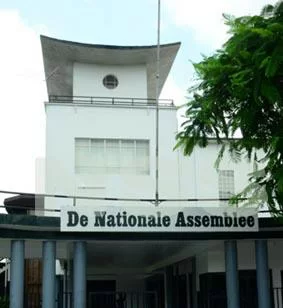
When Suriname’s current National Assembly took office following the May 2025 general elections, Speaker Ashwin Adhin of the National Democratic Party (NDP) laid out an ambitious new agenda: a more effective, higher-performing legislature that would deliver faster, more substantive policy outcomes for the nation. More than nine months later, that pledge has proven far easier to make than to keep. The past months have brought nothing short of a continuous string of delays, quorum failures driven by bad-faith political maneuvering, coercion, and unethical bargaining across the body.
The National Assembly’s current legislative docket is overflowing with time-sensitive, high-stakes bills that directly impact Suriname’s standing and future. Key legislation designed to prevent Suriname from being added to an international anti-money laundering and counter-terrorism financing blacklist remains stalled, with existing rules against both activities still not brought up to international compliance standards. At the same time, at least seven major financial bills that would reform the country’s tax system are scheduled for upcoming debates, while the national budget process is already months behind schedule — a problem compounded by disorganization within the governing coalition itself.
Internal power dynamics within the ruling coalition are far from stable. The NDP holds the most visible, dominant position and sets the legislative agenda, but deep divides have already emerged within the National Party of Suriname (NPS), whose 6-seat caucus has split into competing factions pulling in opposite directions. Smaller coalition partners including the PL, A20 and BEP have adopted a cautious, waiting-and-seeing approach, and wield little meaningful influence over final decision-making.
While all coalition partners have overlapping substantive and political disagreements over four initiative bills related to the functioning of the country’s judiciary, growing scrutiny is now focused on the role of the ABOP, led by Ronnie Brunswijk. It is an open secret that these bills are being wielded as a political pressure tool against the government and other coalition members. Support for legislation is not tied to its policy merits, but to the advancement of partisan interests, the protection of party positions and influence, and other demands with little connection to the public good. Far from rigorous parliamentary deliberation, the process has devolved into little more than backroom deal-making.
The consequences of this gridlock are already tangible and widely felt: consistent quorum boycotts, fractured caucuses, and endless delays to critical decision-making. The legislature has subordinated its core mandate — drafting and passing laws that serve the national interest — to internal power struggles. And while these high-priority bills languish, a second alarming pattern has emerged: a surge in overseas travel by parliamentarians and government officials, with little to no transparency or public accountability.
International parliamentary and government missions are a legitimate, necessary part of governing. But what is missing is basic openness about where officials are traveling, what the purpose of the trip is, how many people are attending, and what the total cost to public funds is. Even when trips are organized by invitation and partial costs are covered by hosts, public funds still cover expenses including daily stipends for delegates. Similarly, frequent government overseas trips have also been conducted without any public disclosure of details.
A one-sentence summary confirming attendance at a conference or mission is nowhere near enough accountability. Elected representatives and government officials owe the public a detailed, transparent accounting of what tangible benefits these trips delivered for Suriname. As long as that accountability is not provided, public perception will only grow that lawmakers have gotten their priorities backwards. A parliament that stalls life-saving critical legislation but still jumps at the chance to travel overseas will inevitably lose the public’s trust.
It is long past time for National Assembly members to be reminded that serving as a people’s representative is not an honorary title — it is a public responsibility. Right now, that responsibility is being treated as an afterthought. As long as political parties continue to prioritize their own narrow interests at the expense of the Surinamese public, the parliament will remain what it is already at risk of becoming: an institution that does not lead the nation, but is instead led by the unproductive internal power struggles that paralyze it.