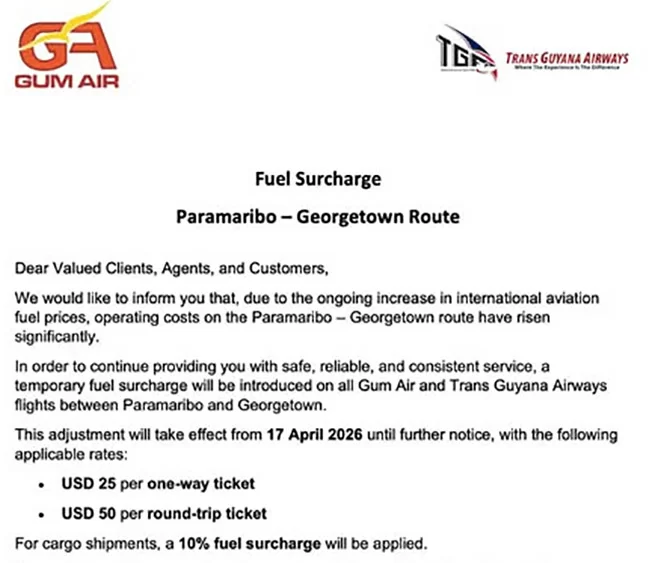
Global aviation markets are facing unprecedented upward pressure on operating costs, driven by a sharp rally in jet fuel prices that is forcing carriers across the world to implement fare increases and new fuel surcharges. This trend is now hitting South America’s small Caribbean nation of Suriname, where local airlines have moved to pass higher energy costs directly to consumers.
Effective April 17, 2026, regional carrier Gum Air introduced a $25 one-way fuel surcharge for its Paramaribo-Georgetown route, with return flights carrying a $50 surcharge. The airline also added a 10% fuel surcharge to all air cargo shipments on the route. Surinam Airways, the country’s flag carrier, rolled out a similar surcharge policy for all passenger tickets back on March 25, becoming the first major Surinamese airline to adjust pricing in response to the fuel crisis.
Airlines argue these extra charges are an unavoidable necessity: without passing through rising jet fuel expenses, daily operations would become financially unsustainable, and carriers would be unable to maintain service levels for customers. Even so, the new pricing structure has pushed up travel costs for both leisure and business passengers, adding new strain to Suriname’s tourism sector – one of the most critical contributors to national employment and GDP across the country.
While most nations across Latin America and the Caribbean have rolled out targeted policy interventions to mitigate the fallout of the global fuel crisis, the Surinamese government has so far taken a hands-off, wait-and-see approach. As of mid-April, no formal regulatory framework or support policy has been announced to address soaring jet fuel costs or cushion the blow for consumers and key economic sectors.
Rooted in heightened geopolitical tensions between the United States and Iran, the ongoing global jet fuel crisis has sent energy costs soaring across the Americas, putting widespread economic pressure on both net energy importers and exporters. Governments across the region have responded with a diverse range of policy measures to contain the impact. Mexico, for example, has ramped up domestic crude oil production and tapped into its national strategic petroleum reserves, while also introducing new subsidies for public transit to keep household transportation costs low. Brazil has doubled down on its longstanding biofuel strategy, expanding incentives for ethanol production and use to cut the country’s reliance on imported fossil fuels.
Argentina has opted for direct price caps on fuel to stem rising inflation and prevent widespread social unrest, while also investing in renewable energy infrastructure to shore up long-term energy security. Colombia and Peru have both activated strategic reserves and rolled out targeted fuel subsidies for low-income and vulnerable population groups.
For small island nations across the Caribbean, which are almost entirely dependent on imported fossil fuels, urgent emergency measures have been put in place. Trinidad and Tobago has increased domestic oil and fuel exports while maintaining government-funded fuel subsidies for residential households. Jamaica has implemented temporary cuts to fuel taxes and accelerated incentives for electric vehicle adoption and expanded public transit access. Regional bodies have also stepped up collaboration on collective fuel purchasing initiatives, designed to lower procurement costs for smaller markets through bulk buying agreements.
Beyond short-term emergency interventions, a growing number of countries in the region are investing in the development of sustainable aviation fuel (SAF) and exploring new technological innovations to cut the aviation sector’s long-term reliance on fossil jet fuel. Initiatives to optimize flight routes for lower fuel consumption and improve overall aviation logistics are also being accelerated, with the dual goal of cutting fuel use and stabilizing long-term operating costs for carriers.