作者: admin

  • NTRC welcomes Grenada’s appointment as 2nd Vice-Chair of CTO Executive Committee

    NTRC welcomes Grenada’s appointment as 2nd Vice-Chair of CTO Executive Committee

    During the 64th Council Meeting and Commonwealth Digital Roadshow hosted in Maseru, Lesotho, from April 20 to 24, 2026, the Caribbean island nation of Grenada earned a prominent leadership position on the Executive Committee of the Commonwealth Telecommunications Organisation (CTO), clinching the role of Second Vice-Chair. The appointment was officially announced by Grenada’s National Telecommunications Regulatory Commission (NTRC), marking a notable step up for the country, which previously held a non-leadership ordinary member seat on the committee.

    The newly constituted 2026-2027 CTO Executive Committee brings together a geographically diverse group of Commonwealth nations. Mauritius takes the top position as Chairperson, Uganda serves as First Vice-Chair, with Grenada filling the Second Vice-Chair role. Samoa joins as Immediate Past Chair and an Ex-Officio Committee Member, while Cameroon, Lesotho, and Mozambique complete the lineup as additional Exco-Members.

    This year’s gathering convened under the overarching theme “The Digital Future: Cultivating Opportunities, Safety and Sustainable Growth.” Per the CTO’s official mandate, the new Executive Committee will steer the organization’s long-term strategic direction, deepen cross-country collaboration across the 54-nation Commonwealth bloc, and advance targeted initiatives to speed up digital innovation, widespread digital transformation, and inclusive connectivity for underserved communities. The body is also tasked with fostering public-private and cross-national partnerships to expand resilient digital infrastructure, and leverage technology as a catalyst for equitable socio-economic growth across all member states.

    Grenada’s delegation at the high-level meeting was led by NTRC Commissioner Andrew Millet, who has been widely praised for his work securing the leadership appointment. The NTRC released a statement congratulating Millet, noting that his consistent professionalism, demonstrated commitment to the sector, and sharp strategic leadership throughout the gathering brought significant recognition to both Grenada and the national regulatory commission, and was instrumental to the successful outcome.

    The Government of Grenada has echoed this praise, framing the appointment as a landmark win for the country’s international profile. In an official communication to the NTRC, Cabinet Secretary Carvel Lett described Grenada’s elevation to a leadership role as “a noteworthy achievement” that “reflects the growing confidence placed in our country’s leadership and contribution at the regional and international levels, particularly in the areas of ICT, telecommunications, and digital transformation.”

    Looking ahead, the NTRC has reaffirmed its long-standing commitment to advancing Grenada’s national digital development agenda, and to expanding the country’s constructive influence in regional and global telecommunications policy discussions. The appointment positions Grenada to shape the future of digital transformation across the Commonwealth, bringing a small island developing state perspective to global digital policy conversations.

  • ‘Fake Cops’ Charged After Armed Vape Shop Robbery

    ‘Fake Cops’ Charged After Armed Vape Shop Robbery

    In a bold, pre-planned crime that unfolded in broad daylight in Belize City, two men who impersonated law enforcement officers to rob a local vape shop have been taken into custody, facing multiple criminal charges after a high-speed pursuit that ended with a full recovery of stolen goods and illegal weapons.

    The incident occurred just after 6 p.m. on Monday, April 27, at a retail vape shop located on Daly Street in central Belize City. According to official police accounts, the two suspects planned the heist to exploit the shop’s controlled entry protocol, arriving at the location on a single motorcycle with full-face helmets that concealed their identities. Dressed in camouflage uniforms designed to mimic standard police tactical gear, the pair did not raise any initial red flags for staff. The 28-year-old on-duty shop attendant, Dylan Vasquez, allowed the men entry after they approached the door, unaware of the violent crime about to unfold.

    Within moments of entering, the attackers revealed their weapons. One suspect held a loaded 9mm pistol to Vasquez’s neck to intimidate him and prevent any resistance, while the second suspect moved behind the sales counter to steal assets. Investigators confirmed the robbers made off with more than $20,000 in cash that had just been counted and prepared for deposit following a large recent vehicle sale, along with dozens of disposable vaping products.

    Eyewitnesses working at adjacent businesses reported that the pair fled the shop immediately after the robbery, speeding away on their motorcycle. But officers from the Belize City Police Department, who had been dispatched within minutes of the silent alarm being triggered, were already positioned nearby and launched a rapid pursuit. During the chase through city streets, one of the suspects allegedly fired multiple shots at pursuing officers in an attempt to escape capture.

    Police ultimately cornered and arrested both suspects, identifying them as 27-year-old Kenroy Amani Daly and 26-year-old Ahkeem Rashawn Danderson. Along with recovering all of the stolen cash and stolen vape products, law enforcement seized two unregistered 9mm pistols and loaded magazines holding a total of 19 live rounds of ammunition.

    Formal charges have already been filed against both men: each faces counts of robbery and falsely impersonating a police officer. Daly, the suspect accused of firing on police and holding the gun to the attendant’s neck, faces an additional charge of aggravated assault for the threats against the employee and the pursuing officers. Both are currently held in police custody awaiting an upcoming court hearing to answer for the alleged offenses.

  • Nieuw vredesvoorstel Iran botst op Amerikaanse scepsis

    Nieuw vredesvoorstel Iran botst op Amerikaanse scepsis

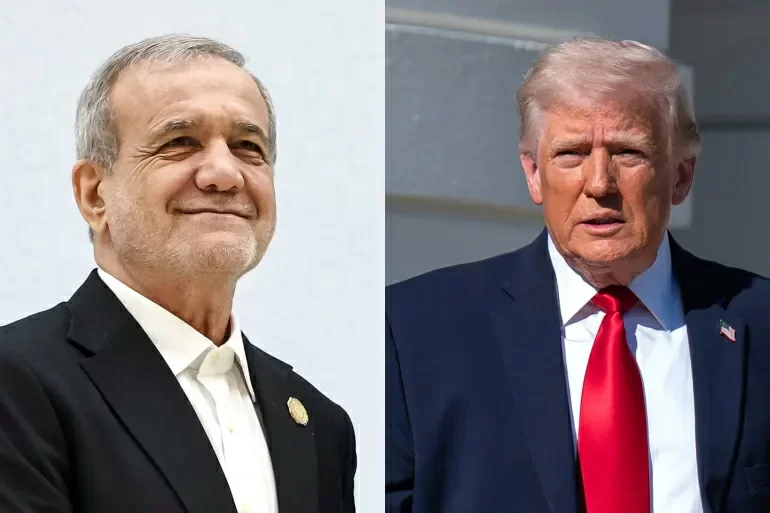
    In the aftermath of a fragile ceasefire that paused a deadly regional conflict between long-time adversaries Iran and the US-backed Israeli bloc, Tehran has put forward a new peace proposal that is already facing deep skepticism from the Trump White House. The plan, which seeks incremental de-escalation before tackling the most divisive issue in bilateral relations – Iran’s nuclear program – currently appears unlikely to win Washington’s approval, threatening to delay any path to a permanent end to hostilities that have killed thousands and roiled global energy markets.

    Breaking down the details of Iran’s new initiative, the proposal frames the reopening of the strategic Strait of Hormuz as its core confidence-building measure – a step that would reverse Tehran’s recent closure of the vital waterway that has sent energy prices soaring and disrupted global supply chains. In exchange for reopening the strait, Iran is demanding that the Trump administration lift its recent naval blockade of Iranian ports, which cut off the country’s key oil export revenue and a major source of state income, and agree to end the ongoing conflict outright. Crucially, however, Iran has demanded that any negotiations over its nuclear program be delayed until after a ceasefire and blockade withdrawal are fully implemented – a condition that runs directly counter to longstanding US demands that nuclear constraints be part of any immediate de-escalation deal.

    The proposal was transmitted to Washington through Pakistan, which has been serving as a neutral intermediary between the two hostile governments. Iranian state media outlet Fars News Agency has confirmed that the initiative aligns with Tehran’s long-stated red lines on both the Strait of Hormuz and its nuclear program, noting that Foreign Minister Abbas Araghchi has operated fully within the framework of Iran’s diplomatic mandates. The outlet emphasized that the plan should be understood as a de-escalatory initiative to clarify regional positioning, not a formal negotiating package at this stage.

    Iranian analysts frame the proposal as a strategic shift away from the country’s previous negotiating model, which centered on offering nuclear concessions in exchange for relief from economic sanctions. Abas Aslani, a senior researcher at the Centre for Middle East Strategic Studies, told Al Jazeera that Tehran has concluded that older approach is no longer a viable path to a mutually acceptable agreement. “Iran sees this also as a measure to build confidence and bridge the existing trust deficit,” Aslani added. In comments to the UN earlier this week, Iran’s ambassador to the global body Amir Saeid Iravani reinforced Tehran’s position, noting that lasting stability and security in the Gulf region can only be achieved through a permanent end to all hostile aggression against Iran.

    The White House has confirmed that President Donald Trump reviewed the Iranian proposal alongside his top national security advisors on Monday, but early signals from the administration point to a firm rejection of the plan in its current form. An anonymous US official told Reuters that Trump is dissatisfied with the proposal, specifically because it fails to include binding provisions to address Iran’s nuclear program immediately. “He does not really value the proposal as it stands,” the official said. Two anonymous sources familiar with internal deliberations told CNN that Trump is almost certain to reject the plan, arguing that lifting the port blockade before resolving the nuclear issue would remove one of Washington’s most powerful negotiating leverage points.

    Not all administration comments have been uniformly negative, however. Secretary of State Marco Rubio told Fox News Monday that the proposal was “better than we had expected,” but added that he retains deep doubts about Tehran’s underlying intentions. “They are very good negotiators,” Rubio said. “We have to make sure that any agreement is one that permanently prevents them from ever developing a nuclear weapon.” Al Jazeera’s Washington correspondent Mike Hanna noted that extraordinary secrecy has surrounded the White House deliberations, with no readouts or details released about who even attended Monday’s meeting, an unusual departure from standard protocols for high-level national security discussions.

    Beyond the US and Iran, international allies are growing increasingly impatient with the prolonged standoff, according to regional analysts. Mohamed Elmasry, an analyst at the Doha Institute of Graduate Studies, told Al Jazeera that while both Washington and Tehran appear to believe time is on their side, prolonged delay only makes a deal harder to reach. “I really don’t think time works for anyone. The Europeans are clearly losing their patience,” Elmasry said. He noted that recent comments from German Chancellor Merz – who publicly remarked this week that “the Iranians are very skilled negotiators” – reflects growing allied pressure on Trump, who allies hold responsible for creating the current regional crisis and failing to resolve it. “Trump will not be happy about that, and the chancellor hit him where it hurts,” Elmasry added.

    The Strait of Hormuz remains one of the world’s most critical energy chokepoints even in peacetime: roughly one-fifth of all global oil and liquefied natural gas trade passes through the narrow waterway, connecting major Gulf oil producers to global markets. Tehran’s closure of the strait after the outbreak of conflict created immediate inflationary pressure on energy markets worldwide, making a resolution to the standoff a pressing priority for global economies already grappling with post-conflict volatility.

  • Calls for greater autism awareness in public spaces

    Calls for greater autism awareness in public spaces

    A rising tide of complaints from families of autistic children across Barbados, centered on rigid policies in high-traffic public spaces such as supermarkets, has reignited advocacy for greater flexibility, public awareness, and empathy from local business operators. Chantal Fields, Events and Coordination Chairman of the Autism Association of Barbados, outlined the ongoing everyday challenges faced by autistic people and their caregivers during an interview with Barbados TODAY, held on the sidelines of the organization’s annual Autism Awareness Walk earlier this week.

    Fields emphasized that while public understanding of autism has grown incrementally in recent years, many families still encounter unnecessary barriers during routine outings. A core point of frustration is supermarket policies that ban children from riding inside shopping baskets, a safety measure many caregivers rely on to manage autistic children who are prone to elopement, or unexpected wandering.

    “Many parents have reached out to me about this issue,” Fields explained. “A little bit of grace goes a long way, because not everyone can navigate a supermarket trip the same way. For autistic children prone to wandering, a trip to pick up groceries turns into a constant effort to keep them safe. Restricting the use of shopping carts as a safety space directly undermines that effort.”

    Fields proposed a common-sense compromise that balances business concerns with family safety: “Businesses don’t have to drop their rules entirely. Even allowing the practice for caregivers who can show verification of their child’s autism would be a huge step forward. Everyone on the autism spectrum functions differently, and a small accommodation can drastically cut the burden on families.”

    Despite these ongoing public access challenges, Fields highlighted incremental progress in other areas of daily life. In the workplace, a growing number of Barbadian employers have adopted more flexible policies to support parents of autistic children, allowing adjusted shift times to accommodate therapy appointments and excused leave for care-related needs. “Many parents have told me their workplaces have been really supportive,” she noted. “That flexibility makes a world of difference for families balancing care and work.”

    In the education sector, however, systemic change remains in its early stages. Fields said the Ministry of Education has begun rolling out pilot programs for more inclusive schooling, but widespread implementation is still years away, meaning current families will not see the full benefits of these reforms. “The ministry is putting in the work, but it’s still at the pilot stage,” she said. “It won’t help many of the families currently navigating the system, but it will create better outcomes for the next generation.”

    Looking toward long-term improvement, the Autism Association of Barbados has partnered with the Samuel Jackman Prescod Institute of Technology (SJPIT) to launch new skills-based training programs for autistic adults, focused on employable trades such as cooking and carpentry. The initiative aims to expand employment opportunities and increase economic independence for autistic people across the island. Fields noted that public receptiveness to these efforts has grown, with slowly opening opportunities for autistic people to participate fully in Barbadian society.

    Fields’ comments came as more than 300 community supporters gathered before dawn on Tuesday for the annual Autism Awareness Walk. Participants started at the Social Empowerment Agency, traversed a marked route through Lower Collymore Rock, Culloden Road, Beckles Road, Dalkeith Road, circled the historic Garrison district, continued along Highway 7, and returned to the starting point. The event concluded with a community cool-down session, reinforcing the association’s core mission: building widespread public acceptance, practical support, and understanding for autistic people and their families across Barbados.

  • Mental health key to workplace safety — NMHC

    Mental health key to workplace safety — NMHC

    As the Caribbean island of Barbados marks the annual World Day for Safety and Health at Work, the country’s National Mental Health Commission (NMHC) is delivering a critical wake-up call to all local employers: mental health cannot be sidelined as an add-on to workplace safety protocols—it is foundational to occupational safety itself.

    Dr. Maisha Emmanuel, chair of the NMHC, laid out the commission’s stance in a public statement, stressing that any conversation about safe, healthy work environments must integrate mental and psychosocial well-being alongside long-standing physical safety protections. She explained that common work-related issues including chronic stress, occupational burnout, workplace harassment, and on-the-job violence are every bit as much occupational health hazards as traditional dangers such as exposure to toxic chemicals, poorly maintained machinery, or inadequate ergonomic design.

    The commission’s argument highlights the direct causal link between poor workplace mental health and elevated safety risks. Unmanaged stress, clinical anxiety, and depression all impair core cognitive functions: they reduce focus, slow response times, cloud critical judgment, and diminish a worker’s ability to assess their surrounding environment. Each of these impairments is a known precursor to workplace accidents and injuries. Workers navigating untreated mental health challenges are far more likely to make costly errors, experience preventable incidents, and fail to respond effectively when emergency situations arise.

    Dr. Emmanuel noted that the problem is far from abstract for Barbadian workers, with thousands currently grappling with psychosocial hazards on the job. Excessive unmanageable workloads, extended shift hours, pervasive workplace bullying, lack of managerial support, and persistent job insecurity have become common experiences for many across the island’s labor force. “These psychosocial hazards are as real and dangerous as any physical hazard, and they must be addressed with the same seriousness and urgency,” she emphasized.

    To turn the commission’s call into action, the NMHC has outlined a series of concrete steps employers can implement immediately to improve workplace mental health and safety. First, organizations should conduct full systematic assessments to identify psychosocial risks specific to their workplaces, then roll out targeted measures to prevent and mitigate those hazards. Employers must also prioritize widespread mental health literacy, expand access to support resources, and build inclusive workplace cultures where workers feel comfortable disclosing mental health concerns without fear of stigma, retaliation, or discrimination.

    Key actionable recommendations from the commission include adjusting workload distribution to prevent endemic burnout, defining clear job roles and performance expectations to reduce worker uncertainty, offering flexible work arrangements where feasible to support healthier work-life balance, enacting and enforcing strict zero-tolerance policies for workplace bullying and harassment, providing specialized training for managers to recognize early signs of mental health strain and support struggling team members, and guaranteeing all staff access to confidential Employee Assistance Programmes and affordable specialized mental health services.

    The message is not directed solely at employers, however. The NMHC also reminded workers that protecting collective and individual mental health at work is a shared responsibility. For employees, the commission recommends speaking up about harmful stressors when they arise, setting clear healthy boundaries around work and personal time, taking regular scheduled breaks to avoid fatigue, building supportive connections with colleagues, practicing evidence-based stress management techniques, and reaching out for professional support early if mental health challenges begin to impact daily work and well-being.

    In closing, Dr. Emmanuel reaffirmed the core principle of the commission’s campaign: “A safe workplace protects both physical and mental health. Every worker in Barbados has the right to return home safe and healthy — in body and mind — every day. On this World Day for Safety and Health at Work, let us commit to creating workplaces where mental health is valued, protected, and supported as the essential component of workplace safety.”

  • ‘Fake Police’ Buzzed In before Robbing Vape Shop

    ‘Fake Police’ Buzzed In before Robbing Vape Shop

    In a carefully planned brazen crime that unfolded on a Monday evening in Belize City, two armed men disguised as law enforcement officers successfully gained entry to a local vape shop before stealing more than $20,000 in cash — only to be captured by responding officers a short time later after a high-stakes pursuit. The botched robbery, which occurred at approximately 6 p.m. at the Daly Street vape establishment, has highlighted the growing risk of deceptive criminal tactics targeting small retail businesses in the area.

    According to an anonymous eyewitness who spoke to local outlet News 5, the two suspects arrived at the shop on a single motorcycle, outfitted in police-issued camouflage uniforms and full-face helmets that helped their disguise pass unnoticed. The vape shop operates a mandatory controlled entry system, a common security measure for retail businesses that sell regulated products, and staff members, seeing what they believed to be uniformed officers at the door, buzzed the pair into the shop without raising any alarm.

    Within moments of gaining entry, the situation turned violent. Official police reports confirm that one of the armed men immediately held a gun to the neck of a shop employee to subdue the staff, while his accomplice cleared the shop’s cash registers and storage areas, stealing the full count of cash on hand as well as dozens of disposable vapes. Local reporting notes that the stolen cash had just been counted following a separate private car sale completed earlier that day, meaning the full sum was held at the shop when the robbers arrived, making it a particularly attractive target.

    After completing the robbery, the pair fled the scene on their motorcycle, hoping to evade capture before officers could be alerted. However, nearby police units received the distress call within minutes of the robbery and launched an immediate pursuit of the suspects. During the chase through the city, one of the two suspects fired a weapon at pursuing officers in an attempt to escape, adding another layer of danger to the already tense incident.

    Despite the threat, law enforcement officers successfully detained both suspects at the end of the chase. In addition to taking the two men into custody, police recovered all of the stolen cash, as well as two loaded firearms that were used in the commission of the robbery. No updates on potential injuries to staff or officers have been released to the public as of the initial reporting, and investigations into the pair’s prior criminal activity and any potential accomplices are ongoing.

  • Guyana formally protests CARICOM leaders’ tolerance of Venezuelan President’s Essequibo brooch

    Guyana formally protests CARICOM leaders’ tolerance of Venezuelan President’s Essequibo brooch

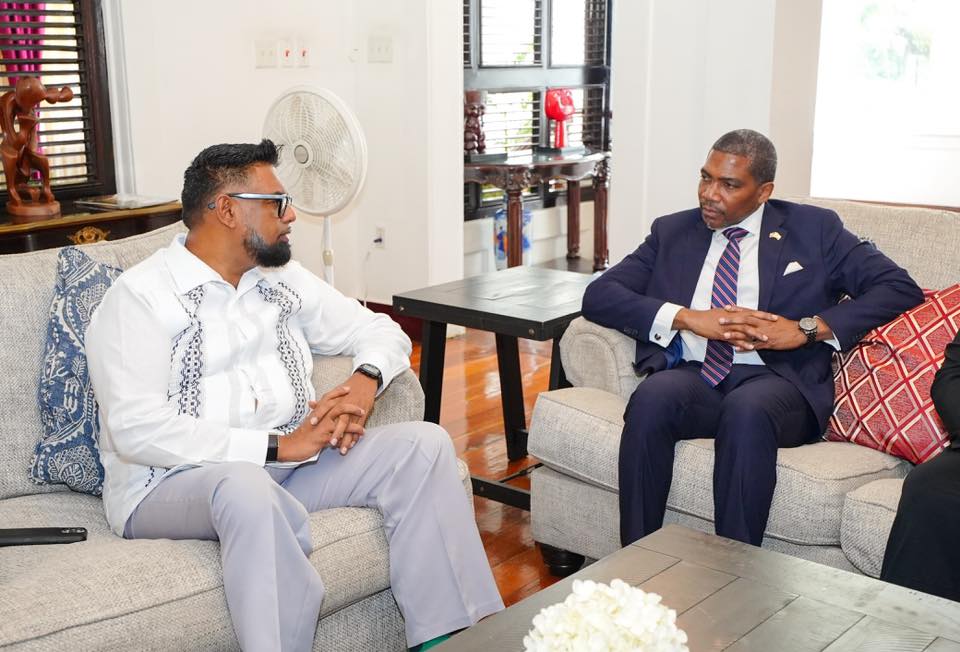
    On Tuesday, April 28, 2026, Guyanese President Irfaan Ali submitted a formal diplomatic protest to the Caribbean Community (CARICOM) over a provocative symbolic gesture made by Venezuelan President Delcy Rodriguez during recent official visits to two CARICOM member states. During Rodriguez’s official engagements in Grenada and Barbados earlier this April, she wore a brooch shaped like a map of Venezuela that incorrectly includes Guyana’s 160,000-square-kilometer Essequibo Region, territory that Venezuela has long claimed as its own despite ongoing international legal proceedings over the dispute.

    In a strongly worded correspondence addressed to current CARICOM Chairman and Prime Minister of St Kitts and Nevis Dr. Terrance Drew, President Ali emphasized that the regional bloc’s long-stated solidarity with Guyana on the territorial issue can no longer remain just rhetorical, and must be matched by concrete action. Ali argued that allowing symbols of territorial aggression against a CARICOM member state to be displayed on official regional platforms risks being misread as the community’s tacit acceptance or tolerance of Venezuela’s unlawful claim. “No action, whether deliberate or inadvertent, should create the impression that the Community’s platforms may be used to advance claims now before the International Court of Justice. CARICOM’s principled support for Guyana must be reflected not only in declarations, but also in the context and conduct of official engagements,” the letter stated.

    The incident first came to light during Rodriguez’s visit to Grenada, and was later amplified when official government photos from her meeting with Barbados Prime Minister Mia Mottley clearly showed the disputed map brooch. Within hours of the photos circulating, Guyana’s Private Sector Commission and one of its affiliated bodies released sharp public statements condemning the gesture and the failure to address it during the official meetings.

    While the Guyanese government acknowledged that it respects the sovereign right of all CARICOM member states to maintain independent bilateral relations with any global partner, including Venezuela, President Ali noted that the prominent display of a symbol asserting a territorial claim against Guyana during these high-level official engagements is deeply regrettable. He stressed that the brooch incident is far more than a trivial symbolic choice: it represents a deliberate, calculated provocation that advances a territorial claim Guyana has lawfully rejected for decades, and which is currently pending final adjudication at the International Court of Justice (ICJ).

    Next week, the ICJ is scheduled to hold public hearings on the merits of the core legal question in the dispute: the validity of the 1899 Arbitral Tribunal Award that Guyana recognizes as the complete, final and binding settlement of its land boundary with Venezuela. President Ali emphasized that while the judicial process is ongoing, Venezuela cannot use symbolic gestures, official maps, domestic legislation, or public displays to legitimize a claim it has not been able to validate under international law.

    “Such conduct does not strengthen Venezuela’s case; it undermines confidence in its stated commitment to peaceful settlement, international law, and good neighbourly relations,” Ali wrote. He added that the recent brooch incident fits into a broader pattern of provocative actions by Venezuela in recent years, including a unilateral domestic push to annex the Essequibo Region and appoint government officials to the claimed territory. These actions, he noted, directly contradict the ICJ’s December 2023 court order, which required Venezuela to refrain from any action that would alter the status quo of the disputed territory—currently administered and controlled entirely by Guyana—and mandated that both parties avoid any actions that could aggravate or expand the dispute, or complicate its final resolution.

    President Ali reaffirmed Guyana’s unwavering commitment to a peaceful resolution of the dispute in full accordance with international law, stating that Guyana retains full confidence in the ICJ’s process and will respect the court’s final binding judgment. At the same time, he made clear that Guyana expects all nations, including Venezuela, to align their actions with the core principles of the United Nations Charter, avoid deliberate provocations, and respect the ongoing judicial process that both parties have agreed to participate in. He urged CARICOM to maintain consistent vigilance to uphold the bloc’s long-held principled position in support of Guyana’s sovereignty and territorial integrity.

  • Trump Hosts King Charles for Historic White House Visit

    Trump Hosts King Charles for Historic White House Visit

    On April 28, 2026, a landmark moment in transatlantic diplomacy unfolded on the South Lawn of the White House, where U.S. President Donald Trump and First Lady Melania Trump formally welcomed King Charles III and Queen Camilla for the British monarch’s first state visit to the United States during the current administration.

    Even persistent rainy weather failed to dampen public enthusiasm, with hundreds of onlookers gathering behind security barriers to catch a glimpse of the day’s events. The full ceremonial welcome included all the traditional trappings of a state visit: a 21-gun salute in honor of the visiting head of state, precision marching by U.S. military units, and a dramatic aerial flyover by military aircraft that capped off the opening spectacle.

    In opening remarks delivered during the ceremony, President Trump reaffirmed what has long been termed the “special relationship” between the United States and the United Kingdom, emphasizing the deep shared history and aligned core values that have bound the two nations for more than a century. “Americans have no closer friends than the British people,” Trump told the assembled crowd and diplomatic delegation, noting decades of joint cooperation on advancing global security, upholding democratic norms, and addressing shared international challenges.

    Following the public welcome ceremony, the two leaders retired to the Oval Office for a closed-door working meeting, joined by top senior officials from both national governments. Attendees included U.S. Vice President JD Vance, U.S. Secretary of State Marco Rubio, and UK Foreign Secretary Yvette Cooper, alongside a cohort of senior diplomats and cabinet members from both sides. Official photographs released to the public after the meeting captured the gathered leaders in discussion, marking the first formal high-level summit between the current U.S. administration and the British monarch.

    This Oval Office meeting is widely framed by diplomatic analysts as a critical step in the British monarchy’s ongoing efforts to shore up long-standing bilateral ties, amid shifting global political and security dynamics. The state visit is scheduled to continue later the same day, with King Charles set to make history once again: he will address a joint session of the U.S. Congress, becoming the first British monarch to speak to the full legislative body since Queen Elizabeth II delivered an address to lawmakers in 1991. Previews of the upcoming speech indicate it will center on reinforcing shared democratic values, expanding cross-border cooperation on pressing global issues, and reaffirming the enduring partnership between the world’s two oldest major democracies.

  • PM says economic reform to be homegrown, people-focused

    PM says economic reform to be homegrown, people-focused

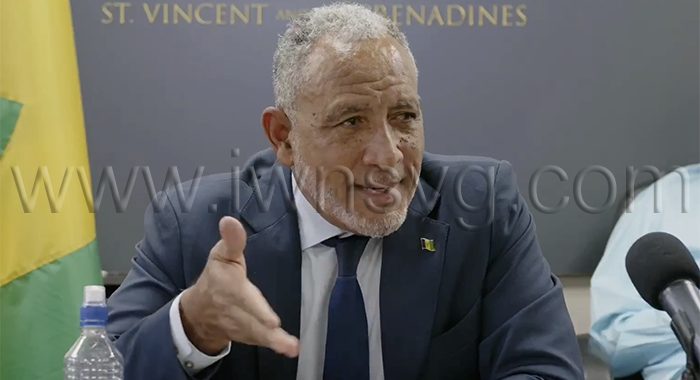
    Five months after taking office as St. Vincent and the Grenadines’ (SVG) fifth prime minister, Godwin Friday — who also serves as minister of finance — has announced a deliberate, rules-based strategy to address the Caribbean nation’s worsening debt crisis and fragile fiscal position. The plan was unveiled Tuesday during a joint press conference in Kingstown held at the conclusion of an Article IV consultation with the International Monetary Fund (IMF), the Washington-based global financial institution.

    Friday emphasized that SVG cannot rely on passive waiting for economic challenges to resolve on their own, a sharp break from the fiscal trajectory of the previous Unity Labour Party administration, which held power from 2001 until November 2024. Current projections paint a stark picture of the nation’s finances: SVG’s debt-to-GDP ratio already sits at 113% for 2025, and if no policy changes are made, that figure is expected to climb to 145% by 2031. The country has been classified at high risk of debt distress since 2016, and ongoing external shocks including soaring global oil prices and persistent inflation, paired with lingering recovery costs from recent natural disasters, have pushed the already precarious fiscal situation to a breaking point.

    While Friday confirmed the IMF is providing critical technical support to the reform effort, he stressed that the stabilisation programme will be fully homegrown, with national ownership at its core. “We will implement, we will develop, devise, of course with your technical assistance, our homegrown economic stabilisation programme that will ensure that we have national ownership of the recovery journey on which we are embarking,” the prime minister said. “We are on that journey.”

    A core principle guiding the government’s approach is social fairness, Friday added, noting that any fiscal adjustment must prioritize protecting SVG’s most vulnerable communities, who bear the brunt of rising prices and economic instability first. “It is not just a balance sheet matter… it involves people’s lives,” Friday said of the government’s framework. “The costs of these higher oil prices and higher costs of inflation and so forth… will not be borne disproportionately by those persons who are most vulnerable, because they’re the ones who feel it first. Protection of the most vulnerable are central to any reform efforts.”

    To deliver accountability and transparency, the government will establish a legally backed rules-based fiscal framework with clear, measurable targets. Key milestones include reaching a 3% primary surplus as a share of GDP by 2029, and aligning the nation’s fiscal practices with the Eastern Caribbean Currency Union (ECCU)’s 60% debt-to-GDP benchmark. Friday acknowledged the 3% surplus target is ambitious, requiring an 11 percentage point turnaround in the coming years, but noted similar shifts have been achieved in other nations, and the ambitious timeline is necessary to put SVG on a sustainable path.

    The prime minister welcomed the IMF’s balanced, collaborative approach to the partnership, saying it aligned with the government’s focus on balancing fiscal responsibility with inclusive economic growth. “We’re prepared to do what is necessary here in a way that is going to set our country on a path towards fiscal responsibility, but also one that generates growth… and that we do so in a way that is both responsible and sustainable,” Friday said.

  • NAMLAC waarschuwt regering: risico op blacklisting Suriname bij onvoldoende voortgang

    NAMLAC waarschuwt regering: risico op blacklisting Suriname bij onvoldoende voortgang

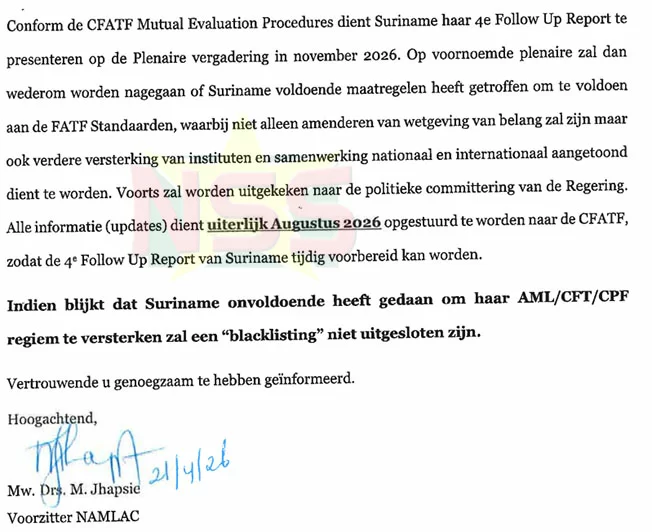
    Suriname is at serious risk of being placed on an international anti-money laundering blacklist unless urgent action is taken to strengthen its regulatory framework, the country’s National Anti-Money Laundering Commission (NAMLAC) has warned in an urgent letter addressed to President Jennifer Simons.

    The warning comes nearly four years after Suriname’s last major international assessment by the Caribbean Financial Action Task Force (CFATF), the regional body that enforces global standards set by the Financial Action Task Force (FATF). In 2022, the CFATF placed Suriname under its Enhanced Follow Up process after the country received low marks for both technical compliance and the practical effectiveness of its anti-money laundering, counter-terrorist financing, and counter-proliferation financing (AML/CFT/CPF) regime. At that time, Suriname was granted a deadline extending to 2027 to address all identified gaps and bring its rules in line with FATF’s 40 core recommendations.

    Between 2023 and 2025, Suriname made measurable progress, securing improved ratings for compliance with 27 of the 40 FATF recommendations. However, the country has hit a critical deadlock over the remaining 13 reforms. According to NAMLAC, Suriname was unable to submit any new progress assessment requests to the CFATF in 2026 because Suriname’s National Assembly has not passed any of the required legislation to address the outstanding gaps. Worse, the CFATF’s submission window for new progress updates has already closed.

    Suriname is scheduled to present its fourth Follow Up Report to the CFATF plenary assembly in November 2026. At that meeting, international assessors will conduct a full review of whether Suriname has implemented sufficient reforms to meet global FATF standards. The review will also evaluate the Suriname government’s political commitment to the reforms, the strengthening of domestic regulatory institutions, and the country’s track record on both national and international collaboration to combat illicit financial activity.

    NAMLAC has stressed that all remaining compliance updates must be submitted by no later than August 2026 to allow for the final report to be prepared in time for the November plenary. The commission has made clear that if insufficient progress is documented by the assessment deadline, blacklisting remains a very real possibility for Suriname.