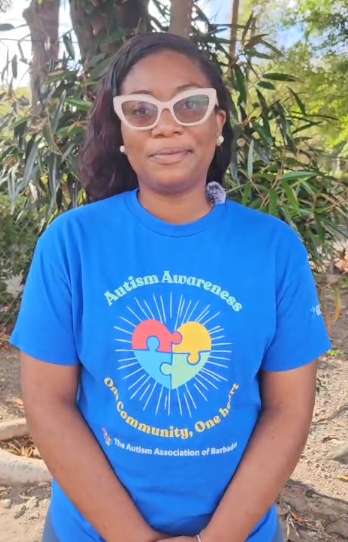
A rising tide of complaints from families of autistic children across Barbados, centered on rigid policies in high-traffic public spaces such as supermarkets, has reignited advocacy for greater flexibility, public awareness, and empathy from local business operators. Chantal Fields, Events and Coordination Chairman of the Autism Association of Barbados, outlined the ongoing everyday challenges faced by autistic people and their caregivers during an interview with Barbados TODAY, held on the sidelines of the organization’s annual Autism Awareness Walk earlier this week.
Fields emphasized that while public understanding of autism has grown incrementally in recent years, many families still encounter unnecessary barriers during routine outings. A core point of frustration is supermarket policies that ban children from riding inside shopping baskets, a safety measure many caregivers rely on to manage autistic children who are prone to elopement, or unexpected wandering.
“Many parents have reached out to me about this issue,” Fields explained. “A little bit of grace goes a long way, because not everyone can navigate a supermarket trip the same way. For autistic children prone to wandering, a trip to pick up groceries turns into a constant effort to keep them safe. Restricting the use of shopping carts as a safety space directly undermines that effort.”
Fields proposed a common-sense compromise that balances business concerns with family safety: “Businesses don’t have to drop their rules entirely. Even allowing the practice for caregivers who can show verification of their child’s autism would be a huge step forward. Everyone on the autism spectrum functions differently, and a small accommodation can drastically cut the burden on families.”
Despite these ongoing public access challenges, Fields highlighted incremental progress in other areas of daily life. In the workplace, a growing number of Barbadian employers have adopted more flexible policies to support parents of autistic children, allowing adjusted shift times to accommodate therapy appointments and excused leave for care-related needs. “Many parents have told me their workplaces have been really supportive,” she noted. “That flexibility makes a world of difference for families balancing care and work.”
In the education sector, however, systemic change remains in its early stages. Fields said the Ministry of Education has begun rolling out pilot programs for more inclusive schooling, but widespread implementation is still years away, meaning current families will not see the full benefits of these reforms. “The ministry is putting in the work, but it’s still at the pilot stage,” she said. “It won’t help many of the families currently navigating the system, but it will create better outcomes for the next generation.”
Looking toward long-term improvement, the Autism Association of Barbados has partnered with the Samuel Jackman Prescod Institute of Technology (SJPIT) to launch new skills-based training programs for autistic adults, focused on employable trades such as cooking and carpentry. The initiative aims to expand employment opportunities and increase economic independence for autistic people across the island. Fields noted that public receptiveness to these efforts has grown, with slowly opening opportunities for autistic people to participate fully in Barbadian society.
Fields’ comments came as more than 300 community supporters gathered before dawn on Tuesday for the annual Autism Awareness Walk. Participants started at the Social Empowerment Agency, traversed a marked route through Lower Collymore Rock, Culloden Road, Beckles Road, Dalkeith Road, circled the historic Garrison district, continued along Highway 7, and returned to the starting point. The event concluded with a community cool-down session, reinforcing the association’s core mission: building widespread public acceptance, practical support, and understanding for autistic people and their families across Barbados.