作者: admin

  • Dominican migration agencies create permanent committee to strengthen management and training

    Dominican migration agencies create permanent committee to strengthen management and training

    In a move designed to modernize and streamline migration governance across the Dominican Republic, two leading state migration agencies have sealed a landmark agreement to deepen collaborative work through the launch of a permanent technical committee.

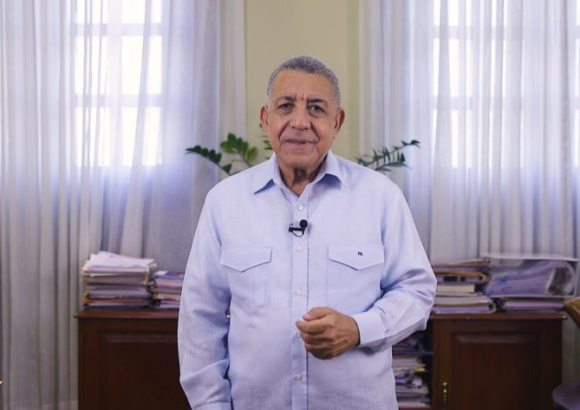
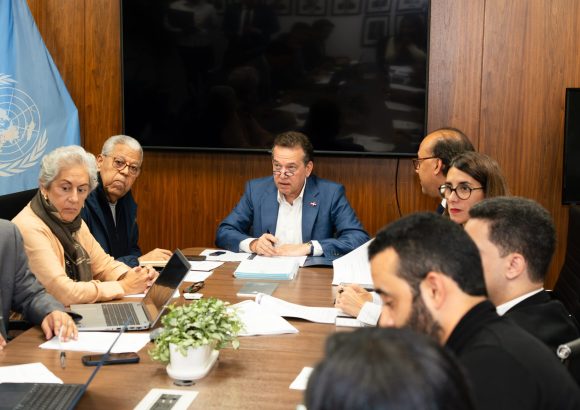
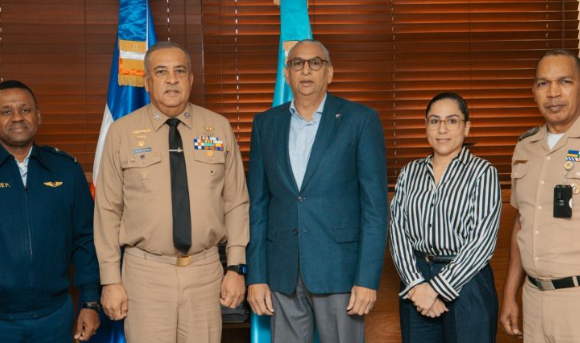
    The deal was struck during a high-level working meeting between José Benedicto Hernández, Executive Director of the National Migration Institute of the Dominican Republic (INM RD), and Vice Admiral Luis Rafael Lee Ballester, Director General of the General Directorate of Migration (DGM). During the talks, both leadership teams mapped out overlapping priorities and uncovered untapped opportunities to align their technical, academic, and operational resources, closing coordination gaps across their distinct areas of institutional responsibility.

    The newly established permanent committee will take the lead on setting priority research agendas for migration challenges facing the country, facilitating structured cross-agency information exchange, and coordinating joint academic and analytical studies. These activities are intended to build a more nuanced, data-driven understanding of shifting domestic and regional migration patterns, ultimately delivering more robust evidence to support strategic decision-making across both institutions.

    Beyond research and information sharing, the two agencies have also committed to organizing a joint technical workshop to revise and modernize the training curriculum that INM RD currently uses to upskill DGM inspectors and frontline operational agents. The core objective of this curriculum update is to align training content directly with the evolving on-the-ground needs of DGM operations, equipping staff with stronger, more relevant skills to apply standard migration protocols consistently and effectively.

    Overall, the cross-agency initiative aims to embed permanent, structured channels for cooperation that integrate research, professional training, and day-to-day migration management. By doing so, it lays the groundwork for a more coordinated, evidence-led approach to shaping migration policy and delivering institutional responses to emerging migration challenges in the Dominican Republic.


  • Banco Popular teaches financial literacy to over 58,000 Dominican children

    Banco Popular teaches financial literacy to over 58,000 Dominican children

    Financial literacy is a critical life skill that lays the foundation for long-term economic stability, and one leading Dominican financial institution is making significant strides in bringing this education to young learners across the country. As of August 2026, Banco Popular Dominicano’s ongoing youth financial education initiative has successfully engaged 58,143 children spanning every region of the Dominican Republic. The program’s core mission is to cultivate healthy early habits around three key financial skills: regular saving, intentional budgeting, and informed smart spending.

    Unlike traditional, one-note outreach campaigns, the bank has built a multi-faceted, accessible strategy that combines physical learning materials, in-person interactive events, and flexible digital resources to meet children where they are. At the center of the program’s educational materials is the children’s storybook *Ahorrar es Crear* (translated as Saving is Creating), crafted by author Laura Vicens with original illustrations by Karla Peña. Since the book’s public launch in March 2024, it has been downloaded more than 10,000 times in digital form, and the bank has distributed 18,000 printed copies through partnerships with schools and local community gatherings across the nation.

    To turn static reading into engaging, hands-on learning, Banco Popular Dominicano has partnered with Ciencia Divertida, a local organization focused on interactive educational programming, to host a series of public events under the program theme “Ahorrar nos hace bien” (Saving Does Us Good). This collaboration has produced 14 dedicated storytelling sessions and 268 structured educational workshops, which have directly interacted with and impacted 25,641 young participants, helping them connect financial concepts to their daily lives through activities rather than lectures.

    For children and families who prefer learning from home, the bank also offers a dedicated digital hub: Academia Finanzas con Propósito, the program’s official online learning platform. The centerpiece of the platform’s youth offerings is the guided course *Aventura Financiera*, developed and led by experienced facilitator Pamela Pichardo. The course walks young learners through the basics of personal money management and how they can contribute to household budget planning, and to date, 3,634 children have completed the full course and earned official certifications of completion.

    Most recently, the institution expanded its outreach through a high-profile public event: the 6th International Children and Young Adult Book Fair, held from September 15 to 20. Banco Popular set up an institutional booth at the fair to share information about its financial education program with attendees, and distributed an additional 1,000 printed copies of *Ahorrar es Crear* directly to young visitors, their parents, and attending educators, further extending the program’s reach to new communities.

  • 45 Dominican business leaders to attend Dominican Week 2026 in the U.S.

    45 Dominican business leaders to attend Dominican Week 2026 in the U.S.

    A high-profile delegation of 45 Dominican business leaders is set to embark on a four-day official visit to Washington, D.C., and New York this September, organized to deepen economic and commercial ties between the Caribbean nation and the United States. Running from September 28 to October 1, the mission forms the core of Dominican Week 2026, an initiative spearheaded by the American Chamber of Commerce of the Dominican Republic (AmchamDR) to unlock new cross-border collaboration opportunities.

    The event brings together top-tier public and private sector leaders from the Dominican Republic with key stakeholders across the U.S. business landscape, including corporate representatives, federal government agencies, leading financial institutions, and national trade associations. Attendees will hold targeted discussions across a diverse range of high-priority sectors, from nearshoring operations and climate-resilient supply chains to advanced manufacturing, renewable energy, critical mineral development, commercial aviation, and artificial intelligence innovation.

    Notably, the Dominican delegation will include several of the country’s most senior government officials to underscore the national commitment to strengthened bilateral economic relations. Among the senior policymakers joining the mission are José Ignacio Paliza, Minister of the Presidency; Víctor Bisonó, Minister of Foreign Affairs; Eduardo Sanz Lovatón, Minister of Industry and Commerce; Joel Santos, Minister of Energy and Mines; and Igor Rodríguez, Director of the Dominican Civil Aviation Board (IDAC).

    The itinerary is split between the two major U.S. economic and political hubs to address different policy and business priorities. In the nation’s capital of Washington, D.C., discussions will center on broad trade frameworks, cross-border investment policy, energy development, and regional economic resilience. The schedule will also include deep-dive working sessions focused on targeted priorities, such as AI adoption for Dominican small and medium-sized enterprises, critical mineral supply chain development, advanced manufacturing expansion, aviation sector modernization, and streamlined trade facilitation reforms.

    Once the Washington portion of the mission concludes, the delegation will travel to New York to hold closed-door meetings with leading private sector and industry institutions. Top scheduled engagements include talks with global financial services giants Visa and JPMorgan Chase, as well as leaders from the New York City Bar Association. The conversations in New York will focus on expanding access to U.S. financial services, advancing infrastructure development projects, growing participation in global capital markets, and attracting new foreign direct investment to the Dominican Republic.

    Beyond these core meetings, the 2026 Dominican Week program will also include a featured Americas Connect regional connectivity session hosted at Google’s New York facilities, alongside additional scheduled engagements with other key U.S. government agencies and national business advocacy organizations.

    In comments previewing the initiative, AmchamDR President Francesca Rainieri emphasized that Dominican Week fills a unique gap in bilateral economic relations by providing a dedicated, high-level platform for Dominican firms to connect directly with U.S. business leaders and top policy decision-makers. Through these face-to-face engagements, Rainieri noted, participants can co-develop collaborative partnerships that will drive long-term growth and deepen the interconnectedness of the U.S. and Dominican economies.

  • Dominican Republic records over 585,000 flights in last three years

    Dominican Republic records over 585,000 flights in last three years

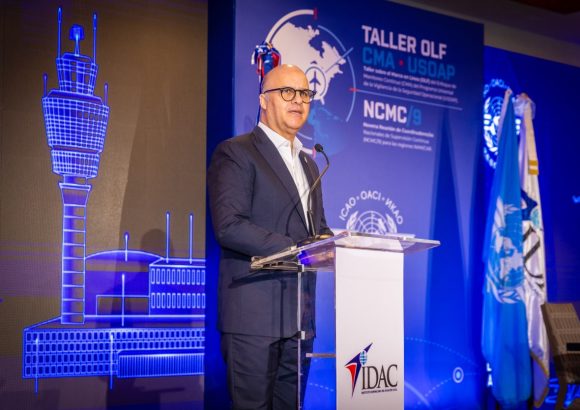
    Over the past three years, the Dominican Republic’s civil aviation sector has posted robust, sustained expansion, logging a total of 585,363 flight operations that have enabled over 50 million passenger trips, according to the top official of the Dominican Civil Aviation Institute (IDAC).

    Igor Rodríguez Durán, Director General of IDAC, shared new official sector data breaking down the recent growth trajectory: 2024 recorded 212,023 flight movements, while 2025 saw a slight uptick to 217,620 operations. By the end of August 2026, cumulative flight operations for the year already reached 155,720, putting the country on track to maintain its strong industry momentum.

    Rodríguez Durán attributed this steady growth to substantial targeted investments in modern aviation infrastructure, upgraded equipment, and specialized technical training rolled out under the administration of President Luis Abinader. Today, the Dominican Republic stands out as a regional leader in civil aviation, he noted, outpacing many neighboring markets in operational efficiency and service quality.

    The IDAC director emphasized that a thriving civil aviation sector acts as a core engine of nationwide economic activity, supporting key industries from tourism to trade and local business development. To preserve this momentum, the agency has prioritized strict adherence to international safety regulations and ongoing upgrades to operational protocols.

    In a major announcement confirming the sector’s continued expansion, Rodríguez Durán revealed that the Dominican Republic’s ninth international airport is on track to launch commercial operations in 2027. The new terminal is being developed in the municipality of Oviedo, located in the southwestern Pedernales province, with the explicit goal of unlocking accelerated growth across the underdeveloped Enriquillo region.

    IDAC is currently in the process of procuring and installing cutting-edge navigation, safety, and passenger service equipment, all designed to meet the highest global standards ahead of the airport’s opening. According to Rodríguez Durán, the new infrastructure will deliver transformative benefits for Enriquillo’s local population, opening up new pathways for economic opportunity, social connectivity, and tourism development that have long been out of reach for the region.

    “IDAC will continue working to ensure that the expansion of Dominican civil aviation meets the highest standards of operational safety,” he added, reinforcing the agency’s commitment to balancing growth with public safety as the sector evolves.

  • Dominican Republic advances regional development as tourism and exports hit records

    Dominican Republic advances regional development as tourism and exports hit records

    In a major push to decongest the capital and spread economic opportunity across the country, the Dominican government has announced significant progress on a slate of regional development projects designed to draw foreign and domestic investment, generate new jobs, and expand access to public services outside of Santo Domingo this week. Top officials have emphasized that balanced territorial growth, upgraded infrastructure, and inclusive economic expansion are core priorities of the current administration, marking a shift away from over-concentration of development in the capital region.

    Félix Reyna, director of the Dominican Republic’s Directorate of Strategy and Government Communication (Diecom), outlined that ongoing initiatives across four key development hubs — Manzanillo, Punta Bergantín, Cabo Rojo, and Miches — are focused on four pillars: expanding core public infrastructure, supporting local productive sectors, delivering hands-on technical training to local workforces, and connecting unemployed residents to open positions across growing industries. These projects are laying the groundwork for long-term, sustainable growth in regions that have historically been overlooked in national development planning.

    In the country’s second-largest city of Santiago de los Caballeros, a transformative 13-kilometer monorail transit project is on track to launch trial operations this coming October. The system will feature 14 stations across the city and integrate seamlessly with Santiago’s existing cable car, dedicated bus rapid transit corridors, and city-wide bicycle network to create a fully connected multi-modal public transit system. Officials confirmed that the unified fare for a ride across any mode of the integrated network will be set at 35 Dominican pesos, keeping the service accessible for low and middle-income commuters.

    Santiago is also set to receive major investments in critical public infrastructure beyond transit. Around 9 billion Dominican pesos have been allocated for the construction of the Cibao Central Aqueduct, which will resolve long-standing water access issues for hundreds of thousands of residents across the region. Additionally, a separate 1.7 billion Dominican peso investment is currently under review to upgrade and expand Santiago’s public hospital infrastructure, improving access to quality healthcare for local communities.

    Beyond infrastructure development, the Dominican Republic is posting landmark economic gains across two of its most vital sectors: tourism and exports. From January through August 2026, the country welcomed a record-breaking 8,556,415 international visitors arriving by air and sea, representing a 6.9% year-over-year increase compared to the same period in 2025. This growth confirms the Dominican Republic’s position as the top tourist destination in the Caribbean. Exports also hit an all-time high over the same eight-month period, reaching a total of $10.56 billion USD — an 11.4% increase year over year. Raw gold emerged as the country’s top export, contributing $2.02 billion USD to the total export figure.

    On the policy front, the Dominican government has formally approved the 2027 General State Budget Bill, which totals 2.04 trillion Dominican pesos. The budget framework prioritizes funding for key sectors that drive inclusive growth: public education, public health, regional infrastructure development, private sector productivity, and institutional strengthening to improve government service delivery.

    On the international stage, Dominican President Luis Abinader traveled to New York City to take part in the 81st session of the United Nations General Assembly. During his visit, the president is scheduled to hold a series of high-level bilateral and multilateral meetings with global leaders, where he will advocate for policy priorities and initiatives that advance the Dominican Republic’s national interests on the global stage.

  • Abinader honors 14 Dominicans for their contributions in the U.S.

    Abinader honors 14 Dominicans for their contributions in the U.S.

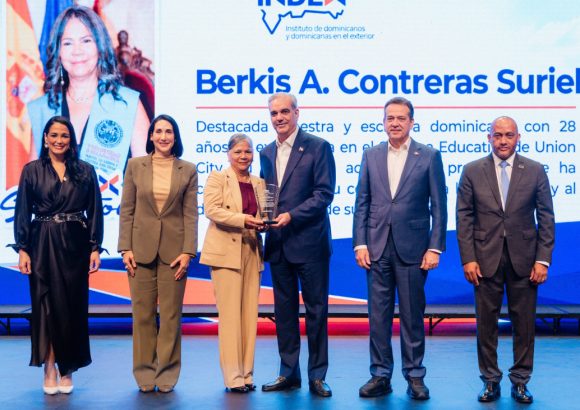
    Held in New York City, the fourth annual “Index Somos Todos” Outstanding Dominican Abroad Recognition ceremony brought top Dominican government officials together with members of the country’s vast global diaspora to celebrate the achievements and contributions of 14 exceptional Dominican professionals based in the United States. Leading the event were Dominican Republic President Luis Abinader, First Lady Raquel Arbaje, and Foreign Minister Víctor “Ito” Bisonó, with the program organized by the Institute of Dominicans Abroad (Index), the government body dedicated to connecting the nation with its global community of expatriates.

    The 2025 cohort of honorees spans a wide range of professional sectors, reflecting the diverse impact of Dominican diaspora members across U.S. society. Recognized leaders include New York Police Department Lieutenant Gypsy Pichardo, pulmonologist and academic professor Wilson Arismendy Quezada, prominent businesswoman Bernarda Rodríguez, public health coordinator Yraida Aponte, communications strategist Mayra Serafina Linares, senior technology executive Jorge Ulloa, primary care physician Yohanna Olivo, and bodega industry leader Carlos Elpidio Herrera. The list of honorees also includes actress and entrepreneur Lorena Jorge, U.S. military veteran Alfonso Geomar Matos Mesa, physician Agustín Apolinar Rojas, Union City Public Works Commissioner Wendy Arelis Mesa Grullón, educator and author Berkis Contreras Suriel, and behavioral health executive Ertuania Jorge Ghosh.

    During his remarks at the ceremony, Foreign Minister Bisonó underscored the Dominican government’s ongoing commitment to deepening and strengthening ties with the Dominican diaspora, a community that numbers more than three million people spread across 129 countries and territories around the world. Bisonó emphasized that the contributions of Dominican expatriates extend far beyond the critical economic support of remittances, noting that diaspora members also drive growth through cross-border investment, entrepreneurial innovation, and the sharing of specialized knowledge and professional expertise built through their careers abroad.

    He highlighted that annual remittances from the diaspora are projected to reach approximately $11.9 billion in 2025, with the vast majority of that funds coming from Dominican communities in the United States. The packed ceremony drew a diverse audience of attendees, including senior Dominican government delegates, U.S.-based community leaders, family members of the honorees, and representatives of the large Dominican diaspora community across the United States.

  • Master of the Ocean 2026 opens in Cabarete with Dominican flair and action-packed multidisciplinary competition

    Master of the Ocean 2026 opens in Cabarete with Dominican flair and action-packed multidisciplinary competition

    One of the world’s most demanding multidisciplinary water sports competitions, the 21st edition of Master of the Ocean, has officially launched in the coastal town of Cabarete, Dominican Republic. The annual event draws elite and amateur athletes from more than 12 countries, who gather to test their versatility across five distinct ocean-based disciplines: kitesurfing, wing foil, surfing, stand up paddle (SUP), and windsurfing.

    The opening ceremony, held on September 16 at Coconuts Restaurant on Cabarete’s Hideaway Beach, set a vibrant tropical tone for the competition. The gathering brought together competing athletes, event organizing committees, local government officials, and tourism industry guests to mark the start of the week-long event.

    Organizers faced an early challenge from unpredictable weather, as unstable northeast winds and intermittent rain showers disrupted the originally planned competition schedule, forcing last-minute adjustments to heat timings. Once meteorological and ocean conditions stabilized, the opening rounds of kitesurf, wing foil, surf, and SUP got underway, with competitors navigating consistent 1- to 3-foot breaking waves.

    What sets Master of the Ocean apart from single-discipline water sports events is its unique format and focus on all-around athletic ability. Each heat features four competitors, with only the top two advancing to subsequent rounds. Athletes must demonstrate seamless adaptability, switching between five vastly different disciplines over the course of the competition and adjusting their technique to match shifting ocean swells and wind patterns.

    In the opening kitesurf heats, two-time defending overall champion Maxime L’Huillier of France claimed a decisive victory in Heat 1. Additional opening heat wins went to Tom Court of England, local favorite Joselito del Rosario from the Dominican Republic, and Germany’s Lucas Matthes.

    L’Huillier and Court carried their momentum into the opening wing foil rounds, where they notched another pair of wins, while Jan Malte Claus and Matthes secured victories in the two remaining opening wing foil heats. In the opening surf heats, wins went to Mad Max Tullet, Tom Court, Jan Malte Claus, and Dominican athlete Francis Gonzalez. For the opening SUP rounds, first-place finishes went to L’Huillier, Deni Blondet of Peru, local competitor Sammy Perez Hults, and Gonzalez.

    The windsurfing discipline got underway after stronger winds moved into the Cabarete coast, though official results for its opening rounds remain pending as wind conditions weakened again before heats could be completed.

    The competition is set to continue through the coming days at the Cabarete venue, far beyond just a sporting event. The competition blends elite water sports action with laid-back Caribbean beach culture, live music, and community engagement, while also positioning the Dominican Republic as a leading global destination for sustainable adventure tourism and world-class water sports.

  • Haiti extradites 18 suspects to U.S. in President Jovenel Moïse assassination case

    Haiti extradites 18 suspects to U.S. in President Jovenel Moïse assassination case

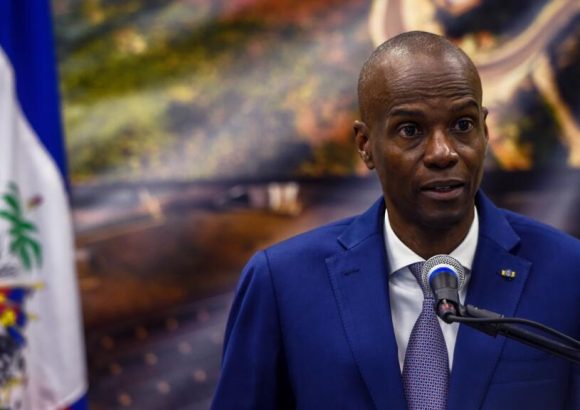
    On Sunday, Haitian officials made a major announcement regarding the high-profile 2021 assassination of former President Jovenel Moïse, confirming that multiple individuals charged with connection to the killing have been extradited to the United States. The announcement also brought public acknowledgment of a disappointing reality: Haiti’s own domestic judicial process into the assassination remains mired in crippling delays, years after the crime took place.

    While Haiti’s Ministry of Justice declined to share an exact number of transferred suspects, U.S. Attorney Jason A. Reding Quiñones clarified that 18 individuals were moved from Haitian custody to U.S. authorities aboard a U.S. military aircraft, where they will now answer to charges in the American judicial system. This transfer was carried out in direct response to an extradition request submitted by U.S. law enforcement, executed under the terms of the longstanding extradition treaty between the two nations. To date, U.S. prosecutors have brought charges against a total of 30 people linked directly to the July 7, 2021 assassination.

    In its official statement, the Haitian Justice Ministry outlined the significant barriers that have blocked progress in the country’s domestic case. As of 2026, five full years after Moïse was killed at his private residence in Port-au-Prince, the domestic investigation has yet to progress to a formal trial. In contrast, U.S. legal proceedings have moved forward steadily, with law enforcement completing arrests, moving forward with prosecutions, and securing convictions connected to the plot already.

    The pool of extradited suspects includes one of the most high-profile figures tied to the attack: Joseph Félix Badio, who Haitian authorities identify as a key mastermind of the assassination plot. He was transferred alongside a group of Colombian nationals that investigators allege also played direct roles in planning and carrying out the killing.

    Haitian government officials emphasized that the extradition process is expected to benefit the stalled domestic investigation long-term. Evidence and information gathered through U.S. legal proceedings, they say, will provide critical new material to advance Haiti’s own inquiry into the assassination once extradition processes are complete.

    Moïse’s assassination did not only trigger a national judicial reckoning—it dramatically worsened the already fragile political and security crisis that has gripped Haiti for years. In the years following the killing, the country has been overwhelmed by a surge of uncontrolled gang violence that has displaced hundreds of thousands and terrorized civilian communities. Latest United Nations data underscores the severity of the ongoing crisis: in just the first half of 2026 alone, at least 3,050 people have been killed across Haiti, with an additional 1,401 people suffering injuries in gang-related and political violence.

  • Dominican Foreign Minister coordinates UN General Assembly agenda

    Dominican Foreign Minister coordinates UN General Assembly agenda

    NEW YORK — Fresh off his appointment as Dominican Republic’s top diplomat, Foreign Minister Víctor “Ito” Bisonó has kicked off critical coordination work for the country’s upcoming high-stakes participation in the 81st United Nations General Assembly’s High-Level Week, convening a working gathering at the Dominican Permanent Mission to the UN’s New York headquarters Sunday.

    Held ahead of the September 22 to 28 high-profile diplomatic event, the meeting gathered key senior diplomatic figures from the Caribbean nation, including Vice Ministers Vilma Arbaje de Contreras and Rubén Silié, Wellington Bencosme — the Dominican Republic’s Permanent Representative to the UN — full mission delegation members, and senior foreign policy advisors to the Dominican Foreign Ministry.

    During the working session, Bisonó led a comprehensive walkthrough of the country’s official stances for the packed schedule of upcoming activities, which includes multilateral negotiation sessions, high-stakes bilateral diplomatic meetings, and a series of other top-tier international engagements. The core objective of this alignment check is to ensure every Dominican position at the assembly fully adheres to the overarching foreign policy framework laid out by Dominican President Luis Abinader.

    Sunday’s gathering marked a significant milestone for the new foreign minister: it was his first official visit to the Dominican Republic’s UN diplomatic mission since he took office. Bisonó received a formal ceremonial welcome, complete with an official honor guard organized by Ambassador Bencosme. Following the opening reception, the foreign minister toured the mission’s facilities, and held a casual meeting with all local diplomatic and administrative staff to learn about their day-to-day work at the UN post.

  • Five young Dominicans complete 480-hour challenge to reclaim reading record

    Five young Dominicans complete 480-hour challenge to reclaim reading record

    In a remarkable display of endurance and commitment to promoting literacy, five young Dominican participants have crossed the finish line of a grueling 480-hour non-stop reading aloud marathon, wrapping up their 20-day challenge Sunday evening in Santo Domingo.

    The team, composed of Abril del Rosario, Ismael Durán, Maikol Arias, Mayury Vélez and Franchesca Minier, hit the official 480-hour milestone at 6:00 p.m. local time, capping off a round-the-clock effort that saw the group rotate and maintain continuous reading across 20 consecutive days. By the end of the challenge, the participants had worked their way through 63 full books, turning a collective display of endurance into a celebration of written work.

    Crowds of family members, friends, and enthusiastic supporters gathered on site to cheer on the team as they completed their final hour, joining in a joyful celebration of their achievement. Beyond the goal of claiming a world record, the initiative carries a broader social mission: to foster a culture of reading across the Dominican Republic, and shine a spotlight on the active role young Dominicans play in advancing the country’s education, cultural development, and knowledge sharing.

    For organizers, the challenge is also a matter of national pride. The Dominican Republic previously held the Guinness World Record for the longest reading marathon roughly 15 years ago, and this effort was organized to bring the title back to the country. Now that the on-the-ground challenge is complete, the team will submit all required evidence and official documentation to Guinness World Records headquarters. Independent adjudicators will review the submission to verify that all of the organization’s strict requirements have been met, before granting official recognition of the new record attempt.