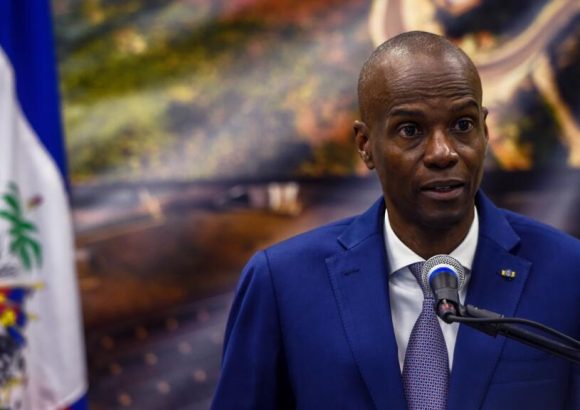
On Sunday, Haitian officials made a major announcement regarding the high-profile 2021 assassination of former President Jovenel Moïse, confirming that multiple individuals charged with connection to the killing have been extradited to the United States. The announcement also brought public acknowledgment of a disappointing reality: Haiti’s own domestic judicial process into the assassination remains mired in crippling delays, years after the crime took place.
While Haiti’s Ministry of Justice declined to share an exact number of transferred suspects, U.S. Attorney Jason A. Reding Quiñones clarified that 18 individuals were moved from Haitian custody to U.S. authorities aboard a U.S. military aircraft, where they will now answer to charges in the American judicial system. This transfer was carried out in direct response to an extradition request submitted by U.S. law enforcement, executed under the terms of the longstanding extradition treaty between the two nations. To date, U.S. prosecutors have brought charges against a total of 30 people linked directly to the July 7, 2021 assassination.
In its official statement, the Haitian Justice Ministry outlined the significant barriers that have blocked progress in the country’s domestic case. As of 2026, five full years after Moïse was killed at his private residence in Port-au-Prince, the domestic investigation has yet to progress to a formal trial. In contrast, U.S. legal proceedings have moved forward steadily, with law enforcement completing arrests, moving forward with prosecutions, and securing convictions connected to the plot already.
The pool of extradited suspects includes one of the most high-profile figures tied to the attack: Joseph Félix Badio, who Haitian authorities identify as a key mastermind of the assassination plot. He was transferred alongside a group of Colombian nationals that investigators allege also played direct roles in planning and carrying out the killing.
Haitian government officials emphasized that the extradition process is expected to benefit the stalled domestic investigation long-term. Evidence and information gathered through U.S. legal proceedings, they say, will provide critical new material to advance Haiti’s own inquiry into the assassination once extradition processes are complete.
Moïse’s assassination did not only trigger a national judicial reckoning—it dramatically worsened the already fragile political and security crisis that has gripped Haiti for years. In the years following the killing, the country has been overwhelmed by a surge of uncontrolled gang violence that has displaced hundreds of thousands and terrorized civilian communities. Latest United Nations data underscores the severity of the ongoing crisis: in just the first half of 2026 alone, at least 3,050 people have been killed across Haiti, with an additional 1,401 people suffering injuries in gang-related and political violence.