In a major push to decongest the capital and spread economic opportunity across the country, the Dominican government has announced significant progress on a slate of regional development projects designed to draw foreign and domestic investment, generate new jobs, and expand access to public services outside of Santo Domingo this week. Top officials have emphasized that balanced territorial growth, upgraded infrastructure, and inclusive economic expansion are core priorities of the current administration, marking a shift away from over-concentration of development in the capital region.
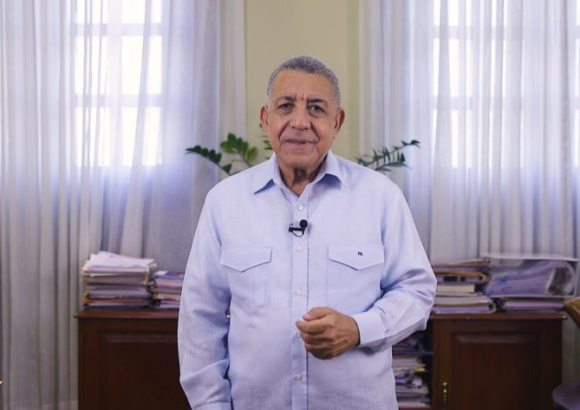
Félix Reyna, director of the Dominican Republic’s Directorate of Strategy and Government Communication (Diecom), outlined that ongoing initiatives across four key development hubs — Manzanillo, Punta Bergantín, Cabo Rojo, and Miches — are focused on four pillars: expanding core public infrastructure, supporting local productive sectors, delivering hands-on technical training to local workforces, and connecting unemployed residents to open positions across growing industries. These projects are laying the groundwork for long-term, sustainable growth in regions that have historically been overlooked in national development planning.
In the country’s second-largest city of Santiago de los Caballeros, a transformative 13-kilometer monorail transit project is on track to launch trial operations this coming October. The system will feature 14 stations across the city and integrate seamlessly with Santiago’s existing cable car, dedicated bus rapid transit corridors, and city-wide bicycle network to create a fully connected multi-modal public transit system. Officials confirmed that the unified fare for a ride across any mode of the integrated network will be set at 35 Dominican pesos, keeping the service accessible for low and middle-income commuters.
Santiago is also set to receive major investments in critical public infrastructure beyond transit. Around 9 billion Dominican pesos have been allocated for the construction of the Cibao Central Aqueduct, which will resolve long-standing water access issues for hundreds of thousands of residents across the region. Additionally, a separate 1.7 billion Dominican peso investment is currently under review to upgrade and expand Santiago’s public hospital infrastructure, improving access to quality healthcare for local communities.
Beyond infrastructure development, the Dominican Republic is posting landmark economic gains across two of its most vital sectors: tourism and exports. From January through August 2026, the country welcomed a record-breaking 8,556,415 international visitors arriving by air and sea, representing a 6.9% year-over-year increase compared to the same period in 2025. This growth confirms the Dominican Republic’s position as the top tourist destination in the Caribbean. Exports also hit an all-time high over the same eight-month period, reaching a total of $10.56 billion USD — an 11.4% increase year over year. Raw gold emerged as the country’s top export, contributing $2.02 billion USD to the total export figure.
On the policy front, the Dominican government has formally approved the 2027 General State Budget Bill, which totals 2.04 trillion Dominican pesos. The budget framework prioritizes funding for key sectors that drive inclusive growth: public education, public health, regional infrastructure development, private sector productivity, and institutional strengthening to improve government service delivery.
On the international stage, Dominican President Luis Abinader traveled to New York City to take part in the 81st session of the United Nations General Assembly. During his visit, the president is scheduled to hold a series of high-level bilateral and multilateral meetings with global leaders, where he will advocate for policy priorities and initiatives that advance the Dominican Republic’s national interests on the global stage.