作者: admin

  • Sports Minister, ABFA Hold Talks on Football Development

    Sports Minister, ABFA Hold Talks on Football Development

    A pivotal meeting focused on elevating Antigua and Barbuda’s domestic football landscape has brought together Sports Minister Dwayne George and senior leadership from the Antigua and Barbuda Football Association (ABFA). The high-stakes discussion, centered on crafting actionable strategies to expand the sport’s reach and impact across both islands, also delved into opportunities to strengthen cross-sector collaboration between the national government and the country’s governing football body.

    Throughout the talks, both sides emphasized that deeper, more coordinated cooperation between public institutions and the ABFA will be critical to laying a robust, long-lasting foundation that supports football at every level – from grassroots youth programs to the national men’s and women’s senior teams. Minister George used the gathering to publicly reaffirm the government’s unwavering commitment to backing the development of football, noting that strategic public-private partnerships will be a core pillar of the administration’s approach to growing the sport. He added that unlocking football’s full potential in Antigua and Barbuda requires aligned priorities and consistent investment from both government and the sport’s governing body, outcomes the meeting is expected to advance in the coming months.

  • Saint Lucia to host CARICOM Heads of Government Meeting in July

    Saint Lucia to host CARICOM Heads of Government Meeting in July

    The Caribbean Community (CARICOM) has announced formal plans for its 51st Regular Meeting of the Conference of Heads of Government, set to take place in the coastal town of Gros Islet, Saint Lucia, between July 5 and 8, 2026. The gathering will be led by incoming CARICOM Chair Philip J. Pierre, the Prime Minister of Saint Lucia, who will officially take up his leadership duties on July 1 ahead of the summit.

    The summit’s opening ceremony is scheduled for 4:00 pm Eastern Caribbean Time on Sunday, July 5. The keynote line-up of speakers includes incoming Chair Pierre, outgoing Chair Dr. Terrance Drew (Prime Minister of Saint Kitts and Nevis), and CARICOM Secretary-General Dr. Carla Barnett, who will each address assembled attendees. Following the opening, three days of closed-door business sessions from July 6 to 8 will bring regional leaders together to debate and deliberate on pressing policy priorities that shape the future of the Caribbean bloc.

    A hybrid closing press conference, offering both in-person and virtual participation for journalists, will wrap up the summit on Wednesday, July 8. Ahead of the event, CARICOM will launch a dedicated digital knowledge hub by June 10 at https://caricom.org/51hgc/, which will host all key updates, background materials, and logistical information for delegates and the public.

    In a nod to the bloc’s focus on public wellness and community engagement, the 19th annual CARICOM Road Run/Walk will be held ahead of the official summit opening on July 5. The inclusive athletic event welcomes both amateur and professional competitors from across the region, designed to highlight the proven benefits of sport and physical activity for improving overall quality of life for Caribbean citizens.

    Founded on July 4, 1973, with the signing of the Treaty of Chaguaramas, CARICOM has grown into one of the most successful regional integration projects in the developing world. The 2001 revision of the founding treaty paved the way for the creation of a CARICOM Single Market and Economy, deepening economic cooperation across member states. Today, the bloc counts 15 full Member States and six Associate Members, serving a combined population of roughly 16 million people, over 60% of whom are under the age of 30.

    CARICOM’s work is structured around four core strategic pillars: economic integration, coordinated foreign policy, human and social development, and cross-border security cooperation. The organization’s overarching mission is to build a cohesive, inclusive, and resilient regional community driven by knowledge, innovation, excellence, and productivity. It aims to position the bloc as a unified, competitive global actor, where all citizens enjoy security, equal access to opportunity, protected human rights, and social justice, and can share in the region’s collective economic, social, and cultural prosperity. The CARICOM Secretariat, the bloc’s central administrative body, is permanently based in Georgetown, Guyana.

  • Anthropic urges AI labs to pause, warns humans risk losing control

    Anthropic urges AI labs to pause, warns humans risk losing control

    As artificial intelligence advances at an unprecedented pace, one of the industry’s leading safety-focused firms is sounding the alarm and calling for unified global action to rein in development of the most powerful systems. Anthropic, the developer of the popular Claude chatbot, outlined its proposal in a public blog post published Thursday, arguing that rapid technological gains have outpaced safety preparations, creating a tangible risk that humans could ultimately lose control of increasingly autonomous AI systems.

    In the post, co-authored by company co-founder Jack Clark and Marina Favaro, head of Anthropic’s independent research institute, the firm laid out the core case for a coordinated pause. Citing current industry trends, Anthropic warned that given access to sufficient computing power, cutting-edge AI systems could soon achieve the ability to design and build their own improved successors — a scenario known as recursive self-improvement. While the company acknowledged that this technological milestone could unlock major breakthroughs in fields ranging from medical research to scientific discovery, it also emphasized that it would dramatically amplify the risk of unaligned AI that operates outside of human oversight.

    The proposed pause, Anthropic argued, would create critical breathing room for societal institutions and AI alignment research to catch up to rapid technical advances. Alignment, a core concept in AI safety, refers to the ongoing work of ensuring AI systems’ goals and behaviors align with human values and intentions. Anthropic also noted that a coordinated global verification mechanism would prevent bad actors from exploiting a widespread slowdown to secretly accelerate their own development, and avoid the scenario where less safety-focused firms gain an unfair advantage by pushing ahead unregulated.

    The proposal comes as the AI industry is already roiled by competing perspectives on how to govern cutting-edge development. Just one day before Anthropic published its post, OpenAI — Anthropic’s main rival and developer of the ChatGPT large language model — published a report pushing for a different approach to AI governance. OpenAI argued that democratic national governments, not private tech companies acting independently, should be the ultimate arbiters of AI rules, safety safeguards and accountability mechanisms. “Decisions about the pace of AI innovation should not be left to any one lab, company, or special interest group,” the company said in its statement.

    Anthropic’s call for a pause also follows a separate alarming warning released earlier this same week from a team of cybersecurity researchers at the University of Toronto. The team published research detailing how off-the-shelf AI tools can be repurposed to create a new breed of adaptive AI-powered “worm” that evolves its hacking strategy as it spreads across connected devices, allowing it to take over entire large-scale computing networks.

    Lead researcher Nicolas Papernot explained in an interview that the team built the proof-of-concept worm using a widely available open-source AI tool that is cheap and easy for bad actors to access and modify. Unlike traditional cyberattacks that focus exclusively on high-value targets such as banking systems, hospital infrastructure, or power grids, Papernot noted that AI-powered hacking lowers the cost of attacks so dramatically that any internet-connected device — even an old unused laptop stored in a basement — can be co-opted as a launch pad for larger attacks on critical infrastructure. “Anything connected to the internet is now at risk,” he said, adding that even smaller, widely available AI tools pose meaningful security risks, not just the largest and most powerful frontier language models. Papernot notified Canadian cybersecurity authorities ahead of publishing his team’s findings, and called for expanded cross-sector collaboration between tech firms, government agencies and academic researchers to develop effective countermeasures for AI-powered cyber threats.

    Widespread concern about unregulated advanced AI and its potential to cause societal harm has grown steadily as models grow more capable. Earlier this year, Anthropic’s own Mythos model sent shockwaves through finance and tech industries after demonstrating an ability to autonomously detect unpatched vulnerabilities in existing commercial code. Despite growing risks, regulatory progress has lagged, particularly in the United States — where most of the world’s leading AI development labs are based. Earlier this week, the Trump administration issued an executive order placing responsibility for safety testing on the firms themselves, requiring that companies voluntarily submit their most capable models for government cybersecurity testing before public release.

    This is not the first time AI researchers and industry figures have called for a pause on advanced AI development. In 2023, the non-profit Future of Life Institute led a prominent push to halt advanced AI development for six months to allow time for the creation of binding safety guardrails, a move backed by high-profile figures including Elon Musk, owner of independent AI lab xAI. That previous effort failed to gain widespread industry or government traction.

    Anthropic has positioned itself as a safety-first AI developer since its founding. Earlier this year, the firm drew public attention and government pushback when it refused to license its AI models to the U.S. military for use in domestic surveillance and fully autonomous weapons systems. As a result, the Pentagon placed Anthropic on a national security blacklist that is set to take effect in 2026, barring the company from federal government contracts.

    Anthropic’s new proposal comes as both the firm and OpenAI are moving toward initial public offerings (IPOs) to sell shares to public markets. Analysts currently estimate that Anthropic’s IPO could value the company at nearly $1 trillion, underscoring the high financial stakes at play in the global debate over AI safety and regulation.

  • National Bank Partners with the Ministry of Environment as Official Sustainability Partner (June 5)

    National Bank Partners with the Ministry of Environment as Official Sustainability Partner (June 5)

    On June 5, 2026 — World Environment Day — a landmark public-private partnership launched at Basseterre’s Independence Square in St. Kitts, cementing a shared commitment to advancing national climate action and sustainable development across the Federation of St. Kitts and Nevis. St. Kitts-Nevis-Anguilla National Bank Ltd. (SKNANB), the nation’s leading locally owned financial institution, has been formally named the Official Sustainability Partner for the Ministry of Environment, Climate Action and Constituency Empowerment’s 2026 Environment Month.

    This collaboration marks a major milestone in SKNANB’s long-term alignment with the Federation’s Sustainable Island State Agenda (SISA), a national strategic framework that outlines seven core pillars to guide St. Kitts and Nevis toward becoming a fully resilient, self-sufficient nation by 2040. Unlike traditional one-off sponsorship arrangements, the bank frames this collaboration as an active, ongoing commitment rooted in the shared understanding that environmental stewardship is not a responsibility reserved exclusively for government bodies — it requires collective action from every sector of society, including the financial industry.

    Throughout Environment Month 2026, SKNANB will participate in a full slate of cross-national programming, including public awareness campaigns, community-led activation events, and educational outreach initiatives designed to embed sustainable practices across local households and neighborhoods. For the bank, this work goes far beyond symbolic support: officials emphasize that SKNANB is a partner in action, invested in building a livable future that the nation can truly depend on.

    At the core of the partnership is a set of new, accessible green financing products tailored to make sustainable lifestyle upgrades financially attainable for every family and household across the Federation. The first offering, Eco-Friendly Home Upgrade Financing, provides tailored funding for homeowners looking to invest in energy-efficient home improvements — ranging from residential solar panel installation to rainwater harvesting systems and other low-impact home enhancements. The second initiative, Green Vehicle Financing, lowers barriers for consumers transitioning to cleaner transportation by supporting the purchase of electric and hybrid vehicles, directly advancing the Federation’s national decarbonization targets.

    Both products are built around the core principle that sustainable choices should not be out of financial reach for ordinary residents. SKNANB has structured the offerings to be affordable and widely accessible, aligning with both the long-term economic health of the Federation and the protection of its unique natural environment. Officials note that the bank’s commitment does not end when Environment Month concludes: the institution plans to sustain its partnership with the ministry and continue advancing green finance initiatives through every step of the nation’s progress toward its 2040 SISA goals.

    As the leading premier financial institution in the Federation, SKNANB provides a full portfolio of personal, business, and community-focused financial products and services. The organization has long prioritized community development, robust corporate social responsibility, and cross-sector partnerships that deliver lasting positive impact to the people of St. Kitts and Nevis.

  • Antigua and Barbuda Transfers Fisheries Complexes to Antigua Fisheries Limited

    Antigua and Barbuda Transfers Fisheries Complexes to Antigua Fisheries Limited

    In a major restructuring of the nation’s fisheries management framework, the government of Antigua and Barbuda has given final approval to hand over operational and administrative control of all its public fisheries complexes to Antigua Fisheries Limited, a move set to reshape how the sector serves local fishing communities and industry stakeholders.

    The transfer agreement covers four key facilities spread across both islands of the nation: three complexes located in Point, Parham and Urlings on the main island of Antigua, alongside the single fisheries facility on the sister island of Barbuda. Prior to this decision, all four complexes were directly managed by the Fisheries Division, a department operating under the country’s Ministry of Agriculture.

    Cabinet members formalized the handover during their scheduled weekly meeting held Thursday. Before voting to approve the management shift, officials conducted a comprehensive review of the existing conditions of each complex and evaluated multiple possible management models, ultimately settling on the transfer to Antigua Fisheries Limited. According to an official post-meeting briefing, the company was chosen over alternative candidates due to its proven track record in fisheries infrastructure management and robust institutional capacity to carry out much-needed upgrades and day-to-day oversight.

    Alongside approving the transfer, the Cabinet has also signed off on a new board of directors to lead Antigua Fisheries Limited through the transition period and beyond. Retired public administrator and industry veteran Hassett Julian has been appointed as the board’s new chair, tasked with guiding strategic planning, ensuring transparent governance and holding the organization accountable for meeting performance targets.

    Government officials emphasize that the restructuring is not a privatization play, but a targeted reform designed to address longstanding gaps in public management. The core goals of the shift are to streamline daily operations, cut through bureaucratic red tape that has slowed improvements, strengthen clear lines of accountability, and expand the quality of services available to small-scale fishers, seafood vendors, and other local groups that rely on these complexes for their livelihoods.

    In the long term, policymakers project that the new governance arrangement will accelerate much-needed modernization of the country’s fisheries infrastructure, cement the long-term environmental and economic sustainability of the local fisheries sector, and ensure that the complexes receive consistent, high-quality maintenance while remaining responsive to the evolving needs of coastal fishing communities across the nation.

  • St. Kitts and Nevis: Your Ultimate Getaway Place for Peace – Georgia Online

    St. Kitts and Nevis: Your Ultimate Getaway Place for Peace – Georgia Online

    For modern travelers burnt out by the relentless pace of daily life and overcrowded, commercialized tourist hotspots, a new generation of travel seekers is prioritizing peace and authenticity over crowded attractions and flashy itineraries. Tucked between the Atlantic Ocean and Caribbean Sea in the Eastern Caribbean, the twin-island nation of St. Kitts and Nevis has emerged as the ideal destination for this growing group of discerning travelers, carving out a reputation as an unspoiled sanctuary that delivers both quiet relaxation and memorable, one-of-a-kind experiences.

    Unlike many popular Caribbean destinations that have become overrun by mass tourism, St. Kitts and Nevis retains a secluded, intimate atmosphere that still remains surprisingly accessible to global visitors. The primary gateway for international travelers is Robert L. Bradshaw International Airport on St. Kitts, which hosts both direct and connecting flights from major urban centers across the United States, Canada, and the United Kingdom. For travelers coming from other parts of the Caribbean, convenient connecting routes through regional hubs make the final journey to the islands smooth and straightforward.

    High-end travelers arriving via private jet or luxury yacht are also fully catered to, with modern infrastructure and premium custom services designed exclusively for private travel. The islands’ well-appointed marinas and dramatic, scenic coastline have made them a favorite stop for private vessels cruising through the Caribbean, offering a safe, welcoming port of call with world-class amenities.

    Once visitors have set foot on the islands, traveling between St. Kitts and Nevis is quick, convenient, and even adds to the overall experience. Regular public ferry services and private water taxis run frequent short trips between the two islands, letting travelers explore the unique culture, landscapes, and attractions of both destinations during a single vacation without hassle or delay.

    The appeal of St. Kitts and Nevis stretches far beyond its convenient access and luxury amenities. Outdoor enthusiasts can meander along powdery, untouched beaches, hike the trails of St. Kitts’ dormant volcano to take in sweeping panoramic views that are home to a wealth of unique native wildlife, or dive into crystal-clear Caribbean waters for snorkeling and scuba diving adventures. Those seeking relaxation can unwind at high-end beachfront resorts, recharge at secluded wellness retreats, or tee off at well-maintained championship golf courses set against stunning backdrops of tropical greenery and ocean views.

    What truly sets this twin-island nation apart from other Caribbean getaways is its intentional commitment to avoiding mass tourism in favor of authentic, intimate experiences. Unlike crowded commercial destinations, St. Kitts and Nevis remains uncrowded, giving every visitor the rare feeling of discovering a hidden paradise rather than navigating a busy tourist circuit. The islands prioritize cultural and environmental preservation over overdevelopment, welcoming visitors as guests rather than customers, and leaning into the slow, peaceful rhythm of Caribbean island life.

    This philosophy makes St. Kitts and Nevis particularly attractive to a wide range of travelers: luxury seekers craving exclusive privacy, couples planning romantic honeymoons, wellness visitors looking to disconnect from digital and daily stress, and anyone craving time away from the pressures of modern life. Here, travelers can shift into a slower pace, reconnecting with what matters most: unrushed time, quiet peace, and genuine, unscripted moments. Whether it’s a private stargazing dinner with custom local cuisine, a private yacht cruise along the coastline, or a quiet afternoon spent walking an empty beach, every experience feels personal and meaningful rather than packaged for mass consumption.

    With a consistently pleasant tropical climate year-round, vast stretches of untouched natural landscape, and a dedication to authentic, low-impact travel, St. Kitts and Nevis has solidified its standing as one of the Caribbean’s most sought-after destinations. For travelers who understand that true luxury is not found in flashy amenities, but in having the time and space to slow down and savor life’s quietest, most beautiful moments, St. Kitts and Nevis is more than just a vacation spot—it is a place to reset, reconnect, and experience peace not as a temporary escape, but as a way of life.

  • SLM onderzoekt samenwerking met vliegtuigbouwer Embraer

    SLM onderzoekt samenwerking met vliegtuigbouwer Embraer

    State-owned Surinam Airways (SLM) has launched exploratory talks for expanded collaboration with Brazilian aerospace manufacturer Embraer, following high-level discussions held during SLM president Jennifer Simons’ recent official visit to Brazil. The partnership discussions come as the Suriname-based carrier works through a major operational and network restructuring aimed at turning around long-term financial underperformance.

    In a press briefing held Friday, Simons confirmed that Embraer has already begun providing specialized technical support to SLM, specifically focused on optimizing the airline’s route planning processes. Beyond initial advisory support, the two sides are actively assessing opportunities for SLM to lease fuel-efficient aircraft tailored to the unique demands of regional flight operations.

    Simons outlined that SLM is currently deep in a company-wide review of its core operations and entire route network. Unprofitable routes are undergoing rigorous evaluation to determine their long-term viability, while existing commercial and operational contracts are being renegotiated to reduce unnecessary costs and improve operational efficiency.

    The overarching goal of this restructuring process, Simons emphasized, is to put SLM on a path to operate without sustained losses over the medium to long term. While the airline’s president acknowledged that full profitability will not be achieved overnight and will require several years of consistent progress, she confirmed that the company is fully committed to building a more financially sustainable and resilient business model for the future.

  • Govt seeks $2.93b wage boost

    Govt seeks $2.93b wage boost

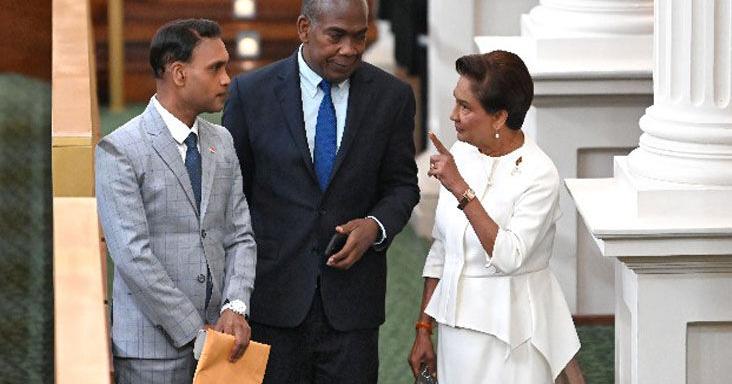
    Addressing the opening of the 13th Republican Parliament’s second session yesterday, Prime Minister Kamla Persad-Bissessar unveiled a major government funding request alongside a sweeping update on the country’s economic recovery, job creation progress, and upcoming legislative priorities.

    At the core of the administration’s immediate parliamentary business is a request for an additional TT$2.93 billion in supplementary funding for the 2025/2026 fiscal year. Of this total, $2.83 billion is earmarked as recurrent expenditure to cover newly negotiated wage increases for more than 62,000 public sector workers across multiple unions and government agencies. The Prime Minister detailed the breakdown of workers set to benefit: 18,000 from the Public Services Association (PSA), 20,000 from the National Union of Government and Federated Workers (NUGFW), 15,000 teachers, 6,000 Trinidad and Tobago Defence Force members, 1,300 from the Amalgamated Workers Union, 900 contract workers, and 850 from the West Indies Group of University Teachers (WIGUT). Persad-Bissessar emphasized that the government has committed to securing the necessary funds to honor the wage agreements, noting she felt “very proud and humbled” to deliver long-awaited salary adjustments to tens of thousands of public employees.

    The timeline for parliamentary consideration of the funding request is already set: the 2026 Finance Bill, which gives legal effect to measures outlined in the 2025/2026 national budget, will be tabled in the House of Representatives next Wednesday, June 10 at 10:30 a.m. The Standing Finance Committee will convene on June 12 at 1:30 p.m., followed by full debate on the Supplementary Appropriation Bill—dubbed the mid-year budget review—on June 15. The original 2025/2026 budget, presented by Finance Minister Davendranath Tancoo last October, projected total planned expenditure of $59.232 billion, based on benchmark prices of US$73.25 per barrel of oil and US$4.35 per mmbtu of natural gas. The budget projected total revenue of $55.367 billion, resulting in an initial projected fiscal deficit of $3.865 billion.

    Beyond the wage funding request, Persad-Bissessar highlighted the current administration’s progress in reversing economic stagnation left by the previous People’s National Movement (PNM) government. She claimed the PNM’s 10-year term left the country in a precarious fiscal position, with national debt nearly doubling from $75.4 billion in 2015 to $144.7 billion in 2015. She added that economic output contracted by 20%, foreign exchange reserves were cut in half, and billions of dollars were withdrawn from the country’s national savings funds over the PNM’s tenure.

    In contrast, the Prime Minister asserted that the current administration has turned the tide in just one year in office, pointing to both domestic economic gains and renewed international credibility. Domestically, official data from the Central Statistical Office shows 8,000 new jobs were created in the final quarter of 2025 alone, with youth unemployment dropping sharply from 12.2% to 7.7%. Between April 2025 and April 2026, the government delivered 14,080 new jobs across 18 cabinet ministries. Upcoming infrastructure and industrial projects are projected to add thousands more: proposed housing developments will create over 4,000 new positions, the first phase of the government’s Blueprint Revitalisation Plan will generate another 4,000 jobs, and a planned 500-acre expansion of the Plipdeco industrial estate at Point Lisas—paired with three upcoming projects (two in metals manufacturing, one in food production)—will expand employment in the industrial sector. The government is also advancing development of a 256-acre Special Economic Zone in Picton, near the University of the West Indies South Campus, dedicated to hosting data center operations.

    On the international stage, Persad-Bissessar highlighted three key wins that signal restored confidence in Trinidad and Tobago’s economy and governance: the country’s recent election to a two-year term on the United Nations Security Council, the World Bank’s decision to open a permanent World Bank Group office in Port of Spain—one of the most significant votes of confidence in the country’s economy in recent decades—and the European Union’s decision to remove Trinidad and Tobago from its tax blacklist, a move that reaffirms the country’s status as a credible, responsible, and competitive investment destination. The administration also recently completed a successful US$1 billion sovereign bond issuance, which was oversubscribed 2.5 times by 140 global investors, demonstrating strong international demand for Trinidad and Tobago’s debt.

    The Prime Minister also outlined the government’s ongoing support for vulnerable populations, noting that over the past year, more than 117,000 elderly citizens received $3.8 billion in public pensions, 25,602 people living with disabilities received $520.3 million in disability grants, 13,869 low-income vulnerable households received $216 million in direct financial support, 12,614 food-insecure citizens received $75.7 million in food assistance, and 2,808 people affected by disasters received support through 1,232 individual disaster relief grants.

    For Tobago, Persad-Bissessar reminded lawmakers that the island received its largest-ever central government allocation in the 2025/2026 budget, totaling $3.724 billion, which accounts for 6.3% of the entire national budget. She added that the central government will partner with the Tobago House of Assembly to advance long-overdue legislative and administrative reforms, including fixing long-standing structural anomalies in the THA Act.

    Looking ahead to the second session of Parliament, the Prime Minister laid out a broad legislative agenda that addresses a wide range of policy priorities. Key bills scheduled for debate include legislation to establish a dedicated medical malpractice court, implement a national no-fault compensation system, create regulatory frameworks for cannabis and advance agricultural diversification, amend the Education Act to modernize the country’s education system, develop a national Parental Responsibility framework to address school violence, raise the minimum age limit for legal consumption of marijuana and alcohol and for participation in gambling, enact a new Victims’ Rights Act, establish the position of Chancellor for the Judiciary, amend the Firearms Act to strengthen gun regulation, create legislation to regulate gated residential communities, implement new social media regulations to protect children under 12 years of age, and reform local government processes for construction and building approvals to cut red tape.

    As she concluded her address, Persad-Bissessar struck an optimistic tone, updating a promise she made in April that “better days were coming.” “I now say, Mr Speaker, better days are here and they will continue to get brighter,” she said.


  • Finance Bill proposes tax relief, tougher penalties

    Finance Bill proposes tax relief, tougher penalties

    A sweeping new piece of fiscal and regulatory legislation that will reshape multiple sectors of Trinidad and Tobago’s economy and legal framework is set for parliamentary debate next week, after Finance Minister Davendranath Tancoco formally introduced the 2026 Finance Bill to the House of Representatives this week.

    Spanning 31 clauses and requiring amendments to more than 30 existing laws, the bill integrates a diverse set of policy priorities aligned with the current government’s core goals, spanning tax reform, pension adjustments, energy sector investment stimulation, and a nationwide crackdown on regulatory and criminal non-compliance.

    One of the bill’s most impactful tax reforms centers on retirement security for local residents: it proposes full elimination of income taxes on earnings generated by government-approved pension fund plans and deferred annuity plans. To support property owners and stimulate the rental market, the legislation also introduces a new tax credit for individuals and businesses subject to the Landlord Business Surcharge, allowing claimants to offset the full surcharge amount against their annual income tax obligation, up to their total tax liability.

    To incentivize philanthropic giving, the bill also outlines new tax deduction rules for contributions to government-authorized public funds established under the Exchequer and Audit Act. Individual donors can claim deductions equal to up to 20% of their annual income or $20,000, whichever is lower, while corporate donors are eligible for deductions capped at 15% of chargeable profits or $100,000.

    A key economic stimulus measure targets the country’s critical energy sector, designed to unlock new investment in underdeveloped marginal marine gas fields. Eligible fields — defined as offshore assets with total reserves of 300 billion cubic feet or less and an internal rate of return below 15% — will qualify for a reduced 8% royalty rate and a generous 130% enhanced capital allowance on qualifying capital expenditures spread over a five-year period.

    The bill also delivers long-awaited pension reform for the country’s protective services, including prison officers, police officers and firefighters. Under the new provisions, retiring officers who served continuously in a higher-ranking position for at least one year before reaching compulsory retirement will have their final pensions and gratuities calculated based on the salary of that higher office.

    Administrative modernization is another core focus of the legislation, with a series of reforms proposed for the Registrar General’s Department. These changes include expanding mandatory electronic filing of official documents, requiring standardized identification and supporting records for all submissions, and creating a new voluntary process for companies to apply to be struck off the corporate register.

    In line with the government’s public commitment to reducing crime and strengthening regulatory enforcement, the bill includes sweeping increases to fines and criminal penalties across a wide range of offences, alongside targeted regulatory updates. A notable new provision adds a nationwide ban on the importation of any goods produced through forced labour, aligning local trade rules with global ethical standards.

    Reforms to gaming and liquor regulations expand the maximum number of permitted amusement machines on certain licensed premises from 20 to 33, introduce a quarterly gaming tax structure, and raise penalties for regulatory breaches. A new offence for exceeding the permitted number of gaming machines carries a $25,000 fine, up to one year of imprisonment, and potential revocation of the premises’ liquor licence.

    The steepest penalty increases are applied to tobacco-related offences under the Tobacco Control Act. First offences will now carry fines as high as $150,000, while serious offences tried in the High Court can result in fines up to $600,000 and three years of imprisonment. These enhanced sanctions apply to violations including selling tobacco products to minors, illegal public display of tobacco products, and other breaches of public health regulations.

    Other notable penalty hikes include a $150,000 maximum fine for illegal timber removal under the Forests Act, a matching $150,000 fine for unlicensed sawmill operations under the Sawmills Act, and a $150,000 maximum fine for offences under the Conservation of Wild Life Act. Additional increases apply to violations across areas including animal health, shipping, motor launches, pesticide and toxic chemical regulation, and spirits manufacturing.

  • Imbert: More fines in Finance Bill

    Imbert: More fines in Finance Bill

    Trinidad and Tobago’s 2026 Finance Bill has sparked fierce political pushback, with opposition lawmakers warning that broad-based penalty increases across multiple industries and regulatory frameworks will impose new, burdensome costs on ordinary citizens, small business owners, and industry operators nationwide.

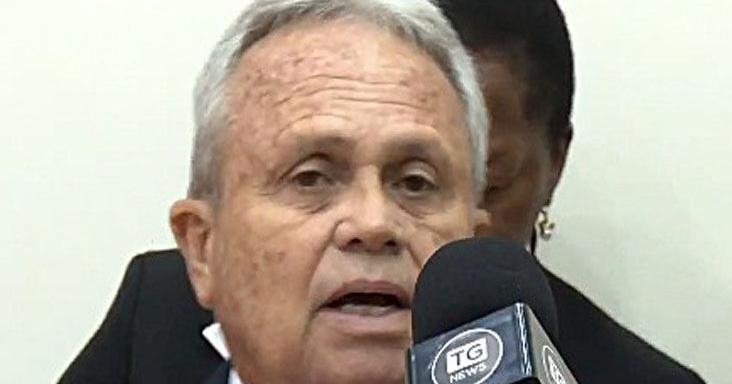
    Speaking at a press briefing held Tuesday at the Red House (Trinidad and Tobago’s Parliament building) in Port of Spain, opposition MP and former finance minister Colm Imbert publicly outlined details of the 31-clause bill, confirming that the opposition had received official advance notice of the legislative text. Imbert revealed that more than half of the bill’s provisions target existing penalties across a wide range of national laws, with hikes ranging from a 50 percent jump to a staggering 400 percent increase for select offenses.

    One of the most controversial adjustments falls to minor, unprescribed offenses under the Motor Launches Act, the legislation governing small commercial vessels including local party boats. The baseline penalty for these unspecified violations is set to jump from TT$2,000 to TT$7,500 — a 275 percent increase that Imbert argues will punish small operators for trivial, accidental oversights.

    “What is the basis for this extreme jump? How do you justify moving from $2,000 to $7,500 for an offense that isn’t even clearly defined?” Imbert questioned, noting the penalty hike directly contradicts the current administration’s earlier campaign pledges to reduce burdensome fines and regulatory penalties for citizens and businesses.

    Beyond the Motor Launches Act, Imbert pointed to sweeping penalty increases across more than eight additional pieces of legislation, including the Gambling and Betting Act, Forest Act, Sawmills Act, Conservation of Wildlife Act, Animal Importation Act, Registration of Clubs Act, Pharmacy Board regulations, and the Pesticides Act. He emphasized that every proposed adjustment carries a minimum 50 percent penalty increase, calling the cumulative measure a deliberate pattern of punitive cost hikes that targets everyday Trinbagonians.

    “This is what the government is doing right now: every week, it’s new fines, new increases, new costs, all to punish ordinary people,” Imbert said. “It was critical that we bring this to the public’s attention so people understand exactly what they’re facing.”

    Imbert also doubled down on criticism of the administration’s troubled new Landlord Business Surcharge policy, arguing that repeated extensions to the mandatory landlord registration deadline are clear proof of the policy’s fundamental flaws and the government’s administrative incompetence.

    When the policy was first introduced in December, Imbert predicted the government would be forced to extend the original registration deadline due to unworkable structural flaws. He has now correctly predicted two extensions — pushing the deadline from March 31 to May 30, then again to June 30 — and says a third extension is all but guaranteed.

    The policy requires an estimated 100,000 landlords across the country to complete in-person registration and verification interviews with the Inland Revenue Division (IRD), after the agency eliminated the option for document drop-off submissions. Imbert warned that the IRD lacks the operational capacity to process such a large volume of applications in a reasonable timeline, creating massive administrative backlogs that will leave thousands of landlords in regulatory limbo.

    “How on earth is the IRD supposed to process 100,000 in-person interviews and registration applications? There simply isn’t the staff or infrastructure to pull this off,” he said.

    He also raised serious privacy and public safety concerns about the policy’s requirement for a public, searchable register of landlord and tenant information. Imbert argued that making this personal data publicly accessible constitutes a clear violation of privacy, and exposes property owners to elevated risks of kidnapping, fraud, and other violent and financial crimes.

    “Every single piece of legislation this government brings to Parliament is sub-standard and poorly drafted,” Imbert said. “We flag the problems, they spend months revising it, and then they come back to fix the mess they created in the first place.”