作者: admin

  • US Adds Grenada and 11 Other Countries to Visa Bond Programme

    US Adds Grenada and 11 Other Countries to Visa Bond Programme

    The United States Department of State has significantly expanded the scope of its Visa Bond Program, designating twelve additional countries for enhanced financial scrutiny requirements. The newly listed nations, which include Grenada, the Republic of the Congo, Bhutan, and several others across Africa and Asia, will now subject certain visa applicants to a substantial financial bond obligation.

    This policy enhancement, effective from December 24, 2020, mandates that applicants from these countries who are granted B-1/B-2 business and tourist visas must post a bond of up to $15,000. The bond is forfeited to the U.S. government if the visitor violates the terms of their admission, primarily by overstaying their visa’s validity period.

    The expansion brings the total number of countries on the list to 40. The program is strategically targeted at nations with high rates of visa overstays, representing a key enforcement mechanism within the Trump administration’s broader immigration policy framework. Officials characterize the bond requirement as a vital tool to protect taxpayer resources and ensure compliance with immigration laws, arguing it discourages visa fraud and promotes timely departures.

    However, the program faces staunch criticism from immigrant advocacy groups and some policy analysts. Detractors argue that the policy effectively institutes a wealth-based immigration filter, disproportionately impacting lower-income travelers and creating a significant financial barrier for legitimate visitors. Critics further contend that such measures strain international diplomatic relations and project an unwelcoming image of the United States abroad.

    The move underscores the ongoing and profound shift in U.S. immigration strategy towards stricter enforcement and financial deterrence, a hallmark of the outgoing administration’s approach to border and travel security.

  • BSCFA Asked to Sign Away Millions in Claims for One Year’s Promise

    BSCFA Asked to Sign Away Millions in Claims for One Year’s Promise

    A high-stakes legal confrontation between Belize’s sugar cane farmers and major industry players has reached a critical juncture, with farmers being pressured to accept a controversial settlement that would forfeit millions in rightful claims. The Belize Sugar Cane Farmers Association (BSCFA) faces a pivotal decision regarding a proposed agreement from T&L Sugars Limited (TLS) and Belize Sugar Industries Limited (BSI) that legal experts characterize as overwhelmingly favoring corporate interests.

    The dispute centers on approximately $4.9 million Belize Dollars in unpaid Fairtrade Premiums for the 2021/22 and 2022/23 crop years, with additional claims potentially pushing the total beyond $8 million when including subsequent seasons. The conflict escalated when BSCFA filed formal litigation in June 2024, alleging unlawful conspiracy and breach of contract by the sugar companies.

    Legal proceedings took a significant turn in July 2025 when Justice Mansoor of Belize’s High Court rejected TLS’s jurisdictional challenge, affirming the Belizean courts’ authority over the matter and awarding legal costs to the farmers’ association. With TLS’s appeal scheduled for hearing on March 30, 2026, the proposed settlement emerges as a potentially decisive moment in the prolonged conflict.

    The settlement terms demand substantial concessions from BSCFA: permanent dismissal of all current litigation, complete waiver of Fairtrade Premium claims for all crop years preceding 2026/27, forfeiture of previously awarded legal costs, and absolute confidentiality regarding agreement terms. In exchange, TLS offers a single-year Letter of Enhancement Agreement for the 2026/27 season and withdrawal of its pending appeal—without admitting any wrongdoing.

    Legal analysis by Marin Young & Co LLP reveals concerning provisions within the proposed agreement. TLS would retain absolute discretion over Fairtrade-eligible sugar volumes without possibility of challenge, while dispute resolution would shift to London under English jurisdiction. Most critically, the arrangement contains no renewal guarantees, potentially enabling companies to repeat the premium withholding strategy in future seasons.

    The legal opinion identifies four fundamental concerns: the irreversible surrender of valid financial claims, concession of core legal arguments regarding premium entitlements, establishment of unfavorable precedents regarding corporate discretion over premium distributions, and the creation of a template for future premium denials during negotiations.

    The central legal question—whether Fairtrade Premiums are payable regardless of signed agreements—remains untested in Belizean courts, representing a potentially precedent-setting issue with generational implications for agricultural trade justice. Legal counsel advises that settlement acceptance would permanently preclude obtaining a judicial determination that could secure future premium protections.

  • PM Briceño Says BPO Expansion Brings Jobs to Women in Rural Areas

    PM Briceño Says BPO Expansion Brings Jobs to Women in Rural Areas

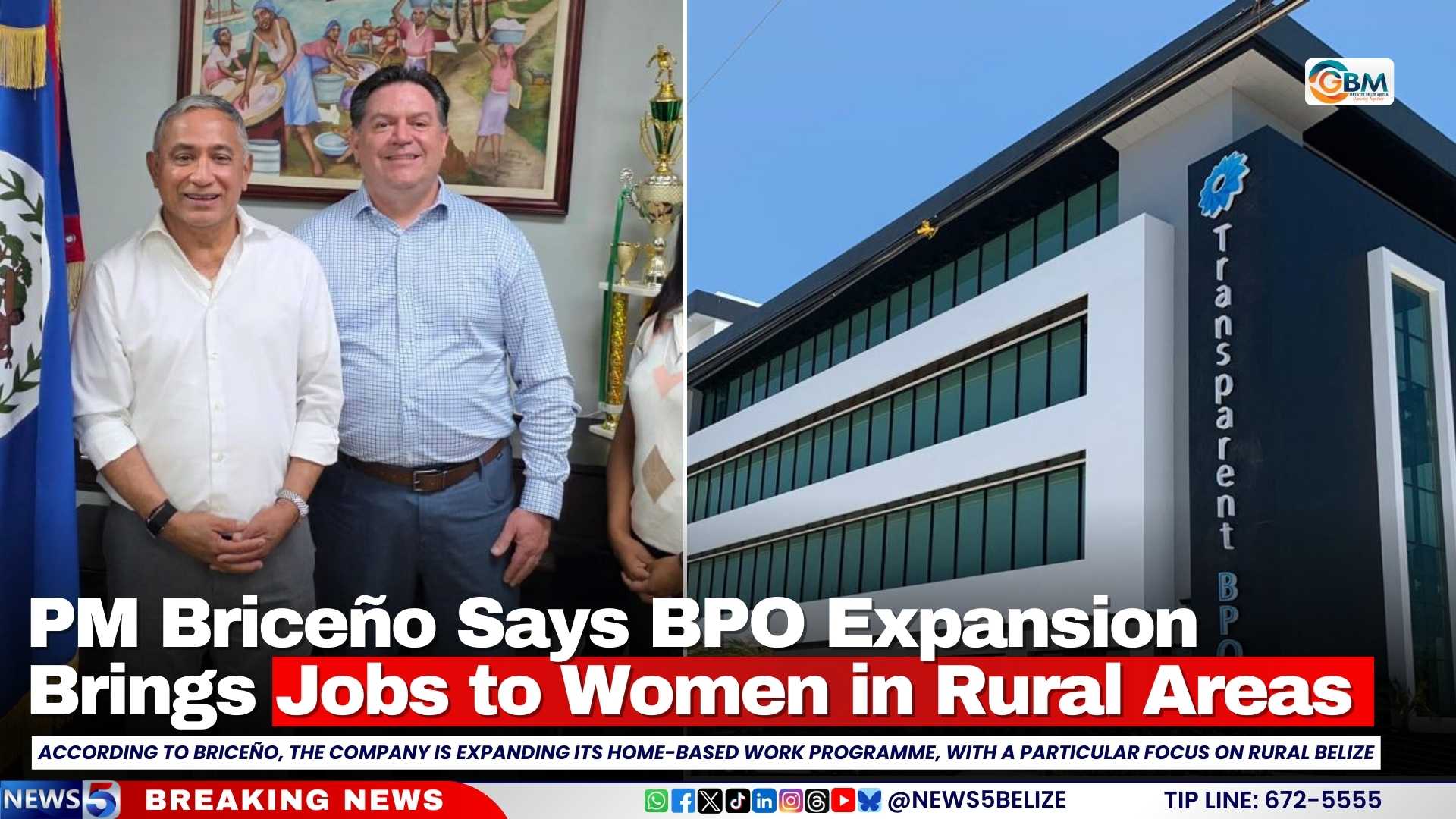
    Belizean Prime Minister John Briceño has announced significant expansion plans for the country’s Business Process Outsourcing (BPO) sector, with particular emphasis on creating employment opportunities for women in rural communities. The development emerged following high-level discussions between the Prime Minister and executives from Transparent BPO, a major player in Belize’s growing outsourcing industry.

    During a recent courtesy meeting, both parties explored strategies to broaden the company’s home-based work initiative, specifically targeting regions outside urban centers. This innovative approach enables female workers to secure sustainable employment without relocating or undertaking lengthy commutes to city-based offices, thereby addressing both economic and social mobility challenges.

    Prime Minister Briceño, communicating through official social media channels, emphasized the dual benefit of operational expansion and rural employment generation. This initiative aligns with the government’s ongoing support for the BPO sector, which according to earlier statements from Briceño, currently employs over 20,000 Belizeans and contributes substantially to the national economy with annual salary distributions exceeding $150 million USD.

    The strategic focus on gender-inclusive rural employment represents a significant step in regional economic development, potentially serving as a model for other developing nations seeking to leverage digital transformation for social impact. The government’s continued endorsement of the BPO industry underscores its importance as a cornerstone of Belize’s economic strategy and job creation efforts.

  • Ishmael outlines vision for a healthier nation, declares NCD war

    Ishmael outlines vision for a healthier nation, declares NCD war

    Barbados is embarking on a radical transformation of its national healthcare system, with Minister of State Davidson Ishmael announcing a comprehensive strategic overhaul during the Budget debate. The government is allocating over $395 million to shift from a hospital-centric model to a proactive, community-based wellness approach, with three core pillars: digital modernization, a frontal assault on non-communicable diseases (NCDs), and enhanced primary care infrastructure.

    A cornerstone of this transformation is the full implementation of a comprehensive Health Information System, designed to eliminate the long-standing inefficiencies of physical patient notes. Minister Ishmael directly addressed these systemic failures, stating, ‘It is time for us in the 2026 Barbados to be able to put the idea of lost physical notes behind us.’ This digital platform will enable patients to schedule appointments remotely and allow their medical histories to move seamlessly across the healthcare network, thereby reducing cancelled procedures and providing valuable data for policy formulation.

    Substantial capital investments form the second pillar of this strategy. A monumental $400 million expansion of the Queen Elizabeth Hospital (QEH) will increase its physical capacity by 40%, including dedicated facilities for a burns unit and an oncology suite. Concurrently, a $185 million initiative will upgrade polyclinics, transforming them into comprehensive ‘Community Health Services’ to deliver care directly within neighborhoods.

    The minister issued a stark warning about NCDs, which account for approximately 83% of adult deaths in Barbados—a crisis he described as ‘largely preventable.’ These lifestyle-related illnesses create an enormous financial burden, costing the nation between $375 million and $825 million annually. Ishmael framed this not just as a health crisis but as an economic one, noting that reducing NCD prevalence would free up hundreds of millions for reinvestment in education, agriculture, and infrastructure. He challenged citizens to ‘get up and move,’ setting a national target to reduce physical inactivity by 10% by 2030.

    Beyond physical health, the minister highlighted critical mental health services, revealing that the Lifeline Barbados hotline has fielded over 12,000 calls in under two years. He specifically addressed Barbadian men’s ‘poor health-seeking behaviors,’ urging them through initiatives like ‘Lion Line’ to prioritize preventive screenings rather than waiting for critical health emergencies.

    While praising the budget’s direction, Ishmael advocated for even more aggressive policies to make healthy foods affordable and accessible, pledging to collaborate with the Ministry of Finance to expand the ‘healthy basket of goods.’ He concluded by framing robust public health as the fundamental bedrock of national prosperity, asserting that ‘the health of a nation is the wealth of its nation.’

  • Budget Debate: Holness says murders to fall below 500 this year

    Budget Debate: Holness says murders to fall below 500 this year

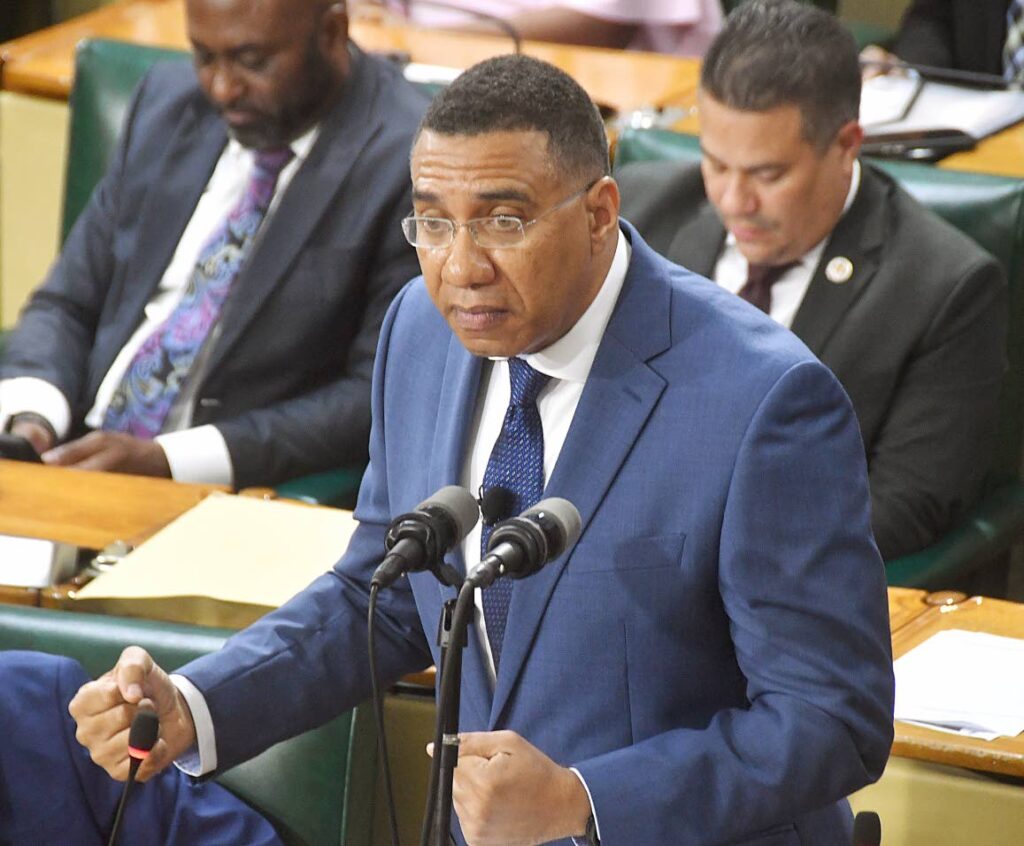
    In a landmark declaration to Parliament, Jamaican Prime Minister Andrew Holness announced a transformative milestone in national security, projecting that annual homicides will fall below 500 in 2026—a figure unprecedented in modern Jamaican history. This optimistic forecast comes amid sustained declines in violent crime, with official data revealing a dramatic 43% reduction in murders from 1,147 cases in 2024 to 673 in 2025. The current year shows even greater promise, with January to mid-March figures indicating a further 29.4% decrease compared to the same period last year. Holness attributed this success to comprehensive security reforms combining intelligence-led operations, legislative enhancements, and institutional strengthening. Central to this strategy has been the strategic deployment of emergency powers, enabling security forces to develop advanced capabilities while systematically dismantling criminal networks. The Prime Minister emphasized that gang violence represents Jamaica’s primary security threat, driving narcotics trafficking, extortion, and territorial conflicts. To combat this, the government has established a Joint Anti-Gang Task Force employing integrated investigative techniques, financial intelligence, and multi-agency coordination. Concurrently, Holness revealed plans for a $5 billion forward operating base in Camp Wareika, spanning 100 acres to enhance the Jamaica Defence Force’s strategic dominance over the Liguanea Plains. This facility will leverage the tactical advantages of the Wareika Hills while maintaining the military’s presence at Up Park Camp, symbolizing the administration’s commitment to long-term security transformation through technological superiority and territorial control.

  • Budget Debate: NaRRA to lead construction of new KPH

    Budget Debate: NaRRA to lead construction of new KPH

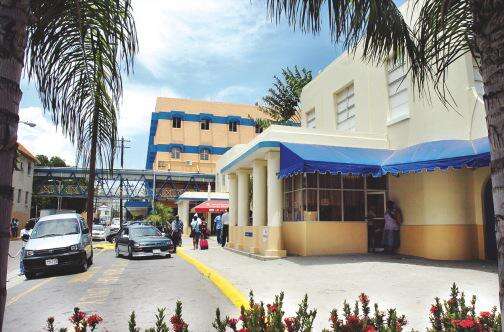
    In a significant move to fortify national healthcare infrastructure, Jamaican Prime Minister Andrew Holness has declared that the National Reconstruction and Resilience Authority (NaRRA) will spearhead the development of a new Kingston Public Hospital (KPH). The announcement came during the Prime Minister’s pivotal address in the Budget Debate on Thursday.

    Highlighting critical vulnerabilities in existing facilities, Holness emphasized that the historic 300-year-old KPH structure remains dangerously exposed to natural disasters. He presented a grave hypothetical scenario, noting that had Hurricane Melissa directly impacted Kingston, the consequences would have been devastating. The potential destruction of this major referral hospital during a critical emergency would have compounded public health crises amidst an already severe natural catastrophe.

    Holness articulated a forward-looking vision for healthcare infrastructure, stating the imperative to construct a new KPH that embodies modern international standards. The facility will be designed with embedded resilience, uninterrupted care capabilities, and comprehensive disaster preparedness at its core.

    The Prime Minister confirmed substantial progress, revealing that Cabinet has already sanctioned land acquisition for the new medical complex. This strategic initiative represents a proactive approach to national vulnerability management, aiming to address structural weaknesses before they manifest in future crises.

  • Budget Debate: Gov’t campus at Heroes Circle to be fast-tracked

    Budget Debate: Gov’t campus at Heroes Circle to be fast-tracked

    KINGSTON, Jamaica — In a decisive move to bolster national resilience and catalyze urban renewal, Prime Minister Dr. Andrew Holness has declared the development of a centralized Government Campus at National Heroes Circle a paramount national priority. The announcement, made during his pivotal contribution to the Budget Debate on Thursday, frames the project as a critical response to systemic vulnerabilities exposed by recent crises.

    The visionary initiative aims to consolidate Jamaica’s Houses of Parliament, along with its key ministries and agencies, into a single, purpose-built complex. Prime Minister Holness articulated that this endeavor transcends mere symbolism. “In the post-Melissa context, the Government Campus is more than a statement of national pride. It is a strategic investment in the continuity of government,” he stated, referencing the disruptive impact of Hurricane Melissa.

    Highlighting the urgent need for such an investment, Holness detailed the current fragmented state of the government’s infrastructure. Ministries and agencies are presently dispersed across a collection of aging and structurally inadequate buildings in downtown Kingston. These facilities are not only poorly interconnected but also represent a significant vulnerability, being wholly unprepared to withstand a major disaster and ensure the uninterrupted function of the state.

    Beyond securing governmental operations, the campus is envisioned as the cornerstone for the long-anticipated regeneration of downtown Kingston. The project is expected to anchor new mixed-use developments, stimulate commercial activity, and spur residential investment in the surrounding communities. Furthermore, it is designed to restore the National Heroes Circle area to its historic status as the civic and symbolic heart of the nation’s capital.

    Addressing the current Parliament building on Duke Street, where legislators operate in notoriously cramped conditions, the Prime Minister firmly dismissed any notion that the outdated facility has ‘served us well,’ signaling that the time for progression is unequivocally at hand.

  • Mount Pleasant dumped out of CONCACAF Champions Cup by Galaxy

    Mount Pleasant dumped out of CONCACAF Champions Cup by Galaxy

    KINGSTON, Jamaica — LA Galaxy delivered a commanding performance to complete a comprehensive 6-0 aggregate victory over Jamaica’s Mount Pleasant Academy in the CONCACAF Champions Cup Round of 16. The second leg, played under rainy conditions at the National Stadium on Thursday night, saw the MLS side secure a 3-0 win, mirroring their first-leg dominance.

    Brazilian forward Gabriel Pec continued his spectacular form, adding two more goals to his first-leg hat-trick. The scoring opened in the 18th minute when João Klauss found the net, effectively extinguishing any lingering hopes of a Jamaican comeback. Pec then demonstrated his clinical finishing with goals in the 62nd and 87th minutes, bringing his personal tally to five across the two-match series.

    Despite a spirited start from the Jamaican champions, who pressed aggressively in search of an early goal, the quality gap between the teams became increasingly apparent. Mount Pleasant’s best opportunity came in the 58th minute when Warner Brown bypassed goalkeeper JT Marcinkowski but sent his shot into the side netting of an open goal.

    The match marked the Jamaican debut of German international Marco Reus, who entered as a substitute in the 66th minute. However, his appearance remained relatively low-key amidst Galaxy’s dominant team performance. The official attendance was recorded at just 1,765 spectators, whose hopes for a miraculous turnaround were ultimately dashed by Galaxy’s professional execution.

  • Budget Debate: Hopewell/Lucea Bypass to be constructed

    Budget Debate: Hopewell/Lucea Bypass to be constructed

    In a significant infrastructure announcement during the 2024/25 Budget Debate, Jamaican Prime Minister Andrew Holness revealed ambitious government plans to develop the Hopewell and Lucea Bypass project. This major transportation initiative will originate from a connection point on the Long Hill Bypass in St. James, extending westward with strategic link roads serving both Hopewell and Lucea before concluding on the western side of Lucea.

    The proposed alignment will run approximately three kilometers south of the current coastal roadway, representing a substantial infrastructure enhancement for the region. Prime Minister Holness emphasized the transformative economic potential of this project, stating it will ‘unlock the entire waterfront stretch between Montego Bay and Negril as prime resort land,’ creating significant opportunities for tourism development and investment.

    In a complementary initiative, the government plans to develop Lucea Harbour into a premium boating destination. Holness highlighted the natural advantages of the location, noting its shelter from prevailing winds, deep natural waters, and strategic proximity to the emerging resort corridor between Montego Bay and Negril.

    The Prime Minister also addressed climate resilience concerns, warning that Lucea faces similar storm and wave action risks as Black River in St. Elizabeth. In response to these vulnerabilities, authorities are considering the eventual construction of a new town center for Lucea once the bypass project is completed, signaling a comprehensive approach to both development and environmental challenges.

  • Budget Debate: Minimum wage to increase by $1,000 in July

    Budget Debate: Minimum wage to increase by $1,000 in July

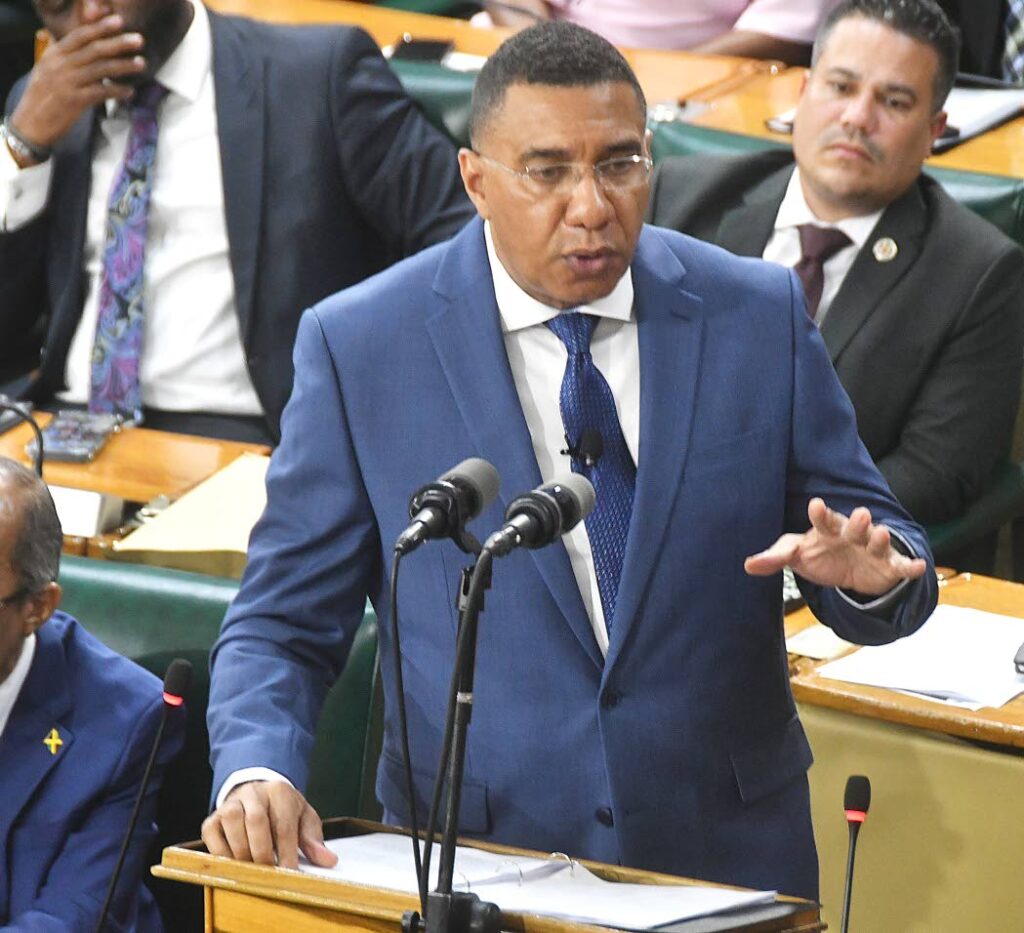
    Jamaican Prime Minister Andrew Holness has confirmed a measured increase in the national minimum wage, raising it by $1,000 to $17,000 per week, effective July 1, 2026. The announcement came during the Prime Minister’s address to the 2026/27 Budget Debate in Parliament on Thursday.

    This adjustment represents a recalibration of previous electoral commitments. During last year’s general election campaign, Holness had pledged a more substantial increase of $2,500, which would have elevated the minimum wage to $18,500. However, the government has opted for a more moderate approach in response to current economic realities.

    Prime Minister Holness cited multiple external economic pressures influencing this decision. The aftermath of Hurricane Melissa continues to impact Jamaican businesses and households in their recovery efforts. Simultaneously, the economy faces renewed challenges from global energy price fluctuations and increased shipping costs, creating a complex financial landscape.

    “In this context, the Government believes it is important to strike the right balance by continuing to improve the earnings of workers while recognising the realities employers face,” Holness stated during his parliamentary address.

    The Prime Minister emphasized that this measured increase does not signify abandonment of the administration’s long-term policy objective. The government remains committed to its overarching goal of transitioning from a minimum wage to a livable wage for Jamaican workers. Holness assured that as economic conditions stabilize, the government will continue implementing phased increases necessary to realize this vision for the Jamaican workforce.