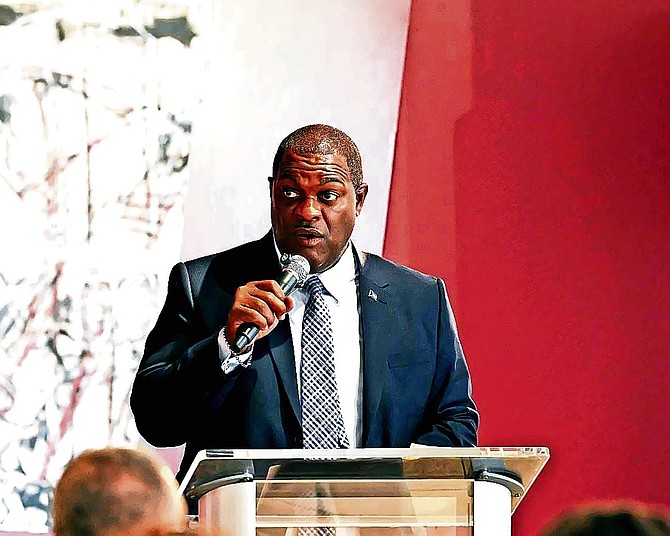
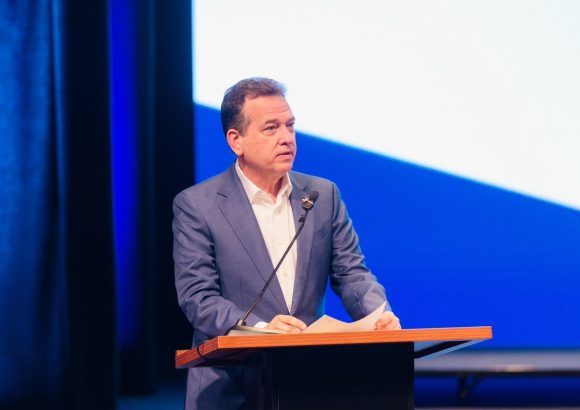
As bilateral negotiations over a proposed deportation arrangement continue between Antigua and Barbuda and the United States, Prime Minister Gaston Browne has publicly drawn a hard line against a U.S. request that would see the small Caribbean nation accept up to 120 third-country nationals annually, calling the proposal “totally unacceptable” and prioritizing the country’s limited capacity and national security over blind cooperation. Speaking during his weekly *Browne and Browne* radio broadcast on Saturday, Browne clarified that Antigua and Barbuda has only offered to accept a maximum of 10 deportees per year under any finalized deal, a cap that aligns with the nation’s size and inherent vulnerabilities.
Browne revealed that the initial 120-person proposal came with no binding commitments for U.S. assistance, nor any guarantee that comprehensive background checks would be completed on individuals before transfer. That lack of structure, he emphasized, is a non-starter for his administration. “At one point I was told that they had asked us to accept as many as 120 individuals and there was no guaranteed assistance, no guaranteed due diligence. And I said to them that that is totally unacceptable,” Browne told listeners.
The prime minister outlined three non-negotiable conditions that Antigua and Barbuda is requiring Washington to meet before any agreement can move forward. First, all individuals must undergo rigorous vetting by U.S. law enforcement and immigration authorities to screen out criminal elements. Browne stressed that even a single high-risk individual can have outsized negative consequences for a small nation like Antigua and Barbuda, saying “one criminal element coming into our country can make a difference.”
Second, Browne insisted that every deportee transferred to the country must hold valid, official travel documentation. He explained that undocumented migrants detained in the U.S. often destroy their identity papers to avoid deportation, and Antigua and Barbuda cannot absorb stateless individuals with no verifiable background. “What happens sometimes is some of these immigrants, who they detain as soon as they get to the United States, they tear up their travel documents and we can’t have them come here as stateless individuals,” he said.
While Browne reaffirmed Antigua and Barbuda’s commitment to maintaining a constructive, cooperative relationship with the United States, he made clear that cooperation will never come at the cost of the island nation’s core national interests. “We have said to them that, look, they have their issues, and we want to help. We want to be a cooperative state. But we cannot participate or agree to anything that is to our detriment,” he said.
The prime minister pushed back against any expectation that he would accept an unfavorable deal, asking rhetorically: “I mean, can anybody justify the prime minister of this country being part of any decision, or agreeing, or being compliant with anything that is not in the best interest of this country?” He noted that Antigua and Barbuda’s small geographic size and population leave it uniquely vulnerable to security risks, requiring extreme caution when entering any arrangements involving the transfer of foreign nationals. “We’re small, powerless and very vulnerable. Based on that vulnerability, we have to make sure that we keep our country safe and secure,” Browne said.
He added that the administration’s top concern is avoiding the accidental admission of individuals with criminal histories, a outcome that he says would never happen under his leadership. “Where there is any probability for us to even inadvertently and complicitly allow criminals to come into the country, as I said, that’s not in my leadership,” he stated.
As of Saturday, Browne confirmed that negotiations with U.S. officials remain ongoing, and Antigua and Barbuda has not yet received a formal response from the U.S. State Department after the country submitted its latest counter-proposal outlining its conditions and annual cap. Discussions on the arrangement were launched after the two sides signed a non-binding memorandum of understanding that outlined a framework for Antigua and Barbuda accepting a limited number of third-country nationals. From the start of negotiations, the Antigua and Barbuda government has maintained that while it stands ready to assist its international partners, any final agreement must align with the country’s national security needs and practical capacity to absorb new arrivals.
作者: admin
-

Wereld Anti-Tabakdag: Suriname scherpt strijd tegen nicotineverslaving onder jongeren aan
Every year, World No Tobacco Day (WNTD) serves as a global call to action to curb the devastating public health and economic impacts of tobacco and nicotine use. This year, public health authorities in Suriname are leveraging the observance to accelerate their national campaign against tobacco and nicotine addiction, aligning with the 2024 WNTD global theme: “Unmask the Appeal – Countering Tobacco and Nicotine Addiction”. The campaign this year shines a critical light on deceptive marketing tactics deployed by the global tobacco industry, which specifically target vulnerable young populations to drive adoption of nicotine products.
According to the World Health Organization (WHO), the tobacco industry has rapidly expanded its product portfolio in recent years, rolling out a wave of new nicotine-based offerings including electronic cigarettes (vapes), nicotine pouches, and products formulated with synthetic nicotine. These products are consistently marketed to consumers as modern, less harmful alternatives to traditional cigarettes, but leading public health experts warn that they carry severe, well-documented risks of addiction, especially for developing adolescent brains.
Young people remain the primary target for these industry marketing efforts. Tobacco and nicotine product manufacturers leverage enticing flavored formulations, eye-catching trendy packaging, and aggressive targeted advertising across social media platforms to normalize product use and grow customer bases among underage groups.
Against this backdrop, the government of Suriname is moving forward with comprehensive plans to strengthen its national anti-tobacco regulatory framework. With technical and policy support from the WHO, Suriname’s public health bodies are currently working to update the country’s original 2013 Tobacco Act. Key proposed updates include stricter product regulations, enhanced enforcement to crack down on the illegal trade of tobacco products, mandatory plain neutral packaging requirements, and expanded legal protections to shield young people from tobacco industry influence.
High-level policy progress has already been made: back in February 2024, Suriname President Jennifer Simons held formal talks with a visiting WHO delegation to discuss further anti-tobacco measures. Public health teams are also developing and rolling out targeted school-based youth education programs in partnership with the Ministry of Education, Science and Culture.
National data underscores the urgent need for stronger, more comprehensive anti-tobacco action in Suriname. Annually, preventable tobacco-related illnesses claim more than 500 lives across the country, and generate a total economic burden of more than 508 million Surinamese dollars. Data from the 2022 Global Youth Tobacco Survey further highlights the scale of the youth exposure challenge, finding that 13.2 percent of 13 to 15-year-olds in Suriname currently use tobacco products.
To mark this year’s World No Tobacco Day, public health organizations across Suriname have organized a series of community outreach and awareness activities, including public walks and multi-platform educational campaigns. The core message from Suriname’s health authorities is clear: consumers must not be fooled by the tobacco industry’s deceptive marketing, and collective action is critical to protect young generations from the harms of nicotine addiction.
-

Heritage’s $570m offshore contract under scrutiny
A nearly $571 million offshore energy infrastructure contract, set to be awarded by Trinidad and Tobago’s state-linked Heritage Petroleum Co. Ltd. via a closed limited bidding process, has become the center of growing scrutiny from seasoned energy industry insiders, who question the compliance and fairness of the procurement strategy.
The contract in question covers the delivery of a specialized offshore production and compression facility, designed to process hydrocarbons from the company’s West/Southwest Soldado fields. Rather than opening bidding to all qualified suppliers globally, Heritage has opted for a limited process that excludes international vendors entirely, granting pre-qualification to just three local companies: TOSL Engineering, Namalco Construction Services Limited, and Anti-Corrosion Technical Services Limited (ACTS).
Internal company documents obtained by the Sunday Express confirm the total contract value is pegged at $570,611,800, with a tender submission deadline set for the end of May 2026. Per the internal document outlining procurement strategy, Heritage plans to enter a five-year lease agreement for the facility, aligning with the firm’s long-term strategy of outsourcing core operational capacity instead of building in-house capabilities. TOSL Engineering already holds an existing contract with Heritage for a Mobile Offshore Production Unit (MOPU) at the same fields, a deal that has been extended twice and is currently set to expire in March 2026; the company is now seeking an additional one-year extension to March 2027 while a new provider is finalized.
Industry observers have raised multiple red flags about the process, starting with its deviation from standard open bidding requirements outlined in local public procurement law. Section 5.1 of Trinidad and Tobago’s Public Procurement and Disposal of Public Property Regulations mandates that open bidding must be used by public bodies unless the complexity of the project or specific market conditions make an alternative method more likely to deliver best value for money. Insiders argue no such compelling justification has been made public for this half-billion-dollar contract.
Critics also point to unusually fast pre-qualification approvals that deviate from standard industry timelines. One insider noted that one pre-qualified applicant had its submission approved just one hour and 28 minutes after it was received, while a second was approved within seven days. Standard evaluations that assess financial stability, technical capability, and health, safety and environment (HSE) compliance typically take four to six weeks to complete, leading to questions about whether the required due diligence was actually conducted.
Further concerns center around the lack of experience of two of the pre-qualified local firms, ACTS and Namalco, which insiders say have no proven track record of delivering large-scale offshore production and compression facilities. More critically, industry sources say Heritage artificially narrowed the eligible supplier pool by excluding major international vendors that have documented expertise in this specialized sector. Market research compiled by observers identifies multiple global firms, including Canada’s Compass Energy, Singapore’s Grander Energy and Aurora Maritime, and the UK’s Aquaterra Energy, all of which have the capability to deliver the project. These international companies were not invited to participate at all.
Insiders question whether Heritage properly conducted global market soundings to identify all capable suppliers before restricting the bid list to three local entities. For a contract of this size and strategic importance, observers say the decision to limit bidding runs counter to the legislative mandate that prioritizes open competition to secure the best value for public funds.
“For a contract worth hundreds of millions of dollars over five years, a legitimate question arises: Why were only three local companies invited when the offshore production and compression market is demonstrably international?” one senior insider noted. “That question becomes even more pressing if there is no evidence that only three suppliers worldwide were capable of performing the work.”
Many industry experts argue that a far more appropriate and legally compliant approach would have been open bidding paired with a pre-qualification process to shortlist only technically and financially capable vendors. This model would preserve broad competition, ensure transparency, and deliver the best value for money, which is the core requirement of public procurement law in the country. Without a robust, documented justification for restricting competition, insiders warn the current procurement process violates Heritage’s legal obligations to conduct bidding in a transparent, fair, and non-discriminatory manner, leaving the entire award vulnerable to formal legal challenge under the 2015 Public Procurement and Disposal of Public Property Act, as amended. Heritage has so far defended its decision to use limited bidding, but has not released a public justification for excluding international suppliers or for deviating from the open bidding requirement.
-

‘WE WILL NOT BE GAGGED’
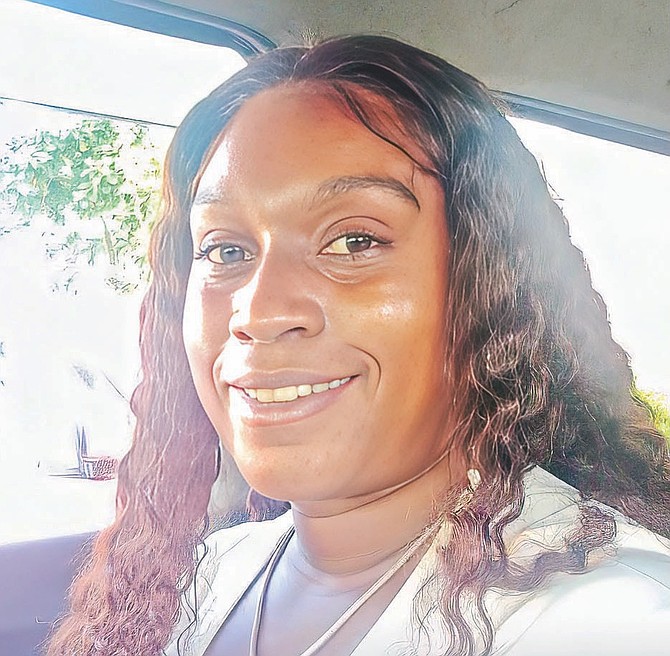
In the months after a January police-involved shooting left one person dead and another critically injured, a 24-year-old small business owner named Alyssa Phillip has emerged as the most high-profile voice demanding justice for her injured friend Kaia Sealy. As calls for accountability grow, and government moves to restrict demonstrations have sparked accusations of intimidation, a close friend and fellow activist has opened up about who Phillip really is, and what drives the ongoing protest movement.
The *Sunday Express* reached out to Phillip multiple times to request an in-person interview about her background and motivations, but she declined, prioritizing organizing actions in support of Sealy. Instead, the outlet spoke with Mariah Walcott, another leading figure in the pro-Sealy movement, who has stood alongside Phillip since the first demonstration was organized.
Walcott, Phillip, and Sealy have been tied together by a friendship spanning more than 13 years. All three 24-year-olds attended Bishop Anstey High School in Port of Spain together, and have stayed close through graduation, career building, and starting their own families.
According to Walcott, Phillip is the head of a family-owned baking business that delivers pastries across the twin-island nation of Trinidad and Tobago. The company was originally founded and run by Phillip’s father when the three were still in high school, but he handed full control over to Phillip after she graduated. Leveraging her formal education and natural business acumen, Phillip has grown the enterprise significantly, a feat that requires her to wake as early as 4 a.m. each day to prep orders and make deliveries across the country. Even with this demanding full-time role, she still carves out time to lead protests against what the group views as systemic injustice in the country.
Walcott says neither she nor Phillip see themselves as formal public activists. “We are simply people trying to do the right thing,” she explained, emphasizing that the group refuses to be silenced despite mounting pressure. She argues that the recent introduction of restricted “no-protest zones” near key government institutions, combined with Phillip’s recent arrest, are deliberate intimidation tactics designed to crush public dissent and discourage further demonstration.
Phillip was arrested on charges related to the protests, granted bail this past Wednesday – but even after her release, the movement has continued, with Walcott stepping in to lead actions when Phillip was detained. When Phillip was taken into custody, Walcott guided a march from the Office of the Director of Public Prosecutions to Port of Spain’s Woodford Square, where she told gathered supporters that attempts to muffle the movement had already failed.
Walcott recalled how the protests first came together in the days after the shooting. She was at work when she got the news that Sealy had been shot, and Sealy’s common-law husband Joshua Samaroo had been killed by police. She left work immediately to go to the hospital, but was denied access to Sealy, and no hospital or law enforcement officials would answer her questions about what had happened. That night, she called Phillip, and the pair grieved together over the phone.
A few days later, after security footage of the shooting was released to the public, Phillip reached back out to Walcott to float the idea of organizing a public demonstration. “What do you think about making some signs and getting people together to protest?” Phillip asked, and Walcott said she never hesitated to agree.
Walcott describes the longstanding dynamic of the three friends: she herself is the most outspoken of the group, Phillip is a natural, energetic “firecracker,” and Sealy has always been the calm, soft-spoken, reserved member of the trio. “That’s why seeing what happened to her has been so heartbreaking,” Walcott said.
Raised in poverty, Walcott said she has always cared deeply about fighting for better outcomes for marginalized people in her community, and her longstanding bond with Sealy made joining the protest an obvious choice. “There were times growing up when I had nowhere to go. I could always knock on Kaia’s door and I would have somewhere to sleep and something to eat. Her family became a second family to me,” she explained. The pair even experienced pregnancy around the same time, building their young families alongside one another.
Walcott acknowledged that she has received threats for her role in the movement, but she said the intimidation has not deterred her. While she is more cautious out of concern for her two young children and her public sector job, she remains committed to continuing the campaign, even with new restrictions on public gathering. “If I don’t speak up, what example am I setting for my children and the children to come?” she asked.
Sealy, who is currently facing eight charges including manslaughter and has active warrants out for her arrest, has been overwhelmed and humbled by the public support she has received, Walcott said. Sealy has never lost her religious faith through the ordeal, and constantly expresses gratitude to everyone who has sacrificed their time and energy to stand with her.
Walcott also emphasized how deeply she owes her own support to Phillip, who stepped up to help her when she was laid off from her job and struggling financially. When Walcott called Phillip distraught about her unemployment, Phillip offered her a job immediately, inviting her to come work alongside her baking and selling pastries across Port of Spain. “We are like sisters,” Walcott said of her bond with both Phillip and Sealy.
When asked if she is related to famed Trinidadian Nobel laureate Sir Derek Walcott, Mariah Walcott laughed and said she does not know for sure, but the connection would make sense: she has loved literature, poetry, writing, and music her entire life.
-

Kamla: We are the fulfilment of the jahajis’ dream
On the 181st anniversary of the first arrival of East Indian indentured laborers to Trinidad, Prime Minister Kamla Persad-Bissessar led national commemorations that blended historical reflection, personal heritage, and a celebration of Trinidad and Tobago’s multi-ethnic national identity.
The day’s events kicked off with a vivid historical re-enactment at Penal’s Heritage Dam, where Persad-Bissessar stepped aboard a full-scale replica of the *Fatel Razack* – the sailing vessel that carried the first group of indentured workers to Trinidad and Tobago on May 30, 1845, marking the start of 72 years of Indian indentureship in the country. After the landing re-creation, the Prime Minister led a public procession to the Petrotrin grounds, where hundreds of attendees gathered despite rainy weather to mark Indian Arrival Day.
Speaking to the assembled crowd, which included members of the foreign Diplomatic Corps and Trinidad and Tobago Police Commissioner Allister Guevarro, Persad-Bissessar wove the national history of indentureship together with her own family story. A 31-year incumbent representing the Siparia constituency in south Trinidad, where many descendants of indentured workers settled, she recalled her childhood growing up in Penal and shared the journey of her great-grandmother, Sumaria Seepersad, who traveled from Madras, India, to colonial Trinidad in the early 1880s.
For the Prime Minister, Indian Arrival Day is far more than a ceremonial holiday or a page from distant history. It is a living connection to the struggles and resilience of ancestors whose sacrifices shape modern Trinidad and Tobago to this day. “When we re-enact the long walk to departure ports, the boarding of the ships, and the crossing of the kala pani (dark waters), we are symbolically retracing the footsteps of our foreparents from another time, a journey once filled with fear, uncertainty, heartbreak, and sacrifice,” she explained.
Persad-Bissessar pulled back no punches in describing the exploitative, dehumanizing system that brought thousands of Indian villagers to Trinidad. Between 1845 and 1917, an estimated 144,000 indentured workers arrived in the country, recruited through a system she called effectively a form of modern human trafficking. Most were poor residents from Bihar, Uttar Pradesh, and Madras, many lured through deceptive promises into exploitative contracts. After leaving their homes and families forever, they survived dangerous transoceanic voyages only to face systemic discrimination, grueling working conditions on plantations that were barely an improvement over chattel slavery.
Sharing her great-grandmother’s story to illustrate the broader experience of the indentured generation, Persad-Bissessars recalled that 16-year-old Sumaria arrived in Trinidad with only a small traveler’s bundle, speaking no English, only Bhojpuri. Widowed at a young age, she raised her children alone in a small thatched cutya house, walking miles barefoot every day to work on sugar cane and cocoa plantations under the hot tropical sun. “Every morning, before sunrise, she got up and kept going, never realising that she and thousands like her were not merely enduring hardship. Instead, they were laying the foundation for generations they would never live to see,” the Prime Minister said.
Today, Persad-Bissessar said, the descendants of these indentured workers stand as the living fulfillment of the dreams their ancestors carried across the kala pani. She posed a rhetorical question that resonated with the crowd: Could her great-grandmother, who walked the muddy tracks of Penal in poverty and marginalization, ever have imagined that her own great-granddaughter would one day lead the nation as Prime Minister? That descendants of the jahajis (ship travelers), once mocked and excluded, would become leaders and builders of modern, independent Trinidad and Tobago? “That is their triumph, their victory, and the greatness of the jahaji legacy,” she declared.
While honoring the specific contributions of Indian indentured immigrants, the Prime Minister emphasized that their story is an integral part of Trinidad and Tobago’s broader inclusive national story. Descendants of Indian immigrants, she noted, have joined the descendants of African, European, Chinese, and Middle Eastern communities to collectively shape the country’s vibrant culture, unique national identity, and ongoing development, binding all groups together through a shared history of struggle and progress.
-

Al-Rawi fires back after Nizam demands LATT probe
A high-stakes political and legal controversy is unfolding in Trinidad and Tobago, after former House Speaker and practicing attorney Nizam Mohammed launched a public call for the Law Association of Trinidad and Tobago (LATT) to launch formal disciplinary proceedings against two Opposition Senators, Faris Al-Rawi and Janelle John-Bates, over their roles in editing a key parliamentary witness statement. The conflict traces back to an inquiry by the Public Administration and Appropriations Committee (PAAC) into the government’s pharmaceutical procurement process, when former Health Minister Terrence Deyalsingh submitted a formal witness statement to the committee. Hidden electronic track changes embedded in the submitted document exposed that edits to the statement had been made by John-Bates and Al-Rawi, sparking immediate public outrage and parliamentary scrutiny. At the time of the edits, John-Bates – herself an attorney – served as a sitting member of the PAAC conducting the inquiry, while Al-Rawi, a former Attorney General, was acting as Deyalsingh’s legal representation. The controversy prompted the Senate to refer the matter to its Standing Privileges Committee for investigation, but the parliamentary session was prorogued in late May before the committee could conclude its probe or issue any sanctions. In a formal media statement released Thursday, Mohammed argued that the lack of progress has left both senators facing no accountability, a outcome he called unacceptable for a country that claims to crack down on corruption and unethical conduct. “You cannot claim an all-out war against crime and then be selective in applying sanctions,” Mohammed noted in his release, emphasizing that allegations of evidence tampering in a quasi-judicial parliamentary inquiry carry severe ramifications for the integrity of the national legal profession. Mohammed reminded the public that LATT was established under the 1986 Legal Profession Act specifically to regulate attorney conduct, uphold professional standards, and defend the rule of law in Trinidad and Tobago. He cited binding provisions in the national legal Code of Ethics that require all attorneys to uphold their oath of office, maintain personal integrity, and refuse to assist any party in acting contrary to national law. Given the information already available in the public domain, Mohammed said LATT has a statutory duty to actively examine whether the two senators’ conduct warrants formal disciplinary action. “Justice demands active consideration by the Law Association in the discharge of its statutory duty,” Mohammed stated. Reached for comment by media outlets, Al-Rawi forcefully rejected Mohammed’s demands, dismissing the call as “childishly unfortunate”, legally ill-informed, and potentially defamatory. Al-Rawi accused Mohammed of cherry-picking sections of the Legal Profession Act and Code of Ethics to push a misleading political narrative, while ignoring core legal protections such as attorney-client privilege and longstanding rules restricting premature public disclosure of Privileges Committee proceedings. Al-Rawi argued that Mohammed failed to basic journalistic due diligence by reaching out for his side of the story before going public, a misstep that led Mohammed to spread “political falsehoods” about his conduct. “Had he done any of the aforementioned, Mr Mohammed would have avoided spewing political falsehoods and would likely have satisfied himself that there was no wrongdoing by me,” Al-Rawi said. The former Attorney General added that he is eager for parliamentary gag orders on Privileges Committee disclosures to be lifted so he can publicly clear his name, confirming that he plans to request permission from the committee to release all relevant documents he submitted to the panel when Parliament reconvenes on June 5. Al-Rawi also revealed he is currently consulting his legal team to determine whether Mohammed’s public comments exceed the legal protections for fair comment and public privilege, opening the door to potential legal action against the former House Speaker. Turning to broader national priorities, Al-Rawi argued that the entire controversy is a distracting distraction from the urgent issues of public safety and economic stability that should command Trinidad and Tobago’s attention right now. “I believe that our nation should be focused on the issues of lives and livelihoods as opposed to cheap, ill-informed and childish distractions,” he said. For her part, John-Bates has already issued a public apology to the Senate for her role in editing the witness statement and submitted her resignation to Opposition Leader Pennelope Beckles, while maintaining she never intended to undermine the integrity of the parliamentary inquiry process. Beckles has not yet announced a final decision on whether to accept John-Bates’ resignation, leaving that portion of the controversy unresolved pending Parliament’s reconvening next month.
-

Colombia beschuldigt Ecuador van ‘bewuste inmenging’ in presidentsverkiezingen
Diplomatic tensions between neighboring Latin American nations Colombia and Ecuador have escalated sharply after Colombia’s foreign ministry leveled a formal accusation of “deliberate interference” in Colombia’s upcoming presidential election, following a controversial tariff agreement between Ecuadorian President Daniel Noboa and a Colombian opposition candidate. The dispute unfolded over the weekend, just one day before Colombians head to the polls to elect their next head of state.
On Friday, Noboa announced that Ecuador would lift all bilateral import tariffs starting June 1, a decision reached after a phone call with Abelardo De La Espriella, an independent right-wing presidential candidate running in Sunday’s election. Taking to social media platform X, Noboa framed the policy shift as a response to De La Espriella’s commitment to launching “a genuine joint fight against narcoterrorism.” The two leaders also agreed to a new extradition deal for Ecuadorian criminals hiding out in Colombian territory.
Colombia’s foreign ministry rejected the framing of the tariff lift as a goodwill gesture from the Ecuadorian government in an official statement, dismissing the presentation as deliberately misleading. In a reciprocal move, Bogotá announced it would roll back its own retaliatory trade measures that it implemented in response to Ecuador’s earlier tariffs, a step that comes laced with political reproach amid the pre-election period.
Trade and security relations between the two countries have been strained for months, long before this latest diplomatic clash. Last year, Ecuador imposed new import tariffs on Colombian goods, accusing Bogotá of failing to crack down on drug trafficking along their 586-kilometer shared border. Colombian President Gustavo Petro has repeatedly and forcefully denied these accusations, pointing to the inherent complexity of security challenges in the border region.
This year’s Colombian presidential election pits De La Espriella against two leading contenders: Iván Cepeda, Petro’s ally, and right-wing Senator Paloma Valencia. The long-running tensions between Bogotá and Quito are rooted in decades of unresolved border disputes, as well as ongoing disagreements over how to combat drug trafficking and armed criminal groups that have destabilized the broader region. Ecuador’s original tariffs were explicitly designed as a pressure tactic to force Colombia to adopt harsher measures against cross-border organized crime, a demand Colombia has consistently pushed back against.
Now, the direct involvement of a presidential candidate in the tariff dispute has amplified volatility at a critical political juncture. Colombia’s election will shape the country’s trajectory for years to come, at a moment when the entire Latin American border region continues to grapple with pervasive violence and persistent economic uncertainty, making external political interference a particularly inflammatory issue for Colombian voters.
-

Update: Police Continue Search for Missing Hiker
BASSETERRE, St. Kitts – Four days have passed since a Chinese national visitor went missing while hiking the iconic Mount Liamuiga trail, and local law enforcement has confirmed that large-scale search operations are still ongoing.
Wang Ziyuan, the missing hiker, was last spotted on the Mount Liamuiga trail on May 27, 2026, according to official records. As of Sunday, May 31, when the latest police statement was released, search teams had not yet recovered any sign of Wang.
In its official update, the Royal St. Christopher and Nevis Police Force (RSCNPF) outlined that coordinated search efforts over the 48 hours leading up to May 31 covered extensive stretches of the mountain terrain. The collaborative operation brings together a wide range of emergency and specialist resources, including uniformed officers from the RSCNPF, personnel from the St. Kitts-Nevis Defence Force, rescue specialists from the St. Kitts-Nevis Fire and Rescue Department, trainers and recruits from the Police Training School, forest management experts from the local Forest Unit, Red Cross disaster response volunteers, and canine search teams from Ross University’s K9 Unit.
Search operations ran from dawn to dusk across both Thursday, May 29 and Friday, May 30, with teams systematically combing through marked trails and less accessible off-trail areas of the volcanic peak. Despite the exhaustive, systematic sweep, no trace of the missing visitor has been found to date.
The RSCNPF emphasized that all participating agencies remain fully committed to the search mission, and have confirmed that operations will continue indefinitely until new developments emerge. Authorities pledged to promptly release additional public updates as more information on the case becomes available.
In closing the statement, law enforcement extended formal gratitude to all civilian volunteers, partner agencies, and local community members who have contributed resources, time, and support to the ongoing search effort.
-

Diaspora-investeringen in Suriname centraal tijdens bijeenkomst in Nederland
A new collaborative initiative is opening up fresh financing pathways for Surinamese nationals living in the Netherlands who aim to invest in property back home. During the “Building, Renting, Housing and Investing in Suriname” event held Friday in Hoofddorp, the Surinaamse Postspaarbank (SPSB) and Sur Estate Group of Companies signed a formal partnership agreement designed to drive diaspora investment into Suriname’s real estate sector.
Organized jointly by Sur Estate Group of Companies and the Diaspora Instituut Nederland (DIN), the in-person gathering brought together roughly 50 diaspora entrepreneurs, prospective investors and other stakeholders with an interest in Suriname’s property market. This event served as a follow-up to a well-attended webinar hosted earlier this year, which saw overwhelming interest from the Surinamese diaspora community based in Europe.
Suriname’s ambassador to the Netherlands Ricardo Panka attended the event, where attendees discussed the wide range of opportunities for investment, entrepreneurship, infrastructure development and residential expansion across Suriname. Through a series of expert presentations and interactive roundtable discussions, participants covered key topics ranging from large-scale real estate development and rental market opportunities to entrepreneurship support, tax regulation and compliance, and modern construction technical standards.
The highlight of the one-day gathering was the official signing of the partnership between SPSB and Sur Estate Group. The agreement paves the way for the launch of the Diaspora Housing Program, a tailored financing initiative created exclusively for Surinamese people living abroad who want to invest in residential and commercial real estate projects in their home country.
According to the program’s founders, the initiative is intended to deepen the Surinamese diaspora’s engagement with the country’s ongoing economic development. The program will prioritize support for residential construction and broader real estate projects, with key developments already planned in Suriname’s Wanica District.
During his opening remarks at the event, Ambassador Panka emphasized that prospective investors must prioritize thorough preparation and market research before committing capital to Suriname. He encouraged all interested members of the diaspora to seek out reliable, up-to-date information and take deliberate, concrete steps to pursue viable investment opportunities.
Event organizers also announced that a cohort of participating investors and stakeholders will travel to Suriname in June to attend the annual Suriname Energy, Oil & Gas Summit (SEOGS), where they will have the opportunity to evaluate on-the-ground investment opportunities and inspect active projects across the country.
DIN chair John Brewster noted that the role of the global Surinamese diaspora has undergone a notable shift in recent years, moving away from traditional community-focused engagement toward active, large-scale economic participation. Brewster highlighted that this shifting dynamic creates new openings for sustainable long-term investment that can drive inclusive, continued economic growth across Suriname.
-

Meerderheid DNA lijkt voor in staat van beschuldigingstelling ex-ministers te zijn; deadline nadert
As the clock ticks down on Suriname’s National Assembly (DNA) to rule on a high-stakes indictment request from Prosecutor General Garcia Paragsingh targeting three former ministers — Bronto Somohardjo, Riad Nurmohamed, and Gillmore Hoefdraad — committee leaders are moving to wrap up work before the legal deadline expires on June 9. Despite the tight timeline, Rabin Parmessar, chair of the parliamentary special committee handling the case, has moved to calm public anxiety, insisting there is ample time to complete the process before the cut-off date.
The committee has already concluded all public hearings on the matter and is now drafting its final report, which will first be presented to DNA’s internal caucus meeting before a final binding vote is held in a full plenary public session. Parmessar told local outlet Starnieuws that the public has no reason to panic, confirming the committee will gather this week to finalize the concluding report for submission. He also emphasized that the body has no intention of allowing the legal deadline to lapse without taking formal action. Under Article 4, Paragraph 3 of Suriname’s Law on the Indictment of Political Office Holders (WIPA), a prosecutor general’s request is automatically rejected if DNA fails to issue a decision before the mandated deadline.
The cross-party committee is made up of seven members: Rabin Parmessar (NDP), Dew Sharman (VHP), Xiabao Zheng (PL), Jennifer Vreedzaam (NDP), Mahinder Jogi (VHP), Ivanildo Plein (NPS) and Ebu Jones (NDP). With only three seats out of seven, the ruling NDP does not hold a majority on the committee, leaving the final outcome dependent on cross-party support.
Current indicators suggest there is already broad enough backing within the legislature to approve the prosecution’s request. Both the VHP and NPS have publicly stated their support for allowing the courts to hear the case against the three former officials. Notably, Bronto Somohardjo, one of the three ex-ministers targeted, has openly stated he welcomes the indictment, as he wants the chance to defend himself in open court. He also confirmed his own parliamentary faction will back the prosecution’s request.
The only undecided position so far belongs to PL committee member Xiabao Zheng, whose final stance remains unannounced. Even if Zheng does not support the request, observers note a parliamentary majority is still well within reach, as Somohardjo retains the right to vote on his own case as a sitting member of DNA. Beyond the VHP, most NPS legislators and the ABOP party have also publicly expressed support for Paragsingh’s request.
It is important to note that a positive vote from DNA would not automatically mean a guilty verdict for the three former ministers. The assembly’s decision only clears the path for formal criminal prosecution, after which the Court of Justice will review the full facts of the case and issue a final ruling on guilt or innocence. That final judgment rests exclusively with the court, not the prosecution or the national legislature.
With the June 9 deadline fast approaching, DNA is expected to clarify the next steps for the high-profile procedure against the three former office holders in the coming days. As of now, no internal caucus meeting to consider the committee’s final report has yet been scheduled.