作者: admin

  • Central Bank opens 2026 Interdepartmental Games honoring Olympic champion Félix Sánchez

    Central Bank opens 2026 Interdepartmental Games honoring Olympic champion Félix Sánchez

    On September 18, one of the Dominican Republic’s most anticipated annual internal sports events got off to a formal start at the softball stadium of the Central Bank of the Dominican Republic (BCRD) Employees Club. Héctor Valdez Albizu, the governor of BCRD, presided over the opening ceremony of the 29th Interdepartmental Games 2026, and made a special announcement that this year’s competition is dedicated to Félix Sánchez, the two-time Olympic and world gold medalist in the 400-meter hurdles.

    During his opening address, Governor Valdez Albizu emphasized the far-reaching impact of Sánchez’s contributions to Dominican sports beyond his iconic athletic achievements. Beyond claiming top honors on the world’s biggest athletic stages, Sánchez has remained deeply committed to nurturing emerging talent as a coach and mentor, working to pass down his expertise and competitive spirit to the next generation of Dominican athletes. This dedication aligns perfectly with the core values that the BCRD’s interdepartmental games seek to foster among its staff, Valdez Albizu noted.

    The governor added that the annual games are a core part of the central bank’s ongoing initiatives to promote an active lifestyle, strengthen family-friendly workplace culture, and build teamwork and mutual camaraderie across different departments. Historical data from the BCRD shows that the previous iteration of the games drew participation from more than 2,000 employees, who competed across 18 distinct sports and recreational activities, reflecting the widespread popularity of the event among staff.

    As part of the ceremony, organizers presented Sánchez with a custom plaque celebrating his decades-long standout sports career, as well as a special commemorative coin marking the 70th founding anniversary of the BCRD. In his acceptance remarks, Sánchez urged BCRD employees to continue preserving the tradition of the interdepartmental games and maintain the strong, positive reputation that the institution has built both within the public service and across the Dominican community.

    Sánchez was joined at the opening ceremony by his wife, María Dimitrova, an accomplished karate champion in her own right. Dimitrova previously received special recognition during the BCRD’s 2019 interdepartmental games, making this year’s dedication a historic milestone: it marks the first time that a married couple has been honored in the decades-long history of the BCRD’s games, adding a unique, heartwarming layer to the 2026 opening ceremony.
  • More than 500 security personnel to be deployed for Santo Domingo Book Fair 2026

    More than 500 security personnel to be deployed for Santo Domingo Book Fair 2026

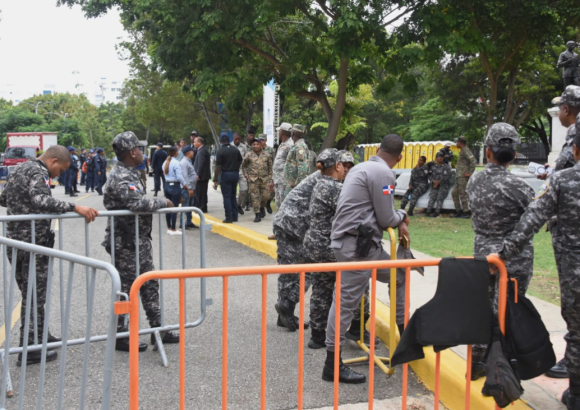
    The highly anticipated 2026 Santo Domingo International Book Fair (FILSD 2026) is set to welcome thousands of book lovers and literary enthusiasts between September 24 and October 4, hosted at the iconic Juan Pablo Duarte Cultural Plaza. To ensure a safe, smooth and enjoyable experience for all attendees, Dominican national security and emergency response agencies have finalized a comprehensive security plan that will see over 500 trained personnel deployed across the event venue and surrounding areas. This year’s edition of the fair carries special significance: Panama takes on the role of guest of honor, and the entire event pays tribute to celebrated Dominican writer José Mármol. With a packed program offering more than 700 cultural and literary activities, the fair has attracted an impressive line-up of participants, including more than 70 acclaimed international writers, 32 global publishing houses, 21 local Dominican publishers and 44 independent local bookstores. The large-scale multi-agency security operation brings together key national bodies: the Dominican Armed Forces, National Police, state intelligence services, and the National Drug Control Directorate (DNCD). Under the operational plan, authorities will set up permanent fixed checkpoints at key access points, and maintain continuous roving patrols both across the fairgrounds and in the surrounding neighborhoods. External security coverage will extend to three major local thoroughfares: Máximo Gómez Avenue, César Nicolás Penson Avenue, and Pedro Henríquez Ureña Avenue. Additional personnel will be permanently stationed at high-footfall areas across the venue, including exhibition pavilions, public auditoriums, on-site museums, and other spaces projected to draw large crowds of visitors. All pedestrian entry points to the fair will implement mandatory security checks: every attendee will pass through screening with handheld metal detectors, and carry-on bags will undergo visual inspection. To preserve public safety, a clear list of prohibited items has been published, including all firearms, bladed weapons, alcoholic beverages, glass containers, and other potentially dangerous articles. Authorities have also added extra restrictions to maintain the event’s focus on literature and culture: political or religious propaganda not directly related to the fair’s official programming, unlicensed street vending, and unauthorized vehicles are all banned from the venue premises. Traffic management forms a core part of the operational plan, with Dominican road safety agencies Digesett and Intrant rolling out a special temporary traffic scheme around the Cultural Plaza. The scheme is designed to keep vehicle traffic flowing smoothly, separate vehicle lanes from pedestrian areas, and protect visiting pedestrians as they enter and exit the event. To eliminate parking congestion for attendees, authorities have negotiated access to more than 1,300 public parking spaces with nearby public and private institutions, including the Universidad Apec (Unapec), Universidad Iberoamericana (Unibe), the Palace of Fine Arts, the Félix Sánchez Olympic Stadium, and the Ministry of Higher Education, Science and Technology (Mescyt). On-site parking at the Plaza de la Cultura will be reserved exclusively for authorized official and event vehicles. Beyond security, the comprehensive operational plan integrates full medical and emergency response capabilities. A centralized Unified Command Post will lead cross-agency coordination for any emergency incidents. 911 response units, DAEH emergency services, ambulances and trained paramedic teams will be stationed at pre-identified strategic locations across the venue to enable rapid response. Additional support will be provided by the Dominican Civil Defense and the National District Fire Department, both of which will deploy trained personnel and specialized communications equipment to the site. The plan also prioritizes support for vulnerable groups: authorities have confirmed that senior citizens, people living with disabilities, and organized school groups will receive priority assistance at all times. A dedicated special protocol has also been established to quickly locate and reunite lost or disoriented children with their guardians, giving visiting families extra peace of mind during the event.

  • Families affected by Colonial City fire begin receiving government assistance

    Families affected by Colonial City fire begin receiving government assistance

    A destructive early-morning blaze that tore through a residential and commercial block in Santo Domingo’s historic Colonial City has left dozens of residents displaced, with local authorities moving quickly to deliver emergency support following an on-site damage assessment.

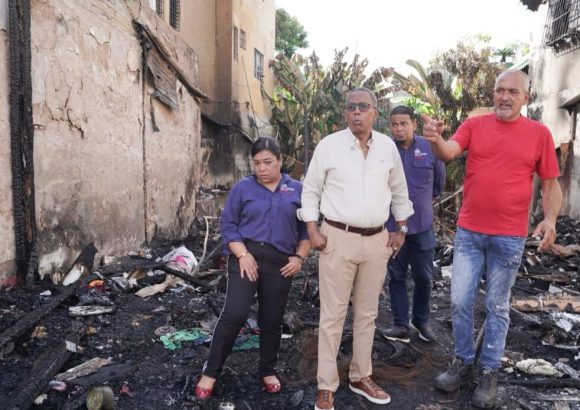
    The fire broke out around dawn on September 20 on Arzobispo Portes Street, close to Regina Alley, according to initial incident reports. The blaze completely destroyed one residential property and one small business, damaged a second adjacent home, and left four parked vehicles with significant fire damage. Among the casualties, affected resident Emely Núñez and her son sustained minor burns while escaping the spreading fire.

    Núñez, one of the hardest-hit community members, told reporters she believes the fire originated from an exploding power strip inside her home, a failure she linked to consistent voltage fluctuations that had plagued the neighborhood for weeks. She added that the ongoing electrical issues had already been formally reported to local power distribution company Edeeste prior to the incident, with multiple other local residents confirming they have also experienced similar electrical problems that have damaged their personal home appliances. At present, officials have not confirmed the official cause of the blaze, with community members noting that a final determination will depend on the official investigative report from the Dominican Fire Department.

    In the immediate aftermath of the fire, technical teams from the Ministry of Housing and Buildings arrived to inspect the structural integrity of damaged properties, while Edeeste personnel carried out safety work on local electrical infrastructure and installed new power meters at several affected lots to restore basic utility access.

    Edgar Augusto Féliz Arbona, director of the Dominican Republic’s Directorate of Social Assistance and Community Food (DASAC), led the official needs assessment mission to the neighborhood, where he met directly with Núñez and other impacted residents to inspect damaged properties firsthand. During the visit, Féliz Arbona confirmed that government emergency support was already being activated, with the first priority focused on replacing all household goods lost in the blaze to address families’ most urgent needs.

    “This support is core to our mandate: we step in to help Dominican families facing vulnerable, unexpected circumstances, and we will deliver every replacement item these families lost immediately,” Féliz Arbona said, adding that the assistance effort was launched following direct instructions from President Luis Abinader to prioritize support for households impacted by unforeseen emergencies. Féliz Arbona also noted that DASAC will coordinate closely with other national and local government agencies to address any needs that exceed the agency’s current scope of work, ensuring no affected family is left without the support they require to rebuild.

  • Abinader proposes stronger Dominican Republic-Peru ties after bilateral meeting with Fujimori

    Abinader proposes stronger Dominican Republic-Peru ties after bilateral meeting with Fujimori

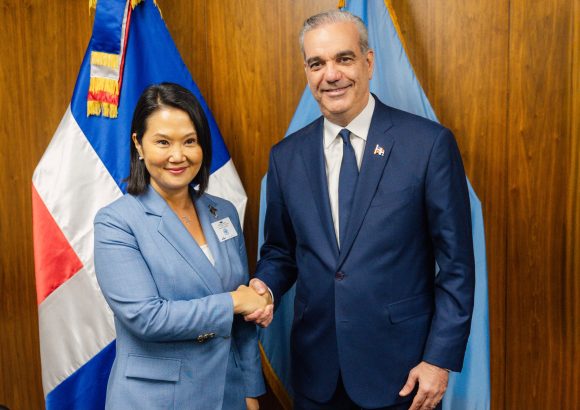
    On the final day of his working trip to New York, Dominican Republic President Luis Abinader held a high-stakes bilateral meeting with Peruvian President Keiko Fujimori, centered on deepening long-standing relations between the two Latin American nations and unlocking opportunities for collaborative work across multiple priority sectors.

    The closed-door meeting marked the first formal discussion between Abinader and Fujimori since Fujimori took office as Peru’s head of state, bringing together the two leaders to align on shared priorities for bilateral engagement. During the talks, Abinader emphasized the Dominican Republic’s long-standing commitment to building robust, mutually beneficial ties with Peru, noting that existing cooperation has laid a strong foundation for even greater progress.

    “We have always aimed to build the strongest possible relations with Peru, and to strengthen the bonds that already connect our nations. I am confident we can elevate these ties to entirely new levels,” Abinader told Fujimori during their discussion.

    After the meeting concluded, Abinader spoke with assembled reporters, where he further outlined the context of the bilateral discussion, highlighting the deep, decades-long historic connections between the Dominican Republic and Peru. He added that despite the progress the two nations have already made, there remains significant untapped potential to expand cooperation that delivers benefits to both populations.

    According to an official statement released by the Peruvian government following the meeting, the leaders covered a broad range of pressing shared issues beyond core diplomatic relations. Key topics on the agenda included cross-border security cooperation, advancing the adoption of artificial intelligence for public good, collaborative work to protect shared cultural heritage, strengthening systems to build disaster resilience, advancing shared sustainable development goals, and expanding bilateral economic and trade connections to boost shared economic growth.

    To further facilitate in-person engagement and deepen bilateral ties, the two leaders also exchanged formal invitations to make state visits to each other’s countries, with plans to continue discussions on collaborative priorities in future high-level meetings. The New York talks wrap up Abinader’s working visit to the U.S. city, closing out a schedule of diplomatic engagements focused on expanding the Dominican Republic’s international partnerships.

  • France and Dominican Republic launch digital portal for shared historical archives

    France and Dominican Republic launch digital portal for shared historical archives

    A landmark new collaborative archival project has opened thousands of pages of shared history between France and the Dominican Republic to global public access, marking a major milestone in bilateral cultural cooperation.

    The National Archives of France has launched a fully bilingual digital portal that hosts a vast collection of historical documents chronicling France’s historical presence in Santo Domingo, the territory that now makes up the Dominican Republic on the island of Hispaniola. Spanning more than two centuries of history, the collection includes materials dating from 1795 all the way to the modern day, creating a comprehensive, easily accessible resource for anyone seeking to explore the intertwined past of the two nations.

    This digital initiative is the direct outcome of a formal cooperation agreement signed on June 25, 2025, between the Dominican Republic’s General Archive of the Nation (AGN) and the Archives Directorate of France’s Ministry for Europe and Foreign Affairs. Beyond the launch of the digital portal, the agreement also lays out a roadmap for future collaborative work, including the development of standardized catalogs and detailed descriptive guides that will further simplify navigation of the collections for both academic researchers and casual members of the public.

    The project builds on years of existing partnership between the AGN and France’s Interministerial Archives Service (SIAF), the government body that oversees both the Overseas National Archives and the National Archives of France, which provided the institutional foundation for expanding access to the previously underutilized collection.

    The portal was officially introduced to the public during a formal inauguration ceremony held at the National Archives of France in Paris. The event was attended by senior representatives from archival institutions on both sides of the Atlantic, including Roberto Cassá, Director of the Dominican Republic’s AGN, senior French archival officials, and David Puig, the Dominican Ambassador to France.

    At its core, the initiative is designed to fulfill two linked goals: preserving the shared historical heritage that connects France and the Dominican Republic, and tearing down barriers to access that have previously limited public and research engagement with these important documents. By making the full collection available online free of charge, organizers hope to support academic inquiry, empower Dominican and French citizens to explore their shared history, and leave a lasting accessible resource for future generations to study the deep historical ties between the two nations.

  • Barceló Bávaro Culinary Week 2026 to feature 10 renowned chefs in Punta Cana

    Barceló Bávaro Culinary Week 2026 to feature 10 renowned chefs in Punta Cana

    PUNTA CANA, DOMINICAN REPUBLIC – One of the Caribbean’s most iconic luxury resort destinations, Barceló Bávaro Grand Resort, is preparing to welcome food lovers from across the region and beyond for the 11th edition of its celebrated Culinary Week, running October 18 through 25. This year’s gathering will bring together 10 award-winning, internationally recognized chefs from the Dominican Republic and around the globe for a full week of immersive gastronomic celebration that showcases diverse culinary traditions from multiple world cuisines.

    Unlike standard food festivals that focus on a single culinary identity, the 2025 Culinary Week program is built around a curated lineup of themed dinners and hands-on culinary experiences that highlight seven distinct culinary styles: bold Italian flavors, classic Spanish tapas and roasts, zesty Mexican street food and fine dining, refined French technique, global fusion creations, premium grilled and cured meat dishes, and vibrant, fresh Caribbean coastal cuisine. What makes this event unique is its openness to more than just resort guests: local Dominican food enthusiasts are also invited to participate in every scheduled experience, making the celebration a collaborative moment for visitors and community members alike.

    This year’s program introduces several exciting new additions that set the 11th edition apart from previous years. Attendees will have the chance to enjoy an exclusive dessert tasting hosted at the resort’s popular Coffee, Rum and Cigar Lounge Bar, developed in partnership with three leading food industry brands: Levapan, Puratos and Chocolate World. To complement the sweet treats, the event will also feature guided rum tastings curated by iconic Dominican rum producer Ron Barceló, giving guests the opportunity to sample premium aged rums paired to match the week’s menu offerings.

    The 2025 chef lineup features two exciting first-time participants: Luigi Puello, the esteemed Food and Beverage Director at Casa de España, and Ramsés Núñez, a sought-after private and corporate chef who specializes in custom, personalized gastronomic experiences for high-profile clients. They will be joined by a roster of veteran culinary talents, including Alejandro Abreu, president of the Dominican Association of Chefs; Liberato De Simone of renowned local Italian eatery Dolce Italia; José Lombardero of Espacio Sukaldeko; and Cristóbal Marto, corporate chef for acclaimed dining destinations La Cassina and Casa Luca. The resort’s own in-house culinary team will also contribute to the event, with four talented chefs representing Barceló Bávaro Grand Resort, Occidental Caribe and Occidental Punta Cana: Hilario Martínez, Benjamín Rodríguez, Ondry Reyes and Wilson Perdono.

    The 11th Culinary Week will kick off officially on Sunday, October 18, with an opening cocktail reception that will welcome leading figures from the Dominican Republic’s gastronomy and tourism industries to mark the start of the week-long celebration. To make the event accessible to all who wish to attend, the resort has created special all-inclusive accommodation packages that combine access to all Culinary Week events with leisure stays and resort amenities, while guests staying in the resort’s Premium Level accommodations will receive exclusive, priority access to all program activities.

    For local and international food lovers looking to experience the best of Dominican and global cuisine in a world-class Caribbean setting, the 2025 Culinary Week at Barceló Bávaro Grand Resort offers a one-of-a-kind opportunity to connect with top culinary talent and explore diverse flavor traditions.

  • Kennedy’s Hardware Workers Take Industrial Action Over Union Dispute

    Kennedy’s Hardware Workers Take Industrial Action Over Union Dispute

    A labor dispute has erupted at two major Kennedy’s Hardware locations in the region, after frontline employees launched formal industrial action to push for management recognition of their chosen union and address a raft of unaddressed workplace grievances. The walkout involves staff at both the All Saints Road store and the Newgate Lane outlet, marking a escalation of months of quiet frustration over working terms at the retail hardware chain. The majority of the workers participating in the action are women, who have raised repeated concerns over unfair working conditions, vague and inconsistent job descriptions, unmanageable workloads, and other ongoing issues that disrupt their daily job performance and work-life balance. After months of unaddressed internal complaints, employees collectively voted to designate the People’s Union as their official bargaining agent, with the goal of sitting down for structured, good-faith negotiations with company leadership to resolve their grievances. According to statements from the striking workers, however, company management has stonewalled their efforts at dialogue, flatly refusing to schedule any meeting or engage in formal talks with elected representatives of the People’s Union. With no path to negotiation remaining, workers say they had no choice but to launch industrial action to pressure the company to both acknowledge their core workplace concerns and formally recognize their right to be represented by the union of their choosing in all future bargaining discussions. As of Monday morning, company leadership has not released any detailed public response to the workers’ specific allegations. A spokesperson for Kennedy’s Hardware noted that the company is still reviewing the situation and intends to publish a full formal statement on the dispute later in the day.

  • STATEMENT: Dominica Dementia Foundation in observance of  World Alzheimer’s Day

    STATEMENT: Dominica Dementia Foundation in observance of World Alzheimer’s Day

    September 22, 2026

    Global public health data paints a stark picture of the growing dementia crisis gripping communities across every corner of the globe: according to new figures released by Alzheimer’s Disease International, a new case of dementia is diagnosed somewhere in the world every three seconds. Right now, more than 55 million people worldwide live with this neurodegenerative condition, and projections indicate that this total will surge to three times its current size by 2050 if no large-scale intervention is implemented.

    But for Veronne Nicholas, president of the Dominica Dementia Foundation (DDF), the human weight of this crisis does not rely on global statistics to be felt on the ground in Dominica. In every local neighborhood, every school and every workplace, residents already see the quiet toll the disease takes on families across the island. “We each know someone, or a family, impacted by a loved one with dementia,” Nicholas emphasized in a recent public address.

    Many people misread the subtle signs of dementia’s impact on daily community life, Nicholas explained. A chronically late high school student, or a coworker who consistently struggles to meet deadlines, is often unfairly labeled as unmotivated or lacking work ethic. In many cases, however, these challenges stem from the unspoken burden of caring for a family member living with dementia. As the condition progresses, this responsibility only grows heavier, pushing caregivers to balance work, education and family life with increasingly intense care demands.

    To turn the tide on this growing public health challenge, Nicholas is calling for widespread public adoption of evidence-based prevention and intervention strategies. Early detection of dementia, she stresses, is one of the most powerful tools to improve long-term health outcomes for patients. Additionally, public health research confirms that consistent physical activity, ongoing social engagement, and regular mental stimulation can all significantly reduce an individual’s risk of developing the condition. Prioritizing heart health — including managing blood pressure, diabetes, and cholesterol levels — also delivers meaningful protective benefits for long-term brain health.

    Above all, Nicholas is pushing for greater recognition and support for the millions of unpaid family caregivers who bear the majority of care responsibilities for dementia patients worldwide. “They matter just as much as the patients they care for,” she said, urging local communities, governments and global health organizations to step up and provide the resources, respite and recognition that caregivers need to sustain their critical work.

  • Gajadien en Pawiroredjo willen automatische koppeling salaris president schrappen

    Gajadien en Pawiroredjo willen automatische koppeling salaris president schrappen

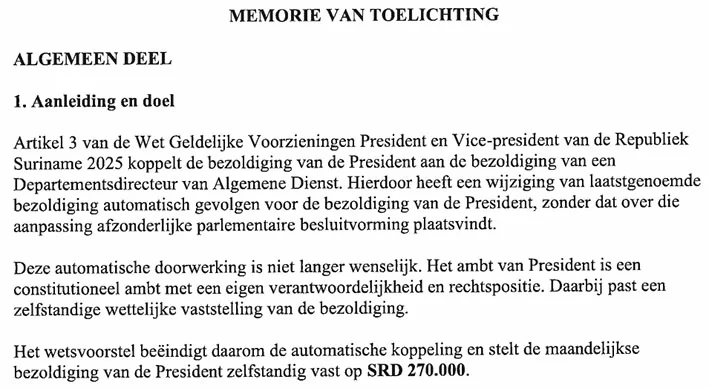
    Two members of Suriname’s National Assembly (DNA), Asiskumar Gajadien and Jerrel Pawiroredjo, have tabled a private member’s bill on Monday that would break the long-standing linkage between the presidential salary and the pay of senior civil service department directors. The legislation, if approved, would mark a major shift in how the top executive’s compensation is set, prioritizing parliamentary oversight and fiscal accountability in the South American nation.

    Under the current regulatory framework, which was formalized in the 2024 Law on Financial Provisions for the President and Vice-President of the Republic of Suriname, the president’s pay automatically rises or falls in line with changes to the salary of a General Service Department Director. This automatic adjustment mechanism means the National Assembly is not required to vote separately on any modifications to the presidential salary when civil service pay scales are updated. The new bill seeks to end this indirect adjustment process entirely.

    If passed, the proposed legislation will set a fixed monthly base salary of 270,000 Surinamese dollars (SRD) for the president directly in law. The existing proportion for the vice-president’s salary will remain unchanged, with the vice-president continuing to receive 75% of the president’s monthly pay – equal to SRD 202,500 under the proposed base rate. While the old benchmark of four times a General Service Department Director’s salary will be retained as an indicative reference value, it will no longer trigger automatic changes to the presidential salary when the civil service figure is adjusted.

    Under the new framework, any future change to the president’s salary will require a full new legislative process and approval from the National Assembly. When considering future adjustments, lawmakers will be required to take into account multiple relevant factors, including national price inflation and changes in household purchasing power, public sector salary trends across the board, and the current fiscal and budgetary position of the Surinamese state. The bill also mandates that a full review of the presidential salary must be conducted at least once every three years, though even a scheduled review will not automatically result in a pay increase – any adjustment still requires a separate parliamentary vote.

    The push for decoupling comes amid renewed public and political debate over salary adjustments for senior political officeholders in Suriname. The existing law governing presidential and vice-presidential financial provisions was only passed in November 2024 and published as S.B. 2024 no. 159. Notably, this is not the first attempt to amend this legislation this year: an earlier private member’s bill was submitted to the National Assembly on February 23, 2026, which focused on revising the pay structure to align with the principle of pay equality. Unlike the earlier proposal, the new bill from Gajadien and Pawiroredjo specifically targets the elimination of automatic pay pass-through from civil service salaries to the presidency, arguing that hikes for lower-level administrative posts should not automatically translate to higher pay for the head of state.

    The bill’s sponsors argue that the new structure will strengthen three core pillars of democratic governance: parliamentary oversight of executive compensation, greater transparency for public finances, and tighter budgetary discipline for the state. By requiring explicit legislative approval for any change to the presidential salary, the proposal aims to give elected representatives direct control over the executive’s pay, ensuring all adjustments are debated publicly and aligned with the country’s broader economic conditions.

  • Gros Islet cricket tournament to bowl off in October

    Gros Islet cricket tournament to bowl off in October

    After a 12-month hiatus, top-tier competitive cricket is making a much-anticipated comeback to the Caribbean district of Gros Islet this October, anchored by a four-team Twenty20 tournament and an ambitious new initiative designed to nurture the district’s next generation of cricket talent.

    The Gros Islet Cricket Association (GICA), the organizing body behind the revival, recently completed a player draft that brings together a diverse mix of athletes: promising up-and-coming prospects from grassroots cricket programs, established players from local amateur clubs, and experienced senior team members, creating a blended competitive structure that prioritizes both performance and development.

    GICA Chairman Joseph Hall emphasized the significance of the restart, noting that the district had been unable to host its annual domestic tournament in 2023. “We didn’t have a tournament last year. So this year we restarted our domestic competition,” Hall said. “We are trying our best to get all of our local players, our Under-19 players, our grassroots players, involved in the tournament.” The draft and tournament structure were intentionally built to ensure emerging young talent gets meaningful competitive exposure alongside more seasoned athletes, rather than being sidelined in lower-tier exhibition matches.

    In a departure from past events, GICA is also welcoming eligible players from outside the Gros Islet district to join the four competing franchises. Beyond on-field talent development, the association is also investing in growing the sport’s off-field infrastructure by training new scorers, umpires, and other game officials, addressing a longstanding gap in local cricket administrative capacity.

    Each of the four tournament franchises will be led by a high-profile local cricket figure: batsman and wicketkeeper Dominic Auguste, top-order batsman Jard Goodman, versatile allrounder Lee John, and former West Indies Under-19 national captain Kimani Melius.

    Alton Crafton, head coach for the initiative, outlined the overlapping development pathways for the district’s young talent. Gros Islet’s Under-19 squad is already competing in a series of longer-format matches as part of the ongoing Saint Lucia National Cricket Association (SLNCA) Super 50 tournament, and Crafton confirmed that the October T20 tournament may also add additional longer-format development matches to help young players build skills across all forms of the game.

    The revival of domestic cricket in Gros Islet comes on the heels of a historic run of success for the district’s programs in recent years. Local Gros Islet squads have claimed three major regional titles, including the Sandals Under-19 Tournament, the Saint Lucia Premier League, and the SLNCA Two-Day Men’s Tournament, demonstrating the strength of the district’s existing cricket foundation and building momentum for the 2024 comeback.