作者: admin

  • ‘Education is the gateway to another world’

    ‘Education is the gateway to another world’

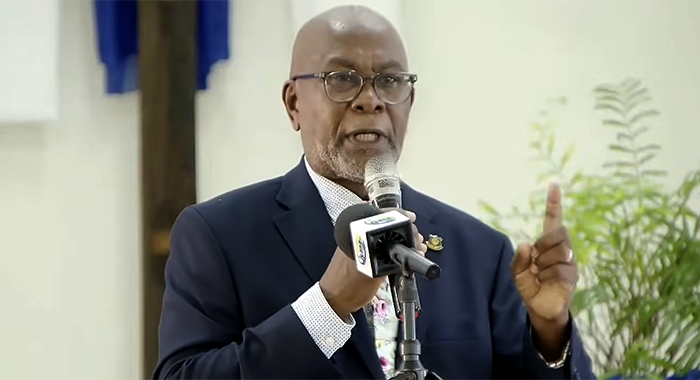
    NEW ROADS, Westmoreland — On a landmark Friday ceremony, Jamaica’s Deputy Prime Minister and Minister of National Security and Peace Dr Horace Chang opened a purpose-built digital learning centre at New Roads Primary School, his childhood alma mater, tying the expansion of rural educational access directly to the nation’s ongoing push for lasting community peace and poverty reduction.

    The new facility, a fully fitted 20-seat computer laboratory, fulfils a pledge Chang first made back in 2007. Equipped with high-speed Starlink Internet connectivity arranged through the Universal Service Fund, the lab is designed to expand educational access for young learners in this rural Westmoreland community, where opportunity gaps between rural and urban areas have long limited student outcomes. Alongside the lab, Chang also donated three laptops for teaching staff and new cricket equipment for the school’s student body, framing the entire initiative as a long-term investment rather than a one-off gesture.

    Speaking to an assembled crowd of students, educators, parents and local community leaders, Chang explained that the recent renaming of his portfolio to the Ministry of National Security and Peace signals a policy shift: while investments in law enforcement have delivered tangible progress, building lasting peace requires equal investment in education and youth development. “We can say without hesitation, today, Jamaica is safer than it was three years ago, and I commend the police for the effort,” he noted. “But that leaves space for much more structured activity in our communities, and part of that is our education field.”

    Chang emphasized that education remains the single most sustainable path to breaking intergenerational cycles of poverty, reducing social dysfunction, and opening pathways to upward mobility. A graduate of New Roads Primary who went on to attend Cornwall College and the University of the West Indies, the veteran lawmaker drew from his own experience to argue that a student’s starting point in life does not determine their potential. “Education is the gateway to another world, a world of improvement, better quality of life, to achieve your dream and success,” he stated.

    The new digital centre, he added, leverages technology to narrow the rural-urban opportunity divide, drawing on positive outcomes from similar computer labs he has previously installed across other constituencies, including Glendevon Primary School in St James North Western, where the technology has driven measurable improvements in literacy, numeracy and overall student performance. “The idea is to demonstrate that with technology we can reach them [students], and provide the teachers with those tools that will help them to get across to the students that will educate them, build them, develop more human resources,” he explained. “This is not only about giving back to my community, which is important, but to also send a message that we’re in a world today where we can use technology to reach anywhere in Jamaica. And we can offer opportunities to everyone, whether it’s sports, academia, development of our students’ talent at any point in Jamaica. We just have to have the commitment and the willingness to invest.”

    Local and national education leaders echoed calls for the school community to steward the new facility to maximise its long-term impact. Westmoreland Eastern Member of Parliament Dr Dayton Campbell urged attendees to protect the investment, noting that Chang’s rise from humble local roots to national leadership is proof that students in rural communities can achieve any goal they set. “It means that you can grow wherever you are planted. There is absolutely nothing to invalidate your dreams,” Campbell said.

    Rhoda Moy Crawford, Minister of State in the Ministry of Education, Skills, Youth and Information, thanked Chang for his generous donation and stressed that protecting the facility is a shared responsibility that supports public safety as well as education. “All of us have to put our hands together to protect this investment,” she said.

    New Roads Primary Principal Coreen Tennant-James called the digital learning centre a transformative addition for the school, noting that expanding access to digital tools will help both students and educators build the skills needed to thrive in an increasingly digital global economy. “We express heartfelt gratitude to everyone who contributed to making this dream a reality,” she said. “Your investment in education is truly an investment in the future of our children. And, to our students, this laboratory is for you. Use it wisely, allow it to inspire creativity, learning, and excellence.”

  • ‘Commit to lifelong learning’

    ‘Commit to lifelong learning’

    As the Fourth Industrial Revolution, anchored by rapid advances in artificial intelligence, reshapes global labor markets and economic systems, a leading Caribbean academic is urging Jamaica to embrace systemic education reform and a national culture of lifelong learning to secure long-term prosperity.

    Anthony Clayton, a professor of sustainable development at The University of the West Indies, Mona, shared his analysis in an exclusive interview with the Jamaica Observer over the weekend, warning that widespread automation of technical roles is rapidly redefining the core skills required for gainful employment. Going forward, Clayton argues, the most in-demand workers will not rely on routine technical capabilities that can be easily replicated by AI and automated systems. Instead, employers will prioritize candidates with advanced problem-solving acumen, creative thinking, and well-developed emotional intelligence.

    To cultivate these high-value skills and build the digital and institutional infrastructure needed to compete on the global stage of the Fourth Industrial Revolution, Clayton says Jamaica must fundamentally reorient its existing education and training frameworks. This shift, he emphasizes, will require bold new policy thinking and cross-sector collaboration that departs from outdated traditional models.

    Clayton points to shifting trends in the United States, where major technology corporations have already begun to carve out a larger role in workforce development that was once the exclusive domain of traditional higher education institutions. Unlike many traditional universities that prioritize theoretical knowledge, these leading tech firms prioritize practical, hands-on learning focused directly on solving real-world industry challenges.

    Looking to global examples of successful reform, Clayton highlights innovative models adopted by Germany and the United Kingdom. Both nations have implemented hybrid education frameworks centered on deep industry-university partnerships. These models include structured work experience placements embedded in academic programs, and industry-sponsored engineering doctorates where students conduct original research targeted at solving company-specific problems or developing new commercial products.

    According to Clayton, these collaborative, hybrid learning arrangements are set to become the global standard in technology-driven sectors first, as they align educational outcomes directly with the evolving needs of modern labor markets. Early adoption of this approach in Jamaica, he argues, would smooth the country’s transition to an integrated digital economy, where every sector from manufacturing and logistics to finance, governance, and marketing relies on interconnected digital systems.

    In this new economic landscape, nearly all workers will need to operate as knowledge workers, capable of driving value through specialized expertise, critical reasoning, interpersonal collaboration, and an ongoing commitment to updating their skills. Clayton notes that this large-scale transition will also require a reevaluation of the core roles of government and public institutions to support the shift.

    Clayton concludes that if Jamaica makes the targeted adjustments needed now, the country can leverage the opportunities created by the Fourth Industrial Revolution to break free from its long history of stagnant low growth and emerge as a dynamic, competitive economic hub in the digital age.

  • Prosecutor’s fixation on spent shell puzzles judge

    Prosecutor’s fixation on spent shell puzzles judge

    The high-profile murder trial involving six active-duty Jamaican law enforcement officers is set to reconvene on Tuesday, with a key procedural dispute over a single spent bullet casing taking center stage for courtroom arguments.

    The six officers — Sergeant Simroy Mott, Corporal Donovan Fullerton, Constables Andrew Smith, Sheldon Richards, Orandy Rose, and Richard Lynch — stand accused of the 2013 shooting deaths of three men: Matthew Lee, Ucliffe Dyer, and Mark Allen. Fullerton faces an additional charge of submitting a false statement to Jamaica’s Independent Commission of Investigations, the country’s police oversight body.

    The incident dates back to January 12, 2013, when the three victims were travelling through the Barbican neighborhood of St Andrew in a blue Mitsubishi Outlander. According to initial official accounts, officers signaled the vehicle to pull over, and after a brief delay, the driver stopped. Prosecutors allege that three men exited the vehicle and opened fire on police, triggering a shootout that left the three men dead, while a fourth suspect escaped the scene. Two unregistered firearms were recovered from the area after the gunfight.

    Investigators collected dozens of spent bullet casings from the Acadia Drive crime scene, near its intersection with Evans Avenue, and submitted all evidence to the Government Forensic Laboratory for ballistics testing. A total of 14 5.56mm casings, alleged to have been fired by the responding officers’ service weapons, were packaged together in a single envelope for analysis. Of these 14 casings, 12 were definitively matched to three police rifles used on the day of the shooting. Two casings, however, had no matching weapon on record — one of which was visibly damaged after being run over by a vehicle.

    Lead prosecutor Kathy-Ann Pyke has made the unmatched damaged casing a point of focus, demanding that the case’s veteran ballistics expert, a laboratory superintendent with nearly 20 years of experience in firearms analysis, re-examine the casing by running it through the lab’s computerized matching system to determine its origin. Pyke has argued that the extra step is necessary to properly label the casing as corresponding to crime scene marker number one, which has already been presented to the court via photographic evidence. She said the request comes as a precautionary measure to avoid mixing the casing up with other 5.56mm ammunition evidence collected from the scene.

    But High Court Judge Sonia Bertram-Linton has repeatedly questioned the relevance of the request since proceedings began on Friday, expressing confusion over why the single casing needs to be singled out for additional testing. The judge noted that the request introduces new evidence that would require full disclosure to the defense, and that she could already anticipate an objection from the defense team. Before the judge could finish her remark, lead defense attorney Hugh Wildman immediately voiced his objection to the proposal.

    Wildman’s unusual offhand comment — “I did not attend Ward 21 before I came here” — sparked a brief back-and-forth in the courtroom, before the judge encouraged the prosecution to move forward with the proceedings. Wildman’s co-counsel, Althea Grant-Coppin and John Jacobs, have formally objected to allowing any additional analysis of the casing, arguing that the full ballistics report has already been submitted to the court as evidence.

    When the trial resumes today, both the prosecution and defense will present full arguments on whether the additional testing should be allowed, after which Judge Bertram-Linton will issue a formal ruling. Following the ruling, the defense is scheduled to begin its cross-examination of the ballistics expert witness.

  • US-registered plane crashes in Guyana’s interior

    US-registered plane crashes in Guyana’s interior

    On a Sunday morning in late May 2026, a small single-engine aircraft registered in the United States went down in the remote interior region of Guyana, aviation and local news sources have confirmed. The downed aircraft, identified as a Cessna 182 with the registration marking N1-82UG, is owned by Domestic Airlines, a local air service founded and operated by experienced Guyanese pilot Orlando Charles.

    According to a senior source familiar with the incident, the crash occurred at Aricheng, a remote location in Guyana’s interior. Egbert Field, Director-General of the Guyana Civil Aviation Authority (GCAA) and a retired Lieutenant Colonel, confirmed the details of the accident to Demerara Waves Online News, noting that the only person on board — the pilot — escaped with only minor injuries.

    As of the latest update on 31 May 2026, investigators have not yet determined the root cause of the crash. Investigative teams are expected to be deployed to the remote crash site in the coming days to conduct on-site inspections and reconstruct the sequence of events that led to the accident. Multiple attempts to reach Orlando Charles for direct comment on the incident via mobile phone have gone unanswered as of press time.

  • Community Advocate Chaneil Imhoff Nominated for Caribbean POSH ICON Woman Award

    Community Advocate Chaneil Imhoff Nominated for Caribbean POSH ICON Woman Award

    A well-respected community advocate from Antigua and Barbuda, Chaneil Imhoff, has earned a prestigious nomination for the Community & Cultural Icon Award at the 2026 Caribbean POSH ICON Woman Awards, marking recognition for her years of dedicated work advancing public welfare across the region.

    In a public statement shared following the announcement of nominees, Imhoff expressed her deep gratitude for the honor, writing, “I’m honoured to be nominated for the Community & Cultural Icon Award at the Caribbean POSH ICON Woman Awards 2026.” The long-time community organizer emphasized that the nomination is not just a personal acknowledgment, but a reflection of the ongoing impact of her nonprofit organization WISH, which has centered its mission on three key pillars: expanding public access to mental health resources and education, creating opportunities for youth to build leadership skills, and lifting overall community wellbeing across Antigua and Barbuda.

    “This nomination reflects the work we continue to do through WISH and our efforts to advance mental health awareness, youth empowerment, and community wellbeing,” Imhoff clarified, highlighting the collective effort behind the recognition. The upcoming 2026 Caribbean POSH ICON Woman Awards, an event that celebrates the contributions of extraordinary women driving change across the Caribbean, is set to be hosted in the British Virgin Islands, with events running from June 25 to June 30, 2026.

    Looking ahead to the award selection process, Imhoff has reached out to members of the public and her local and regional network to request their support through the public voting phase of the competition. She also took the opportunity to extend sincere thanks to all her existing supporters, who have offered consistent encouragement and backing for WISH’s work throughout the years. The nomination puts a spotlight on the critical role of local community organizing in the Caribbean, and highlights how grassroots work focused on mental health and youth development is gaining regional recognition.

  • OPINION: Unmasking The Vape Epidemic Amongst The Caribbean Region

    OPINION: Unmasking The Vape Epidemic Amongst The Caribbean Region

    Across the idyllic island nations of the Caribbean, a quiet public health emergency is unfolding that has largely flown under the radar of global health discourse: the rapid escalation of youth vaping that now qualifies as a full-blown epidemic. What began as a marketed ‘safer alternative’ to traditional tobacco cigarettes has morphed into a public health nightmare, disproportionately impacting young people across the region and undoing decades of progress in reducing tobacco-related illness.

    Recent regional public health surveys paint a troubling picture. In several Caribbean countries, current vaping rates among teenagers aged 13 to 17 now surpass 25%, a three-fold increase over just the past five years. This surge has been fueled by aggressive, targeted marketing from major tobacco and vape companies that frame vaping as a trendy, harmless lifestyle choice, capitalizing on weak regulatory frameworks in many small island nations. Many of these products are sold in colorful packaging, infused with sweet tropical fruit flavors that appeal directly to young consumers, and are often priced low enough to fit within a teenager’s limited allowance.

    Compounding the crisis is a dangerous gap in public awareness. Many Caribbean residents, including parents and even some healthcare providers, still hold the mistaken belief that vaping poses little to no long-term health risk. But growing global research contradicts this myth: vaping products contain harmful chemicals including nicotine, formaldehyde, and ultrafine particles that damage lung tissue, impact brain development in adolescents, and increase the risk of heart disease. For developing island nations with already strained public health systems, the growing burden of preventable vaping-related illness threatens to overwhelm limited care resources.

    Weak regulation has also created opportunities for illicit trade. Unregulated, counterfeit vape products are widely sold in informal markets across the region, with no oversight of their ingredients or quality. Unlike many high-income countries that have implemented flavor bans, product restrictions, and age verification requirements, more than half of Caribbean nations still lack comprehensive vaping regulations. This policy vacuum has allowed the industry to expand its footprint unimpeded.

    Public health advocates across the region are now calling for urgent coordinated action. They are pushing for regional governments to implement strict age restrictions, ban flavored vaping products, increase public awareness campaigns about the risks, and crack down on illicit sales. They also emphasize the need for targeted youth prevention programs in schools, and support for adult smokers who want to quit using evidence-based treatments rather than unregulated vape products. The Caribbean has long been lauded for its progress in reducing traditional tobacco use through public health initiatives; now, leaders say it is time to bring that same resolve to confronting the new vape epidemic before it causes irreversible damage to a generation of young people.

  • Surinamese nationals charged with drug offences

    Surinamese nationals charged with drug offences

    A targeted anti-narcotics operation carried out by the Barbados Police Service has led to serious drug-related charges against three citizens of Suriname, law enforcement officials have confirmed.

    The three accused — 33-year-old Farino Revelino Bergmans, 41-year-old Celita Saskia Aloewanai, and 21-year-old Kylie Bretni Banga — each face four separate cocaine-linked charges: possession of the controlled substance, possession with intent to supply, drug trafficking, and illegal importation of cocaine. All offences are alleged to have occurred on May 23, 2026, according to official charging documents filed by the Barbados Police Narcotics Unit.

    During the operation, officers seized approximately 1.2 kilogrammes of suspected cocaine from Bergmans, a haul with an estimated street value of $60,000 Barbadian dollars. He made his first initial court appearance Saturday before Magistrate Alison Burke at the District ‘A’ Traffic Court, where he was not permitted to enter a plea at this stage of proceedings. The judge ordered Bergmans remanded into the custody of the Barbados Prison Service at Dodds, with his next court listing scheduled for June 4.

    Authorities allege Aloewanai was in possession of roughly 1.1 kilogrammes of cocaine, valued at an estimated $55,000, while Banga is accused of holding 1 kilogramme of the drug worth approximately $50,000.

    Both Aloewanai and Banga are set to make their first court appearances at the District ‘B’ Magistrates’ Court on June 1, as the legal process around this large-scale drug seizure moves forward.

  • All Saints Road Detour in Effect Sunday for Major Infrastructure Works

    All Saints Road Detour in Effect Sunday for Major Infrastructure Works

    The Antigua and Barbuda Ministry of Works has issued an official public advisory announcing upcoming large-scale infrastructure upgrades along a key stretch of All Saints Road (ASR), located between the Fresh and Easy Supermarket and the Bellevue Service Station. As part of the broader government-led All Saints Road Project, this construction work will require a full temporary traffic diversion that will go into effect starting at 11:00 a.m. on Sunday, 31 May 2026, and remain in place until 7:00 a.m. the following Monday morning.

    Drivers traveling outbound from the city center will follow a clearly marked alternate route: after passing the Fresh and Easy Supermarket, motorists will make a right turn, then rejoin the main All Saints Road corridor via the junction at Bellevue Heights Service Station. For those driving inbound toward the city, the detour requires a left turn at the Bellevue Heights Service Station before following marked roads back to the main ASR route.

    To minimize traffic disruption and keep commuters moving safely, trained traffic flaggers will be positioned at key points along the detour to direct vehicle flow. Permanent and temporary road signs will also be installed along the entire alternate route to guide drivers traveling in both directions. Crucially, local residents who live within the immediate construction zone will retain full access to their properties throughout the work period, and all commercial operations along the affected stretch of road will remain open for customers as normal.

    Authorities stress that drivers should stay alert in the area, as heavy construction machinery will be operating in close proximity to the work zone. Motorists are strongly encouraged to comply with all directions from on-site personnel and posted signage to support safe travel through the area. Project organizers have asked all road users, including local commuters and commercial transport operators, to revise their travel plans ahead of time to account for potential unexpected delays during the construction window.

    Members of the public with questions or concerns about the upcoming road work or detour arrangement can reach the Project Implementation Management Unit directly by phone at 562-9173 during regular operating hours.

  • Onderwijsbonden bundelen krachten: landelijk beraad, leerkrachten blijven thuis morgen

    Onderwijsbonden bundelen krachten: landelijk beraad, leerkrachten blijven thuis morgen

    In a coordinated announcement made on May 31, multiple education unions across Suriname have declared a nationwide work stoppage, set to begin Monday, June 1, following years of broken commitments, overdue pay, and unfulfilled policy agreements with authorities. The unified industrial action, called a “landelijk beraad” or national consultation, requires all participating teaching staff to stay home from work until official negotiations deliver tangible, actionable results, union leaders confirmed.

    The strike brings together a broad coalition of Surinamese education organizations: all five member unions of the Federation of Organizations of Teachers in Suriname (FOLS) – SOB, KOB, COB, BLTO, and IOB – are joined by the Teachers’ Union (BvL), the Alliance for Teachers in Suriname (ALS), the Syndicate for Educators, and the Suriname Higher Education Teachers Union (DoHOS), which has pledged full solidarity. The Association of Scientific Staff at the University (VWPU) has also expressed public understanding for the industrial action, signaling widespread discontent across all levels of the country’s education sector.

    Union organizers emphasize that the decision to strike comes after years of unaddressed demands. A comprehensive list of educator requests has been on the table for policymakers for an extended period, with almost no meaningful progress toward implementation. Most critically, thousands of teaching staff across Suriname still await rightfully owed payments, including end-of-year gratifications, correct salary scale adjustments, overdue allowances, and other legally mandated financial benefits. Some educators have waited for these funds since 2020; many have already retired without receiving what they are owed, and a number have passed away never accessing their entitled compensation.

    Beyond immediate financial grievances, unions warn that the ongoing neglect of educator needs has triggered an alarming brain drain crisis that threatens Suriname’s long-term educational quality. Persistent financial insecurity and professional demotivation have pushed hundreds of qualified, experienced teachers to leave the profession entirely, seeking higher-paying roles in other domestic sectors or relocating abroad to secure stable incomes for their families. This steady outflow of educational expertise, unions argue, does irreversible damage to the life prospects of Suriname’s younger generation, eroding the foundation of the country’s public education system.

    “Enough is enough,” the coalition stated in a joint signed declaration. Union leaders note that educators have fulfilled their professional responsibilities to students and communities for years, and it is now time for government authorities to meet their legal and contractual obligations. The work stoppage will remain in place until the coalition receives an official invitation to negotiations focused not on new empty promises, but on immediate implementation of the full demands package and resolution of all outstanding financial commitments.

    The unified bloc makes clear it will no longer accept delays, postponements, or non-binding commitments from authorities. Describing the work stoppage as a defining line in the sand, the unions said in their closing statement: “No more words, no more excuses, no more delays. It is time for action, respect, and results.”

  • Verkiezingen Colombia: Linkse hervormingen vs rechtse veiligheidsmaatregelen

    Verkiezingen Colombia: Linkse hervormingen vs rechtse veiligheidsmaatregelen

    On May 31, Colombia kicked off the first round of its pivotal presidential election, a vote that will chart the South American nation’s future course on core issues ranging from domestic security to economic policy and international relations. More than 40 million eligible Colombian voters are heading to polling stations, which opened at 8 a.m. local time, with final official results projected to be announced by 8 p.m. the same day. Given pre-election tensions and security concerns, roughly 400,000 military personnel and police officers have been deployed nationwide to safeguard voting operations, with security teams maintaining a visible presence on streets across major cities including Bogota.

    Three leading candidates dominate the race, each offering sharply different policy visions for the country. Topping pre-election opinion polls is 63-year-old left-wing Senator Iván Cepeda, the son of a assassinated communist leader. Cepeda, who has pledged to continue and deepen the progressive reforms begun by current left-wing President Gustavo Petro, currently holds enough support to place first but is not projected to clear the 50% threshold needed to win the election outright in a single round. That outcome would push the race to a runoff round scheduled for June 21.

    Cepeda’s core policy platform centers on advancing peace negotiations with illegal armed groups, a strategy that has made limited progress under the Petro administration. He has also proposed sweeping structural social reforms to reduce Colombia’s entrenched inequality and poverty, including higher taxes on the nation’s wealthiest citizens, the transfer of 1 million hectares of land to victims of the country’s 60-year-long internal armed conflict, and expanded public access to healthcare.

    Trailing Cepeda closely in the polls is 47-year-old independent lawyer and businessman Abelardo De La Espriella, a political outsider who has never held public office. Often compared to El Salvador’s hardline President Nayib Bukele for his blunt rhetoric and policy priorities, De La Espriella has centered his campaign on an aggressive crackdown on illegal armed groups. His platform includes plans to construct 10 new mega-prisons, alongside anti-poverty measures focused on expanding access to education, healthcare, and affordable housing. He has repeatedly warned voters that a Cepeda victory would entrench the controversial economic policies of the Petro administration, including the ban on new oil exploration projects.

    In third place in pre-election polling is right-wing Senator Paloma Valencia, backed by former Colombian President Álvaro Uribe and until recently the front-runner among right-wing candidates. Her policy agenda overlaps broadly with De La Espriella’s, calling for tough action against corruption, drug trafficking, and illegal armed groups. She also supports cutting corporate taxes to spur job growth, and funding new social programs through a resumption of large-scale oil and gas exploration.

    The election is widely viewed as a critical bellwether for Colombia’s long-term direction, with particular focus on how the new administration will approach domestic security and the country’s long-standing diplomatic and economic relationship with the United States. Voters are deeply divided over the future of Petro’s progressive agenda, with sharp disagreements over how to address decades of violence, widespread economic inequality, and the role of fossil fuels in the country’s economy.