作者: admin

  • Hurricane Polo Explodes Into Category 5 Off Mexico

    Hurricane Polo Explodes Into Category 5 Off Mexico

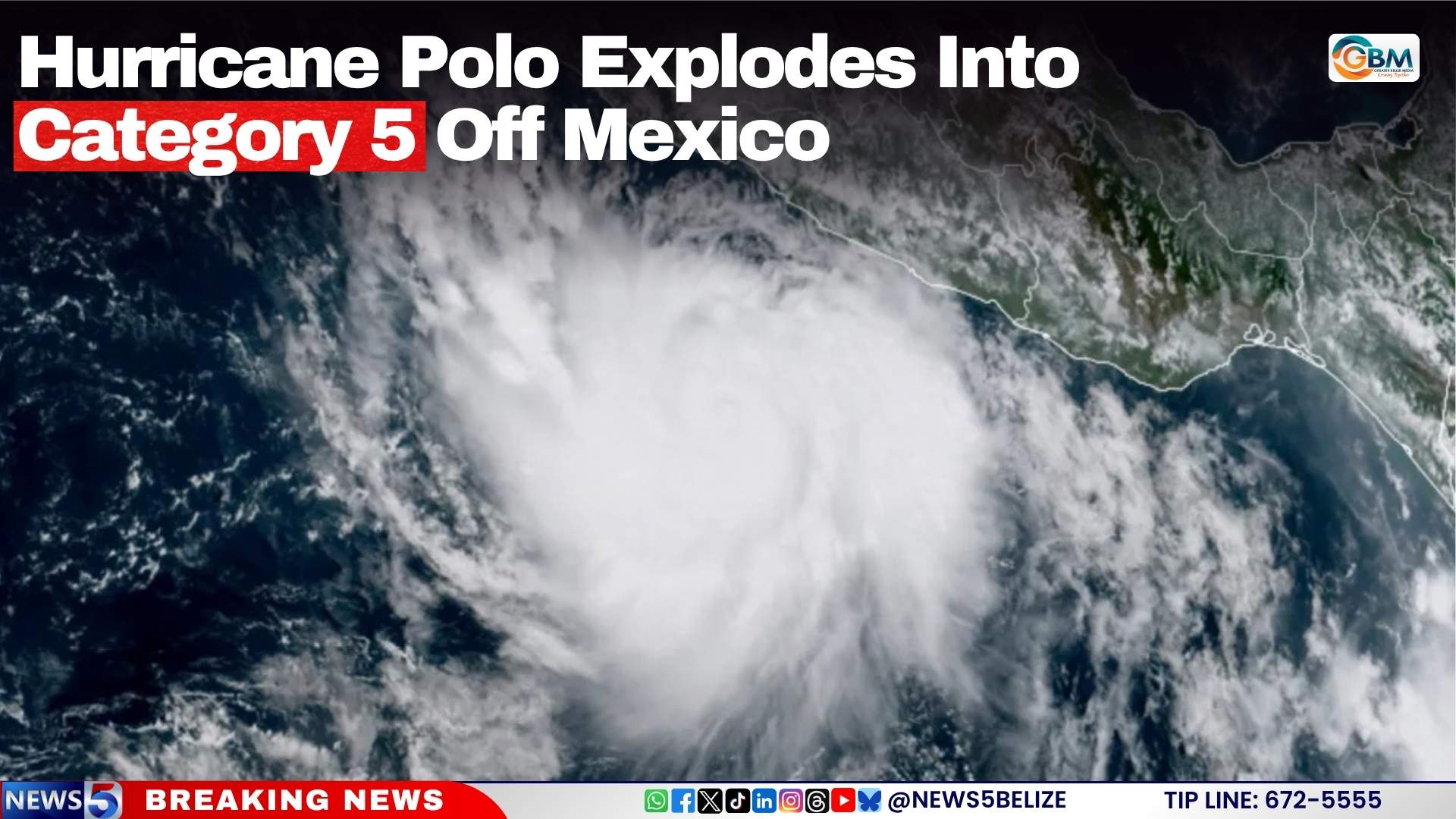
    In the eastern Pacific Ocean, a rapidly strengthening storm has captured the urgent attention of meteorologists worldwide: Hurricane Polo has exploded from a weaker system to a dangerous Category 5 hurricane in an extraordinarily short timeframe. Over just 24 hours, the storm’s maximum sustained wind speeds surged by 110 miles per hour, a rate of intensification that the U.S. National Hurricane Center (NHC) has described as “truly remarkable,” ranking among the fastest ever recorded in the eastern Pacific basin.

    This historic rate of intensification places Polo in rare company alongside some of the most devastating hurricanes to impact Mexico in recent decades. It comes extremely close to the 24-hour intensification surge seen in 2023’s Hurricane Otis, which leveled large parts of the coastal resort city of Acapulco after catching forecasters off guard with its rapid strengthening. Only Hurricane Patricia, which set a global record in 2015 with a 120 mph 24-hour wind increase, has posted a faster intensification rate in the region.

    As of Tuesday morning local time, Polo boasts maximum sustained winds of 160 mph, making it one of the strongest storms to form in the eastern Pacific in recent years. Current forecast tracking models project the storm will turn northwest in the coming days, following a path that runs parallel to Mexico’s southwestern coastline. Forecasters with the NHC note that the storm’s most powerful winds are expected to remain over open ocean, far from populated coastal areas.

    Even with the strongest conditions staying offshore, Mexican communities along the southwest coast still face significant, life-threatening hazards. Forecasters identify heavy rainfall as Polo’s most dangerous onshore threat, with the NHC projecting total accumulations of 4 to 8 inches across the states of Guerrero and Michoacán through Thursday. Isolated areas could see as much as 12 inches of rain, creating extreme risk for flash flooding and destructive mudslides across mountainous and low-lying coastal regions. In response to these risks, authorities have issued a tropical storm watch for a 300-mile stretch of coastline stretching from Tecpán de Galeana to Manzanillo, warning residents to prepare for potential storm conditions.

    Polo is not the only active storm system in the Pacific this week. Tropical Storm Odalys is currently churning far to the west-southwest of the southern tip of Baja California, and meteorologists predict it could strengthen to hurricane strength by the middle of the week.

    The unusually active Pacific hurricane season, which has already produced multiple major storms, is being linked to ongoing El Niño conditions that have pushed ocean surface temperatures across the Pacific far above average. Climate and weather experts note that warmer ocean waters act as fuel for tropical cyclone development, creating favorable conditions for the hyperactive season currently unfolding in the Pacific. In a striking contrast, the Atlantic basin has yet to record its first hurricane of the 2026 season, a stark split in activity that aligns with typical El Niño-driven weather patterns.


  • Three Jamaicans Remanded After EC$79,000 Marijuana Seizure

    Three Jamaicans Remanded After EC$79,000 Marijuana Seizure

    A major drug bust in the Eastern Caribbean has led to three Jamaican citizens being placed behind bars pending trial, following the seizure of a large marijuana shipment worth close to EC$80,000. The three defendants — 25-year-old Aljermin McLean, 21-year-old Joshua Newton, and 54-year-old Elvis Smith — face a series of coordinated drug-related charges connected to the operation carried out by law enforcement on September 14.

    During that targeted enforcement action, police reportedly seized 26.4 pounds of illicit marijuana, which local authorities have appraised at an approximate market value of EC$79,000. All three men have been charged together on three separate counts: possession of a controlled substance, possession of the drug with the intent to supply it to others, and possession with the intent to transfer the illegal substance.

    Following their initial court appearance, the trio has been remanded into prison custody as they await their next court proceeding, which is scheduled to take place on November 25. It is important to note that under the principles of criminal justice, all allegations brought against the three men have not yet been tested or proven in a court of law, and the defendants retain the right to a full and fair trial to contest the charges.

  • ABMS Announces Renaming of Media Centre in Honour of Philbert Mason

    ABMS Announces Renaming of Media Centre in Honour of Philbert Mason

    ST. JOHN’S, Antigua and Barbuda – September 22, 2026 – A landmark tribute to decades of dedicated public service and meteorological excellence is being unveiled in Antigua and Barbuda, as the national Meteorological Service (ABMS) has officially renamed its core media hub the Philbert Mason Media Centre, following formal approval from the country’s Cabinet. The honor recognizes the far-reaching, enduring contributions of Philbert Cleofoster Mason, one of the nation’s most accomplished meteorologists and a beloved, trusted public voice for weather information across generations.

    Over a career spanning nearly 40 years with the Antigua Meteorological Service, Mason rose through the ranks to secure the position of Deputy Director, a role he held for many years before declining a promotion to lead the agency as Director. Throughout his tenure, he became a household name and a source of national reassurance, particularly when the island nation faced extreme weather events and dangerous tropical cyclones. For Antiguans and Barbudans across multiple age groups, Mason’s measured, clear delivery of weather updates became synonymous with authoritative, reliable information that helped communities prepare for incoming threats. His voice became especially critical during two of the most destructive hurricanes to hit the region: Hurricane Hugo in 1989 and Hurricane Luis in 1995, when timely, accurate updates were a matter of life and death for local residents.

    Mason’s impact extended far beyond the technical work of meteorological monitoring and forecasting. He possessed a rare gift for translating complex, jargon-heavy climate and weather data into accessible, actionable information that ordinary citizens could easily understand and use to protect themselves. His steady demeanor, unshakable professionalism, and quiet confidence turned the Meteorological Service into a widely trusted institution during some of the country’s most challenging crises, cementing his reputation as a cornerstone of national public safety.

    His service to the nation was first formally recognized by the Antigua and Barbuda government back in 1995. Beyond his work in meteorology, Mason also made meaningful contributions to the country’s cultural community, supporting local artists and cultural initiatives across the islands.

    ABMS leadership notes that naming the media centre after Mason is a particularly fitting tribute, as the facility is the very hub from which the agency continues the work Mason dedicated his life to: delivering clear, accurate weather and climate information to the public, empowering citizens to make informed choices that protect their lives, livelihoods, and property.

    Dale C. S. Destin, current Director of the Antigua and Barbuda Meteorological Service, explained that the renaming serves two key purposes: it honors Mason’s lasting legacy, and it reminds today’s generation of meteorologists of the core responsibility they carry to the public. “Philbert Mason represented something very important in meteorology — the ability to take highly technical information and communicate it clearly, confidently and calmly to the people who needed it most,” Destin said. “For many of us in the profession, Philbert was more than a colleague or former leader. He was an inspiration. He demonstrated what it meant to be the voice of the Meteorological Service when the country was facing its greatest weather threats.”

    Destin added that the location of the honor makes it all the more meaningful: “It is therefore especially appropriate that the place from which we communicate weather information to the public now carries his name. Every time a forecaster stands before the cameras or a media briefing is conducted here, the Philbert Mason Media Centre will remind us of the standard of professionalism, clarity and public service that he represented.”

    Moving forward, ABMS is encouraging all forecasters, media partners, and facility users to adopt the new official name when referencing the centre, suggesting standard on-air phrases such as “Coming to you from the Philbert Mason Media Centre at the Antigua and Barbuda Meteorological Service…” or the simplified “We’re here at the Philbert Mason Media Centre…” The agency hopes that over time, the new name will become as familiar to the public as the iconic voice of the man it honors.

    This renaming is far more than a one-time commemoration: it is designed as a living tribute that connects the history of meteorological public service in Antigua and Barbuda to the ongoing mission of the modern agency. ABMS remains a critical national institution, tasked with delivering weather, climate, marine, and tsunami warning services across the islands. As the country’s official meteorological authority and the central hub for early warning systems, the agency forms a core pillar of national disaster resilience. Its accurate, timely information delivers measurable economic value to the nation, avoiding up to 6% of GDP in annual disaster losses and boosting operational efficiency — equal to roughly 200 to 400 million Eastern Caribbean dollars, or $74 to 150 million USD in avoided costs each year. Through its forecasting, warning, climate service, and hazard monitoring programs, ABMS protects lives, livelihoods, property, and critical infrastructure while supporting national disaster risk reduction and climate resilience. Its services underpin key economic sectors from aviation and maritime transport to the blue economy, tourism, agriculture, water management, health, energy, and emergency response, making it central to national safety, economic stability, and long-term sustainable development.

  • JCI Dominica to bring career opportunities and youth development into focus at Future Fest 2026

    JCI Dominica to bring career opportunities and youth development into focus at Future Fest 2026

    As the global world of work continues to transform at an unprecedented pace, young people across Dominica are about to gain a valuable new resource to map their professional journeys. Junior Chamber International (JCI) Dominica is preparing to launch Future Fest 2026, a one-of-a-kind career development event scheduled to take place on Friday, September 25, at the Windsor Park Sports Stadium. Running from 10 AM to 2 PM under the thoughtful theme “Navigating Careers in a Changing World: Adapt, Innovate, Succeed,” the event is crafted to address the growing gap between traditional formal learning and the real-world skills young people need to thrive in modern workplaces.

    Unlike conventional career fairs that focus primarily on distributing pamphlets and sharing job postings, Future Fest 2026 is built as an interactive, holistic experience designed to engage attendees on multiple levels. The event will host a wide range of programming, including hands-on interactive booths hosted by local industries and organizations, youth-focused engagement activities, dedicated networking blocks, wellness-focused initiatives, informative educational sessions led by industry experts, and branded giveaways for early attendees. A diverse cohort of practicing professionals, local industry organizations, educational institutions, and community stakeholders have already confirmed their participation, creating a broad ecosystem of support for young attendees.

    Shakell Charles, chair of the Future Fest 2026 organizing committee, explained that the core mission of the event goes far beyond simple career exploration. The initiative was created specifically to bridge the connection between emerging young talent and the established professionals and resources that can accelerate both career and personal growth. “Future Fest 2026 is being organized as a dynamic platform where young people can explore their future, discover opportunities, meet professionals, build connections and gain practical knowledge to help them navigate their future, careers and their personal development,” Charles shared in an official statement about the upcoming event.

    A key guiding philosophy behind the event is JCI Dominica’s push to encourage young people to take ownership of their future trajectories, rather than relying solely on formal education to prepare them for work. The organization argues that in today’s fast-changing labor market, active exploration, networking, and skill-building outside of the classroom are just as critical as academic learning. “JCI Dominica believes that young people should simply be prepared for the future. They should be given the tools and opportunities to actively create it,” Charles emphasized, outlining the organization’s core vision for the event.

    Building on the success of previous Future Fest iterations, organizers have expanded this year’s programming to create more unstructured opportunities for direct engagement. Attendees will have more time than ever to ask pressing questions to working professionals, dive into under-explored career paths that align with their interests, and hold one-on-one conversations with people working in fields they hope to join. Unlike many career events that ignore the mental and personal side of early career development, Future Fest 2026 integrates career exploration with wellness and personal growth programming, allowing participants to build professional connections while picking up tools to support their overall well-being during their career journey.

    Organizers are currently calling on all young people across Dominica to mark their calendars for the event, encouraging attendees to come ready to explore new career options, connect with peers and industry leaders, pick up actionable practical knowledge, and take full advantage of the full day of programming on offer.

  • Haiti strengthens its regional integration with the signing of MASA.

    Haiti strengthens its regional integration with the signing of MASA.

    In a landmark step toward breaking decades of relative geopolitical and economic isolation, Haiti formalized its commitment to deeper Caribbean regional integration on September 22, 2026, with the official signing of the Multilateral Air Services Agreement (MASA) alongside the Caribbean Community (CARICOM). The signing ceremony was co-led by Haitian Prime Minister Alix Didier Fils-Aimé and CARICOM Secretary-General Carla Barnett, bringing to fruition months of collaborative negotiations between Haitian authorities and the regional bloc.

    For the Haitian government, the agreement is far more than a technical aviation accord—it is a core strategic priority designed to reconnect the country to its regional neighbors. Prime Minister Fils-Aimé emphasized that ending Haiti’s long-standing isolation is critical to unlocking dormant economic potential, creating new small and medium business opportunities, and strengthening people-to-people ties between Haitian communities and populations across the Caribbean. Beyond economic gains, the agreement also enshrines Haiti’s commitment to aligning its aviation regulatory frameworks with global safety and security standards, supported by regional expertise sharing and capacity building.

    Through the terms of MASA, Haiti will create a more streamlined regulatory environment to encourage the launch of new direct air routes between the country and other CARICOM member states. This improved connectivity is expected to remove long-standing barriers to the movement of people and commercial goods across the region, delivering tangible boosts to two key sectors of Haiti’s economy: tourism and cross-border trade. Additionally, the agreement is set to increase the competitiveness of Haiti’s aviation sector by creating more operational flexibility and opening opportunities for partnership with regional carriers.

    CARICOM officials note that the signing moves the bloc closer to its long-term goal of building a fully integrated, accessible, and economically dynamic Caribbean Single Market and Economy. For Haiti, which occupies a geographically central position in the Caribbean archipelago, enhanced air connectivity unlocks the chance to leverage that strategic location more effectively, enabling the country to contribute fully to regional development initiatives while advancing its own economic recovery and integration goals.

  • Cuba-Dominica ties celebrated at Roseau Eucharistic celebration

    Cuba-Dominica ties celebrated at Roseau Eucharistic celebration

    On Saturday, September 19, a multi-purpose Eucharistic celebration convened in Roseau, the capital of Dominica, bringing together political leaders, community members and longstanding allies to mark three overlapping milestones: the 30th anniversary of formal diplomatic relations between Cuba and Dominica, the feast of Our Lady of Charity of El Cobre, and the centennial of the birth of iconic Cuban revolutionary leader Fidel Castro.

    Organized with support from the Embassy of Cuba in Dominica, the interfaith gathering drew a diverse cross-section of attendees, including incumbent senior government officials, members of the Cuban diaspora based in Dominica, Dominican graduates of Cuban higher education institutions, Cuban medical and education professionals working in the country, and other friends of the Cuban people. High-ranking attendees included Josette Matthew, Acting President of Dominica, Dr. Vince Henderson, Dominica’s Minister of Foreign Affairs, Ian Douglas, Dominica’s Ambassador to Cuba, Miguel Fraga, Cuba’s Ambassador to Dominica, and multiple members of Dominica’s national parliament. Father Frantzo Simbert presided over the religious service.

    In his homily, Father Simbert emphasized Cuba’s decades-long contributions to advancing public health and accessible education across Dominica and the broader Caribbean region, a legacy that has laid the foundation for the close bilateral ties between the two island nations. Following the homily, guests enjoyed a performance of a segment of the iconic Cuban folk song *La Guantanamera*, which stood out as one of the most memorable and unifying moments of the day’s events.

    Addressing the gathering, Ambassador Fraga opened by extending gratitude for the enduring partnership between Cuba and Dominica, and thanked the Catholic Church in Dominica for its willingness to host the celebration. He then turned to the ongoing economic challenges facing the Cuban people, highlighting the recent intensification of the long-standing United States economic, commercial and financial embargo, alongside new restrictive measures that have severely disrupted fuel supplies to the island nation.

    Fraga stressed that these external measures are not abstract policy tools—they inflict tangible harm on everyday Cubans, especially the most vulnerable segments of the population. He described the cumulative impact of the embargo as “a silent genocide,” noting, “Behind these measures there are not just numbers: there are families, there are children, there are the elderly, there are the sick – there are human beings.” Rejecting decades of U.S. rhetoric framing Cuba as a global security threat, Fraga clarified, “Cuba is not a threat; the Embargo is.”

    Even amid mounting economic and social pressures, Fraga affirmed that the Cuban people remain resolute and optimistic, drawing inspiration from the teachings of Pope Francis and their enduring devotion to Our Lady of Charity. Echoing the words of Cuban national hero José Martí, “with all and for the good of all,” Fraga emphasized that Cuba would continue to move forward, sustained by the strength of its people and the solidarity of global allies. He closed his remarks with a rousing declaration: “Cuba is alive! Cuba is fighting!”

    The ceremony concluded with collective prayers and blessings for the people of both Cuba and Dominica, alongside renewed calls for global peace, cross-border solidarity, and the continuation of the warm bilateral friendship that has defined 30 years of official relations between the two nations.

  • Health and Business

    Health and Business

    The idea of structuring healthcare systems along the lines of a traditional business has long been a source of fierce debate. For many, the very phrase brings to mind a common, unsatisfying experience: patients rushed through abbreviated consultations, leaving with little improvement to their health, thinner wallets, and no sense of being cared for. This frustrating scenario is a lived reality for countless people, and it is often incorrectly framed as a natural consequence of applying business efficiency to healthcare. But this misunderstanding overlooks the true role that thoughtful business practices can play in improving care delivery.

    Healthcare is an inherently complex sector, made up of dozens of interconnected moving parts that keep the system functioning. From strategic planning and equipment procurement to supply chain management, workforce training, quality assurance, and continuous performance monitoring, every core operational task that powers a functional business is also central to running a successful healthcare system. The key difference, however, is that healthcare does not involve trading ordinary consumer goods — it delivers the most precious service any person can access: care for their well-being and dignity.

    In standard profit-driven business models, customer value is often sidelined to prioritize shareholder returns. By contrast, effective healthcare must center patient needs first, while delivering aligned value to every group with a stake in system outcomes. Defining value itself is complex, and perspectives shift depending on which stakeholder one asks, but measuring outcomes offers a clear, accountable framework for assessing performance.

    For patients, the core desired outcomes are straightforward: improved health and care that honors their dignity. For medical practitioners, value translates to career satisfaction, equitable compensation, and a safe, supportive work environment. For governments, success means strong overall health system performance and a sustainable, justifiable public budget. For taxpayers — a role every stakeholder will fill at some point — value comes from efficient resource use, responsible management, and public trust in the system.

    In theory, none of these outcomes are fundamentally incompatible with one another. In practice, however, they often come into competition. Patients want high-quality care and unhurried time with providers, while taxpayers demand careful stewardship of limited public resources. Clinicians want fair pay, while system administrators need to keep payroll costs within budget. Patients may want unlimited access to the latest medications, but governments must prioritize treatments that fit within public budget constraints.

    These competing priorities do not have to create a zero-sum game, however. When structured well, good governance creates a ripple effect of positive outcomes across the entire system. If governments set clear strategic direction, allocate budgets responsibly, and invest in system capacity, mid-level managers gain the flexibility and resources they need to lead effectively. When management teams are fully staffed, well-trained, and equipped with the tools to succeed, frontline clinical staff face less avoidable burnout and strain. When the workforce is treated humanely and given the resources to do their jobs well, patients directly receive higher quality care. When supply chains are properly maintained and continuously refined, drug and equipment shortages no longer dictate what life-saving care is possible to deliver.

    When every level of the system adheres to proven management best practices, competing stakeholder values begin to converge. Full reconciliation is impossible: resources will always be finite, and some level of tension between different outcome priorities is unavoidable in any system. But the widespread frustration felt by patients, providers, and taxpayers alike is not the result of this unavoidable residual tension. Most of the current conflict is manufactured, born from the gap between what the system could deliver if all its parts worked in synergy, and what it actually delivers when those parts are misaligned. While effective management is simple to advocate for and far harder to implement, its importance cannot be overstated. The pervasive competition between stakeholder values that shapes daily experiences in healthcare is not an inevitable cost of resource scarcity — it is a consequence of poor alignment and inadequate management.

    This is where well-refined, continuous improvement-focused business practices earn their place in healthcare. They are not tools to extract profit from patient care; instead, they act as a framework to bring coherence to competing expectations, while advancing the positive outcomes all stakeholders want. Strategic planning aligns system capacity with patient need. Smart procurement balances cost control with consistent care quality. Robust supply chain management ensures the right treatments are available when they are needed. Rigorous quality assurance makes sure the care delivered matches the care that was promised. Targeted workforce development matches staff skills and needs to the demands of the job.

    When these practices are absent or poorly implemented, the system does not stay neutral — it drifts toward waste, misalignment, and ultimately, the harmful outcomes that make so many people wary of business-informed healthcare. When management fails, all stakeholders lose.

    The core takeaway from this analysis is that the ongoing debate is asking the wrong question. It is not a matter of whether healthcare should or should not be run like a business. Instead, the critical question policymakers and system leaders must answer is: how can we leverage proven business practices to help healthcare deliver more of the collective outcomes that all stakeholders need and deserve?

  • Elections : Status of the electoral process

    Elections : Status of the electoral process

    As Haiti moves closer to its long-awaited general elections, the country’s Provisional Electoral Council (CEP) has released a comprehensive progress update confirming that multiple critical pre-election milestones have been successfully reached as of September 21, 2026, putting the electoral process firmly on track.

    Voter registration, the foundational step of any democratic election, kicked off in a phased rollout earlier this year. The process launched July 20–21 across nine of Haiti’s ten administrative departments, expanding to the most populous West Department on July 30. Today, registration operations are active across every region of the country, with 1,285 official Registration and Polling Centers (CIVs) open and serving voters nationwide. Five departments — Grand’Anse, South-East, South, Nippes, and North-East — have already surpassed a 95% operational rate for their CIV networks, with 117, 132, 168, 105, and 104 functioning centers respectively. In the West Department, 148 centers remain open daily to process new voter registrations and update electoral roll records.

    Two months since the launch of voter registration, more than 628,755 eligible Haitians have been officially added to the national electoral roll. This figure accounts for more than 10% of all potential voters, defined as citizens in possession of a valid national identification card. Regional participation varies, with South-East, Grand’Anse, and Nippes posting the highest registration rates to date: 16%, 15%, and 14.5% of their respective voting-age populations have completed the process.

    Beyond voter enrollment, the CEP has wrapped up another pivotal phase of pre-election preparations: the accreditation of political parties and groupings, followed by a public random draw to assign official campaign numbers to all approved entities. To date, 30 authorized political entities — 18 established political parties and 12 ad-hoc political groupings — have successfully submitted their required documentation, including rosters of members, adherents, and supporters, through the CEP’s official candidate registration platform. As of the update cutoff date, the platform has already recorded 7 presidential candidacies, 162 senate candidacies, 419 candidacies for the Chamber of Deputies, 162 for municipal council seats, 180 for CASEC positions, and 89 for ASEC posts. The digital candidate registration and document submission window, which opened August 20, will remain open to applicants until October 9, 2026.

    Human resourcing, a often overlooked but critical component of successful election administration, has also advanced substantially. The CEP has already completed recruitment and training for 2,853 Electoral Registry Agents (ADRE) and 4,643 Electoral Security Agents (ASE), who will manage on-the-ground operations on voting day. Separately, on September 17, the electoral body concluded a series of specialized training workshops focused on electoral dispute resolution. These sessions trained more than 1,000 electoral law commissioners and electoral judges across nine departments, ensuring that the legal framework for addressing voting irregularities and candidate challenges is in place ahead of the poll.

    The CEP reaffirmed in its statement that it will continue full-scale work to finalize all components of the electoral machinery, keeping the process on schedule for the upcoming elections.

  • Dominica Council on Ageing celebrates Dominica’s 15 centenarians as ‘living treasures’

    Dominica Council on Ageing celebrates Dominica’s 15 centenarians as ‘living treasures’

    On the Caribbean island of Dominica, a special annual observance is turning the nation’s attention to its oldest residents, as the Dominica Council on Ageing honors the country’s centenarians as irreplaceable pillars of national and community life. President Josephine Dublin-Prince, leading the celebration of Centenarian Day, has framed these 100-year-plus residents as walking national archives, their lifetimes weaving together 100 years of the island’s history, quiet wisdom, and remarkable perseverance through change and challenge.\n\nDublin-Prince shared in her official address this Tuesday that 15 people across Dominica currently hold the distinction of being a centenarian: 11 women and 4 men who have reached the rare milestone of 100 years of age or more. She called on the entire country to pause and acknowledge the foundational contributions these elders have made to their families, local communities, and the nation as a whole, noting that the day of celebration carries deeper meaning beyond marking extraordinary longevity.\n\nBeyond marking how long these residents have lived, the occasion serves to honor the full breadth of knowledge, love, spiritual grounding, resilience, and hard-won experience that each centenarian has accumulated across a century of life. Among the honorees, Dublin-Prince highlighted the island’s oldest living centenarian, 105-year-old Eldira Anatole from the community of Penville. The oldest male centenarian is 102-year-old James Riley, known affectionately to many as “Babby,” who hails from Canefield and currently resides at the Mahaut Seniors Home.\n\nOver their lifetimes, these 15 elders have witnessed Dominica’s profound transformation, from a traditional, early 20th-century way of life to the interconnected, modern society the island is today. Their personal journeys, Dublin-Prince emphasized, hold timeless lessons for younger generations across core values: the importance of strong family and community ties, consistent hard work, spiritual well-being, healthy lifestyle habits, compassion, resilience in the face of hardship, and maintaining a deep, reciprocal connection to Dominica’s natural landscape.\n\nThe president also used the occasion to issue a urgent call for expanded care and protection for all older Dominicans, stating that centenarians deserve to spend their final years surrounded by dignity, financial and personal security, and consistent, reliable support from both families and public institutions. She encouraged households and local communities to prioritize listening to the stories of elder residents, work to preserve their life experiences to pass down to coming generations, and create ongoing spaces that allow older people to stay active, engaged, and connected to wider community life.\n\n“We must therefore never take our centenarians for granted,” Dublin-Prince stressed, adding that the respect and appreciation shown during Centenarian Day should not be a one-time gesture, but reflected in small, daily interactions and actions year-round. She argued that these 15 remarkable residents deserve recognition and celebration not just on their designated holiday, but in every month of the year.\n\n“To each of our centenarians, we say we see you, we honour you, we respect you, we celebrate you, and we thank you,” she said, closing her address with a wish that each honoree continues to experience a life defined by consistent dignity, unconditional love, quality care, and widespread respect from across the nation.\n\nThe full list of 2026 honorees includes: 105-year-old Edvira Anatole of Penville; Iona Wiltshire of Castle Bruce; 102-year-old James Riley of Canefield; 101-year-old Andrew Anatole of Roger; 101-year-old Pearly Eusebe Goodwill, a resident of the Goodwill Care Home; 102-year-old Josephine Pascal of Grand Fond; 100-year-old Lucille Pascal of Grand Fond; 101-year-old Julianna Scotland of Roseau; 101-year-old Christine White of Castle Comfort; 101-year-old Elaine LeBlanc of Penville; 101-year-old May Jerome Cochrane; 101-year-old Margaret Andre of Goodwill; 100-year-old Clarina Bunt Joseph of Morne Prosper; 100-year-old Auguiste George of Grand Bay; and 100-year-old Matthew St. Rose of Kingshill.

  • PM Browne Calls for Swift Police Action After Deadly Bathlodge Shooting

    PM Browne Calls for Swift Police Action After Deadly Bathlodge Shooting

    A fatal shooting in the Bathlodge community of Antigua and Barbuda has left one young woman dead and two additional people wounded, prompting the nation’s top political leadership to push for urgent law enforcement action against escalating gun violence.

    Prime Minister Gaston Browne has publicly voiced deep concern over the repeated outbreaks of gun-related crime across the twin-island nation, emphasizing that unregulated use of illegal weapons cannot be allowed to become an accepted part of daily life. In the wake of the latest deadly incident, Browne has formally called on the Royal Police Force of Antigua and Barbuda to move quickly, deploying every legal resource at its disposal to track down, arrest, and prosecute the individuals responsible for the attack.

    National Security Minister Sir Steadroy Benjamin reinforced the government’s unwavering commitment to combating gun crime, stressing that the Bathlodge shooting will not derail ongoing efforts to curb illegal firearm activity. According to Benjamin, law enforcement agencies have already ramped up targeted patrols and enforcement operations in high-risk areas across the country. He added that police will continue prioritizing the removal of unregistered weapons from public streets and holding violent offenders accountable through the judicial system, with the national government committed to providing all necessary institutional and material backing for these operations.

    Both the prime minister and the national security minister have issued a joint appeal to residents of Bathlodge and neighboring communities, urging anyone with information that could advance the investigation to come forward and assist detectives. Beyond law enforcement action, the Antigua and Barbuda government has highlighted that long-term success in reducing gun violence depends on widespread cross-sector collaboration. Officials say families, educational institutions, religious organizations, and local communities all play a critical role in discouraging criminal behavior and shielding young people from harmful influences that push them toward violence.