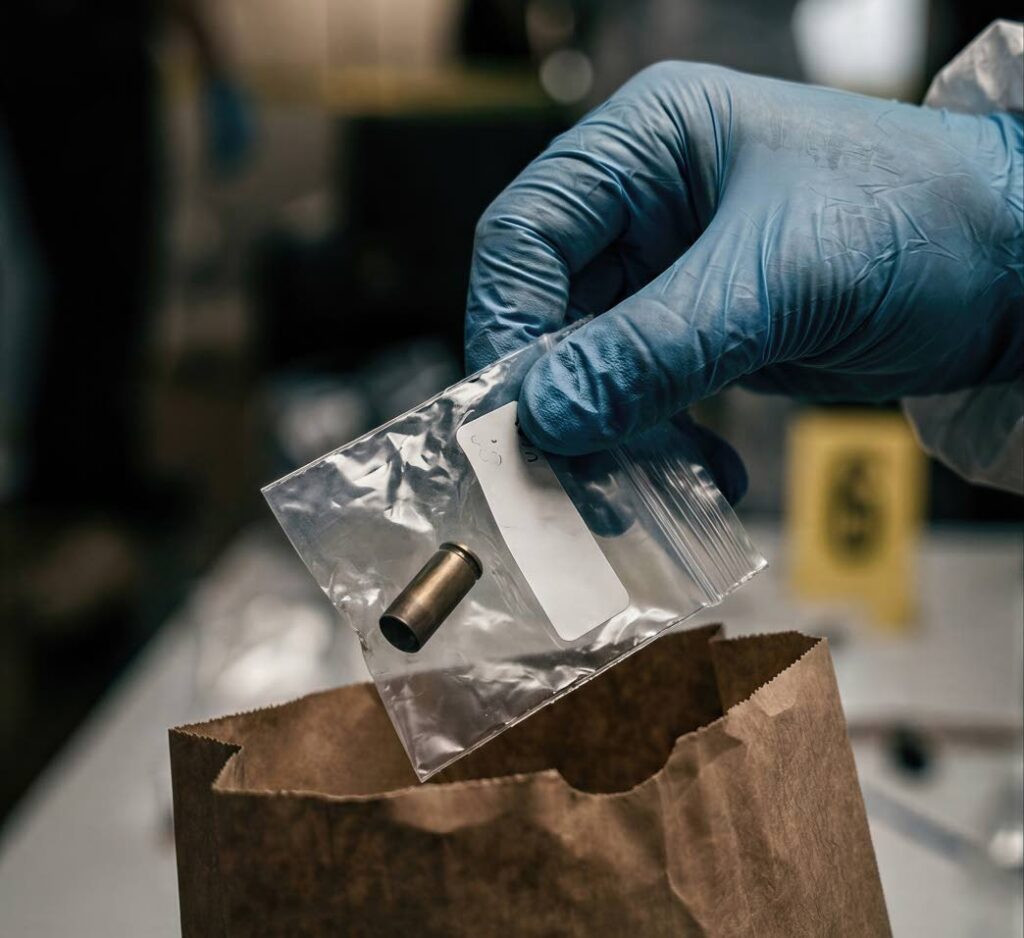
The high-profile murder trial involving six active-duty Jamaican law enforcement officers is set to reconvene on Tuesday, with a key procedural dispute over a single spent bullet casing taking center stage for courtroom arguments.
The six officers — Sergeant Simroy Mott, Corporal Donovan Fullerton, Constables Andrew Smith, Sheldon Richards, Orandy Rose, and Richard Lynch — stand accused of the 2013 shooting deaths of three men: Matthew Lee, Ucliffe Dyer, and Mark Allen. Fullerton faces an additional charge of submitting a false statement to Jamaica’s Independent Commission of Investigations, the country’s police oversight body.
The incident dates back to January 12, 2013, when the three victims were travelling through the Barbican neighborhood of St Andrew in a blue Mitsubishi Outlander. According to initial official accounts, officers signaled the vehicle to pull over, and after a brief delay, the driver stopped. Prosecutors allege that three men exited the vehicle and opened fire on police, triggering a shootout that left the three men dead, while a fourth suspect escaped the scene. Two unregistered firearms were recovered from the area after the gunfight.
Investigators collected dozens of spent bullet casings from the Acadia Drive crime scene, near its intersection with Evans Avenue, and submitted all evidence to the Government Forensic Laboratory for ballistics testing. A total of 14 5.56mm casings, alleged to have been fired by the responding officers’ service weapons, were packaged together in a single envelope for analysis. Of these 14 casings, 12 were definitively matched to three police rifles used on the day of the shooting. Two casings, however, had no matching weapon on record — one of which was visibly damaged after being run over by a vehicle.
Lead prosecutor Kathy-Ann Pyke has made the unmatched damaged casing a point of focus, demanding that the case’s veteran ballistics expert, a laboratory superintendent with nearly 20 years of experience in firearms analysis, re-examine the casing by running it through the lab’s computerized matching system to determine its origin. Pyke has argued that the extra step is necessary to properly label the casing as corresponding to crime scene marker number one, which has already been presented to the court via photographic evidence. She said the request comes as a precautionary measure to avoid mixing the casing up with other 5.56mm ammunition evidence collected from the scene.
But High Court Judge Sonia Bertram-Linton has repeatedly questioned the relevance of the request since proceedings began on Friday, expressing confusion over why the single casing needs to be singled out for additional testing. The judge noted that the request introduces new evidence that would require full disclosure to the defense, and that she could already anticipate an objection from the defense team. Before the judge could finish her remark, lead defense attorney Hugh Wildman immediately voiced his objection to the proposal.
Wildman’s unusual offhand comment — “I did not attend Ward 21 before I came here” — sparked a brief back-and-forth in the courtroom, before the judge encouraged the prosecution to move forward with the proceedings. Wildman’s co-counsel, Althea Grant-Coppin and John Jacobs, have formally objected to allowing any additional analysis of the casing, arguing that the full ballistics report has already been submitted to the court as evidence.
When the trial resumes today, both the prosecution and defense will present full arguments on whether the additional testing should be allowed, after which Judge Bertram-Linton will issue a formal ruling. Following the ruling, the defense is scheduled to begin its cross-examination of the ballistics expert witness.