作者: admin

  • Too broken for a hearse

    Too broken for a hearse

    The Ravine Sable community in Longdenville, Central Trinidad, faces an infrastructure crisis of such severity that it has fundamentally disrupted both life and death. The community’s main access road has deteriorated into an impassable hazard, recently forcing a funeral home to refuse hearse service. This left grieving residents unable to bring a deceased neighbor home for a final farewell, compelling them to hold services in a distant town center instead.

    This incident epitomizes a decades-long neglect. Senior citizen Madho Siew, a 30-year resident, confirmed the road was last properly paved in 1995. The situation has been severely exacerbated by over 50 daily ten-wheeler trucks accessing a local sandpit, traffic for which the road was never engineered. These heavy vehicles systematically destroy the pavement and generate suffocating dust clouds.

    The consequences are multifaceted and severe. Resident Sukdai Jogie, 72, suffers from chronic dust-induced coughing, a diagnosed medical condition directly attributed to her proximity to the road. The financial burden on residents is crushing; one newcomer reported spending nearly $30,000 on six separate vehicle repairs in just over a year. Local mechanic Darrion’s Automotive Mechanical Services confirms 75% of community vehicles require frequent suspension repairs, costing between $8,000-$15,000, leaving many cars abandoned as unaffordable fixtures.

    Public transport offers little relief. Taxis frequently refuse the route, and those that do charge exorbitant fares up to $50 for a single trip after dark. In the absence of government action for nearly a decade, community contractor Donny Parasram Sookdeo has become an unlikely guardian. He has personally absorbed thousands in costs to conduct patchwork repairs and clear overgrown vegetation, calling it his way of “giving back.”

    Residents now pin their hopes on a new government and their active MP, Dr. Rishad Seecheran, pleading for a permanent solution that will restore not just their road, but their dignity, health, and financial stability.

  • ‘RANT LESS, WORK MORE’

    ‘RANT LESS, WORK MORE’

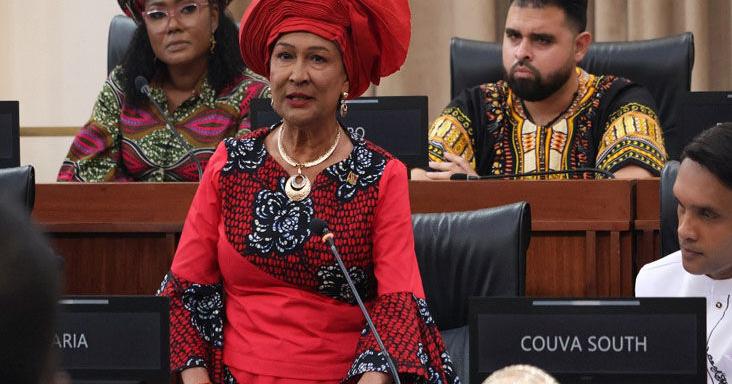
    A political confrontation has erupted in Trinidad and Tobago over the government’s controversial school policing program, with Opposition Leader Pennelope Beckles delivering a sharp critique of Prime Minister Kamla Persad-Bissessar’s leadership approach. The dispute centers on the Schools-Oriented Policing Programme implemented by the ruling UNC government.

    Beckles utilized social media platforms to challenge the Prime Minister directly, stating that the nation’s children deserve substantive policy rather than “hot air in a plastic bag” and social media rants. This response came after Persad-Bissessar accused the opposition PNM party of attempting to remove police protections from schools, describing their actions as demonstrating “neglect and hatred of our nation’s children.”

    The controversy stems from parliamentary debates initiated by former education minister Dr. Nyan Gadsby-Dolly, who characterized the armed police initiative as “poorly thought out” and “unsustainable.” During Friday’s parliamentary session, Education Minister Dr. Michael Dowlath and Homeland Security Minister Roger Alexander faced scrutiny over the program’s implementation details and alleged lack of stakeholder consultation.

    Beckles asserted that the policing initiative has proven ineffective, noting that “We cannot police our nation’s youth into righteousness.” She emphasized that school violence represents a complex societal issue requiring comprehensive solutions rather than reactive measures. The Opposition Leader particularly criticized the reduction of critical support staff including guidance counselors and school social workers while simultaneously deploying police officers without clear operational frameworks.

    The Opposition Leader called for evidence-based strategies addressing root causes of school violence, accusing the government of focusing exclusively on expulsions and arrests without developing preventive measures. Beckles condemned the Prime Minister for presiding over what she described as a failed initiative that has not reduced school violence, while highlighting the government’s responsibility to manage the education sector effectively.

    This political clash reflects deeper divisions regarding public safety approaches and educational policy in Trinidad and Tobago, with both leadership figures presenting contrasting visions for addressing school security concerns.

  • War over $21m land deal

    War over $21m land deal

    A contentious $21 million real estate transaction has been identified as the primary motive behind the assassination of prominent Trinidadian businessman Danny Guerra, who was fatally shot outside his DG Homes office in Sangre Grande on March 13. According to multiple investigative sources, the dispute centered on a strategically located parcel of land near Paharry Junction along Toco Main Road, originally intended for mixed commercial and residential development.

    Law enforcement officials confirm the killing exhibits all characteristics of a professionally executed contract murder, with the price tag believed to be approximately $600,000. The conflict emerged when Guerra allegedly seized complete control of the land acquisition from his business associate who initially brokered the deal. “He handled everything behind the man’s back and cut him out completely,” revealed an anonymous source close to the investigation. “From that point, it was war.”

    Investigators are focusing on the disgruntled business associate who possessed detailed knowledge of Guerra’s daily routines and movements. This individual is suspected of providing critical intelligence to the assassins, who reportedly tracked Guerra for several days prior to the shooting. On the day of his murder, Guerra had visited the US Embassy in Port of Spain, possibly to obtain travel documents, indicating he was aware of potential threats to his safety.

    The investigation has uncovered potential gang connections, with authorities suspecting the involvement of the Valencia-based Anybody Gets It (ABG) gang. Intelligence sources suggest the killing may have served dual purposes: settling the personal business dispute while simultaneously weakening the rival Resistance Gang, which Guerra was believed to financially support through his quarrying operations.

    While police initially considered alternative motives including previous equipment disputes and potential prison-orchestrated plots, these avenues have yielded minimal evidence. The land dispute remains the most substantiated theory, overshadowing speculation about political motivations or previous criminal associations.

    Guerra’s business empire, built through dominant control of the Eastern Division’s quarrying industry, had previously drawn law enforcement scrutiny. In November 2025, he was detained under a Preventative Detention Order for alleged connections to organized crime, including illegal quarrying, arms trafficking, and money laundering. Though released in January after legal challenges, investigators were reportedly preparing a new detention order based on intercepted communications discussing planned attacks at the time of his death.

    The aftermath continues to unfold with retaliatory violence already emerging, including the recent killing of quarry supervisor Rondell Adolphus. Intelligence sources warn additional targets connected to Guerra’s network have been identified, indicating the initial assassination may trigger further violence in the region.

  • From The Bleachers: Ideas to improve school sports

    From The Bleachers: Ideas to improve school sports

    As another school sports season concludes in Saint Lucia, critical evaluation reveals both celebratory achievements and substantial areas requiring systemic improvement in track and field development. The current landscape demonstrates pressing needs for enhanced resources, strategic planning, and modernization to elevate athletic standards nationwide.

    Resource allocation emerges as a fundamental concern, with urgent requirements for additional qualified coaches, improved facilities, and proper equipment implementation. The installation of specialized infrastructure—including shot put circles, long jump pits, and high jump mats—across all 24 secondary schools represents an essential foundation for development. Athletic diversification beyond traditional flat sprints presents another crucial opportunity, particularly through investment in sprint hurdling and quarter-miling to develop more versatile competitors capable of international success.

    The scheduling coordination between school meets and club competitions demands immediate attention. This season’s congested calendar—featuring Island Champs, National Juniors, and subsequent events within tight succession—demonstrated the unsustainable pressure placed on multi-event athletes. Collaborative efforts between government entities, educational institutions, and the national athletics federation must establish complementary schedules that prioritize athlete development over organizational convenience.

    A paradigm shift toward national talent identification appears overdue, with proposals suggesting promising athletes should become national projects rather than individual school responsibilities. The documented success of Julien Alfred—who received coordinated support from the Athletics Association, Ministry of Sports, and Olympic Committee—provides a proven model for replication. Establishing a dedicated sports scholarship desk with transparent objectives and funding mechanisms would further address the gap between talent recognition and opportunity realization.

    Technical modernization through digital record-keeping represents another critical advancement area. While secondary schools currently access the athletic.net platform used throughout the Caribbean and United States, utilization remains limited to Island Champs registration. Mandating comprehensive use of the platform’s live results functionality would create valuable performance archives while enabling international benchmarking. The exemplary practices of District 2’s sports committee and select schools demonstrate the feasibility of implementing shareable, editable result formats.

    The controversial practice of cash incentives at school competitions requires reevaluation, particularly given the existing resource disparities between institutions. Redirecting focus toward equitable development across all schools rather than financial rewards would better serve long-term athletic development objectives. Strategic partnerships with alumni associations and community businesses could help less-resourced schools compete effectively despite smaller populations and limited coaching access.

    Addressing these structural gaps necessitates collaborative understanding between the Ministry of Education, Youth Development and Sports, individual schools, and the national governing body. Delivering world-class athletic programming demands commitment to modern thinking and sustained effort rather than seeking temporary solutions. The path forward requires acknowledging that meaningful progress emerges from coordinated long-term strategy rather than fragmented short-term interventions.

  • Terwijl de oorlog woedt, dringen Iraanse politici aan op vertrek uit het kernwapenverdrag

    Terwijl de oorlog woedt, dringen Iraanse politici aan op vertrek uit het kernwapenverdrag

    Iran stands at a critical geopolitical crossroads as hardline politicians push for the nation’s withdrawal from the Treaty on the Non-Proliferation of Nuclear Weapons (NPT), responding to intensified US-Israeli strikes on civilian nuclear sites, steel complexes, and academic institutions. The escalating confrontation has triggered parliamentary action that could fundamentally reshape Iran’s nuclear posture and international alliances.

    Ebrahim Rezaei, spokesperson for the Iranian parliament’s national security commission, declared Friday that continued NPT membership ‘has yielded no benefits’ for Iran. His statements on social media platform X coincided with lawmaker Malek Shariati’s announcement that a priority bill had been submitted through parliamentary channels to facilitate Iran’s exit from the treaty. This legislative move would also revoke nuclear restrictions tied to the defunct 2015 nuclear agreement and establish new international partnerships with aligned nations including Shanghai Cooperation Organization and BRICS members for peaceful nuclear technology development.

    The parliamentary push comes amid devastating airstrikes that have targeted Iran’s critical infrastructure. US-Israeli forces conducted intensive bombardments on Friday, hitting a yellowcake facility in Yazd, the Khondab Heavy Water Complex near Arak, and areas surrounding the Bushehr nuclear power plant—prompting International Atomic Energy Agency (IAEA) warnings about potential radiological catastrophe. Simultaneous attacks crippled Iran’s major steel complexes in Isfahan and Ahvaz, threatening billions in non-oil export revenue and thousands of jobs amid an existing economic crisis featuring 70% inflation and severe energy shortages.

    Iran’s leadership has accused IAEA Director Rafael Grossi of complicity in the attacks, with senior advisor Mohammad Mohkber labeling him an accomplice to bloodshed. Parliamentary member Fada-Hossein Maleki further accused Grossi of months of ‘instigation’ to please US President Donald Trump, describing nuclear bomb remarks as ‘provocative acts contrary to all international norms.’

    The conflict has plunged Iran into information darkness, with the Islamic Republic maintaining a complete internet shutdown for over one month—affecting 90 million citizens—while heavily armed forces patrol cities to prevent protests. State media continues broadcasting coerced confessions, including a recent video of a blurred-face girl arrested for sharing strike footage with foreign media.

    As Tehran endures its most severe bombardment nights, with airstrikes illuminating skies orange and causing temporary blackouts, the parliamentary bill awaits review by the Guardian Council—a powerful 12-member constitutional body—before potential implementation, marking a potential point of no return in Iran’s nuclear diplomacy.

  • Babonneau escape with back-to-back PM Cups following low-scoring thriller

    Babonneau escape with back-to-back PM Cups following low-scoring thriller

    Cricket enthusiasts witnessed an epic showdown on Saturday, March 28th at Mindoo Philip Park, where Babonneau narrowly defeated Choiseul by a single wicket in a heart-stopping Prime Minister’s Cup Final that extended to the tournament’s ultimate delivery. The electrifying atmosphere, fueled predominantly by vocal Choiseul supporters, reached fever pitch as the match culminated in a finish reminiscent of the previous year’s championship thriller.

    Choiseul, having overcome local rivals Soufriere in their semifinal clash, entered the final determined to dethrone the defending champions. Their innings commenced explosively with Jason Simon’s blistering 41-run contribution, though their momentum was substantially curtailed by Babonneau’s bowling ace Sacchin Cepal. Delivering a masterclass performance that earned him Finals MVP honors, Cepal recorded impressive figures of 4-18, creating critical early breakthroughs during the powerplay overs.

    The middle overs witnessed Babonneau’s spin duo—Larry Edward (2-16) and Yunieski Gustave (2-19)—apply relentless pressure through disciplined bowling, ultimately restricting Choiseul to a seemingly manageable total of 137-9. However, Babonneau’s response began shakily as they lost seasoned openers Dane Edward and Johnnel Eugene within the powerplay. A period of cautious consolidation followed, with the required run rate escalating steadily.

    As the match approached its climax, Babonneau’s innings descended into chaos courtesy of Choiseul captain Kuston Jules’ heroic bowling effort. The skipper claimed six wickets while conceding merely 27 runs across his four overs, singlehandedly reigniting his team’s hopes. With six runs needed from the final over, Jules commenced with two immediate wickets, intensifying the drama exponentially.

    The equation narrowed to two required from the last ball, bringing McKay Brigitte to the crease. Having struggled throughout his innings, Brigitte delivered under extreme pressure, striking the ball toward third man where a fielding error permitted the decisive second run. Babonneau’s players erupted in euphoric celebration as they secured their second consecutive title in the most dramatic fashion imaginable.

    During post-match ceremonies, tournament organizers recognized several outstanding performers: Stephen Naitram (Most Runs, 359), Dillan John (Most Wickets, 14), and Dane Edward (Tournament MVP). Babonneau’s head coach Jervaughn Charles, in conversation with St. Lucia Times, described the victory as a ‘nerve-wracking, emotional rollercoaster’ while paying tribute to Choiseul’s exceptional performance in a contest that exemplified cricket’s capacity for breathtaking uncertainty.

  • Beloningsstructuur en organisatie rechterlijke macht worden herzien

    Beloningsstructuur en organisatie rechterlijke macht worden herzien

    Suriname’s National Assembly has initiated comprehensive revisions to the Judicial Position Act, targeting both compensation structures and organizational frameworks within the nation’s judiciary. According to NDP parliamentarian Ebu Jones, the preparatory phase involves extensive exploration of various options to enhance the judicial system’s functionality and independence.

    The proposed amendments extend beyond mere salary adjustments for judges, encompassing the entire judicial chain—from the President of the Court of Justice to prosecutors and court clerks. This holistic approach aims to align responsibilities with appropriate remuneration while reinforcing the rule of law. Jones emphasized that the reforms seek to make judicial positions both attractive and independent, addressing systemic vulnerabilities.

    Structural reforms constitute a critical component of the overhaul. One key proposal involves establishing dedicated administrative bureaus for both the Court of Justice and the Public Prosecutor’s Office. These entities would assume responsibility for personnel management, financial processing, and other administrative duties that currently fall under senior judicial officials.

    This strategic separation aims to shield top judicial figures—including the Court President and Attorney General—from potential conflicts of interest and public speculation regarding appointments and budget management. By relieving judges of administrative burdens, the reforms intend to prevent the judiciary from being drawn into political or managerial positions, thereby safeguarding its integrity and independence.

    The legislative review also examines a previous decision by former President Chan Santokhi that granted judicial leadership autonomy in organizing internal structures. Jones referenced Parliament’s operational model as an ideal framework, where a dedicated bureau handles administrative and financial matters, allowing lawmakers to focus solely on their core legislative duties.

    While specific adjustments to these powers remain undetermined, multiple scenarios are under consideration. The coming period will determine the concrete implementation of these proposals and the ultimate direction of Suriname’s judicial modernization efforts, all oriented toward strengthening both the position and performance of the judicial branch.

  • Actions for the restoration of security in Haiti

    Actions for the restoration of security in Haiti

    Haiti’s escalating security crisis took center stage at the 6th Sectoral Security Roundtable conference this week, where government officials and international partners convened to address rampant gang violence and its devastating societal impacts. Hosted at Port-au-Prince’s Karibe Hotel with support from the United Nations and the Center for Analysis and Research in Human Rights (CARDH), the high-level gathering focused on establishing a specialized Anti-Gang Force and comprehensive security restoration measures.

    Serge Gabriel Collin, Haiti’s Minister of Economy and Finance, delivered a stark assessment of how insecurity has crippled the nation’s economic foundations and social fabric. He revealed alarming statistics: approximately 5.7 million Haitians now face severe food insecurity while over 1.4 million have been internally displaced due to gang-related violence. The minister attributed poor economic performance directly to the deteriorating security situation, emphasizing that without stability, economic recovery remains impossible.

    Minister Collin outlined the Ministry’s multifaceted approach to combating the crisis through both direct security measures and indirect economic interventions. Key strategies include intensifying efforts against illicit trafficking networks that supply armed groups with narcotics, firearms, and ammunition. The government is strengthening border control operations at ports, airports, and land crossings to disrupt these supply chains. Additionally, financial security measures are being enhanced through aggressive anti-money laundering initiatives and counter-terrorism financing operations.

    Beyond security-focused actions, the Ministry is deploying economic tools to address root causes of instability. These include supporting entrepreneurship programs, creating wealth redistribution mechanisms, and allocating specific budgetary resources to finance ongoing law enforcement operations. Social protection programs are being expanded to reduce inequalities and prevent factors that contribute to instability, representing a comprehensive approach to security restoration.

    Axel Joseph, Chief of Staff to the Prime Minister, reinforced the government’s unwavering commitment to security restoration, emphasizing that this remains the administration’s top priority. The Organization of American States (OAS) representative advocated for a coordinated, sustainable approach centered on building national capacity rather than relying solely on external interventions.

    Conference participants unanimously concluded that only through concerted, multi-dimensional action can Haiti hope to achieve lasting stability. The consensus emphasized that security restoration must be accompanied by institutional strengthening and economic revitalization to create a sustainable foundation for peace and development.

  • Fuel, in Haiti Beginning of panic among consumers

    Fuel, in Haiti Beginning of panic among consumers

    Port-au-Prince, Haiti – March 28, 2026: A wave of consumer anxiety has swept across Haiti, manifesting in lengthy queues at service stations and a resurgence in the use of jerrycans amid intensifying rumors of imminent fuel shortages and price surges. In a decisive response, the Ministry of Commerce and Industry has moved to quell the panic and enforce distribution laws.

    Minister James Monazard issued an official statement categorically denying the existence of a national fuel crisis. ‘No fuel shortage has been observed on the national market,’ the Minister asserted, confirming that petroleum products remain available at official pumps with distribution secured through formally authorized channels.

    The Ministry has enacted a strict prohibition on the sale of fuel outside these legal channels, specifically targeting unauthorized containers like jerrycans. The decree warns that any individuals or entities engaged in such illegal sales will face immediate enforcement actions, including product seizure, closure of offending outlets, and legal prosecution under Haitian law. Relevant authorities, including inspection services and law enforcement agencies, have been instructed to apply a zero-tolerance policy.

    To substantiate its claims and directly counter public rumors, the Ministry conducted a series of inspections on Saturday, March 28th. Teams visited multiple service stations in key areas including Delmas, Tabarre, Pétion-Ville, and the second district of Port-au-Prince. These operations verified the actual presence of fuel, contradicting widespread allegations of a shortage.

    A parallel inspection mission was executed in the Northeast Department, covering the communes of Ouanaminthe, Fort-Liberté, and Trou-du-Nord. Under the supervision of Departmental Director Lesly Théogène and Inspector Egains Joseph, eleven stations were assessed. The survey revealed that the vast majority were adequately stocked; only a single station in Ouanaminthe was found to be out of gasoline. The Ministry acknowledges that while availability is overall acceptable, the situation remains fragile.

    The government is urging public cooperation, encouraging citizens to report any illegal fuel practices to the authorities to help stabilize the market and prevent unnecessary panic.

  • Mass parties at beaches and resorts are prohibited during Holy Week

    Mass parties at beaches and resorts are prohibited during Holy Week

    As one of the most widely observed religious and recreational periods in the region approaches, the Dominican Ministry of the Interior and Police (MIP) has rolled out a comprehensive suite of security regulations designed to protect public safety across high-traffic tourist and leisure hubs during Holy Week 2026.

    Through official Resolution MIP-RR-0001-2026, the MIP has enacted targeted restrictions on large-scale gatherings and high-risk activities that are common during the week-long holiday. The regulatory framework covers a range of crowd-focused activities, setting clear rules for sound amplification equipment use, temporary public structure installation, and group alcohol consumption in public spaces.

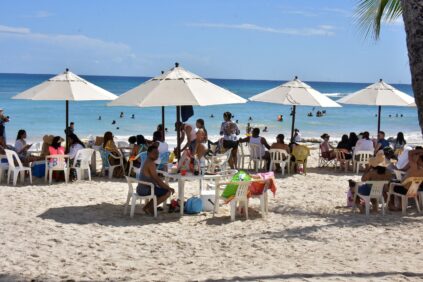
    The most notable restriction imposed by the resolution is a full ban on all mass gatherings for parties, whether publicly organized or private, across coastal beaches, rivers, streams, and surrounding resort areas. The temporary structure ban also applies to these same zones, and both restrictions will remain in effect from March 29 through April 5, 2026, covering the full span of Holy Week celebrations.

    Additional rules include a complete prohibition on the sale of alcoholic beverages across the country on Good Friday, a key solemn day of reflection for observant believers. To guarantee full compliance with the new resolution, MIP has formally directed two specialized state bodies—the Dominican National Police and the Directorate for the Control of Alcohol Sales (COBA)—to carry out regular patrols and enforcement actions throughout the holiday period.

    In an official statement justifying the new measures, MIP emphasized that unregulated large parties held in open public spaces often create avoidable risks to community safety. These events, which typically feature loud music, large crowds, and widespread alcohol consumption, frequently disrupt public order, impede local transportation and mobility, and erode peaceful citizen coexistence in popular recreational areas. The new regulatory package is crafted to mitigate these risks, balancing the public’s desire for holiday leisure with the need to maintain safety and order for residents and visitors alike.