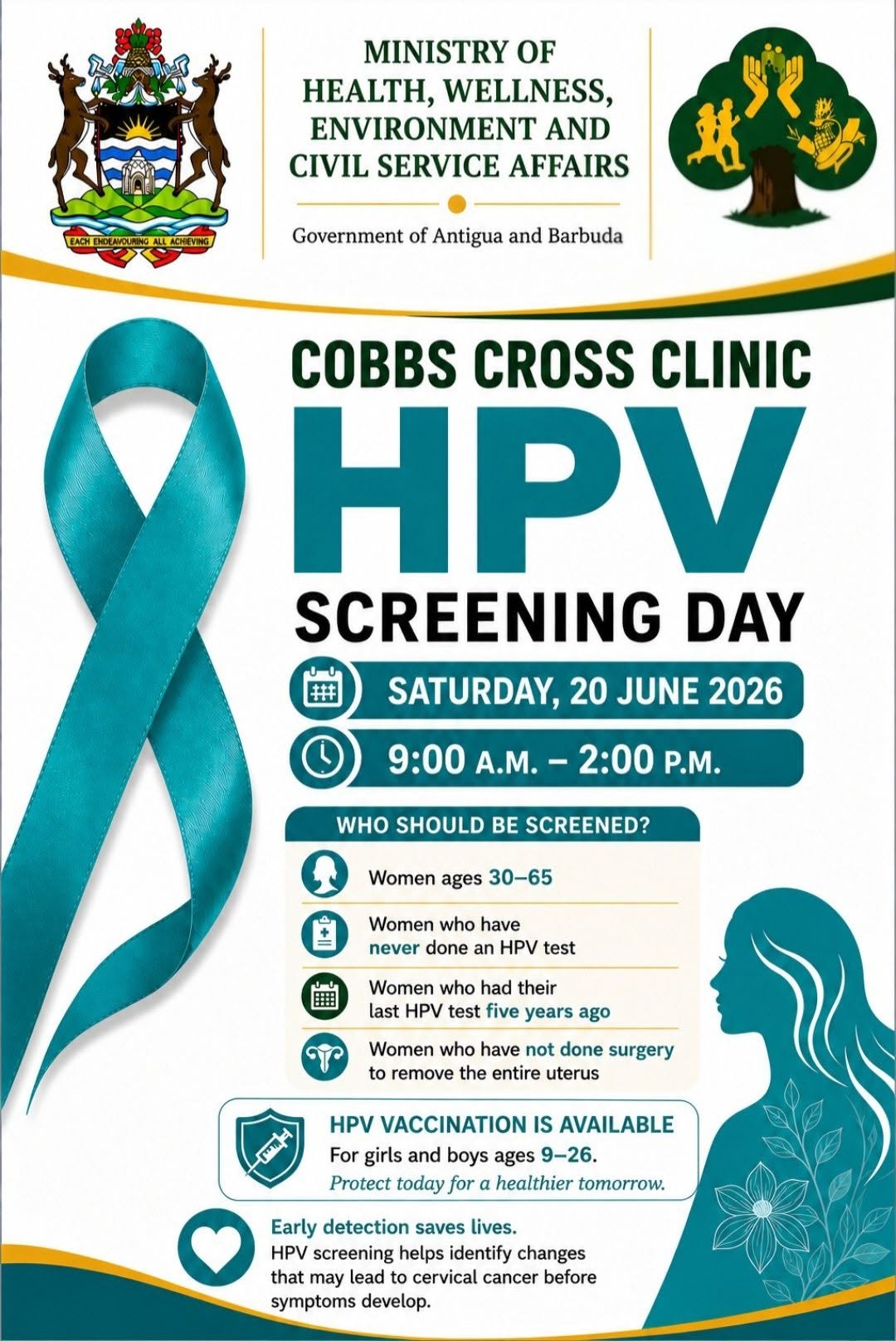
Public health authorities in Antigua and Barbuda are calling on eligible women across the nation to access no-cost human papillomavirus (HPV) screening at the Cobbs Cross Clinic later this month, as part of a sustained national push to boost early detection and prevention of cervical cancer.
Details released by the country’s Ministry of Health, Wellness, Environment and Civil Service Affairs confirm the dedicated HPV Screening Day will be held on Saturday, June 20, 2026, running from 9:00 a.m. to 2:00 p.m. at the Cobbs Cross facility. The outreach initiative prioritizes women between the ages of 30 and 65, with targeted outreach to two high-priority groups: those who have never completed an HPV test, and those whose most recent screening was conducted more than five years prior. Health officials also extend the invitation to women who retain their uterus after partial gynecological surgery, who remain at risk of developing cervical cancer.
Medical experts leading the campaign emphasize that HPV screening fills a critical gap in cervical cancer prevention, as it detects abnormal cellular changes that can develop into cancer long before patients experience any noticeable symptoms. Catching pre-cancerous or early-stage cancerous changes drastically improves treatment success rates and stops the disease from advancing to life-threatening stages.
Beyond screening for adult women, the event will also offer free HPV vaccinations for all adolescents and young adults between the ages of nine and 26, regardless of gender. Ministry officials note that widespread vaccination remains one of the most impactful public health interventions to cut rates of HPV-linked cancers and other associated chronic conditions across the population.
This localized screening and vaccination day is part of a broader national public health strategy, designed to raise public awareness of cervical cancer prevention pathways and expand equitable access to life-saving preventive care across every region of Antigua and Barbuda. Authorities are stressing that all eligible residents face no financial barrier to accessing these services, and are urging community members to take advantage of the opportunity, noting that proactive preventive health care not only saves individual lives but also builds stronger, healthier national communities.