作者: admin

  • COMMENTARY: Toward a Global Architecture of Peace

    COMMENTARY: Toward a Global Architecture of Peace

    In a comprehensive analysis of contemporary global challenges, Ambassador Dr. Clarence E. Pilgrim presents a compelling framework for reimagining international stability. The discourse examines how modern conflicts have evolved into interconnected systemic crises that transcend geographical boundaries, affecting regions from the Middle East to Africa and Eastern Europe with cascading consequences.

    The central thesis establishes that peace cannot be sustained through mere aspiration but requires deliberate architectural construction across multiple dimensions. In our era of profound economic interdependence and shared environmental systems, regional instability generates worldwide reverberations—disrupting supply chains, inflating living costs, weakening institutions, and eroding developmental achievements. This reality transforms peace from an idealistic concept into a strategic imperative for global survival.

    Ambassador Pilgrim proposes a tripartite foundation for durable peace: peace among nations, peace among peoples, and peace with our natural environment. These interdependent principles represent concrete prerequisites for stability and civilizational advancement rather than abstract philosophical concepts.

    The United Nations, comprising 193 member states, faces critical relevance challenges as its 1945-era structure struggles to address twenty-first century complexities. Institutional evolution becomes essential—not optional—to maintain legitimacy and effective conflict prevention capabilities. Necessary reforms include reexamining Security Council composition, addressing structural imbalances, and ensuring procedural mechanisms don’t hinder collective action.

    Beyond institutional reform, economic integration emerges as a crucial peace-building mechanism. Nations interconnected through trade networks and shared economic interests develop mutual stakes in stability, reducing confrontation incentives. Similarly, scientific and environmental cooperation—particularly regarding ocean resources, biodiversity protection, and climate management—represent collective responsibilities with profound peace implications.

    The philosophical underpinning of this framework challenges utilitarian approaches seeking the greatest good for the greatest number. Instead, it advocates for inclusive peace that serves all humanity, recognizing that inequality and exclusion fundamentally interconnect with instability.

    Historical exemplars like Nelson Mandela and Martin Luther King Jr. demonstrate how reconciliation and moral leadership can transform societies. Their legacies confirm that peace constitutes an active construction project requiring sustained commitment rather than passive absence of conflict.

    Addressing the somewhat skeptical characterization of these proposals as the ‘Pilgrim Doctrine,’ the ambassador acknowledges the ambition while maintaining the vision’s necessity. The international community faces a definitive choice between continuing current patterns of geopolitical rivalry and fragmented cooperation or deliberately constructing systems prioritizing stability and shared progress through established zones of peace.

    The concluding imperative emphasizes transforming abstract peace concepts into tangible institutions, partnerships, and behavioral patterns. Success would establish peace as the fundamental architecture of human progress, while failure risks defining this century through persistent instability.


  • British visitor forced to take cocaine through airport — lawyer

    British visitor forced to take cocaine through airport — lawyer

    A 19-year-old British national from South Wales received a substantial fine in St. Vincent’s Serious Offences Court on Thursday after being intercepted with 2.5 kilograms of cocaine at Argyle International Airport. Warren Lee Davies was arrested on March 18 when authorities discovered three taped packages of the illicit substance concealed within his carry-on luggage as he attempted to board a Virgin Atlantic flight.

    Defense attorney Grant Connell presented a compelling narrative of coercion, asserting his client acted under severe duress rather than criminal intent. “This case presents extraordinary circumstances,” Connell addressed the court. “The young man was vacationing here when he was compelled to transport a package under threat of death.”

    The prosecution highlighted that Davies initially refused to open the suitcase when instructed by authorities, requiring police to employ a boltcutter for access. However, the defense emphasized the suitcase featured a combination lock to which Davies had never been provided access codes, suggesting his unawareness of the contents.

    Connell challenged the drug trafficking characterization, noting the packaging methodology—cocaine wrapped in tissue within taped packages—deviated significantly from typical cartel operations. “There are no brand markings, no scorpion symbols, nothing indicative of organized crime involvement,” the lawyer stated after examining the evidence firsthand.

    Further supporting the coercion argument, Connell revealed the suitcase contained four T-shirts twice Davies’ size, indicating the belongings did not originally belong to the defendant. The attorney controversially asserted that police protection guarantees in St. Vincent constituted “an oxymoron,” questioning the feasibility of witness protection.

    Throughout court proceedings, Davies displayed minimal emotional expression, described by his lawyer as having “gone catatonic” since the airport incident. During sentencing, the defendant remained largely motionless until discussions turned to potential imprisonment, when he exhibited visible nervousness through physical twitches and restless movements.

    Chief Magistrate Colin John ultimately convicted Davies on three counts: possession with intent to supply, attempted exportation, and possession for drug trafficking purposes. The court imposed a $20,000 fine for each count, payable immediately, with alternative one-year prison sentences for each default to run concurrently.

    Following sentencing, Davies’ demeanor transformed dramatically. After returning to the prisoners’ bench, he received an encouraging smile and wink from his attorney. During court recess, the previously catatonic teenager became effervescent, enthusiastically using his lawyer’s phone to communicate with an unknown party while displaying visible relief.

  • Road clean-up, drainage works underway in Herberts and Freemans Village, Smith says

    Road clean-up, drainage works underway in Herberts and Freemans Village, Smith says

    Member of Parliament Anthony Smith Jr. has announced the commencement of significant infrastructure enhancement initiatives in the Herberts and Freemans Village communities. These critical improvements, currently in progress, focus on comprehensive road rehabilitation and advanced drainage system upgrades within the All Saints West constituency.

    The ongoing projects represent the initial phase of a meticulously crafted, multi-faceted infrastructure development strategy. According to official statements, this program aims to address long-standing transportation challenges while simultaneously implementing robust flood mitigation measures through modernized drainage networks.

    “Our work continues relentlessly across All Saints West,” Smith emphasized, highlighting the government’s sustained commitment to community development. The parliamentary representative further revealed that additional infrastructure projects are slated for implementation as the constituency advances its comprehensive development agenda.

    Smith concluded with a forward-looking statement: “More transformative work is forthcoming throughout All Saints West. Our administration maintains an unwavering commitment to progress, remains sharply focused on developmental objectives, and continues to drive positive change forward for all constituents.” The infrastructure initiative marks a significant step toward improving living standards and fostering sustainable community development in the region.

  • How the Iran war has hit the global economy

    How the Iran war has hit the global economy

    Escalating military confrontations between the United States-Israel coalition and Iran have unleashed profound disruptions across global financial and energy markets, generating widespread alarm over a potential worldwide economic downturn. The conflict, initiated by strikes on February 28, has triggered a dangerous cycle of retaliation that now threatens global economic stability.

    Tehran’s strategic retaliation has included ballistic missile attacks targeting Israeli territories, U.S. military installations, and critical energy infrastructure throughout the Gulf region. Particularly consequential has been Iran’s targeting of commercial vessels transiting the Strait of Hormuz—a vital maritime corridor responsible for approximately 20% of global oil and gas shipments—resulting in dramatically reduced traffic through this crucial waterway.

    The energy sector has experienced immediate and severe price shocks. According to Muyu Xu, senior crude oil analyst at Kpler, liquefied natural gas (LNG) prices have surged by nearly 60% since hostilities began. The situation worsened significantly when QatarEnergy, supplier of 20% of global LNG, suspended production following an Iranian drone attack on March 2, creating substantial strain on international LNG markets.

    Refined petroleum products including gasoline, diesel, jet kerosene, and fuel oil have all witnessed substantial price increases. Industry analysts project these trends will persist should energy flows through the Strait of Hormuz remain severely constrained.

    Capital Economics economists, led by Neil Shearing, present two potential scenarios in their March 9 assessment. A short-lived conflict could see Brent crude prices falling to $65 per barrel by year-end. However, a prolonged engagement might drive oil prices to approximately $130 per barrel in the second quarter, with year-end prices remaining elevated even if Strait shipments resume.

    The economic ramifications extend beyond energy markets. Data from Global Petrol Prices indicates at least 85 countries have reported increased gasoline prices since February 28, with Cambodia experiencing the most dramatic surge at 68%. Vietnam (50%), Nigeria (35%), Laos (33%), and Canada (28%) have likewise recorded significant increases.

    Governments worldwide are implementing extraordinary conservation measures. Pakistan and the Philippines have adopted four-day workweeks for government employees, while Thailand has mandated remote work for officials. Myanmar has instituted alternate-day driving restrictions, and Sri Lanka has implemented digital fuel rationing systems requiring online registration and QR code verification at pumps.

    International Monetary Fund Managing Director Kristalina Georgieva warned on March 9 that prolonged conflict poses significant inflationary risks to the global economy. Historians note that oil price shocks have frequently preceded economic downturns, citing the stagflation episodes of 1973, 1978, and 2008 as precedent.

    The aviation industry faces particular challenges, with jet fuel prices skyrocketing from $85-90 to $150-200 per barrel. Flight paths between Asia/Australia and Europe/US are being substantially lengthened to avoid Gulf airspace, increasing operational costs that are being passed to consumers through higher ticket prices.

    Frederic Schneider, nonresident senior fellow at the Middle East Council on Global Affairs, warns that debt-burdened Global South nations may face catastrophic debt crises should developed economies raise interest rates to combat inflation. The convergence of these factors creates a perfect storm threatening global economic stability.

  • PM warns late voter card validation could leave electors disenfranchised

    PM warns late voter card validation could leave electors disenfranchised

    Prime Minister Gaston Browne of Antigua and Barbuda has issued a critical public advisory concerning voter registration protocols ahead of the nation’s impending general election. During his nationally broadcast weekly radio address, the Prime Minister emphasized the urgent necessity for electors to complete the validation process for their voter identification cards without delay. Browne articulated that postponing this mandatory administrative procedure could potentially jeopardize citizens’ constitutional right to participate in the democratic process. He specifically highlighted that individuals who procrastinate until the final hours risk encountering registration deadlines that may effectively exclude them from the electoral roll. The Prime Minister’s statement comes amid intensified election preparations, with electoral authorities currently engaged in comprehensive verification and updating of the national voters’ registry. Browne explicitly recommended that all eligible voters complete the validation process within the forthcoming fortnight to ensure unimpeded participation in the upcoming political event. This development occurs within the broader context of Caribbean nations strengthening their electoral systems to ensure transparency and inclusivity in democratic exercises.

  • Vincentian developers, it’s time to wake up

    Vincentian developers, it’s time to wake up

    Maurice John, a computer science graduate from UWI Cave Hill, issues a compelling wake-up call to St. Vincent and the broader Caribbean regarding the accelerating artificial intelligence revolution. Drawing from personal experience as founder of M. John I.T. Solutions established in 2011, John recounts how the region missed both the website and mobile application economic booms despite globally accessible opportunities.

    John’s journey exemplifies both the challenges and potential of Caribbean technological innovation. Despite initial resistance from local businesses unwilling to adopt web presence, he demonstrated global reach through his SDA Hymnal application, which achieved over 100,000 downloads worldwide. This success proved that geographical limitations need not determine technological destiny when quality ideas receive proper execution.

    The recent emergence of AI-assisted coding tools has dramatically transformed development possibilities, enabling individual creators to accomplish what previously required entire teams. Within just twelve months, John has simultaneously developed multiple sophisticated applications including: a comprehensive rebuild of the CaribiDreams platform featuring financial services and property rentals; DreamStockPro, an inventory and accounting system for small businesses; a privacy-focused anonymous chat application addressing data exploitation concerns; and Divine Dueling, an AI-powered Bible quiz game currently available across platforms.

    John emphasizes that the trillion-dollar mobile application economy emerged with remarkably low barriers to entry—merely $99 for Apple developer registration and $25 for Google Play access. Yet Caribbean participation remained minimal as the region hesitated while technological revolutions advanced.

    The author delivers a pointed critique of local corporate priorities, noting how major companies invest hundreds of thousands in promotional giveaways rather than supporting technological innovation. He advocates for redirecting these resources toward venture capitalism, startup funding, and accelerator programs specifically supporting Caribbean-built software solutions.

    John proposes concrete action steps: convening developers, business leaders, financial institutions, and government stakeholders to establish a sustainable Vincentian technology ecosystem. This requires business development support, patient capital investment, mentorship networks, and cultural shifts that celebrate creators alongside consumers.

    The article concludes with an urgent mobilization call to Vincentian developers worldwide, encouraging them to address local challenges through technology—from tourism platforms and logistics tools to fintech solutions and agricultural applications. With powerful AI tools now accessible and excuses diminishing, John positions the current AI revolution as the final opportunity for Caribbean technological emergence, emphatically stating: “This is not a moment to observe. This is a moment to move.”

  • WATCH: Poor polling and dishonorable conduct in parliament could cost Pringle the UPP leadership, PM warns

    WATCH: Poor polling and dishonorable conduct in parliament could cost Pringle the UPP leadership, PM warns

    Antigua and Barbuda’s Prime Minister Gaston Browne has publicly speculated that Opposition Leader Jamale Pringle’s leadership position is becoming increasingly vulnerable due to a confluence of political challenges. During his weekly radio address, the Prime Minister pointed to two primary factors that could catalyze internal dissent within the opposition United Progressive Party (UPP): notably weak public opinion polling and Pringle’s recent performance in parliamentary proceedings.

    Browne characterized the UPP as experiencing a discernible decline in popular support, suggesting this trend has created an environment of internal discontent. He further indicated that Pringle’s actions and effectiveness in the Lower House have become a subject of scrutiny, potentially eroding his standing among party colleagues. The Prime Minister’s analysis implies that these combined pressures may soon manifest as a concerted effort from within the UPP’s ranks to seek a change in leadership.

    These pointed comments emerge against a backdrop of escalating political rivalry, with the nation anticipating a forthcoming general election. Both major political factions are actively intensifying their campaign efforts, positioning these remarks as a strategic element within the broader pre-electoral discourse. Browne’s decision to openly discuss opposition vulnerabilities reflects the heightened stakes and the psychological maneuvering characteristic of the current political climate in Antigua and Barbuda.

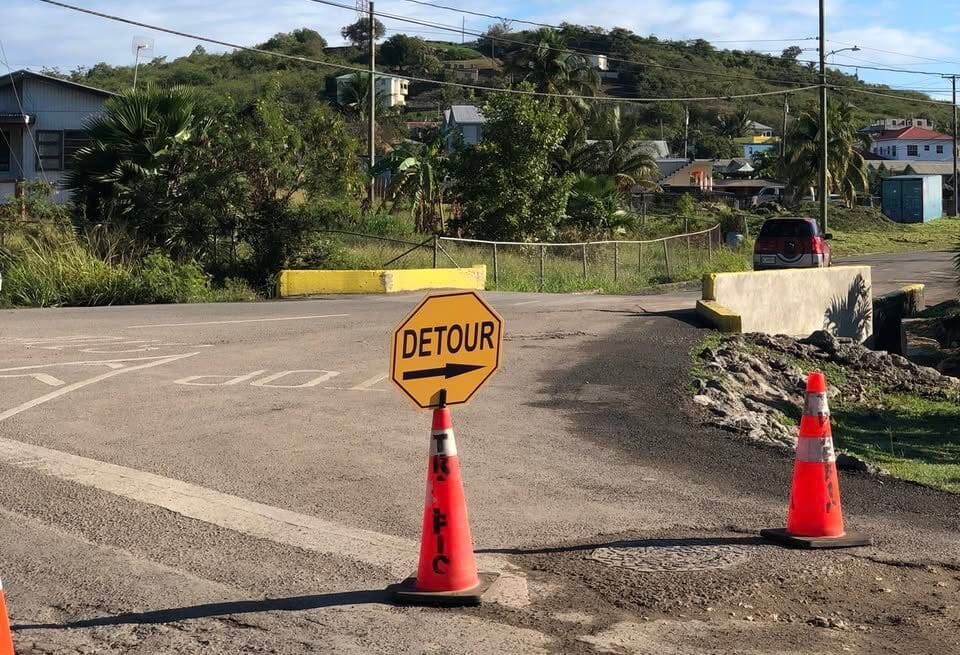
  • Detour at Buckley Line Roundabout Continues Amid All Saints Road Works

    Detour at Buckley Line Roundabout Continues Amid All Saints Road Works

    The Government of Antigua and Barbuda has maintained traffic modifications at the Buckley Line Roundabout as part of ongoing infrastructure enhancements under the All Saints Road Project. Commercial transport operators are currently directed to utilize alternative routes via Factory Road and Herberts Main Road to reach All Saints Road, ensuring minimal disruption to freight movements and regional commerce.

    A specialized single-lane access route remains exclusively operational for KFC Buckley Line personnel and patrons, demonstrating the administration’s commitment to balancing infrastructure development with business continuity. This carefully engineered traffic management strategy reflects the government’s methodical approach to public works execution.

    The comprehensive road rehabilitation initiative represents a strategic investment in the nation’s transportation infrastructure, aiming to enhance road safety standards, improve vehicular flow efficiency, and strengthen economic connectivity between commercial zones. Transportation authorities emphasize that these temporary adjustments are essential for facilitating uninterrupted construction progress while maintaining public access to essential services.

    Commuters and commercial operators are advised to incorporate additional travel time into their schedules and remain attentive to updated traffic guidance as the project advances through subsequent phases. The infrastructure development team continues to monitor traffic patterns to optimize diversion effectiveness throughout the project lifecycle.

  • Children and parents treated at A.B.L.E. event

    Children and parents treated at A.B.L.E. event

    The Kensington Oval in Barbados transformed into a vibrant hub of inclusivity as hundreds of citizens gathered for the annual ‘Everyone is A.B.L.E.’ event. This community initiative, orchestrated by the Kiwanis Club of Pride of Barbados, was specifically designed to create an environment of unity, support, and enjoyment for children with diverse abilities and their families.

    The event’s programming featured an array of activities carefully crafted to encourage interaction and mutual understanding among participants. Pediatric physiotherapist Dr. Rhea Clarke emphasized the significance of creating a barrier-free space where children could engage without limitations. ‘Our participants represent a broad spectrum of conditions including Down syndrome, autism spectrum disorders, cerebral palsy, visual impairments, and hearing challenges,’ Dr. Clarke noted. ‘The fundamental objective is to facilitate meaningful connections between children of all abilities, fostering a society that learns to coexist harmoniously.’

    Recognizing the substantial demands placed on caregivers, organizers implemented a comprehensive wellness component specifically for parents. Nicola Yarde, representing the Kiwanis Club, detailed the introduction of relaxation services including therapeutic massages and additional surprises designed to provide respite for families. ‘While we’ve hosted this event previously, this year we incorporated specialized support for parents who navigate considerable challenges daily,’ Yarde explained. ‘We established dedicated wellness stations where caregivers could experience moments of rejuvenation and unwind from their responsibilities.’

    The initiative has demonstrated remarkable growth and community engagement, with participation increasing substantially each year. Yarde reported overwhelming response from families who actively anticipate the annual event. ‘The enthusiasm continues to build with expanding attendance figures. Families consistently inquire about event dates well in advance, demonstrating the profound value this gathering provides,’ she observed. The palpable excitement among both children and parents underscores the event’s positive impact on the Barbadian community’s approach to disability inclusion and support systems.

  • JCI Antigua holds 11th annual Professionalism in Customer Care Seminar

    JCI Antigua holds 11th annual Professionalism in Customer Care Seminar

    The Junior Chamber International (JCI) Antigua successfully concluded its 11th Annual Professionalism in Customer Care Seminar at the Villa Community Centre, marking a significant milestone in its ongoing commitment to elevating service standards. The event attracted a diverse cohort of over 35 professionals representing a wide spectrum of enterprises across Antigua and Barbuda, underscoring a collective recognition of customer-centricity as a critical business driver.

    The seminar’s core agenda was meticulously designed to address the multifaceted challenges of contemporary customer relations. It positioned service excellence not merely as a functional requirement but as a fundamental pillar for enhancing customer satisfaction, fortifying brand reputation, and securing sustainable organizational growth in a competitive landscape.

    A series of dynamic and thought-provoking presentations formed the cornerstone of the event, equipping attendees with actionable strategies. Keynote topics included ‘Every Touchpoint Matters: Customer Service Excellence Across All Platforms,’ which emphasized the need for a seamless and consistent omnichannel experience. Another pivotal session, ‘From Stress to Strength: Building Emotional Resilience in Customer Care,’ provided tools for professionals to manage high-pressure interactions effectively. A forward-looking discussion on ‘The Role of Artificial Intelligence in Modern Customer Care’ explored the integration of technological innovations to streamline support and personalize user engagement.

    These interactive sessions delivered a wealth of practical knowledge, offering fresh paradigms to refine service delivery protocols, enhance the quality of customer engagements, and navigate the rapidly evolving expectations of the digital age.

    JCI Antigua extended its profound gratitude to all participating businesses for their engagement and for acknowledging the indispensable role of superior customer service in operational success and economic development. The organization also lauded the contributions of its facilitators, event partners, and supporters, whose collaborative efforts were instrumental in the seminar’s achievement.

    Through this annual initiative, JCI Antigua reaffirms its dedication to fostering professional development, championing operational excellence, and empowering both individuals and organizations within the national business community to achieve new heights of service quality.