作者: admin

  • Politie zoekt Pearl Morgenstond in meerdere zware strafzaken

    Politie zoekt Pearl Morgenstond in meerdere zware strafzaken

    On April 6, law enforcement agencies in Suriname announced an official manhunt for Pearl Percy Morgenstond, a 41-year-old suspect also known by the aliases ‘Morgu’ and ‘Kabouter’, acting on orders from the Attorney General at the Suriname Court of Justice.

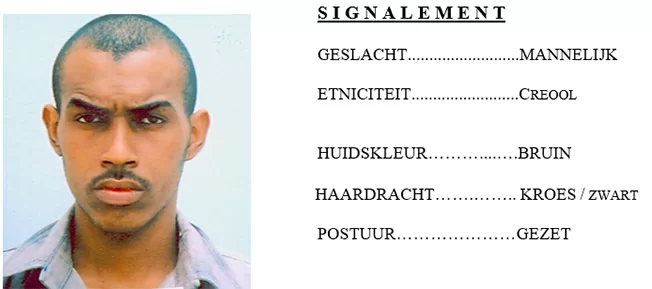
    Born on January 22, 1985, in Paramaribo, Morgenstond is registered at two addresses in Wanica District: Devisweg and Kronenburgweg. Suriname police have linked the suspect to a string of severe criminal offenses. The charges against him include active participation in a structured criminal organization, hostage-taking, aggravated theft, extortion, and qualified forgery of official documents. He also faces an additional charge of violating the country’s Arms and Ammunition Act.

    Suriname police released a public description of the suspect to aid public identification: he is a man of Creole descent, with a brown skin tone, curly hair, and a stocky build. The manhunt operation is being led jointly by two specialized units: the Serious Crime Combat Division and the Forensic Investigation Department, which bring specialized experience in tracking high-priority criminal suspects.

    In a public appeal, law enforcement is urging any member of the public who may have information about Morgenstond’s current whereabouts to come forward immediately. Tip-offs can be submitted through multiple channels: calling the Suriname Central Region Detective Division (RRMS) at the hotline 582050, contacting the national police Command Center at the emergency line 115, or visiting the nearest local police station to share information in person. All provided information will be handled confidentially as the operation progresses.

  • Guyana secures 3rd place in EU-backed Caribbean maritime security competition

    Guyana secures 3rd place in EU-backed Caribbean maritime security competition

    On Monday, Guyana’s Customs Anti-Narcotics Unit (CANU) announced that the country has earned third place in the 2026 Joint Maritime Control Unit (JMCU) Caribbean Competition, held under the European Union-funded Seaport Cooperation Project (SEACOP), a regional initiative focused on countering maritime illicit trafficking.

    The annual competition is designed to benchmark and elevate the capabilities of Caribbean law enforcement teams to carry out high-risk vessel inspections for contraband, most notably illegal narcotics, while adhering to global safety and procedural standards. It brings together maritime enforcement agencies from across the Caribbean region to test practical skills, share best practices, and strengthen cross-border cooperation against transnational organized crime.

    Guyana’s delegation was made up of personnel from three leading national security agencies: CANU, the Guyana Police Force (GPF), and the Guyana Defence Force (GDF) Coast Guard. The team scored 72 out of a total 80 possible points, equal to a 90% overall rating. This result tied Guyana with Saint Kitts and Nevis for third place, trailing only regional leaders Barbados and Trinidad and Tobago, which scored 75 points (94%) to claim the top two positions.

    Assessments for the competition were conducted against a strict 80-point evaluation framework that graded teams across multiple core competency areas. Judges evaluated operational safety protocols, tactical search methodologies, internal communication, inter-agency teamwork, decision-making during high-pressure scenarios, adherence to legal and procedural rules, professional conduct, and command effectiveness.

    In its official statement, CANU emphasized that Guyana’s strong performance reflects the nation’s growing and robust maritime interdiction capacity, built through sustained investments in targeted training, improved inter-agency coordination, and intelligence-led enforcement operations. The result also cements Guyana’s commitment to collaborative regional security, as participating nations work collectively to shut down illicit trafficking routes that span Caribbean waters.

    Alongside Guyana, Barbados, Trinidad and Tobago, and Saint Kitts and Nevis, the competition drew participants from a range of Caribbean nations including Suriname, Jamaica, and Antigua and Barbuda, demonstrating the widespread buy-in for coordinated regional security action across the bloc.

    CANU noted that the SEACOP JMCU Competition serves as a critical developmental platform for Caribbean maritime law enforcement, helping agencies align operational standards, improve interoperability during joint operations, and adopt proven best practices from peer nations. For Guyana, the third-place finish confirms the country’s position among the top tier of regional maritime interdiction units, with clear room to advance to the top of the rankings through continued refining of operational protocols and training.

  • Minister vows stronger marketing for Oistins Fish Festival

    Minister vows stronger marketing for Oistins Fish Festival

    As one of Barbados’ most beloved cultural gatherings prepares to mark its historic 50th anniversary, a senior government official has laid out a bold strategy to reverse years of declining patronage and reinvigorate the iconic Flow Oistins Fish Festival. Dr. Shantal Munro-Knight, a government minister and Member of Parliament for Christ Church South, has committed to rolling out enhanced marketing campaigns and expanded community outreach to draw larger crowds to the milestone celebration next year, addressing long-simmering frustrations from local vendors who have reported plummeting sales at recent editions of the event.

    Voicing shared concern over the steady drop in attendance that has eroded the festival’s vibrancy in recent years, Munro-Knight confirmed she will partner closely with the festival’s organizing committee to reframe public outreach and boost national awareness of the event’s cultural significance. “Supporting every vendor and small business that relies on this festival is a top priority,” she emphasized during a public appearance at the festival’s annual Dionna Browne-Findlay Easter Bonnet parade, where she served as head judge. “We are calling on all Barbadians to turn out and support our event both on the final day of this year’s festival, and for our golden anniversary celebration next year.”

    Munro-Knight made clear that the 50th anniversary programming will center two core goals: honoring the Caribbean island’s fishing community, which founded the festival decades ago, and reviving beloved traditional elements that have faded from recent lineups. Iconic features that once defined the event, including elaborate parade floats, traditional folk costumes and live folk dance performances, will return to the spotlight for the golden jubilee. “I can promise the 50th anniversary will be a grand, unforgettable celebration,” she said. “We’re bringing big floats back, and we’re highlighting the core elements that make this festival special – most of all, our fisherfolk who built this tradition.”

    The MP added that reversing the trend of waning public interest will require a national shift back to intentional cultural appreciation, with a specific focus on engaging younger generations through expanded school involvement. “This is a whole-of-government commitment. We need to revisit our approach to make sure our marketing and outreach resonate with all Barbadians, from older generations who grew up with the festival to young people who are experiencing it for the first time,” she explained. “We have to embed deeper youth and school engagement to build long-term interest and keep crowds coming back year after year.”

    During her appearance at the Easter Bonnet parade, an event that has become a staple staple side attraction of the festival, Munro-Knight also put forward a proposal to expand the competition’s participation eligibility. Currently, the contest is split into two age divisions: three to seven years old, and eight to 11 years old. The MP suggested opening the competition to older children and adult women to broaden participation and add more variety to the event.

    Now in its fifth year, the 2024 parade did not disappoint, with dozens of contestants showcasing wildly creative handcrafted bonnets themed around the festival’s core Barbadian cultural identity. Popular designs included interpretations of the island’s iconic flying fish, vibrant underwater seascapes, and depictions of Mother Sally, a legendary traditional folk character central to Barbadian carnival culture. In the three-to-seven age group, Dante Yearwood took home first place, with Arriel Hunte and Reef Riis claiming second and third place respectively. For the eight-to-11 division, Amyrah Boyce won the top prize, followed by Legacy Goddard in second and Kimaria Allen Farrell in third.

  • Vendors complain of poor sales at Oistins Fish Festival

    Vendors complain of poor sales at Oistins Fish Festival

    One of Barbados’ most beloved annual cultural gatherings, the Flow Oistins Fish Festival, is facing an unprecedented downturn that has left long-time and first-time vendors alike frustrated and calling for urgent institutional changes. During a on-site visit by Barbados TODAY on Easter Sunday afternoon, the widespread discontent among stallholders was impossible to miss, with nearly every seller reporting historically low foot traffic and revenue that fails to cover even basic participation costs.

    An anonymous toy vendor, visibly frustrated by the lack of customer activity, shared that she had only earned $80 on the festival’s Saturday, and had not made a single sale by mid-afternoon Sunday. Surveying the nearly empty aisles between stalls, she explained that recouping the fee she paid to secure her vending spot is now almost out of the question.

    Multiple vendors pointed to insufficient promotional outreach as a core driver of the low turnout. One seller, who described the first three days of the event as shockingly lifeless, noted that numerous attendees she spoke to had no advance warning that the festival was running that weekend. Even after dark, when the event traditionally draws the largest crowds, there has been little energy or activity this year. She stressed that while she holds out hope for a last-minute uptick in visitor numbers, the 2024 festival is already the worst she has ever experienced. To reverse the decline, she suggested organizers reintroduce popular traditional activities and add more family-focused programming specifically designed to attract young children and their parents.

    For Angelina Powell-Austin, a veteran vendor who has participated in the Oistins Fish Festival for 43 consecutive years, the 2024 downturn is part of a gradual but steady decline she has watched unfold over decades. “Years ago, this event was vibrant. By Saturday alone, we would already earn back every dollar we spent on our spot, then pack up early and return on Monday to keep all remaining sales as pure profit,” she recalled. Now, she says, each passing year brings worse turnout and lower sales, and this year’s atmosphere has been “boring, dead” compared to the event’s glory days. Though she acknowledged that all events evolve over time, she joined other sellers in calling for meaningful changes to reverse the trend.

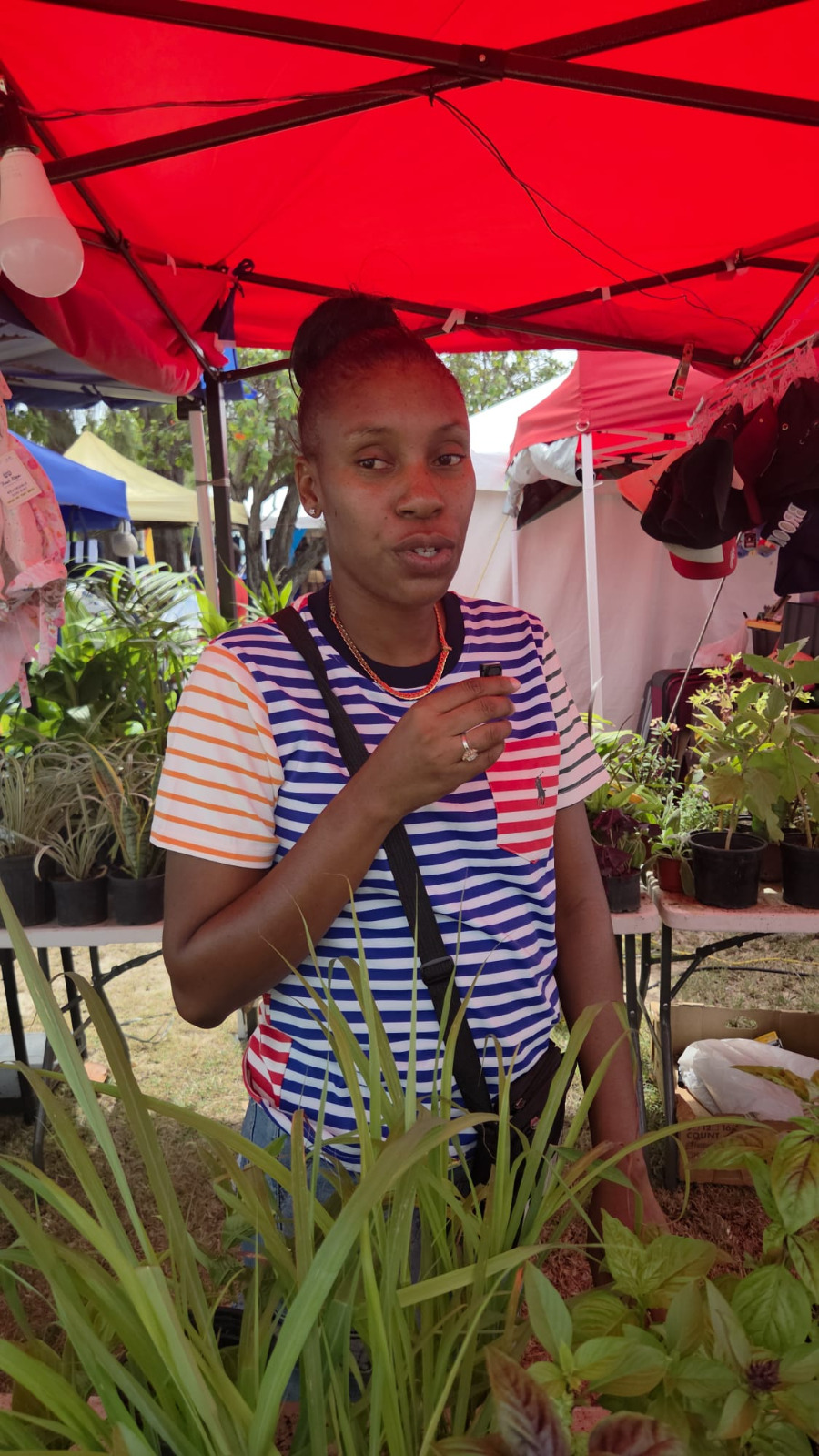
    Lateisha Edwards, who runs a local plant and seedling stall and has participated in the festival for 15 years, echoed that assessment, calling 2024 one of the worst iterations of the event in her tenure. She noted that only opening Friday saw moderately heavy foot traffic, with all subsequent days slowing to a near standstill—even though many browsers stopped to look at her plant stock, very few ended up making purchases. Edwards says she is still holding out hope that sales will pick up before the festival wraps.

    A jewelry vendor in only her fourth year of participation struck a more optimistic tone, even as she acknowledged that the 2024 event has failed to meet her expectations. “Business is always a gamble,” she explained. “Even if sales are slow this weekend, this is still a chance to get my brand in front of new people, and many customers come back to purchase from me after the festival ends. There is always reason to hope things will improve.”

    Fruit and vegetable seller Shiann Harvey added that her sales are also far below average. In typical years, she would have sold out of her entire stock by Easter Sunday, but this year she still has most of her produce left. Like other vendors, she called for organizers to add more diverse entertainment and engaging attractions to draw crowds back to the event and revitalize its declining popularity.

  • CARIFTA Bronze: Grenada’s U20 quartet inches closer to the sub-40 mark

    CARIFTA Bronze: Grenada’s U20 quartet inches closer to the sub-40 mark

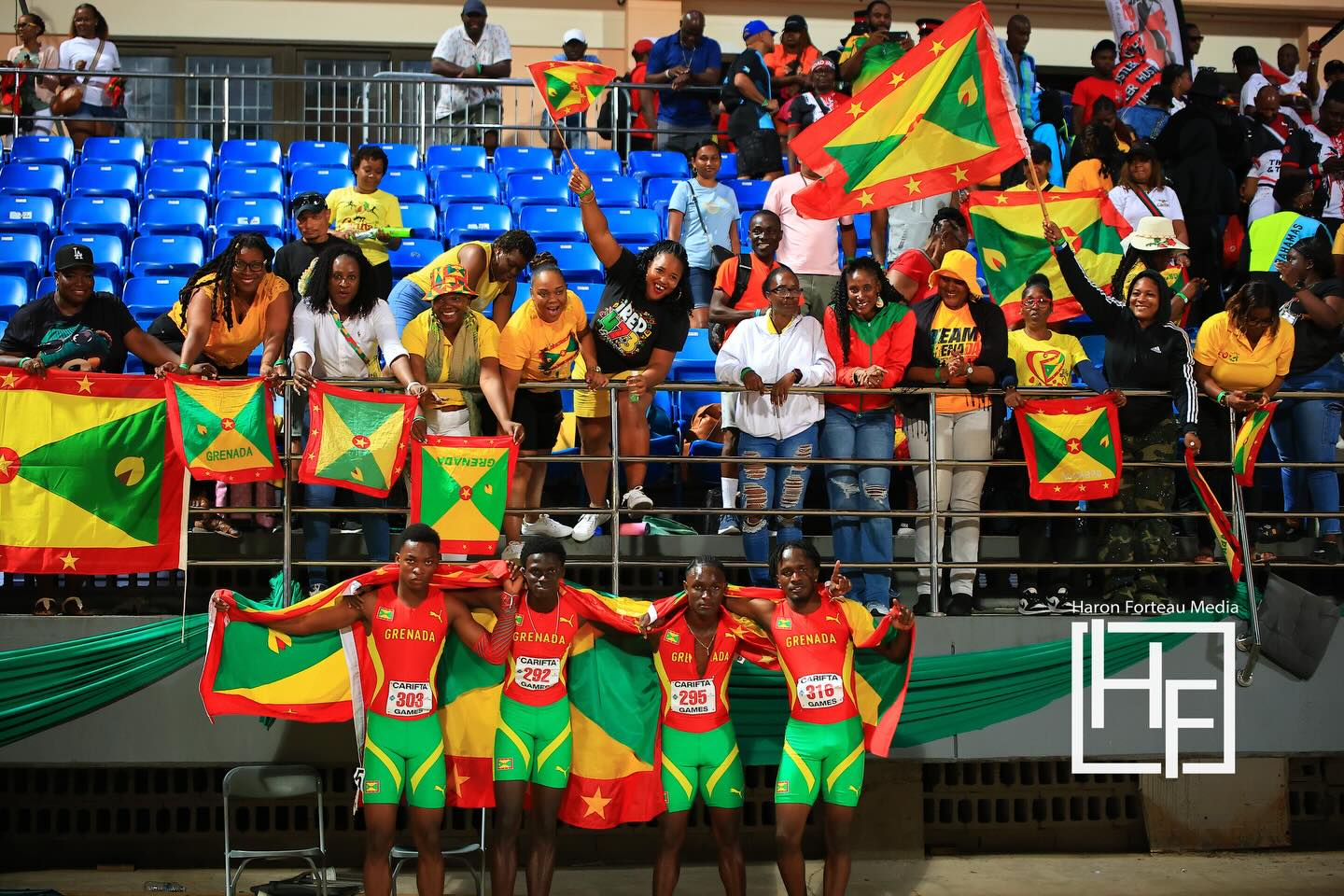
    The 2025 CARIFTA Games delivered a historic moment for Grenada’s track and field program, as the nation’s Under-20 men’s 4×100m relay squad secured a hard-fought bronze medal and shattered a long-standing national record in the event. The four-person team, made up of sprinters Ian George, Darrel Daniel, Kneon Mark Stanislaus, and Ethan Sam — a three-time individual CARIFTA sprint medalist — crossed the finish line in a blistering 40.18 seconds to claim a spot on the regional podium. Dominant regional track powers Trinidad and Tobago and Jamaica claimed the top two positions, with Trinidad and Tobago taking gold in 39.64 seconds and Jamaica securing silver with a 39.85-second run.

    This bronze medal result marks only the fourth time in the entire history of the CARIFTA Games that a Grenadian Under-20 men’s 4×100m relay quartet has earned a place on the podium. The 2025 team joins an exclusive group of Grenadian squads that have pulled off this rare achievement, dating back more than 50 years. The previous podium finishes came most recently in 2024, when Shaquane Toussaint, Emilio Bishop, Taigon Peterkin, and Samuel Green also took home bronze; in 1973, when an unconfirmed Grenadian team also claimed third place; and all the way back in 1972, when the team of Roy Layne, Russell Lambert, Raymond Layne, and Ken Francios earned bronze.

    Beyond the prestige of a regional medal, the 2025 squad’s performance carries historic statistical significance for Grenadian track and field. The 40.18-second finish time is on track to be officially ratified as the new National Under-20 record for the 4×100m relay. This mark is now the fastest time ever recorded by any Grenadian Under-20 4×100m relay team in history, bringing the nation’s rising sprint program closer than it has ever been to breaking the coveted 40-second barrier in the age category. For a small nation working to build its standing in regional track and field, the result marks a major milestone for current and future generations of Grenadian sprinters.

  • Crash Horror on Pares Main Road as Passenger Trapped in Wreckage

    Crash Horror on Pares Main Road as Passenger Trapped in Wreckage

    A serious collision between a passenger bus and a private car has shut down part of Pares Main Road, prompting a large-scale response from local emergency services. Within minutes of the crash being reported to authorities, police officers and specialized rescue teams deployed to the site to begin extrication and medical operations. Early unconfirmed reports from first responders on the ground indicate that at least one person remains trapped inside one of the damaged vehicles, and multiple individuals have sustained injuries in the incident. As of the latest update, medical officials have not released details on the seriousness of the injuries reported, nor have they shared information on the identities of those involved. Local law enforcement has confirmed that they are continuing to coordinate rescue efforts and assess the scene, and the public can expect additional official statements to be released as new details about the crash emerge. Motorists are advised to avoid the area temporarily to allow emergency crews to complete their work unimpeded.

  • STATEMENT: Government of Dominica congratulates Addison James on gold medal win at CARIFTA Games

    STATEMENT: Government of Dominica congratulates Addison James on gold medal win at CARIFTA Games

    Roseau, Dominica – April 6, 2026: The small Caribbean island of Dominica is celebrating a standout athletic achievement after local javelin thrower Addison James secured his second consecutive regional title at the 53rd CARIFTA Games hosted in Grenada. James delivered a winning throw of 63.73 meters to claim the gold medal in the under-20 men’s javelin event, cementing his status as one of the Caribbean’s most promising young track-and-field talents.

    What makes James’ victory particularly notable is that it marks back-to-back gold medals for the athlete, following his first CARIFTA title win in 2025. This rare repeat win at the prestigious regional youth athletics competition demonstrates not just raw natural talent, but consistent training, unwavering commitment, and a relentless drive to push his own performance limits.

    Officials from the Government of Dominica have publicly extended their warmest congratulations to James on his historic achievement. The Ministry of Culture, Youth, Sports and Community Development joined the national administration in applauding the young athlete’s outstanding result, noting that his success is a powerful example of what persistence and strong character can help young people accomplish. For a small nation like Dominica, James’ repeat gold medal win has become a source of widespread national pride, with government representatives saying his career trajectory will serve as inspiration for the next generation of Dominican athletes. The government and ministry have also extended their well wishes for James’ continued success in future competitive events as he advances his athletic career.

  • Kendra Beazer Launches Campaign for Barbuda: “One Barbuda. One Future.”

    Kendra Beazer Launches Campaign for Barbuda: “One Barbuda. One Future.”

    Barbuda political hopeful Kendra Beazer has officially kicked off her electoral campaign, centering her bid for public office around a unifying vision framed under the slogan ‘One Barbuda. One Future.’ The launch event, held on the Caribbean island recently, drew dozens of local residents, party supporters and community organizers who gathered to hear Beazer outline her policy priorities for the territory.

    In her opening campaign address, Beazer emphasized that deep divisions across community groups and uneven development across different regions of Barbuda have held back the island’s shared growth over recent years. She argued that a collective, collaborative approach to governance is the only path forward to address pressing local challenges, from infrastructure improvement to sustainable economic development amid rising climate risks for small island states.

    Beazer, who has a background in community organizing and local public service, highlighted three core pillars of her campaign: expanding access to affordable housing for young Barbudan families, boosting sustainable tourism that benefits local small business owners rather than outside investors, and implementing more robust coastal protection measures to mitigate the impacts of sea level rise and tropical storm damage. She stressed that every resident of Barbuda, regardless of their neighborhood background or economic status, deserves a seat at the table when shaping the island’s long-term future.

    Local political analysts note that Beazer’s campaign enters a crowded field for the upcoming local election, but her focus on unifying, community-centered policy has already resonated with many voters frustrated by partisan infighting in recent governance cycles. As the election campaign progresses, she has planned a series of town halls across every parish of Barbuda to collect feedback from residents and refine her policy platform ahead of voting day.

  • Monroe magic

    Monroe magic

    On the truncated opening session of the final day of the 2026 CARIFTA Athletic Championships held in Grenada, a series of standout and mixed results unfolded for Caribbean athletes across field and track events. Saint Lucia’s rising young talent Randall Monroe made his first appearance at the regional championship a memorable one, securing a bronze medal in the Under-17 Boys’ Long Jump competition. Competing against some of the region’s top young jumpers, Monroe delivered a career-defining performance on his fifth attempt, leaping to a new personal best of 6.60 meters. The mark temporarily pushed him into the silver medal position before final adjustments to the standings dropped him one spot to third, giving him the bronze. This result marks Monroe’s second top-four finish of the championships, after he claimed fourth place in the Under-17 Men’s High Jump just the previous night. With Monroe’s bronze added to the tally, Saint Lucia’s total medal count now stands at four: one gold, one silver, and two bronze, cementing the country’s solid performance at this year’s regional meet. Across competing nations, Team Barbados looked to add to their already impressive nine-medal haul from earlier rounds of the championships, but the team left the abbreviated final-day opening session without adding any new medals to their total. Despite the lack of new medals, the day still brought multiple qualifying successes for Barbadian track athletes. In the Under-17 Girls’ 100m Hurdles semi-finals, Tiara McClean crossed the finish line in fifth place in her heat, clocking a time of 15.23 seconds. While the placing was outside the top four, her overall qualifying time was fast enough to advance her to the final of the event scheduled for Monday night. Barbadian hurdlers also saw success at the Under-20 level, with both Alika Harewood and Afia Greenidge securing their spots in the Under-20 Girls’ 100m Hurdles final. On the men’s side of the Under-20 hurdles, Tevon Cadougan earned the last available spot in the 110m Hurdles final with a time of 14.25 seconds, the slowest qualifying mark to advance. His compatriot Rashad Gibson missed out on a spot in the final by the narrowest of margins, finishing just four hundredths of a second behind Cadougan with a time of 14.29 seconds. In field event action for Barbados, Shamyra Scantlebury competed in the Under-17 Girls’ Javelin throw, posting a best throw of 27.95 meters across her attempts to finish ninth in the event. As the championships head into the final session Monday night, athletes who advanced to the finals will compete for regional gold, silver and bronze medals to cap off the annual gathering of the Caribbean’s top young track and field talent.

  • Iran dreigt met sluiting van Bab al-Mandeb: wat betekent dat voor de wereldhandel?

    Iran dreigt met sluiting van Bab al-Mandeb: wat betekent dat voor de wereldhandel?

    As escalating tensions between the United States and Iran continue to roil the Middle East, senior Iranian officials have issued stark new threats that Iranian-aligned forces could shut down the strategically vital Bab al-Mandeb strait, a move that would upend global energy supplies and international commerce. The warning comes after Iran effectively restricted shipping through the Strait of Hormuz, another critical chokepoint for global energy trade, and follows escalating hostile rhetoric between Tehran and the Trump administration.

    Top advisers to Iran’s Supreme Leader and veteran Iranian diplomats have doubled down on the threat of closing the strait. Mojtaba Khamenei, a senior adviser to Iranian Supreme Leader Ali Khamenei, warned that Iran’s regional allies could shut down Bab al-Mandeb in the same way Iran has already constrained access to the Strait of Hormuz. Ali Akbar Velayati, an influential former Iranian foreign minister, reinforced the message, stating that the unified command structure of the so-called ‘Axis of Resistance’ views Bab al-Mandeb as strategically equivalent to Hormuz. If the White House continues what Velayati called its ‘foolish mistakes,’ he warned, global energy and trade flows could be disrupted with a single action. Iran’s state-owned broadcaster Press TV has officially confirmed these warnings.

    The threats are a direct response to recent aggressive rhetoric from former U.S. President Donald Trump, who has threatened to bomb Iranian energy infrastructure, including power plants, bridges, and desalination facilities, if the Strait of Hormuz remains closed to international traffic. Iran has countered that the strait remains open to shipping from most nations that negotiate safe passage, explicitly excluding only the United States and Israel.

    ### Why Bab al-Mandeb Matters to the Global Economy
    Located between Yemen on its northeastern shore and Djibouti and Eritrea in the Horn of Africa to the southwest, Bab al-Mandeb links the Red Sea to the Gulf of Aden, which connects to the Indian Ocean. At its narrowest point, the strait is just 29 kilometers wide, with only two shipping lanes for incoming and outgoing traffic, making it extremely vulnerable to blockades. Today, the strait is effectively controlled by the Iran-backed Houthi movement of Yemen, which is part of Tehran’s ‘Axis of Resistance,’ a coalition of ideologically and tactically aligned groups across the Middle East.

    As the only maritime gateway from the Indian Ocean to the Red Sea, which connects via the Suez Canal to the Mediterranean, Bab al-Mandeb handles roughly 12 percent of total global trade every year. A closure would force commercial vessels to divert on to a much longer route around the southern tip of Africa, extending delivery times by 10 to 14 days and sharply increasing shipping and insurance costs.

    In 2024 alone, roughly 4.1 billion barrels of crude oil and refined petroleum products passed through the strait, accounting for 5 percent of total global seaborne oil shipments. When combined with the Strait of Hormuz, which normally carries 20 percent of the world’s oil and natural gas, a simultaneous closure of both chokepoints would block 25 percent of global energy supplies. Beyond energy, roughly 10 percent of all global container trade, including goods shipped from China, India, and other Asian manufacturing hubs bound for European markets, transits the strait.

    The strategic importance of Bab al-Mandeb has grown dramatically since Iran restricted access to the Strait of Hormuz. Saudi Arabia, which historically relied heavily on Hormuz for its oil exports, has increasingly shifted shipments through its Red Sea port of Yanbu, using the East-West Pipeline that runs from the Abqaiq oil field to Yanbu, operated by state oil giant Aramco. In March, the pipeline was operating at full capacity of 7 million barrels per day, an all-time record, reflecting the new reliance on the Bab al-Mandeb route.

    ### Can the Houthis Actually Close the Strait?
    Yemen’s Houthi movement has already demonstrated its ability to disrupt shipping through the strait. During the 2023-2024 Gaza war, the group launched repeated attacks on vessels it deemed linked to Israel or the United States, prompting global insurance providers to stop covering commercial ships transiting the area. Shipping volumes through the strait fell sharply as a result, before a ceasefire agreement between the U.S. and the Houthis in May 2025 reopened the route to most traffic.

    In recent weeks, the Houthis have resumed rocket and drone attacks targeting Israel, marking their renewed participation in regional hostilities, though they have not yet resumed attacks on U.S.-linked commercial shipping. Former U.S. diplomat Nabeel Khoury noted that recent Houthi attacks are largely symbolic, intended as a warning against escalating regional tensions and the deployment of additional U.S. forces to the Middle East. But if the group decides to fully escalate, closing Bab al-Mandeb is its most powerful weapon.

    “All they need to do is attack a handful of ships passing through, and all commercial shipping in the Red Sea will come to a standstill,” Khoury explained. “That would cross a red line, and you would very quickly see U.S. and Israeli military strikes on Houthi targets in Yemen.”

    ### Global Implications of a Closure
    Middle East expert Elisabeth Kendall, president of Girton College at the University of Cambridge, described a full closure of Bab al-Mandeb as a “nightmare scenario” for the global economy. If the Strait of Hormuz remains restricted and Bab al-Mandeb is closed, she warned, trade bound for Europe would be severely disrupted, potentially even paralyzed.

    “This is an extremely critical situation, and everything depends on what happens next,” Kendall said. She added, however, that the Houthis are likely hesitant to take such a drastic step, as it would provoke a direct military response from Saudi Arabia and trigger broader counterattacks from Western and allied forces. A full closure would also worsen the ongoing global energy crisis sparked by the Middle East conflict, amplifying economic hardship for households, manufacturers, and consumers around the world.