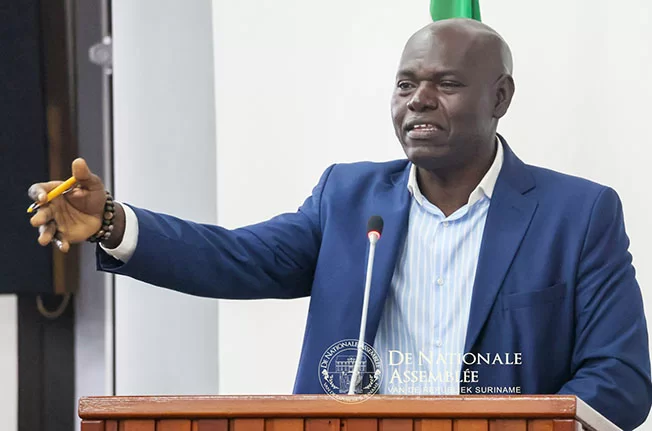
A Surinamese parliamentary opposition leader has reignited debate over transparency in the country’s burgeoning offshore oil sector, renewing scathing criticism of the government’s refusal to grant the National Assembly full access to the critical exploration and development contract between state-owned oil firm Staatsolie and French energy giant TotalEnergies.
Ronny Asabina, who leads the BEP political faction in the Surinamese legislature, argues that parliament is fundamentally blocked from fulfilling its constitutionally mandated oversight role as long as the terms of the landmark agreement remain hidden from elected representatives.
In unusually harsh remarks, Asabina labeled the ongoing secrecy a “national shame” for the South American nation, pointing out that the country’s state oil company has explicitly rejected requests to share the full text of the deal with the nation’s lawmaking body – even as elected officials are expected to extend political trust to the agreements struck behind closed doors.
The parliamentary leader says that without access to the full contract, key details that matter deeply to the Surinamese public remain out of sight, including legally binding environmental protection clauses, frameworks for resolving commercial disputes, and critical fiscal terms that outline how much revenue the state will earn from the development of the offshore reserves. In particular, Asabina has raised pointed questions about the timeline of projected government tax revenues from the project. Under the terms of typical large-scale oil development deals, companies do not pay income tax until all upfront capital investments have been recouped and operational profits are generated.
Given the extremely capital-intensive nature of offshore oil exploration and production, and the ability of firms to offset early operational losses against future tax obligations, Asabina warned that substantial tax revenues for the Surinamese government could be delayed for decades after production first begins, a timeline that would put immense strain on the country’s already stretched public finances.
Asabina stressed that the National Assembly has an inalienable right to full disclosure of all agreements that the executive branch has negotiated on behalf of the Surinamese state and its people. He also recalled that government officials previously made a public promise to convene a special parliamentary committee to review all oil sector contracts, a commitment that has yet to be fulfilled. “As the elected representatives of the Surinamese people, we have a non-negotiable responsibility to know exactly what terms have been agreed to in the name of our entire society,” Asabina told the government in his address.