作者: admin

  • Registration Open : Master’s in Public Policy Analysis (FDSE)

    Registration Open : Master’s in Public Policy Analysis (FDSE)

    Higher education opportunities in public policy have expanded in Haiti, as the State University of Haiti (UEH) has officially opened registration for the second intake of its Master’s in Public Policy Analysis (MAPP) hosted by the Faculty of Law and Economic Sciences (FDSE). The academic initiative, scheduled for the 2026–2027 academic year, will close applications on October 15, 2026, with clear eligibility requirements and a structured application process laid out for prospective students.

    To qualify for consideration, candidates must hold an undergraduate bachelor’s degree (or equivalent credential) in one of several eligible fields, including economic sciences, administrative sciences, engineering, and social sciences. All applicants are also required to hold a Unique Identification Number (NINU) issued by Haiti’s National Identification Office (ONI), and pay a non-refundable 5,000 HTG registration fee to complete the initial screening step.

    The application process follows five key steps designed to streamline review for university administrators. First, candidates must submit their registration fee payment to the official UEH/ADMISSION REQUEST account (account number: 706054558) at any branch of SOGEBANK. Next, applicants must fill out the official online application form hosted on UEH’s admissions portal at https://admission.ueh.edu.ht, where they will be required to input their transaction payment number and upload a digital copy of their payment slip. During the form completion process, candidates must explicitly indicate that they are applying for the Master’s in Public Policy Analysis. After submitting the form, applicants must print a copy of their completed registration slip, then bring this documentation to the Dean’s Office of the Faculty of Law and Economic Sciences to finalize application validation.

    A complete set of supporting documentation is required to validate an application at the FDSE Dean’s Office. Candidates must bring two recent passport-sized photographs (taken within the past six months), with their full name, phone number, and NINU written on the back of each photo. Additional required documents include the printed application registration form, official national photo identification, the original bank deposit slip proving registration fee payment, an original and copy of the applicant’s undergraduate degree (or a provisional certificate of completion if the official diploma has not yet been issued), full undergraduate academic transcripts, a personal letter of motivation, an updated professional curriculum vitae, and one official letter of recommendation.

    Admission to the competitive program is granted to applicants who submit a complete, compliant application package and agree to adhere to all the program’s official academic and administrative regulations. The university has also published key additional information for candidates, including an annual tuition rate of 130,000 HTG for the master’s program.

    University administration has emphasized strict rules to avoid application disqualification: no exceptions will be granted for late submissions, incomplete applications that do not meet eligibility criteria, incorrect registration steps, or payments made to an alternate bank or non-official account. Online registration through the official UEH admissions portal is mandatory for all candidates, with no offline-only applications accepted.

    Prospective applicants with questions about the program or application process can contact the UEH admissions office via email at admission@ueh.edu.ht, or by phone at +509 47 47 9553, +509 3248 9797, or +509 3704 1522. The UEH main administration is located at 21 Rue Rivière, Port-au-Prince, Haiti, and additional university information can be found on its official website at www.ueh.edu.ht.


  • VS en Iran hervatten diplomatiek contact tijdens VN-top

    VS en Iran hervatten diplomatiek contact tijdens VN-top

    Against the backdrop of the 81st United Nations General Assembly in New York, the United States and Iran launched indirect, multi-hour negotiations mediated by regional third parties on Tuesday, with discussions centered on ending regional hostilities and reopening the strategically critical Strait of Hormuz to commercial shipping. While both sides have described the initial round of talks as promising, no breakthrough has yet been announced, and core differences on priorities and sequencing of concessions remain unresolved.

    U.S. President Donald Trump initially stated that his special envoy Steve Witkoff and senior advisor Jared Kushner held three hours of direct discussions with Iranian officials, calling the session “very good” and “very productive”, noting significant momentum toward a final agreement. He later confirmed that talks would continue and expressed confidence that a final arrangement would be reached. The White House later clarified that Trump himself did not participate in the negotiations, and that mediators shuttled between the U.S. and Iranian delegations led by Witkoff and Iranian Foreign Minister Abbas Araghchi respectively. Witkoff characterized the completed first negotiating round as potentially “constructive and promising”, adding that mediators would continue their shuttle work in the coming days.

    At the heart of Iran’s negotiating position are its demands for the United States to roll back economic and military pressure in exchange for reopening the Strait of Hormuz. Iranian state media report that Tehran conveyed its formal terms to Washington via mediators: these include lifting the U.S. blockade on Iranian ports, unfreezing billions of dollars in Iranian assets held abroad, and ending U.S.-led military campaigns against Iran and its regional allied armed factions. A senior Iranian official told state media that Tehran would be willing to fully restore open shipping through the strait within seven days if Washington agrees to reduce military pressure and scale back economic sanctions.

    The Strait of Hormuz is one of the world’s most critical energy chokepoints, carrying roughly a fifth of global oil supplies and a large share of liquefied natural gas exports from Gulf producing states to global markets. Disruptions and uncertainty around shipping through the waterway have already roiled global energy markets, with Reuters market data showing Brent crude prices climbed above $100 per barrel on Tuesday following news of the negotiations.

    Washington’s priorities differ sharply from Tehran’s. Trump has repeatedly emphasized two non-negotiable U.S. red lines: Iran will not be permitted to develop a nuclear weapon, and unimpeded commercial shipping through the Strait of Hormuz must be restored immediately. This leaves the two sides’ core negotiating objectives directly opposed: Iran demands that relief from pressure come first, while the U.S. insists on tangible Iranian commitments on shipping security and nuclear limits before making any concessions.

    A notable dynamic of the current process is the gap between harsh public rhetoric and quiet diplomatic outreach. Just hours before the negotiations opened, Trump used his address to the UN General Assembly to deliver sharp criticism of Iran, saying he faced a “major decision” between a deal that would allow Iran’s economy to recover and further military escalation. He reaffirmed that the U.S. would never allow Iran to acquire a nuclear weapon, with the White House identifying Iran’s nuclear program as one of the administration’s top global security priorities.

    Iran responded in kind: the Iranian General Staff issued a warning that the country would deliver a stronger and more unpredictable response to any new U.S. attacks. Still, Iranian officials have left the door open to a diplomatic resolution, stating that talks can progress if Tehran’s core conditions are met. Analysts quoted by Al Jazeera note that the combative public language from both sides is a deliberate negotiating tactic: both governments face domestic political pressure, and neither wants to be seen as making concessions under duress to the other side.

    Qatar and Pakistan have taken on the lead role as mediators between the two governments, working to narrow gaps and bring the parties closer to an agreement. Qatari Prime Minister and Foreign Minister Sheikh Mohammed bin Abdulrahman Al Thani met with Araghchi in New York on Tuesday to discuss regional developments, de-escalation, and laying the groundwork for sustained dialogue. Qatar has also previously held exploratory talks on establishing a temporary shipping corridor through the Strait of Hormuz and practical cooperation to clear the waterway for commercial traffic, highlighting that diplomacy is not just focused on a high-level political agreement, but also on putting in place practical arrangements to resume global shipping.

    According to Reuters, negotiators are also exploring a broader regional security framework that would include Iran and the Cooperation Council for the Arab Gulf States. This proposal would tie negotiations on the Strait of Hormuz to wider agreements on long-term security across the Gulf region, though the text of the proposal has not yet been made public.

    Outside of the mediated bilateral talks, France has put forward a separate international initiative to protect shipping through the strait. Reuters reports that Paris is drafting a UN Security Council resolution to authorize an international maritime mission to guarantee free navigation through Hormuz, a proposal that is being coordinated with Washington. Previous attempts to launch such a mission stalled due to objections from China and Russia, which argued that the initiative would be disproportionately targeted at Iran. Paris is now working to revise the text to explicitly frame the mission as focused solely on protecting commercial shipping and global energy security, rather than confronting Tehran.

    Despite the opening of talks and signs of goodwill on both sides, key obstacles remain unaddressed. Beyond conflicting core priorities, the two sides cannot agree on the sequencing of concessions. Tehran refuses to give up its leverage over Hormuz shipping before it receives the economic and military relief it has demanded, while Washington insists on seeing concrete Iranian action on its core demands first. This impasse means any final agreement will likely require a carefully structured package of simultaneous or phased reciprocal steps from both sides.

    The ongoing UN General Assembly, which runs from September 22 to 28 in New York, provides a critical immediate diplomatic window for further talks, with senior officials from both sides already on location for the global summit.

  • DAA to host second road race of 2026 in Grand Bay

    DAA to host second road race of 2026 in Grand Bay

    One of Dominica’s leading amateur sports governing bodies, the Dominica Athletics Association Inc. (DAA Inc.), is preparing to host the second leg of its highly anticipated 2026 Road Race Series on Sunday, October 11. This year’s event will wind through scenic and populated stretches of the island’s Grand Bay region, bringing community-focused competitive running back to the area for another year.

    Organizers have issued a public call for both competitive and recreational athletes across all age groups to reserve the date, ramp up their training regimens, and gear up for a day of tight competition and community camaraderie on the island’s roads.

    To ensure fair competition matched to athletes’ physical capabilities, the event has structured race distances around distinct age categories, each with its own designated starting point along the Grand Bay corridor. The 5-kilometer race, open to open-level competitive runners and masters athletes aged 35 and older, will kick off from Bagatelle. Runners in this division will turn right at the Bagatelle junction before moving toward the core Grand Bay area.

    For younger emerging talent, the 3-kilometer race reserved for Under-17 athletes will get underway from the Stowe neighborhood. Athletes competing in the Under-13 and Under-15 age brackets will take on a 2-kilometer course that starts in Dubique. The youngest participants, spanning Under-7, Under-9 and Under-11 age groups, will contest a 1-kilometer sprint starting near the bridge adjacent to the Geneva Playing Field.

    After the separate starting points, all competitors will converge at the Geneva Playing Field junction, where they will turn left onto Pierre Charles Boulevard and follow the full stretch of the road to the finish line. The final endpoint for all race divisions is situated on Pierre Charles Boulevard, just a short distance from the local Catholic Church, where winners will be crowned at the end of the day’s racing action.

  • ECAB Says It Is Working to Restore ATM Services Following Network Outage

    ECAB Says It Is Working to Restore ATM Services Following Network Outage

    Customers of the Eastern Caribbean Amalgamated Bank (ECAB) have been unable to complete routine transactions across the institution’s entire automated teller machine network after an unplanned outage hit the system this week, the bank has confirmed. In a public statement addressing the service disruption, ECAB shared that its in-house technical team has been deployed full-time to diagnose and resolve the root cause of the outage, with the top priority being bringing all ATM terminals back online as quickly as possible. Until full service is restored, the bank is directing all customers seeking to access cash or complete account transactions to visit one of its five physical branch locations, which remain fully operational. These in-branch facilities are situated at Coolidge, Redcliffe Street, High Street, Woods Mall, and Dockyard respectively. ECAB has issued a formal apology to its customer base for the inconvenience caused by the unexpected outage, and expressed gratitude for clients’ understanding and patience as the technical team works through the issue. Notably, the regional financial institution has not yet released any details regarding what triggered the network outage, nor has it provided a concrete estimated timeline for when customers can expect full ATM functionality to be restored.

  • Platform launched to connect young people with opportunities

    Platform launched to connect young people with opportunities

    A 20-year-old Vincentian educator and technology specialist, Noah Horne, has turned a personal frustration into a transformative digital solution for young people across St. Vincent and the Grenadines, with the official launch of YouthLink SVG, a homegrown platform that aggregates scattered youth opportunities in one accessible, user-friendly hub.

    Unveiled to the public on Saturday, YouthLink SVG consolidates a wide range of opportunities including full and part-time jobs, academic scholarships, professional internships, skills training programs, project grants, youth competitions, volunteer placements, and community events into a single centralized interface. As of its launch, the platform already hosts more than 70 vetted opportunities sourced from local, regional, and international partner organizations.

    The concept for YouthLink emerged directly from Horne’s own post-graduation experience. After completing his computer science degree at the St. Vincent and the Grenadines Community College (SVGCC) in 2024, Horne began his search for professional opportunities and quickly discovered that openings were dispersed across dozens of disjointed platforms – from independent Facebook pages and organizational websites to scattered social media accounts. Without constant scrolling across multiple channels, young people risked missing life-changing opportunities entirely if they did not see a posting during its narrow window of visibility.

    This challenge was not a new observation for Horne. Even during his secondary school years, he noticed that most peers had little awareness of available scholarships and development opportunities, let alone guidance on where to find them or how to meet eligibility requirements. “Instead of young people having to search through ten different pages every day, I wanted there to be one place where they could go and see what opportunities are available to them,” Horne explained of his core motivation for building the platform.

    Horne’s path to developing YouthLink builds on a long history of engagement with technology and innovation, cultivated from an early age. Raised in the community of South Rivers, he was encouraged by his parents to pursue technology-focused learning opportunities from childhood. In 2017, he participated in a STEM summer program where he deepened his skills in computer systems and game development. Just one year later, while studying in Form 2, Horne and his cousin Myles Jones claimed first prize at a national technology competition hosted by the National Telecommunications Regulatory Commission (NTRC) for their app Agri Marketplace, a digital tool designed to connect local farmers directly with buyers.

    His professional and educational journey continued with computer science studies at SVGCC, specialized training in web application development through an Organization of Eastern Caribbean States (OECS) digital skills scholarship, and a role as an educator at Mountain View Adventist Academy. While working at the academy, he founded the institution’s first Tech Club and mentored student teams that went on to win national robotics competitions in 2025 and 2026.

    In 2026, Horne returned to NTRC’s annual iCode784 competition alongside partner Jadiel Billingy, competing under the team name “The Mandem”. Six of the nine applications the pair submitted advanced to the competition’s top 10, and their project EcoTrack SVG earned them second place overall. The team collaboration eventually evolved into The Mandem, a local technology enterprise that offers mobile device repair services and custom digital solutions for clients across St. Vincent and the Grenadines.

    By early 2026, Horne had finalized plans to develop and launch YouthLink SVG as a public resource. Ahead of the official unveiling, he presented a working demo of the platform to key institutional partners, including the Youth Agriculture Support Improvement Project (YASIP) through the Zero Hunger Trust Fund, and received overwhelmingly positive and encouraging feedback that shaped the platform’s final iteration.

    YouthLink SVG is designed with both young users and opportunity providers in mind. For job and opportunity seekers, the platform offers robust tools to search, filter, save, and share relevant openings. For registered organizations, the platform allows free creation of organizational profiles, publishing and management of opportunity listings, with standard posting currently offered at no cost. Partner organizations can also activate YouthLink’s built-in application system, which enables applicants to submit resumes, CVs, and all required supporting documents directly through the platform, streamlining the entire recruitment and selection process.

    Listings on the platform fall into two clear categories: opportunities posted directly by registered partner organizations, and openings curated from legitimate public sources, which are clearly labeled as “publicly sourced” for full transparency.

    Today, Horne is actively encouraging young Vincentians to sign up for the platform and explore available opportunities, while inviting businesses, government agencies, educational institutions, non-governmental organizations, youth groups, and other opportunity providers to register and post their openings on the hub. “The opportunity that changes your life might already exist. Sometimes the problem is simply knowing that it’s there. That’s the gap I want YouthLink to help close,” Horne said of the platform’s mission.

  • Up to 50 Antigua and Barbuda Delegates Could Receive EC$430 for Commonwealth People’s Forum

    Up to 50 Antigua and Barbuda Delegates Could Receive EC$430 for Commonwealth People’s Forum

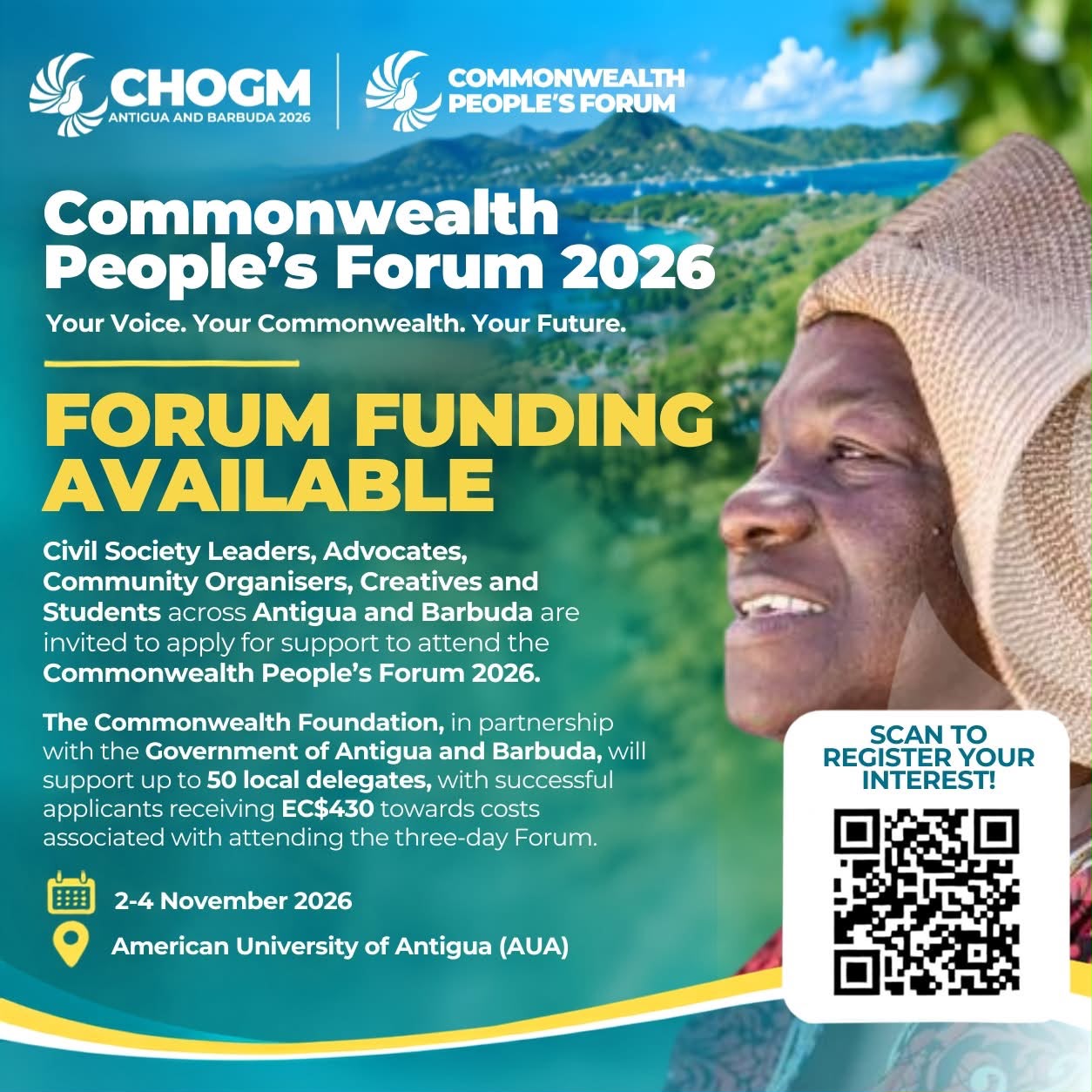
    A new funding initiative has been launched to expand access to the 2026 Commonwealth People’s Forum, with up to 50 local delegates from Antigua and Barbuda set to receive financial support to offset their participation costs. The program is a joint effort between the Commonwealth Foundation and the Government of Antigua and Barbuda, backing the three-day international gathering scheduled to take place from November 2 to 4 at the American University of Antigua (AUA).

    Eligibility for the stipend is open exclusively to residents of Antigua and Barbuda, with priority given to civil society leaders, grassroots advocates, and community organizers working across the nation. Tertiary students based in the country are also invited to submit applications for the funding opportunity. Each selected delegate will receive a one-time contribution of EC$430, a sum designed to remove financial barriers that would otherwise prevent interested community representatives from attending the high-level forum. According to the Commonwealth Foundation, the support aims to ensure diverse voices from small island states can contribute meaningfully to global discussions hosted at the event.

    To secure the stipend, successful applicants must complete two mandatory steps: finalize their official registration for the Commonwealth People’s Forum and obtain accreditation for the concurrent Commonwealth Heads of Government Meeting (CHOGM) by the September 30 deadline. Awardees are also required to attend all three days of scheduled forum programming, with stipend disbursement scheduled to take place on the final day of the event, November 4.

    The Commonwealth People’s Forum is a recurring civil society gathering held in parallel with CHOGM, which brings together non-state actors, community representatives, and stakeholder groups from all 56 member states of the Commonwealth. The 2026 agenda covers a broad range of pressing global and regional issues, including freedom of expression, climate and environmental justice, equitable economic inclusion, responsible artificial intelligence governance, sustainable blue economy development, and global health financing.

    The Commonwealth Foundation has issued a note of caution to prospective applicants: submitting an expression of interest does not automatically guarantee a spot at the event. Final acceptance is contingent on remaining venue capacity and successful completion of the full accreditation process, the organization confirmed. All relevant resources, including event registration forms, eligibility criteria, and full program details, are now available online for interested applicants.

  • Canada : New aid to Haiti of $25.4 million

    Canada : New aid to Haiti of $25.4 million

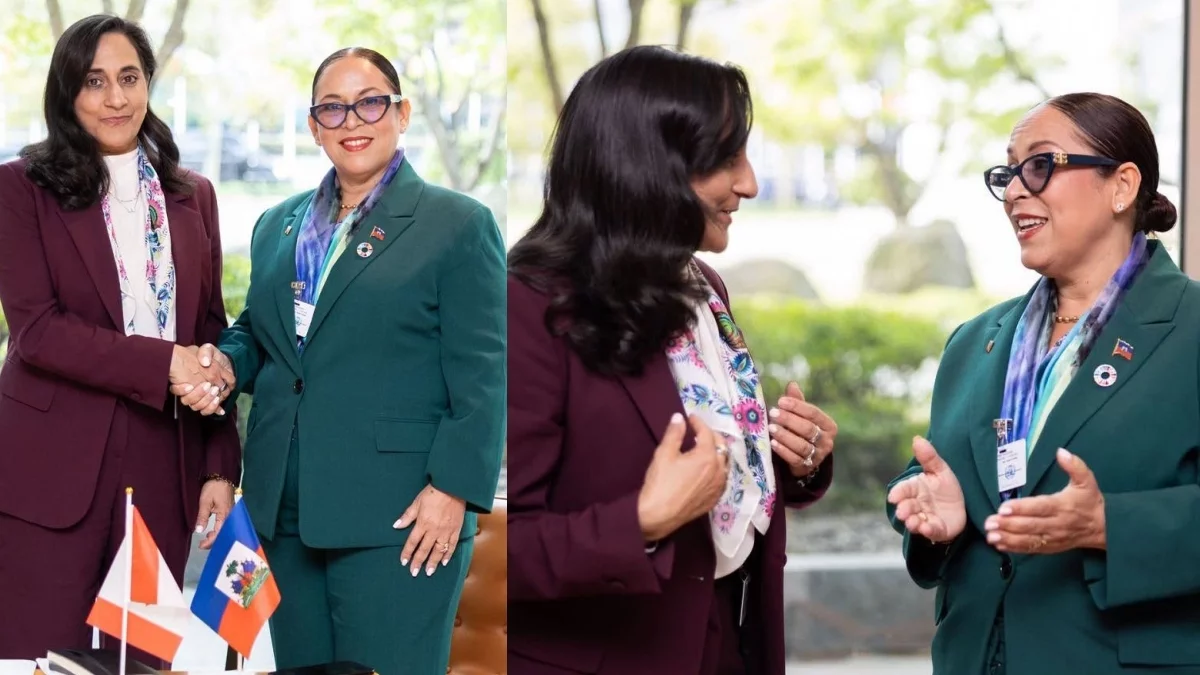
    On the sidelines of the 81st United Nations General Assembly in New York on September 22, 2026, a high-stakes bilateral meeting brought together Haitian Foreign Minister Raina Forbin and Canadian Foreign Minister Anita Anand to address the cascading crises gripping Haiti and coordinate international support for the Caribbean nation. The gathering offered a critical platform for the two top diplomats to review the most pressing challenges facing Haiti, from the urgent task of reestablishing nationwide security and laying the groundwork for upcoming democratic elections to alleviating the country’s worsening humanitarian emergency. A central focus of the talks was clarifying how Canada can sustain its backing for the Haitian government’s ongoing efforts to pull the country back from instability. In a key announcement during the meeting, Minister Anand unveiled that Canada will allocate $25.4 million in fresh development aid to bolster three core priority areas in Haiti: security infrastructure, democratic governance, and community-level resilience to ongoing conflict. This new funding package will be directed toward multiple targeted initiatives: it will support campaigns to crack down on systemic corruption and transnational organized crime, expand programs to stop criminal gangs from recruiting vulnerable youth, strengthen support systems and interventions for survivors of gender-based violence, and fund local grassroots peacebuilding projects led by communities across the country. Responding to the announcement, Minister Forbin extended a formal welcome to the new aid package and conveyed the Haitian government’s deep gratitude for Canada’s long-standing solidarity with the Haitian people amid their ongoing struggles. Beyond the new funding announcement, the conversation also centered on the urgent need to revitalize the Gang Suppression Force (GSF) and ensure the unit is fully deployed across high-risk areas of Haiti, as part of broader efforts to ramp up the country’s security response to gang violence. Minister Forbin stressed that sustained international partnership support remains indispensable to Haiti’s efforts to restore full security and establish the stable conditions needed for long-term national recovery and development. The meeting concluded with both Haiti and Canada reaffirming their shared commitment to maintaining open, regular dialogue and deepening bilateral cooperation, with a particular focus on advancing security sector reform, shoring up national institutional stability, and delivering tangible improvements to the daily living conditions of all Haitian people.

  • UWI Five Islands Guild Congratulates Elena Etinoff on Essay Competition Win

    UWI Five Islands Guild Congratulates Elena Etinoff on Essay Competition Win

    A promising young scholar from The University of the West Indies (UWI) Five Islands Campus has earned top honors in a prominent national essay competition focused on reparations, drawing praise from her campus’ student governing body.

    Elena Etinoff secured first place in the university-level division of the 2026 Essay Competition hosted by the Antigua and Barbuda Reparations Support Commission, an achievement celebrated publicly by the UWI Five Islands Campus Guild of Students.

    Competing as the official representative of her institution, Etinoff impressed judges with her submission titled “From Chains to Change: Reflecting on the Past, Projecting a Just Future.” In its congratulatory statement, the Guild of Students emphasized the nuanced perspective woven throughout Etinoff’s work. The winning text balances rigorous critical reflection on the historical harms of chattel slavery with forward-looking vision, outlining a path toward a more just and equitable society for people of Caribbean descent.

    “We are proud to see our students using their voices, knowledge and ideas to contribute to important conversations,” the Guild shared in its official statement. The student body organization extended its warm congratulations to Etinoff on her outstanding accomplishment, while issuing a heartfelt encouragement to continue advancing meaningful dialogue around reparations and racial justice, urging her to “keep the fight alive.”

    The competition itself, focused on centering local and student-led engagement with the ongoing global movement for Caribbean reparations, provides a platform for emerging scholars to contribute their perspectives to a conversation that carries profound social and political weight for Antigua and Barbuda and the wider Caribbean region.

  • Concacaf Nations League : D-1 Haiti vs Trinidad and Tobago (schedule)

    Concacaf Nations League : D-1 Haiti vs Trinidad and Tobago (schedule)

    One day out from their opening group stage fixture of the 2026–2027 CONCACAF Nations League, Haiti’s senior men’s national football team, nicknamed the Grenadiers, is preparing to take the pitch against Trinidad and Tobago at Kingston’s Sabina Park on September 24. All of Haiti’s opening group matches are being hosted away from home in Jamaica due to ongoing domestic instability, marking an unusual start to the team’s regional campaign. This edition of the CONCACAF Nations League doubles as the official qualification pathway for the 2007 CONCACAF Gold Cup, the premier regional men’s football tournament scheduled to take place in summer 2027, adding high stakes to every group stage fixture.

    The Grenadiers enter this campaign with a newly restructured technical staff headed by Spanish head coach David Badia. Badia will be supported by two assistant coaches: Marc Chervaz, a Swiss football strategist, and fellow Spanish coach Alberto Vásquez. A notable addition to the staff that has drawn excitement from Haitian football supporters is Cameroonian former international goalkeeper Idriss Kameni, who takes on the role of goalkeeping coach for the side. Kameni’s decades of top-flight and international experience have been cited as a major asset for developing Haiti’s current generation of shot-stoppers.

    Following the opening match against Trinidad and Tobago, Haiti will remain in Kingston for their second group fixture against Costa Rica on September 27. The team will then hit the road for two away matches: first against the Dominican Republic on October 1 (kickoff scheduled for 8:00 PM local time, with the host venue still to be confirmed), followed by a rematch against Costa Rica in Costa Rica on October 4, kicking off at 6:00 PM local time, where the venue also remains to be finalized.

    If the Grenadiers advance out of the group stage, the quarter-final round of the competition will kick off in November 2026, with the tournament’s final round scheduled for March 2027. All advancing teams will secure their spot in the 2027 Gold Cup, making every group stage match critical for Haiti as they aim to return to the region’s top tournament. Fans can access the full official squad list for the Grenadiers’ Nations League campaign and additional background on Badia’s appointment through publicly available football news sources from Haiti.

  • Skerrit and Francis pay tribute to Desiree John, wife of former PM, following her death

    Skerrit and Francis pay tribute to Desiree John, wife of former PM, following her death

    The small Caribbean nation of Dominica is in mourning this week following the death of Desiree John, 78, the widow of Patrick John — the country’s first prime minister after it achieved independence in 1978. Mrs. John passed away on Tuesday, September 22, while receiving treatment in the intensive care unit of Dominica-Friendship Hospital. As of Wednesday, no official cause of death has been released to the public.

    Top political figures from across Dominica’s partisan divide have stepped forward to honor her legacy and offer condolences to her grieving family. Prime Minister Roosevelt Skerrit, speaking from the floor of Parliament, opened the legislative session with reflections on Mrs. John’s unrecognized contributions to Dominica during the critical early years of the nation’s statehood.

    Though Desiree John never held an official appointed or elected position in government, Skerrit emphasized that her steady support for her husband during his tenure in national leadership represented an important contribution to the country’s development during one of the most pivotal periods of its modern history. Patrick John, popularly known across the country by his nickname “PJ,” led the Dominica Labour Party and served as the nation’s first prime minister following independence from the United Kingdom. He passed away in July 2021 at the age of 83.

    Opposition United Progressive Party leader Joshua Francis also issued a formal statement on the party’s behalf, extending heartfelt sympathy to the entire John family. Francis echoed Skerrit’s framing of Mrs. John’s life as deeply connected to the defining moments of Dominica’s post-independence journey, praising her personal character and commitment to her loved ones.

    “Mrs. John leaves behind a legacy of quiet strength, resilience, devotion to family, and steadfastness through some of the defining moments of our nation’s journey,” Francis wrote in his statement. He extended condolences to her children, grandchildren, extended relatives, and close friends, noting that the entire nation of Dominica joins the family in mourning her loss. Francis closed his statement by expressing hope that cherished memories of Mrs. John would bring the family comfort in this difficult time, adding, “May her soul rest in eternal peace.”