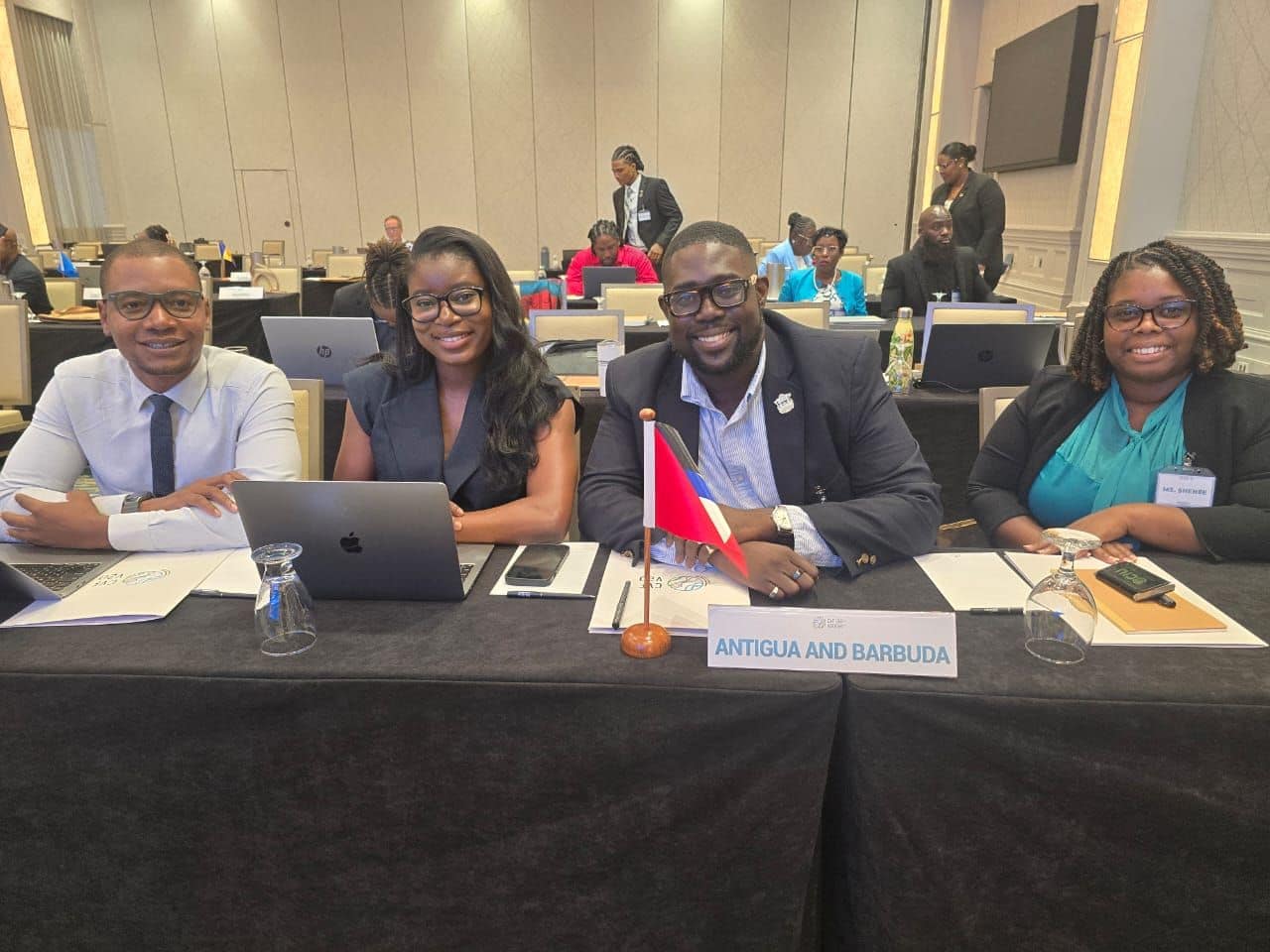
A four-person official delegation from the Government of Antigua and Barbuda has wrapped up its participation in a high-profile two-day regional climate policy workshop, held from May 28 to 29, 2026 at the Hilton Barbados Resort in Bridgetown. Titled “Prosperity on Our Terms: A Caribbean Agenda for Climate Finance Access and Addressing Loss and Damage,” the event was organized by the Climate Vulnerable Forum and the Vulnerable Twenty Group (CVF-V20), operating under the current presidency of Barbadian Prime Minister Mia Amor Mottley. The gathering drew policy representatives from nine Caribbean V20 member states, alongside stakeholders from across the wider CARICOM bloc, with a shared core goal of advancing the region’s ability to secure accessible, adequate climate and disaster risk financing. The Antigua and Barbuda delegation brought together cross-government expertise: Gita Nicholas and Arry Simon from the nation’s Department of Environment, and Carlon Knight and Sheneé Cornelius from the Ministry of Finance, Corporate Governance and Public-Private Partnerships. Over the two days of intensive discussion, delegation members took part in deep-dive technical sessions focused on the major climate finance frameworks currently being advanced by CVF-V20. The opening session delivered a complete breakdown of the evolving post-2025 global climate finance landscape and the CVF-V20 Climate Prosperity Agenda, framing the deep-seated structural financing barriers that disproportionately impact Small Island Developing States (SIDS) like Antigua and Barbuda. Following the opening overview, attendees walked through the details of two flagship CVF-V20 initiatives. The first is the Vulnerability to Viability (V2V) Compact, a four-pillar structural financing program built to tackle the long-term economic vulnerabilities of nations on the frontlines of climate impacts. The second is the CVF-V20 Lifeline Fund, presented by Jwala Rambarran, former Central Bank Governor of Trinidad and Tobago. This fund is designed to deliver fast, trigger-activated liquidity support to member states in the immediate aftermath of a major climate disaster. The workshop also featured a dedicated session on Climate and Disaster Risk Finance and Insurance (CDRFI), led by Isaac Anthony, Chief Executive Officer of the Caribbean Catastrophe Risk Insurance Facility (CCRIF SPC). Attendees explored current coverage trends, the challenge of basis risk, and tailored insurance solutions designed to serve micro and small enterprises across the region. Additional technical sessions covered critical topics including dedicated finance for addressing climate-related Loss and Damage, with introductions to the Global Shield against Climate Risks and the formal UN-backed Fund for Responding to Loss and Damage. Delegates also examined strategies to mobilize private sector investment through blended finance structures and expanded access to global carbon markets. Beyond technical discussions, the workshop advanced plans for a new Regional Adaptation Training Hub for the Caribbean, a core component of the $5.3 million USD GEF-UNIDO-V20 Adaptation Support Program. The hub will work to expand Caribbean nations’ access to low-cost climate adaptation technologies and specialized support services. On the afternoon of May 29, the Antigua and Barbuda delegation joined a site visit across Barbados’ coastal and fisheries projects under the ambitious Roofs to Reefs Programme. Stops on the tour included the Barbados Fisheries Division in Bridgetown, the Paynes Bay and Folkstone marine reserves in St. James, and the historic fishing village of Six Men’s in Saint Peter. The on-the-ground visit gave delegates direct insight into community-led fisheries management practices, coastal biodiversity conservation strategies, and marine ecosystem protection efforts—all priorities that align directly with Antigua and Barbuda’s own goals for advancing its coastal and blue economy. On completion of the workshop, the delegation returned with a sharper, more comprehensive understanding of the financing tools and multilateral frameworks available to support Antigua and Barbuda as it continues building out its national climate resilience infrastructure. As one of the nine Caribbean nations represented at the event, Antigua and Barbuda’s participation underscores the region’s unified commitment to advancing a collective voice in the global climate finance negotiation process.
Antigua and Barbuda Delegation Concludes Regional Climate Finance Workshop in Barbados