作者: admin

  • Canaries Wellness Centre closed for two weeks for upgrades

    Canaries Wellness Centre closed for two weeks for upgrades

    Residents of the Canaries community will need to adjust their primary healthcare access plans for the coming fortnight, as the local Canaries Wellness Centre is set to shut down for critical infrastructure rehabilitation starting this Monday.

    According to an official announcement from Saint Lucia’s Ministry of Health, Wellness and Nutrition, the facility will remain closed from June 1 through June 12 to accommodate targeted upgrade works carried out under the OECS Regional Health Project, a development initiative backed by financing from the World Bank. Standard healthcare operations at the centre are scheduled to resume on June 15 following the completion of the rehabilitation.

    To avoid disruptions to routine care for local residents, all primary health services that are typically offered at the Canaries location will be temporarily relocated to the nearby Anse La Raye Wellness Centre for the duration of the closure. Importantly, the ministry has confirmed that scheduled home visits and community outreach programs serving Canaries residents will continue operating without interruption throughout the two-week period. This measure is designed to ensure that vulnerable patients with ongoing care needs do not lose access to critical support services.

    To ease the burden of traveling to the alternate facility, the government has arranged free shuttle transportation for Canaries residents. The service departs from the Canaries bus stop located adjacent to the Canaries Infant School, with fixed departure times: 7:30 a.m. and 10:30 a.m. on both Mondays and Fridays, and a single 7:30 a.m. departure on Tuesdays.

    Additionally, the ministry has published a clarified clinic schedule for the Anse La Raye Wellness Centre to help patients plan their visits during the temporary transition. Under the adjusted schedule, general medical clinics alongside specialized care for diabetes and hypertension will run on Mondays, child health services will be held every Tuesday, and additional general medical clinics will operate on Fridays.

  • Koeweit onder vuur te midden van toenemende spanningen tussen VS en Iran

    Koeweit onder vuur te midden van toenemende spanningen tussen VS en Iran

    On June 1, a fresh wave of violence erupted across the Middle East, shattering the fragile ceasefire that had slowed three months of open conflict and derailing ongoing diplomatic efforts to de-escalate tensions. Iran launched coordinated rocket and drone attacks targeting Kuwait on Monday, stating the strike was retaliation for U.S. airstrikes on Iranian military positions carried out over the weekend. Iran clarified that its assault targeted an American air base, though it did not publicly disclose the base’s exact location.

    U.S. military officials confirmed that late Sunday, American defense systems intercepted two Iranian ballistic missiles that were heading toward U.S. troops stationed in Kuwait. No American casualties were reported from the incident. In response to the attacks, Kuwait activated its full air defense network and issued a formal condemnation, accusing Iran of deliberately worsening already volatile regional tensions.

    The new outbreak of hostilities immediately sent shockwaves through global energy markets, pushing international oil prices up by more than 3% as investors braced for further disruption to critical energy supply routes. Parallel to the escalation in the Gulf, Israel has moved additional troops deeper into Lebanese territory to step up operations against Hezbollah, the Iran-aligned militant group. Israeli Prime Minister Benjamin Netanyahu has ordered expanded military action across Lebanon, including strikes on Hezbollah targets in the southern suburbs of Beirut. Iran views Israeli military moves in Lebanon, which are technically covered by an existing ceasefire agreement, as directly tied to U.S. aggression against the Islamic Republic, further linking the two separate fronts of the broader conflict.

    The ongoing conflict, which first erupted on February 28, has already claimed thousands of lives, with the heaviest casualties concentrated in Iran and Lebanon. Iran has imposed significant restrictions on shipping through the Strait of Hormuz, the strategic chokepoint that carries roughly a fifth of global oil supplies and a large share of global liquefied natural gas (LNG) trade, putting massive pressure on the world’s already strained energy infrastructure. In recent days, 15 vessels, including four oil tankers, have transited the strait under supervision from Iran’s Islamic Revolutionary Guard Corps. But shipping analysts warn that any lasting normalization of commercial traffic through the key waterway will require a permanent peace deal that establishes clear, agreed-upon navigation rules.

    Diplomatic efforts to resolve the crisis remain ongoing, but rifts between negotiating parties continue to slow progress. U.S. President Donald Trump has repeatedly expressed confidence that a negotiated deal with Iran can still be reached and has called for all parties to exercise restraint, even as he faces growing criticism from domestic political opponents. For its part, Iran has pushed back against the United States, accusing Washington of maintaining inconsistent and shifting negotiating positions that have dragged out talks unnecessarily.

    U.S. Secretary of State Marco Rubio has recently held meetings with both Lebanese President Joseph Aoun and Prime Minister Netanyahu, where he presented a proposal designed to support gradual de-escalation across the region. Domestically, the Biden administration – corrected, the Trump administration – faces growing political pressure to reopen the Strait of Hormuz and bring down fuel prices for American consumers, as November’s congressional elections draw closer.

  • OP-ED: Why CARICOM’s diplomatic nadir lingers

    OP-ED: Why CARICOM’s diplomatic nadir lingers

    As great power competition re-emerges to reshape the global order, the 15-member Caribbean Community (CARICOM) finds itself grappling with a decades-long question: how can small post-colonial states preserve their sovereign autonomy amid shifting regional and international pressures? This tension took center stage at the recently concluded 29th Meeting of the Council for Foreign and Community Relations (COFCOR), held May 20-21 in Suriname, where CARICOM foreign ministers formally called for unified collective action to navigate an increasingly unpredictable global landscape. The meeting’s communique outlined a two-pronged “dual approach” to protect regional sovereignty: intensifying foreign policy coordination to align bloc positions amid great power rivalry, and accelerating implementation of the CARICOM Single Market and Economy (CSME) to shore up regional food and energy security.

    But beneath the official call for unity lies a deep, consequential rift among member states, rooted in clashing approaches to regional foreign policy in the face of a renewed U.S. focus on the Western Hemisphere. At the heart of the divide is the so-called “Trump Corollary” to the 19th-century Monroe Doctrine – a framework that has shifted U.S. hemispheric strategy from a development-focused model of influence to a militarized, deterrence-first approach centered on counter-criminal operations and great power competition. Trinidad and Tobago, one of CARICOM’s founding members, has emerged as the most vocal backer of this new doctrine, aligning its foreign policy closely with Washington’s interventionist posture in the Caribbean. Prime Minister Kamla Persad-Bissessar has explicitly rejected the longstanding regional principle of the Caribbean as a Zone of Peace, justifying the shift by pointing to rising transnational drug trafficking, gang violence and homicides linked to instability in neighboring Venezuela. Port of Spain has since deepened security and economic cooperation with Washington to counter what it frames as malign influence in the region.

    Oil-rich Guyana has taken a more nuanced stance, balancing its critical security and energy interests to avoid overt alignment, but the gap between Trinidad and Tobago’s position and that of nearly all other CARICOM member states remains wide. The resulting policy disagreements have not only deepened mistrust across the bloc, but also opened the door to new questions about the future of regional governance: Trinidad and Tobago raised a slate of bloc-level governance reforms at COFCOR, and the country was not represented at the ministerial level at the recent meeting, highlighting the depth of the current diplomatic rift.

    To understand the stakes of this current divide, it is necessary to contextualize CARICOM’s long-standing pursuit of strategic autonomy – defined as the ability for small states to act independently to advance their national interests, while adapting to shifting global geopolitics. Most of CARICOM’s sovereign members gained independence between the 1960s and 1980s, following centuries of British colonial rule. When the Pax Britannica collapsed and the Pax Americana took hold, the Caribbean was already framed by Washington as America’s “backyard,” a status formalized by the 19th-century Monroe Doctrine, expanded by the Roosevelt Corollary’s “big stick” assertion of U.S. primacy, and cemented during the Cold War. As the U.S. built out a network of naval and air bases to counter Soviet influence in the region following the Cuban Revolution, the Caribbean became a major Cold War flashpoint, bringing small island states directly into great power rivalry.

    It was in this context that the founding leaders of post-independence Caribbean states articulated a core doctrine of strategic autonomy. Errol Barrow, the father of Barbadian independence, famously outlined the “Friends of All, Satellites of None” framework when Barbados joined the United Nations in 1966, a non-aligned approach that rejected ideological alignment with any great power, centered on the diplomacy of peace and prosperity rather than power competition. This principle has remained a foundational touchstone for regional foreign policy, rooted in three core values: respect for sovereign equality of all states, non-interference in internal affairs, and adherence to international law and the UN Charter.

    Today, as great powers revive a spheres-of-influence order that erodes the U.S.-led liberal internationalism of the post-Cold War era, Caribbean leaders warn that this strategic autonomy is under unprecedented threat. The rise of geopolitical fragmentation and multipolarity has strained multilateral institutions, including the UN – the primary platform through which small CARICOM states amplify their voices and defend their interests on the global stage. But the most pressing challenge to regional strategic autonomy is not external: it is coming from within the bloc itself.

    Trinidad and Tobago’s full-throated endorsement of the Trump Corollary has upended long-standing regional consensus on security. For decades, CARICOM has framed the Caribbean as a Zone of Peace, with a regional approach to security that extends beyond traditional border defense to include human, economic and environmental security, reflected in the 2023 Caribbean Maritime Security Strategy. This framework, aligned with the UN Convention on the Law of the Sea (UNCLOS), rejects large-scale militarization of the region’s waters, prioritizing peaceful economic development of the blue economy – a core lifeline for small island states dependent on fishing, shipping, tourism and maritime trade. UNCLOS also provides critical legal protection for CARICOM states’ Exclusive Economic Zones, enshrining their sovereign right to develop marine resources and resist interference from larger powers.

    By contrast, the U.S. military deployments in the region that Trinidad and Tobago supports target drug trafficking networks but have been documented to disrupt local fishing, shipping and tourism industries – harms that Barbadian Prime Minister Mia Mottley and other regional leaders have publicly decimated. For small, low-lying coastal CARICOM states that rely on open maritime trade routes for survival, these operations pose an existential economic threat. The region’s long-standing commitment to the Zone of Peace principle, backed by UNCLOS, is designed precisely to avoid this outcome, by framing the Caribbean as a space for cooperation rather than great power competition.

    The current rift has already played out in high-stakes diplomatic moments. Both Guyana and Trinidad and Tobago refused to endorse a recent COFCOR statement expressing deep concern over intensified U.S. economic, commercial and financial sanctions on Cuba, and reaffirming the Caribbean Zone of Peace principle – a statement issued as the Trump administration ramps up pressure on the Cuban government, including open threats of military action for regime change. More recently, both countries joined an American-orchestrated joint statement condemning China over alleged economic coercion related to detained Panama-flagged vessels, pulling them directly into the middle of escalating Sino-U.S. rivalry. Nine CARICOM states have active development partnerships with China under the Belt and Road Initiative, making U.S. pressure on these ties an added strain on regional unity.

    While COFCOR Chair Melvin Bouva’s call for unified action to navigate geopolitical uncertainty has been widely praised across the region, analysts note that growing divergence over what strategic autonomy actually means for member states has blocked progress toward that goal. The upcoming 51st Regular Meeting of the CARICOM Conference of Heads of Government, scheduled for July 5-8, is expected to take up the question of regional unity and strategic autonomy as a core agenda item. Ultimately, regional leaders will need to confront a new reality: the shifting global geopolitical order has already reshaped CARICOM, and competing visions of strategic autonomy among member states will define the bloc’s trajectory for years to come.

  • Fishermen’s Co-operative Returns to Members After 12-Year Dispute

    Fishermen’s Co-operative Returns to Members After 12-Year Dispute

    After more than a decade of protracted legal and administrative gridlock, the Antigua and Barbuda Fishermen Co-operative Society Limited has formally transitioned back to democratic member control, following the successful election of a new governing board at a special Annual General Meeting. Convened by the Supervisor of Co-operatives and hosted at the Fisheries Conference Room in Point Wharf on Sunday, the gathering brought a definitive close to 12 years of institutional uncertainty that left the representative body unable to operate under the leadership chosen by its fishing community membership.

    The resolution of this long-running impasse came through the coordinated action of two national regulatory bodies, acting in strict alignment with the provisions of the island nation’s Co-operative Societies Act. The Financial Services Regulatory Commission (FSRC), via the Office of the Supervisor of Co-operatives, carried out its statutory mandate to organize the process of returning full governance authority to the co-operative’s membership. To guarantee the fairness and transparency of the leadership vote, the national Electoral Commission was also brought in to oversee balloting and result tabulation.

    Meeting proceedings opened with a comprehensive briefing for attending members on the co-operative’s current financial and operational status, before moving forward to the nomination and election of directors and committee representatives. When voting concluded, a full new leadership slate was sworn in, earning the unanimous backing of all members in attendance.

    For the hundreds of working fishermen who have waited more than a decade for this outcome, the election is far more than a routine change in organizational leadership. It marks the long-awaited restoration of a collective voice for the island’s fishing community that had been silenced throughout the prolonged dispute. Many members noted that the co-operative has been a foundational institution for small-scale fishermen across Antigua and Barbuda for generations, and the return to member-led governance secures that legacy for future participants.

    The successful conclusion of the transition has been broadly celebrated across the local fishing sector. Attending members publicly extended their gratitude to both the FSRC and Electoral Commission for their steady stewardship through the organization’s most challenging period, and for upholding the core democratic principle that the will of the membership must ultimately guide the co-operative’s work.

    The newly installed 7-member Board of Directors is led by Chair Sir Anderson Roberts, and includes members Gary Gore, Orel Benjamin, Dale Stoute, Euro Henry Jr., Colin Francis, and Charles Simon. A three-person Supervisory and Compliance Committee was also elected, composed of Mavis George, Fellisa Simon, and Devon Revan.

    With this long-running dispute finally resolved, the co-operative turns the page on a difficult chapter and enters a new era unified behind a democratically chosen leadership team. Members have reaffirmed their commitment to the co-operative principles of collective action, shared benefit, and community leadership that first gave rise to the organization decades ago.

  • WATCH: 25,000 Free Eyeglasses Arrive in Antigua for Distribution by the Ministry of Health

    WATCH: 25,000 Free Eyeglasses Arrive in Antigua for Distribution by the Ministry of Health

    The government of Antigua and Barbuda is rolling out a landmark public welfare initiative that will deliver 25,000 pairs of prescription eyeglasses completely free of charge to residents unable to access affordable vision care, Prime Minister Gaston Browne confirmed in a radio address Saturday. Appearing as a guest on Pointe FM’s popular Browne and Browne talk program, the prime minister outlined the core goals and logistics of the new National Vision Initiative, framing the effort as a targeted investment in both economic productivity and public quality of life.

    Uncorrected vision impairment creates significant barriers for people across Antigua and Barbuda, limiting their ability to work, pursue education, and carry out daily activities safely. For low-income households, the high out-of-pocket cost of prescription eyeglasses often puts this essential care out of reach. During the broadcast, program participants highlighted that a single pair of prescription glasses typically costs between 700 and 2,000 Eastern Caribbean dollars, a major expense that many families cannot prioritize alongside other basic needs.

    Browne emphasized that the government designed the initiative to remove this financial barrier entirely. “We’re making sure that those in Antigua and Barbuda who struggle with poor vision and cannot afford a pair of glasses can get one for free,” he said. The prime minister confirmed that the full shipment of eyeglasses has already cleared customs and arrived in the country, with the Ministry of Health tapped to oversee all program operations from screening to distribution.

    The program will offer a full end-to-end service at no cost to eligible residents: participants will receive a comprehensive eye exam, a customized prescription, and their new eyeglasses all free of charge. Browne added that the administration views this as an ongoing commitment to public vision health, rather than a one-time effort. The government plans to run repeat distribution cycles in coming years, and will provide replacement glasses for recipients when their prescription changes or their current glasses need to be replaced.

    Led by the Prime Minister’s office and executed through the public health system, the initiative grew out of cross-government discussions about the critical role of early intervention in vision care and the need to expand access to underfunded health services for low-income communities. It forms a core part of the current administration’s broader portfolio of social support programs aimed at reducing financial strain on vulnerable households.

    In addition to the vision program announcement, Browne used the radio address to share an update on a separate government assistance initiative. He confirmed that a second shipment of subsidized building materials has arrived in the country and is currently being distributed to qualifying beneficiaries of that housing support program.

  • Bay Gardens rolls out Staycation, Caribcation deals

    Bay Gardens rolls out Staycation, Caribcation deals

    Saint Lucia’s locally owned hospitality brand Bay Gardens Resorts has rolled out two new limited-time promotional offers, designed to boost regional and domestic travel by opening up affordable getaways for both local residents and Caribbean visitors.

    Branded as Staycation and Caribcation, the targeted deals cut accommodation rates across all four of the group’s distinct properties: Bay Gardens Beach Resort & Spa, Bay Gardens Hotel, Bay Gardens Inn, and Bay Gardens Marina Haven. Each venue caters to different travel styles and financial plans, from budget-friendly short stays to luxury full-service retreats, giving guests the flexibility to pick an option that aligns with their needs.

    The offers are segmented to serve specific traveler groups: the Staycation promotion is exclusively for Saint Lucian residents seeking a quick local break from daily routine, while the Caribcation deal extends discounted pricing to Caribbean nationals looking to explore the island’s natural and cultural offerings.

    All bookings through the promotions also include access to the group’s popular “Stay at 1, Play at 5” guest benefit program. This package unlocks amenity access across all participating sister properties, complimentary shuttle transportation between locations, free use of non-motorized water sports equipment, and unlimited entry to the on-site Splash Island Water Park.

    Sanovnik Destang, executive director of Bay Gardens Resorts, explained that the initiative is rooted in a broader goal of encouraging visitors and locals alike to connect with Saint Lucia’s unique culture, renowned warm hospitality, and world-class attractions, while creating space for quality time with loved ones. “Whether that means relaxing on Reduit Beach, sharing meals together, enjoying local music, or simply slowing down with family, these are the moments that turn a summer trip into a lasting tradition,” Destang shared.

    Travelers can select from three booking tiers to match their preferences: room-only, bed-and-breakfast, and full all-inclusive packages. Entry-level room-only rates start at $150 USD per night, with final pricing adjusted based on the specific travel dates and chosen property.

    More details about the promotions, including booking terms and availability, can be found on the official Bay Gardens Resorts website at www.baygardensresorts.com.

  • Department of Culture Pays Tribute to Dr. Renee Smith’s Lasting Legacy in Music and Youth Development

    Department of Culture Pays Tribute to Dr. Renee Smith’s Lasting Legacy in Music and Youth Development

    The twin-island nation of Antigua and Barbuda is united in grief this week as the Department of Culture officially confirms the death of one of its most beloved cultural leaders, Dr. Renee Smith. A trailblazing music educator, celebrated choir director, fierce youth advocate, and respected international cultural ambassador, Dr. Smith built a decades-long legacy that has permanently shaped the trajectory of music and performing arts across the country, leaving an enduring impression on multiple generations of artists and community members.

    For more than 30 years, Dr. Smith centered her work on expanding access to high-quality music education and growing the national choral community, both within the Department of Culture and through community partnerships across Antigua and Barbuda. When she took the helm as Director of the National Youth Choir in 2005, she transformed the program into a hub not just for musical training, but for holistic youth development. Under her guidance, hundreds of young singers didn’t just master vocal technique and performance; they learned critical life skills including self-discipline, public confidence, collaborative leadership, and a deep sense of national pride, all nurtured through the shared experience of making art.

    Her leadership propelled the National Youth Choir onto the regional stage, where the ensemble earned acclaim representing Antigua and Barbuda at multiple editions of the Caribbean Festival of Arts (CARIFESTA). She led the group to performances at CARIFESTA X in Guyana (2008), CARIFESTA XI in Suriname (2013), and CARIFESTA XIV in Trinidad and Tobago (2019), where she ensured the nation’s unique musical talent and distinct cultural identity were presented with exceptional professionalism and distinction to audiences from across the Caribbean and beyond.

    Dr. Smith’s impact stretched far beyond the rehearsal walls of the National Youth Choir. A tireless champion for youth empowerment across all sectors, she was also a widely respected voice in international music academia, regularly sharing her expertise with peers and students at local, regional, and global events. On behalf of the Antigua and Barbuda Department of Culture, she collaborated on cultural and music initiatives in Dominica, the United Kingdom, and Trinidad and Tobago, where her contributions earned consistent recognition and praise from partner institutions and fellow arts professionals.

    A lifelong believer in continuous learning and personal growth, Dr. Smith’s perseverance and dedication culminated in her completion of a Doctoral Degree later in her career, a milestone that stood as a testament to her unwavering commitment to self-improvement and excellence. For colleagues, students, and community members alike, she served as a lifelong inspiration, embodying core values of hard work, humble service, and persistent dedication to lifting up others through the arts.

    Today, Dr. Smith’s legacy continues to echo through the voices of every singer she trained, the countless lives she guided, and the strong cultural foundations she helped build for Antigua and Barbuda. Industry leaders agree her transformative influence on the nation’s music ecosystem and youth development sector will endure for decades to come.

    In a formal statement released this week, the Department of Culture extended its deepest condolences to Dr. Smith’s family, close friends, former students, professional colleagues, and all people whose lives were changed by her wisdom, gentle kindness, and unshakable passion for the arts. The department joined the nation in asking for peaceful rest for Dr. Smith’s soul.

  • Can a lawyer serve 2 masters?

    Can a lawyer serve 2 masters?

    As Managing Partner of K C Legal Consultancy, Kevon K K Charles draws on years of frontline legal practice to unpack a growing tension at the heart of modern transactional law, particularly within the Caribbean legal landscape. For legal practitioners, scenarios that demand navigating conflicting duties are far from uncommon: a client brings a clear, straightforward transactional instruction, expecting their attorney to advance their goals, yet independent of the client relationship, a separate set of binding legal obligations requires lawyers to step beyond their role as a mere advocate for the client’s agenda. This conflict, Charles argues, is where the modern attorney’s most persistent professional challenge begins.

    The core identity of the legal profession has long been anchored to four non-negotiable foundational principles: unwavering loyalty to a client’s interests, strict protection of client confidentiality, preservation of independent professional judgment, and upholding legal professional privilege. These are not hollow theoretical concepts; they form the bedrock of trust that allows clients to speak openly to their legal advisors, disclose sensitive information, and seek guidance without fear of exposure. In recent decades, however, this traditional framework has been layered with an ever-expanding web of regulatory compliance obligations, most acutely felt in transactional work spanning property transfers, corporate structuring, and cross-border or domestic fund movements.

    Regulators now expect attorneys to conduct due diligence, ask targeted questions about transaction origins and intentions, and in some cases report suspicious activity to relevant authorities – obligations that do not stem from a client’s retainer, and that often exist in tension with traditional duties of loyalty and confidentiality. In practice, this conflict is rarely black and white. A transaction may appear fully legitimate on its face, the client may be a longstanding contact the attorney has worked with for years, and the corporate or property structure may be entirely conventional. Still, a subtle red flag can demand that an attorney pause, step back from advancing the transaction, and conduct further inquiry – a position that is rarely comfortable for either the practitioner or the client.

    This tension creates a two-pronged reality that all modern transactional attorneys must grapple with. First, practitioners are bound by strict rules of professional conduct laid out in the Legal Profession Act, which require attorneys to act with integrity, maintain independent judgment, and avoid facilitating unlawful or improper conduct. This means an attorney is never simply a passive conduit for a client’s instructions; they bear an independent responsibility to assess whether a transaction is legally proper, not just whether it can be executed.

    The second core consideration, and one that lies at the heart of public trust in the legal profession, is client confidentiality. For legal practice to function, clients must be able to speak freely and openly with their attorneys about every detail of their affairs. Without this guarantee of trust, an attorney’s ability to provide thorough, accurate legal advice is fundamentally undermined. The challenge of modern regulation, Charles explains, is that growing compliance expectations now operate alongside this longstanding principle. These new rules do not eliminate the protection of legal professional privilege, but they do demand that attorneys develop a far clearer understanding of where privilege ends and regulatory obligations begin.

    Many clients naturally ask: can information shared with my attorney still remain confidential? Charles confirms the answer remains yes – but it is no longer an unqualified absolute. The attorney-client relationship is still rooted in trust, but it now operates within a regulatory framework that imposes enforceable duties that extend beyond the bilateral client-lawyer relationship.

    In the Caribbean context, this balancing act is uniquely delicate. As Charles notes in his ongoing series of articles on wealth, property and regulation in the region, many Caribbean transactions grow out of decades-long personal and professional relationships, often built on informal arrangements and legacy structures that have evolved organically over generations. Information and arrangements that are universally understood within a family or local community do not always easily translate into the documented, verifiable proof that modern compliance frameworks require. This does not make the transactions improper, but it does demand a level of due diligence and care that was not required of Caribbean attorneys in decades past.

    Charles concludes by addressing the core question this tension raises: can attorneys truly serve two competing sets of obligations, or must the profession adapt to a new normal? Contrary to the framing of this conflict as serving two masters, Charles argues that modern practice simply requires attorneys to accept that both sets of obligations now exist side by side, and that the role of the contemporary attorney is to navigate this balance carefully. While this is rarely an easy position to occupy, it is one that is becoming increasingly familiar across the Caribbean legal sector, as regulation evolves to meet global standards.

    This analysis forms part of a continuing series examining the evolving intersection of wealth, property ownership, and regulatory compliance across the Caribbean. NOW Grenada notes that it is not responsible for the opinions and statements shared by contributing authors, and invites readers to report any abusive content via official channels.

  • Update: Police confirm missing hiker found dead

    Update: Police confirm missing hiker found dead

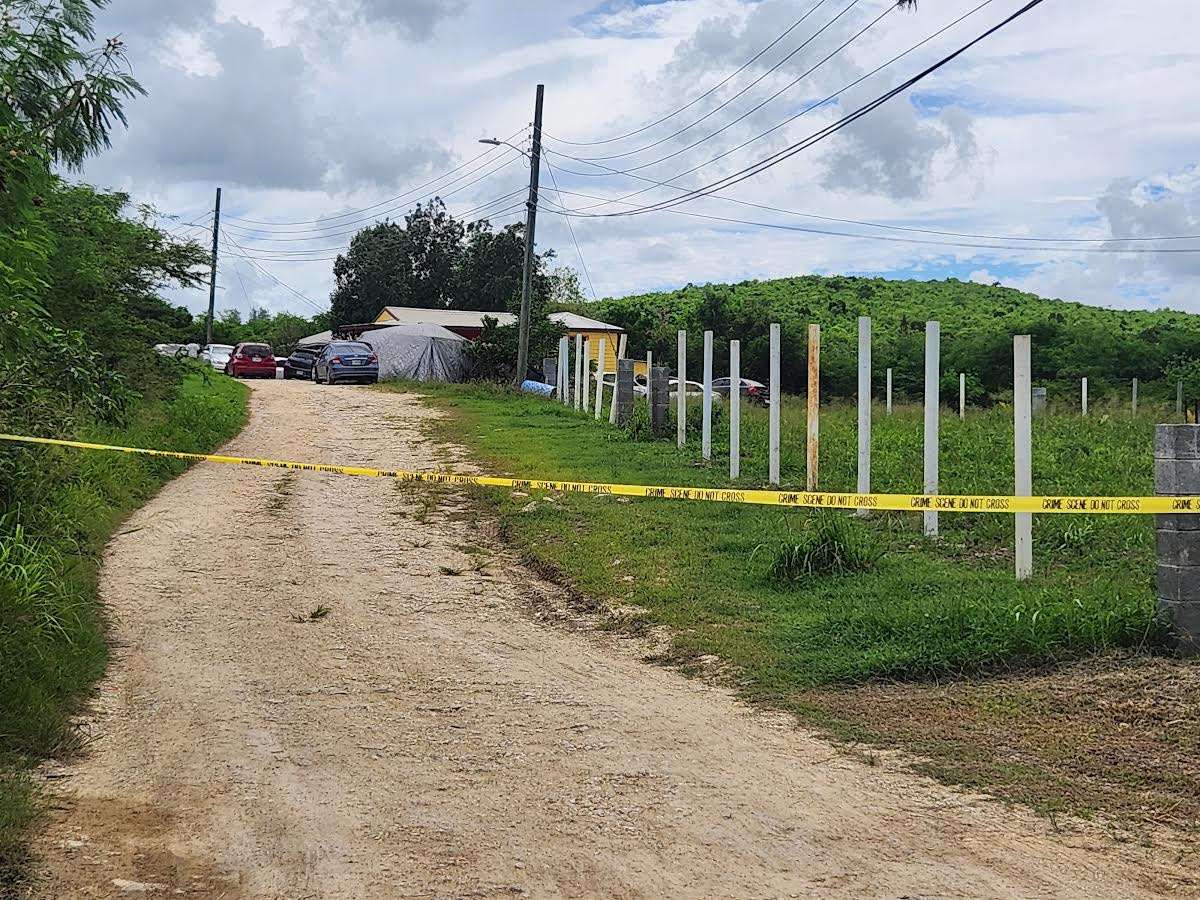
    BASSETERRE, St. Kitts – Following an exhaustive, five-day joint search operation across rugged terrain on Mount Liamuiga, law enforcement authorities in St. Kitts and Nevis have officially confirmed the recovery of the body of a 33-year-old hiker who went missing last week.

    The hiker, identified as Wang Zyuan, was first reported missing on May 27 after he embarked on a solo hike along the popular Mount Liamuiga trail and failed to return as scheduled. Over the following five days, a large coordinated search effort was assembled to locate him, bringing together resources from multiple public and community groups. The operation included search teams from the Royal St. Christopher and Nevis Police Force (RSCNPF), the St. Kitts-Nevis Defence Force, the St. Kitts-Nevis Fire and Rescue Services, the Police Training School, the local Forest Unit, the Red Cross, the Ross University K9 Unit, and dozens of civilian community volunteers, who scoured the mountain’s slopes daily until the discovery was made.

    In an official statement released via social media platforms on the evening of Monday, June 1 – one day after the final day of active searching – the RSCNPF confirmed that search crews had located Wang’s body earlier that same day. “It is with deep regret that the Royal St. Christopher and Nevis Police Force confirms that Mr. Wang Zyuan, who had been missing on the Mt. Liamuiga trail since Wednesday, May 27, 2026, was located deceased on Monday, June 1, 2026, by one of our search teams,” the statement read.

    Law enforcement has extended formal condolences to Wang’s family, friends, and loved ones as they navigate this devastating loss. Authorities have also called on the public to avoid spreading unconfirmed rumors or speculative information about the incident, noting that formal investigations into the circumstances of Wang’s death are still ongoing, and that all updates will be released through official government channels.

    Mount Liamuiga, a dormant stratovolcano that stands as the highest point on the island of St. Kitts, is a popular hiking destination for both local residents and international visitors, though its uneven terrain and remote sections can pose hazards for unprepared or solo hikers.

  • Where have the lettuce beds gone?

    Where have the lettuce beds gone?

    By Marlon Bute, Special to iWitness News

    In the wake of the NDP government’s newly unveiled relief package to soften the blow of skyrocketing fuel and grocery costs, one long-time resident of Lowmans Hill found his memories drifting back to a bygone era that holds critical lessons for the island nation’s current cost-of-living crisis. Decades ago, when resources were tight and cash was far from plentiful, the writer recalls that local communities thrived on a culture of self-reliance that carried families through even the hardest seasons.

    Walking through those old memories, it is impossible to miss the vibrancy of local production that once defined Lowmans Hill. Neat lettuce beds carved from volcanic soil stretched across community provision grounds, while backyard gardens burst with pigeon peas, okra, sweet peppers, tomatoes, cabbage, and every other staple needed for a home-cooked meal. Village fishermen would pull in their Sunday morning seines with help from casual beachgoers, small-scale livestock keepers raised pigs, goats, and sheep, and nearly every household kept free-range yard fowls for a steady supply of eggs and fresh meat. Every sweet potato harvested, every egg collected, every cabbage cut from the garden was money kept in the household rather than spent at imported goods stores. No occupation was exempt from this productive mindset: teachers raised livestock, tradespeople planted staple crops, and even police officers produced charcoal for extra income to support their families. This culture of small-scale local production did more than put food on tables—it forged deep-seated national resilience, nurtured individual initiative and independence, and taught generations of children core values of responsibility, discipline, and the rewards of hard work through after-school and weekend work alongside their elders, strengthening family and community bonds in the process.

    Tragically, this foundational resilience has eroded almost entirely over the past 25 years. As successive governments shifted policy focus and investment away from agriculture, fisheries, and other productive domestic sectors toward prioritizing tourism and consumption-led growth, local production dwindled. Today, St. Vincent and the Grenadines imports nearly every basic good that earlier generations grew and raised themselves: from common vegetables like carrots, cucumbers, and lettuce to tens of millions of dollars worth of chicken, pork, beef, and processed food annually. This deliberate policy shift has created a dangerous systemic dependence that leaves the entire nation vulnerable to outside shocks.

    When global fuel prices climb, shipping costs surge, international conflicts disrupt supply chains, or inflation hits major food-exporting nations, St. Vincent and the Grenadines feels the full brunt immediately. While the country has always faced natural vulnerabilities—from annual dry seasons that strain water and crop production to hurricane risk and the constant presence of an active volcano—these are geographic realities the nation has adapted to for centuries. The over-dependence on imported food, by contrast, is a man-made vulnerability that the country has the power to fix.

    This context is why the recent government relief measures should not be viewed as a short-term band-aid, but as an opening for a broader national conversation about the country’s long-term economic trajectory. When the New Democratic Party was in opposition, it repeatedly campaigned on a platform of rebuilding domestic agriculture, strengthening the fisheries sector, supporting small entrepreneurs, expanding access to affordable capital, and cutting reliance on foreign imports. That vision has carried over into the party’s current administration.

    Agriculture Minister Israel Bruce has centered national conversations on food security and food sovereignty, emphasizing the urgent need to ramp up domestic food production—a framing that recognizes a fundamental truth: no nation can import its way to long-term resilience. The government has also elevated fisheries to an unprecedented level of priority, creating the country’s first dedicated Ministry of Fisheries, Marine Conservation and Climate Resilience led by Minister Conroy Huggins. This standalone ministry sends a clear signal that policymakers recognize fisheries as a critical source of food, jobs, economic activity, and much-needed foreign exchange.

    The administration’s proposed national development bank also has a central role to play in this broader vision. For decades, small-scale farmers, fishers, and local entrepreneurs have been held back by a critical gap: a lack of access to affordable capital. Countless hardworking, innovative Vincentians with viable business ideas have been unable to secure the funding they need to expand a farm, purchase new equipment, buy a fishing vessel, or launch a small enterprise. If structured and managed transparently and effectively, the new development bank could become a cornerstone of rebuilding the nation’s productive capacity, opening up financing to thousands of aspiring producers and helping ordinary families build their own wealth.

    At its core, the challenge facing St. Vincent and the Grenadines is not just an agricultural problem—it is economic, social, cultural, and increasingly a matter of national security. The writer argues that the path forward requires a deliberate return to the land and the productive culture that once sustained the nation. For centuries up through the 1990s, bountiful harvests from thousands of small producers across hundreds of communities built resilience, provided nutritious affordable food, generated extra household income, and fostered collective pride and strong community ties. The near-total disappearance of backyard gardening, once a staple of households across the country, has left the nation poorer in more ways than one.

    True and sustainable prosperity, the writer argues, grows from increased domestic production: from small and large-scale farming, commercial and artisanal fishing, livestock rearing, agro-processing, and local entrepreneurship. It comes from making full use of the natural and human resources that the nation already owns. This is the only long-term path to cutting import volumes, reducing harmful dependence, and building a foundation of lasting resilience, shared prosperity, and national security.

    Reversing 25 years of decline will not be simple. Rebuilding agriculture, revitalizing fisheries, and restoring a culture of local production will require consistent investment, long-term political commitment, innovative policy, and widespread hard work across all sectors of society. But it is non-negotiable work for the nation’s future.

    That is the enduring lesson from the iconic lettuce beds of Lowmans Hill: where generations of producers used native bamboo to build raised beds, filled them with the island’s rich volcanic soil, and harvested fresh organic lettuce in just three weeks. That lesson holds just as true today: the path to security and prosperity lies in using what we have, to the best of our ability, to take care of ourselves.

    *Disclaimer: The opinions expressed in this piece are solely those of the author, and do not necessarily reflect the editorial stance of iWitness News. Opinion submissions can be sent to [email protected]*